
The amplifier category extends well beyond conventional integrated designs.
These ten products include integrated amplifiers, stereo power amplifiers, tube monoblocks, line preamplifiers and a dedicated headphone amplifier.
They are ranked together because each performs an amplification role, but they are not interchangeable. The order prioritizes products capable of anchoring a conventional two-channel loudspeaker system, followed by flexibility, connectivity and the amount of product-specific engineering evidence available in the supplied reports. That naturally favors broadly equipped integrated amplifiers near the top, while specialist line stages and the headphone amplifier appear lower despite their more focused appeal. The source material also varies between listening-led coverage and specification-based product reporting. Power ratings, circuit classes and feature lists are therefore treated as documented facts rather than substitutes for direct comparative listening. A power amplifier still requires a preamplifier, a monoblock requires one chassis per channel, and a line or phono stage cannot drive loudspeakers by itself.
1. Unitra WSH-805
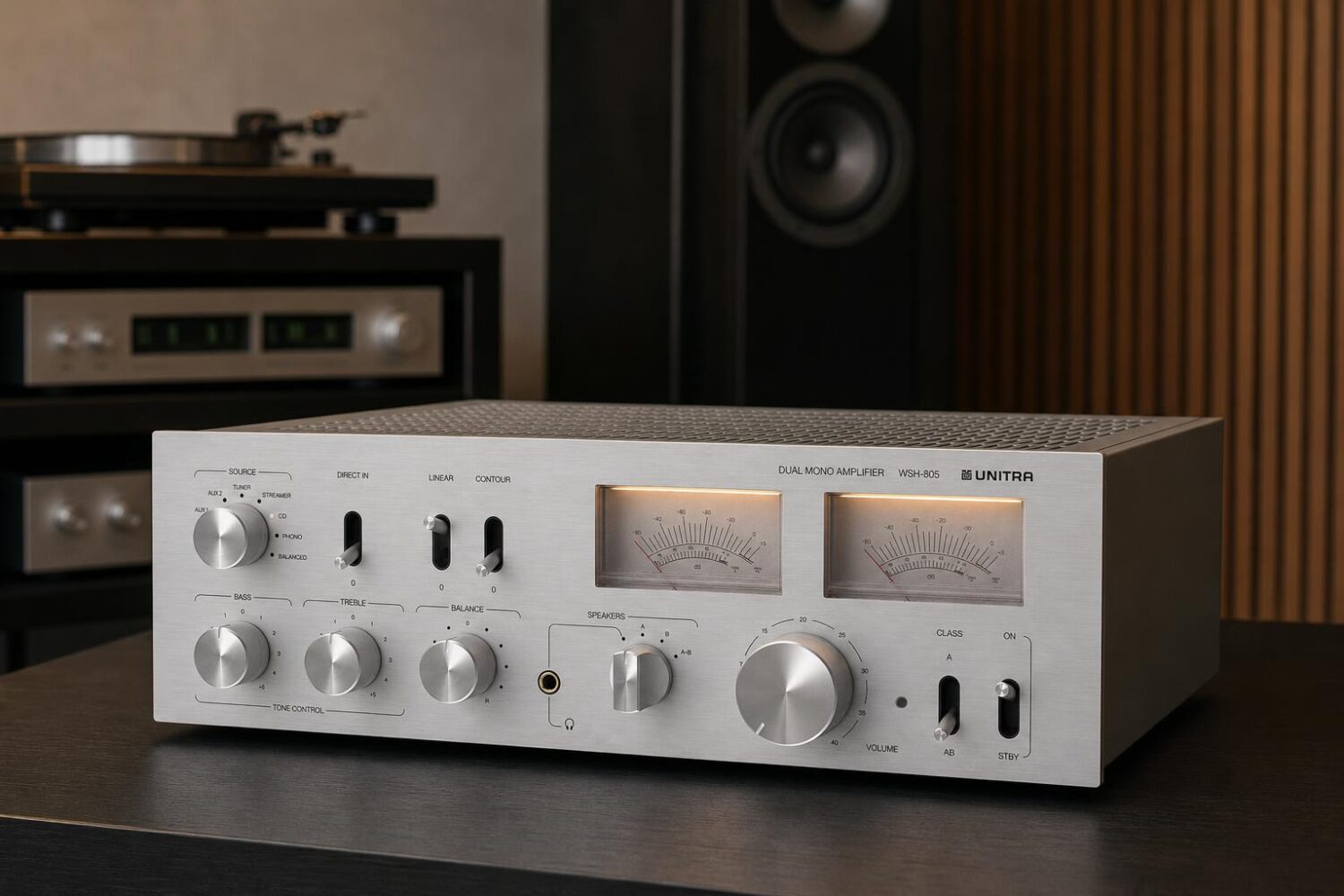
The Unitra WSH-805 combines retro-influenced controls with newly engineered dual-mono amplification.
The Unitra WSH-805 earns first place by combining the self-contained usefulness of an integrated amplifier with unusually flexible analog engineering.
Its retro-influenced meters, knobs and switches reference the historic WSH-205, but the internal design is newly developed rather than a recreation of vintage circuitry.
Left and right channels receive separate basket-type transformers in a dual-mono layout, while both the preamplifier and power-amplifier stages use current-feedback arrangements. Switchable Class AB and pure Class A operation gives owners a meaningful choice of operating mode, and the inclusion of both moving-magnet and moving-coil phono support broadens its value in an analog system. At 18 kilograms, it is a substantial component rather than a space-saving option, and the supplied report does not establish how it sounds against the other amplifiers. Even so, its combination of integrated convenience, dual-mono construction and vinyl flexibility makes it the most complete analog proposition here.
Best for: Analog systems needing one substantial, flexible integrated amplifier
- Dual-mono construction with separate transformers for the two channels
- Switchable Class AB and pure Class A operation
- Support for both moving-magnet and moving-coil cartridges
- Fully discrete power stage and extensive line-level connectivity
Verdict: The WSH-805 is the strongest all-round analog choice because it combines integrated convenience, serious internal separation and unusually broad phono support.
2. Premiera D1
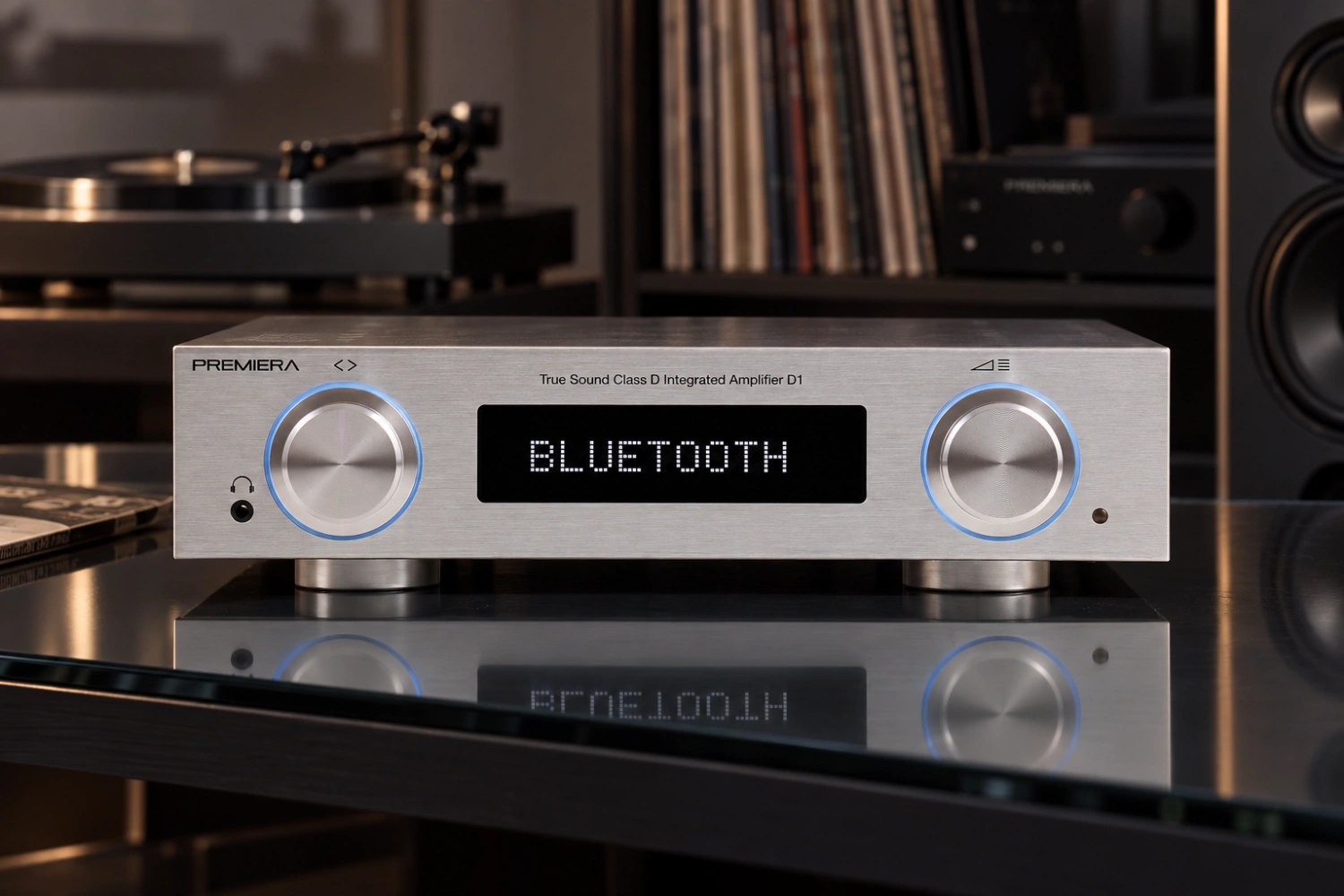
The compact Premiera D1 integrates Class D amplification, digital conversion and moving-magnet phono support.
The Premiera D1 is the most broadly equipped compact integrated amplifier in the ranking.
Its Class D output stage is rated at 101 watts per channel into 4 ohms, while an ESS Sabre digital-to-analog converter, moving-magnet phono stage, HDMI ARC and Bluetooth 5.0 allow it to accommodate televisions, digital sources, turntables and wireless playback without several additional components.
Dedicated outputs for an external power amplifier and an active subwoofer create room for system expansion. The D1 is only 270 millimeters wide and weighs 3.2 kilograms, making its feature density especially notable. Its speaker terminals are intended for one pair of speakers with nominal impedance between 4 and 8 ohms, and moving-coil cartridges require an external solution. Its high placement reflects versatility and compactness rather than an unsupported claim of sonic superiority.
Best for: Compact systems combining television, digital, wireless and vinyl sources
- Class D output rated at 101 watts per channel into 4 ohms
- ESS Sabre conversion with HDMI ARC and Bluetooth 5.0
- Integrated moving-magnet phono preamplifier
- Outputs for an external power amplifier and active subwoofer
Verdict: The Premiera D1 offers the widest source compatibility in the smallest chassis of the ten products.

3. Eversolo AMP-F8
The Eversolo AMP-F8 provides stereo Class AB amplification and a 500-watt bridged mono mode.
The Eversolo AMP-F8 is the highest-ranked dedicated power amplifier because it combines substantial stereo output with a useful upgrade path to bridged mono operation.
In stereo, it is rated at 180 watts per channel into 8 ohms and 280 watts per channel into 4 ohms.
Bridging the channels produces a single 500-watt output into 8 ohms, allowing two AMP-F8 units to operate as a monoblock pair. Its Class AB output stage is supported by a custom 800-watt toroidal transformer. The 265-millimeter-wide chassis is relatively compact, although its 15.9-kilogram weight reflects a more substantial design than the dimensions initially suggest. It is not an integrated amplifier and must be partnered with a preamplifier; achieving the headline mono configuration also requires two units. Within those boundaries, its combination of power, size and configuration flexibility is compelling.
Best for: Systems needing a powerful stereo amplifier with a future monoblock option
- Rated at 180 watts per channel into 8 ohms in stereo
- Output rises to 280 watts per channel into 4 ohms
- Bridged mode provides a rated 500 watts into 8 ohms
- Custom 800-watt toroidal transformer
Verdict: The AMP-F8 is a flexible high-output power amplifier that can grow from a single stereo chassis into a bridged monoblock pair.

4. Manley Laboratories Mahi
The Manley Laboratories Mahi monoblocks can be switched between 40-watt pentode and 20-watt triode operation.
The Manley Laboratories Mahi stands apart as the most listening-led recommendation in this ranking.
These EL84 monoblocks offer two operating modes: pentode operation is rated at 40 watts per channel, while triode mode reduces output to 20 watts per channel.
The lower-powered setting is described in the source as producing a more intimate, transparent and balanced presentation. The documented listening impressions also identify an open midrange, natural tone and a relaxed but engaging soundstage when the amplifiers are paired with suitable speakers. That final qualification matters: neither output mode is intended to compete with the high-current solid-state amplifiers here on raw power, and the monoblocks require a separate preamplifier. For compatible loudspeakers, however, the selectable operating modes provide more than a nominal technical distinction and make the Mahi unusually adaptable for a tube design.
Best for: Tube enthusiasts with compatible loudspeakers who value two distinct operating modes
- Selectable pentode and triode operating modes
- Rated at 40 watts per channel in pentode mode
- Triode mode provides a lower-powered 20-watt alternative
- Source listening notes support an open midrange and natural tonal balance
Verdict: The Mahi is the most persuasive tube choice here, provided its moderate output is matched carefully to the loudspeakers.
5. TIDAL x BUGATTI MA1
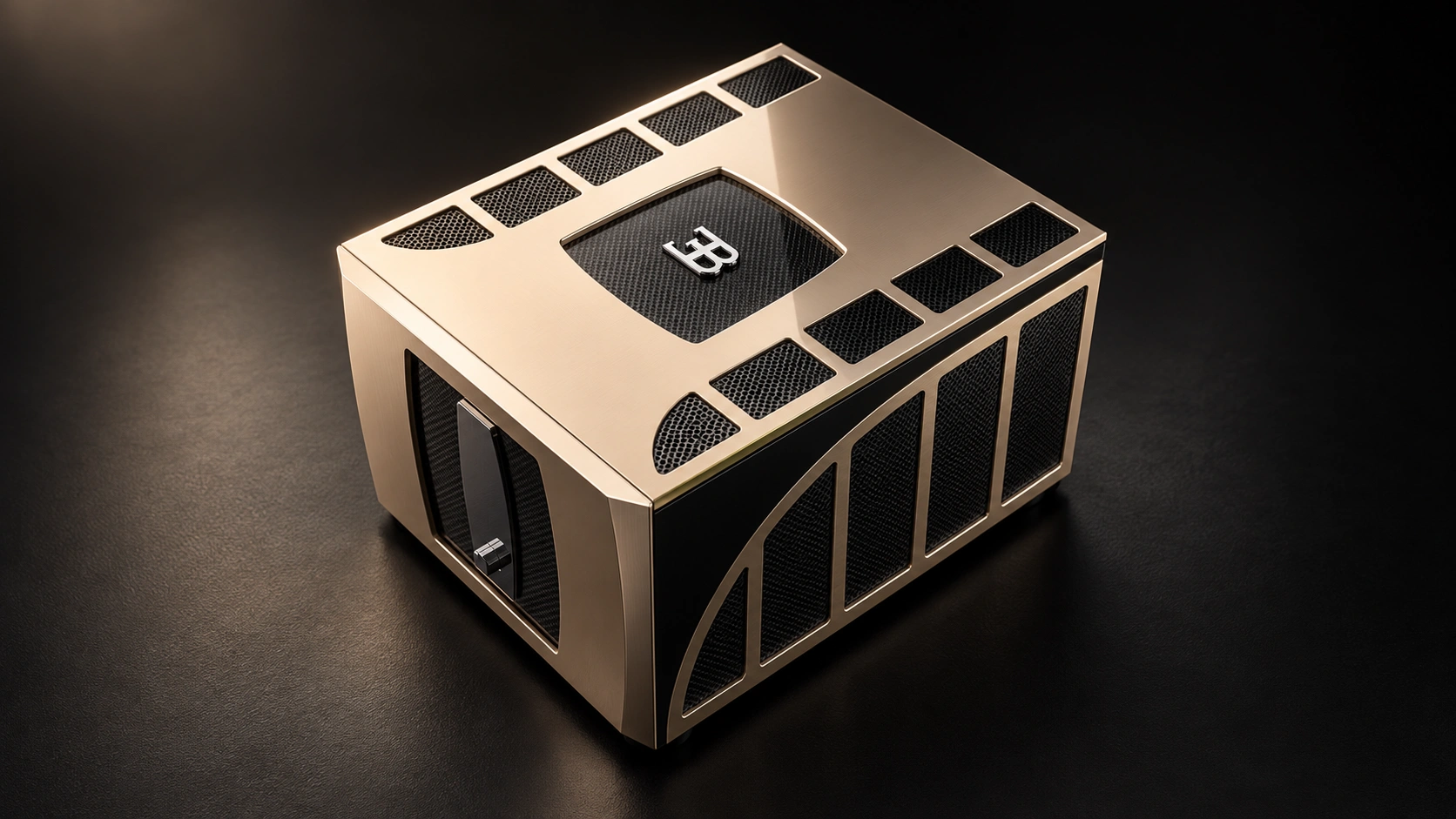
The TIDAL x BUGATTI MA1 is a bespoke monoblock rated to deliver as much as 1,500 watts into 2 ohms.
The TIDAL x BUGATTI MA1 is the ranking's uncompromising high-output specialist.
Each chassis is a true monoblock rated at 420 watts into 8 ohms, 840 watts into 4 ohms and 1,500 watts into 2 ohms.
A stereo system consequently requires two amplifiers, but the documented output figures place the MA1 in a different power category from the other products on this list. The linear power supply uses three magnetically shielded and mechanically decoupled 1,000 VA transformers, active regulation and a listed stabilization capacity of 800,000 µF. TIDAL also specifies a fully DC-coupled input circuit without coupling capacitors or relays in the signal path between input and output, while individually tailored finishes reinforce its bespoke positioning. It ranks below more broadly applicable amplifiers because this level of scale and complexity serves a narrow reference-system audience, not because the published engineering is modest.
Best for: Reference systems requiring extreme monoblock power and bespoke construction
- Rated at 420 watts into 8 ohms and 840 watts into 4 ohms
- Specified to deliver 1,500 watts into a 2-ohm load
- Actively regulated linear supply with three 1,000 VA transformers
- Fully DC-coupled signal path without coupling capacitors or signal-path relays
Verdict: The MA1 is the list's power benchmark, but its true-monoblock format and extreme engineering make it a highly specialized recommendation.

6. Esoteric F-01 Black Edition
The Esoteric F-01 Black Edition retains the standard amplifier's circuitry and 30-watt Class A rating.
The Esoteric F-01 Black Edition is a Class A integrated amplifier rated at 30 watts per channel.
That integrated format makes it easier to deploy than separate preamplifier and power-amplifier combinations, while its operating class gives it a clearly differentiated role from the higher-output Class AB and Class D products in the ranking.
This edition must be interpreted accurately: the black-anodized enclosure is a cosmetic alternative, not a circuit revision. Esoteric states that its internal circuits and specifications are unchanged from the standard silver F-01. A matching black version of the optional PS-01F external power supply is available for a coordinated two-chassis arrangement. The documented information supports the design, output and finish, but not a claim that the Black Edition sounds different from the standard model.
Best for: Class A integrated systems where coordinated black component styling matters
- Integrated amplifier operating in Class A
- Rated at 30 watts per channel
- Black-anodized finish with unchanged established circuitry
- Compatible with a finish-matched optional PS-01F external power supply
Verdict: The F-01 Black Edition combines established Class A amplification with a limited alternative finish, but it is not an electrical upgrade over the silver model.
7. Pro-Ject Amp Box S3 L
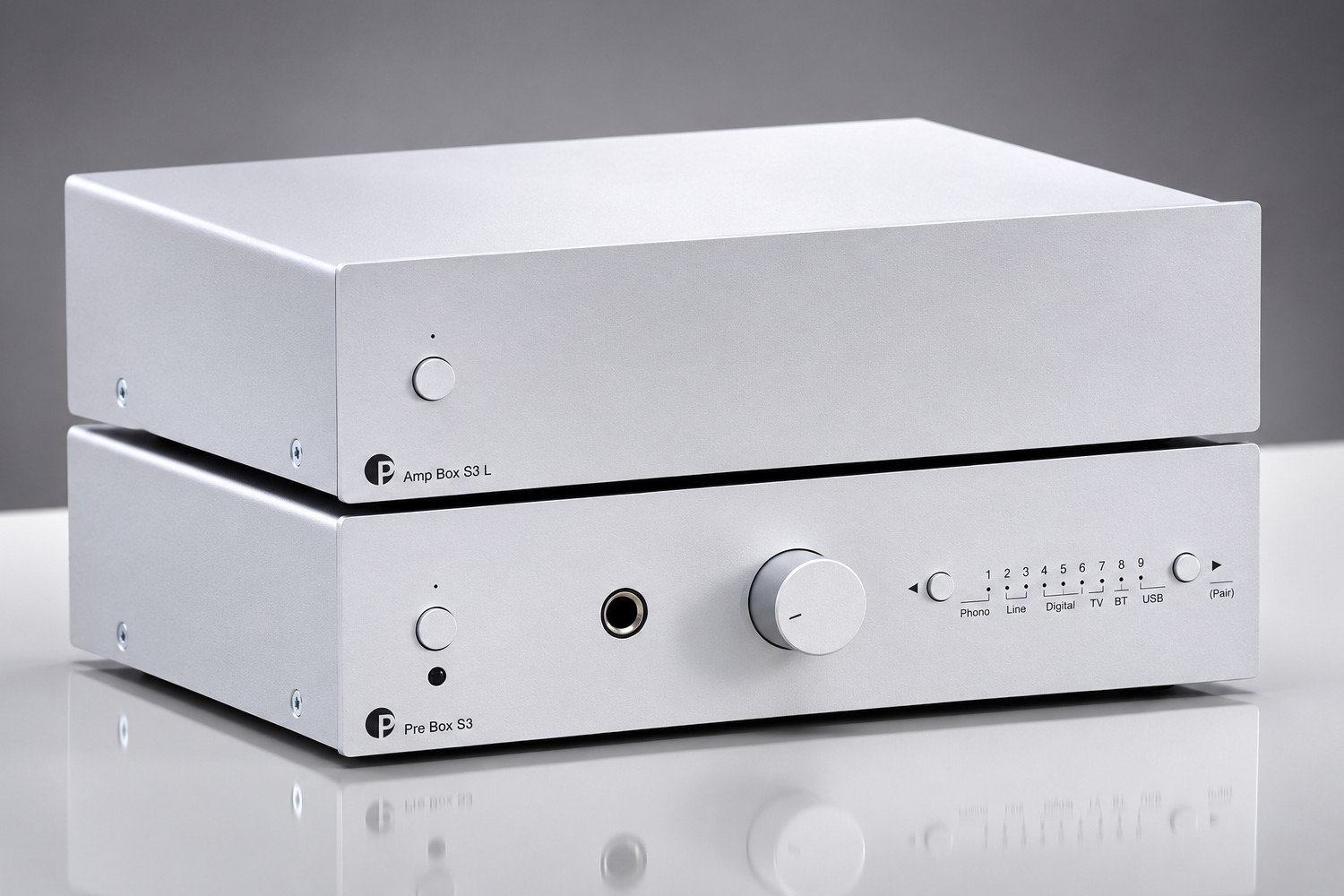
The Pro-Ject Amp Box S3 L expands the company's compact power-amplifier concept with greater stated output.
The Pro-Ject Amp Box S3 L addresses listeners who want more power than the smaller S3 concept provides without adopting a conventional full-width component.
It is rated at 80 watts per channel into 8 ohms and 140 watts per channel into 4 ohms, giving prospective owners clear load-specific figures rather than a single headline rating.
A new amplification module, dual-mono channel layout and external power supply define the design. Connectivity is intentionally simple, with an RCA input and conventional speaker terminals. That simplicity also defines its limitation: this is a two-channel power amplifier, not an all-in-one unit, so volume control and source selection must be provided by a separate preamplifier. It is a focused option for compact separates rather than a substitute for the integrated amplifiers ranked above it.
Best for: Compact separates systems needing straightforward stereo power amplification
- Rated at 80 watts per channel into 8 ohms
- Rated at 140 watts per channel into 4 ohms
- Dual-mono channel layout
- External power supply keeps the main chassis compact
Verdict: The Amp Box S3 L delivers useful power from a compact format, provided the system already includes a suitable preamplifier.
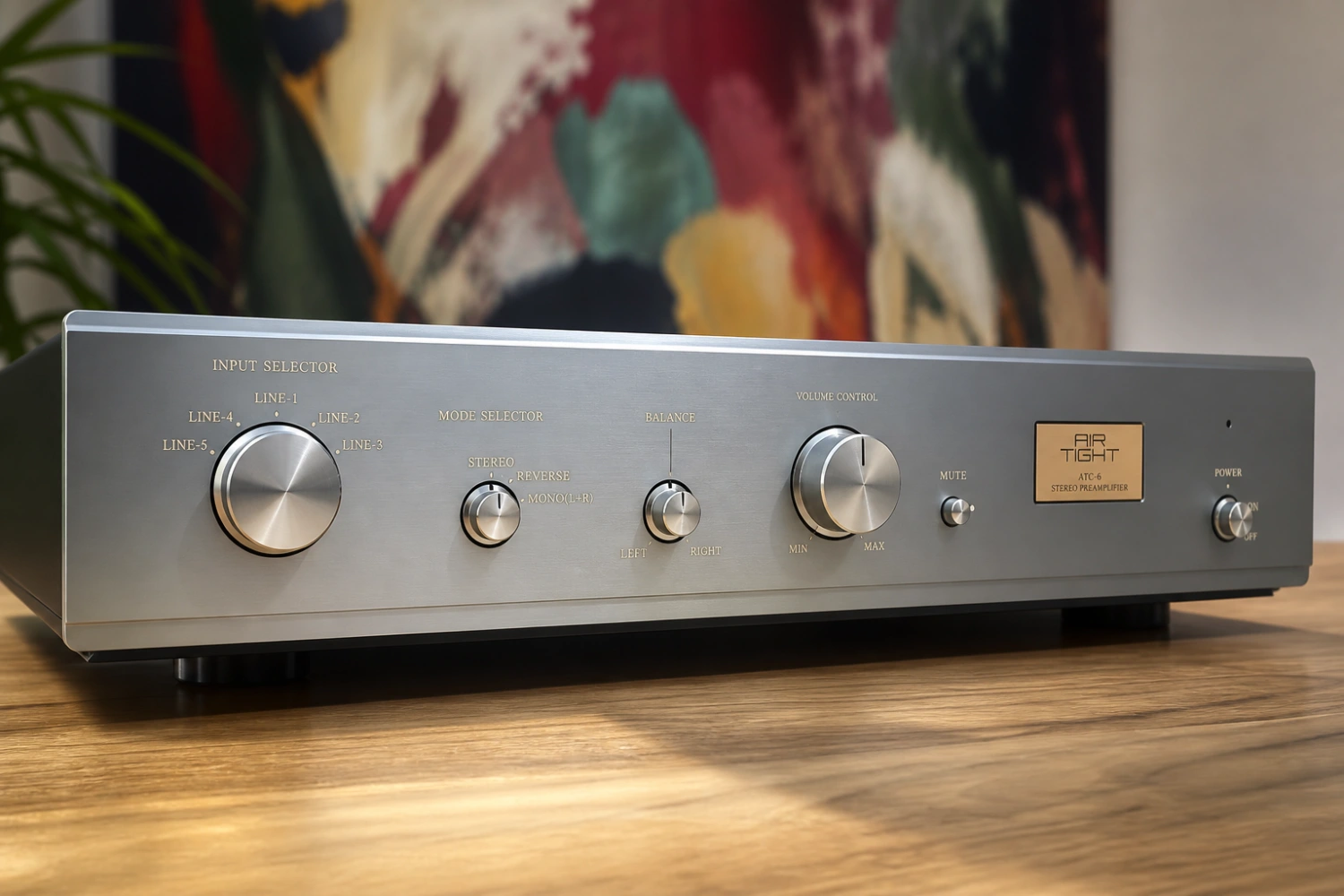
8. Air Tight ATC-6
The Air Tight ATC-6 is a two-stage tube line preamplifier with five analog inputs.
The Air Tight ATC-6 is a tube line preamplifier rather than a loudspeaker-driving amplifier, so its natural place is at the center of an established separates system.
Its traditional two-stage architecture uses a pair of 12AT7 dual triodes, maintaining Air Tight's analog focus without adding digital conversion or streaming functions.
Five line-level inputs include two balanced XLR connections alongside RCA inputs. The redesign introduces structural and electrical changes intended to lower noise, improve stability and support long-term reliability, although the supplied report does not provide comparative measurements or establish those improvements through a direct listening test. The ATC-6 is therefore best understood as a purist control stage for owners who already have source components and a power amplifier.
Best for: High-end analog separates built around a dedicated tube line stage
- Two-stage tube architecture using a pair of 12AT7 dual triodes
- Five line-level inputs
- Two balanced XLR input connections alongside RCA options
- Focused analog design without redundant digital circuitry
Verdict: The ATC-6 is a focused and well-connected tube preamplifier, but it requires a complete supporting system and cannot drive speakers directly.
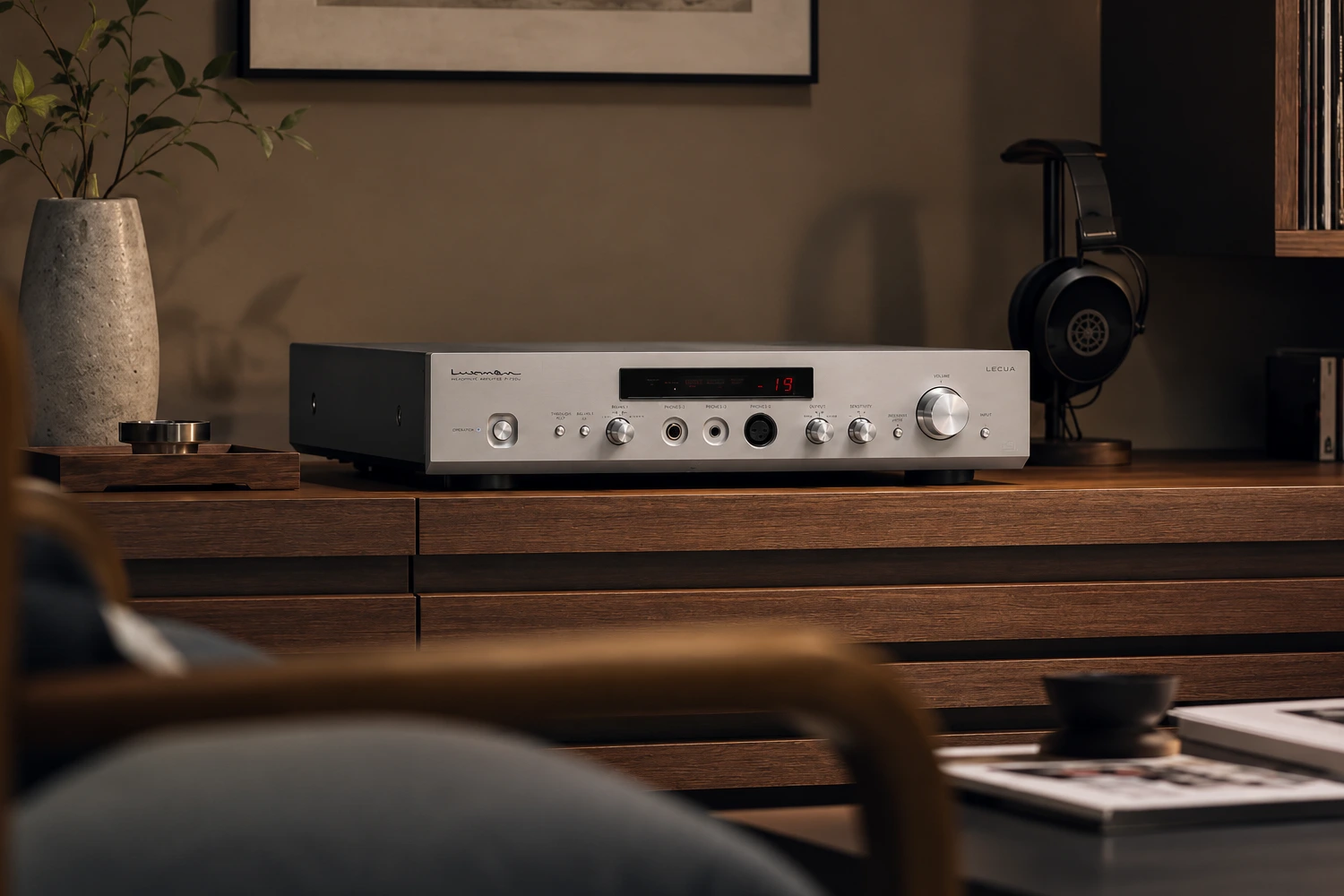
9. Luxman P-800u
The Luxman P-800u uses its four-channel architecture differently for balanced and unbalanced headphone outputs.
The Luxman P-800u is the only dedicated headphone amplifier in the ranking.
It is a full-width analog component informed by engineering developed for Luxman's P-100 Centennial, with a four-channel amplification architecture that is configured according to the selected headphone output.
The 4.4-millimeter and four-pin XLR connections use bridged balanced operation, while the 6.35-millimeter output uses parallel unbalanced drive. There is no onboard digital conversion or streaming, so an external analog source or DAC is required. A rear pass-through output helps it coexist with a wider system, but its purpose remains wired headphone listening rather than loudspeaker amplification. Its low ranking reflects that narrow role, not an assumption about its performance within that role.
Best for: Dedicated analog headphone systems with an existing source or DAC
- Four-channel amplification architecture
- Bridged balanced drive through 4.4-millimeter and four-pin XLR outputs
- Parallel unbalanced drive through the 6.35-millimeter output
- Rear pass-through output for integration with a larger system
Verdict: The P-800u is the most purpose-built headphone amplifier here, but it is not an alternative to a speaker amplifier.
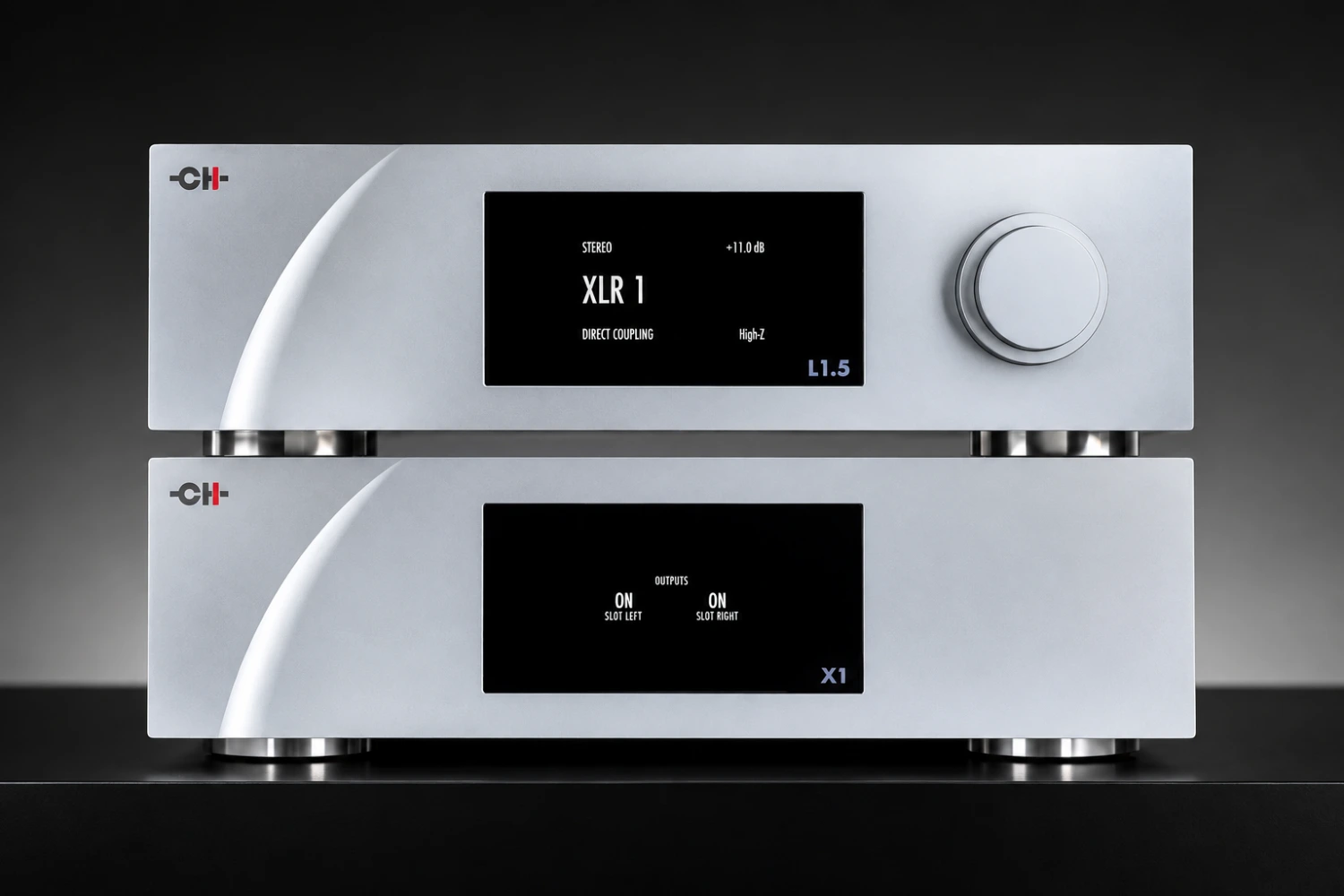
10. CH Precision L1.5
The CH Precision L1.5 brings reference-derived line-stage development to the company's modular preamplifier range.
The CH Precision L1.5 is a line preamplifier developed by reworking an established signal architecture rather than replacing it with an unrelated platform.
Its circuitry draws on work completed for the reference L10, with the redesign emphasizing noise reduction, electrical stability and isolation of the control system from sensitive audio circuitry.
CH Precision retains its modular philosophy by providing an upgrade route for owners of the earlier L1. That continuity is a meaningful advantage in an existing CH separates system. However, the supplied report provides fewer L1.5-specific implementation details than it does for the associated P1.5 phono stage, and no speaker-driving output is involved. Those evidence and applicability limits place the L1.5 last in this broad ranking, even though it may be the most logical option for an established owner seeking the supported upgrade path.
Best for: Existing CH Precision systems requiring a modular line-stage upgrade
- Line-stage circuitry informed by the reference L10
- Redesign places explicit emphasis on noise reduction
- Electrical stability and control-system isolation are central engineering objectives
- Upgrade route available for owners of the earlier L1
Verdict: The L1.5 is a specialist line preamplifier with a valuable upgrade path, but the available source detail is too limited for a higher overall placement.


Sound Off
0Join the discussion if you have something to add.