
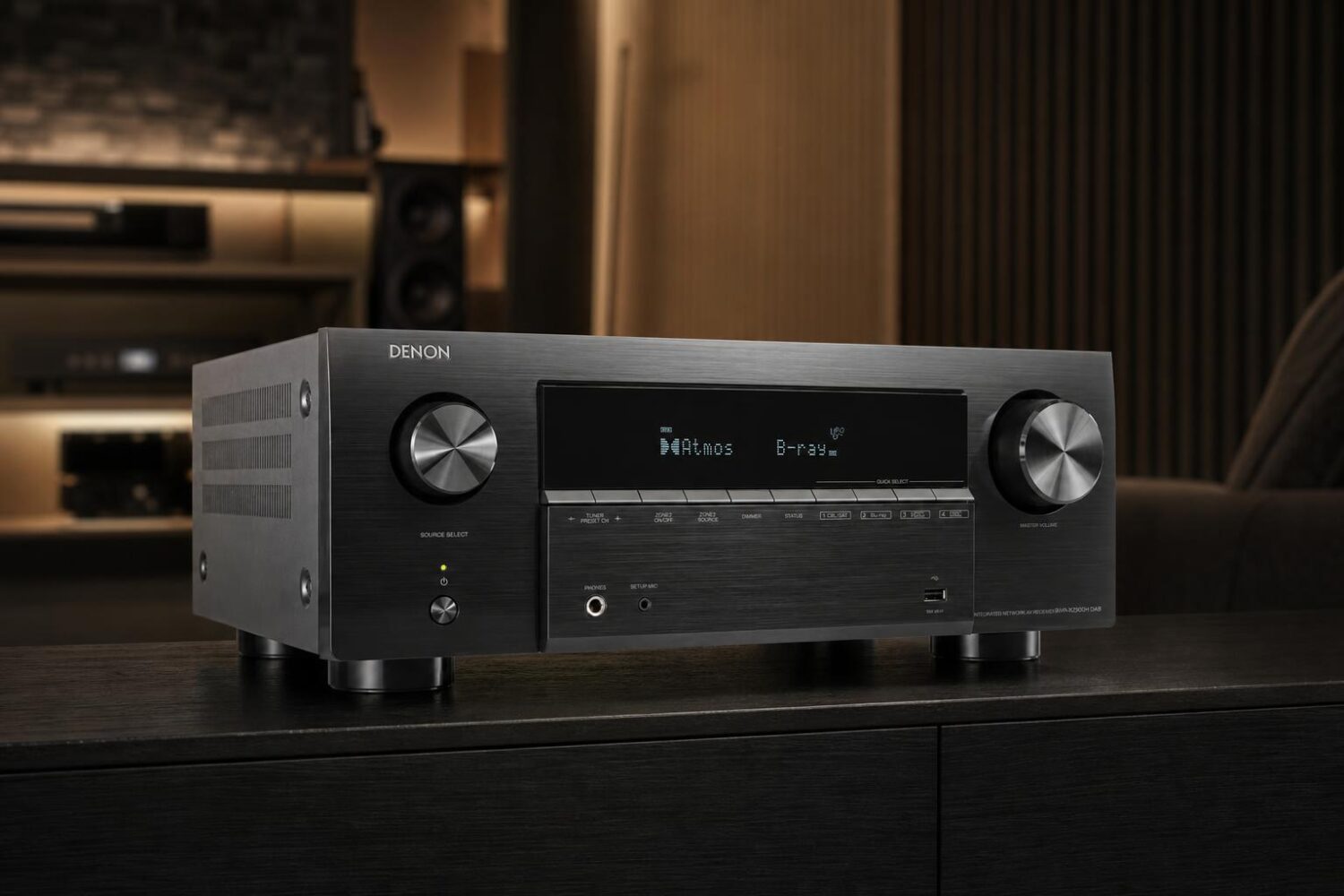
Choosing a home-cinema control centre starts with one practical question: do you need an AV receiver that can power speakers directly, or an AV processor that must be paired with separate power amplifiers? That decision narrows the field quickly. The Arcam AVR11 and Sony STR-DN1080 are complete receivers, while the JBL Synthesis SDR-40 combines processing with nine amplifier channels. The McIntosh MX170 and MiniDSP Tide16 are processors for more specialist systems.
Channel count is only part of the story. Room correction, HDMI capability, streaming, balanced outputs and the number of speakers you plan to install may matter more than a headline specification. Here is how these five models differ, and which one makes the most sense for a conventional living-room cinema, a dedicated theater or a separates-based system.
Quick verdict
Best Overall: Arcam AVR11. It is the most balanced choice here for a serious but still relatively straightforward home cinema. Its seven amplifier channels, 12.1-channel processing, HDMI 2.1 connectivity, Dirac Live, Dolby Atmos, streaming support and $3,000 price make it unusually complete.
Best Value: Sony STR-DN1080. It is the least specialised model in this group, but its six HDMI inputs, two HDMI outputs, Dolby Atmos and DTS:X support, Chromecast, Spotify Connect and compact chassis make it a sensible option when the system is centred on a TV and a conventional speaker package.
Best Features for a dedicated cinema: JBL Synthesis SDR-40. With 16 processing channels, nine Class-G amplifier stages, Dirac Live and HDMI 2.1a gaming support, it is the most ambitious integrated option. Its €7,099 suggested retail price and installation-focused positioning put it in a different class from the Sony and Arcam.
Best for separates: MiniDSP Tide16. Its 16 balanced XLR outputs and included Dirac Live, Bass Control and Active Room Treatment licences are particularly attractive for active speakers, multiple subwoofers or a rack-based system with external amplification.
Best for premium legacy-style installation: McIntosh MX170. It offers 15.1-channel processing, balanced outputs, extensive analogue connectivity and RoomPerfect, but its 4K/60 HDMI platform is less current than the HDMI 2.1 designs in the Arcam and JBL.

Comparison table
| Model | Type | Processing / amplification | Room correction | Video and connectivity highlights | Price stated in source |
|---|---|---|---|---|---|
| Arcam AVR11 | AV receiver | 12.1 processor; 7 amplification channels, 60W per channel at 8 ohms with all channels driven | Dirac Live, measurements at up to nine points | 7 HDMI inputs, 2 outputs; HDMI 2.1, 8K, AirPlay 2, Chromecast, Ethernet, Spotify Connect | $3,000 |
| Sony STR-DN1080 | AV receiver | 7.2-channel; 7 x 165W at 6 ohms | Advanced DCAC | 6 HDMI inputs, 2 outputs; 4K video, Dolby Atmos, DTS:X, Chromecast, Bluetooth, Wi-Fi and Ethernet | Not stated |
| JBL Synthesis SDR-40 | AV receiver / integrated cinema controller | 16-channel processor; 9 Class-G amplifier stages | Dirac Live | HDMI 2.1a; 8K/60, 4K/120, VRR, ALLM and eARC; AirPlay, Google Cast, Roon Ready | €7,099 suggested retail price |
| McIntosh MX170 | AV processor / preamplifier | 15.2-channel; balanced outputs for up to a 15.1 system | RoomPerfect | 8 HDMI inputs, 4 outputs; 4K/60, HDR, Dolby Vision, eARC, HDBaseT, extensive analogue and digital inputs | Not stated |
| MiniDSP Tide16 | AV processor | 16-channel processing; 16 balanced XLR outputs | Dirac Live, Bass Control and Active Room Treatment included | 3 HDMI inputs plus eARC; USB, Bluetooth LDAC and aptX HD, RCA, XLR and four S/PDIF inputs | $3,500 |
Arcam AVR11
The AVR11 is the strongest all-round recommendation because it combines the parts most buyers actually need. It is a seven-channel receiver, but its processor section handles 12.1 channels. That means it can run a conventional system directly while leaving a route to a larger installation through its 12-channel preamp outputs.
For immersive sound, the Arcam supports Dolby Atmos in a 5.1.2 configuration using its own amplification. A 7.1.4 arrangement requires a four-channel power amplifier or two stereo amplifiers. DTS:X is supported after a software update, and the receiver also includes IMAX Enhanced, Dolby and DTS formats.
Dirac Live is a substantial advantage at this price. The supplied information describes measurements at nine positions, with processing completed on a computer before the results are uploaded to the receiver. That is more involved than a basic automatic setup, but it offers useful control when speaker placement and room acoustics are less than ideal.
Seven HDMI 2.1 inputs and two outputs cover a modern source collection, with support for 8K, 4K/120, HDR10+, Dolby Vision and Dynamic HDR. AirPlay 2, Chromecast, Spotify Connect, Bluetooth, Ethernet, DAB/DAB+ and FM add flexibility for music as well as films. At $3,000, the AVR11 suits the buyer who wants serious processing and room correction without immediately building a separate preamp-and-amplifier system.

Sony STR-DN1080
The Sony is the practical choice for a smaller or more conventional home cinema. Its 7.2-channel design supports either 7.1 or 5.1.2, so it is aimed at buyers who want Dolby Atmos or DTS:X without planning a large 7.1.4 theater.
Its most useful everyday feature may be the six HDMI inputs. That is more generous than many similarly positioned receivers, and the two HDMI outputs allow 4K video and surround sound to be sent to two living areas. Optical and coaxial inputs, Bluetooth, Wi-Fi and Ethernet cover the basics, while Chromecast, UPnP, Spotify Connect, AirPlay, DLNA and Google Cast provide a broad set of streaming routes.
The Sony also has a clear on-screen interface and can work with Google Home. Its Advanced DCAC calibration system is less elaborate on paper than the Dirac implementations in the Arcam, JBL and MiniDSP, but it keeps setup approachable. The receiver's stated output is 7 x 165W at 6 ohms, and its 430 x 156 x 331mm chassis is more compact than the premium alternatives here.
Choose the STR-DN1080 when ease, connectivity and a sensible speaker count matter more than expansion into a large dedicated theater. It is not the right pick for a separates system or a 16-channel installation, but it remains the least intimidating route into Atmos among these five models.
JBL Synthesis SDR-40
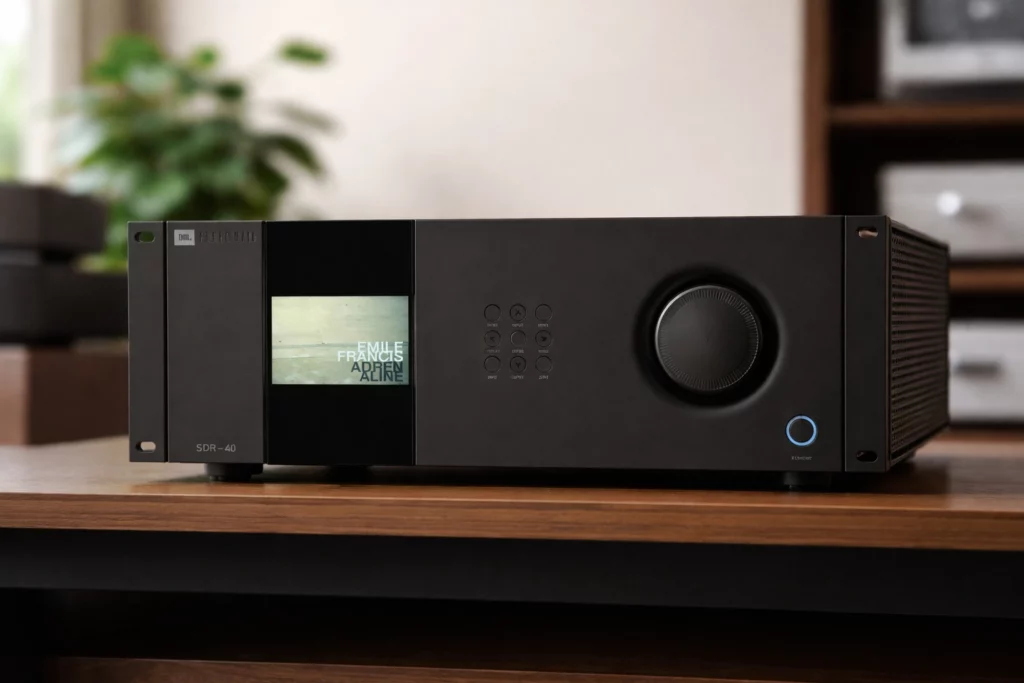
The SDR-40 is built for the buyer who is already thinking in terms of a dedicated cinema room rather than a living-room receiver. It processes 16 channels and includes nine Class-G amplifier stages, offering substantially more integrated power capability than the Arcam or Sony while retaining pre-outs for future expansion.
Its format support is comprehensive: Dolby Atmos, DTS:X Pro, IMAX Enhanced and AURO-3D are all included. Flexible matrix channel assignment is intended to let an installer tailor the layout, from 7.1.4 to systems with additional height or surround channels. Dirac Live addresses both frequency response and time-domain behaviour, which is valuable when a room needs more than basic level and distance adjustment.
The JBL is also the most current gaming and video proposition in the group. HDMI 2.1a supports 8K/60, 4K/120, Variable Refresh Rate, Auto Low Latency Mode and eARC. Network audio includes Apple AirPlay, Google Cast, Spotify Connect, Qobuz Connect and TIDAL Connect, with Roon Ready certification and control through the JBL Synthesis app.
That breadth comes with a €7,099 suggested retail price and an authorised-dealer or custom-installation route. It is the right choice when you want a high-channel-count cinema hub with built-in amplification and expect the rest of the system to be installed around it. For a simple five-speaker room, it is likely more hardware than necessary.
McIntosh MX170
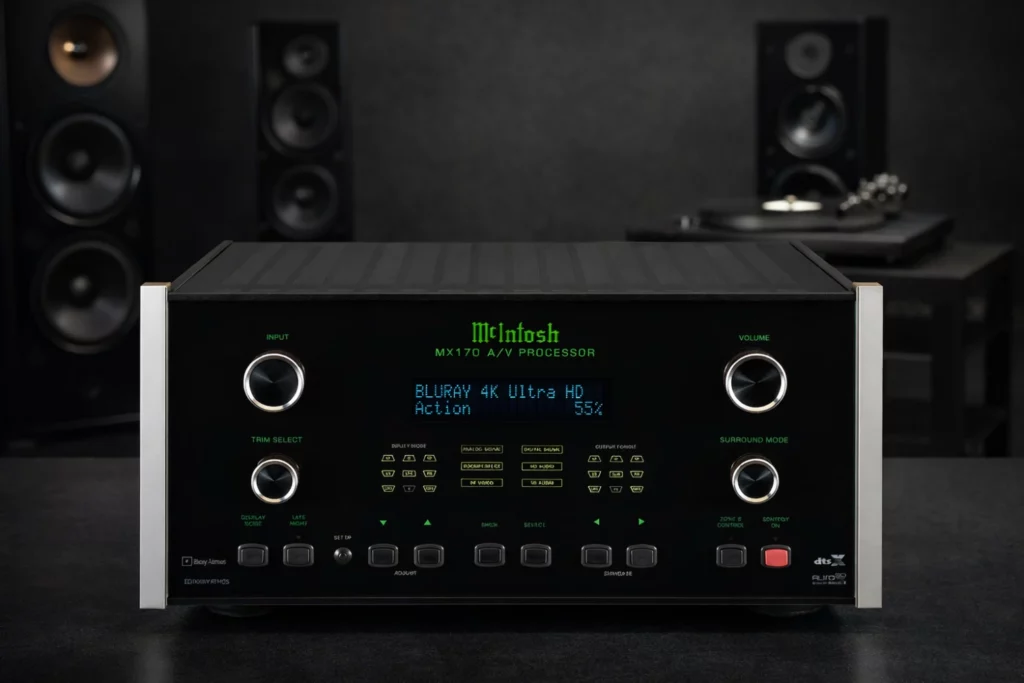
The MX170 takes a different route. It is an AV processor and preamplifier, not an AV receiver, so it needs external amplification. In return, it offers balanced outputs for a 15.1 speaker configuration, with four outputs configurable for additional channels, bi-amping or subwoofers in a smaller system.
Its connectivity is especially broad. There are eight HDMI inputs and four outputs, including eARC, plus HDBaseT for installations where the display is some distance away. The video section supports 4K/60, HDR10, Dolby Vision, HLG and 3D pass-through. Digital inputs include four optical, three coaxial, USB and AES/EBU, while analogue connections include balanced XLR, RCA, phono and a 7.1-channel input.
RoomPerfect provides automatic surround calibration, and the MX170 adds per-channel crossover adjustment, bass and treble controls and input-level matching. Those features make it adaptable in a complex separates system. Its 15.2-channel architecture is also more expansive than the Arcam's processing section.
The important qualification is video generation. The MX170's HDMI specification is based on 4K/60 and HDCP 2.2, rather than the HDMI 2.1 features found on the newer Arcam and JBL. Buy it for its analogue integration, balanced architecture, RoomPerfect and installation flexibility—not primarily for 4K/120 gaming.
MiniDSP Tide16
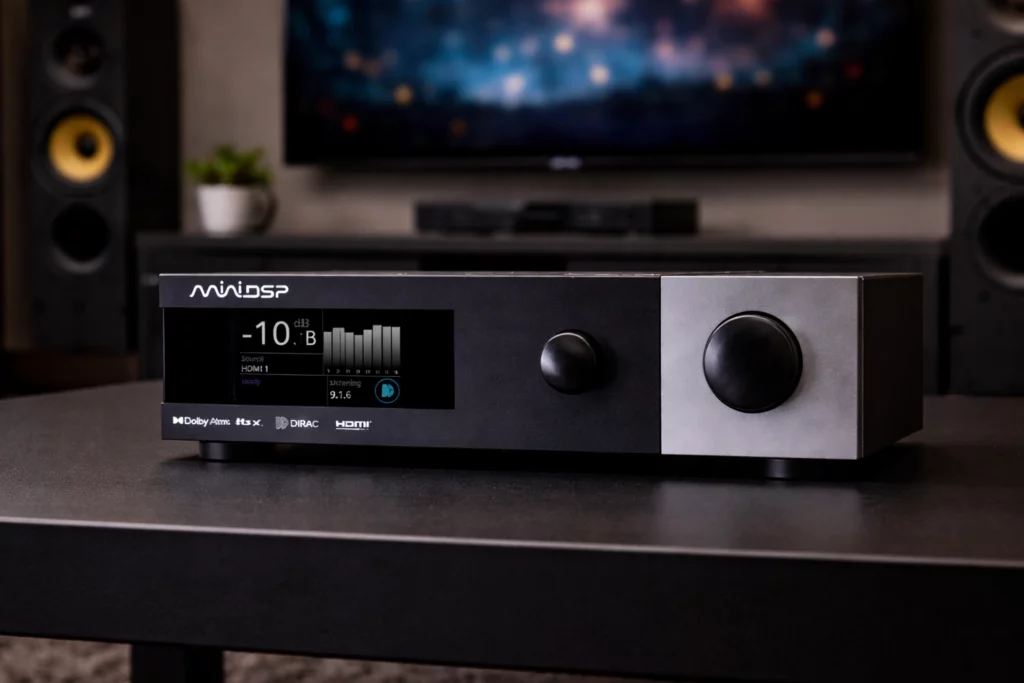
The Tide16 is the specialist option for buyers who want maximum processing control and already understand the requirements of a separates or active-speaker system. It decodes up to 16 channels and sends them through 16 fully balanced XLR outputs, so external amplifiers or active loudspeakers are essential.
Its Dirac package is unusually generous: Dirac Live, Bass Control and Active Room Treatment licences are included at no extra cost. A flexible matrix mixer and bass management operate across all 16 outputs, making the Tide16 particularly relevant to systems with several subwoofers, active speakers or unusual speaker layouts.
It is not limited to cinema sources. USB, Bluetooth with LDAC and aptX HD, RCA and XLR analogue inputs, plus four coaxial and optical S/PDIF inputs, support two-channel listening. MiniDSP states a 127dB signal-to-noise ratio and THD+N of 0.0001% at -118dB. The rack-mountable chassis has a colour OLED display, while three HDMI inputs and eARC handle video sources.
At $3,500, it may look competitive with the Arcam, but the comparison is incomplete: the Tide16 has no built-in speaker amplification. It is best suited to a technically confident owner who values routing, room correction and balanced outputs over an all-in-one receiver.
How they differ
Amplification is the first dividing line. The Sony and Arcam can power a complete speaker system from the box. The JBL also includes nine amplifier stages, though its 16-channel processing means a larger installation may still need external power. The McIntosh and MiniDSP are processors and require separate amplifiers.
Channel count indicates expansion, not automatic sound quality. The Sony is limited to 5.1.2 or 7.1 in the stated configurations. The Arcam can process 12.1 but amplifies seven channels. JBL and MiniDSP reach 16 processing channels, while the McIntosh is specified as 15.2. Choose based on the layout you will actually install, not simply the largest number.
Room correction varies in approach. Arcam and JBL use Dirac Live, while MiniDSP adds Dirac Bass Control and Active Room Treatment. McIntosh uses RoomPerfect, and Sony uses Advanced DCAC. These systems can help compensate for room and placement effects, but they do not remove the need for sensible speaker positioning and bass management.
Video priorities separate the newer models from the older platform. Arcam offers HDMI 2.1 with 8K and 4K/120 support, and JBL adds VRR and ALLM. Sony supports 4K video, but its specification does not list HDMI 2.1 gaming features. McIntosh supports 4K/60, HDR and eARC, while MiniDSP's source connectivity is more focused on its processing outputs than on a large HDMI switcher.
Streaming is broadest on the integrated receivers and JBL. Arcam includes AirPlay 2, Chromecast and Spotify Connect; Sony offers Chromecast, UPnP, Spotify Connect and Google Cast; JBL adds Qobuz Connect, TIDAL Connect and Roon Ready. The McIntosh and MiniDSP evidence is stronger on installation and input flexibility than on built-in streaming platforms.
Which one should you buy?
Buy the Arcam AVR11 if you want the best balance of modern HDMI, serious room correction, streaming and direct speaker drive. It is the safest recommendation for a dedicated living-room cinema or a moderately ambitious Atmos system, especially if you may add external amplification later.
Buy the Sony STR-DN1080 if your system will remain at 5.1.2 or 7.1 and you want straightforward operation, six HDMI inputs and strong everyday streaming support. It is the sensible choice when the budget and room do not justify a high-end installation.
Buy the JBL Synthesis SDR-40 if you are building a dedicated theater, need more than seven channels of integrated amplification or want current HDMI 2.1a gaming features alongside high-end cinema formats. Its price and dealer-led positioning make it a serious installation purchase rather than a casual upgrade.
Buy the McIntosh MX170 if your priority is a premium separates system with balanced connections, extensive analogue inputs, RoomPerfect and a 15.1-channel output architecture. Confirm that its 4K/60 video capability fits your source and display plans before committing.
Buy the MiniDSP Tide16 if you already have external amplification or active speakers and want the deepest routing and room-management toolkit. Its balanced outputs and full Dirac suite are compelling for complex systems, but it is not a plug-and-play receiver.
For most readers comparing these five products, the Arcam AVR11 is the most complete answer because it avoids the extra cost and complexity of separates while retaining a clear upgrade path. The Sony is the value-minded alternative; the JBL, McIntosh and MiniDSP make sense when the room, speaker count and installation ambitions genuinely demand their additional capability.


Sound Off
0Join the discussion if you have something to add.