
The Best DAPs for Every Listener and Budget
The right portable audio product depends on more than decoding numbers. This guide compares five very different options, from the affordable HiBy R6 Pro II 2025 to Shanling’s flagship M9 Plus and HiBy’s wireless WH3 earphones.

Choosing a digital audio player is ultimately about matching hardware to the way you listen. The five products here cover very different priorities: Shanling’s M7 and M9 Plus pursue refined high-end playback, iBasso’s DX340 adds a modular amplifier platform, HiBy’s R6 Pro II 2025 combines strong specifications with a lower stated price, and the HiBy WH3 brings adjustable digital processing to a genuinely portable wireless design.
That range matters because the most expensive model is not automatically the best choice for every listener. Some users need power for full-size headphones, others want streaming and app flexibility, while some value a compact wireless system above all else. The comparisons below focus on what each product actually offers in the supplied reviews, without treating headline specifications as a substitute for choosing the right use case.
Quick verdict
Best Overall: HiBy R6 Pro II 2025. At its stated $699 price, it offers a convincing combination of 632 mW balanced output, Android-based flexibility, dual DACs, Class A and Class AB amplifier modes, high-resolution decoding and up to 12 hours of battery life. It is the most balanced recommendation across performance, features and cost among the products with prices provided.
Best for maximum flagship hardware: Shanling M9 Plus. Its Quad DAC architecture, 1125 mW balanced output, 256 GB of internal storage and 8350 mAh battery make it the most ambitious Shanling option here, but its stated $2960 price places it firmly in an enthusiast category.
Best for modularity: iBasso DX340. Its interchangeable amplifier boards and dual operating system make it the most upgradeable and adaptable player in the group. However, the source says that price and delivery information had not yet been announced.
Best for a more compact high-end player: Shanling M7. It delivers a neutral, refined presentation, 900 mW balanced output and a 7000 mAh battery in a 312 g body, though it lacks a 6.3 mm headphone connection and is reported to generate significant heat.
Best wireless alternative: HiBy WH3. These are not a DAP, but true wireless headphones with adjustable digital crossover, dual-driver construction and a stated $199 price. They suit listeners who prioritise convenience and wireless use over the flexibility of a dedicated player.
Comparison at a glance
| Product | What it does best | Key supported features | Power and battery | Stated price |
|---|---|---|---|---|
| Shanling M7 | Refined high-resolution playback in a relatively light player | ES9038PRO DAC; PCM 768 kHz/32-bit; DSD512; Android 10; 128 GB storage; microSD support | 900 mW balanced and 400 mW unbalanced into 32 ohms; 7000 mAh; up to 10 hours | Not stated |
| Shanling M9 Plus | Top-tier output power, storage and flagship specifications | Symmetrical Quad DAC; PCM 1536 kHz/32-bit; DSD1024; Android 10; 256 GB; microSD up to 2 TB | 1125 mW balanced and 520 mW unbalanced into 32 ohms; 8350 mAh; up to 18 hours asymmetrical | $2960 |
| iBasso DX340 | Modularity and long-term amplifier flexibility | Discrete 1-bit DAC; FPGA Master 3.0; Mango OS and Android 13; 256 GB; microSD up to 2 TB | Standard AMP15; replaceable dual batteries; up to 11 hours | Not announced in source |
| HiBy WH3 | Wireless listening with adjustable digital crossover | Dynamic plus Knowles balanced-armature drivers; 96 kHz/24-bit input; UAT, aptX, AAC and SBC; Qi charging | Up to 125 mW per earphone; up to 24 hours stated | $199 |
| HiBy R6 Pro II 2025 | Balanced performance, features and stated price | Dual CS4308P DACs; Android 12-based HiByOS; 128 GB; expandable storage; Class A/Class AB | 632 mW balanced; up to 12 hours | $699 |
Shanling M7
SOURCE 1 uses
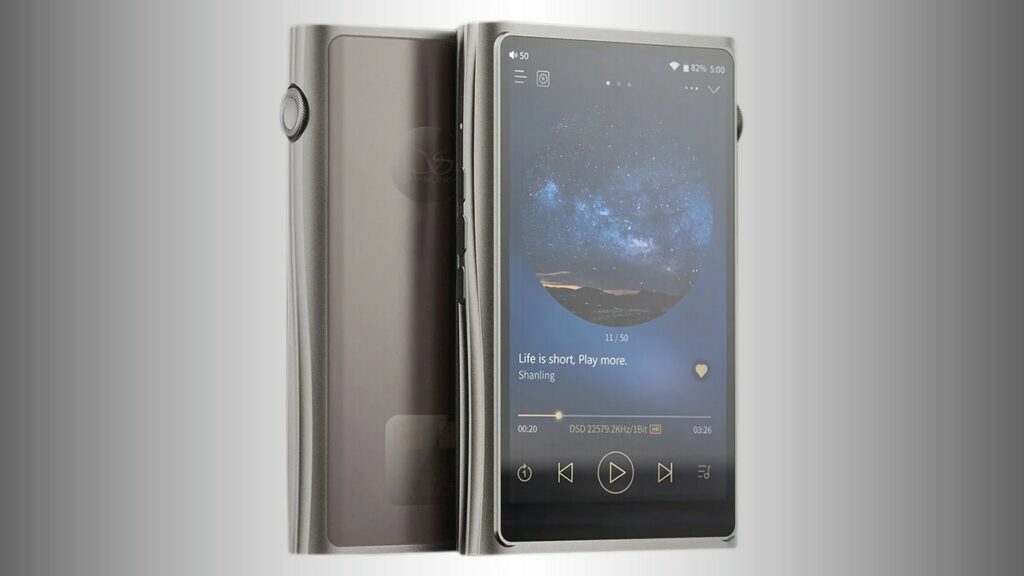
The Shanling M7 is the smaller and less expensive-looking proposition of the two Shanling players in this comparison, although the supplied article does not state a price. Its appeal is a combination of high-resolution capability, a relatively manageable 312 g weight and a sound profile described as neutral, refined and detailed.
Its ES9038PRO 8-channel DAC is configured in current mode and supports PCM up to 768 kHz/32-bit and DSD512. The fully balanced amplifier delivers 900 mW into 32 ohms, while the unbalanced output delivers 400 mW into the same load. That makes the balanced connection the important one if you want to use the M7’s maximum stated output.
The player runs Android 10 on a Snapdragon 665 processor with 6 GB of RAM. It has 128 GB of internal memory, with 20 GB allocated to the system, plus a microSD slot. Wi-Fi supports both 2.4 GHz and 5 GHz bands, and Bluetooth 5.0 includes LDAC, LHDC, aptX HD, aptX and SBC. Android, Prime and USB DAC modes give it flexibility beyond local playback.
The M7 is also practical in several ways. Its 7000 mAh battery is rated for up to 10 hours of music playback, depending on the input, while Bluetooth playback is approximately 8.5 hours. The 1080 x 1920 touchscreen and physical controls, including the side volume wheel, are highlighted positively in the source.
There are meaningful compromises. The player provides 4.4 mm and 3.5 mm outputs but no 6.3 mm jack. The article also reports that it generates significant heat during operation. Its full Android functionality may be excessive for listeners who simply want a focused music player, particularly when compared with the cost and convenience of a modern smartphone. Choose the M7 when its lighter body, neutral presentation and strong balanced output matter more than maximum storage or headline specifications.
Shanling M9 Plus
SOURCE 2 uses

The Shanling M9 Plus is the uncompromising option in this group. Its stated $2960 price is more than four times that of the HiBy R6 Pro II 2025, so it should not be judged as a general-purpose value recommendation. Instead, it targets listeners who specifically want the highest level of hardware and output capability represented in these sources.
Its symmetrical Quad DAC configuration uses AKM AK4499EX DACs alongside two AK4191 delta-sigma modulators. The claimed decoding ceiling reaches PCM 32-bit/1536 kHz and DSD1024. Output power is also exceptional among the listed players: 1125 mW into 32 ohms from the balanced connection, compared with 520 mW from the unbalanced output. Three amplification modes are provided for different headphone sensitivities and impedance demands.
The M9 Plus has 256 GB of built-in storage and supports microSD cards up to 2 TB. Its Snapdragon 665 processor and 8 GB of RAM run Android 10, with Prime Mode available for a more dedicated player experience. It can also operate as an external DAC or digital transport, and includes DLNA, AirPlay, SyncLink smartphone control and MQA 16X streaming support.
Battery capacity is 8350 mAh. The source gives up to 18 hours with an asymmetrical connection and up to 11 hours with a symmetrical connection, with QC3.0 fast charging included. The player weighs 380 g and has a large 6-inch 2160 x 1080 touchscreen, so it is portable in the broad sense but not suited to a narrow pocket.
The supplied listening account describes the M9 Plus as technical, fast, melodic, detailed, airy and analytical, with a transparent and controlled presentation. That sound description, combined with the powerful balanced output, makes it the strongest choice here for a listener who wants a highly resolving flagship and has the budget to accommodate it. It is not the sensible choice for someone seeking the best balance between cost, portability and capability.
iBasso DX340
SOURCE 3 uses
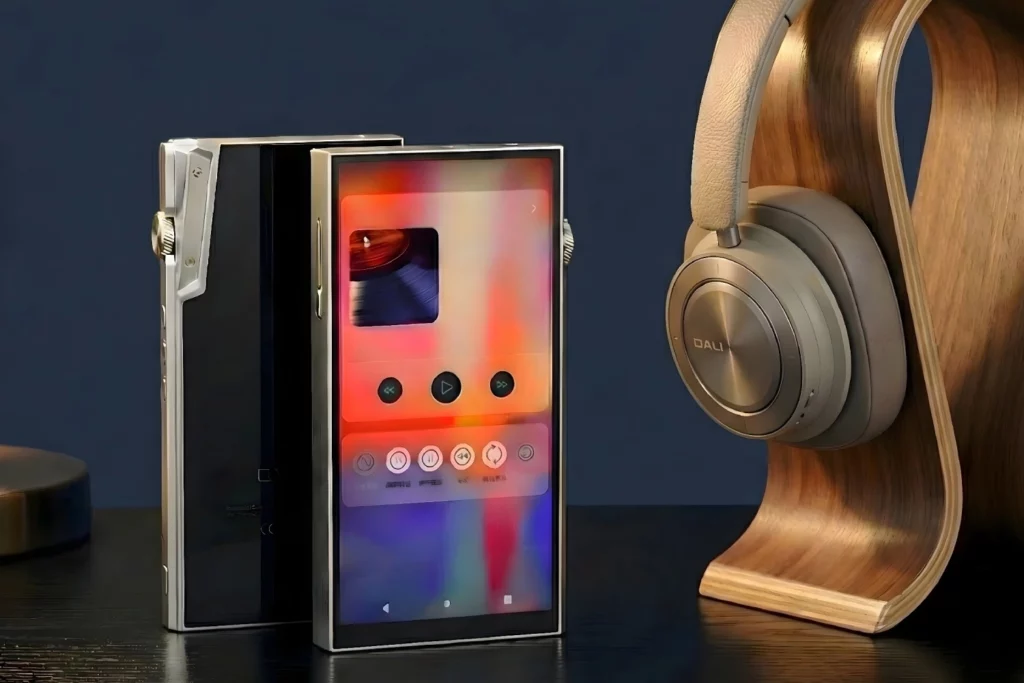
The iBasso DX340 stands apart because its main selling point is not simply its decoding ceiling or storage capacity. It is the modular amplifier architecture. The standard AMP15 can be replaced with alternative boards, including AMP1X-series options, AMP12, AMP13 and AMP14, with compatibility for future AMP1X boards also stated in the source.
That makes the DX340 the most interesting choice for listeners who expect their system to evolve. Instead of treating the amplifier stage as fixed, the player allows users to tailor or upgrade that part of the design as new modules become available. The source does not give comparative listening impressions for those modules, so the practical benefit is flexibility rather than a guaranteed particular sound.
The digital section uses a discrete 1-bit DAC configuration controlled by iBasso’s FPGA Master 3.0 system. It supports PCM up to 32-bit/768 kHz and native DSD512. The dual operating system arrangement is also useful: Mango OS is intended for focused playback, while Android 13 provides streaming and app access.
The DX340 includes 256 GB of internal storage and microSD expansion up to 2 TB. A 6-inch AMOLED display runs at 1080 x 2160 resolution. Connectivity includes balanced and unbalanced outputs, coaxial output, USB OTG, Bluetooth 5.0 and dual-band Wi-Fi. It can therefore function as a player, transport, wireless source or USB DAC.
At 486 g, it is the heaviest player in this comparison. Its replaceable dual-battery design provides up to 11 hours of continuous playback, with separate batteries for the digital and analogue sections. The source says price and delivery information had not yet been announced, which makes it impossible to place the DX340 confidently in a value ranking. Buy it for its upgrade path and architecture, not because it is automatically the best deal.
HiBy WH3
SOURCE 4 uses
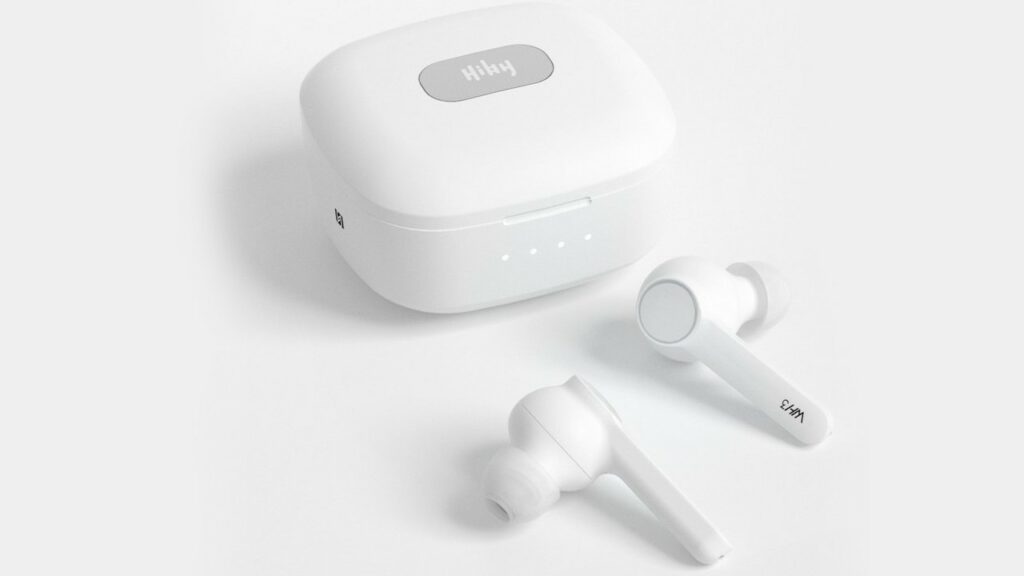
The HiBy WH3 is the outlier. It is not a digital audio player but a pair of true wireless headphones, and that difference should be clear before comparing it with the four DAPs. Its role is to provide a complete wireless listening endpoint, especially for users who do not want to carry a separate player and wired headphones.
The WH3 combines a dynamic driver with a Knowles balanced-armature driver in each earphone. Its adjustable digital crossover offers three modes, allowing the user to change the crossover setting through a touchscreen device. The design also includes four-way DACs and amplifiers for balanced output, with output power stated as up to 125 mW per earphone.
Bluetooth 5.0 supports UAT, aptX, AAC and SBC, while TWS+ sends the Bluetooth signal to both earbuds simultaneously. The headphones accept 96 kHz/24-bit audio input and use a Qualcomm 5 Series Bluetooth chipset with a dual-core DSP. Qi wireless charging adds convenience, and the source states up to 24 hours of use.
At $199, the WH3 is the least expensive product here with a stated price. It cannot match a dedicated DAP for storage, wired output choices, local library management or connection to demanding full-size headphones. It can, however, be a better choice for commuting, exercise and all-day wireless use. Choose it when the product you want is a complete wireless system rather than a source component.
HiBy R6 Pro II 2025
SOURCE 5 uses
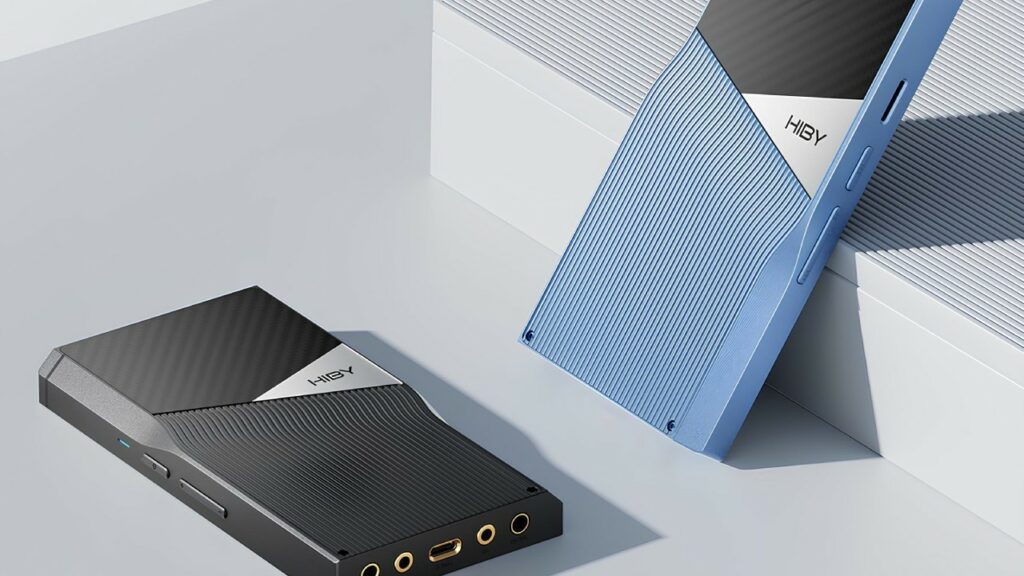
The HiBy R6 Pro II 2025 is the most convincing all-round recommendation because it avoids the most obvious compromises between price, power and features. At a stated $699, it costs substantially less than the Shanling M9 Plus while offering enough output and flexibility for a broad range of headphones.
Its 4.4 mm balanced output is rated at 632 mW, making it suitable according to the source for multi-driver in-ear monitors and demanding, high-impedance full-size headphones. The device uses dual Cirrus Logic CS4308P DAC chips and supports native DSD512 as well as PCM 768 kHz/32-bit. That is more than sufficient format support for the high-resolution material described across these articles.
The R6 Pro II 2025 runs HiByOS, based on Android 12, with a Snapdragon 665 processor, 6 GB of RAM and 128 GB of internal storage. Expandable storage is supported, while the operating system can bypass Android’s system-wide sampling-rate conversion for bit-perfect playback. USB DAC, Bluetooth, line-out and coaxial interfaces further broaden its role.
Its two amplifier modes are a particularly useful feature. Class A is described as offering a smoother, warmer analogue character, while Class AB is intended to provide higher efficiency and dynamic punch. This gives the listener a straightforward way to adjust the player’s behaviour without buying another device.
The player has a 5.9-inch Full HD display, weighs 220 g and is rated for up to 12 hours of use. Those details help explain why it is the Best Overall: it is considerably lighter than the M7, M9 Plus and DX340, yet it offers strong balanced output, high-resolution decoding, modern software and an unusually useful amplifier-mode choice. It does not have the M9 Plus’s extreme output or the DX340’s modular amplifier system, but its stated price and broad feature set make those omissions easier to accept.
How they differ
Power: The Shanling M9 Plus has the highest stated headphone output at 1125 mW balanced into 32 ohms. The Shanling M7 follows at 900 mW, while the HiBy R6 Pro II 2025 provides 632 mW. The M9 Plus is therefore the clearest choice for listeners who want maximum output headroom, although the R6 Pro II 2025 is already specified for demanding headphones.
Sound and processing options: The M7 is described as neutral and refined, while the M9 Plus is described as more technical, transparent, fast and analytical. HiBy offers a different kind of flexibility through Class A and Class AB modes. The WH3 uses three adjustable digital crossover modes, but it is a wireless headphone rather than a wired DAP.
Upgrade potential: The DX340 is the only product here with interchangeable amplifier boards. That is a fundamental difference from the fixed amplifier architectures of the other players and makes the iBasso the natural choice for enthusiasts who want to modify the system over time.
Portability: The R6 Pro II 2025 is the lightest dedicated player at 220 g, followed by the M7 at 312 g, the M9 Plus at 380 g and the DX340 at 486 g. The WH3 is the most convenient overall for wireless use because it removes the need for a separate wired headphone connection.
Battery: The M9 Plus offers the largest stated capacity at 8350 mAh and up to 18 hours with an asymmetrical connection. The M7 reaches up to 10 hours, the DX340 up to 11 hours and the R6 Pro II 2025 up to 12 hours. The WH3 is rated for up to 24 hours, though that figure belongs to the wireless earphone system rather than a DAP.
Value: The WH3 has the lowest stated price at $199, but it serves a different purpose. Among the dedicated players with prices supplied, the R6 Pro II 2025 at $699 is the strongest value proposition. The M9 Plus is a premium flagship purchase, while the DX340 cannot yet be assessed on price because its source does not provide one.
Which one should you buy?
- Choose the HiBy R6 Pro II 2025 for the best overall balance. It is the safest recommendation for listeners who want a serious DAP without moving into the M9 Plus’s stated $2960 price category. Its output, software, storage expansion, amplifier modes and 12-hour battery rating cover a wide range of uses.
- Choose the Shanling M9 Plus if maximum flagship hardware comes first. Its 1125 mW balanced output, Quad DAC architecture, 256 GB storage, DSD1024 support and large battery justify considering it only if those features matter more than cost and weight.
- Choose the iBasso DX340 if you want a platform rather than a finished endpoint. The modular amplifier system is the decisive reason to buy it. It is particularly suited to an enthusiast who wants to experiment with future amplifier boards and does not mind its 486 g weight.
- Choose the Shanling M7 for a refined, neutral presentation in a smaller high-end player. It is lighter than the other Shanling and iBasso options, offers strong balanced output and has a well-equipped Android platform. Be prepared for the reported heat and the absence of a 6.3 mm jack.
- Choose the HiBy WH3 for wireless convenience at $199. It is the right product for users who want true wireless headphones, adjustable crossover processing and Qi charging. It is not a substitute for a DAP if you need local storage, wired outputs or a source for demanding headphones.
Final verdict
The HiBy R6 Pro II 2025 is the Best Overall because it offers the most complete compromise: substantial balanced power, high-resolution support, flexible Android-based software, two amplifier modes, useful connectivity and a stated $699 price. The Shanling M9 Plus is the superior specialist choice for maximum flagship performance, the DX340 wins on modularity, the M7 offers a lighter Shanling alternative, and the WH3 is the practical pick for wireless listening. The right purchase depends on whether your priority is balance, power, upgradeability, portability or freedom from cables.






 VS
VS VS
VS VS
VS VS
VS VS
VS VS
VS VS
VS VS
VS

Comments 0
Share your experience, questions and perspective with other hi-fi enthusiasts.