
The best speaker setup is rarely the one that follows a diagram perfectly. Rooms differ, furniture gets in the way, listening positions are rarely symmetrical and speakers with very different designs can react in completely different ways. A compact wireless model, a portable Bluetooth speaker and a large floorstander do not need the same treatment.
What they do have in common is that placement, level, source quality and system matching usually matter more than small specification differences. Get those decisions right first, then use the finer controls to tidy up the result.
Start with the listening position
Before moving the speakers, decide where you will actually listen. A good setup is built around the main listening seat, not around the position that looks most convenient from the doorway.
For a conventional stereo pair, aim for a roughly symmetrical relationship between the left and right speaker and the listening position. This does not require a perfectly square room, but it does mean avoiding a situation where one speaker is beside a hard wall and the other is next to an open doorway or thick curtains. Those differences change reflected sound and can pull the stereo image to one side.
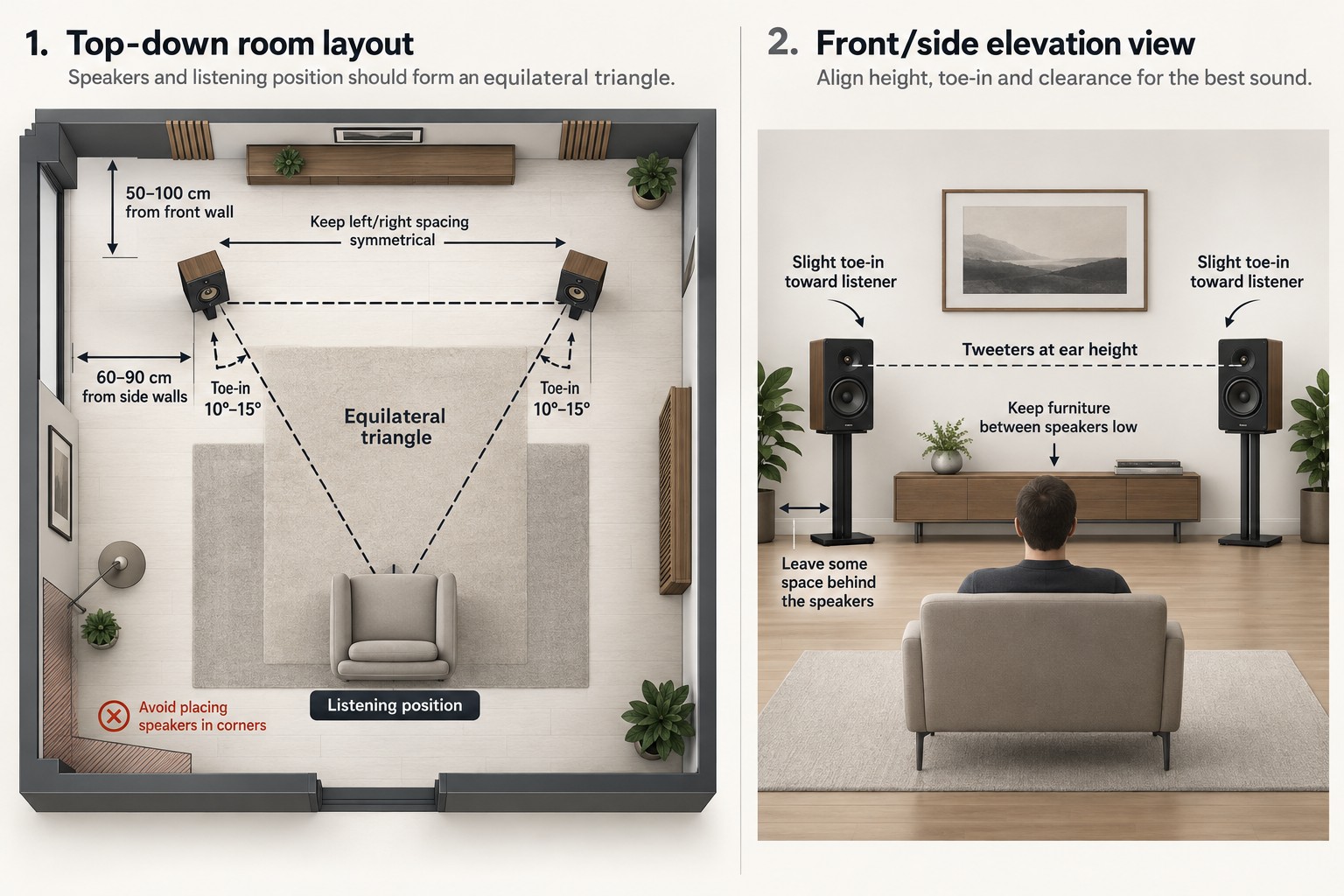
Keep the listening seat away from the exact middle of the room where possible. Very strong bass peaks and cancellations often occur at room boundaries and at specific points between them. Moving the chair a little can sometimes produce a larger improvement than changing the amplifier.
Once the seat is chosen, listen at a moderate level while adjusting the speakers. Use familiar recordings with centered vocals, acoustic instruments and steady bass. A centered voice should appear between the speakers rather than clinging to one cabinet. If the image is vague, check geometry and toe-in before reaching for EQ.

Placement and positioning
Small speakers are not automatically easy to place. Their compact cabinets can make them convenient, but boundaries still influence the tonal balance. A speaker close to a wall or corner generally receives more low-frequency reinforcement. That may be useful if the presentation sounds thin, but excessive reinforcement can make bass slower, thicker or less even from one seat to another.
The Audio Pro C5 MkII W is a useful example. Its bass-reflex port exits at the rear, so it should not be pushed hard against a wall without checking the result. Give the cabinet enough breathing space for the bass to remain controlled, then adjust the distance by ear. Its angled rubber feet also tilt the speaker slightly upward, which is helpful when the cabinet sits below ear height on a shelf or desk.
Surface placement matters too. A small speaker on a hollow shelf may excite the furniture and add a boxy coloration. If the speaker is designed for a desk, sideboard or kitchen surface, make sure it sits securely and does not rock. Avoid covering vents or controls, and do not place a mains-powered unit where its cable is under tension.
Floorstanding speakers need enough room around them to develop a stable soundstage, but more distance is not always better. Moving them far into the room can improve openness while making bass less supported. Moving them close to the rear wall can add weight but may reduce definition. Make changes in small steps and move both speakers together.
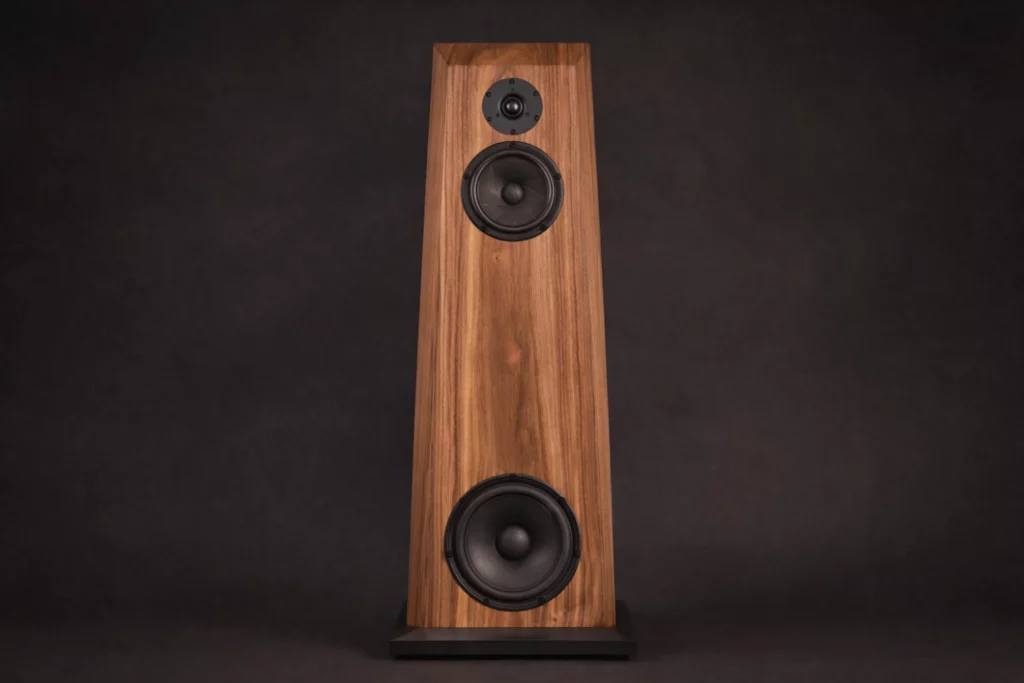
With a large floorstander, stability is part of setup rather than decoration. The Xavian La Boema uses a sealed enclosure and is described as easy to install, but each speaker weighs 50 kilograms. Its optional stainless-steel stands include lockable anti-vibration pads. Whether you use the supplied or optional support arrangement, the cabinet should be stable, level and safely positioned before serious listening begins.
Get the connections right
First identify whether you are setting up passive, powered or portable speakers. Passive loudspeakers require an external amplifier. Powered wireless speakers contain their own amplification and normally need only mains power, network access or a source connection. Portable models introduce battery level, charging and wireless range to the equation.
For passive speakers, connect the amplifier's positive terminal to the speaker's positive terminal and do the same with the negative terminals. Keep the left and right channels consistent. Reversed polarity on one speaker can weaken center focus and make bass sound strangely hollow, even when everything appears to be working.
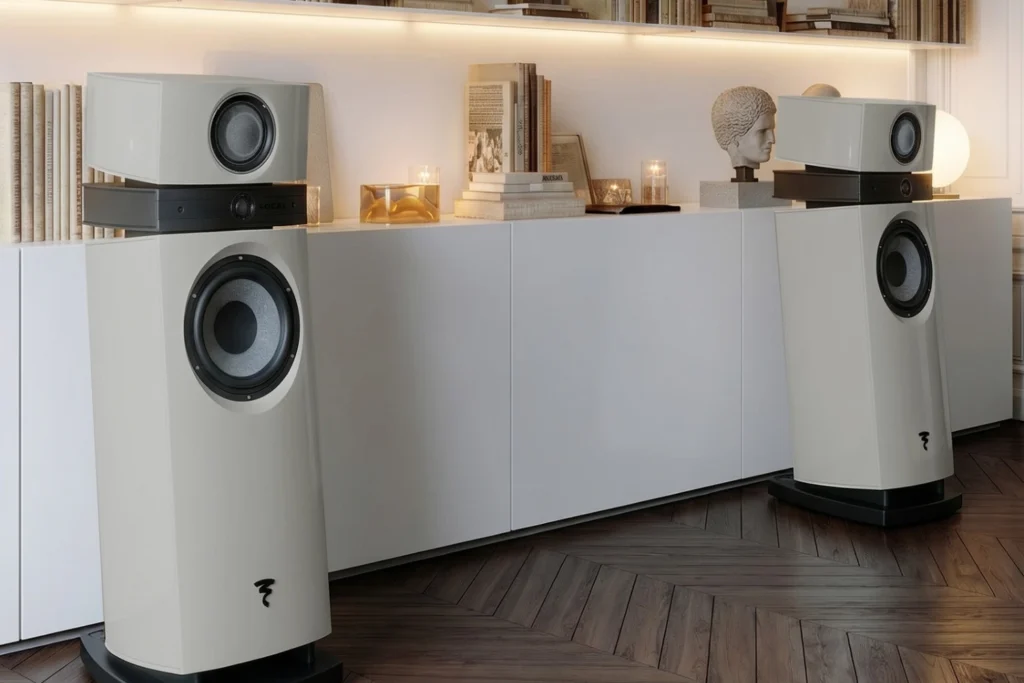
Do not assume that bi-wiring is automatically an upgrade. The Focal Scala Utopia Evo M has four isolated WBT terminals and supports bi-wiring or bi-amping, but the practical benefit depends on the amplifier, cable arrangement and the rest of the system. If you use the normal single-wire connection, make sure the terminal links are fitted correctly and tightened securely. If you bi-amp, confirm that the amplifiers and crossover arrangement are appropriate before connecting anything.
Powered speakers offer different connection priorities. The C5 MkII W includes RCA line input and a subwoofer output, giving it a path for an external analogue source and a possible low-frequency upgrade. An analogue source should be connected at the correct level: a line-level output can go to the line input, while a turntable normally needs suitable phono amplification first unless it has a built-in phono stage.
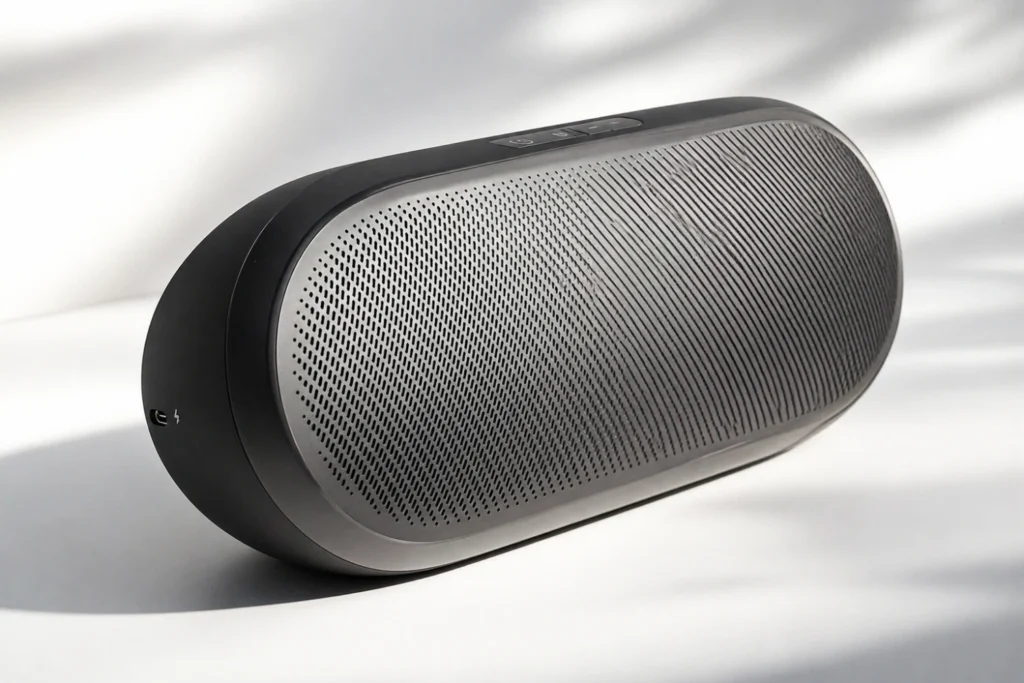
Portable speakers are often best kept simple. The Audio Pro A15 W has a 3.5mm aux input, Bluetooth with aptX support and Wi-Fi streaming through the Audio Pro app. Use the input that best suits the situation: Wi-Fi for a stable home network and compatible multiroom use, Bluetooth for quick direct playback, and the aux input when a physical connection is more reliable.

Choose Wi-Fi, Bluetooth or wired playback deliberately
Wireless convenience is not one single thing. Bluetooth is useful when a phone or laptop is the source and you want quick pairing without configuring a home network. Wi-Fi is generally the more flexible choice for fixed home listening, especially when the speaker supports network services, multiroom control or higher-quality streaming.
The Audio Pro C5 MkII W supports 2.4GHz and 5GHz Wi-Fi, AirPlay 2, Google Cast, Spotify Connect, TIDAL and Qobuz, as well as Bluetooth. That range of options makes it worth choosing one primary playback method rather than switching randomly between them. Network playback may offer better integration and more reliable whole-home control, while Bluetooth remains useful for guests or a device that is not part of the home system.
Set up the speaker close enough to the router for the initial connection, then move it to its final position and check stability. If playback drops out, test the network before blaming the speaker. Congested Wi-Fi, a weak signal or a router positioned behind dense furniture can all cause interruptions.
The A15 W can join other A15 W speakers or Audio Pro W-series models in a multiroom system and also supports Apple AirPlay 2 and Google Cast. That makes it a flexible choice for rooms where the speaker may move between mains power and battery operation. Remember that portability changes the ideal position: a speaker placed in a garden or campsite will not produce the same room reinforcement or stereo effect as one positioned indoors near a wall.
Use placement and tone controls together
Room placement should be the first correction. EQ is the finishing tool, not a substitute for putting the speaker in a sensible position.
If bass is too heavy, try moving the speaker away from a corner or rear wall before cutting the bass. If the sound is too lean, a modest move toward a boundary may help. The best position is usually a compromise between tonal balance, stereo width and practical furniture constraints.
App-based adjustment can then address the remaining preference. The Harman Kardon Luna 2 offers EQ through the Harman Kardon One app, along with controls for lighting and interface sounds. Its documented tuning is balanced, with restrained bass and smooth treble rather than the more forceful presentation associated with bass-heavy portable designs. If it initially sounds too polite in your room, a small EQ change may add energy; large boosts are less sensible because they can reduce headroom and exaggerate limitations in a compact cabinet.
Turn off features that do not improve your listening. Luna 2 allows its lighting and interface sounds to be disabled. That is a useful setup choice in a bedroom, study or serious listening environment where visual effects and confirmation tones are distractions rather than benefits.
Match the amplifier to the speaker
Amplifier matching is about more than a single wattage figure. Consider sensitivity, listening distance, room size, preferred volume and the speaker's impedance behavior. A low-sensitivity speaker may need a more capable amplifier to produce clean peaks, particularly in a large room or when listening from several metres away.
The Xavian La Boema is specified at 85dB sensitivity and the manufacturer recommends careful amplifier selection, noting that it needs some power but not necessarily a heavy-duty powerhouse. That is a good example of sensible matching: do not choose an amplifier solely because it has an impressive headline rating, but do not pair a demanding floorstander with an obviously underpowered unit either.
Large speakers can also expose problems that smaller speakers hide. A powerful floorstander may produce substantial bass energy, which can excite room modes and make the system sound boomy even when the amplifier is perfectly suitable. Before replacing the amplifier, try moving the speakers, adjusting the listening seat and reducing any unnecessary bass boost.
Active and wireless speakers remove much of this decision because their internal amplifier, crossover and drivers are designed as a system. The Audio Pro C5 MkII W uses internal digital amplification, while the A15 W is built around its own two-way driver system and battery-powered operation. The trade-off is less freedom to change amplification later, but easier setup and a more predictable relationship between the electronics and drivers.
Set levels before judging sound
When comparing two speakers or two inputs, match their volume as closely as possible. The louder option often sounds more exciting even when it is not more accurate, balanced or enjoyable over time.
Start with the source volume at a sensible level, then use the speaker or amplifier control for normal adjustment. Avoid running a phone or computer at an extremely low level and compensating with heavy gain elsewhere, since this can make level setting less convenient and may expose noise in some systems. Conversely, do not assume maximum source volume is always best; the correct position depends on the device and input design.
For a stereo pair, check that both channels are playing at the same level and that any balance control is centered. In a multiroom system, adjust each room for its use rather than forcing every speaker to play equally loudly. A kitchen, office and living room have different acoustic conditions and listening distances.
Give high-quality sources a fair chance
A speaker cannot restore information that was discarded or damaged earlier in the chain. Use a reliable network connection or a good local file when evaluating placement and tonal balance. The C5 MkII W supports up to 24-bit/96kHz network audio and formats including FLAC and Apple Lossless, but that capability is useful only when the service or files actually provide suitable content.
Higher resolution is not a guarantee of better sound. A well-mastered standard-quality recording can be more satisfying than an aggressively mastered high-resolution file. The practical priority is a clean source, sensible levels and consistent comparisons.
For Bluetooth listening, keep the source device reasonably close and avoid placing it behind the body of a large cabinet or other obstructions. For Wi-Fi systems, use the network features when they offer a direct connection to the streaming service rather than routing everything through a phone unnecessarily.
Fine-tune toe-in and height
Once the basic position is working, adjust toe-in in small increments. More toe-in can sharpen center focus and reduce the amount of side-wall energy reaching the listener. Less toe-in can widen the presentation, but may soften image focus depending on the speaker's dispersion.
Use vocals and percussion to judge the change, not only test tones. If the sound becomes too bright or narrow, reduce the angle. If the center image wanders or the presentation feels diffuse, try a little more.
Height is equally important. Tweeters are usually most consistent when aimed roughly toward the listening position, but the correct result depends on the design and the room. The angled construction of the C5 MkII W is intended to help when the speaker is below ear height; a tall floorstander such as the La Boema should be positioned so the listening axis is comfortable rather than hidden behind furniture.
Common setup mistakes
- Pushing speakers into corners without listening. Corner reinforcement can add welcome weight, but it can also make bass uneven and obscure vocals.
- Ignoring speaker polarity. If one channel is wired in reverse, center image and bass integration can suffer.
- Judging at different volumes. Always level-match before deciding that one setting or product sounds better.
- Using EQ to fix a placement problem. Start with position, distance from boundaries and listening-seat changes.
- Assuming every wireless mode is equivalent. Bluetooth, Wi-Fi, AirPlay 2, Google Cast and analogue inputs have different setup and convenience benefits.
- Overlooking furniture vibration. A hollow shelf or unstable stand can add coloration and blur bass.
- Adding a subwoofer without checking integration. Use the crossover and level controls carefully, and avoid simply turning up the sub until it dominates.
- Leaving unused features active. Lights, interface sounds and notification behavior can become distractions in a focused listening system.
- Choosing an amplifier by wattage alone. Sensitivity, room size, distance and actual listening levels are all part of the match.
Make one change at a time
The most reliable optimization method is deliberately slow. Establish a baseline, move both speakers equally, listen to several familiar tracks and write down what changed. Then return to the previous position before testing the next adjustment.
Start with the seat and speaker geometry, followed by connections and source mode. After that, check level matching, toe-in, height and EQ. Only once those basics are settled is it sensible to judge whether a different amplifier, subwoofer or streaming arrangement is likely to solve the remaining problem.
That approach works across very different designs: the network flexibility of the Audio Pro C5 MkII W, the battery convenience of the A15 W, the balanced indoor tuning of the Harman Kardon Luna 2, and the greater amplifier and room demands of speakers such as the Xavian La Boema or Focal Scala Utopia Evo M. The equipment changes, but the principle remains the same: make the room, system and listening goal work together before chasing upgrades.