

Amplifiers now cover far more than traditional speaker-driving integrated designs.
This selection ranges from a dual-output headphone DAC and amplifier to streaming integrated models, configurable stereo power amplifiers and dedicated tube monoblocks.
The right choice therefore depends less on a universal ranking than on the job the amplifier must perform. For a streamlined speaker system, the Cary Audio DMS-300A and Atoll SDA300 Signature combine amplification with digital playback features, while the Fosi Audio DA-2120C adds Bluetooth and an active-subwoofer output. The Copland CSA-70 and Luxman L-507uX Mark II place greater emphasis on conventional integrated-amplifier duties. Wattson Audio, Trilogy Audio and Audio Research address systems built around separate preamplification and power amplification. Power figures matter, but they should be considered alongside speaker impedance, connectivity and system architecture. Features such as bridged operation, bi-amping, phono inputs, network streaming and balanced headphone outputs are useful only when they match the rest of the system. The entries retain their supplied order while highlighting the use case that most clearly distinguishes each one.

1. MoonDrop DAWN PRO: DAC and headphone amplifier with two outputs
The MoonDrop DAWN PRO provides separate 3.5 mm single-ended and 4.4 mm balanced headphone connections.
The MoonDrop DAWN PRO is the only dedicated headphone product in this selection.
It combines two CS43131 DAC chips with 3.5 mm single-ended and 4.4 mm balanced headphone outputs, giving owners of compatible headphones two connection options.
The source lists PCM support up to 32-bit/384 kHz, DSD256 compatibility and three independent power-supply chips.
Best for: Headphones using 3.5 mm or balanced 4.4 mm connections
- 3.5 mm single-ended and 4.4 mm balanced outputs
- Two CS43131 DAC chips
- PCM up to 32-bit/384 kHz and DSD256
- Three independent power-supply chips
Verdict: A focused DAC and headphone amplifier for listeners who need both common headphone output formats and high-resolution file support.

2. Swiss Precision Amplified: Wattson Audio & CH Precision Unveil the Madison Powerhouse
The Wattson Audio Madison can serve as a stereo power amplifier, a vertical bi-amp unit or a bridged monoblock.
Developed through collaboration between Wattson Audio and CH Precision, the Madison is a two-channel power amplifier rated at up to 50 watts per channel.
Its most useful distinction is configurability: it can operate as a conventional stereo amplifier, distribute the input signal across both channels for vertical bi-amping, or be bridged for mono use.
The circuit topology draws on CH Precision reference designs, according to the source.
Best for: Flexible separate-component systems with upgrade options
- Up to 50 watts per channel
- Stereo, vertical bi-amp and bridged mono operation
- Circuit topology inspired by CH Precision designs
Verdict: The Madison suits listeners who value reconfigurability more than a fixed stereo-only power-amplifier layout.
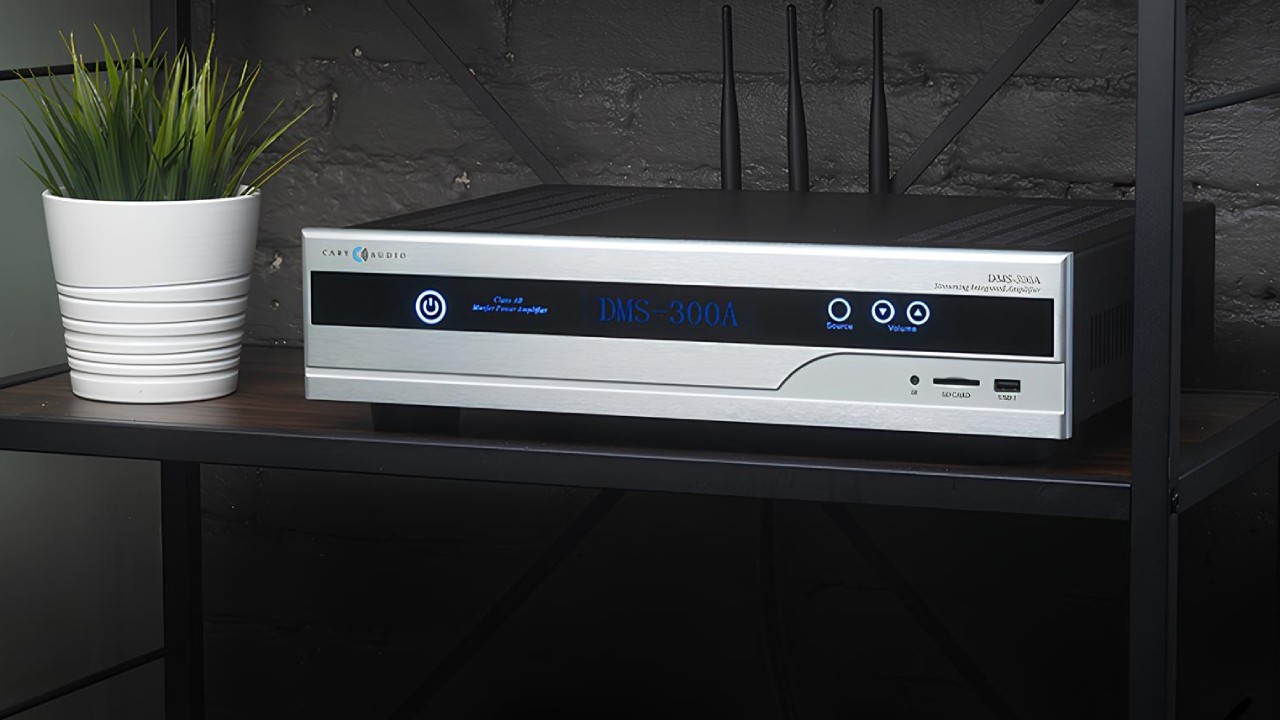
3. Cary Audio DMS-300A: Fully equipped integrated amplifier with streaming capabilities
The Cary Audio DMS-300A integrates Class AB speaker amplification with analog, digital and network-streaming functions.
The Cary Audio DMS-300A combines a discrete Class AB integrated amplifier with analog inputs, digital inputs and network streaming.
It is rated at 75 watts per channel into 8 ohms and 125 watts into 4 ohms, while native service support includes Qobuz Connect, Tidal Connect and Spotify Connect.
Cary Audio describes the unit as designed and manufactured in the United States.
Best for: A speaker system combining streaming with traditional sources
- 75 watts per channel into 8 ohms
- 125 watts per channel into 4 ohms
- Analog and digital inputs
- Qobuz Connect, Tidal Connect and Spotify Connect
Verdict: A broadly equipped integrated amplifier for listeners who want amplification and major streaming services in one component.
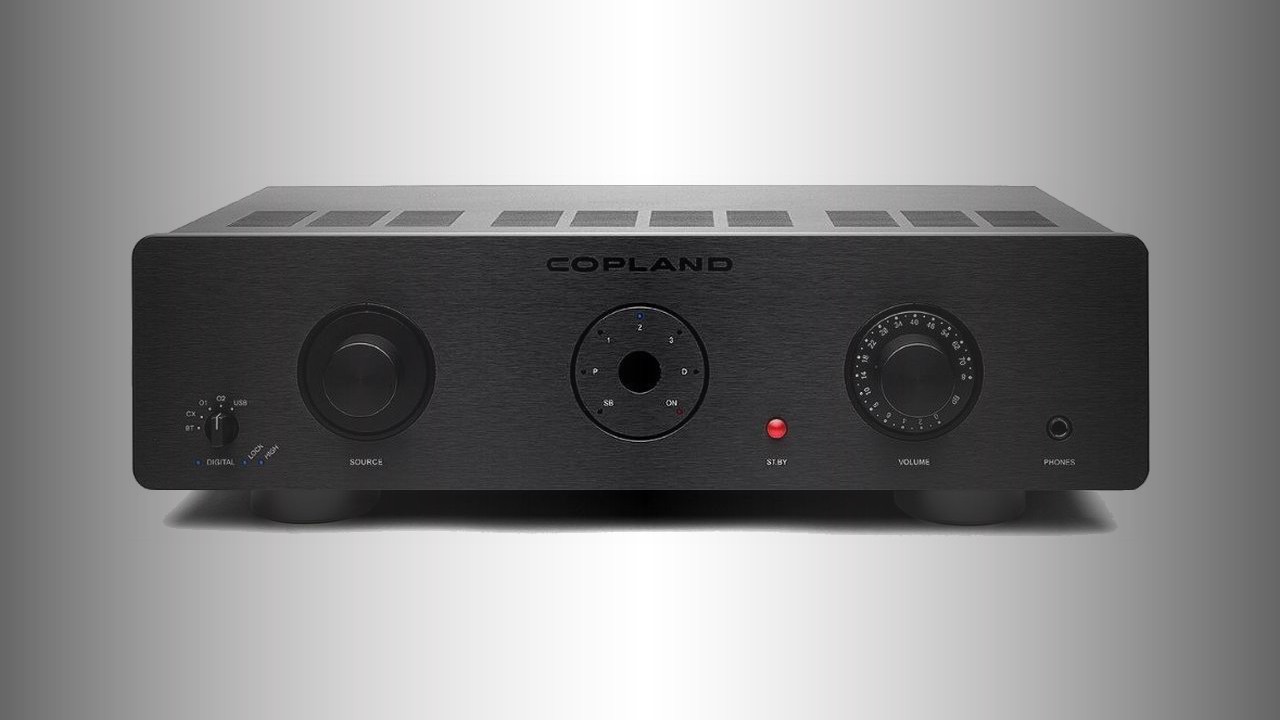
4. Copland CSA-70: Integrated amplifier with analog and digital inputs
The Copland CSA-70 places its solid-state amplifier circuitry on one board to support short signal paths.
Unlike Copland’s tube and hybrid amplifiers, the CSA-70 uses a fully solid-state design.
It supplies 70 watts per channel into 8 ohms and accepts both analog and digital sources.
Copland also claims stability with loads down to 2 ohms, while its single-board construction is intended to keep signal paths short.
Best for: A conventional integrated system with mixed source types
- 70 watts per channel into 8 ohms
- Analog and digital inputs
- Fully solid-state topology
- Claimed stability down to 2 ohms
Verdict: The CSA-70 is a straightforward solid-state integrated amplifier distinguished by mixed-source connectivity and Copland’s claimed low-impedance stability.

5. Trilogy Audio 994: New Hybrid Mono Power Amplifier
The Trilogy Audio 994 combines a 6H6P tube input stage with a transistor output stage and three selectable operating modes.
The Trilogy Audio 994 is a hybrid monoblock with a 6H6P tube input stage and a transistor output stage.
Its three operating choices address different priorities: Class AB delivers up to 140 watts into 8 ohms, pure Class A supplies 20 watts, and ecoA mode provides 30 watts into 8 ohms or 55 watts into 4 ohms.
The circuit is designed without global negative feedback.
Best for: Monoblock systems requiring selectable power and operating modes
- Hybrid tube-input and transistor-output design
- Three operating modes
- Up to 140 watts into 8 ohms in Class AB
- No global negative feedback
Verdict: The 994 offers an unusually broad choice of Class A, Class AB and lower-consumption operation within one hybrid mono amplifier.

6. Luxman L-507uX Mark II: The Pinnacle of Power and Precision in Integrated Amplification
The Luxman L-507uX Mark II combines backlit output meters with extensive front-panel controls and analog connectivity.
The Luxman L-507uX Mark II concentrates on analog system flexibility rather than the streaming functions found elsewhere in this guide.
Its connectivity includes four pairs of analog-device inputs, two recording input/output pairs and phono connections for both moving-magnet and moving-coil cartridges.
An 88-step LECUA1000 electronic volume system, remote control and backlit output-level meters complete its control-focused design.
Best for: Analog-heavy systems with vinyl and recording equipment
- Four pairs of analog inputs
- Two recording input/output pairs
- Moving-magnet and moving-coil phono support
- 88-step electronic volume control
Verdict: A connectivity-rich integrated amplifier for listeners who need extensive analog control, phono support and recording loops.

7. Best power amplifiers: Cutting-edge power units and monoblocks
The power-amplifier guide examines separate-component architecture, including the dual-mono and bridgeable TEAC AP-505.
This entry is a broader guide to dedicated power amplifiers rather than a single model.
It explains how separating preamplification from speaker-driving duties can increase system flexibility and allow components from different manufacturers to be combined.
The supplied excerpt highlights the TEAC AP-505 as one example, using Hypex Ncore Class D modules in a dual-mono configuration and offering bridged operation when additional output is required.
Best for: Researching a move from integrated amplification to separates
- Explains the roles of preamplifiers and power amplifiers
- Covers separate power units and monoblocks
- Includes a dual-mono, bridgeable Class D example
Verdict: A useful starting point for understanding power-amplifier formats, upgrade paths and the practical role of bridged operation.

8. Fosi Audio DA-2120C: Class D amplifier with Bluetooth 5.0 2×90 W
The Fosi Audio DA-2120C supports Bluetooth and multiple wired inputs alongside speaker and active-subwoofer outputs.
The Fosi Audio DA-2120C is presented as a versatile Class D amplifier rated at 2 × 90 watts into 4 ohms.
Its input list covers Bluetooth 5.0, USB-B, optical, coaxial and stereo RCA, while the outputs include speaker terminals and an RCA connection for an active subwoofer.
The source also lists aptX HD, a display, remote-controlled tone adjustment and selectable EQ modes, although its prose occasionally renders the model designation as DA2120A rather than DA-2120C.
Best for: A flexible wired and wireless 2.1 speaker system
- 2 × 90 watts into 4 ohms
- Bluetooth 5.0 with aptX HD
- USB-B, optical, coaxial and RCA inputs
- Active-subwoofer output
Verdict: A feature-dense Class D option for mixed digital, analog and Bluetooth sources, with the exact model designation worth confirming before purchase.

9. Audio Research Reference 330M: Mono power amplifier with tubes
The Audio Research Reference 330M is a 330-watt tube-based monoblock using ECC83 and 6H30 stages.
The Audio Research Reference 330M is a tube-based mono power amplifier rated at 330 watts per channel in the supplied source.
Its input architecture uses an ECC83 tube for voltage amplification, followed by specialized bipolar buffering, while a 6H30 differential tube is used in the second stage.
This is a specialized separate-system component rather than an integrated amplifier with source selection or streaming.
Best for: High-output systems built around tube monoblocks
- 330-watt rated output
- Mono power-amplifier configuration
- ECC83 voltage-amplification stage
- 6H30 differential second stage
Verdict: A specialized high-power tube monoblock for systems using separate preamplification and one power amplifier per channel.
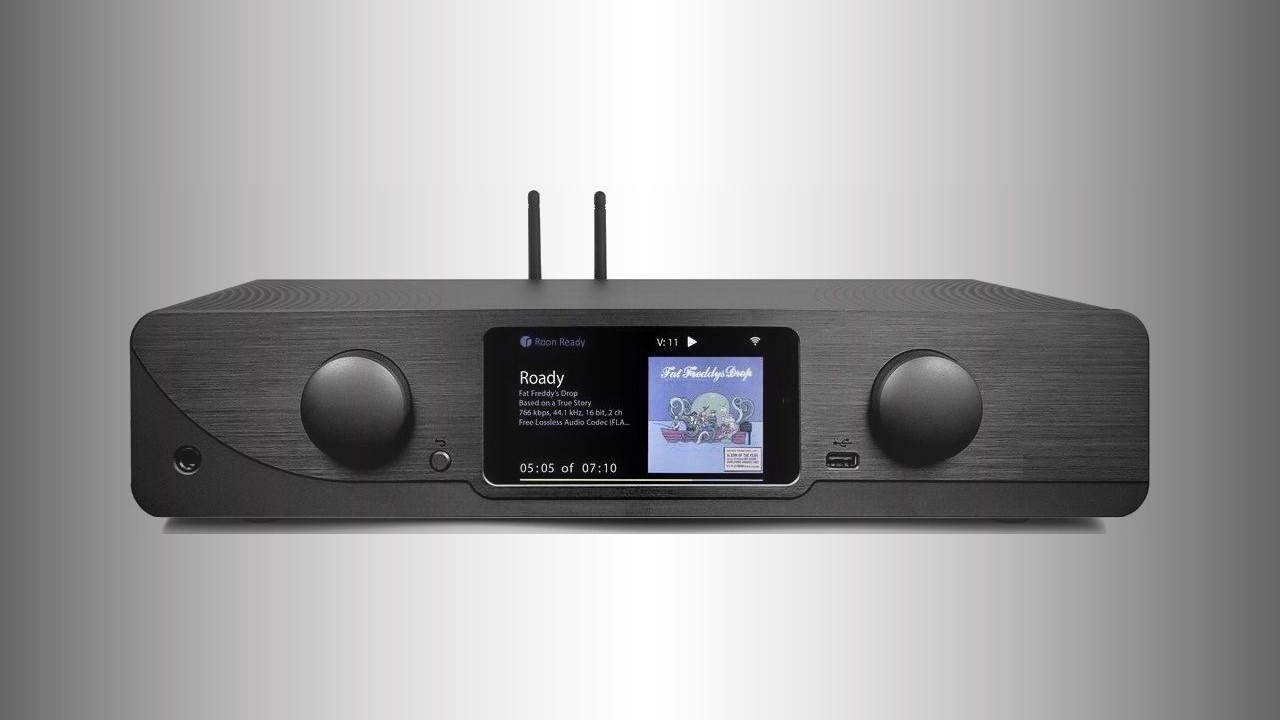
10. Atoll SDA300 Signature: Roon Ready integrated amplifier
The Atoll SDA300 Signature combines Roon Ready playback, a Burr-Brown DAC and 150-watt-per-channel amplification.
The Atoll SDA300 Signature combines Roon Ready operation, digital conversion and high-output integrated amplification.
Its Burr-Brown PCM1792 DAC accepts PCM resolutions up to 24-bit/192 kHz and DSD128, while two pairs of MOSFETs per channel provide 2 × 150 watts into 8 ohms.
Two analog inputs, coaxial and optical PCM outputs, dual toroidal transformers and a separate supply for digital circuitry reinforce its all-in-one system role.
Best for: Roon-based systems requiring substantial integrated output
- Roon Ready operation
- 2 × 150 watts into 8 ohms
- PCM up to 24-bit/192 kHz and DSD128
- Two analog inputs plus coaxial and optical PCM outputs
Verdict: A strong fit for listeners who want Roon integration, high-resolution conversion and 150-watt-per-channel amplification in one unit.
Quick comparison
These entries serve substantially different systems, so the most useful comparison begins with architecture.
Headphone listening, all-in-one streaming, analog integration and separate power amplification each require different connections and supporting components.
Output ratings are included only where supplied and should be assessed alongside the impedance demands of the intended speakers.
| Product | Best for | Verdict |
|---|---|---|
| MoonDrop DAWN PRO | Single-ended and balanced headphone listening | A dual-output DAC and headphone amplifier rather than a speaker amplifier. |
| Wattson Audio Madison | Configurable stereo, bi-amp or bridged systems | A 50-watt-per-channel power amplifier with several deployment options. |
| Cary Audio DMS-300A | Integrated streaming and mixed-source systems | Combines Class AB amplification, digital and analog inputs, and major streaming services. |
| Copland CSA-70 | Solid-state integrated systems with analog and digital sources | Provides 70 watts per channel and claimed stability with low-impedance loads. |
| Trilogy Audio 994 | Hybrid monoblock systems with selectable operating modes | Switches among Class AB, pure Class A and ecoA configurations. |
| Luxman L-507uX Mark II | Vinyl, analog sources and recording equipment | Prioritizes analog connectivity, MM/MC phono support and detailed control. |
| Best power amplifiers: Cutting-edge power units and monoblocks | Learning about separate power-amplifier systems | A category guide rather than one product, with the TEAC AP-505 used as an example. |
| Fosi Audio DA-2120C | Bluetooth and wired 2.1 systems | Offers broad input coverage, aptX HD and an active-subwoofer output. |
| Audio Research Reference 330M | High-output tube monoblock systems | A 330-watt tube-based mono power amplifier for use with separate preamplification. |
| Atoll SDA300 Signature | Roon playback and demanding integrated systems | Pairs Roon Ready operation and high-resolution conversion with 150 watts per channel into 8 ohms. |
Frequently asked questions
What is the difference between an integrated amplifier and a power amplifier?
An integrated amplifier combines source control, volume adjustment and speaker-driving amplification in one unit; some models also add a DAC or streaming.
A power amplifier handles the speaker-driving stage and normally requires a separate preamplifier.
The latter approach provides greater component flexibility but adds boxes, connections and system-planning requirements.
How should amplifier power be matched to speakers?
Power should be considered together with the speaker’s nominal and minimum impedance, listening level and room requirements.
Ratings at both 8 and 4 ohms can be informative: the Cary DMS-300A, for example, is specified at 75 watts into 8 ohms and 125 watts into 4 ohms.
Manufacturer-approved low-impedance stability is also relevant, but it should not be inferred when the specification is absent.
Is Bluetooth the same as network streaming?
No.
The Fosi Audio DA-2120C receives Bluetooth audio directly from a compatible device and supports aptX HD, while the Cary Audio DMS-300A supports services such as Qobuz Connect, Tidal Connect and Spotify Connect.
The Atoll SDA300 Signature instead highlights Roon Ready integration. The preferred option depends on the playback platform already used in the system.
Can the MoonDrop DAWN PRO replace a speaker amplifier?
No.
The DAWN PRO is a DAC and headphone amplifier with 3.5 mm and 4.4 mm headphone outputs.
Passive loudspeakers require an amplifier with suitable speaker terminals and output capability, such as one of the integrated or power-amplifier models elsewhere in this guide.
How to choose the right amplifier for your system
System architecture is the most useful starting point.
Headphone listeners considering 3.5 mm and balanced 4.4 mm connections have a clear specialist option in the MoonDrop DAWN PRO.
For a speaker system with minimal component count, the Cary DMS-300A and Atoll SDA300 Signature combine source handling, digital functions and amplification, while the Fosi Audio DA-2120C adds Bluetooth and a convenient active-subwoofer output. Traditional source collections create different priorities. The Copland CSA-70 accommodates analog and digital inputs in a solid-state integrated design, whereas the Luxman L-507uX Mark II is particularly well equipped for analog components, recording equipment and both MM and MC cartridges. Their feature sets are more relevant than a simple comparison of headline power. Separate-system buyers should account for the required preamplifier, additional cabling and number of power-amplifier channels. The Wattson Audio Madison can be reassigned for stereo, vertical bi-amping or bridged mono operation; the Trilogy Audio 994 offers three operating modes in a hybrid monoblock; and the Audio Research Reference 330M provides a high-output tube-based mono format. Whichever route fits, speaker impedance, source compatibility and the intended upgrade path should be checked before output power becomes the deciding factor.



Sound Off
0Join the discussion if you have something to add.