

CD replay covers several distinct use cases.
Some listeners need a straightforward Red Book player with its own digital-to-analog conversion, while others want an SACD-capable machine, a transport for an external converter, or a player designed to integrate with a specific multiroom system.
Those differences matter more than an indiscriminate feature count. Value is therefore best judged by system fit. The Musical Fidelity concentrates on conventional CD playback and flexible connection options; the Revox prioritizes coordinated control within the brand’s Studiomaster ecosystem; and the Pioneer adds SACD compatibility and balanced analog circuitry. The Electrocompaniet takes a more elaborate approach to mechanical isolation, power supplies and internal shielding, while the TEAC and Hegel examples illustrate contrasting high-end transport and player philosophies. The supplied material ranges from product announcements to a broader high-end roundup, so this guide emphasizes documented construction, format support, connectivity and usability rather than presenting the products as if they had undergone a controlled head-to-head test. The preserved order is not a universal hierarchy: each entry addresses a meaningfully different requirement.
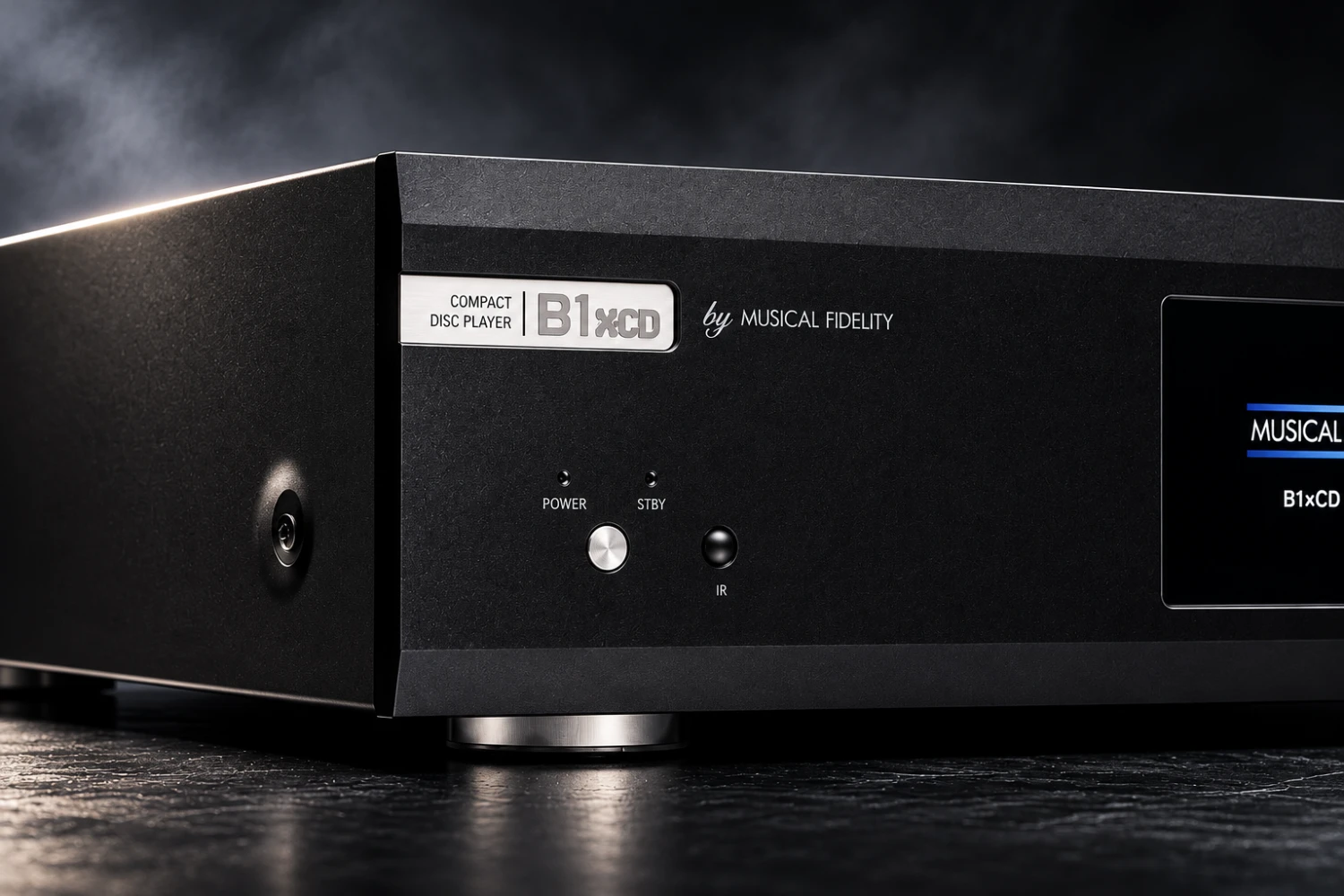
1. Musical Fidelity B1xcd
The full-width Musical Fidelity B1xcd pairs a central CD-Text-capable display with an all-metal chassis and machined aluminum controls.
The B1xcd is a dedicated tray-loading player for Red Book CD-DA discs at 16-bit/44.1kHz.
Musical Fidelity has deliberately avoided turning it into a networked digital hub, concentrating instead on conventional disc playback and the choice of using its internal ESS DAC or sending the signal to an external converter.
Its full-width format, all-metal chassis, extruded aluminum front panel and machined controls suit a traditional separates system. The central LCD can also display artist and track information when a disc includes CD-Text. This clear focus improves simplicity, although listeners seeking high-resolution disc support, streaming or broad file compatibility will need to look elsewhere.
Best for: Focused Red Book CD systems
- Internal ESS DAC or external-converter flexibility
- Dedicated Red Book tray mechanism
- All-metal chassis with aluminum controls
- CD-Text information display
Verdict: The B1xcd combines traditional operation, substantial construction and useful DAC flexibility without expanding into network or high-resolution features.
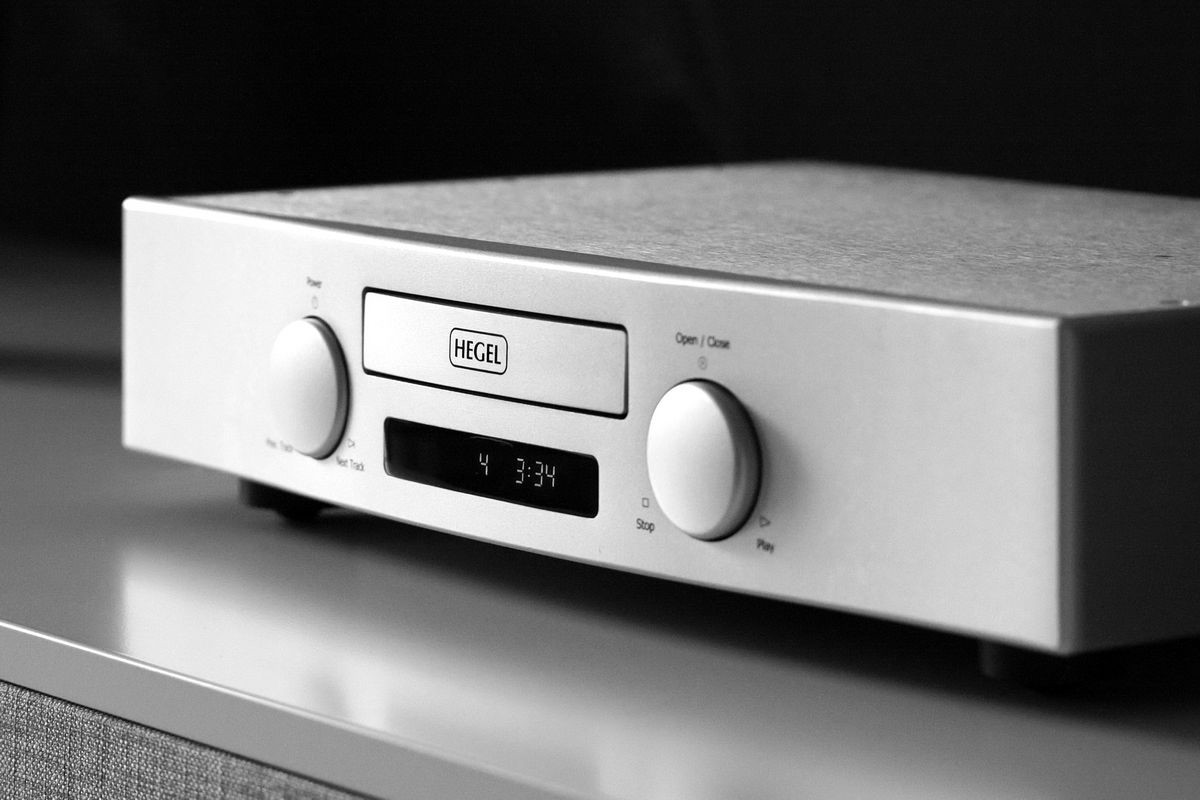
2. TEAC VRDS-701T and Hegel Viking
The TEAC VRDS-701T transport emphasizes disc stability and mechanical isolation, while the Hegel Viking strips CD playback back to a narrowly defined Red Book role.
The source roundup presents two sharply different high-end approaches.
TEAC’s VRDS-701T is a $2,999 CD transport built around the company’s Vibration-Free Rigid Disc-Clamping System, which secures a disc to a precision-machined turntable of matching diameter.
Its mechanism is mechanically isolated from the chassis to reduce vibration, and the source reports strong detail, bass authority and control for the price. Hegel’s $5,500 Viking is instead a complete but deliberately narrow Red Book CD player. It omits digital inputs, networking and upsampling, favoring a purist feature set. TEAC carries the clearer value argument in the supplied material, while Hegel is the option for listeners who regard limited functionality as a design priority rather than a drawback.
Best for: Comparing purist high-end disc replay
- TEAC VRDS rigid disc-clamping mechanism
- Mechanically isolated TEAC transport assembly
- Hegel’s dedicated Red Book design
- Clear choice between transport and complete-player approaches
Verdict: The TEAC offers the stronger documented value proposition, while the Hegel serves listeners who specifically want a highly focused Red Book player.
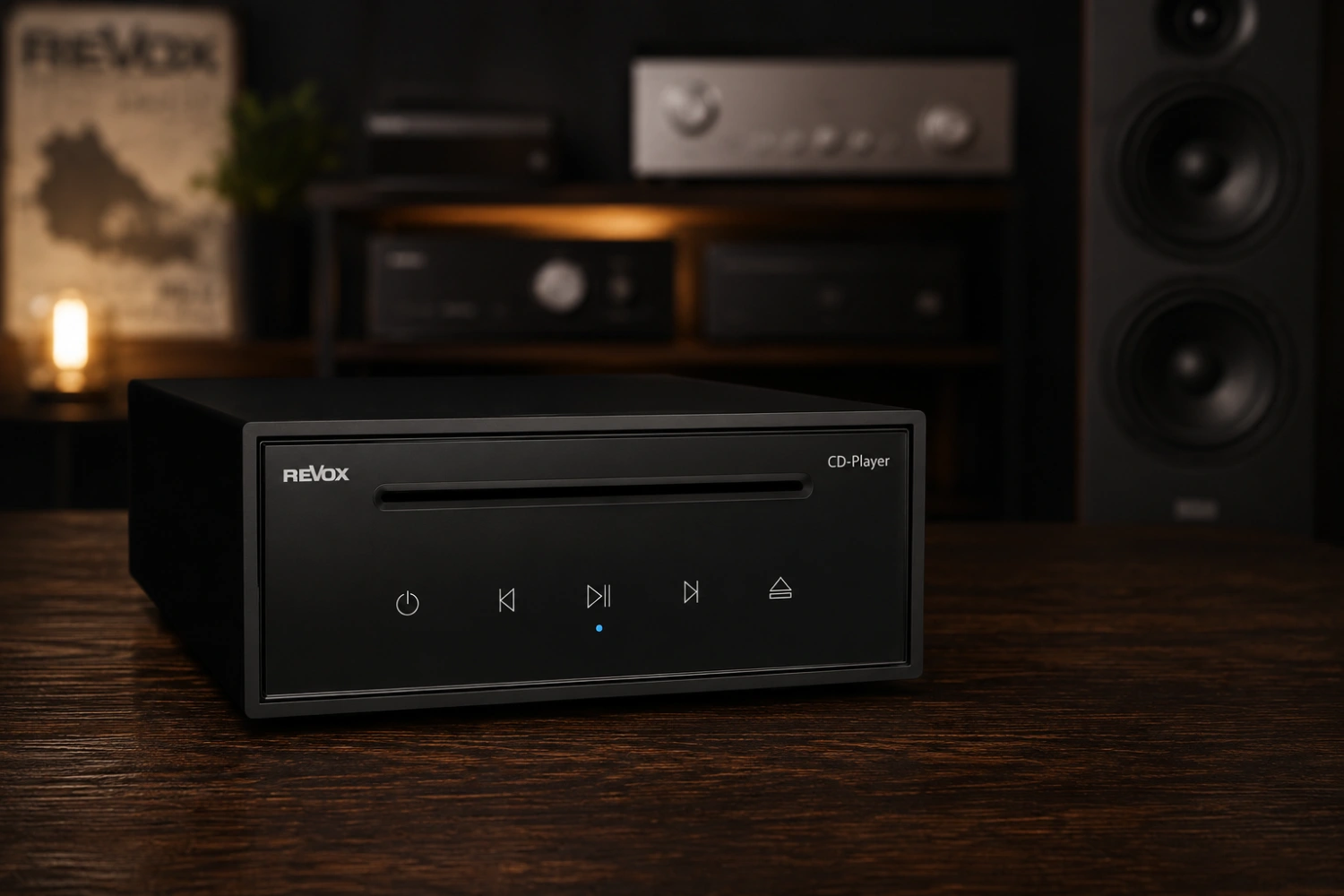
3. Revox Studiomaster CD100
The Revox Studiomaster CD100 combines physical controls with app-based status reporting and automated operation in compatible M500 and M300 systems.
The $1,900 Studiomaster CD100 is designed primarily as an integrated disc source for Revox Studiomaster M500 and M300 systems.
It supports CD-DA and CD-R playback, connecting through coaxial digital and a dedicated control cable.
Revox supplies the cable required for plug-and-play configuration through the host system’s USB port and the player’s RS232 input. Once configured, playback status can appear in the Revox Multiuser app and on compatible front-panel displays. The player can also switch on when selected and shut down when another source is chosen. Optical or analog connections can be configured manually if the coaxial input is occupied, but the strongest usability benefits remain tied to compatible Revox equipment.
Best for: Revox M500 and M300 owners
- CD-DA and CD-R support
- Automatic setup with compatible Revox systems
- App and front-panel status information
- Source-linked automatic power control
Verdict: The CD100 is a convenient and tightly integrated player within a compatible Revox system, but its appeal is substantially narrower outside that ecosystem.

4. Pioneer PD-70AE
The 18 kg Pioneer PD-70AE houses dual ESS DACs, balanced XLR circuitry and separately powered analog and digital sections within a vibration-conscious enclosure.
Pioneer’s PD-70AE accommodates both conventional CDs and Super Audio CDs, making it relevant to collections that span the two formats.
Its internal design includes dual ESS DACs, fully balanced circuitry and XLR analog outputs.
Digital and analog sections receive separate power supplies, while custom electrolytic capacitors were selected following listening evaluations by the manufacturer. Mechanical measures are similarly extensive: Pioneer specifies a silent drive, an aluminum retractable drive structure, double-bottom construction, three internal blocks and a shielded aluminum enclosure. At 18 kg, it is a substantial component intended to control vibration as well as isolate sensitive internal sections. The result is a feature set centered on disc playback rather than network convenience.
Best for: Mixed CD and SACD collections
- CD and SACD playback
- Dual ESS DACs
- Fully balanced circuitry with XLR outputs
- Separate analog and digital power supplies
Verdict: The PD-70AE combines CD and SACD compatibility with balanced analog output and extensive electrical and mechanical isolation measures.

5. Electrocompaniet EMC 1 MKV
The Electrocompaniet EMC 1 MKV uses an 18 kg chassis, specialized supports and five internal sub-casings to isolate its transport, power and signal sections.
The fifth version of Electrocompaniet’s EMC 1 uses a new optical transport engine, a sample-rate converter, fully balanced DACs and discrete analog circuitry.
Mechanical and electrical isolation are central to the design.
The optical assembly is protected by the company’s Electromechanical Cancellation System, while modified SoundCare Superspikes support the chassis. Five separate internal sub-casings shield the transport, transformer, digital, analog and control sections from interference and from one another. Digital and analog circuitry also receive separate toroidal power transformers. Although the revised body is described as more compact and rigid, the player still weighs 18 kg, so installation space and support deserve consideration. This is a dedicated high-end design for listeners who prioritize physical construction and internal separation over compactness.
Best for: Isolation-focused high-end CD systems
- New optical transport engine
- Fully balanced DACs and discrete analog circuitry
- Five shielded internal sub-casings
- Separate toroidal transformers for digital and analog sections
Verdict: The EMC 1 MKV is a substantial dedicated player whose defining strengths are vibration control, circuit separation and fully balanced conversion.


Sound Off
0Join the discussion if you have something to add.