
Amplifiers are not interchangeable system components.
An integrated amplifier may be the most practical answer for a conventional listening room, while a carefully chosen preamplifier and power amplifier provide a more flexible route for separates.
Multi-zone installations, low-powered tube systems and electrostatic headphones introduce entirely different requirements. These Stereoindex picks are organized by system fit rather than by declaring one design universally superior. The selection covers integrated, preamplifier, power-amplifier, monoblock, multi-channel and specialist headphone options, with particular attention to speaker demands, connectivity and intended use. Start by identifying the role the amplifier must perform. Then consider the loudspeaker load, required volume, number of rooms or zones, source connections and whether future expansion matters. Those practical questions will narrow this varied list more effectively than specifications viewed in isolation.

1. Quad 33 Preamplifier and 303 Power Amplifier
The updated Quad 33 preamplifier and 303 power amplifier retain the gray-and-orange visual identity of their predecessors.
The reintroduced Quad 33 and 303 form a two-box preamplifier and power-amplifier system that deliberately retains the gray finish and orange accents associated with the originals.
Although the industrial design is strongly retrospective, Quad has incorporated modern technology rather than simply reproducing the earlier circuitry.
This pairing suits listeners who want the flexibility of separates without abandoning a compact, visually distinctive design language.
Best for: Heritage-styled two-box systems
- Dedicated preamplifier and power-amplifier components
- Modern technology beneath heritage-inspired styling
- Distinctive gray housing and orange accents
Verdict: The Quad 33 and 303 combine recognizable period styling with an updated separates architecture.
2. Denon PMA-1700NE
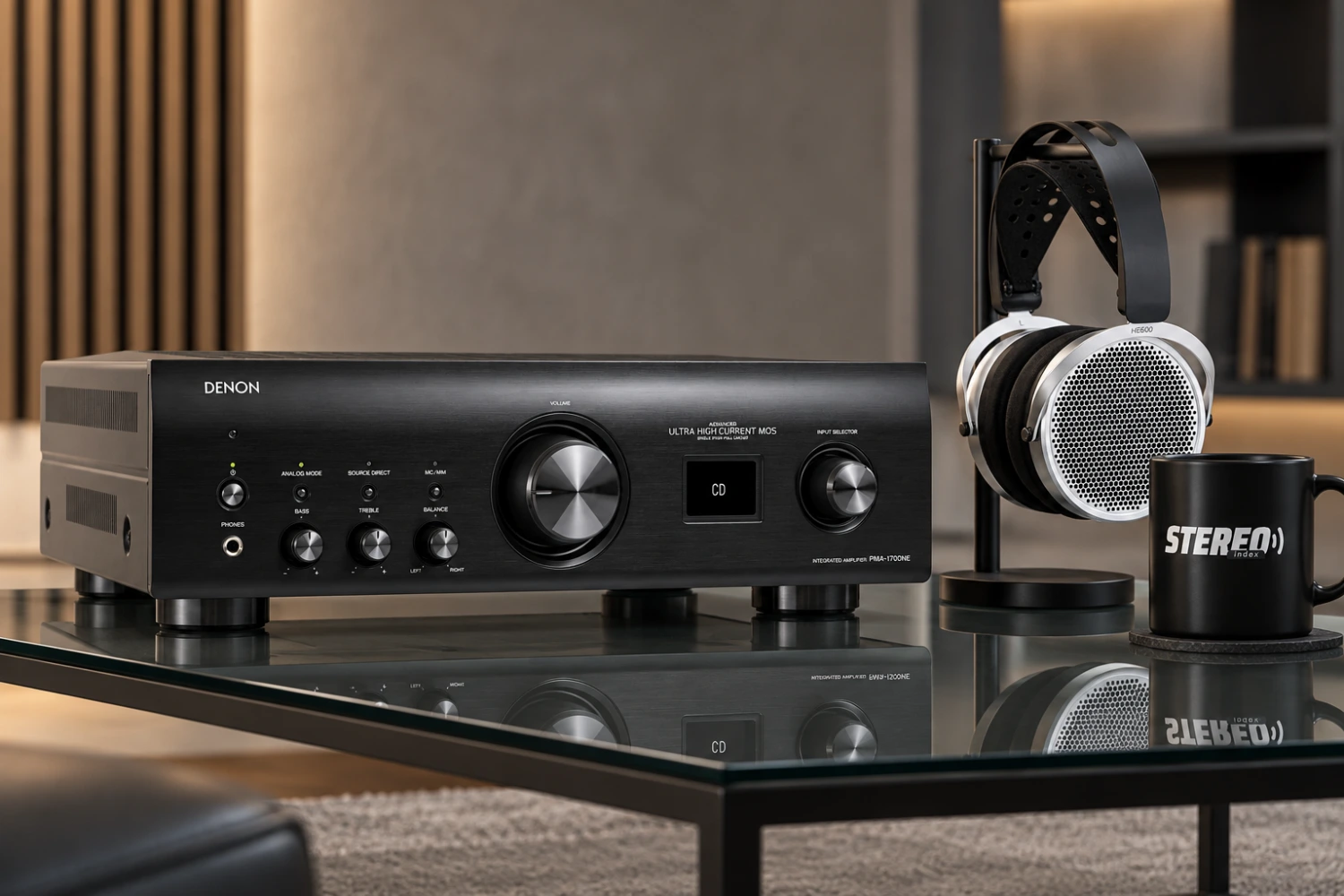
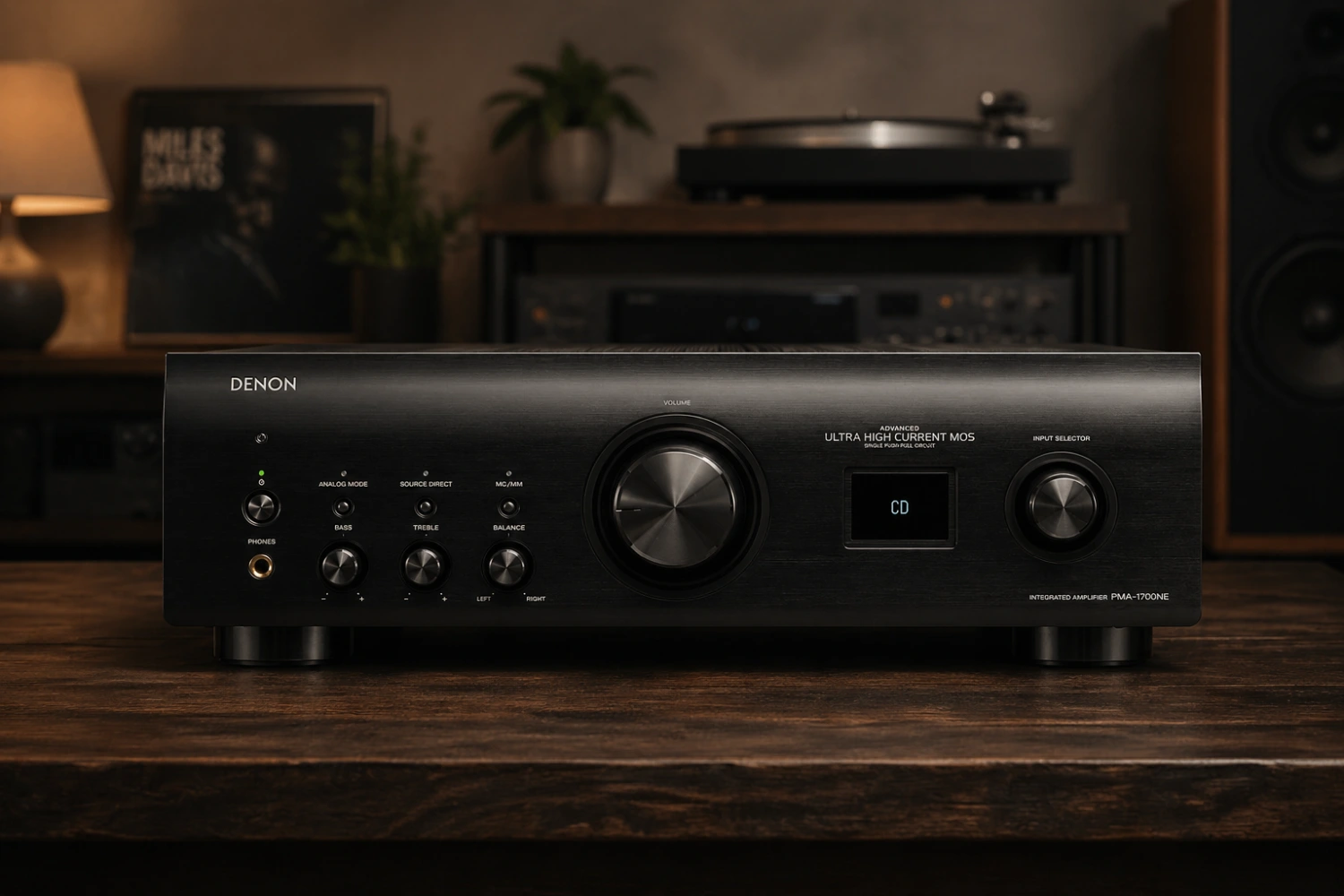
Denon's PMA-1700NE uses a curved aluminum front panel with a central volume control and separate tone and balance controls.
The Denon PMA-1700NE is the conventional integrated-amplifier choice in this group, combining preamplification and power amplification in one chassis.
Its UHC MOSFET output stage is specified to deliver up to 140 watts into 4 ohms, giving it a stronger case for demanding loudspeakers than the low-powered tube designs here.
Separate functional circuit blocks, chassis reinforcement and damping address electrical and mechanical interference, while physical tone and balance controls provide direct adjustment.
Best for: Single-chassis systems with demanding loudspeakers
- Up to 140 watts into 4 ohms
- UHC MOSFET output devices
- Separate functional circuit blocks
- Physical tone and balance controls
Verdict: The PMA-1700NE is a strong fit when substantial integrated-amplifier power and traditional hands-on controls take priority.

3. Riviera Audio AFM70
The Riviera Audio AFM70 is a mono Class A power amplifier using a tube input stage and semiconductor output devices.
The Riviera Audio AFM70 is a Class A monoblock built around a hybrid circuit.
A triode tube handles voltage amplification, while twelve semiconductor devices form the output stage.
Each amplifier is rated at 70 watts into 8 ohms and 140 watts into 4 ohms, and the circuit uses no feedback. Because this is a mono power amplifier, a conventional stereo system requires two units as well as a separate preamplifier.
Best for: Class A stereo separates built around monoblocks
- Pure Class A operation
- Hybrid tube and solid-state circuit
- 70 watts into 8 ohms and 140 watts into 4 ohms
- Zero-feedback design
Verdict: The AFM70 is the specialist choice for a high-output Class A system combining tube voltage gain with solid-state power delivery.
4. T+A AMP 8
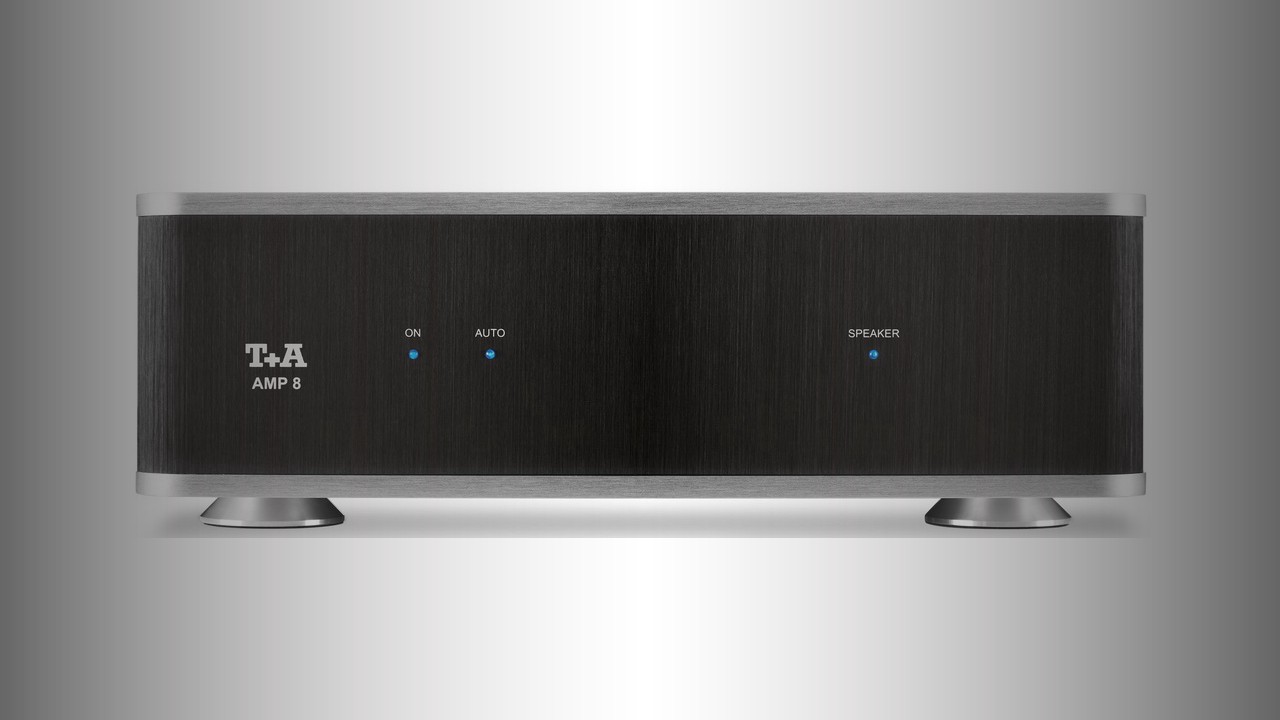
The T+A AMP 8 places its isolated current amplifier circuitry inside a substantial all-aluminum chassis.
The T+A AMP 8 is a dedicated power amplifier designed with difficult loads in mind.
Its isolated current amplifier architecture separates voltage and current amplification, with independent power supplies for the two sections.
A J-FET input stage, Class A voltage amplifier and ThermalTrak output transistors form the main circuit, which is housed in an aluminum enclosure without ferromagnetic materials. T+A specifically designed it to partner the DAC 8 DSD, which supplies digital conversion and preamplifier functions.
Best for: Compact separates requiring a load-capable power amplifier
- Designed to handle heavy loads
- Separate voltage and current amplification circuits
- Independent power supplies for the amplification sections
- All-aluminum enclosure
Verdict: The AMP 8 makes most sense as a focused power stage, particularly alongside T+A's matching DAC and preamplifier.

5. Accuphase C-2150
The Accuphase C-2150 features a machined aluminum volume control connected to its AAVA gain-control system.
The Accuphase C-2150 is a preamplifier centered on the company's AAVA analog balanced volume control.
Rather than relying on a conventional signal-path volume arrangement, AAVA varies gain according to the control position while maintaining characteristic impedance.
The audio path is balanced from input to output, and each channel uses two signal-amplification units. Its substantial enclosure is designed to protect the circuitry from interference and vibration, but a separate power amplifier remains essential.
Best for: Balanced separates emphasizing precise volume control
- AAVA analog balanced volume control
- Balanced signal path from input to output
- Two amplification units per channel
- Interference-resistant, anti-vibration enclosure
Verdict: The C-2150 is a dedicated analog control center for listeners building a fully balanced separates system.
6. Anthem MDX-8
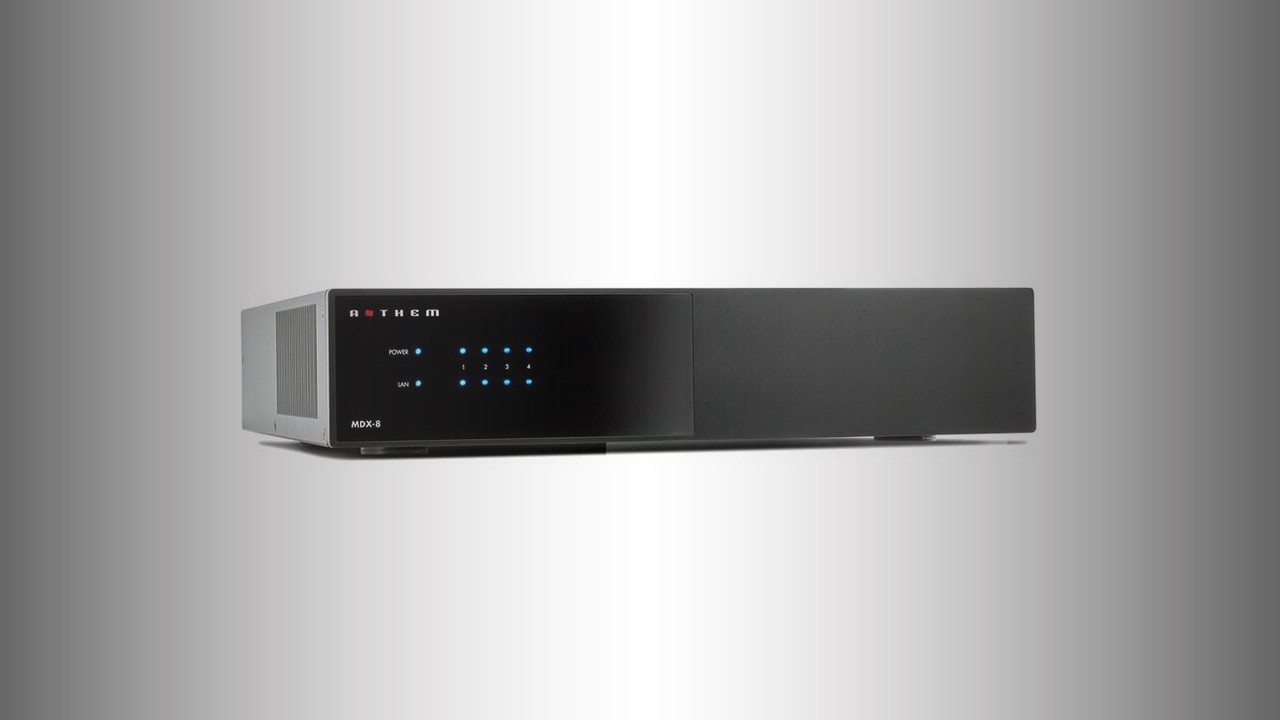
The Anthem MDX-8 combines multi-channel amplification with per-zone room correction, subwoofer management and network configuration.
The Anthem MDX-8 addresses distributed audio rather than a single conventional stereo system.
It combines Class D amplification, digital-to-analog conversion, DSP, bass management and independent Anthem Room Correction for each music zone.
Output is specified at 60 watts per channel into 8 ohms or 120 watts into 4 ohms, with bridged operation providing 200 watts into 8 ohms. Matrix switching can route any analog or digital input to any output, while Ethernet, RS-232 and 12-volt trigger facilities support installation and automation. Its single optical input should be considered when planning sources.
Best for: Multi-zone homes and custom installations
- Independent room correction for each zone
- Built-in 24-bit/192 kHz DAC
- Flexible analog and digital matrix routing
- Ethernet, RS-232 and trigger integration
Verdict: The MDX-8 is the purpose-built option for independently configured rooms, centralized routing and installation control.
7. Luxman MQ-300
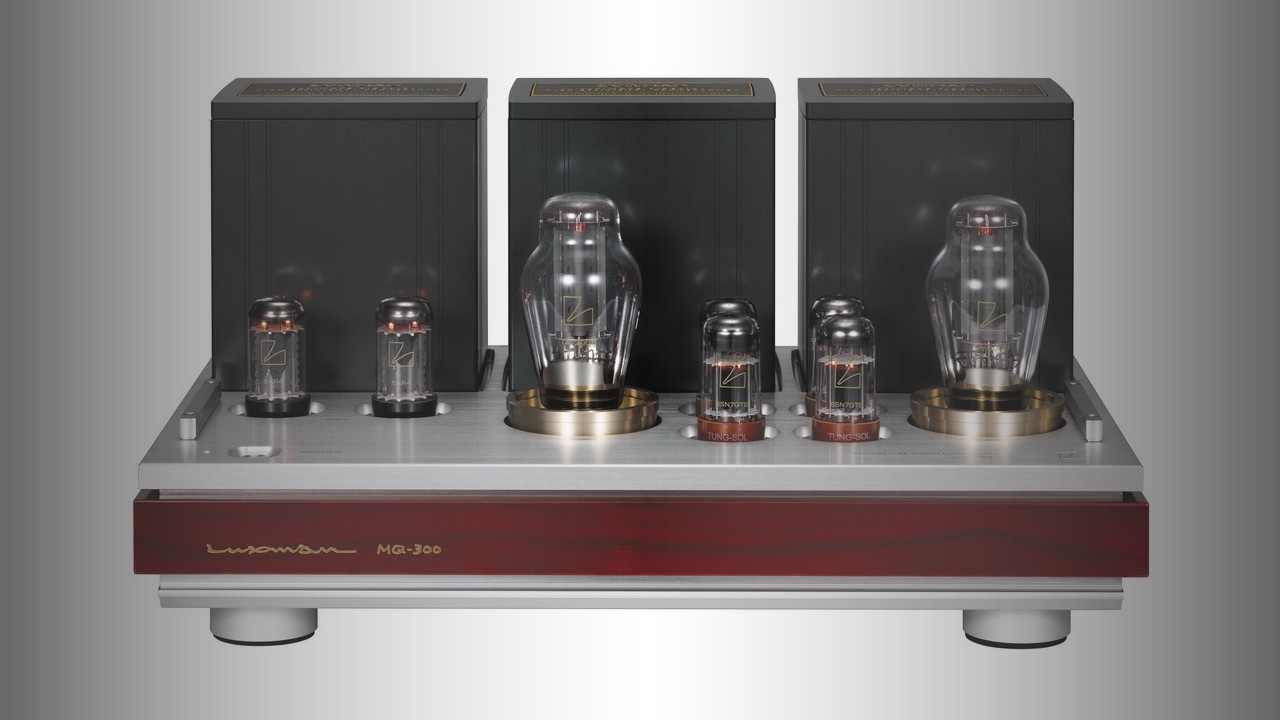
The Luxman MQ-300 displays its Takatsuki 300B output tubes and separately enclosed transformers on a thick aluminum platform.
The Luxman MQ-300 is a stereo single-ended tube power amplifier using Takatsuki TA-300B output triodes.
Its rated output is 8 watts per channel, so loudspeaker sensitivity, impedance behavior, room size and intended listening level require careful consideration.
Construction includes a thick aluminum upper platform, an anti-vibration metal chassis and separate housings for the power and output transformers. This is a specialized amplifier for a deliberately matched system, not a universal solution for difficult speakers.
Best for: Carefully matched high-sensitivity loudspeakers
- Single-ended 300B tube circuit
- Stereo power amplifier in one chassis
- Massive anti-vibration construction
- Separately housed power and output transformers
Verdict: The MQ-300 is an intentionally low-powered 300B amplifier that rewards disciplined speaker and room matching.

8. Esoteric C-02X
The Esoteric C-02X is a dual-mono preamplifier with independently powered channels and precision switched-resistor volume control.
The Esoteric C-02X is a dual-mono stereo preamplifier derived from design work undertaken for the company's Grandioso components.
Its channels have fully independent power supplies, with five transformers used across the design to reduce interaction and power-supply interference.
The signal passes through an input buffer before entering balanced amplification stages. Volume is managed by the Quad Volume Control System, which synchronously switches four precision resistor assemblies. As with the Accuphase, this is a control component and must be paired with a power amplifier.
Best for: Dual-mono high-end separates
- Fully independent dual-mono power supplies
- Five power transformers
- Balanced amplification stages
- Quad Volume Control System
Verdict: The C-02X suits a no-compromise separates layout where channel independence and balanced signal handling are central priorities.
9. Douk Audio T6 PRO
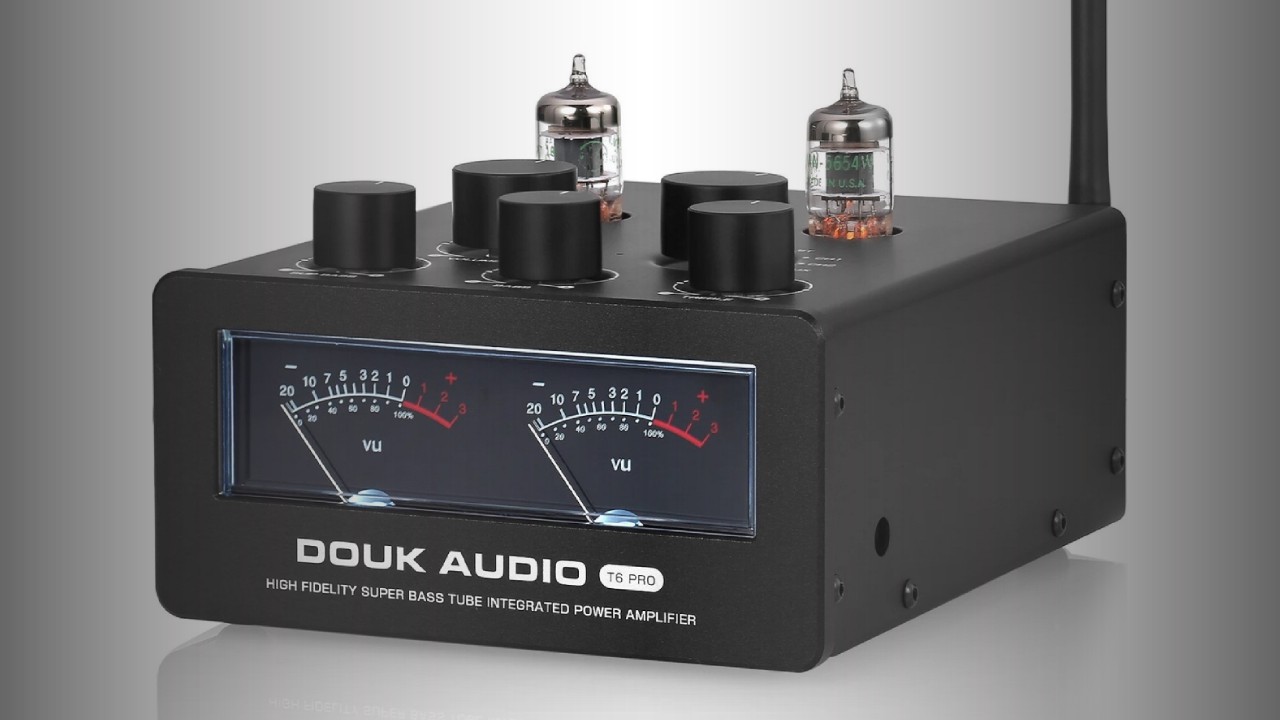
The Douk Audio T6 PRO pairs JAN5654 tubes with twin analog VU meters, Bluetooth and physical tone controls.
The Douk Audio T6 PRO combines JAN5654 tubes and analog VU meters with a broader set of modern features.
Its QCC5125 Bluetooth implementation supports LDAC and Qualcomm aptX, while RCA and auxiliary connections accommodate wired sources.
Speaker and headphone outputs expand its possible roles, and front-accessible treble, bass and super-bass controls allow direct tonal adjustment. Separate sensitivity controls are provided for the left and right VU meters.
Best for: Flexible desktop systems with wired and wireless sources
- Bluetooth with LDAC and Qualcomm aptX
- RCA and auxiliary inputs
- Speaker and headphone outputs
- Treble, bass and super-bass controls
Verdict: The T6 PRO prioritizes connectivity, physical adjustment and vintage-inspired presentation in a compact system component.

10. Topping EHA5
The Topping EHA5 is a dedicated electrostatic headphone amplifier with rear balanced and single-ended preamplifier outputs.
The Topping EHA5 serves a fundamentally different purpose from the speaker amplifiers in this guide: it is designed to drive electrostatic headphones.
Its specified output reaches 700 Vrms and Vp-p, while balanced XLR and single-ended RCA connections support integration with source equipment.
When the headphone output is disabled, the input signal is passed to the rear XLR and RCA outputs, allowing the EHA5 to perform a preamplifier role. A 12-volt trigger input provides synchronized power control with compatible components.
Best for: Electrostatic headphone systems
- Dedicated electrostatic headphone output
- 700 Vrms and Vp-p specified output
- Balanced XLR and single-ended RCA connectivity
- Preamplifier outputs and 12-volt trigger input
Verdict: The EHA5 is the focused choice for electrostatic headphones, with useful preamplifier and trigger functions for system integration.
Quick comparison
The products divide naturally by role.
The Denon is the most conventional integrated amplifier, while the Quad pairing offers a ready-made separates route.
Riviera, T+A and Luxman supply power amplification for very different speaker systems; Accuphase and Esoteric are preamplifiers that need matching power stages. Anthem covers distributed audio, Douk Audio emphasizes desktop versatility, and Topping addresses electrostatic headphones rather than loudspeakers.
| Product | Best for | Verdict |
|---|---|---|
| Quad 33 Preamplifier and 303 Power Amplifier | Heritage-styled two-box systems | A coordinated preamplifier and power-amplifier pairing with updated internals and unmistakably retrospective design. |
| Denon PMA-1700NE | Single-chassis systems with demanding loudspeakers | An integrated design combining substantial 4-ohm output with traditional tone and balance controls. |
| Riviera Audio AFM70 | Class A stereo separates built around monoblocks | A zero-feedback hybrid monoblock pairing triode voltage amplification with a solid-state output stage. |
| T+A AMP 8 | Compact separates requiring a load-capable power amplifier | A dedicated power stage whose separated voltage and current sections are intended to manage demanding loads. |
| Accuphase C-2150 | Balanced separates emphasizing precise volume control | A fully balanced preamplifier distinguished by Accuphase's gain-based AAVA volume system. |
| Anthem MDX-8 | Multi-zone homes and custom installations | A network-configurable multi-channel amplifier with per-zone correction, routing and bass management. |
| Luxman MQ-300 | Carefully matched high-sensitivity loudspeakers | An 8-watt single-ended 300B power amplifier whose suitability depends heavily on speaker matching. |
| Esoteric C-02X | Dual-mono high-end separates | A balanced dual-mono preamplifier designed around independent channel power supplies and switched-resistor volume control. |
| Douk Audio T6 PRO | Flexible desktop systems with wired and wireless sources | A feature-rich tube-equipped component offering Bluetooth, physical tone controls and both speaker and headphone outputs. |
| Topping EHA5 | Electrostatic headphone systems | A specialist electrostatic headphone amplifier that can also pass signals to balanced and single-ended preamplifier outputs. |
Frequently asked questions
Should I choose an integrated amplifier or separate components?
Choose an integrated amplifier such as the Denon PMA-1700NE when simplicity and a single chassis matter.
Separates such as the Quad 33 and 303 allow preamplification and power amplification to remain distinct, while standalone preamplifiers from Accuphase and Esoteric require a separate power amplifier before they can drive speakers.
How should amplifier power influence speaker matching?
Consider speaker sensitivity, nominal impedance, impedance dips, room size and desired listening level together.
The 8-watt Luxman MQ-300 calls for especially careful matching, whereas the Denon, Riviera and load-oriented T+A designs are more appropriate starting points when speakers demand greater output or current.
Power ratings alone do not describe every aspect of compatibility.
Which amplifier is appropriate for a multi-room installation?
The Anthem MDX-8 is the dedicated multi-zone option here.
It provides independent room correction, subwoofer management, volume and tone adjustment for each zone, along with matrix routing and installation-control connections.
Check source requirements in advance because the unit has one optical input.
Can a conventional headphone amplifier drive electrostatic headphones?
Electrostatic headphones require a purpose-designed amplifier or energizer rather than a conventional dynamic-headphone output.
The Topping EHA5 is specifically intended for electrostatic models, but exact headphone connector and operating compatibility should still be confirmed before use.
How to Match the Amplifier to the Rest of the System
Begin with component type.
A standalone preamplifier cannot drive passive loudspeakers, and a power amplifier normally needs a preamplifier or source with suitable volume control.
Monoblocks such as the Riviera AFM70 require one amplifier per stereo channel, while the Quad pairing already divides control and power duties into coordinated components. The Denon PMA-1700NE keeps those roles together in a conventional integrated format. Speaker matching is the next priority. Do not compare wattage figures without noting the stated impedance, and do not assume that amplifier topology guarantees compatibility. The Luxman MQ-300's 8-watt output places far greater importance on speaker sensitivity and listening distance than the higher-output Denon or Riviera designs. The T+A AMP 8 is explicitly designed for heavy loads, but the requirements of the actual loudspeaker should still guide the decision. Installation needs can override traditional stereo considerations. Anthem's MDX-8 is the logical candidate when several independently controlled zones, room correction and automation matter. The Douk Audio T6 PRO is better aligned with a compact system needing Bluetooth, tone controls and both speaker and headphone connections. Electrostatic headphone users should disregard conventional speaker-amplifier comparisons and focus on a compatible specialist design such as the Topping EHA5. Finally, list every required source, output and control connection before selecting a component. Confirm whether balanced connections, triggers, network configuration, subwoofer management or physical tone controls are necessary. A well-matched amplifier is not simply the most powerful or elaborate option; it is the one that performs the correct role, connects cleanly to the rest of the system and operates within the loudspeakers' or headphones' actual requirements.


Sound Off
0Join the discussion if you have something to add.