
The Best Portable Music Player for Every Listening Setup
The Shanling M3 Plus is the strongest all-round choice here, combining Android flexibility, powerful outputs, portable dimensions and balanced sound. But the cheaper M1s, premium Astell&Kern PS10 and desktop-focused Shanling EA5 each make a stronger case for specific listeners.
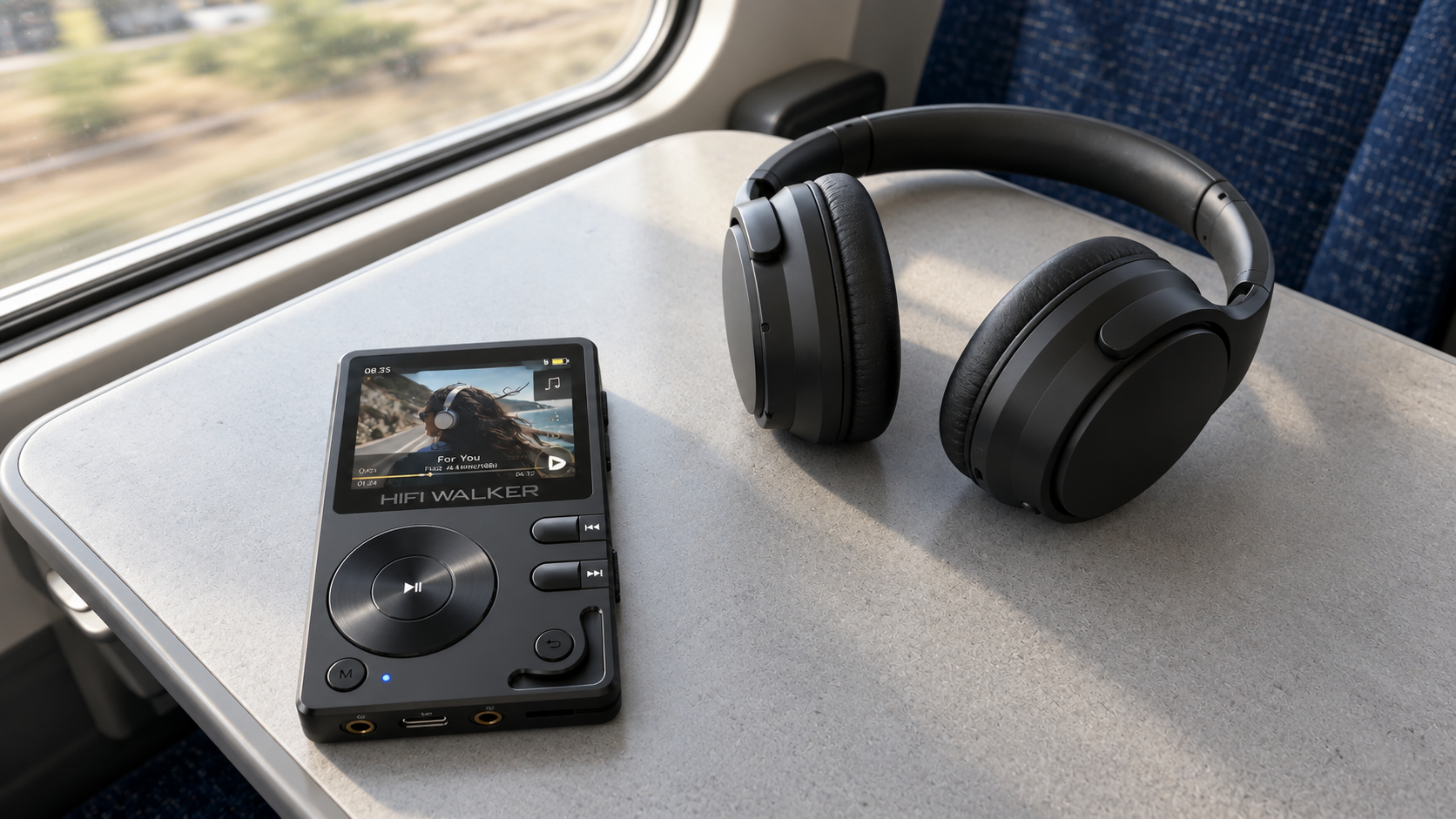
These four players cover very different interpretations of personal hi-fi: the Shanling M1s is a genuinely compact and affordable DAP, the M3 Plus adds Android and much more output power, the Astell&Kern PS10 targets high-end portable listening, and the Shanling EA5 is really a desktop music centre that can also handle headphones. The comparison therefore is not just about DAC counts or headline resolution.
The important question is how each device fits into a real system. The M3 Plus is the strongest all-rounder because it combines streaming flexibility, useful storage, both balanced and single-ended outputs, strong battery life and enough amplification for a wide range of headphones. The alternatives are more convincing when your priorities are low cost and minimum size, premium circuitry and battery capacity, or a desktop system that must switch between speakers and headphones.
Quick verdict
- Best Overall: Shanling M3 Plus — the most complete combination of portability, Android streaming, output power, storage and balanced sound.
- Best Value: Shanling M1s — much cheaper, lighter and smaller, while retaining high-resolution playback, Bluetooth, DLNA and AirPlay.
- Best Premium Portable Features: Astell&Kern PS10 — the most ambitious portable design here, with four AKM AK4498EX DACs, dual audio circuits, adaptive amplification and 256GB of internal storage.
- Best Desktop Choice: Shanling EA5 — the only model with an integrated 50W-per-channel speaker amplifier, making it a very different proposition from the pocket players.
| Product | Best suited to | Key strengths | Main limitation relative to the group |
|---|---|---|---|
| Shanling M3 Plus | Most listeners wanting one portable player | Android 13, 800mW balanced output, 64GB plus microSD, balanced and single-ended outputs | Heavier and more expensive than the M1s |
| Shanling M1s | Budget-conscious portable and IEM users | 106g body, $260 price in the source review, 14.5-hour wired battery life | No internal storage and less output power than the M3 Plus |
| Astell&Kern PS10 | High-end portable users wanting maximum built-in storage | 256GB internal storage, microSD up to 2TB, 5,770mAh battery, separate dual audio circuits | The source article describes its planned debut but does not provide a price |
| Shanling EA5 | Desktop listeners using speakers and headphones | 50W per channel speaker amplification, 570mW headphone output, network and digital inputs | Its 238 x 188 x 55mm desktop form is not pocket portable |
Shanling M3 Plus


The Shanling M3 Plus is the clearest answer for anyone who wants one player to cover local files, streaming, serious wired headphone listening and travel. The two supplied articles describe the same model from slightly different angles: the product overview establishes its hardware and operating system, while the review adds a price of $470 excluding taxes and a more detailed account of its sound and usability.
Its central advantage is balance. The M3 Plus is not the smallest player here, but its 115 x 70 x 18mm dimensions and 205g weight remain portable while allowing room for a 4.7-inch 1280 x 720 display, a 3.5mm output, a 4.4mm balanced output and a 3,500mAh battery. The review also identifies a physical volume wheel, playback buttons and a protective-film-equipped package, all of which make it more practical as a daily player than a device controlled entirely through a touchscreen.
The feature set is broad without requiring a separate source. Android 13 allows streaming applications to be installed over Wi-Fi, while Shanling’s AGLO technology is intended to provide bit-perfect playback. The player also supports DLNA and AirPlay, USB DAC operation, digital transport functionality and bidirectional Bluetooth 5.0 with LDAC, aptX and aptX HD. There is 64GB of internal storage and a microSD slot supporting cards up to 2TB.
Output power is another decisive advantage. The balanced connection is rated at up to 800mW at 32 ohms, while the single-ended output reaches up to 200mW at 32 ohms. That is substantially more flexibility than the M1s offers, and the review says the M3 Plus can drive full-sized headphones short of the most demanding planars while remaining suitable for sensitive IEMs. Battery life is rated at up to 14 hours through the 3.5mm output or 11 hours through the balanced connection.
The review’s listening assessment also makes the M3 Plus the safest general recommendation. It describes an open, clean and versatile presentation with a neutral, detailed balance, some warmth, smooth treble, textured midrange, controlled punchy bass and precise imaging. That combination is presented as suitable across genres rather than tuned for one particular kind of music. For buyers who do not want to choose between convenience, power and refinement, that is exactly the point.
Shanling M1s
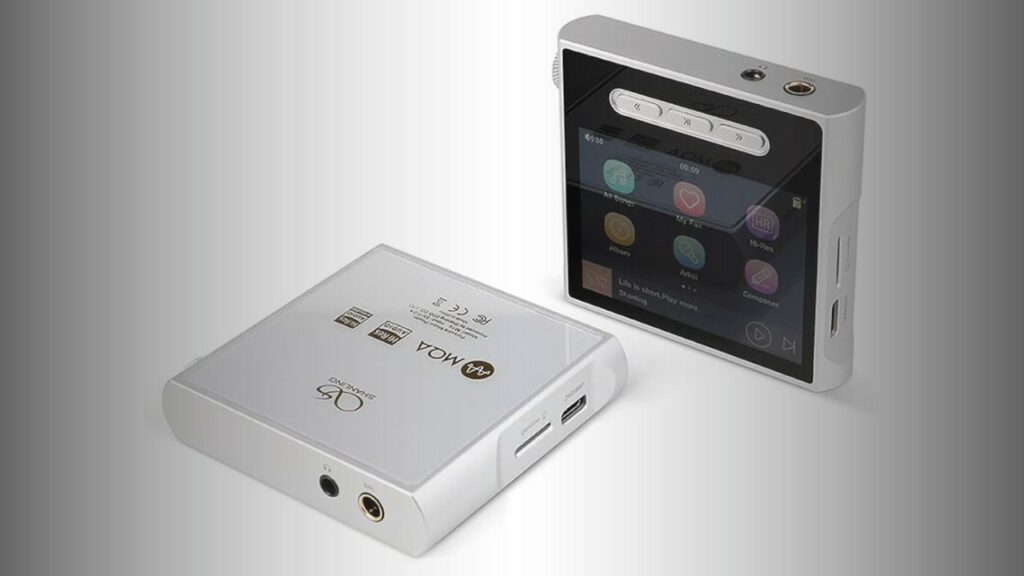
The Shanling M1s is the alternative to buy when compactness and price matter more than maximum power or Android app flexibility. At $260 in the source review, it costs considerably less than the M3 Plus, and its 106g weight makes it the easiest of the dedicated pocket players to carry.
Its small size does involve compromises. The 2.8-inch 640 x 480 touchscreen is intended for basic operation rather than anything visually demanding, and the review notes that the front-mounted physical buttons are an unusual design choice. There is no built-in memory, so music storage depends on the microSD slot, which supports up to 2TB. Smartphone control through Shanling’s Eddict Music app helps compensate for the small screen.
For a budget player, however, the core audio specification is strong. The M1s uses an ESS ES9038Q2M DAC, supports PCM up to 32-bit/768kHz and DSD512, and provides both standard and balanced headphone outputs. Output is rated at 144mW at 32 ohms from the standard connection and 245mW at 32 ohms from the 4.4mm balanced connection. The source describes it as better suited to IEMs than demanding full-size headphones, which is the most important distinction between it and the more powerful M3 Plus.
The M1s is not a streaming-free basic player. Its MTouch 2.0 operating system supports Wi-Fi, MQA, DLNA, AirPlay, external DAC and digital-transport functions, while bidirectional Bluetooth 5.0 includes AAC, aptX, aptX LL, aptX HD and LDAC. It is therefore flexible for its size, though its non-Android operating system is less open-ended than the M3 Plus’s Android 13 platform.
The source review’s sound description is unusually positive for a player at this price. It calls the presentation dynamic, lively and detailed, with especially engaging vocals, agile bass, clear rhythm and an energetic character. It also says the player avoids being overly critical of source quality and works across a wide range of genres. That makes the M1s a compelling choice for portable IEM listening, particularly for buyers who would rather save money and weight than add internal storage or the M3 Plus’s extra amplifier headroom.
Astell&Kern PS10
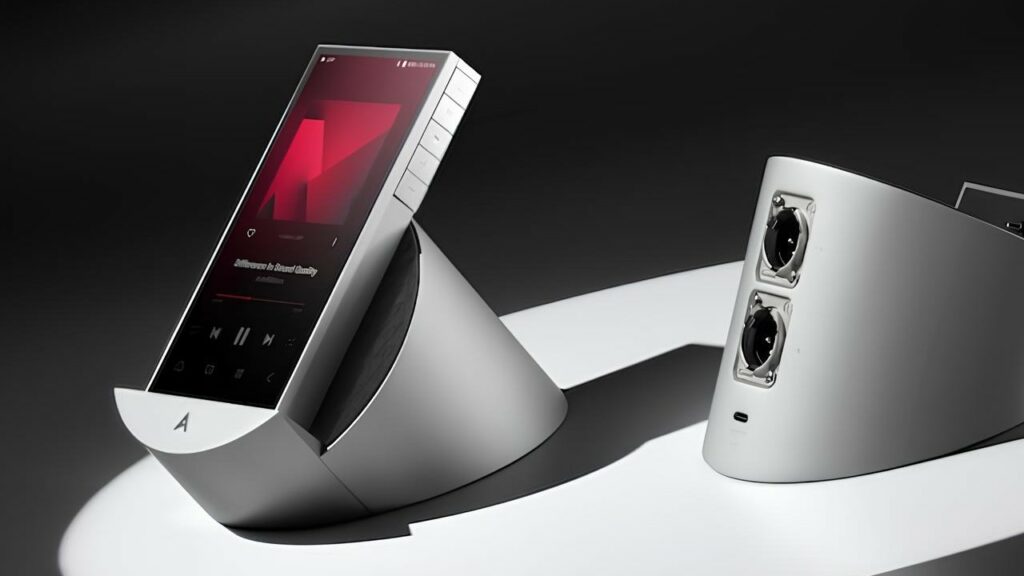
The Astell&Kern PS10 is the most technically ambitious portable player in this comparison, although the supplied article presents it as an introduction rather than a full review. It is designed to fit in a pocket or handbag and includes a docking station for connection to an amplifier or active speakers, giving it a bridge between personal listening and a larger system.
Its standout feature is the HEXA audio circuitry, built around four AKM AK4498EX DAC chips and two AK4191EQ chips. The article says this arrangement processes analogue signals independently and reduces digital signal noise. It also describes separate dual audio circuits for balanced and single-ended outputs, intended to avoid signal degradation when changing output or amplifying the signal.
The PS10’s amplification is designed to adapt to different headphones. Its Normal Gain AMP is intended for lower-impedance devices, while the High Gain AMP is aimed at higher-impedance headphones. Smart Gain automatically selects the appropriate amplifier based on headphone impedance. That is a more automated approach than the fixed output figures supplied for the M1s and M3 Plus, and it should appeal to users who regularly switch between IEMs and over-ear headphones.
Storage and battery capacity are major advantages. The player includes 256GB of internal storage and accepts a microSD card up to 2TB. Its 5,770mAh battery is rated for up to 15 hours of playback, exceeding the M3 Plus’s stated 14-hour single-ended figure and the M1s’s 14.5-hour wired figure. The PS10 also supports USB-C file transfers and charging, USB or Bluetooth external-DAC operation, dual-band Wi-Fi and DLNA networking.
It supports PCM up to 32-bit/768kHz and DSD512, with a bitrate-indicating LED ring, crossfeed, ReplayGain and Bluetooth codecs including aptX HD, LHDC and LDAC. Those are impressive features, but the source does not provide a price, physical dimensions, output power figures or listening impressions. Consequently, the PS10 is best understood as the premium-feature alternative rather than a proven value recommendation. It is the model to consider if internal storage, battery capacity, adaptive amplification and elaborate digital architecture matter more than having a documented price-to-performance case.
Shanling EA5
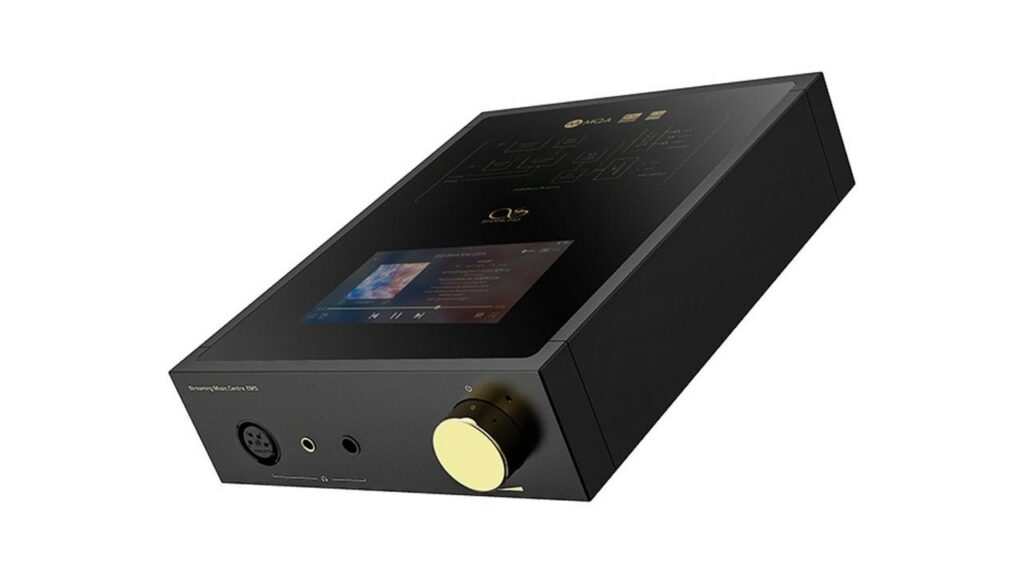
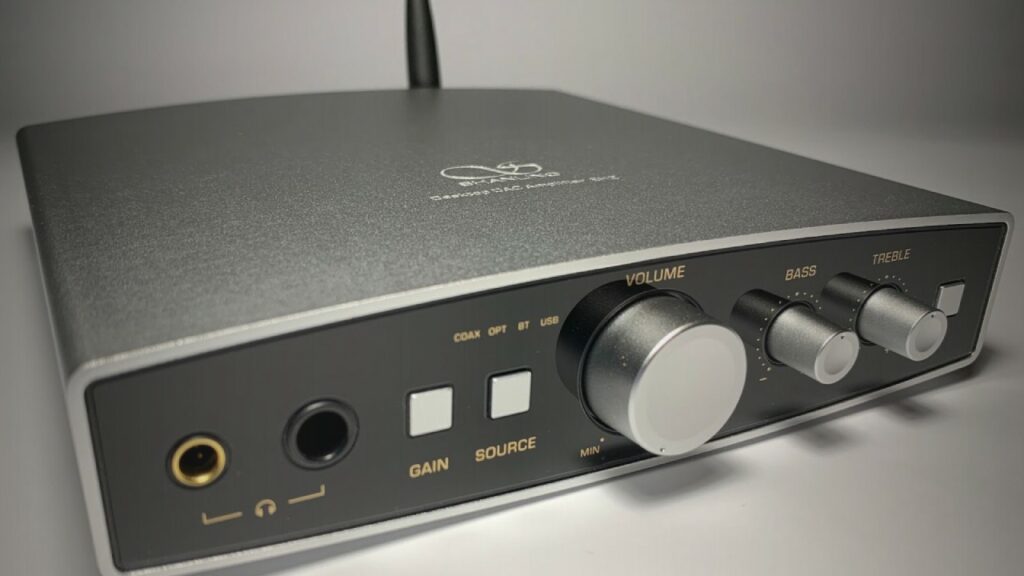
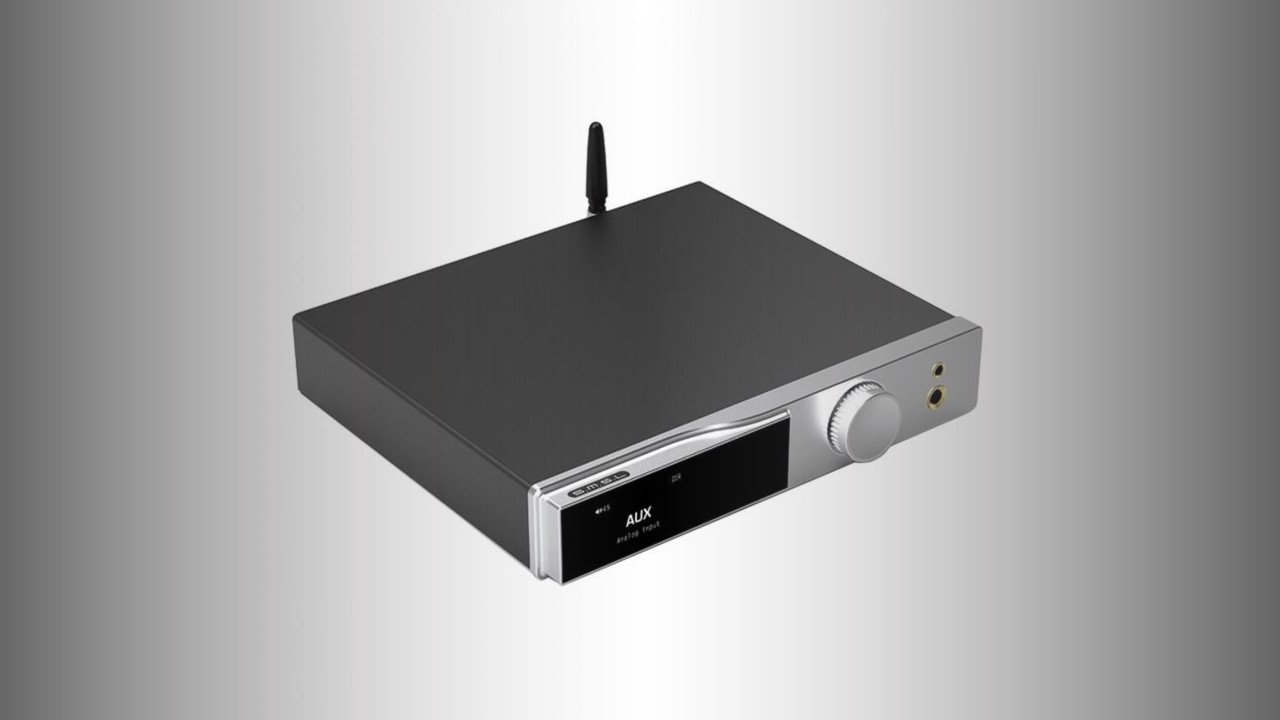
The Shanling EA5 should not be treated as a direct pocket-player rival. At 238 x 188 x 55mm, it is a desktop music centre, and its defining feature is not portability but the ability to replace several components in a compact hi-fi setup.
It combines a digital player with a headphone amplifier and a speaker amplifier. The 6.35mm headphone output is rated at up to 570mW at 32 ohms, while the built-in Abletec Class D amplifier produces 50W per channel at 4 ohms or 32W per channel at 8 ohms. That makes it the obvious choice for someone who alternates between headphones and passive speakers at a desk. None of the portable players here includes an integrated speaker amplifier.
The EA5 is also unusually adaptable as a source component. It can play from a microSD card, external hard drive or local Wi-Fi network, with control through a phone app. Its connectivity includes USB, coaxial, optical, LAN and an external USB drive input, alongside RCA analogue input and RCA preamp output. It can operate as a standalone DAC, pure DAC, preamp, integrated amplifier or Bluetooth receiver and source.
Streaming applications are built into its closed custom Android system, and the 4.7-inch 720p touchscreen gives it a larger interface than the M1s. Wi-Fi supports both 2.4GHz and 5GHz bands, while DLNA and AirPlay are included. Audio support extends to PCM 32/768, native DSD256 and software DSD512, with two-way Bluetooth 4.2 and LDAC.
The EA5 costs $939 according to the source article, putting it above the M3 Plus and M1s, but its value cannot be judged purely as a headphone player. If the alternative is buying separate amplification for speakers and headphones, its multifunction design may be exactly what a desktop system requires. It is not the right answer for commuting or pocket listening, but it is the strongest system-building option here.
How they differ
The biggest difference is the intended environment. The M1s, M3 Plus and PS10 are portable digital audio players; the EA5 is a desktop component. That immediately makes the EA5 the wrong choice for a buyer who wants music on the move, but the right choice for anyone who wants one box to feed passive speakers, headphones and other digital sources.
Among the genuinely portable models, the M1s prioritises size and affordability. It is 106g, costs $260 in the supplied review and offers enough power for IEMs and many portable headphones. The M3 Plus is 205g and costs $470 excluding taxes, but in return it adds Android 13, internal storage, a larger display and far more balanced-output power. The difference is not simply a change in sound hardware: it is a change in how easily the player can become a main source.
The PS10 moves in the opposite direction from the M1s. Rather than minimising the device, it maximises the specification and convenience features that matter to high-end users: 256GB of internal storage, 5,770mAh battery capacity, adaptive gain, separate audio circuits and a docking station. It may be the most compelling option for a collection of local files and varied headphones, but the supplied material does not establish its price or provide a comparative listening test.
Output design also separates the players. The M1s offers standard and 4.4mm balanced connections, but its 245mW balanced rating is well below the M3 Plus’s 800mW. The PS10’s article emphasises its dual adaptive amplifiers but does not give output figures. The EA5 uses a full-size 6.35mm headphone socket and adds speaker amplification, making it better suited to a fixed system than the 4.4mm-equipped portable players.
Software is another clear dividing line. The M3 Plus uses full Android 13, while the M1s runs Shanling’s MTouch 2.0 system and the EA5 uses closed custom Android with built-in streaming apps. The PS10 supports networking and multiple Bluetooth codecs, but the supplied article does not identify its operating system. Buyers who want the widest app-based streaming flexibility should therefore favour the M3 Plus among the models with clearly documented software.
Which one should you buy?
- Choose the Shanling M3 Plus if you want one portable player for local files, streaming, IEMs and full-size headphones. Its combination of Android 13, 64GB internal storage, microSD expansion, 800mW balanced output and balanced sound makes it the safest all-round purchase.
- Choose the Shanling M1s if you want the lowest stated price and the lightest player, or mainly use IEMs. It gives up internal storage, Android and some amplification power, but retains high-resolution playback, Bluetooth, DLNA, AirPlay and a particularly lively presentation.
- Choose the Astell&Kern PS10 if you want a premium portable player with substantial built-in storage, long stated battery life and adaptive amplification. It is especially attractive for listeners who keep a large local library or switch frequently between different types of headphones. Check availability and pricing before committing, since those details are not supplied in the source article.
- Choose the Shanling EA5 if your listening happens at a desk and includes passive speakers as well as headphones. Its speaker amplifier, preamp functionality, RCA connections and broad digital inputs make it much more useful in a desktop hi-fi system than any of the portable players.
Final verdict
The Shanling M3 Plus is the Best Overall choice because it is the most complete portable package in the supplied group. It offers the portability, streaming access and battery life expected from a modern DAP, while its 800mW balanced output, internal storage and reviewed sound quality give it the breadth to serve as a serious everyday player.
The M1s is the smarter low-cost and lightweight buy, the PS10 is the feature-rich premium alternative, and the EA5 is the clear desktop-system specialist. Pick according to where and how you listen, but for the greatest number of buyers, the M3 Plus is the one that makes the fewest compromises.



 VS
VS VS
VS VS
VS VS
VS VS
VS VS
VS
Comments 0
Share your experience, questions and perspective with other hi-fi enthusiasts.