
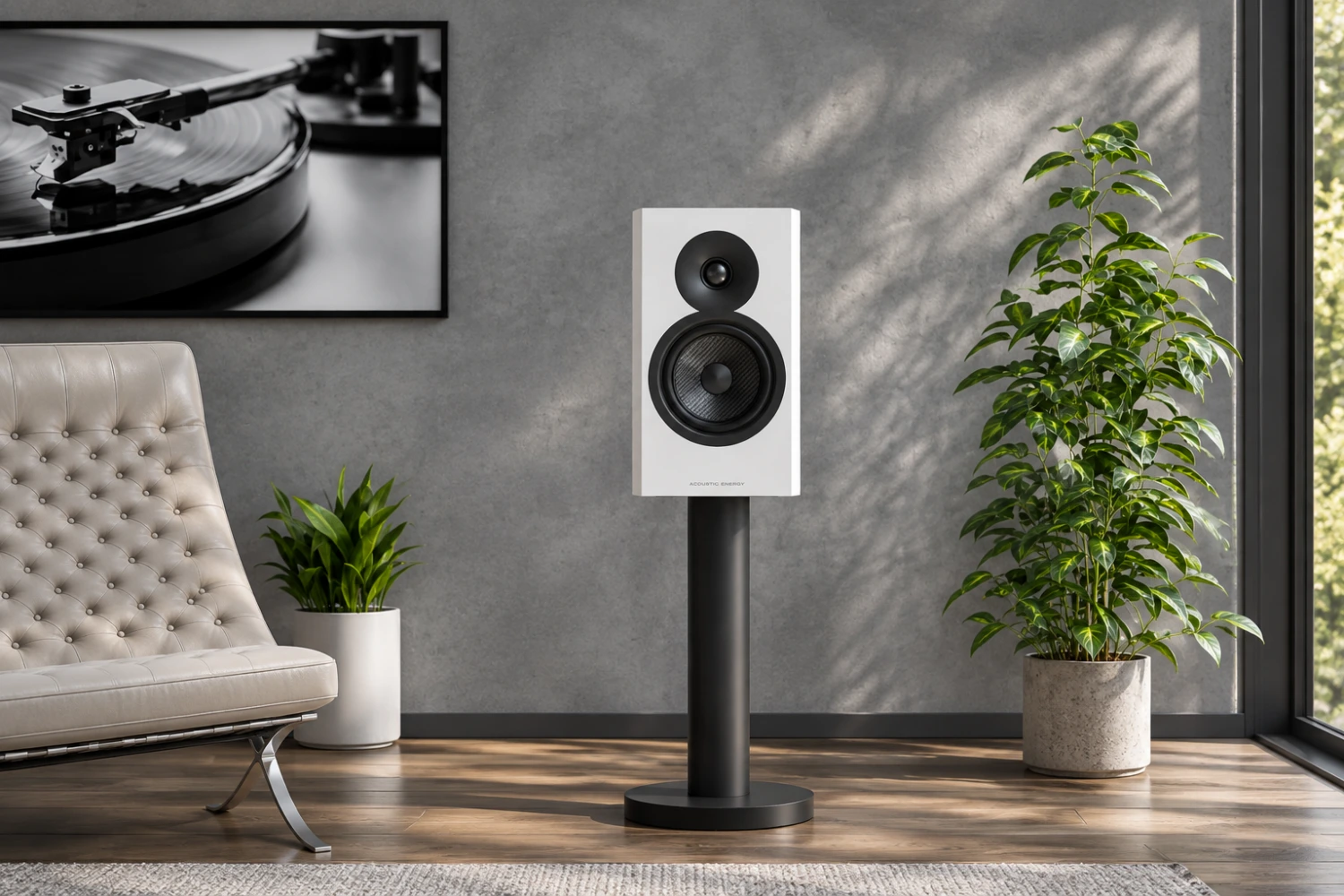
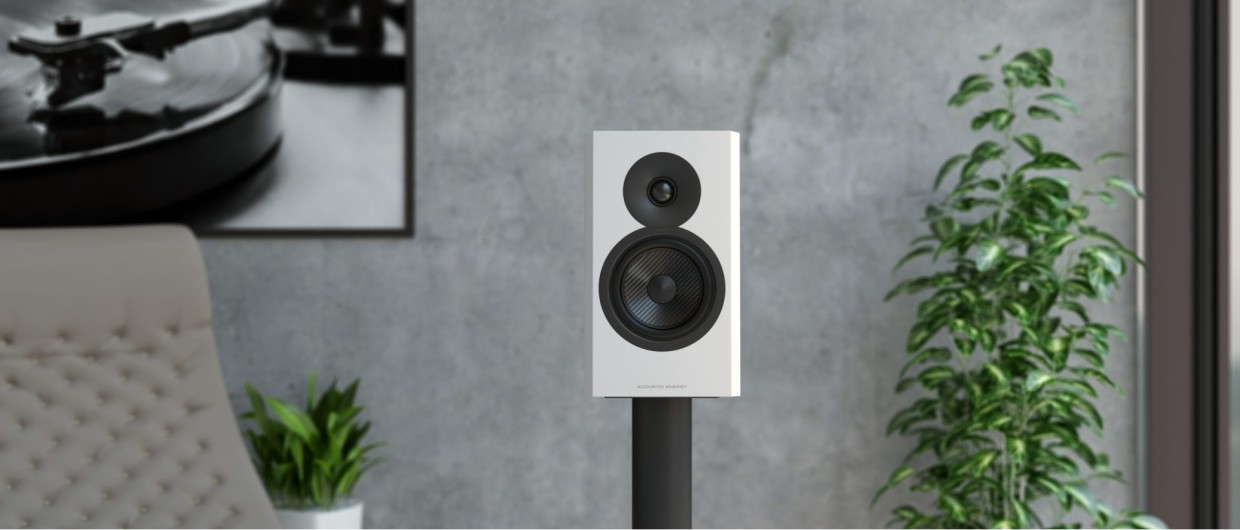
Acoustic Energy has reworked its 500 Series as an integrated loudspeaker system rather than treating the update as a collection of isolated component changes. Knowledge gained during development of the flagship Corinium has informed three defining areas: a new carbon-fiber bass/midrange driver and motor assembly, crossover networks designed around low group delay, and revised Resonance Suppression Composite cabinets with tapered internal geometry. The result is described as a complete redesign of the British company’s established range, with the engineering focused on driver integration, controlled cabinet behavior and a more natural presentation rather than on adding conspicuous external features.
Corinium lessons reshape the 500 Series
The clearest context for this launch is its relationship to Corinium. Acoustic Energy is not placing the flagship speaker itself into a different cabinet; instead, the development process behind that project has influenced how the 500 Series’ individual parts are designed to work together. The company identifies the drivers, crossover filters and enclosures as the principal areas of change.
That distinction matters because loudspeaker updates are often framed around one visible component, such as a new cone material or tweeter. Here, the stated approach is cumulative. Cone geometry, motor linearity, phase behavior through the crossover regions and the movement of internal reflections have all been reconsidered. Acoustic Energy’s premise is that modest gains across these connected areas can produce a more substantial overall change than optimizing one component in isolation.
The original 500 Series established the foundation, but the revised range is intended to retain its dynamics, balance and musical character while improving openness, naturalness and coherence. Those are manufacturer-stated objectives rather than listening conclusions, although the engineering changes show where Acoustic Energy expects the differences to originate.
A shallower carbon-fiber cone meets a 29mm soft dome
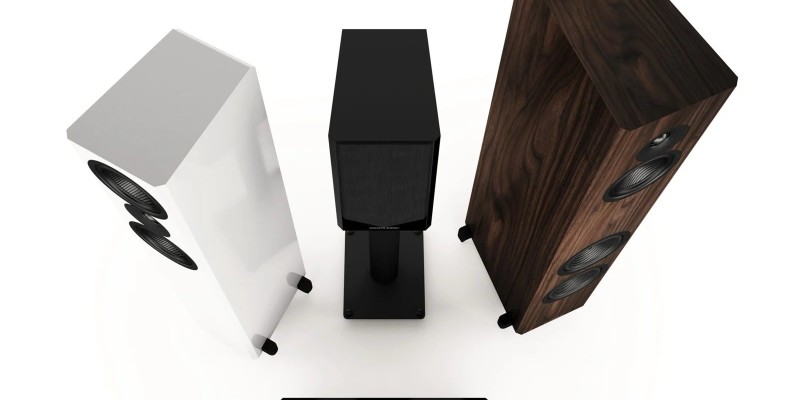
At the center of the redesign is a new bass/midrange unit. Its carbon-fiber cone uses a shallower profile than the previous design, with the revised geometry developed to provide a more natural tonal balance. Cone material remains only one part of the driver, however, and Acoustic Energy has paired the new diaphragm with an entirely redesigned motor system.
That motor is engineered to maintain an ultra-linear inductance profile. Inductance behavior changes as a driver’s voice coil moves, so controlling it is relevant to maintaining consistent operation across the unit’s working range. Acoustic Energy links the revised cone and motor to cleaner, more open midrange reproduction, with reduced coloration around voices and instruments. Those performance descriptions remain the company’s claims, but they explain why the update extends beyond simply exchanging one diaphragm for another.
High frequencies are handled by a newly developed 29mm soft-dome tweeter originating from the Corinium program. Its role in the design hierarchy is not merely to extend treble output; integration with the bass/midrange driver is one of the stated priorities. Bringing this tweeter technology into the 500 Series therefore connects directly to the accompanying crossover work, where the transition between drive units receives as much attention as their individual behavior.
The crossover targets time as well as frequency
Acoustic Energy’s crossover strategy is arguably the least visible but most technically distinctive part of the announcement. Rather than concentrating exclusively on frequency response, the engineering team has designed the filters to achieve low group delay. In broad terms, group delay concerns the timing of different frequency components as they pass through a system.
For the 500 Series, the intended benefit is improved phase integration and more coherent operation through the critical regions where responsibility moves from one drive unit to another. A crossover can divide frequencies correctly on paper while still affecting their timing relationship, so Acoustic Energy’s emphasis indicates that the company treated temporal behavior as a core design target rather than a secondary adjustment.
This approach also clarifies why the tweeter, bass/midrange unit and filter network cannot be viewed independently. The crossover has to account for the behavior of both drivers, while their physical and electrical characteristics determine what the filter must accomplish. Acoustic Energy says the completed system is intended to improve transparency and coherence without discarding the established character of the range.
Tapered RSC cabinets address internal reflections
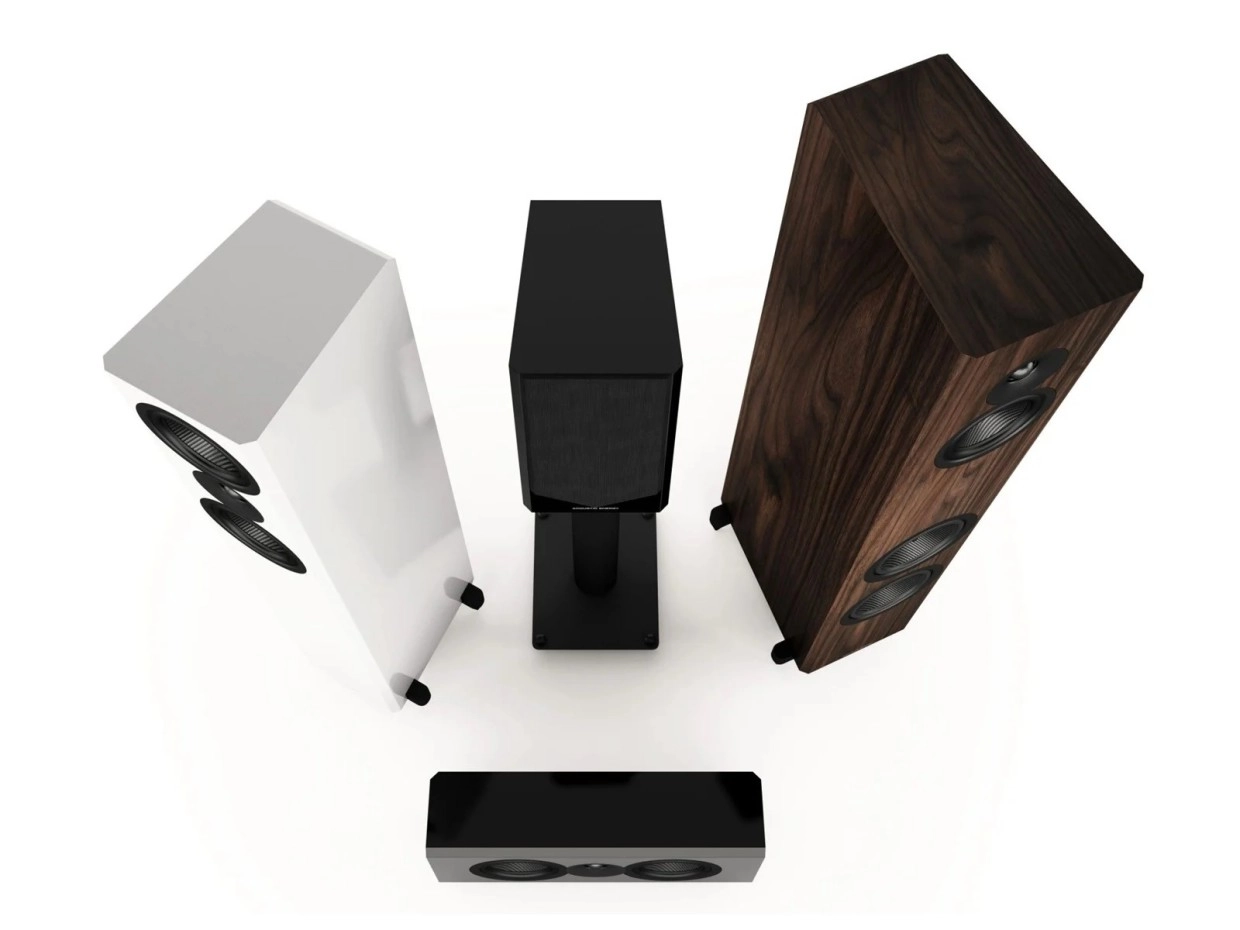
The revised components are installed in Acoustic Energy’s Resonance Suppression Composite cabinet construction, commonly abbreviated to RSC. For this generation, that established enclosure method is combined with a new tapered cabinet profile designed to control and disperse internal reflections more effectively.
Internal energy from the rear of a driver can reflect from cabinet surfaces and return toward the cone, making enclosure geometry relevant to the driver’s operating environment. The tapered profile is intended to reduce the regularity of those reflections rather than allowing them to build between parallel surfaces. Acoustic Energy does not provide cabinet measurements or construction details in the announcement, so the precise implementation remains unspecified.
More importantly, the enclosure work completes the product’s three-part hierarchy. Revised drivers establish the acoustic output, the low-group-delay crossover manages their handover, and the cabinet is designed to give those components a more controlled setting. That system-level relationship is the central idea behind the new 500 Series.
Three finishes and a December dealer rollout
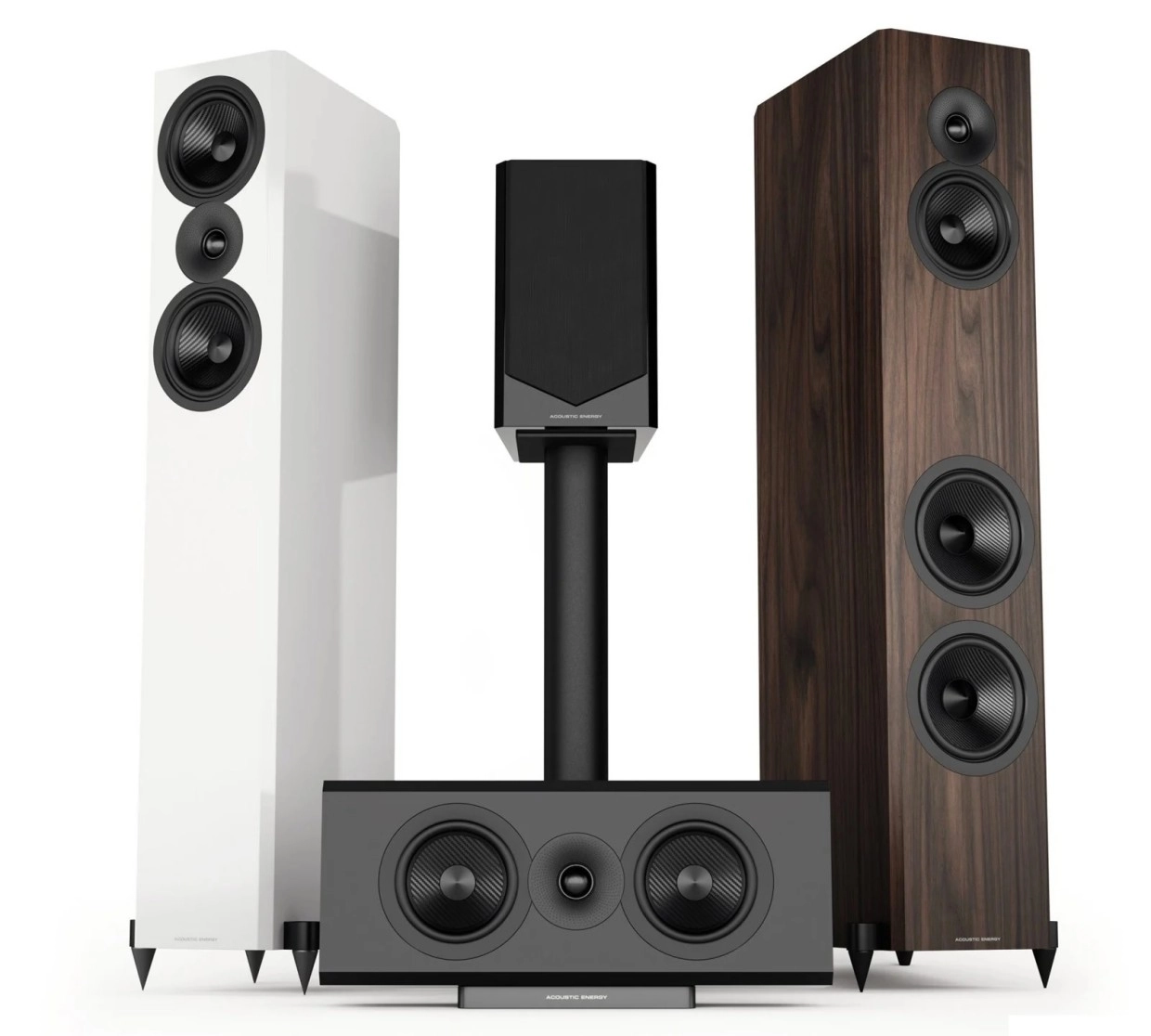
Acoustic Energy plans to offer the redesigned range through authorized dealers worldwide beginning in December. Finish choices will comprise high-gloss white, high-gloss black and American walnut veneer, covering two contemporary lacquer options alongside a traditional wood appearance.
Pricing has not yet been announced. The supplied information also does not identify the individual models, cabinet formats or complete technical specifications that will make up the range. Those omissions leave several important buying questions unanswered, including how broadly the Corinium-derived engineering will be applied across the lineup and whether every model will use the same driver complement.
The revised 500 Series appears aimed at listeners who place greater value on coordinated acoustic engineering than on added controls or lifestyle functions. Its defining story is the interaction between the carbon-fiber bass/midrange driver, Corinium-derived 29mm tweeter, timing-conscious crossover and tapered RSC enclosure. That makes the eventual model breakdown especially important: cabinet size, driver configuration and system requirements will determine how the shared design principles are expressed across the range. Before buyers can assess positioning, Acoustic Energy still needs to disclose full specifications and pricing. The December rollout should provide that missing context, along with a clearer picture of how much Corinium engineering has reached each member of the new family and where the redesigned 500 Series sits within the company’s broader loudspeaker catalog.


Sound Off
0Join the discussion if you have something to add.