
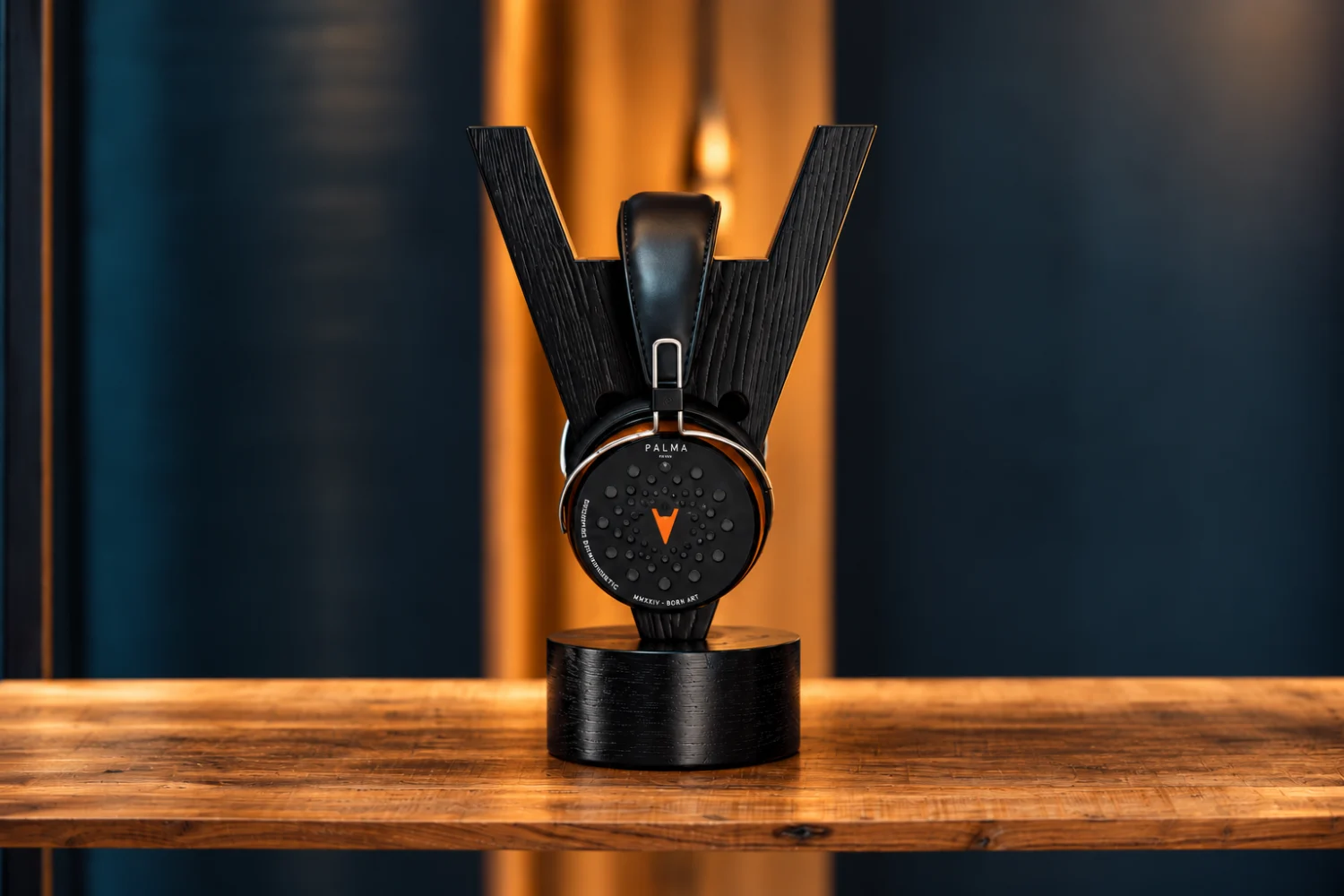
Choosing between open-back and closed-back headphones usually settles how and where a pair will be used. Palma Audio’s DHS-10 is designed to keep that decision open after purchase. A patented mechanism changes the acoustic behavior of each earcup with a short rotation, allowing the over-ear headphone to operate in either configuration without replacement panels or electronic processing. The Spanish manufacturer has carried this idea over from its DHS-1, but substituted a synthetic high-performance composite for that model’s wooden enclosures. The defining concept remains intact, now accompanied by seven color choices and a 50mm dynamic driver system developed for both operating modes.

Forty-eight openings controlled by a 14-degree turn
The DHS-10’s central feature is mechanical rather than digital. Each earcup contains 48 precisely formed openings and an outer cover that rotates to expose or seal them. Moving that cover through 14 degrees changes the headphone from open to closed operation. No components need to be removed, and there is no separate accessory to store when changing modes.
With the openings exposed, energy from the rear of the driver diaphragm can escape through the earcup. Closing them contains that rearward output within the enclosure and is intended to provide greater acoustic separation from the surrounding environment. Those are materially different working conditions for a driver, which makes the DHS-10 more than a headphone with adjustable exterior vents.

The mechanism can also be operated while music is playing, without removing the headphones. That gives listeners a direct way to choose the configuration for a particular room or situation. Open operation may suit listening where sound leakage and outside noise are not concerns, while the closed setting is intended for occasions when additional isolation matters. The design does not, however, turn the DHS-10 into an active noise-canceling model; its closed mode relies on the physical earcup configuration.
One driver platform must serve both enclosures
Convertible construction creates a demanding engineering relationship: the same driver, ear pads and internal structure have to function with the rear of the diaphragm either vented or enclosed. Palma says the DHS-10 has therefore been acoustically tuned for both positions, with the aim of retaining a consistent overall balance rather than presenting two unrelated sound signatures.
A 50mm dynamic driver sits inside each earcup, using a neodymium magnet system. Nominal impedance is 32 ohms, while voice-coil inductance is specified at less than 0.1mH. The impedance suggests the DHS-10 is intended to work across a broad selection of audio sources, although sensitivity and power requirements have not been disclosed in the supplied specifications. Those missing figures will be important for determining how it pairs with portable devices compared with dedicated headphone amplifiers.

The value of the switching system is ultimately tied to this dual-mode tuning. Opening or closing a conventional vent can alter bass loading and the broader tonal balance as well as isolation. Palma’s approach treats both states as planned operating modes rather than positioning one as a secondary adjustment. Independent measurements will be useful for establishing how closely the two settings track each other across the frequency range.
Composite shells distinguish the DHS-10 from the DHS-1
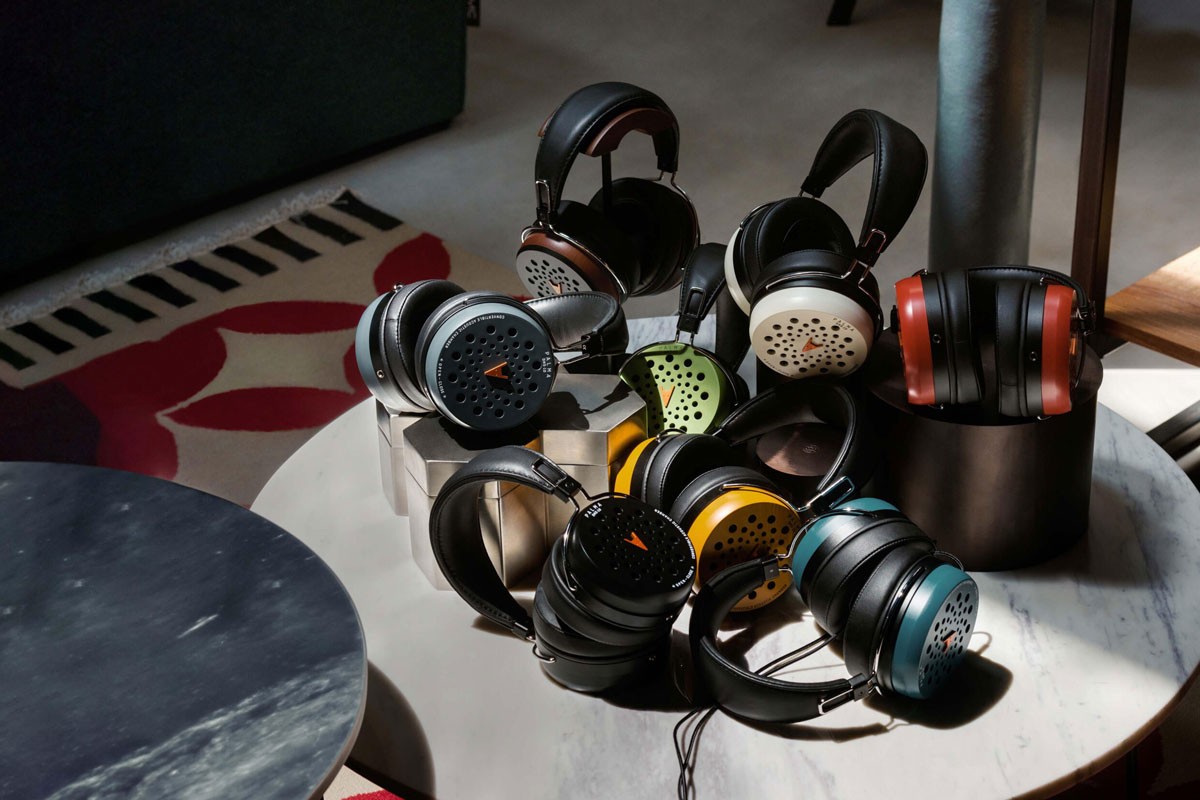
The DHS-10 shares its patented convertible principle with Palma’s earlier DHS-1 but changes the enclosure material. Instead of wood, its earcups use a synthetic high-performance composite. That decision establishes the hierarchy between the two models without discarding the mechanism that defines the range. It also gives Palma room to offer a wider visual selection: the DHS-10 will be made in seven colors, each carrying a musically inspired name.

Material substitution matters here because the enclosure must perform two jobs. It supports the rotating outer section and becomes part of the acoustic boundary when the headphone is closed. Palma has not supplied weight, resonance or durability comparisons between the composite DHS-10 and wooden DHS-1, so conclusions about their mechanical or sonic differences would be premature.
The broader palette gives the newer model a less traditional appearance than a wood-bodied headphone, but color is secondary to the functional role of the shells. Their openings, rotating covers and closed internal volume are integral parts of the acoustic system. Buyers are therefore choosing a finish around a fixed convertible architecture rather than selecting different technical versions.
Comfort and accessories support its dual-use brief
Memory-foam ear pads covered in soft lambskin are intended to provide the contact surface and seal around the ears. That seal is especially relevant in closed operation, where the physical boundary between the earcup and the listener affects passive isolation. The over-ear format should also distribute contact around rather than directly on the ear, although published weight and clamping-force figures are not available.
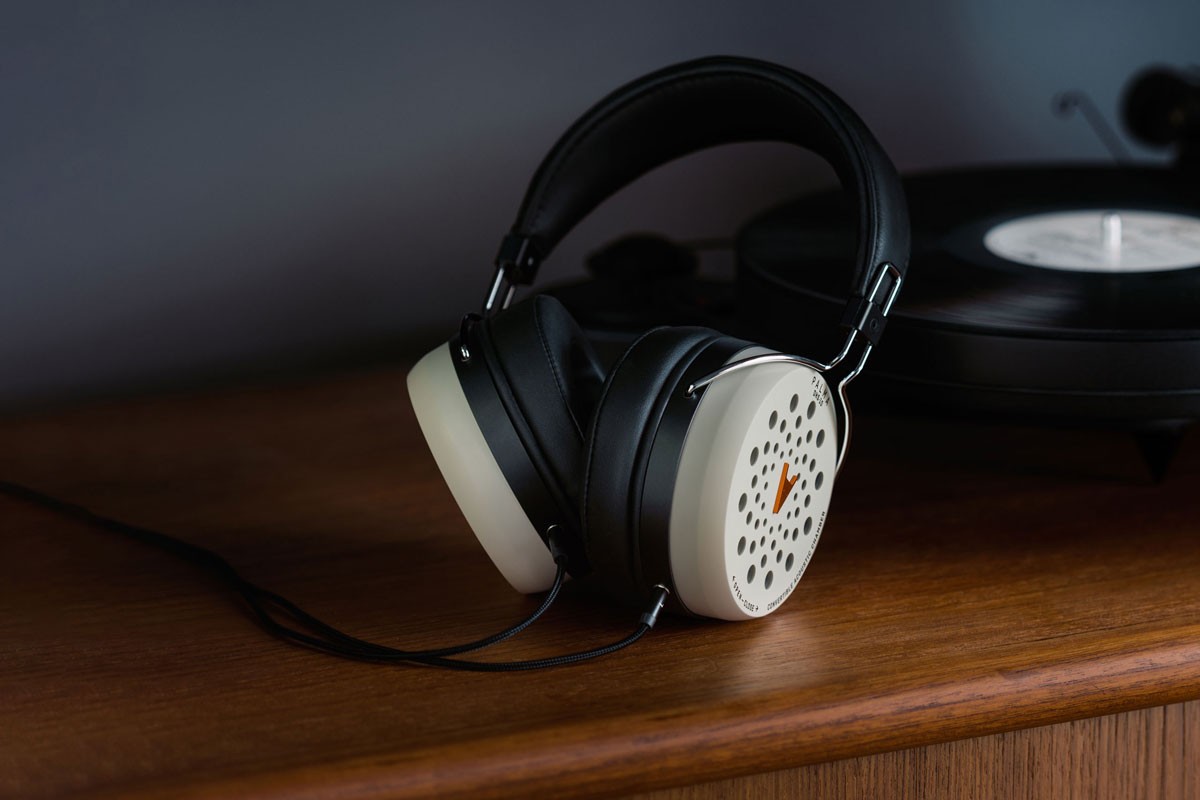
Detachable connection cables are included, as is a robust transport case. Replaceable cabling is useful for storage and servicing, and the case acknowledges that a headphone designed to cover open and closed listening scenarios may move between systems or locations. Palma has not detailed cable lengths or connector options in the available information, so system matching cannot yet be assessed beyond the stated electrical specifications.
Taken together, these supporting details reinforce the DHS-10’s intended versatility without overshadowing its main idea. Seven finishes address personal preference, while the pads, removable cables and case concern day-to-day ownership. None is as unusual as the rotating acoustic assembly, but each helps make the two-mode concept usable as a single primary headphone rather than a technical demonstration.
The DHS-10 appears aimed at listeners who appreciate the spatial behavior associated with an open design but cannot use one in every setting. Its 14-degree mechanical conversion could reduce the need to keep separate open and closed pairs, provided Palma’s tuning preserves a useful balance in both positions. Several details still need clarification, including weight, sensitivity, cable terminations, US pricing and regional release timing. Measurements should also reveal how the 48-aperture system changes frequency response and isolation when sealed. Until those points emerge, the most significant development is architectural: Palma has retained the distinctive mechanism of the DHS-1 while using composite construction, multiple finishes and a shared 50mm driver platform to define a different place for the DHS-10 within its headphone line.


Sound Off
0Join the discussion if you have something to add.