
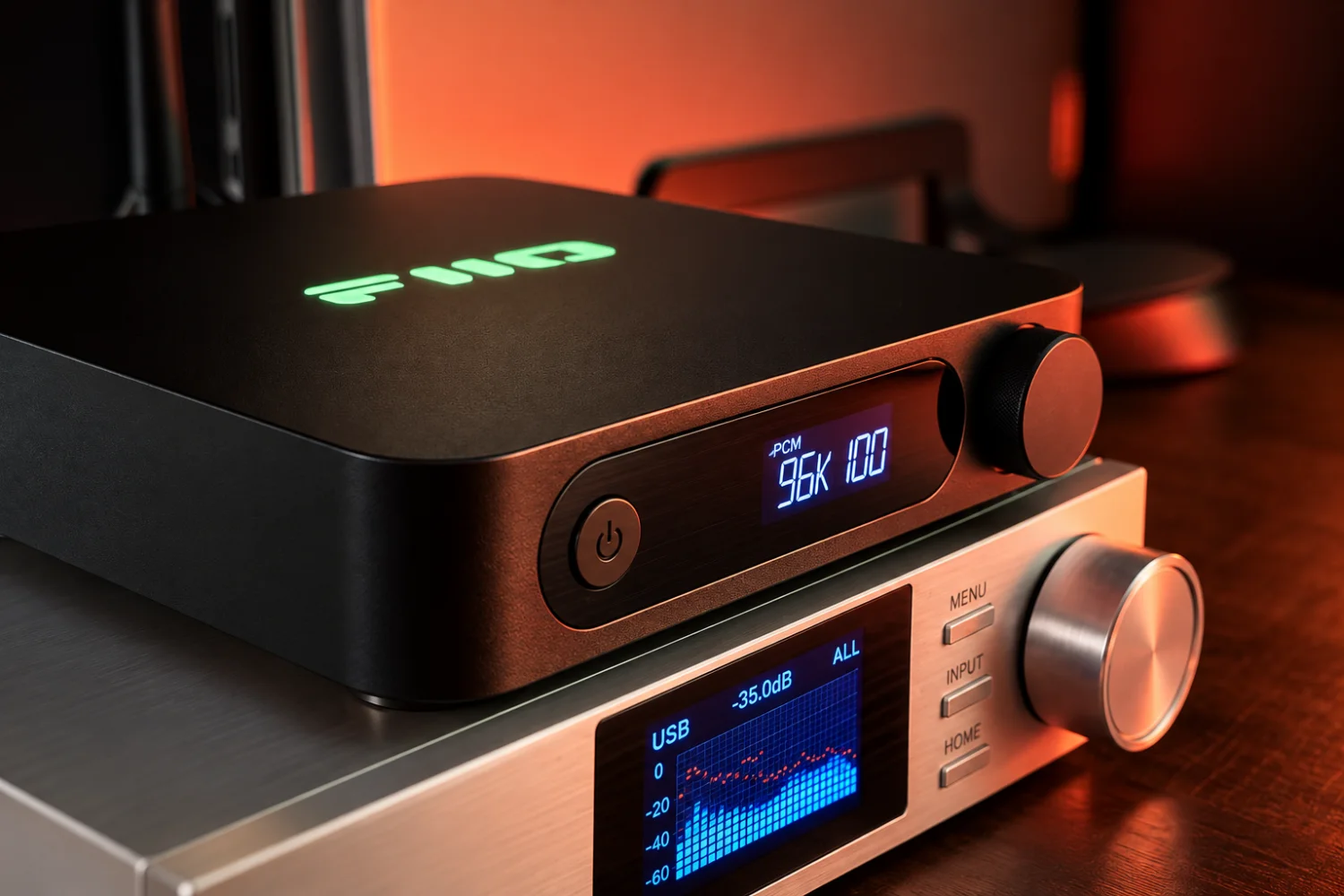
There is something deeply appealing about audio products that solve one specific problem without trying to become the center of the universe. We have reached a point where almost every new DAC, amplifier or streamer seems determined to be a DAC, headphone amp, preamp, network player, Bluetooth receiver and probably a small weather station at the same time.
Sometimes that is exactly what you want. The FiiO K17 is a good example: a genuinely ambitious all-in-one component that can become the heart of a desktop system.
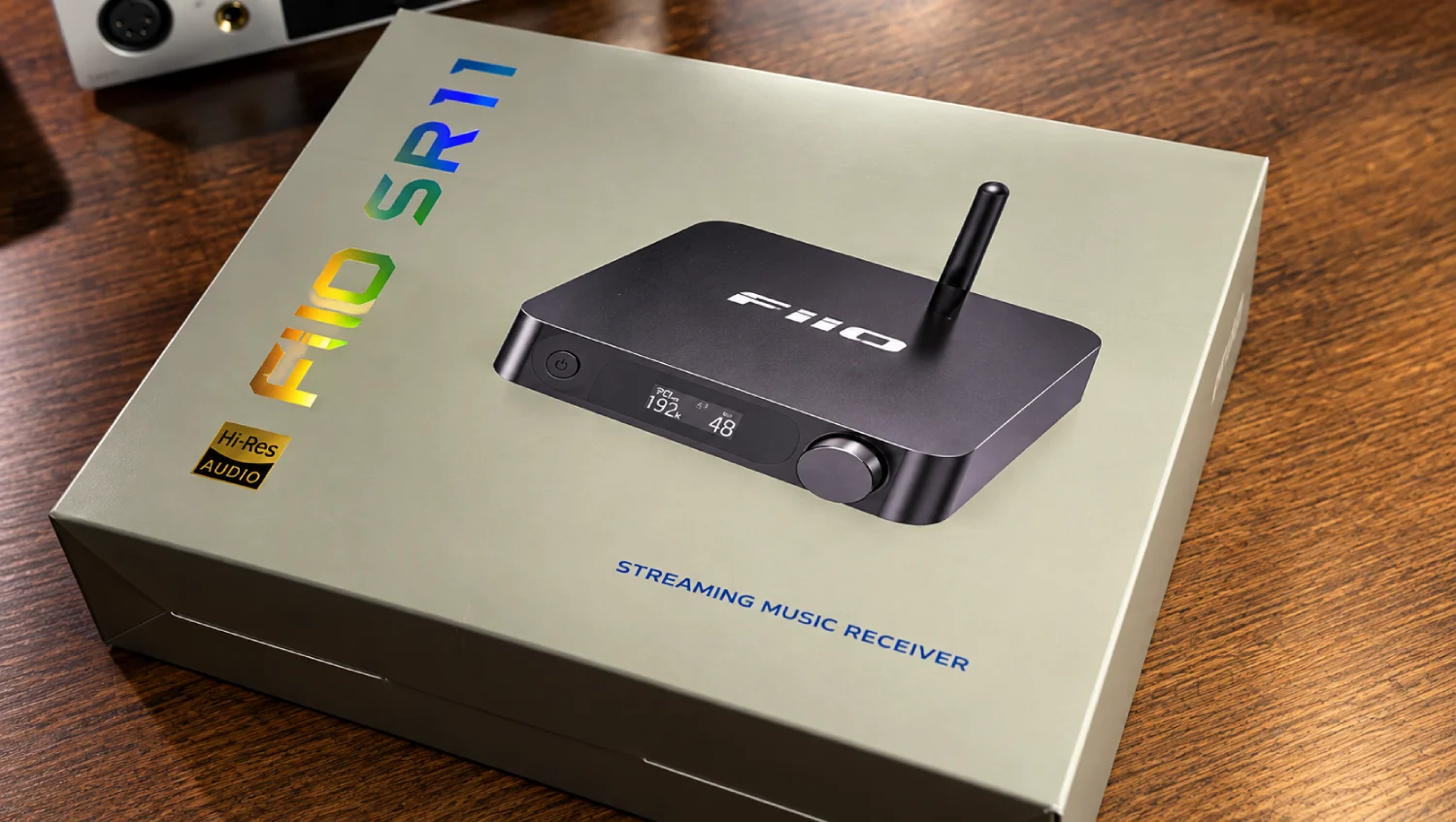
But what if you already own the DAC you like? What if the amplifier is sorted, the headphones or speakers are staying, and you simply want to get music into that system without opening a laptop every time?
That is where the FiiO SR11 makes a lot of sense.
The SR11 is not really trying to replace anything. It is there to connect things. It adds network playback, AirPlay, DLNA/UPnP, Bluetooth, Roon support and local USB storage playback to an existing system, without forcing you to replace the components you already chose for a reason. Innlimt tekst
And after living with it, that simplicity may be its biggest strength.
Small, simple and refreshingly focused
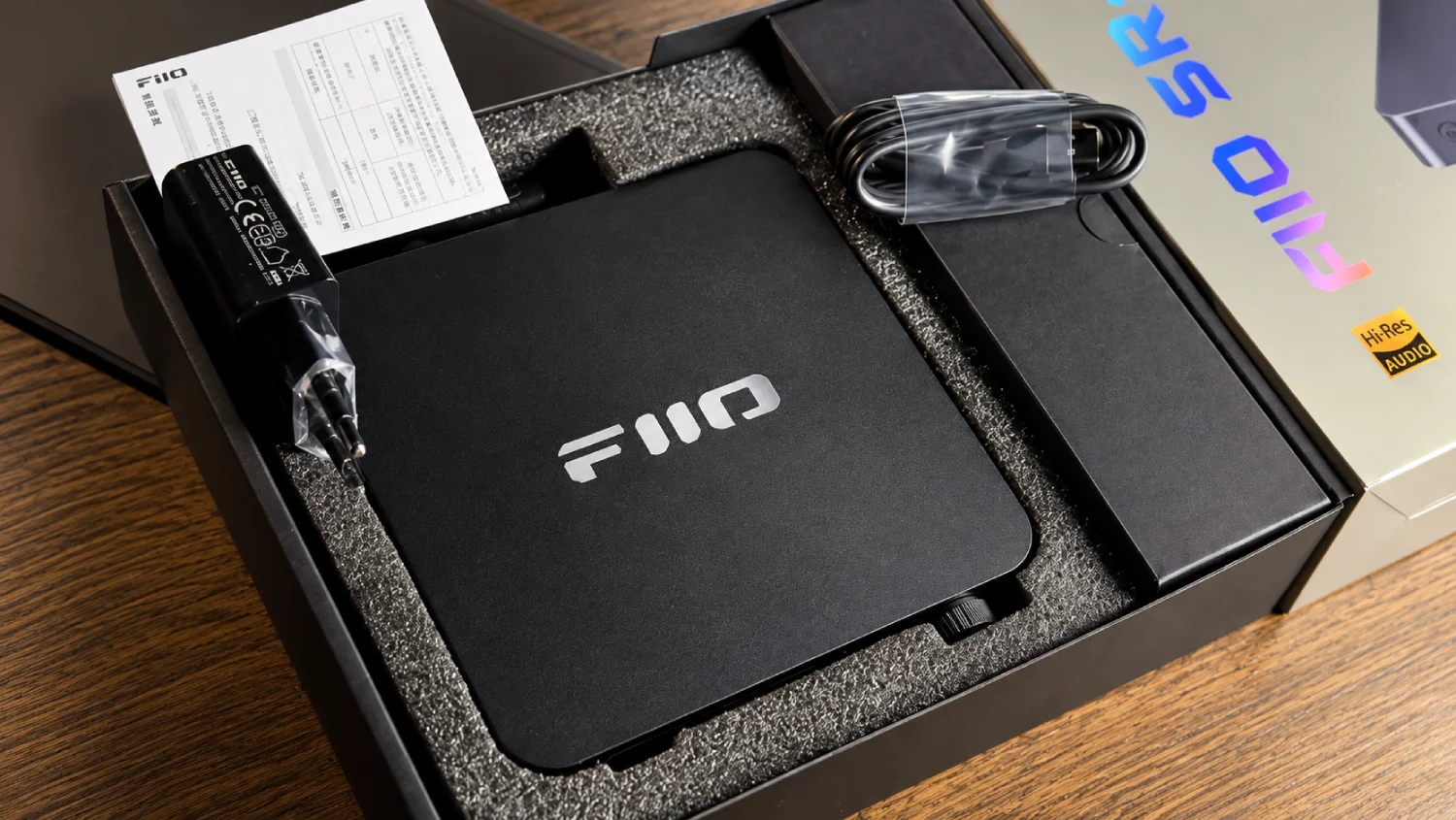
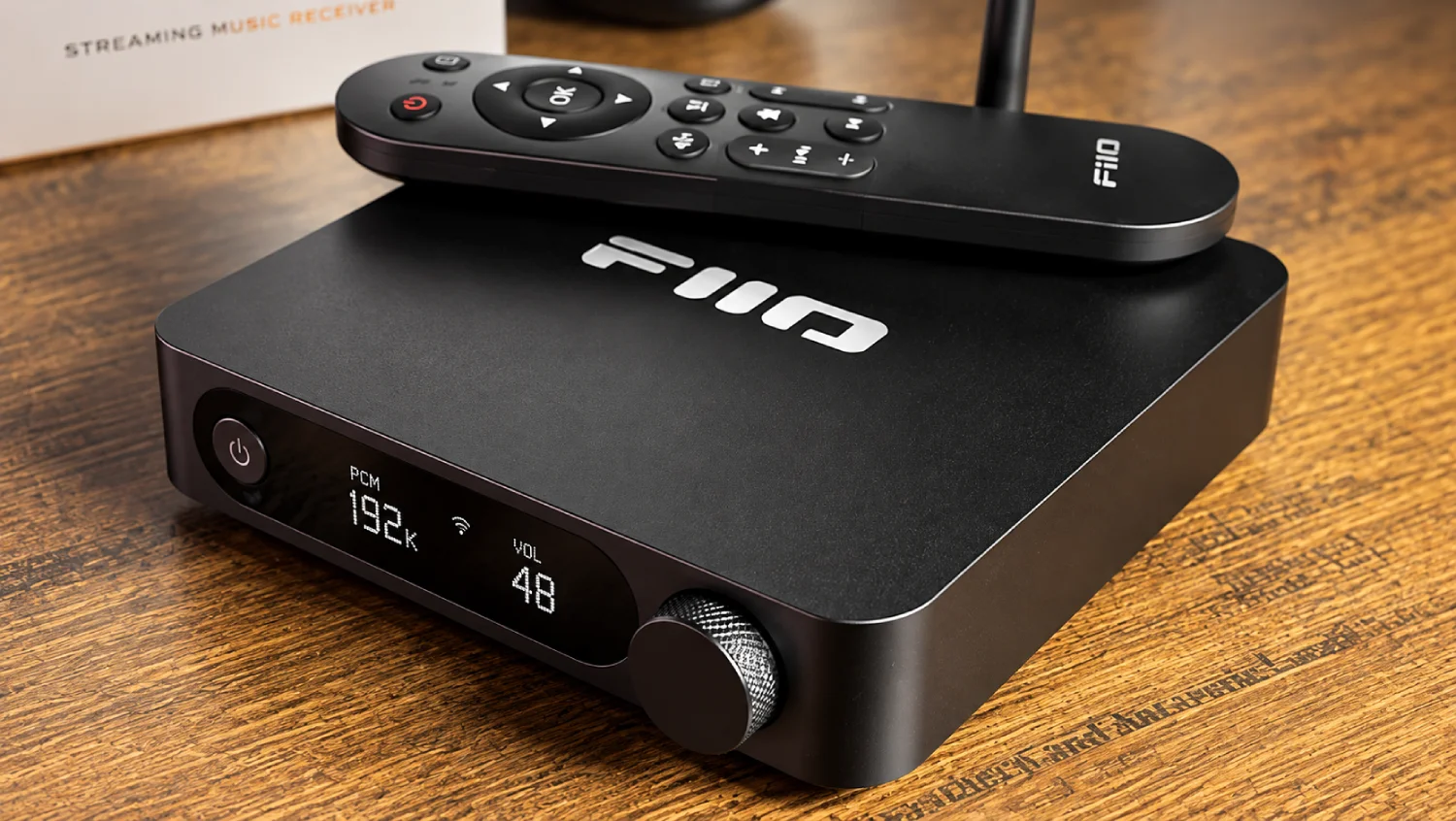
The SR11 arrives in a compact package with the streamer itself, paperwork, power cable, power adapter and remote control. The remote turns out to be more useful than you might expect because the SR11 is the sort of device you quickly stop wanting to physically interact with. Once it is installed in a rack or desktop stack, switching sources from the sofa makes much more sense than reaching for the front panel every time. Innlimt tekst
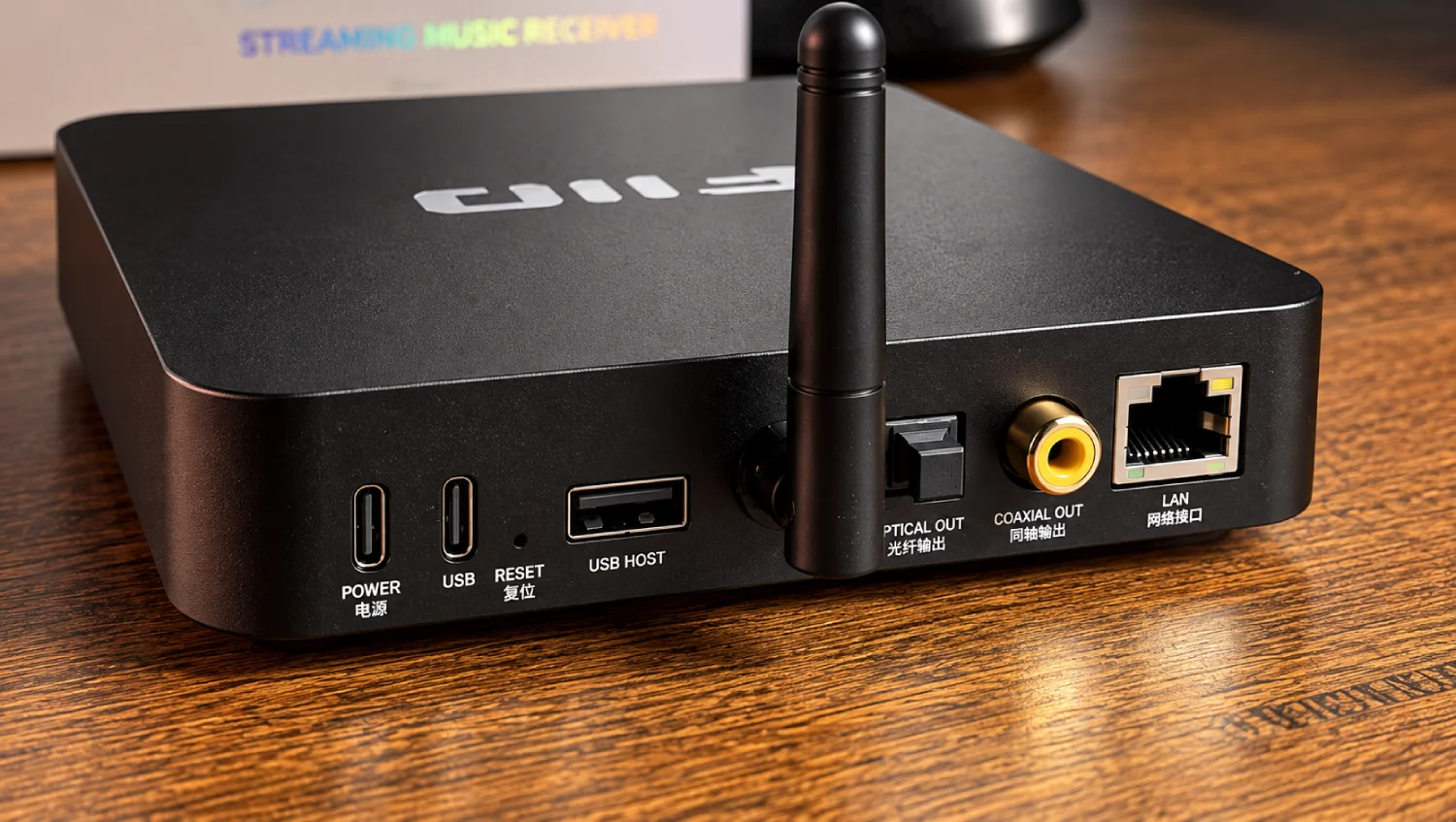
The design is recognisably modern FiiO: compact, black, understated and vaguely Mac mini-like. It looks neat enough to sit beside more expensive equipment without demanding attention, and the illuminated FiiO logo can be dimmed or switched off if you prefer an even cleaner appearance. Innlimt tekst
There is one practical drawback. The SR11 is very light.
That sounds insignificant until you connect several thick or stiff cables to it. A heavy USB cable or interconnect can pull the chassis around surprisingly easily, and the rubber feet do not completely solve the problem on every surface. In a permanent installation this is unlikely to matter much, but anyone using substantial audiophile cabling may wish the enclosure had a little more mass. Innlimt tekst
Still, the small size is part of the appeal. This is not another full-width component demanding shelf space. It can disappear into an existing system and simply do its job.
This is where the SR11 starts making sense
The easiest way to understand the SR11 is not as a conventional streamer, but as a digital bridge.
Imagine you already own a USB DAC or even one of the increasingly capable USB headphone dongles. Connect it to the SR11 and suddenly that simple DAC becomes part of a networked playback system. Music can arrive from a smartphone over Bluetooth, through AirPlay, from a DLNA/UPnP server on your network or from local storage connected directly to the streamer. Innlimt tekst
That flexibility is what makes the SR11 much more interesting than its modest appearance suggests.
My own use case was particularly simple: I was tired of turning on a laptop just to send music to a DAC.
It sounds like a tiny inconvenience, and technically it is. But these little bits of friction matter. If listening to music requires waking a computer, finding the right application, connecting everything and sacrificing laptop battery life, you sometimes just do not bother.
With the SR11 in the chain, that process becomes much more direct. Turn on the system, open the player on the phone and start listening.
That changed the way I used the setup more than I expected. Innlimt tekst
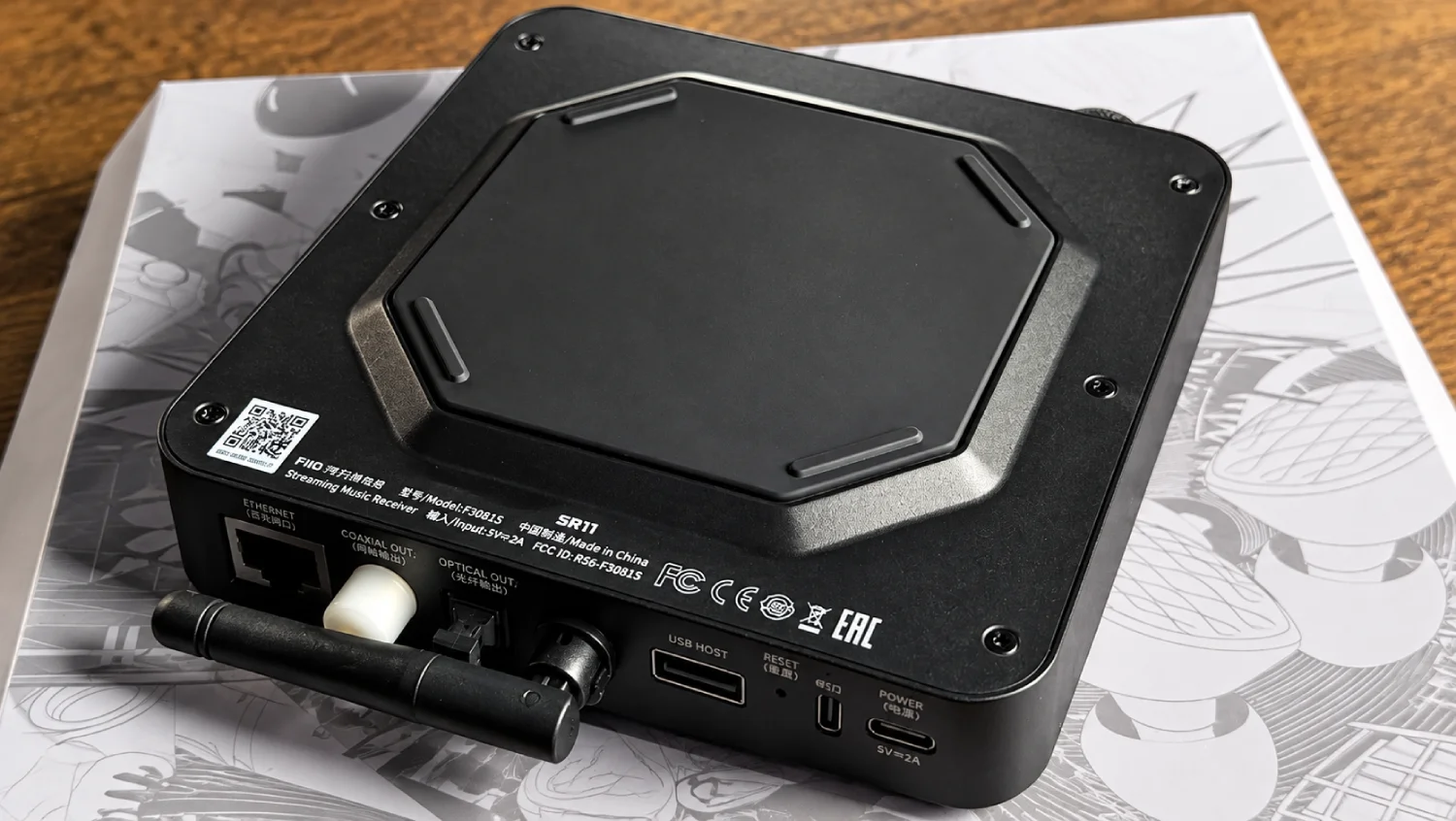
And importantly, you are not limited to Bluetooth. If you have music stored on a NAS, network drive or even suitable storage connected to a capable router, DLNA/UPnP allows the SR11 to become the endpoint while your phone acts primarily as the controller. That means the music library can stay on the network rather than occupying hundreds of gigabytes on the device in your pocket. Innlimt tekst
For anyone with a large local library, this is where the SR11 becomes genuinely useful rather than merely convenient.
There is also Roon support, which makes it considerably more interesting for listeners who already use Roon as the front end for a larger digital music system. Innlimt tekst
Local playback is more useful than it sounds
One of my favourite features is also one of the simplest: you can connect storage directly.
Put your music on an SD card with a USB reader, flash drive or external SSD and the SR11 can play from it without a computer in the chain. During testing, a 1TB SSD worked without issue. Playback from connected media is handled through the FiiO Control app. Innlimt tekst
This opens up some surprisingly useful configurations.
You could have a small desktop system consisting of the SR11, a USB DAC or headphone amplifier and an SSD containing your complete library. No PC. No laptop. No dedicated DAP permanently sitting on the desk. Just a small streamer doing the digital housekeeping.
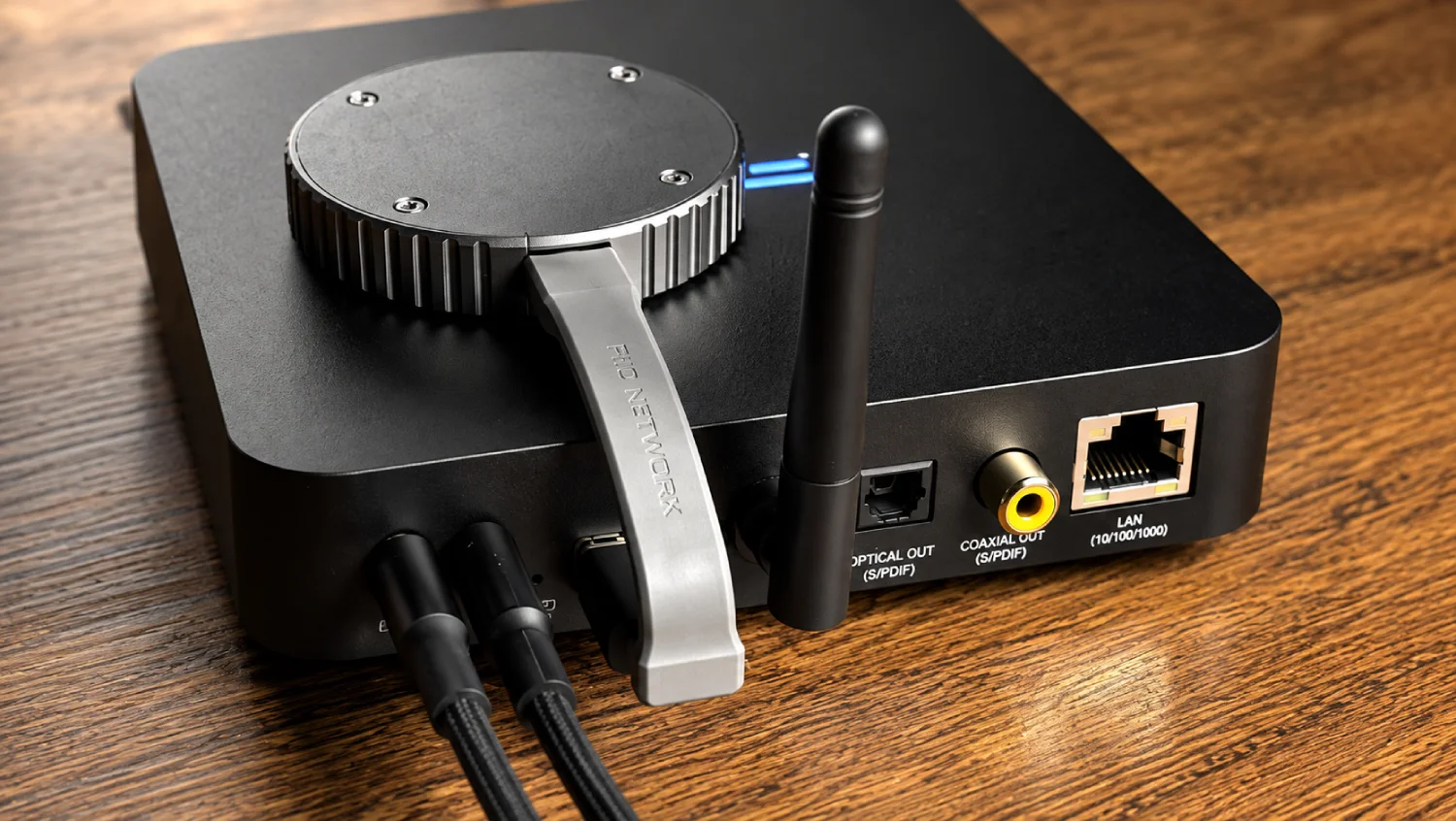
That is the part of the SR11 I appreciate most. It does not dictate what the rest of the system should look like.
Already own a DAC you love? Keep it.
Already have a headphone amplifier? Fine.
Have your library on a NAS? Use that.
Prefer local USB storage? That works too.
The SR11 feels like an accessory for a hi-fi system rather than an excuse to rebuild one.
The software experience is good, but not completely invisible
Network audio is always partly dependent on software, and this is where the experience becomes more complicated.
On iOS, mConnect Lite proved to be a reliable way of accessing a DLNA/UPnP library and sending playback to the SR11. Foobar2000 could also access the necessary network features, although background playback created problems: leaving or minimising the application could interrupt playback in the test setup. Innlimt tekst
Windows is relatively straightforward because foobar2000 can gain DLNA/UPnP functionality through an additional component, while applications such as Audirvana and other media players provide alternatives. Android users have an even wider range of network-capable playback applications available. Innlimt tekst
macOS was less satisfying if the goal is to avoid paid software, with Audirvana being one of the more obvious options found during testing. Innlimt tekst
FiiO Control is needed particularly when working with directly connected storage. It works, although the navigation could be more polished. Returning from a folder sends you back to the top of the list rather than remembering your previous position. Fortunately, scrolling is quick enough that this becomes more of an irritation than a serious problem. Innlimt tekst
There was also one occasion where connected storage stopped responding while the SR11 was running from a 10W power source. Supplying a little more power proved sensible in practice, especially when external storage is involved. Innlimt tekst
None of this ruined the experience, but it is worth understanding that a streamer like this is only one part of the chain. Your choice of phone, computer, player software and server can have as much influence on day-to-day usability as the hardware itself.
Why not just buy a WiiM?
That is probably the obvious question.
WiiM has become one of the most recognisable names in affordable streaming hardware, and for good reason. Its products are easy to recommend if you want a complete streaming ecosystem with a polished consumer focus.
The SR11 appealed for a slightly different reason.
I wanted a compact metal device that could fit into an existing system, provide USB digital output and support local media playback without making me pay for amplification or analogue circuitry I did not need.
In that particular scenario, the FiiO made more sense.
USB output is also significant for more demanding digital setups. In the configuration described during testing, USB supports up to 32-bit/768kHz, while optical is limited to 24-bit/192kHz. Innlimt tekst
The Fosi Audio S3 was another alternative considered, but it did not fit the same requirements because the needed local playback and USB output functionality were not present in the same way, while additional amplification was unnecessary for this particular system. Innlimt tekst
That distinction matters.
The SR11 is probably not the streamer I would recommend to somebody building an entire system from nothing. There are all-in-one products that make more sense in that situation.
It becomes much more compelling when you already own the important parts.
Conclusion
The FiiO SR11 is one of those products that can look almost unnecessary until you put it into the right system.
Then it becomes difficult to remove.
It does not transform the personality of your DAC. It does not promise some magical reinvention of digital audio. And it does not try to become the most impressive box on the shelf.
Instead, it removes friction.
It lets a phone control music stored elsewhere. It can bring network playback to a DAC that never had it. It can play files from local USB storage. It can slot into a Roon system. It can keep a laptop out of the playback chain altogether.
That is not glamorous, but it can have a bigger effect on everyday listening than another theoretical upgrade in specifications.
The most telling part of my time with the SR11 was simply that I listened to music more often. The system became easier to start, easier to control and less dependent on another computer sitting beside it.
And that is ultimately what good infrastructure should do: disappear.
The SR11 will not be necessary for everyone. If you are starting from scratch, an integrated streamer/DAC or all-in-one component may be cleaner. But if you already have a system you like and simply wish it were easier to feed music into it, FiiO's little streamer is remarkably easy to understand.
It fills the gap without trying to replace everything around it.
For the right system, that may be exactly what you need.



Sound Off
0Join the discussion if you have something to add.