
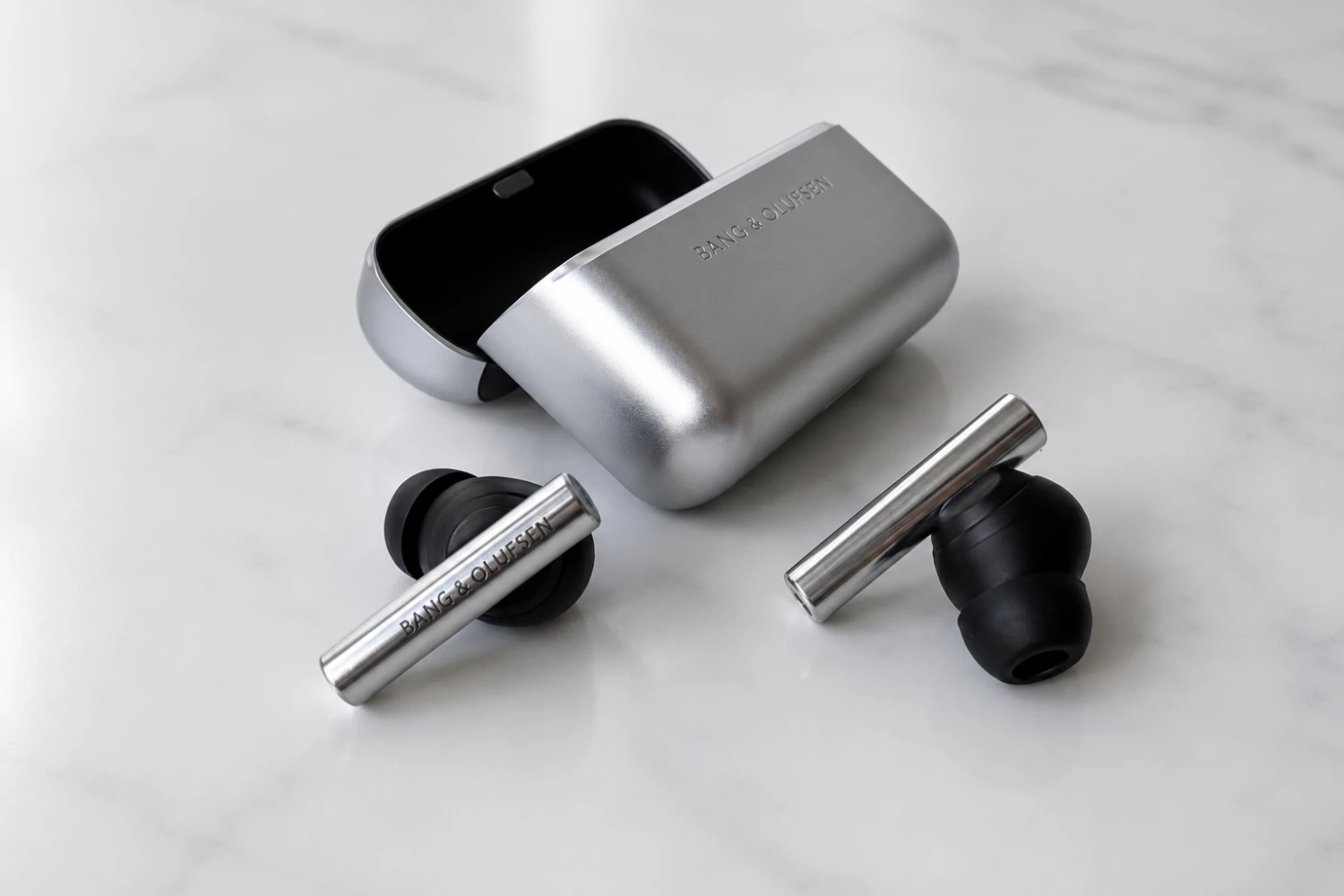
Bang & Olufsen has just redrawn the map of what a pair of true wireless earphones can cost. The Beo Grace arrives as the brand's new flagship, priced at $1,500, and for now it stands entirely alone at the top of the category — the nearest rivals sit at roughly half that price. B&O's own marketing calls it “a future icon, crafted for the century ahead.” Bold words. The question this review sets out to answer is simple: does the listening experience live up to the price tag, or is this simply luxury branding stretched over familiar wireless hardware?
I'll admit some skepticism going in. True wireless earphones have historically been a convenience category, not an audiophile one. But prices across every audio segment have been climbing for years, and it was only a matter of time before TWS models started brushing up against serious wired in-ear monitor territory. The Beo Grace is the first flagship bold enough to make that leap fully. Having spent considerable time with high-end wireless models from other brands, I went in ready to judge this one on its merits — sound above all, but everything else too.
Unboxing and Accessories
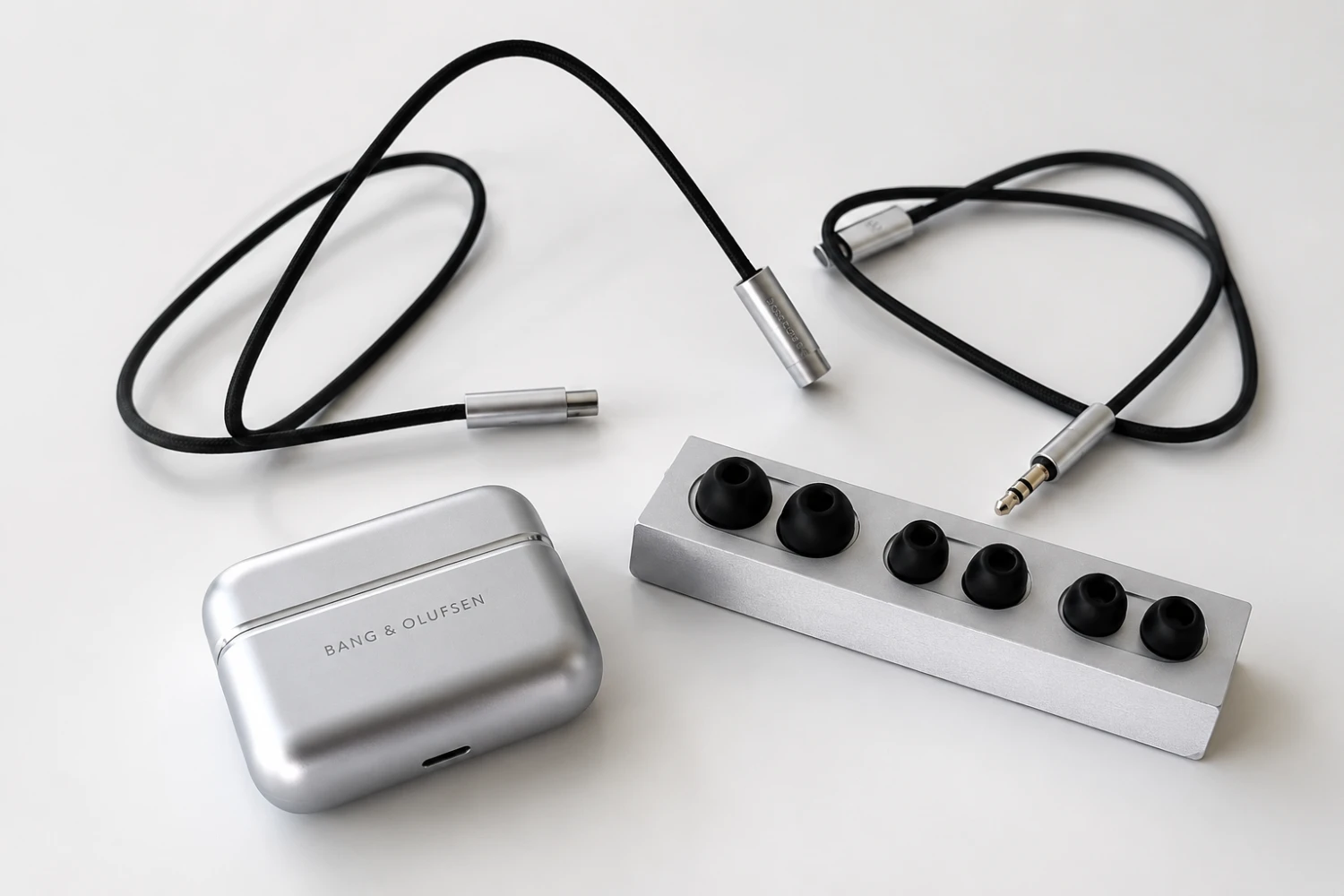
The retail box is understated, in classic B&O fashion. Inside: the charging case, two short fabric-braided cables (USB-C to 3.5mm and USB-C to USB-C), and four pairs of silicone ear tips. Notably absent is any sense that $1,500 buys you an overflowing accessory kit — if you want the optional Italian leather case in Cranberry Red, Seashell Grey, or Infinite Black, that's another $400.
The stock ear tips are oval-shaped with a firmer core, engineered specifically for this model's sound bore geometry. They took some getting used to on first fit, and it's worth knowing upfront that third-party tips aren't compatible — the acoustic design is proprietary. Once seated correctly, though, I had no complaints about seal or acoustic performance.
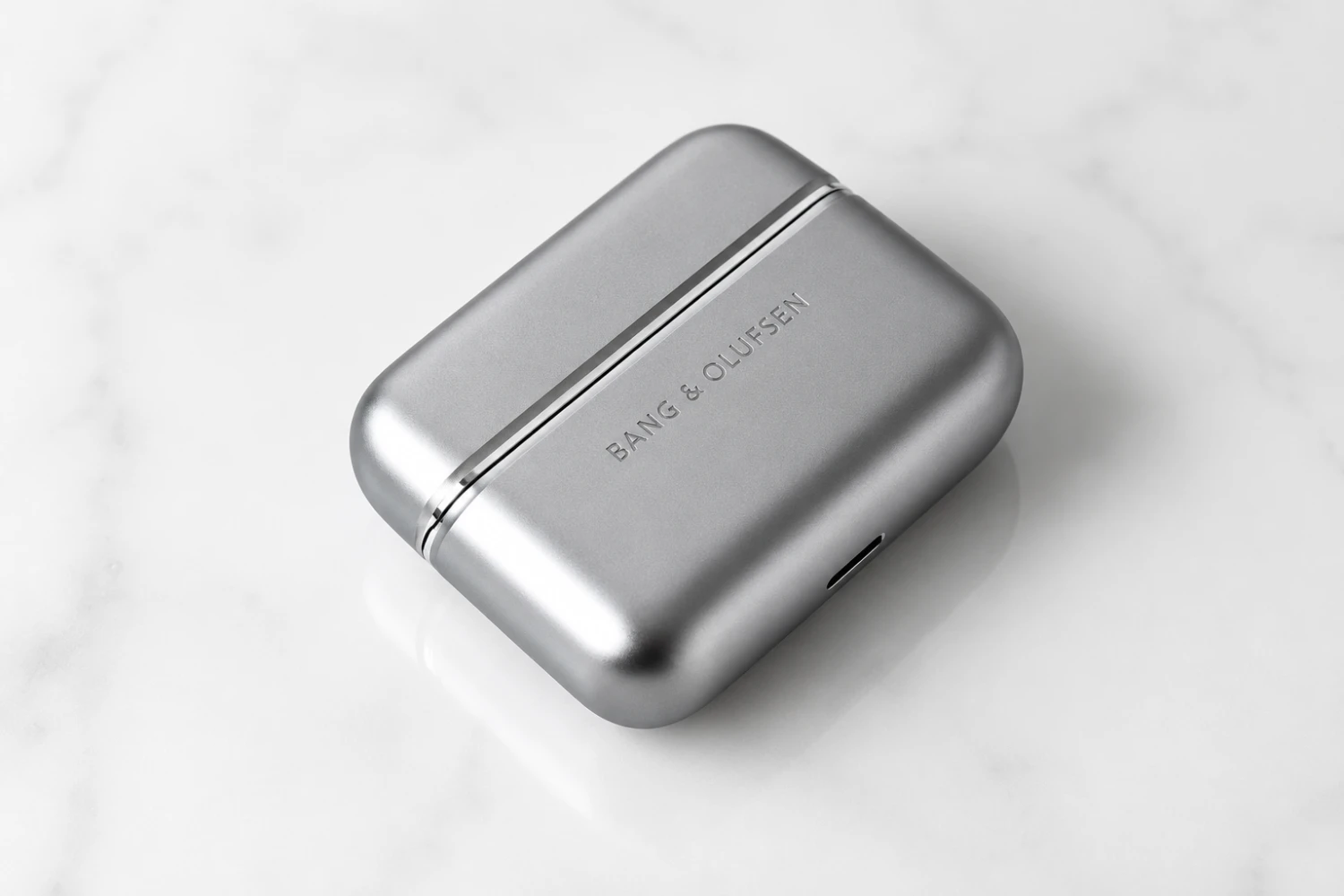
The case itself is machined from seamless, sandblasted aluminum, hand-polished to a matte pearl finish, with softly rounded corners. At 65 grams it's not the smallest case around, but it feels genuinely premium in hand, and it supports wireless charging — plus a couple of clever tricks I'll get to shortly.
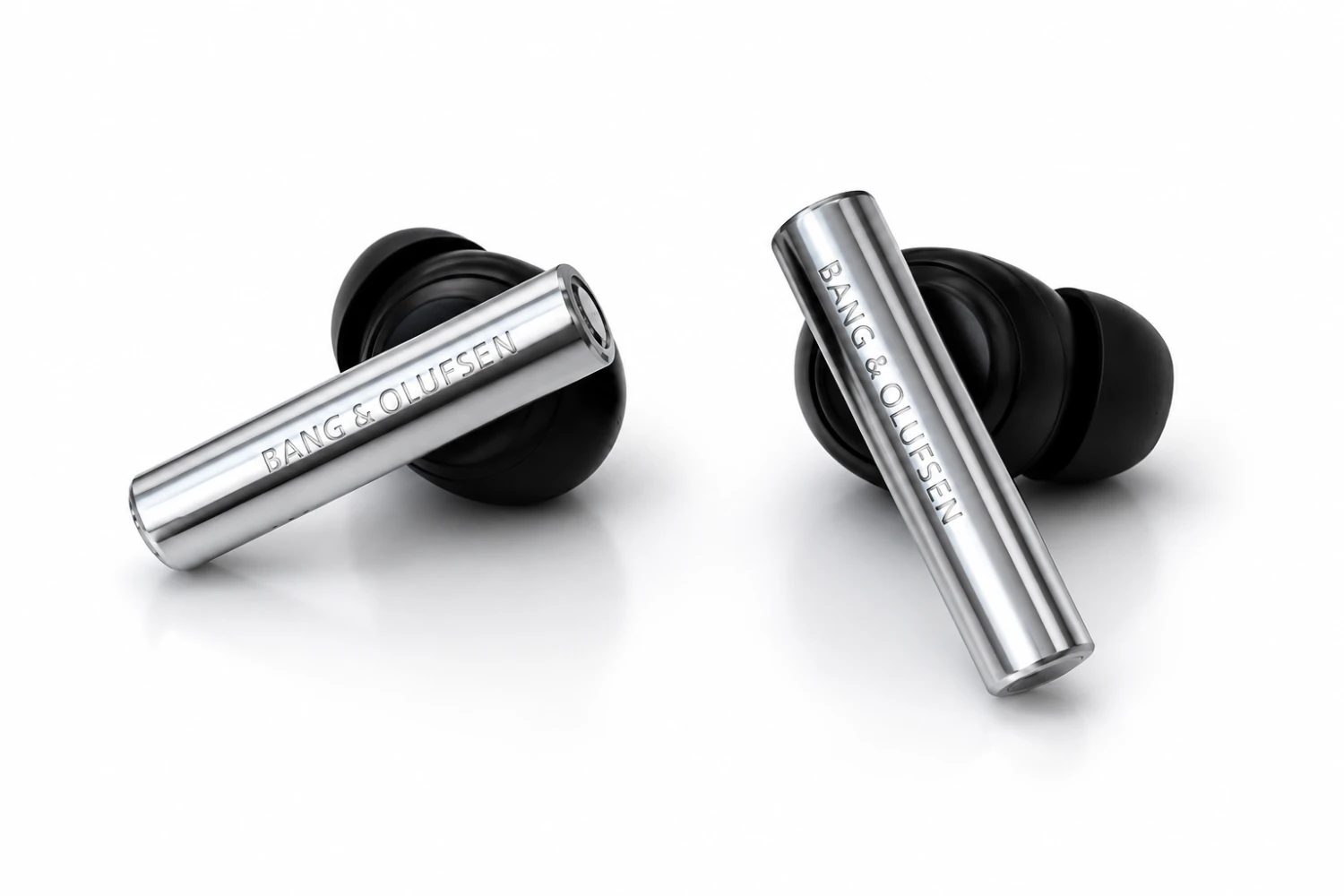
Design
Restrained elegance is the phrase that keeps coming to mind. I'm not typically a fan of the “stemmed” TWS silhouette, but B&O has executed it tastefully here. Build quality is excellent throughout, with mirror-polished aluminum used across the earpieces. It's a design language built around reflected light and material honesty — every surface is meant to catch the eye.
Two finishes are available at launch: the classic Natural Aluminum, and a warmer Honey Tone clearly aimed at pairing with gold jewelry. The intended audience is not subtle. I wear rose gold myself, and I'll admit the Honey Tone would suit that palette nicely.
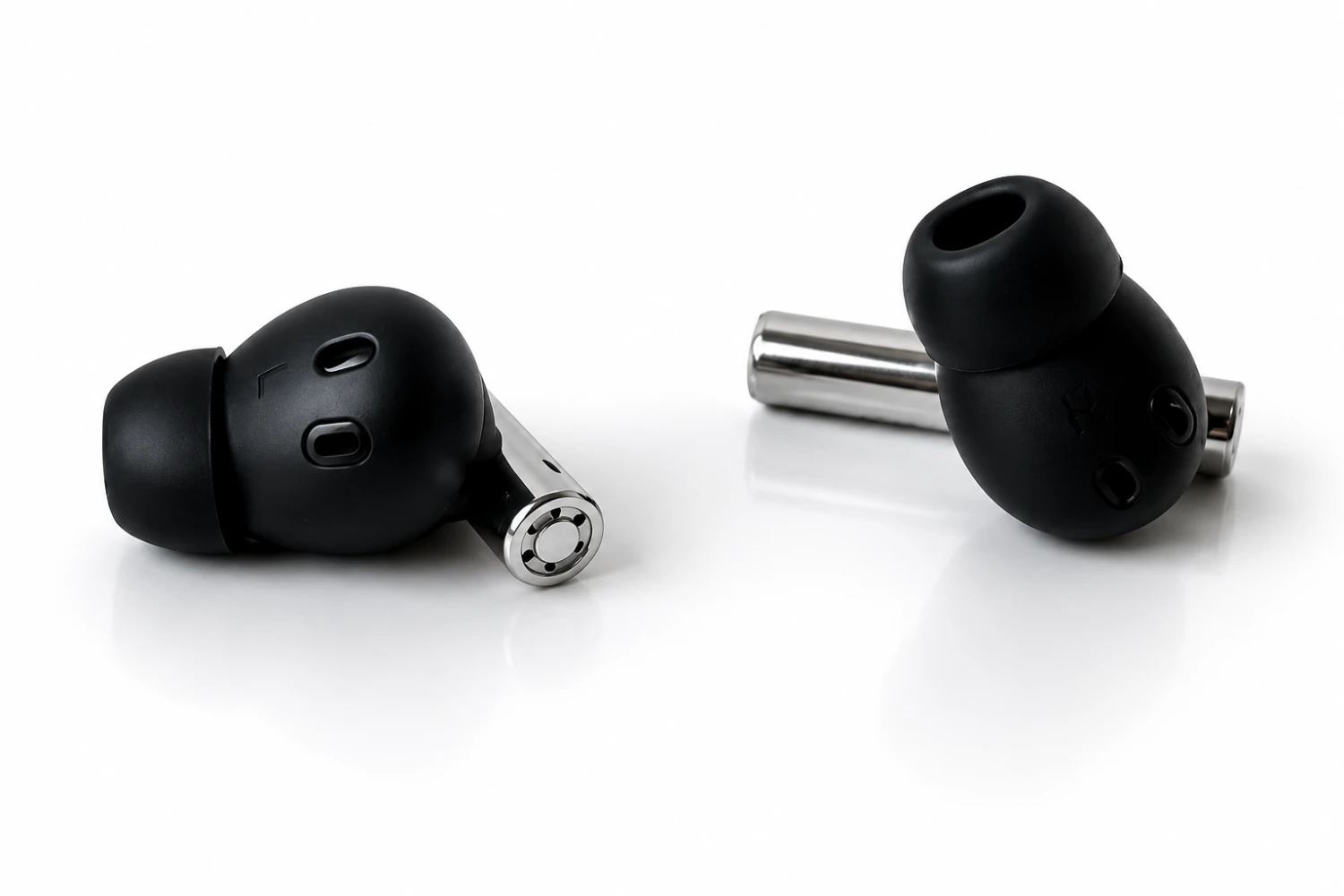
Comfort and Build
Each earpiece weighs just 6 grams and is roughly 15% smaller than the previous flagship, the BeoPlay Eleven. I went in bracing for discomfort given the shape, but the Beo Grace surprised me — secure, unobtrusive, and comfortable over long sessions, with no fatigue or looseness. IP57 dust and water resistance means they're happy at the gym or in the rain, though B&O stops short of full swim-proofing claims.
Controls
This is where B&O clearly wanted to differentiate. Touch controls use a system called Force Control, which reads the pressure of a touch rather than just detecting contact, simulating the click of a physical button and cutting down on accidental triggers. Track skipping, calls, and playback are all mapped through this system, and everything is reassignable in the companion app.
More interesting is NearTap: instead of touching the earpiece itself, you adjust volume by tapping the skin just in front of your ear — right side up, left side down. It works reliably and didn't take long to learn, though I suspect more conservative users may find it a bit unusual at first.
There's also an “aware” layer of automation: the earphones auto-pause when removed and resume when reinserted, with a gentle fade rather than an abrupt cut, and they drop into standby after 15 minutes of inactivity. All of it is configurable.
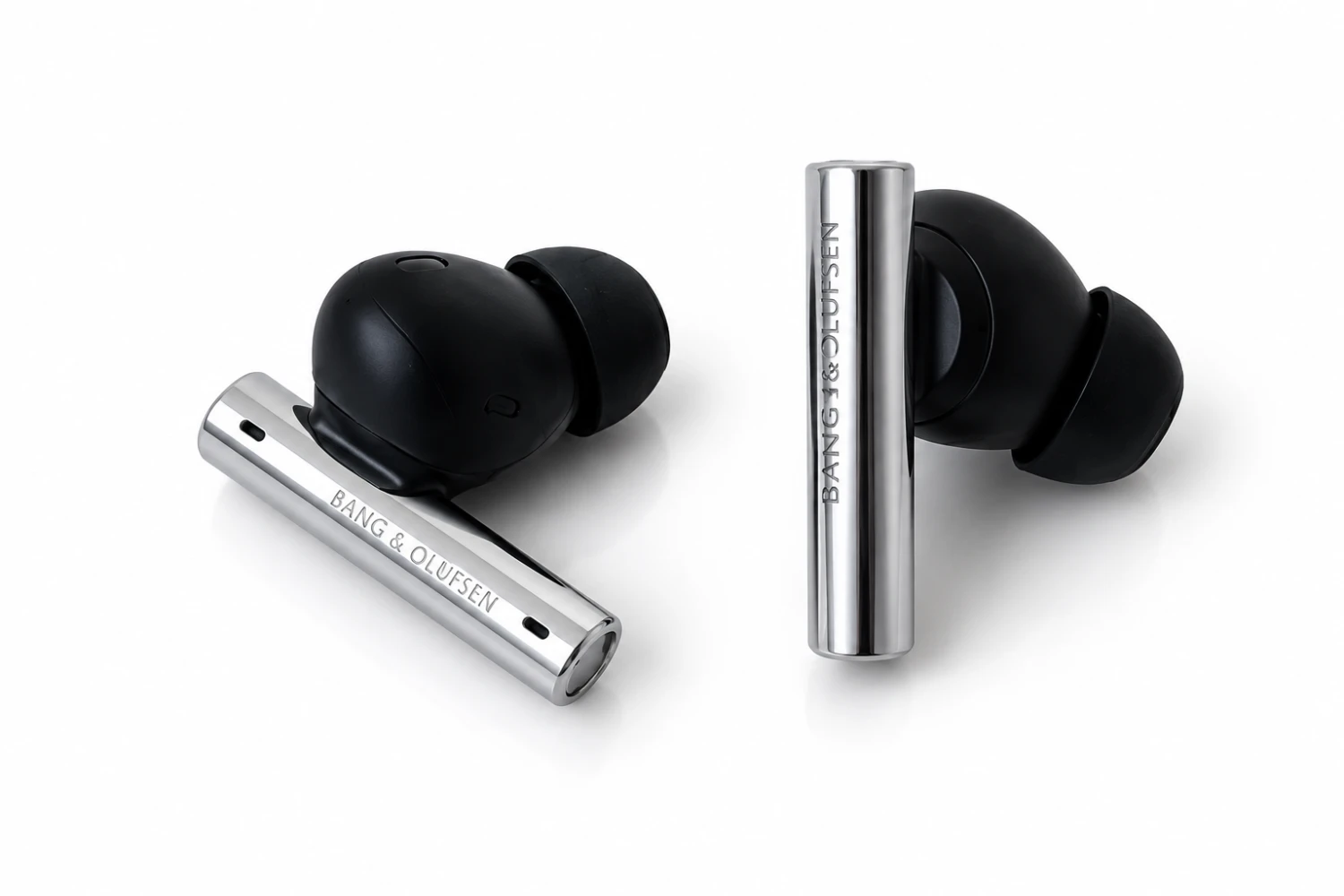
Features
The core hardware is a 12mm titanium driver per side. Bluetooth is version 5.3 — a generation behind the newest standard, though not unreasonable for this design cycle. Codec support is minimal: SBC, AAC, and LC3. No LDAC, which echoes the same decision B&O made on its BeoPlay H100 over-ears. Clearly a deliberate house strategy rather than an oversight.
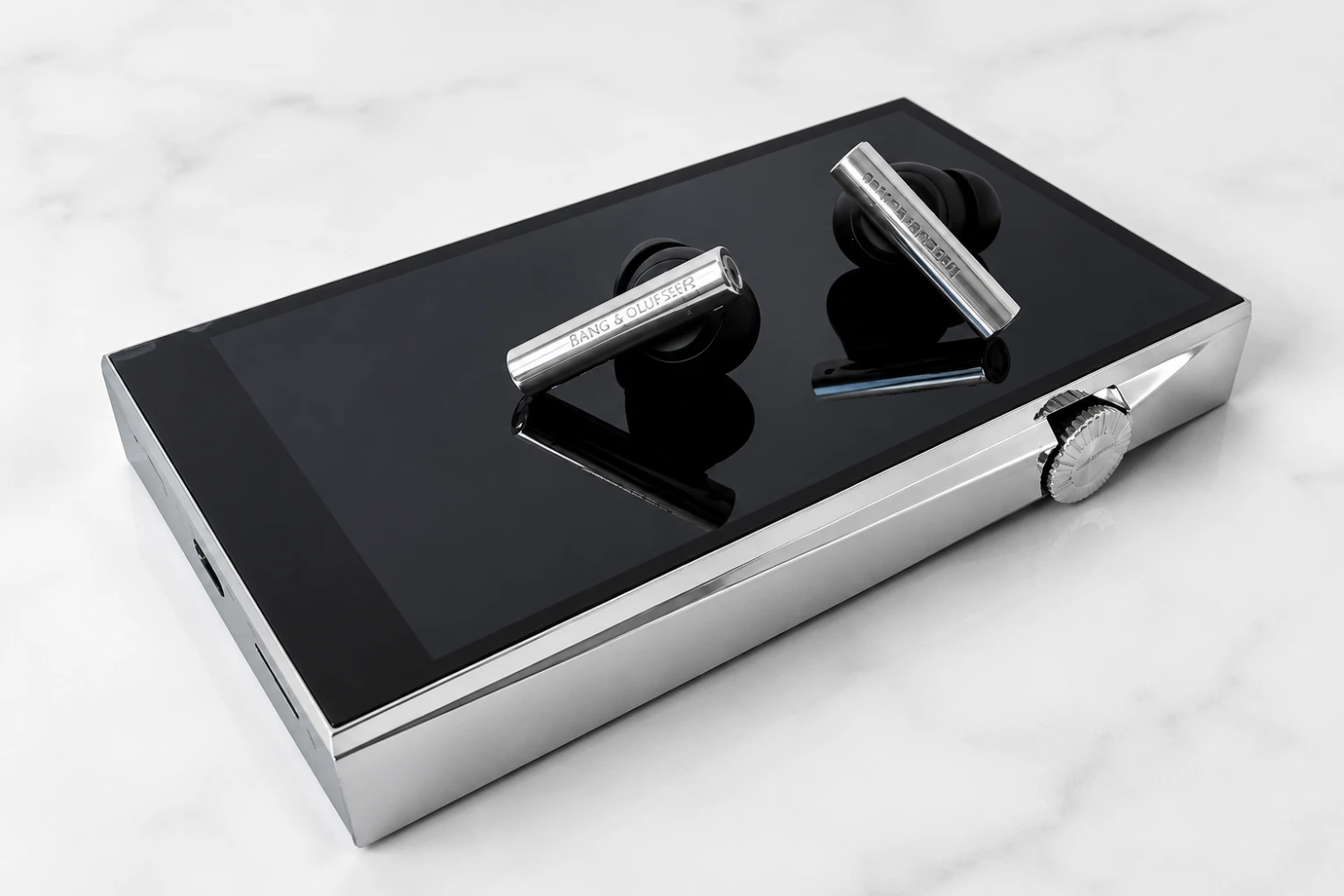
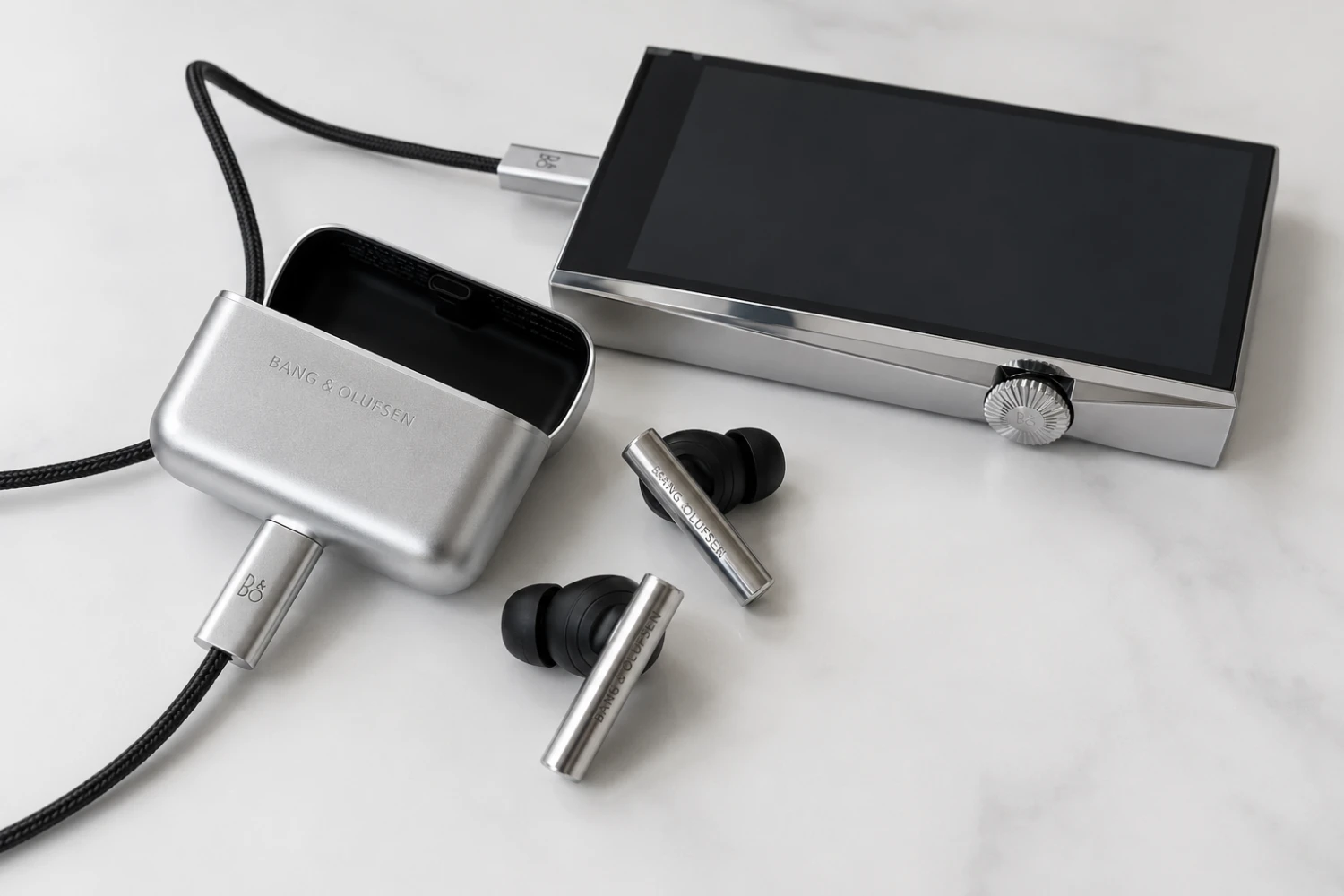
Where it gets interesting is wired Hi-Res playback through the case. Connect the case to a source via its 3.5mm line output or USB-C port, and the signal can be relayed to the earphones at improved resolution — a genuine trump card most competitors don't offer. The USB-C path supports LC3+ and LE Audio Hi-Res at 24-bit/96kHz with a 10Hz–40kHz frequency range and low latency (useful for gaming); the analog line output supports LC3 and LE Audio at 24-bit/48kHz across 10Hz–20kHz. Setup was painless in testing, and having the case double as a Bluetooth transmitter for other sources is a genuinely useful bonus.
Spatial Audio is on board too, optimized for Dolby Atmos with configurable head tracking — handy for film and gaming, less essential for music. The EQ is a little unconventional in layout but functional.
Pairing is fast and stable, and Multipoint covers two simultaneous sources (three would have been nice, but connection reliability was excellent throughout testing).
Active noise cancellation uses B&O's EarSense 2.0 system, which adapts in real time to ambient noise and to the acoustic signature of your own ear canal. The brand claims four times the effectiveness of the outgoing flagship. In practice, ANC performance is genuinely good — better than most — but not best-in-class; there's a faint residual hiss, and it doesn't quite match Sony's ceiling in this category. Transparency mode (TrueTransparency) is detailed and natural, with five adjustable blend levels between ambient sound and music, though a slight hiss is noticeable here as well.
Call Quality
Six MEMS microphones per earpiece, paired with acoustic mesh and cavity design intended to suppress wind noise before ANC and transparency processing even get involved. Call quality in testing was consistently clear — no complaints from anyone on the other end of the line.
Battery Life
Here's the weak point: 4.5 hours of playback per charge with ANC active, and roughly 17 hours total with the case. For 2026, that's on the low side for a flagship. Fast charging helps take the sting out — five minutes on the charger buys 2.5 hours of listening — and B&O, working with battery specialist Breathe, rates the cells for over 2,000 charge cycles, roughly four times the typical competitor lifespan. Still, unlike some full-size wireless headphones, there's no user-replaceable battery option here, so longevity depends entirely on that cycle rating holding up.
Sound Quality
Testing was done through an Astell&Kern A&Ultima SP3000, an iBasso DX320, and an iPhone 16 Pro.
This is genuinely the most seriously I've ever evaluated a pair of true wireless earphones. My usual listening diet is wired audiophile in-ear monitors, and TWS has typically been background noise by comparison. But if the flagship wired world wasn't going to meet flagship wireless halfway, it seems wireless has decided to close the gap itself. I had a similar reaction to B&O's own $2,200 BeoPlay H100 over-ears — and the Beo Grace repeats that trick in a smaller, wireless package.
The short version: no miracles, but a genuinely good result — better than expected, if not quite as transformative as the price might suggest. As is usually the case, reality sits between the marketing and the skepticism.
Judged purely as wireless earphones, the Beo Grace sound excellent. The tuning is deliberately universal — no aggressive coloration, nothing chasing a trend, just a carefully balanced signature meant to appeal broadly. Listeners coming from mass-market TWS will hear a real step up. Listeners tired of overly bassy or artificially sweetened tunings will appreciate the restraint here.
Tonally, it's detailed, open, and airy, leaning slightly warm, with a broadly neutral frequency balance and only a gentle lift in the bass and lower treble — the midrange stays front and center rather than getting swallowed. Soundstage is unusually spacious and three-dimensional for the category, with a sense of depth and deliberate instrument placement. The presentation has energy without forcing the issue, capable of real punch when a track calls for it, with a natural sense of rhythm.
I'd describe the overall character as comfortable but composed — closer to clarity and elegance than to raw weight or bombast. Control across the frequency range is genuinely impressive for a wireless design, and detail retrieval is strong: individual notes stay legible without the mix ever sounding thin or over-processed. Where a track calls for texture, there's a natural elasticity rather than an artificially crisp edge.
Genre versatility is a strength — nothing seems to trip these up, and even dense, complex mixes are handled without smearing or harshness. It's a balanced, dependable pair of earphones: sometimes understated, sometimes genuinely engaging, and unlikely to alienate most listeners. One important note for anyone chasing maximum fidelity: use the wired Hi-Res path through the case whenever possible. The jump over standard AAC Bluetooth streaming is noticeable.
Now, switching hats from reviewer to audiophile: wired in-ear monitors at a similar price point are still, in absolute terms, more capable than the Beo Grace. Layering, micro-detail, and overall resolving power don't quite reach that level — dynamic range is narrower, the soundstage less expansive, vocals a touch more synthetic, and the lowest bass and uppermost treble show reduced extension. Using the wired Hi-Res case connection narrows that gap somewhat, but doesn't close it. That said, the comparison isn't entirely fair — the Beo Grace is carrying an enormous feature set that no wired IEM needs to match.
Would I buy them? If money were no object and I wanted a wireless flagship, quite possibly yes. Not purely for outright technical performance — that wasn't the standout — but because nothing about the sound bothered me, and I have a real appreciation for an honest, uncolored tuning. Listened to on their own terms rather than benchmarked against wired flagships, they reveal a genuinely intelligent, well-judged sound signature. Not a category-killer, but far from a novelty either.
By Frequency
Bass: Controlled, agile, and appropriately dense, with good texture variation and readable detail in the low end. Sub-bass has real punch and reaches deeper than expected for the category, with convincing attack. Midbass is warm and slightly rounded without ever overwhelming the mix. Overall, a linear, well-judged low end.
Midrange: Bright, melodic, and full of life — instruments interact with a natural sense of timing, and imaging within the midrange is precise, with good separation between parts. Vocals come across as rich and emotionally direct, with a warm but natural timbre. The main criticisms: a touch less transparency than the best wired options, and female vocals occasionally lean slightly thin.
Treble: Calm, detailed, and well-controlled, with a touch of sparkle at the base of the range before a gentle roll-off. That roll-off keeps things comfortable and fatigue-free — appropriate for the category — though listeners chasing maximum air and extension in the highest octave may find themselves wanting slightly more. The timbre itself is pleasant, with a subtle shimmer rather than any harshness, and acoustic recordings in particular come across nicely.
The Competition
As of mid-2026, there isn't a true head-to-head rival for the Beo Grace — nothing else occupies this exact price bracket yet. For context, though:
B&O BeoPlay Eleven ($500) — the previous flagship, and the Beo Grace is a clear improvement across the board, sonically and otherwise.
Devialet Gemini II Opera de Paris ($700) — essentially the standard $450 Gemini II with 24-karat gold plating. Sounds pleasant, but resolution stays within expected limits for its price bracket.
Noble FoKus Prestige Encore ($700) — the most genuinely audiophile-leaning TWS currently available, with a sound signature that closes in on wired IEM territory. It's a serious contender on pure sonics, though the Beo Grace pulls ahead on convenience and feature depth.
Technics EAH-AZ100 / Sony WF-1000XM6 — the sensible picks for buyers wanting strong modern features and very good sound without flagship pricing.
Broadly: audiophile-minded buyers on a budget should look at Noble. Buyers wanting the best modern feature set at a moderate price should look at Technics or Sony. The Beo Grace, meanwhile, is squarely a status purchase for buyers who want the most exclusive option available, full stop.
Conclusion
The Bang & Olufsen Beo Grace is the first true wireless earphone to push pricing into genuinely luxury territory, and the market's response to that gamble remains to be seen. On the downside: the asking price is steep, and battery life is disappointing for a 2026 flagship. On the upside: the design is elegant, the fit is excellent, the feature set is deep and well-executed, and several of the proprietary technologies genuinely add value rather than existing as marketing filler.
Sonically, nothing here blew me away, but nothing disappointed me either — the neutral, uncolored tuning is a real strength on its own terms. This is not a model built around price-to-performance logic; anyone shopping that way should look elsewhere. But as a showcase of what a no-compromise, top-shelf wireless earphone can be, the Beo Grace earns its flagship status — even if “value” was never really the point.