
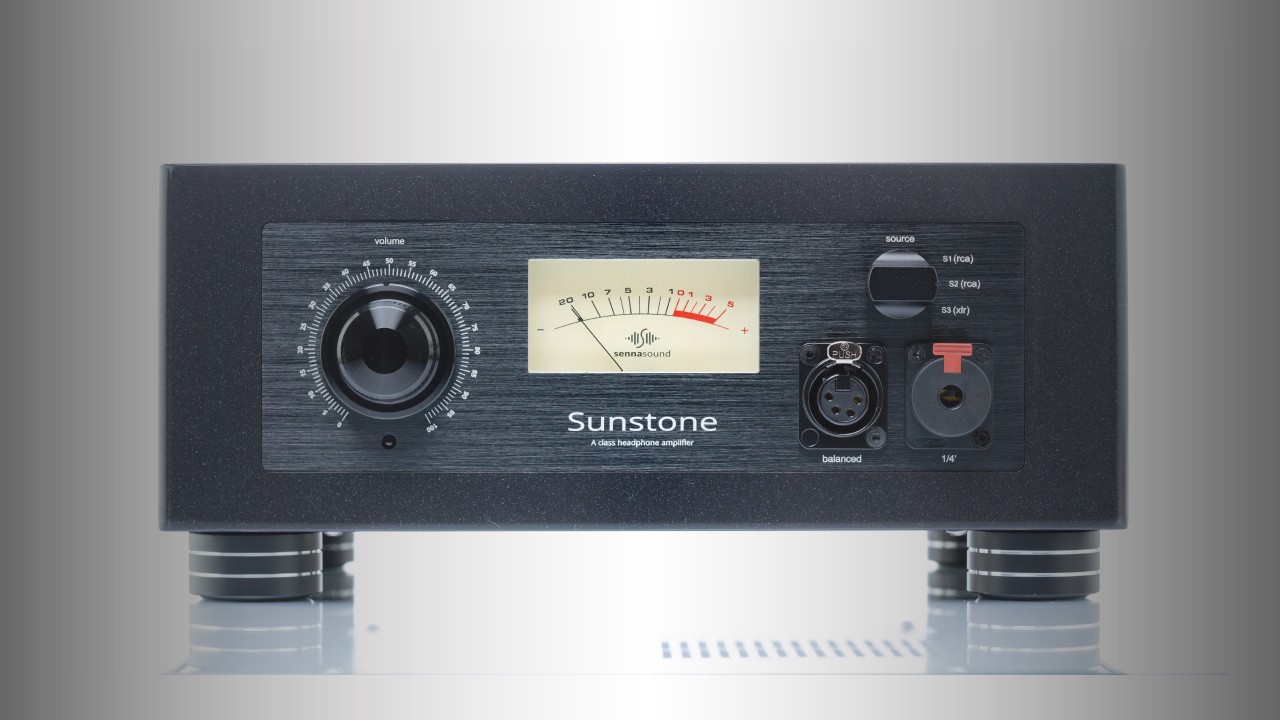
The Senna Sound Sunstone takes a focused approach to headphone amplification. Rather than combining a DAC, network streamer, preamplifier, and headphone stage in one enclosure, it concentrates on a single task: amplifying analog signals for a broad range of headphones. Its fully discrete Class A topology, specified output of 4.5 watts per channel into 50 ohms, and choice of balanced and unbalanced connections place it firmly in the category of dedicated desktop amplifiers for serious systems. That specialization is central to its appeal. The Sunstone is intended for owners who already have suitable source components and want a substantial analog amplifier that can accommodate multiple sources and different headphone interfaces without unnecessary digital functions.
A fully discrete Class A design
The Sunstone’s defining technical choice is its fully discrete Class A amplification circuit. In a Class A design, the active output devices remain conducting throughout the signal cycle rather than switching between operating states. This approach is valued in analog audio engineering for its conceptual simplicity and avoidance of crossover switching at the output stage, although it also consumes more power and produces more heat than many alternative amplifier classes.
Senna Sound supports the circuit with a low-noise, high-current power supply. The stated objective is stable operation and consistent voltage and current delivery as the volume setting and headphone load change. That power-supply emphasis is particularly relevant in a headphone amplifier intended to work with demanding transducers, because headline wattage alone does not describe how confidently an amplifier can supply current under changing conditions.
The published power consumption is 90 VA, which reflects the less energy-efficient nature of Class A operation. Prospective owners should therefore treat ventilation and placement as practical considerations. The Sunstone is better suited to an open shelf or a desktop with adequate space around the enclosure than to a tightly enclosed cabinet.
Useful power for varied headphone collections
The amplifier is specified to deliver a maximum of 4.5 watts per channel into 50 ohms. That is a meaningful amount of output for a dedicated headphone amplifier and gives the Sunstone scope to partner with magnetostatic headphones as well as high-impedance dynamic designs. Owners who rotate between different headphone types may find this flexibility more useful than a device optimized around only one narrow load category.
Its 4.5-watt figure applies specifically at 50 ohms, so it should not be treated as a universal output rating for every impedance. Even so, the combination of that specified output and the high-current power-supply design indicates that accommodating demanding headphones was a central engineering priority. For prospective owners, this can reduce the need to maintain separate amplifiers for different full-size headphones, provided the individual models are otherwise compatible with the Sunstone’s gain and output characteristics.
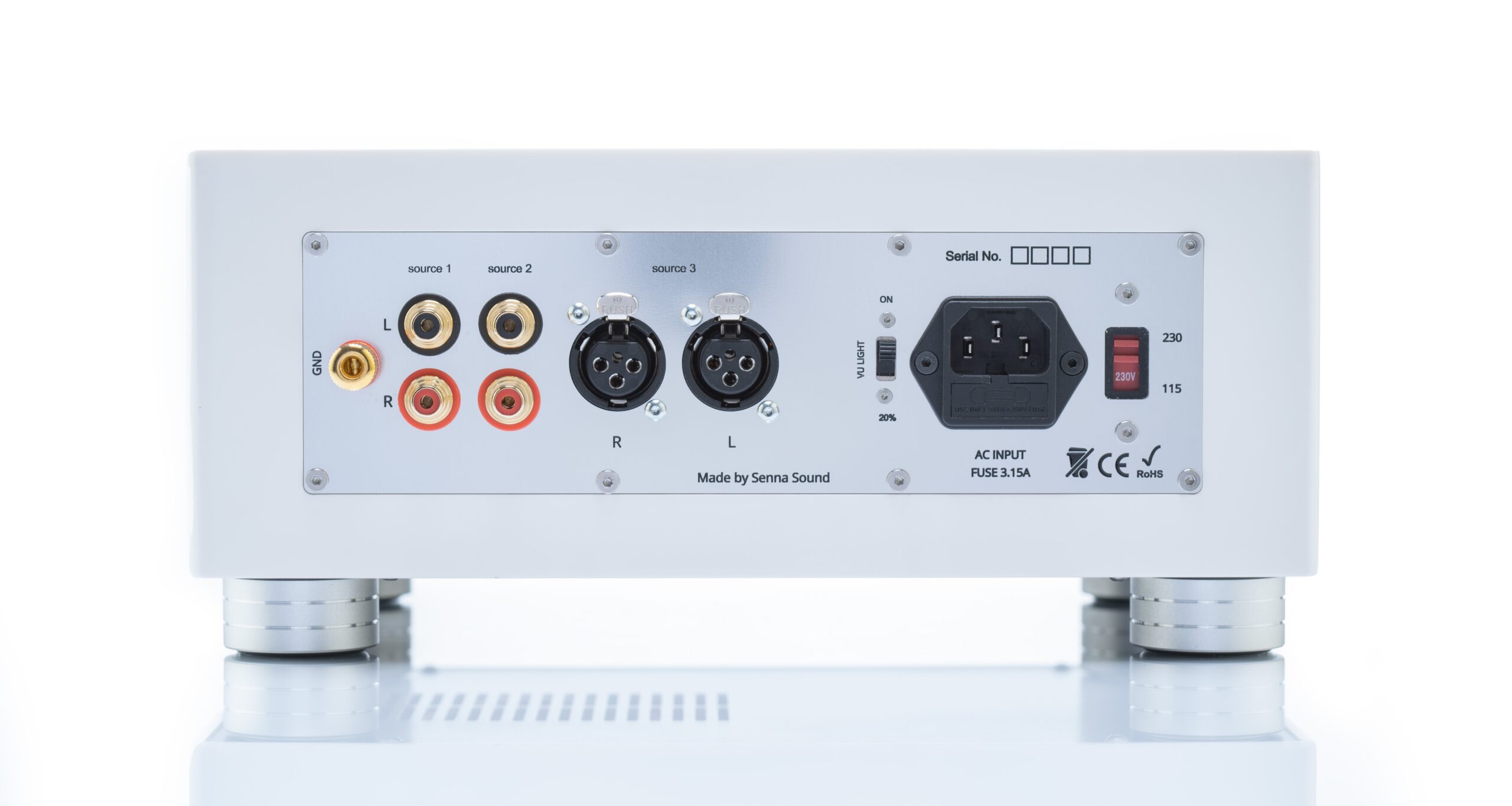
The specified input sensitivity is 0.8 volt RMS, while input impedance is 22 kilohms. Those figures make the amplifier suitable for integration with conventional analog source components, including standalone DACs with line-level outputs, phono stages, CD players, and other sources using RCA or XLR connections.
An intentionally all-analog signal path
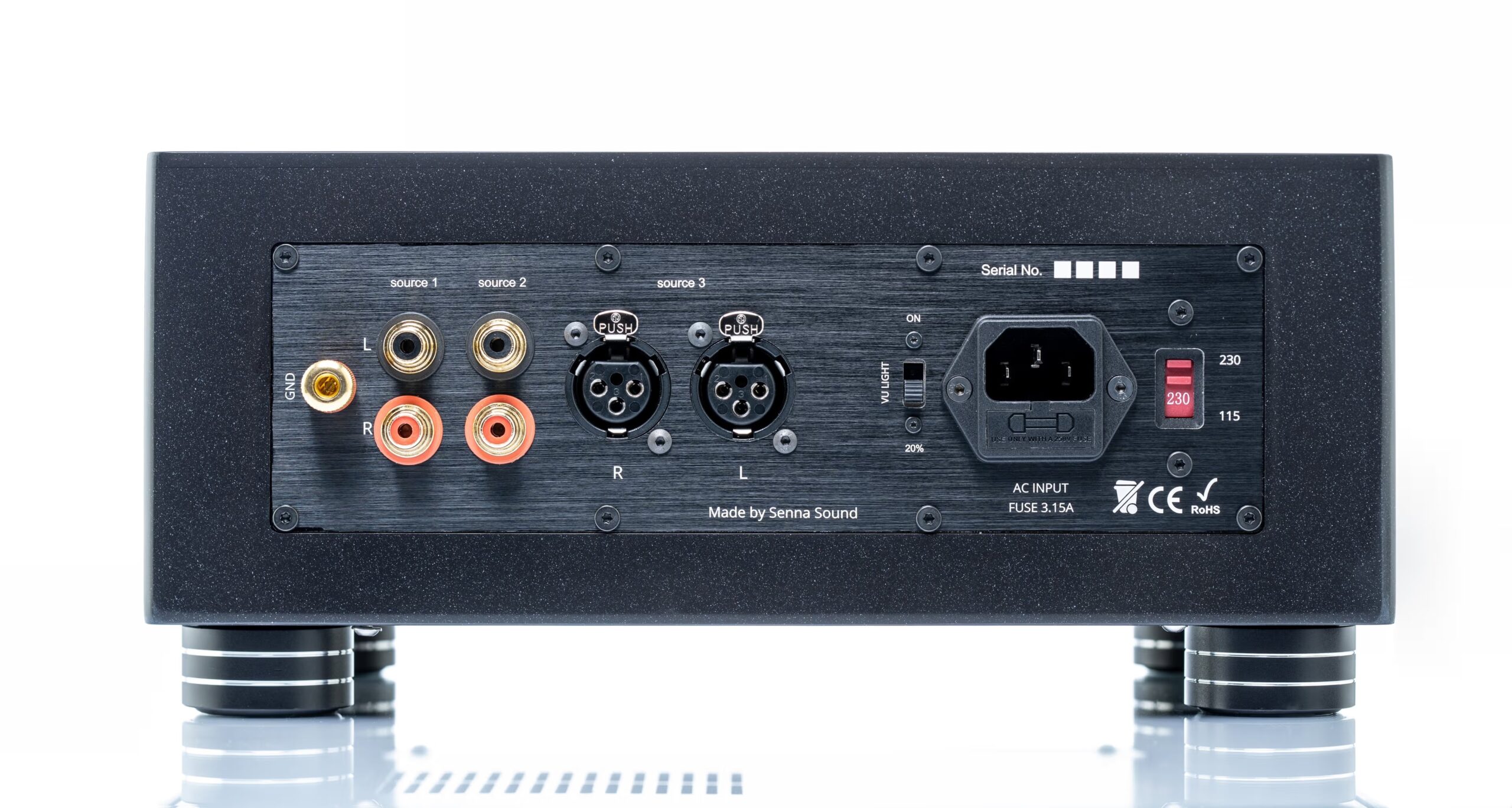
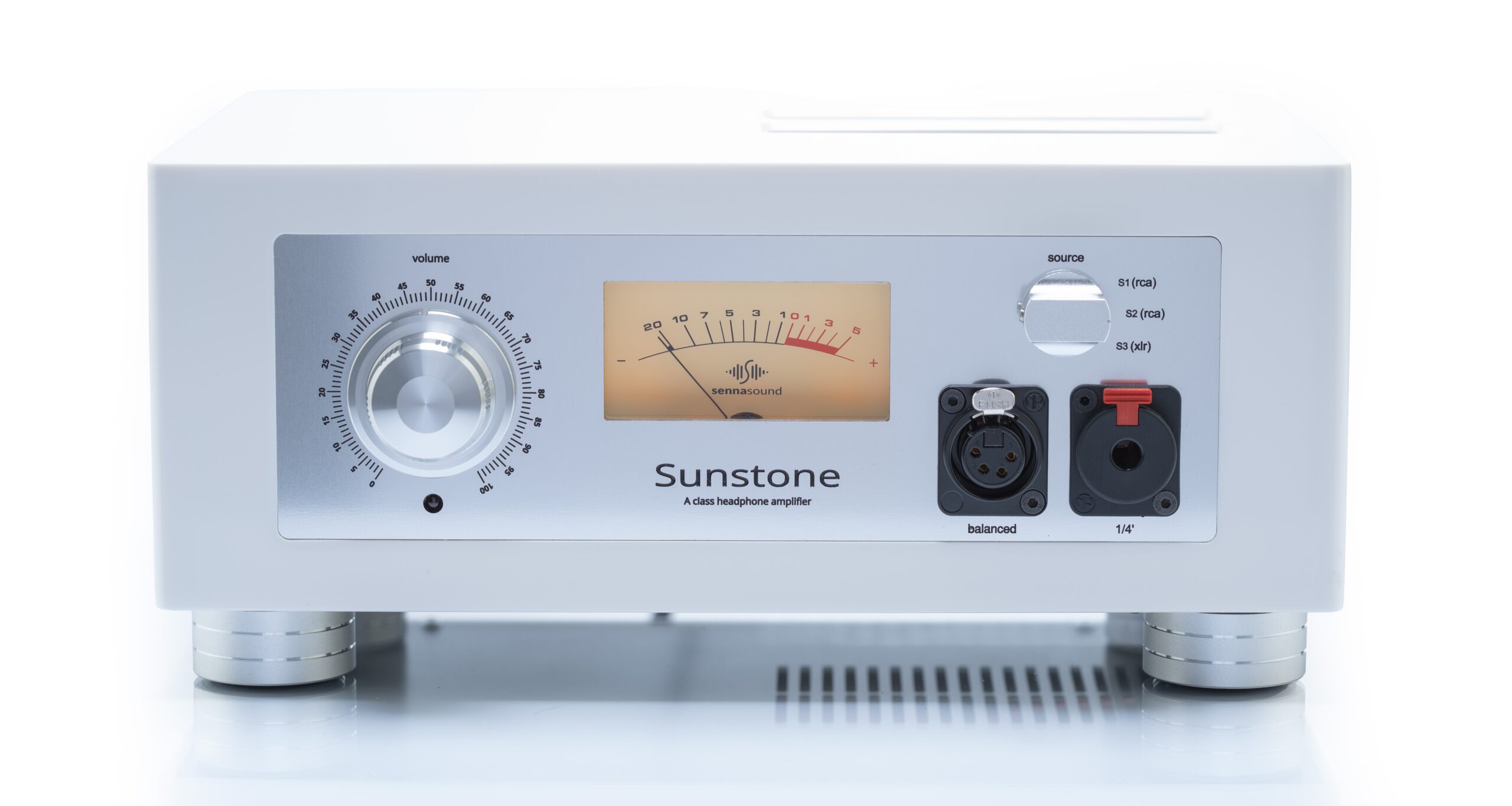
The Sunstone provides two RCA inputs and one XLR input. This three-input arrangement is one of its more practical qualities, allowing several analog sources to remain connected. A listener could, for example, use the XLR input for a standalone DAC while reserving the RCA pairs for a phono stage and another line-level component. The exact system is up to the owner, but the connection count makes the Sunstone more adaptable than a single-input headphone amplifier.
There are no USB, optical, coaxial, Bluetooth, or network inputs. Consequently, the Sunstone does not perform digital-to-analog conversion and cannot accept a digital source directly. This is a deliberate form of specialization rather than an attempt to function as a complete digital hub. It lets an owner select or retain a preferred external DAC, replace digital components independently, and keep the headphone amplifier as the stable analog element of the system.
That modularity will be attractive to enthusiasts who prefer separate components. It will be less convenient for someone seeking a compact, one-box desktop solution, because every digital source will require an external DAC and the necessary interconnects. The Sunstone’s value proposition therefore depends partly on whether its owner sees system separation as flexibility or additional complexity.
Balanced and unbalanced headphone connections
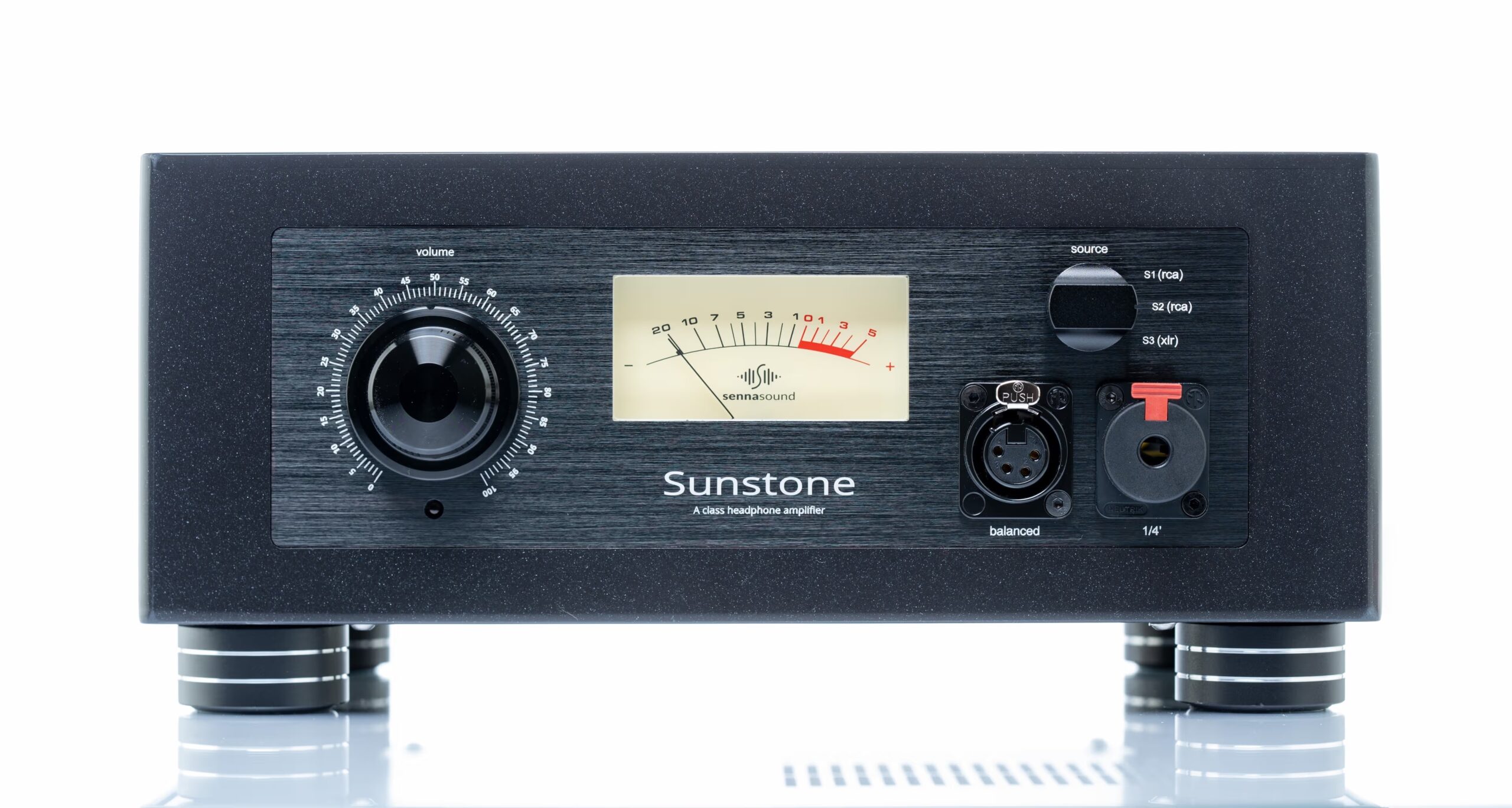
Two headphone jacks are fitted to the front panel: one balanced and one unbalanced. This makes the amplifier easier to use with a mixed headphone collection and avoids forcing every owner to standardize on one cable termination. It also allows headphones supplied with different connection types to be accommodated without relying automatically on adapters.
The inclusion of an XLR line input and a balanced headphone jack gives balanced-equipped systems a direct connection route, while the two RCA inputs and unbalanced headphone output preserve compatibility with conventional components and cables. The source information does not establish that the entire internal circuit is balanced from input to output, so the connection options should be understood as practical interface choices rather than evidence of a specific end-to-end circuit architecture.
Published specifications and physical presence
Senna Sound specifies a frequency response of 5 Hz to 100 kHz within ±1 dB. This extends well beyond the conventional audible band at both ends and indicates that the analog circuit was designed with wide bandwidth. Total harmonic distortion is specified at 0.03 percent at 1 kHz and 1 watt. These figures describe laboratory operating parameters; they should not be interpreted as listening impressions, but they provide useful context for comparing compatibility and design priorities.
At 280 millimeters wide, 200 millimeters deep, and 127 millimeters high, the Sunstone is narrower than many full-width hi-fi components but is not a miniature portable amplifier. Its weight of 6.5 kilograms reinforces its identity as a stationary desktop or rack-shelf product. The relatively compact footprint may help it fit beside a DAC or computer monitor, although its Class A operation still calls for sensible ventilation.
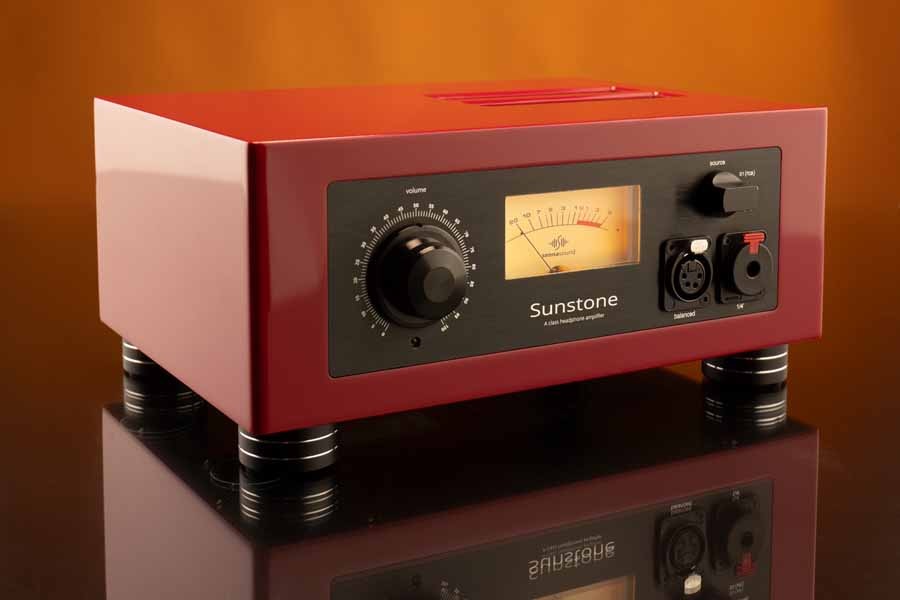
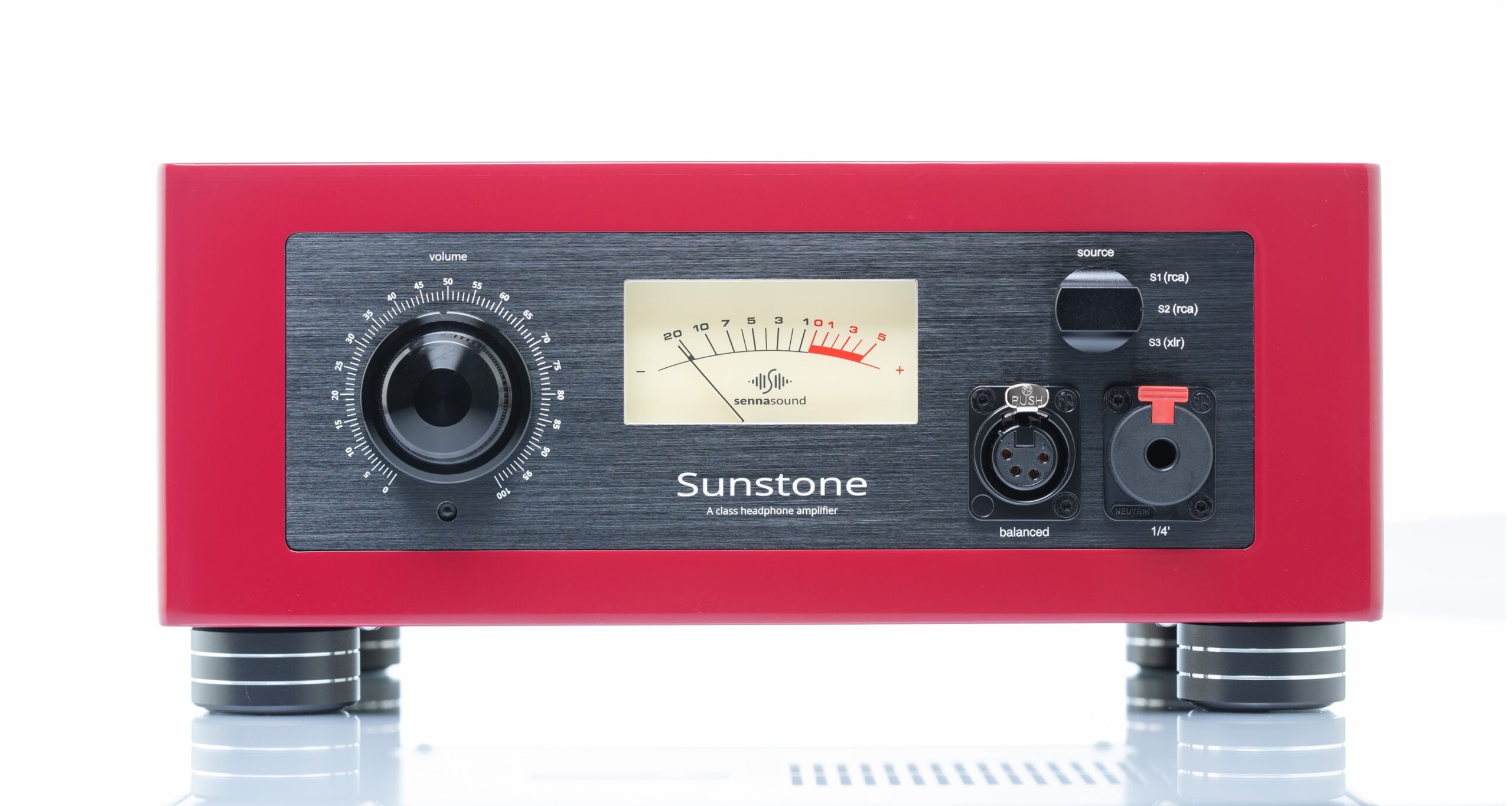
Mains compatibility is selectable between 120 and 230 volts at 50 or 60 Hz using a switch on the rear panel. This is helpful for production and installation across different regions, but users should always confirm that the selector is correctly set before connecting power. The enclosure is offered in three colors, adding a degree of visual choice for systems in which the amplifier will remain prominently displayed.
Who the Sunstone is most suitable for
The Sunstone is most relevant to listeners with one or more high-quality analog sources, a separate DAC, or a varied collection of full-size headphones. Its output capability, high-current supply, and support for both magnetostatic and high-impedance dynamic models make it especially pertinent to owners who want one amplifier to serve multiple headphone types. The three line inputs also suit systems that combine digital playback with vinyl or another analog source.
It is less suitable for users who need built-in digital conversion, wireless streaming, portable operation, or a very small all-in-one desktop device. The 90 VA power consumption and Class A topology also mean it is not designed around minimal energy use. Buyers with only one easy-to-drive headphone and a single digital source may not make full use of its connectivity or power reserves. Its strongest case is therefore in a component-based system where analog flexibility and amplifier specialization are deliberate priorities.
Conclusion
The Senna Sound Sunstone is distinguished by a clear and disciplined design brief: fully discrete Class A headphone amplification supported by a low-noise, high-current power supply. Its specified 4.5 watts per channel into 50 ohms, compatibility with magnetostatic and high-impedance dynamic headphones, three analog inputs, and balanced and unbalanced headphone connections give it useful system flexibility. The absence of digital facilities will narrow its audience, but it also allows owners to choose their own DAC and upgrade sources independently. For listeners building a substantial, all-analog headphone amplification stage around separate components—and who can accommodate Class A power consumption and ventilation—the Sunstone offers a focused combination of output capability, connectivity, and physical solidity.



Sound Off
0Join the discussion if you have something to add.