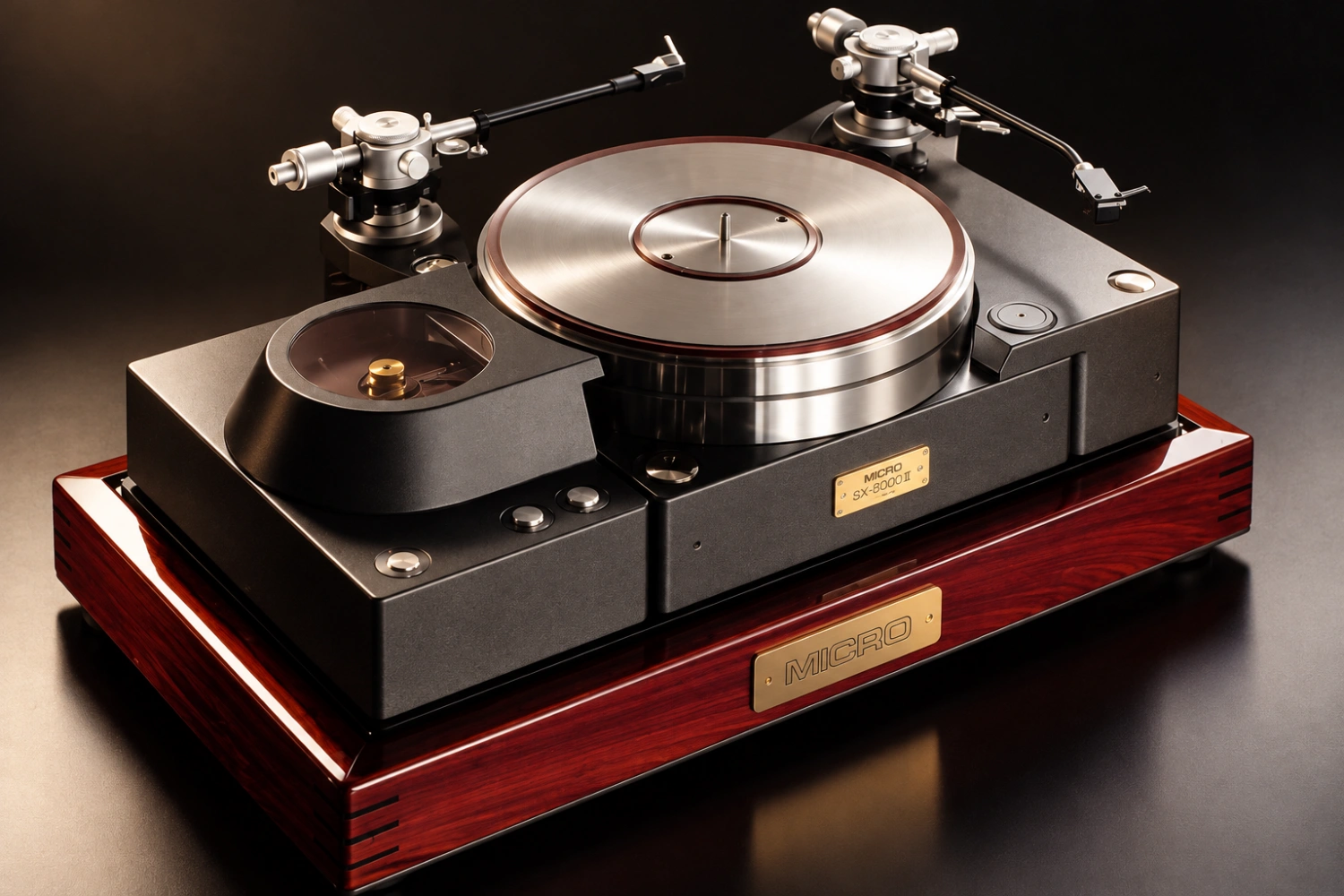
The modern turntable took shape alongside a change in what a record could be. Columbia introduced the long-playing microgroove disc in 1948, and RCA Victor followed with the 45 rpm single in 1949. Longer playing time, smaller grooves and new listening habits made record playback a more demanding task. A deck had to turn at the right speed, keep mechanical noise away from the stylus and let a delicate pickup follow the groove without damaging it. When stereo LPs reached the market in 1958, those demands became more apparent.
The turntable was not merely a motor beneath a record: its drive, bearing, platter, arm and supporting structure all affected the signal a cartridge could retrieve. Manufacturers answered with strikingly different designs. Some pursued sturdy, fast-starting motors; others tried to isolate the record and tonearm from vibration. Later, electronic speed control opened another route. These approaches produced more than a succession of admired machines.
They changed how listeners judged a hi-fi system, how records were handled at home and, eventually, how DJs used the turntable as an instrument. The history is less a contest to name one perfect deck than a story of competing solutions to the same physical problem.
A record format becomes a hi-fi challenge
The arrival of the LP changed the scale of domestic listening. A side could hold a substantial stretch of music, inviting audiences to hear albums and longer works without constant interruption. The 45 rpm disc served a different purpose, particularly for shorter releases. Together, the formats made accurate speed and reliable handling everyday requirements rather than specialist concerns. Playback also depended on developments beyond the turntable itself. Microgroove records called for suitable styli and cartridges, while stereo records required equipment able to trace information in two channels. A new record format could not deliver its potential if the pickup mistracked or vibration from the motor reached the stylus. The deck therefore became part of a system of matched mechanical and electrical components. This helps explain why turntable design diversified. A listener wanting effortless operation might value an automatic changer; another might accept manual cueing in exchange for a simpler mechanism. Domestic buyers, broadcasters and other professional users did not always need the same thing. What counted as a good turntable depended partly on where it would work and who would use it.
The idler drive and the age of mechanical authority
One important early solution used an idler wheel to transfer motion from the motor to the platter. The arrangement could provide substantial torque and reach operating speed promptly. It also made motor isolation and the condition of the wheel important: unwanted vibration had a direct mechanical path toward the record if the design or its maintenance fell short.
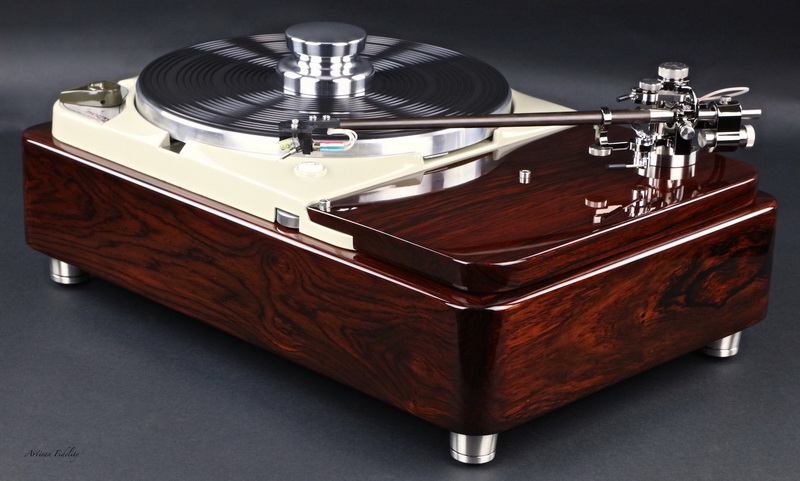
The Garrard 301 remains a well-known example of this school. Built as a transcription motor unit, it also found a place in ambitious domestic systems, where an owner or dealer could combine it with a separate plinth, tonearm and cartridge. That modular approach reflected a period in which a serious record player was often assembled from chosen parts rather than bought as one sealed appliance. Idler-drive decks were not simply an obsolete step on the way to newer technology. Their appeal lay in qualities valued at the time: robust construction, dependable speed and the ability to serve demanding installations. Their later reputation also illustrates a caution in turntable history. A motor unit cannot be judged apart from its mounting and arm, and the performance of a surviving machine depends heavily on its condition.
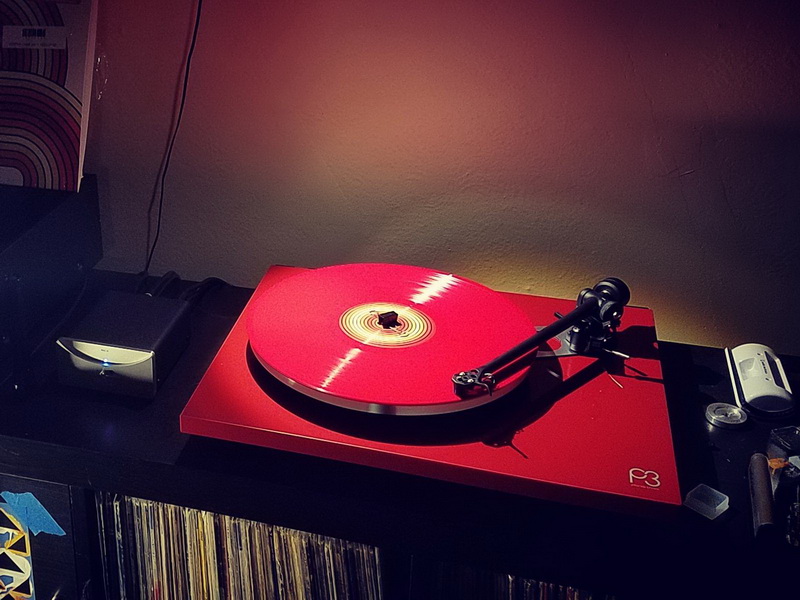
Suspension and belts put vibration under scrutiny
Another design path separated the platter from the motor with a belt. A compliant belt could reduce the transmission of motor vibration, although it introduced its own demands for correct tension, condition and speed control. The point was not that belts automatically made a turntable better. It was that designers could choose where to place the motor and how to manage the mechanical connection to the record.
The Acoustic Research XA, introduced in the early 1960s, became an influential expression of this thinking. Its suspended arrangement supported the platter and tonearm together, helping them maintain their relationship when the supporting surface was disturbed. The underlying idea was significant: environmental vibration, not just vibration from the motor, could interfere with playback. Suspension made setup part of ownership. If an isolated assembly is to work as intended, it must move freely and sit correctly. Such decks rewarded careful installation and a suitable stand.
That practical complication was part of a wider change in hi-fi culture. A turntable increasingly became an adjustable precision device, not merely the record-playing function built into a cabinet.
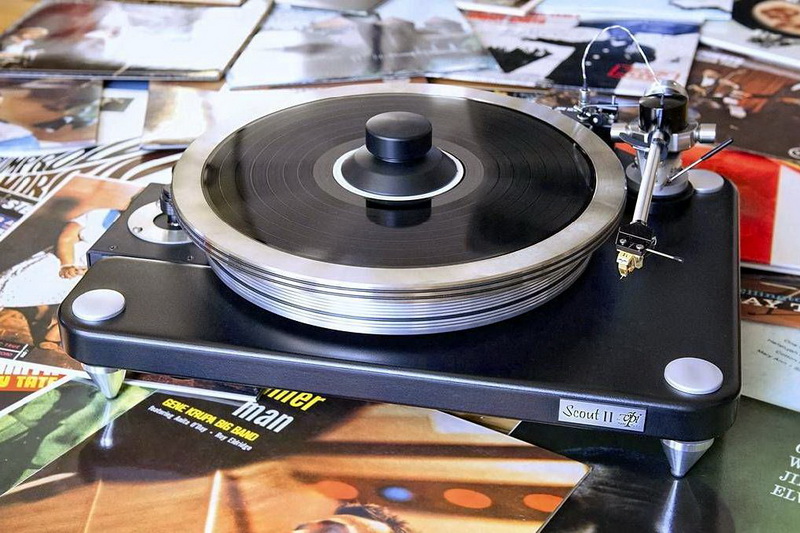
Direct drive offers a different answer
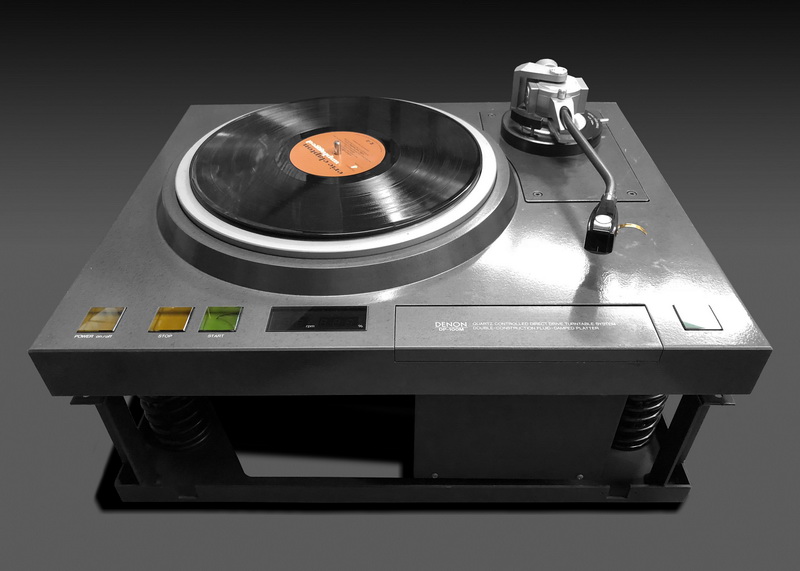
Direct drive removed the belt or idler wheel between motor and platter. In this arrangement, the platter forms part of, or is coupled directly to, the motor system. The design places considerable responsibility on the motor and its speed regulation: doing away with an intermediate drive does not, by itself, eliminate unwanted effects. It does, however, avoid belts and idler wheels as wearing links in the drive path. Technics was central to making the approach visible.
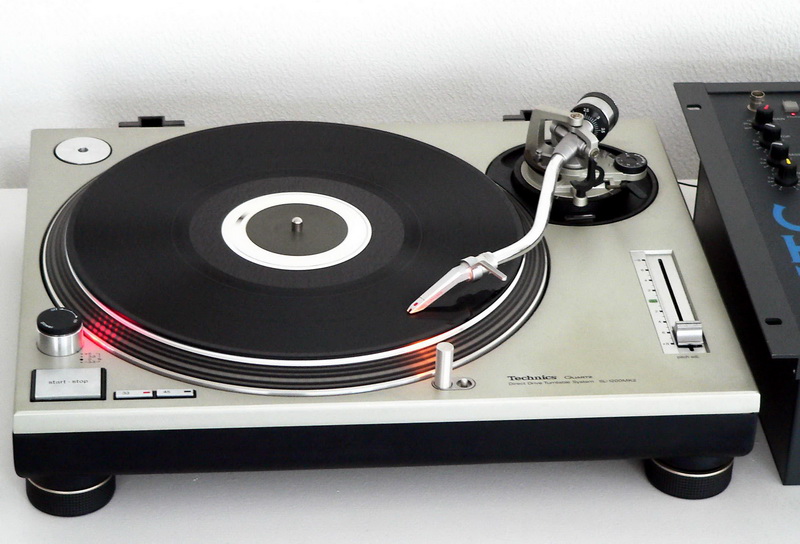
The SP-10 appeared around the beginning of the 1970s as a professional-grade direct-drive motor unit. The Technics SL-1200 followed in 1972, bringing the principle into a complete turntable series that would become exceptionally long-lived. These products showed that precise, usable speed could be pursued through electronics and motor design rather than primarily through mechanical isolation. Direct drive did not settle the argument over how a turntable should be built. Belt-driven and direct-drive models continued to develop alongside one another, serving different priorities. What changed was the range of credible choices.
A buyer no longer had to assume that one drive method defined serious playback; execution mattered as much as the category printed on the specification sheet.
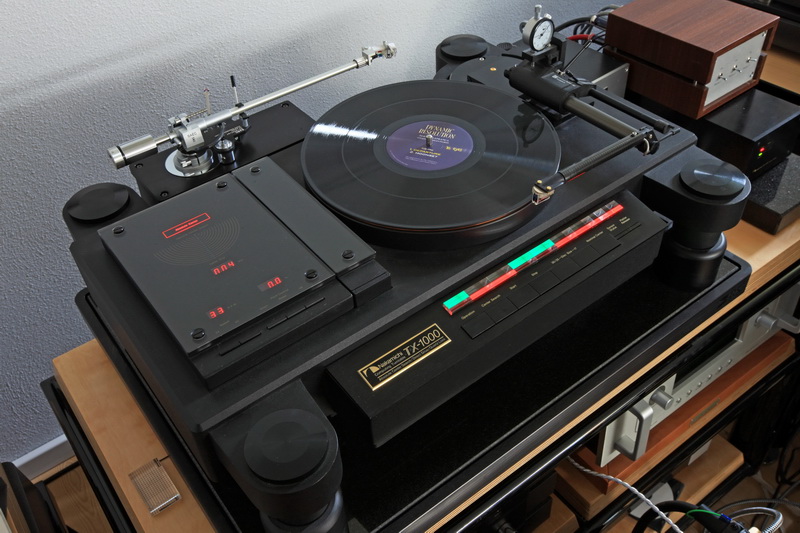
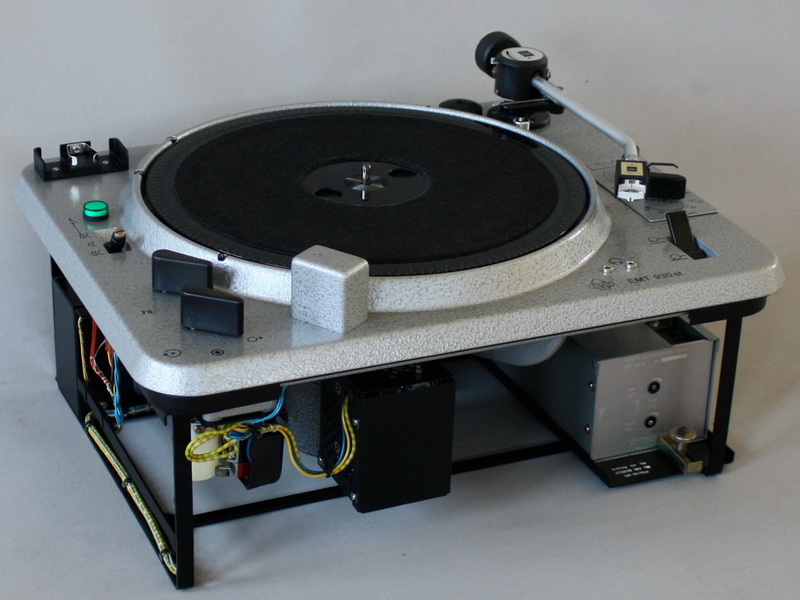
The deck becomes a system reference
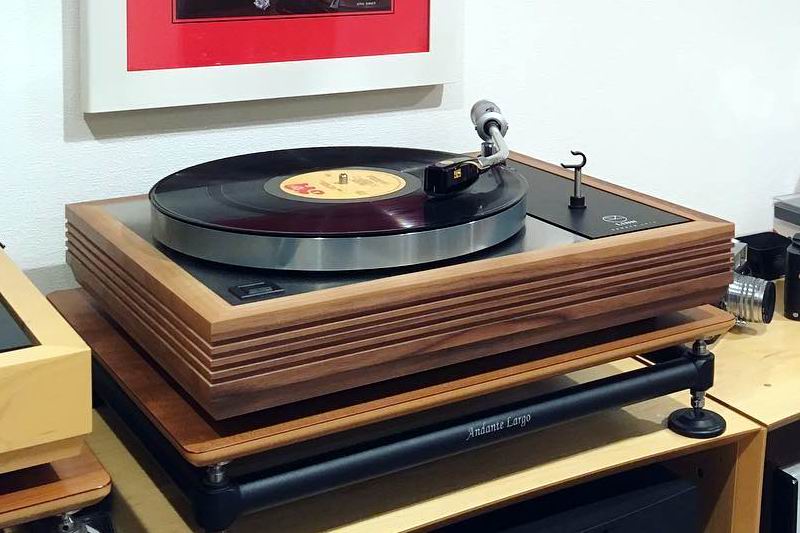
As component hi-fi matured, some makers and enthusiasts placed the turntable at the centre of the system. The Linn Sondek LP12, introduced in 1972, became closely associated with this outlook. Its suspended, belt-driven architecture invited attention to setup and to the partnership among deck, arm, cartridge and supporting surface. The emphasis was not only on the motor unit as an isolated purchase, but on how the complete playback chain worked together. Other manufacturers explored how to make serious record playing more approachable.
Rega’s Planar models are notable for relatively straightforward manual operation and for treating the arm and deck as a coherent package. Such designs differed from an elaborate modular installation, yet they addressed the same question: how can the stylus track the record accurately while the mechanism adds as little disturbance as possible?
This period helped establish a vocabulary still used in turntable discussions. People compared bearings, platters, arms, suspensions and drive systems, sometimes with more certainty than those individual parts deserved. A useful lesson from the era is that design principles have trade-offs. A heavier platter, a suspended chassis or a different drive cannot guarantee a result without sound engineering and careful setup.
Convenience, handling and new uses
The specialist hi-fi deck was never the whole market. Automatic turntables and record changers addressed a real domestic need: playing music with less attention from the listener. Makers such as Dual demonstrated that convenience and thoughtful engineering could coexist. For many households, dependable cueing and straightforward daily use mattered more than the ability to choose every component separately. A turntable’s controls and construction could also make it useful beyond seated home listening.
The Technics SL-1200 series became closely identified with DJs, who needed accessible controls, durable operation and a platter that responded predictably to hands-on handling. In that setting, the record player was no longer only trying to disappear from the musical event. It became a means of selecting, timing and manipulating recorded sound. These uses should not be collapsed into one standard of excellence. An automatic mechanism, a transcription motor unit and a DJ deck were answers to different briefs.
Their histories show why a list of turntables can be misleading if it treats every machine as though it were designed for the same listener in the same room.
After the CD, a longer vinyl legacy
The commercial arrival of the compact disc in the 1980s changed the record player’s position. Digital discs offered a different combination of convenience, durability in ordinary handling and playback consistency. Vinyl did not vanish, but turntables were no longer the default route to a new music collection in many markets.
Existing decks remained in use, specialist manufacturers continued to serve record listeners, and DJs sustained another important demand for vinyl playback. Renewed interest in records later brought turntables back to a wider audience. That return did not reverse the earlier history or prove one drive system superior. It brought old engineering questions into a new market: how much setup should an owner undertake, which features are genuinely useful, and how well can an affordable deck protect the record and retrieve its signal?
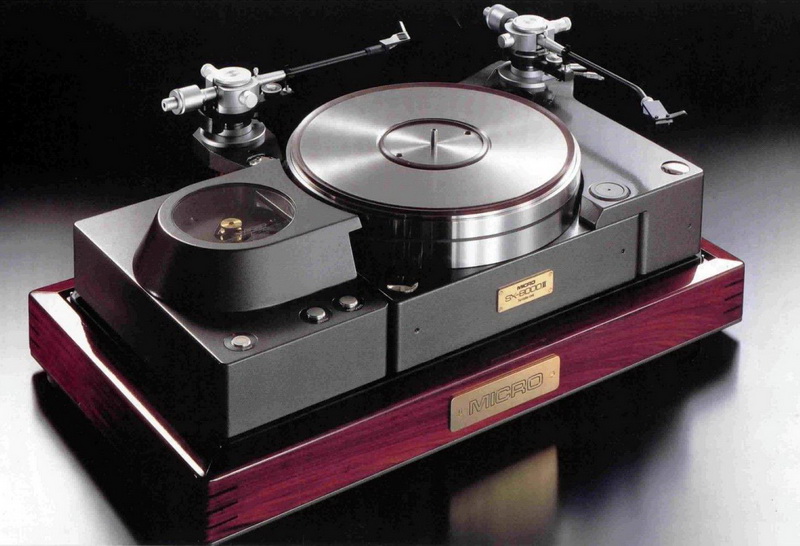
Historic models still matter because their underlying ideas remain visible. Modular motor units, isolated belt-drive decks, integrated manual players and electronically regulated direct-drive machines all have modern descendants. Their value as historical examples lies less in their rarity than in the problems they made possible to solve—and the different listening practices those solutions supported.
Why the turntable matters in hi-fi history
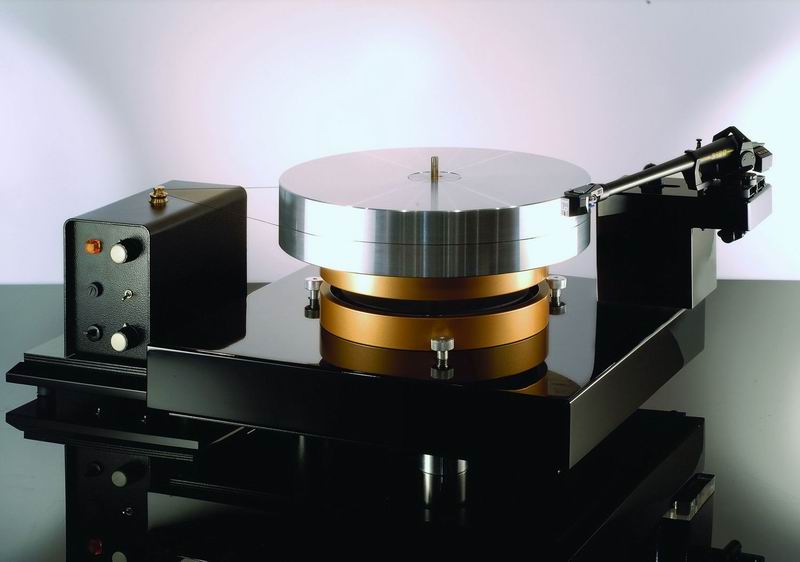
The turntable’s history is a history of engineering choices made audible through a remarkably small contact point: the stylus in the groove. From the LP’s arrival to the growth of stereo, component systems, DJ culture and vinyl’s later return, designers repeatedly reconsidered speed, vibration, tracking and ease of use.
No single model closed the discussion. The lasting achievement of the notable decks is that they revealed different ways to turn a physical record into a stable musical signal. They also made clear that playback quality belongs to the whole system—and to the way that system is used.