An amplifier has a straightforward job: take a small audio signal and provide enough power to drive a loudspeaker. Yet few hi-fi components have inspired more elaborate engineering, larger enclosures or more extravagant prices. At the upper end of the market, the amplifier became more than a necessary link in the playback chain. It became a statement about what its maker believed mattered most: power, control, low noise, simplicity, craftsmanship or some combination of them. That transformation did not happen at once.
As home hi-fi developed, listeners gained more choices about how to assemble a system. Integrated amplifiers offered a practical way to combine signal control and power amplification, while separate preamplifiers and power amplifiers gave designers room to address those tasks independently. Loudspeakers, too, varied widely in the demands they placed on an amplifier. A design that worked comfortably with one pair might have less headroom with another.
The idea of a list of the most expensive amplifiers captures a real feature of hi-fi culture: price itself became part of the conversation. But a price ranking tells us little without a date, a market and evidence of what each product contained. The more useful historical question is why amplification attracted such concentrated technical and financial ambition, and what that ambition contributed to the systems people use today.
From household component to specialist discipline
In the early decades of domestic high fidelity, the appeal of a music system lay partly in bringing better sound into the home without requiring professional equipment. Amplification was essential, but it was usually considered alongside the record player, radio tuner and loudspeaker as part of a complete setup. As enthusiasts began to compare individual components, the amplifier acquired a more distinct identity. Its circuitry, power supply and ability to work with different speakers became subjects of attention in their own right.
The distinction between an integrated amplifier and separate components became especially important to the premium market. An integrated model places input selection, volume control and power amplification in one enclosure. A separate preamplifier handles low-level signals and controls, leaving the power amplifier to supply current to the speakers. Neither arrangement guarantees better sound. Separates do, however, offer designers more physical space and allow owners to change one part of the system without replacing the other.
That flexibility helped create a market for specialist manufacturers. Rather than selling a complete household music system, a company could concentrate on a particular approach to amplification. At the expensive end, the product was increasingly judged not only by whether it played loudly, but by how quietly and consistently it performed across a range of conditions.
The loudspeaker changed the question
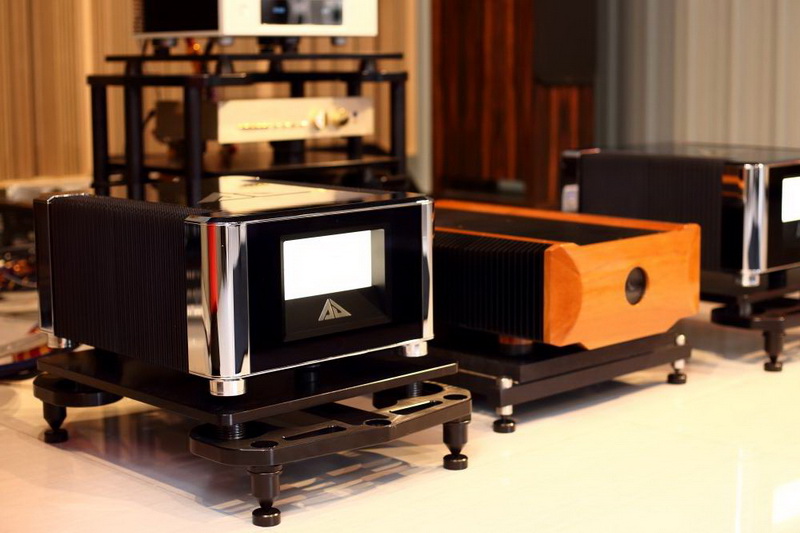
An amplifier’s rated output is often treated as its defining number. In use, the relationship is more complicated. Loudspeakers differ in sensitivity and in the electrical load they present as music changes. Room size, listening distance and preferred volume also affect how much headroom a system needs. The ability to deliver power cleanly into a demanding load can matter more than an impressive figure quoted without context. These considerations encouraged designers to look beyond the audio circuit alone. Power supplies, output devices, heat management and protective systems all influence what an amplifier can sustain.
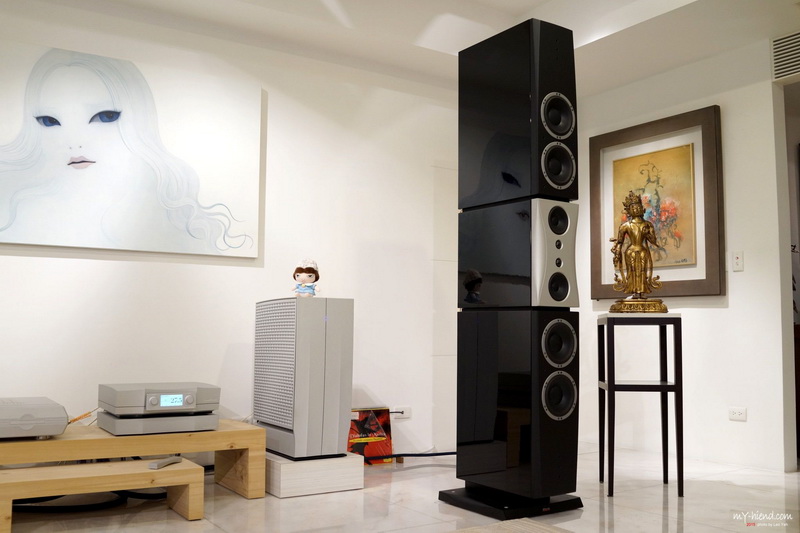
A large, costly amplifier may devote considerable space and weight to components that are not visible in a simplified signal-path diagram. Its scale can therefore reflect an engineering choice rather than mere decoration, although scale by itself is no proof of superior performance. The growing diversity of loudspeaker designs gave expensive amplification a plausible purpose.
Owners seeking a particular speaker were not always free to choose an amplifier on appearance or nominal wattage alone. At the same time, claims of exceptional speaker control could easily outpace the evidence. The relevant questions remained practical: which loudspeaker, at what listening level, under what operating conditions, and compared with what alternative?
Valves, transistors and competing ideals
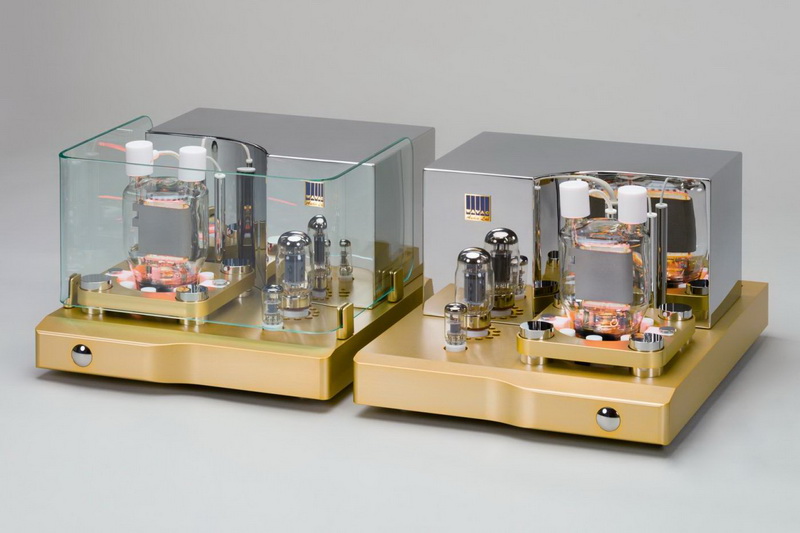
The transition from valve electronics to solid-state electronics reshaped hi-fi amplification. Transistors made possible new approaches to power, packaging and reliability, while valve amplifiers remained attractive to designers and listeners who valued their established circuit traditions. Neither technology disappeared from the specialist market. Instead, their coexistence became one of high-end audio’s defining characteristics.
For designers, the choice involves more than selecting a type of active device. Valve power amplifiers commonly require output transformers to connect their circuits effectively to loudspeakers; transistor designs generally take a different route. Each approach brings questions of distortion, noise, heat, service life and load matching. Within both families, circuit execution varies substantially. It is therefore misleading to treat every valve amplifier, or every transistor amplifier, as if it shared a single sonic or technical character. At the luxury end, these alternatives also became different ways to explain value.
One maker might favour a relatively simple circuit and carefully chosen parts; another might pursue substantial output capability and tighter measured control. The endurance of both approaches shows that high-end amplification was never a single march toward one accepted solution. It was a continuing argument about which compromises were worth making, and for whom.
Why one channel sometimes needed its own box
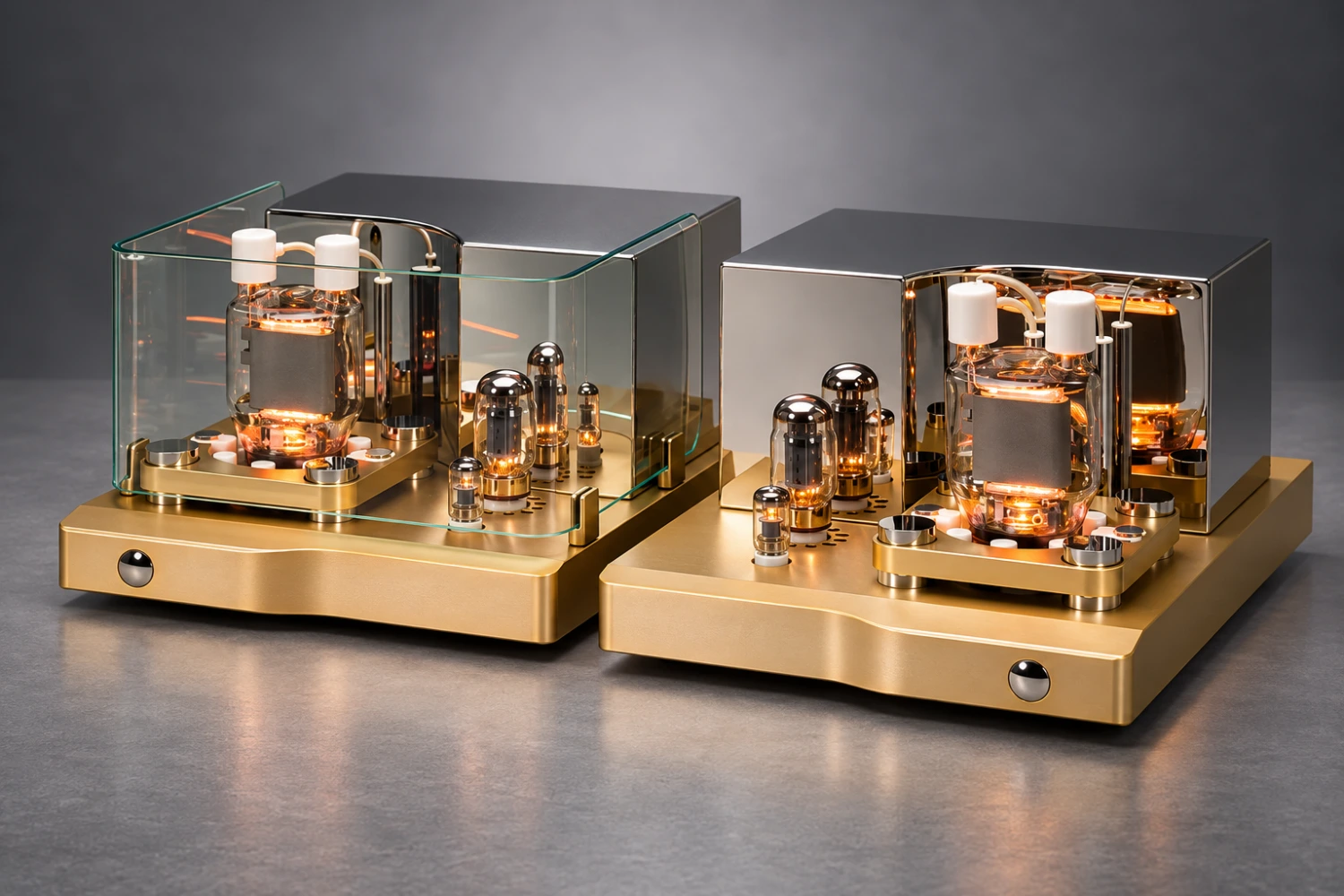
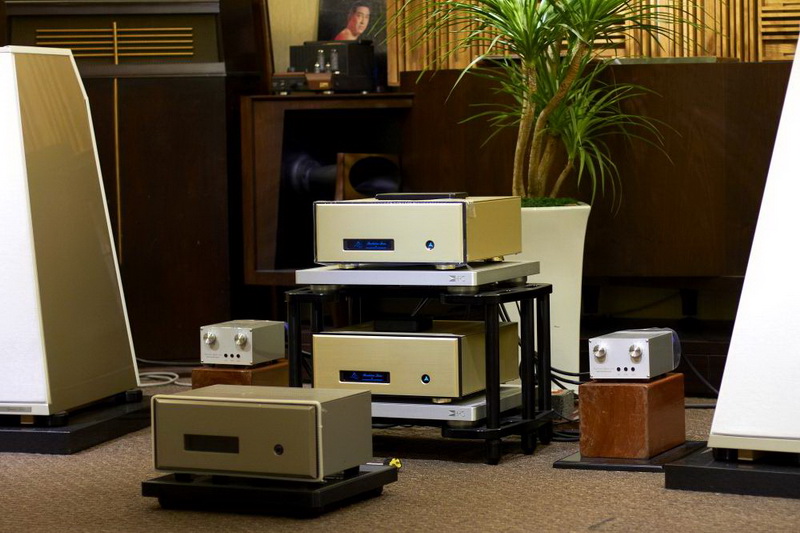
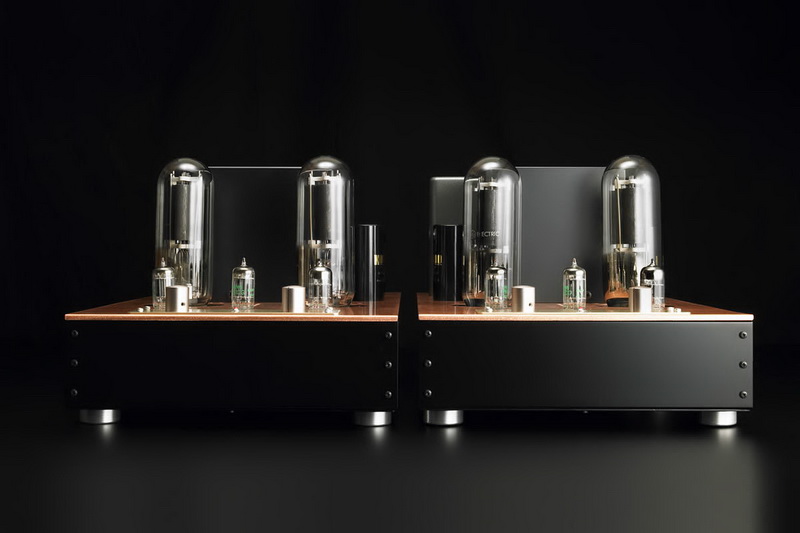
A stereo amplifier must serve two channels. Most do so in a shared enclosure, often sharing at least some of the supporting hardware. A monoblock instead contains one channel of power amplification, so a stereo system uses a pair. This format became a visible feature of expensive systems because it gives designers greater freedom to separate channels physically and to allocate power-supply resources to each one.
There are practical benefits and costs. Separate enclosures can make placement near each loudspeaker possible and can reduce certain forms of interaction between channels. They also require more cases, connections and room, and usually add to manufacturing expense. None of those facts means a pair of monoblocks will necessarily outperform a well-designed stereo amplifier.
The result depends on the actual engineering, not the number of boxes on the floor. The monoblock also illustrates how technical reasoning and luxury presentation can overlap. Two matching chassis make the system’s symmetry unmistakable. Their visual presence communicates seriousness before a note is played. For a buyer, that presence may be welcome; for a historian, it is a reminder to distinguish a defensible design choice from the prestige attached to its appearance.
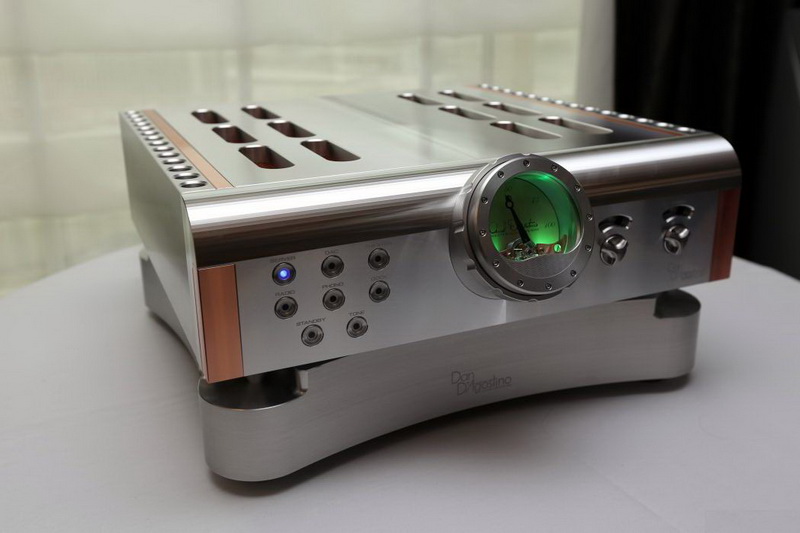
Heat, efficiency and the meaning of excess
Some of the most substantial amplifiers are large because they must dispose of heat. In a Class A output stage, active devices conduct throughout the signal cycle. That operating method can be attractive to designers, but it is relatively inefficient and can generate considerable heat even when the amplifier is not playing loudly.
Other operating arrangements, including Class AB, manage the trade-off between conduction, efficiency and distortion differently. Neither class is a quality grade. The label describes an operating principle, not the audible result of a complete amplifier. Heat sinks, ventilation, power-supply capacity and safe operating limits still require careful attention. A costly chassis may be part of that solution, giving heat somewhere to go and accommodating the hardware needed for the chosen design.
This is one reason the history of expensive amplification cannot be reduced to ornament. Some forms of excess follow directly from a technical goal. Others reflect decisions about finish, materials or exclusivity. They can coexist in the same product. Understanding which is which requires more than a photograph or a price tag; it requires an account of how the amplifier is built and what demands it is intended to meet.
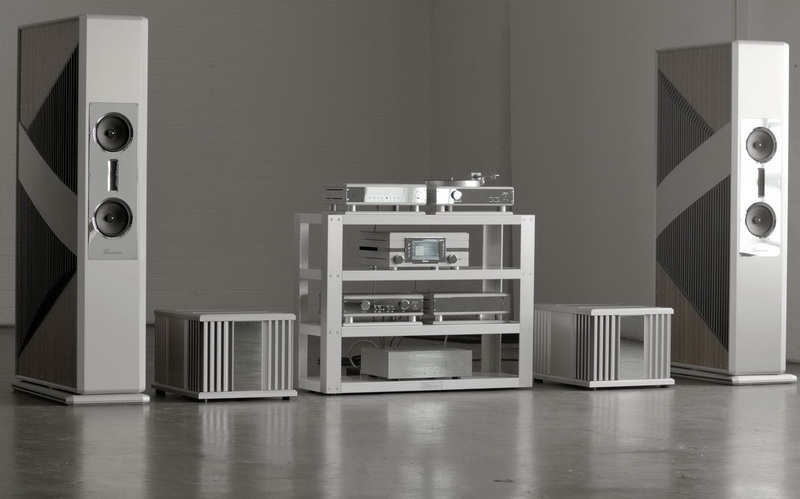
What a high price can and cannot tell us
At the top of the market, an amplifier’s price can reflect engineering, components, enclosure work, small production runs, distribution and the cost of supporting a specialist product. A highly finished case is expensive to make, but it is also part of what the customer receives. Treating every visible refinement as frivolous misses the realities of low-volume manufacture. Treating every refinement as an audible improvement makes the opposite mistake.
Price comparisons are particularly fragile when presented as a timeless ranking. Currency, country, taxes, release date and whether a figure refers to one monoblock or a stereo pair can all change the apparent order. A title promising twelve exceptionally expensive amplifiers is a starting point for inquiry, not evidence that twelve models can be ranked without those details. No particular model, specification or price should be inferred from the premise alone. The better way to assess an ambitious amplifier is to separate claims.
What is its design intended to achieve? Which features address an identifiable engineering problem?
What evidence supports its performance, and how does it fit the loudspeakers and listening conditions in question? Those questions leave room for pleasure in ownership and craftsmanship without confusing them with measurements or universal guarantees of sound quality.
A changing market, not a single destination
High-end amplification grew alongside a broader component culture in which buyers could select sources, speakers and electronics independently. Specialist makers could serve listeners with priorities that mass-market products did not always address, from particular circuit approaches to extensive power reserves or distinctive construction.
The resulting variety helped sustain interest in amplifier design long after amplification had become a mature technology. Meanwhile, the practical centre of home audio did not stand still. Integrated amplifiers remained useful because one-box simplicity solves a genuine problem. Later developments in compact electronics and digital sources gave designers other ways to assemble a system. Large separate power amplifiers continued to have a place, but they did not represent the inevitable endpoint of hi-fi. For many listeners, smaller and less costly equipment was, and remains, entirely appropriate.
That contrast is important when considering the most expensive examples. They were never a representative cross-section of what people needed to enjoy recorded music. They occupied an outer edge of the market, where design preferences could be pursued with fewer constraints on size, heat or cost. Their historical interest lies partly in showing how far those preferences could be taken.
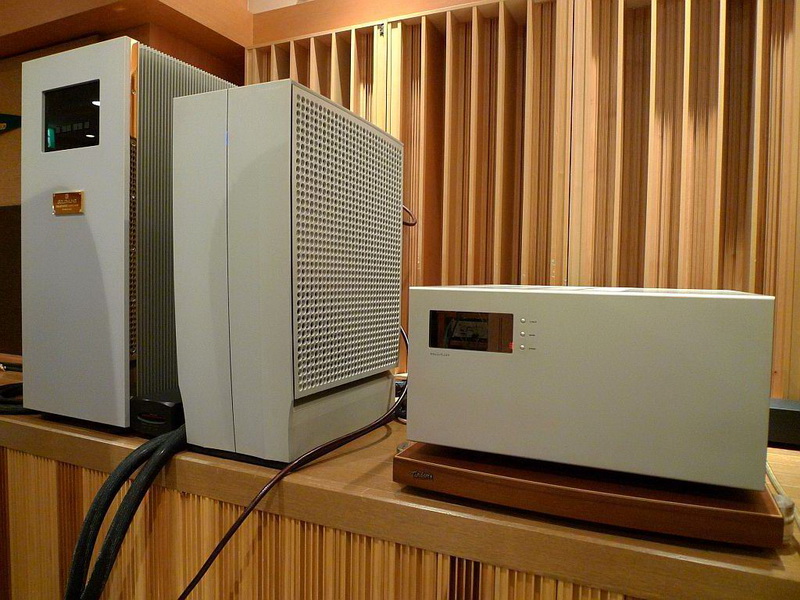
The amplifier as a record of hi-fi priorities
The most expensive amplifiers matter to hi-fi history not because a higher price establishes a higher truth, but because they expose the choices behind reproduced sound. Their size can reveal the demands of power delivery or heat dissipation. Their circuitry can reflect different views of efficiency, simplicity and measured behaviour.
Their appearance can show how engineering became entangled with ownership, display and prestige. Seen in that light, the luxury amplifier is neither an absurd detour nor the standard against which every ordinary system must be judged. It is a concentrated expression of the component era: the belief that each link in a system could be examined, redesigned and chosen for a purpose. The lasting lesson is not to buy the largest box or trust the longest price list.
It is to ask what an amplifier is designed to do, whether the evidence supports its claims, and whether its priorities make sense in the system where it will actually be heard.