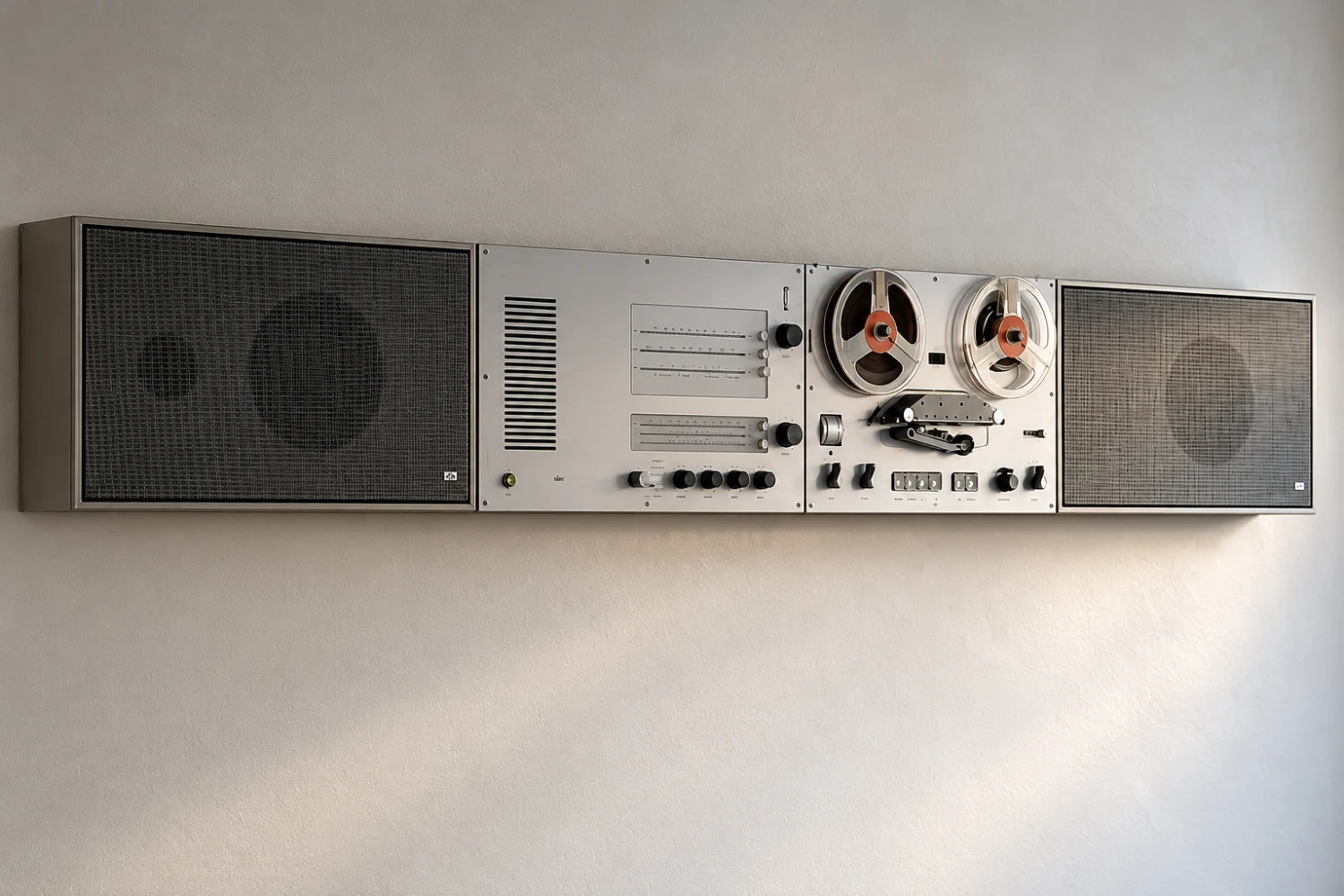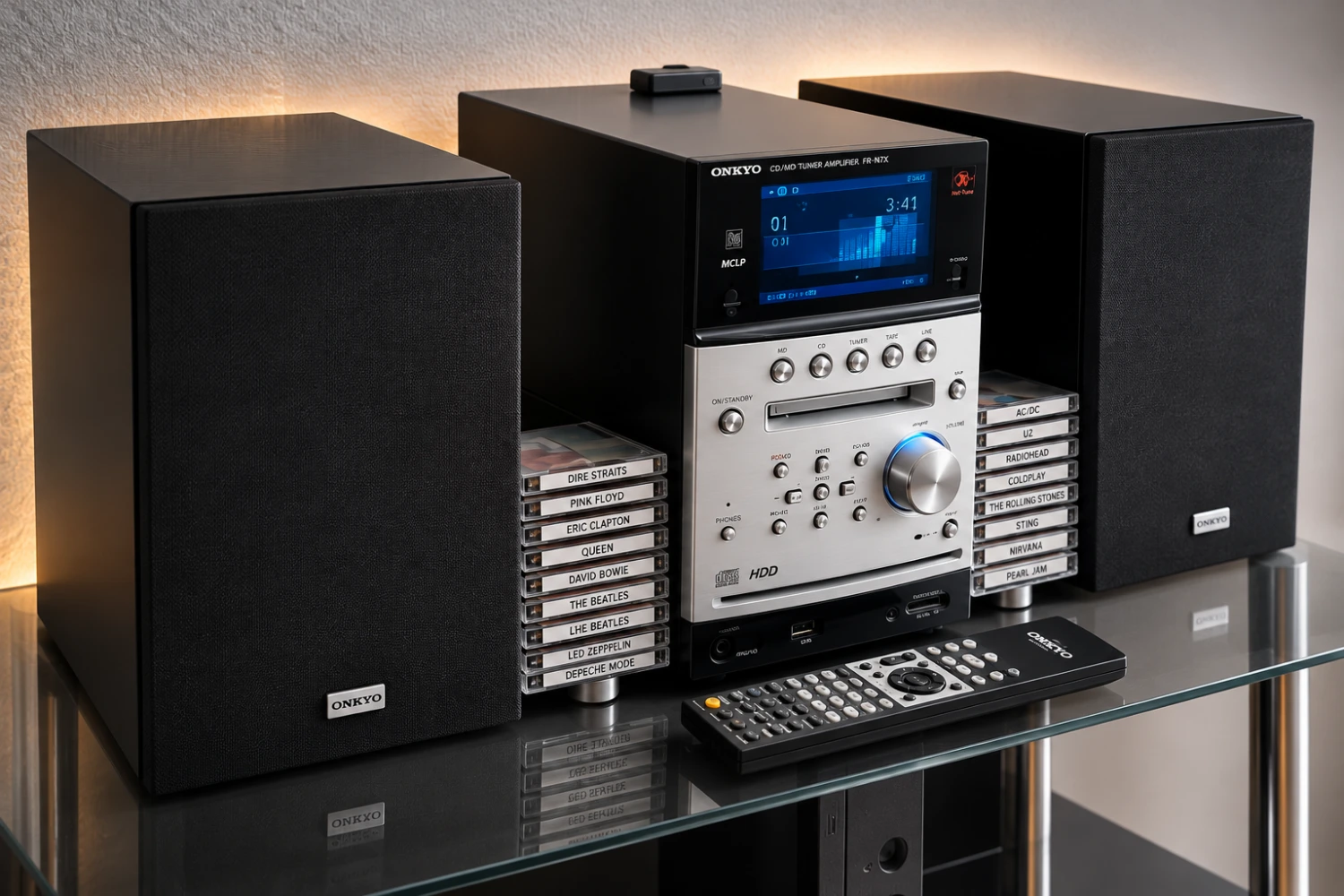
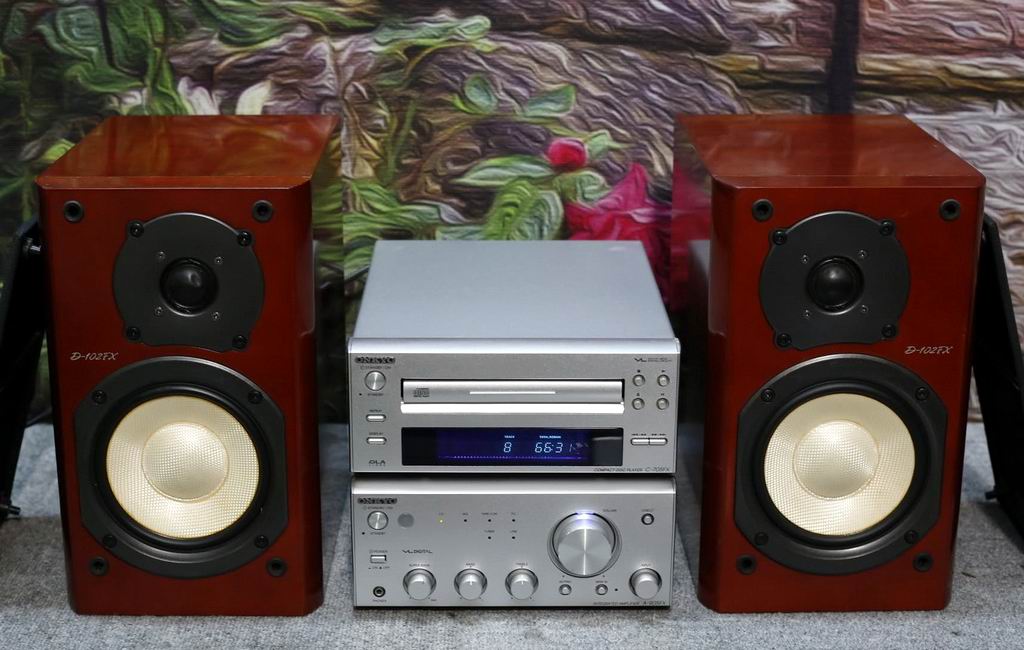
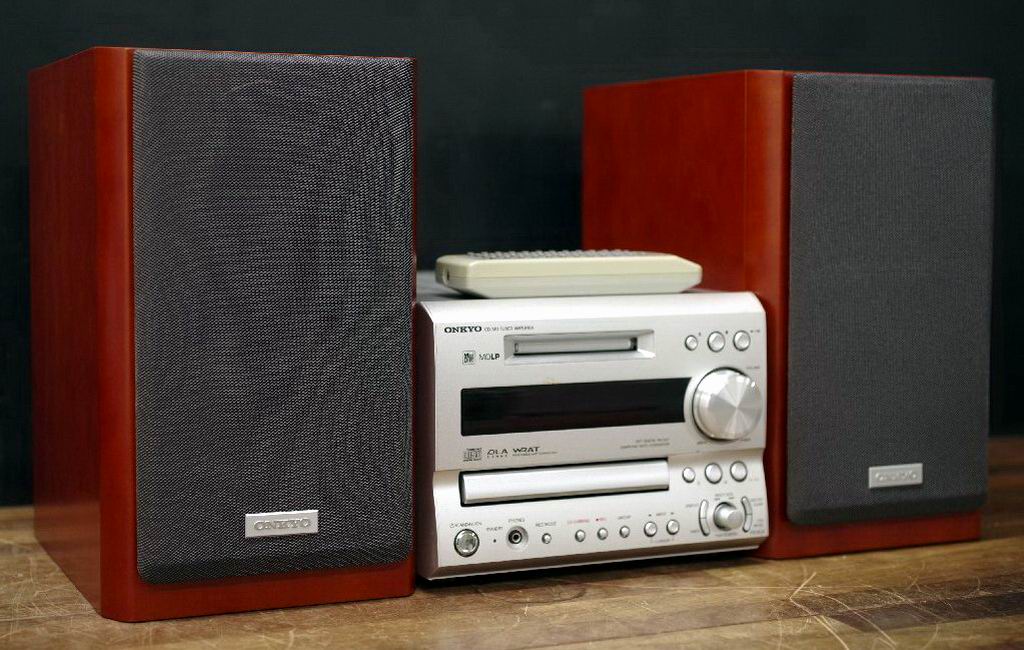
A hi-fi system did not always have to occupy a rack of full-width components. For many listeners, the useful system was the one that could fit on a shelf, play the music they owned and leave room for a pair of properly placed speakers. As recorded music moved from tape and vinyl toward the compact disc, and later toward files and streaming, the music centre became a place where manufacturers had to reconcile convenience with the expectations of hi-fi buyers. Onkyo belongs in that story as a Japanese audio manufacturer associated with both component hi-fi and more compact ways of assembling a system. An archival heading identifies its CS, Intec and Separate ranges as the subject of a history of music centres. It offers no model list, specifications or release chronology, so those names cannot responsibly be turned into a neat sequence of technical breakthroughs. They do, however, provide a useful starting point for examining a larger change: the gradual loosening of the assumption that a serious stereo had to be large, complicated or built entirely from separate full-size units.
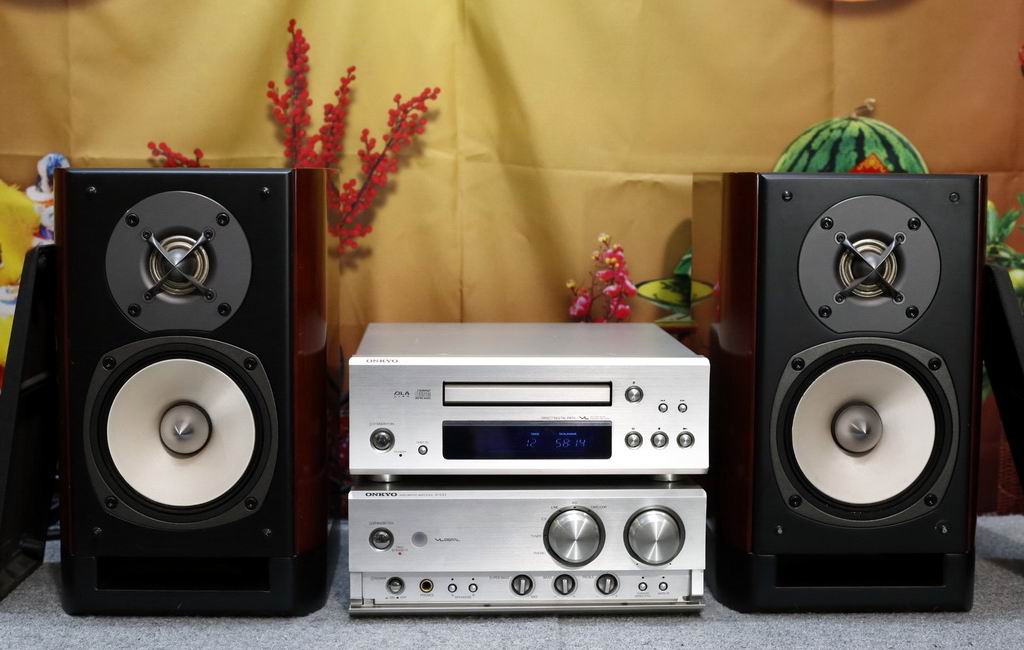
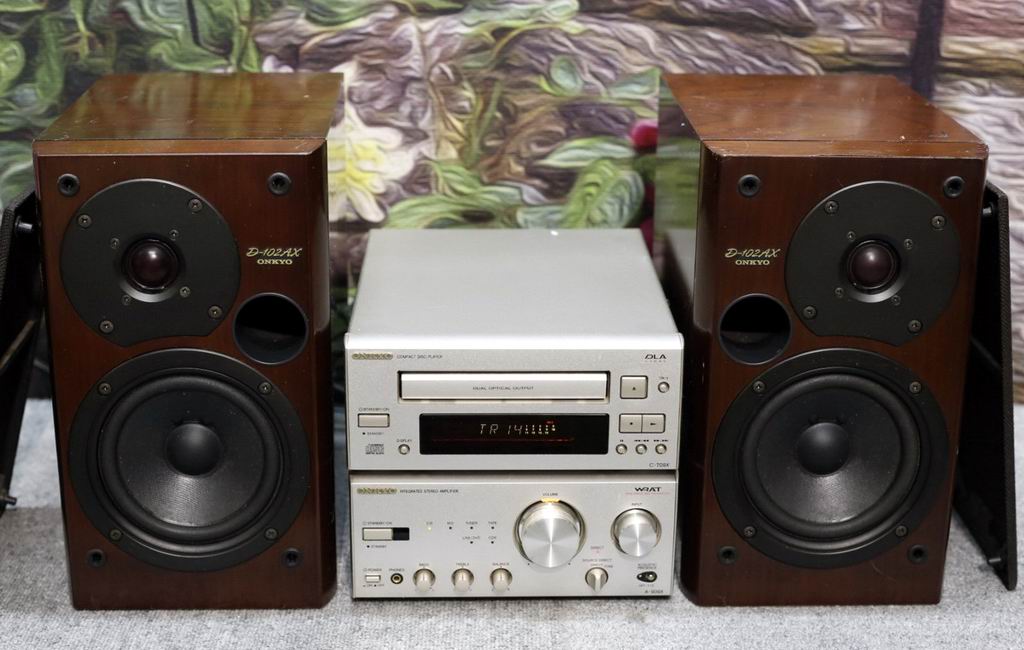
The case for a smaller stereo
Traditional component hi-fi gave owners considerable freedom. A listener could choose a source, amplifier and speakers independently, then replace one part without discarding the others. That flexibility also demanded space, cables and a willingness to make decisions about compatibility. A compact music centre answered a different question: how much of that experience could be made easier to own without abandoning stereo listening? The answer was never simply to shrink everything. A system still needed a way to select and play sources, control volume and drive loudspeakers. Putting more functions into fewer boxes could simplify installation, but it also concentrated more of the system in a single purchase. Whether that was a benefit depended on what the owner valued: a tidy arrangement and straightforward operation, or the freedom to change individual components over time. This distinction matters when reading the names CS, Intec and Separate. The available archival material names the ranges but does not establish which products belonged to each one, how they were configured or when they were sold. Treating them as evidence of one continuous, precisely dated evolution would give the names more historical weight than the source can bear. The broader story is sound: compact systems occupied a meaningful space between one-piece consumer audio and individually chosen component hi-fi.
Why the compact disc changed the brief
The commercial arrival of the compact disc in 1982 did more than add another format to the record shop. A CD player was relatively convenient to operate, and the disc gave listeners direct access to tracks without the handling routines associated with a turntable or the winding and wear associated with tape. As CDs became a common way to buy music, a system with an easily operated disc source made increasing sense in everyday rooms. That development did not make all other sources disappear. Turntables, radio tuners and cassette decks remained relevant to different households, and buyers did not all replace their collections at once. For system designers, the practical challenge was to accommodate changing habits without assuming that every listener started afresh with the newest format. Inputs, controls and the choice between built-in and external sources could matter as much as the headline playback device. Nothing in the surviving source identifies a particular Onkyo CS, Intec or Separate model as a response to a specific format transition. The significance of the CD era here is contextual rather than a claim about one product. It explains why the music centre could become a persuasive alternative to a stack of equipment: the most frequently used source could be made accessible in a smaller, simpler system, while stereo speakers still did the work of presenting the music in a room.
Convenience without abandoning hi-fi
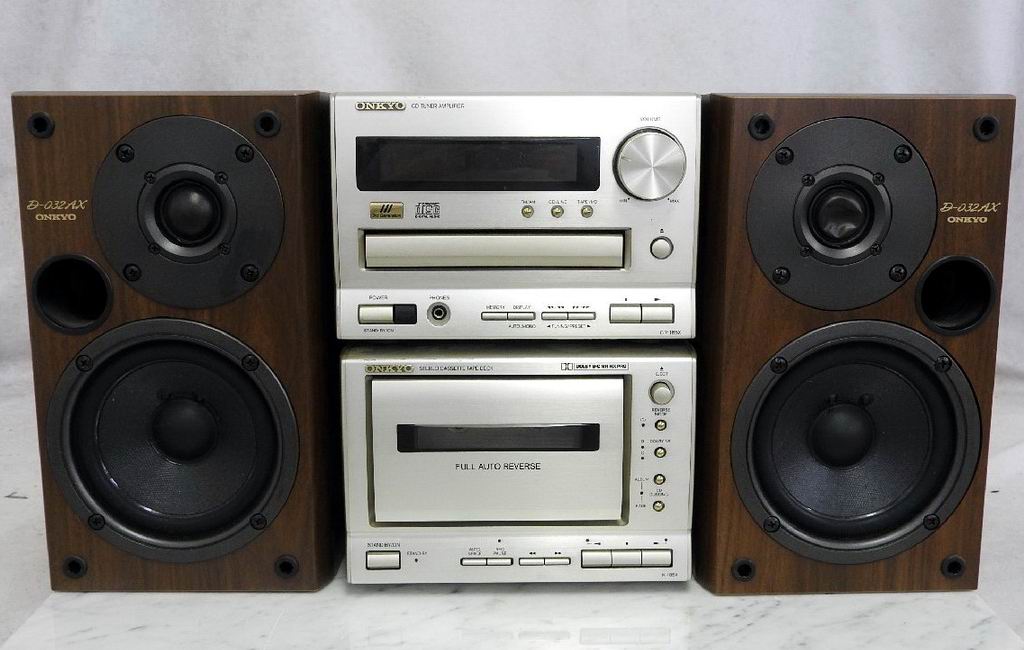
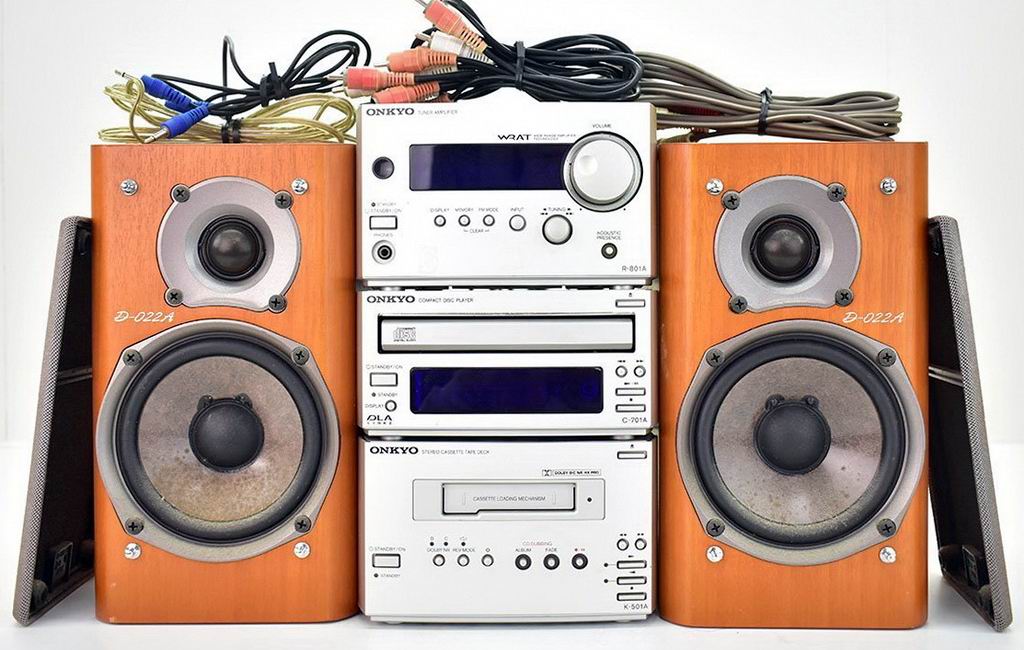
The phrase music centre can suggest an appliance rather than a hi-fi system. Yet the difference between convenience and serious audio has never been as clear-cut as the size of the cabinet. A useful comparison begins with the signal path: a source supplies music, an amplifier provides control and power, and the speakers turn the electrical signal into sound. Combining the first two jobs in one enclosure changes the packaging; it does not remove the need to do either job well. Nor does a multi-box system guarantee a better result. Separate units offer flexibility, but their advantages depend on sensible choices and an appropriate match with the speakers. Conversely, a compact unit can be a rational foundation for stereo listening if it provides the connections and control an owner actually needs. These are general design considerations, not performance findings about any particular Onkyo range. The archival heading supplies no measurements or listening evidence on which to rank them. This is where the different names are most useful as historical prompts. CS, Intec and Separate suggest that Onkyo's music-centre story cannot be reduced to a single mental picture of a compact box. The source does not define the distinctions between the ranges, so their exact place in the catalogue remains open. What can be said is that the category itself invited manufacturers and buyers to consider more than one balance of integration, flexibility and physical scale.
The speakers were never a minor detail
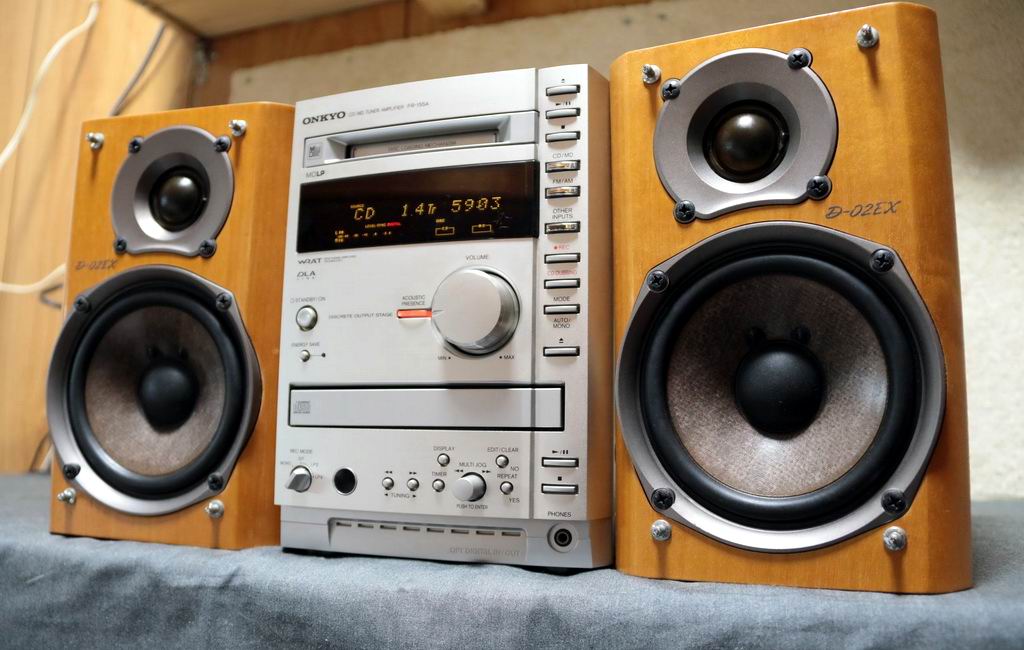
Compact electronics can make a system easier to accommodate, but they do not make the listening room irrelevant. Loudspeakers remain the part of a stereo that interacts most directly with that room. Their position relative to walls, furniture and the listener affects the result, and a small main unit cannot compensate for speakers placed only where they are least visible. This is one reason the history of music centres is also a history of domestic compromises. A conventional component system might announce itself as a collection of equipment. A smaller system could be easier to place among books, furniture or a desk. That advantage was real, particularly where a dedicated listening space was impractical. But the appeal of a reduced footprint had to be weighed against the space needed for two speakers and a useful stereo arrangement. Compactness in one part of the system did not make every part equally compact. The source provides no basis for identifying speaker designs, bundled packages or placement guidance for the named Onkyo ranges. It is therefore better to avoid attaching a particular sonic character to them. Their broader relevance lies in the question they raise for hi-fi: how could manufacturers make stereo less demanding to live with while preserving the choices that allow it to work well? That question extends beyond any one model or period.
When the source moved away from the shelf
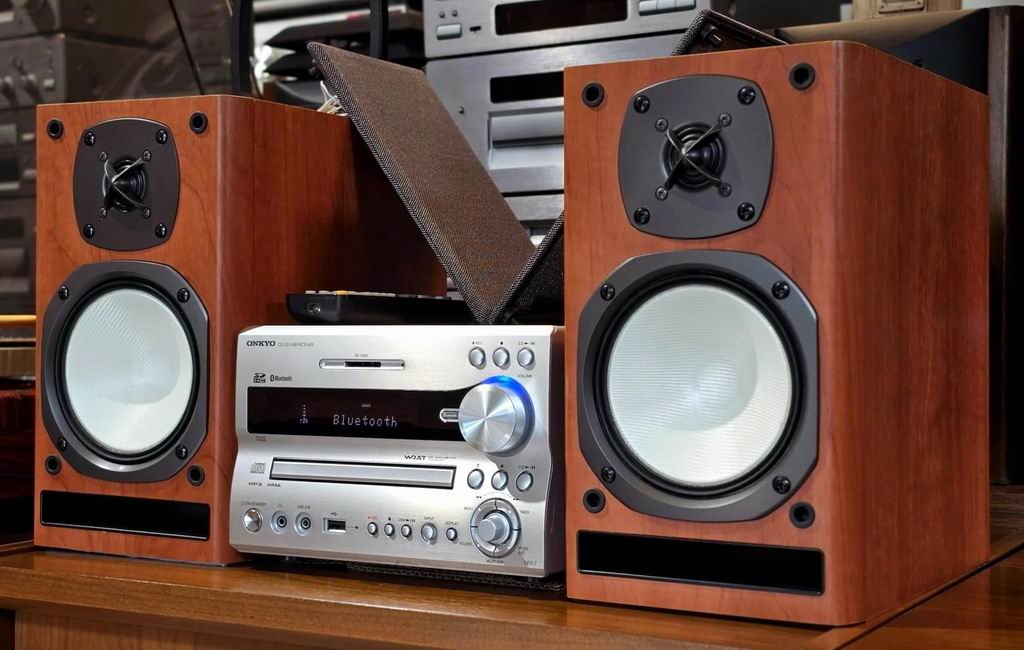
Physical media gave the earlier music centre a relatively clear role. The owner brought a record, tape or disc to the machine, and the system played it. Digital music files complicated that arrangement. In the 2000s, computers and portable players became ordinary parts of many listening habits; later, streaming services made access to a music library less dependent on owning discs at all. The central question shifted from what a system could play internally to what it could connect to. That shift did not make compact stereo obsolete. It changed the value of integration. A disc mechanism might once have been the obvious centre of a small system; with external digital sources, inputs and ease of use could become just as important. Speakers and amplification still mattered, even as the route by which music reached them changed. A well-placed stereo pair remained a different proposition from listening through a computer's built-in speakers or a single small device. The archival heading does not establish which, if any, CS, Intec or Separate products addressed files, networks or streaming. Assigning such features to those names would be guesswork. The later digital shift is relevant because it shows the continuing pressure on the category they represent. A music centre could no longer be defined only by how many playback functions were fitted into its enclosure; its usefulness also depended on how readily it accommodated sources outside that enclosure.
A place between the rack and the all-in-one
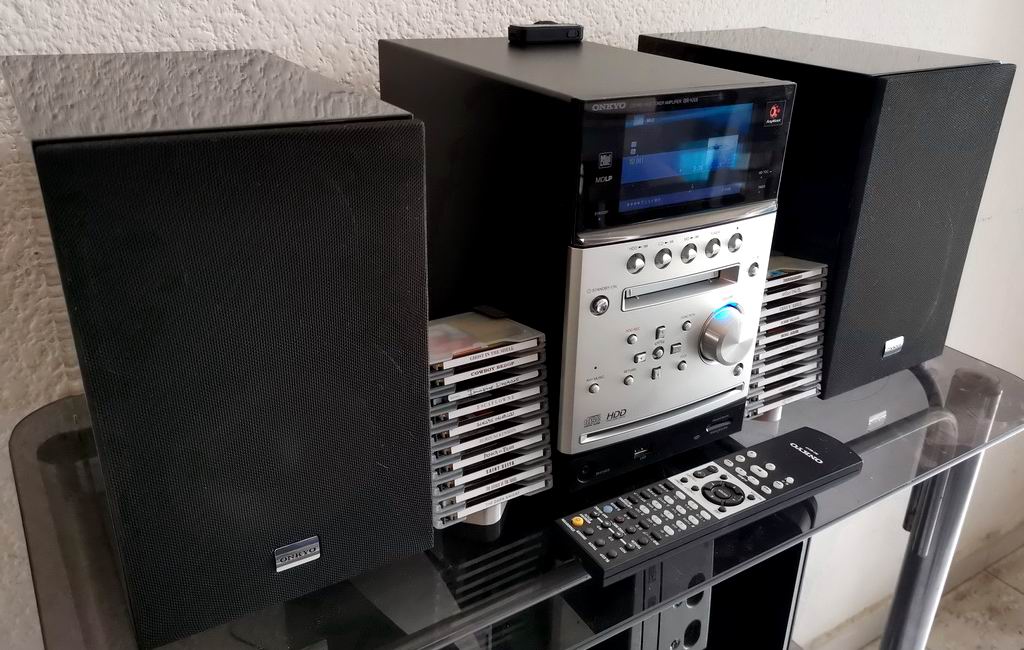
The enduring importance of the compact hi-fi system is that it challenged a false choice. Buyers did not have to choose only between an elaborate component rack and a single self-contained player. There was room for systems that reduced the number and size of the electronics while retaining the basic logic of stereo: a source, amplification and two speakers arranged to serve the listener. Onkyo's CS, Intec and Separate names belong to that history, although the surviving material does not support a detailed family tree. No release dates, model specifications or comparative performance claims can be recovered from a heading alone. That limitation is worth stating because product histories often become tidier in retrospect than they were in use. Different buyers wanted different combinations of simplicity, available sources, upgrade options and space savings. Seen in that context, the music centre was not merely a halfway stage on the way to streaming audio, nor an inferior version of full-size separates. It was an attempt to make hi-fi fit ordinary patterns of ownership: the music people had, the room they lived in and the effort they wanted to spend operating a system. That is the historical significance of Onkyo's place in this category. The particular ranges need fuller documentation for a model-by-model account, but the problem they help illuminate remains familiar.
The lasting question of scale
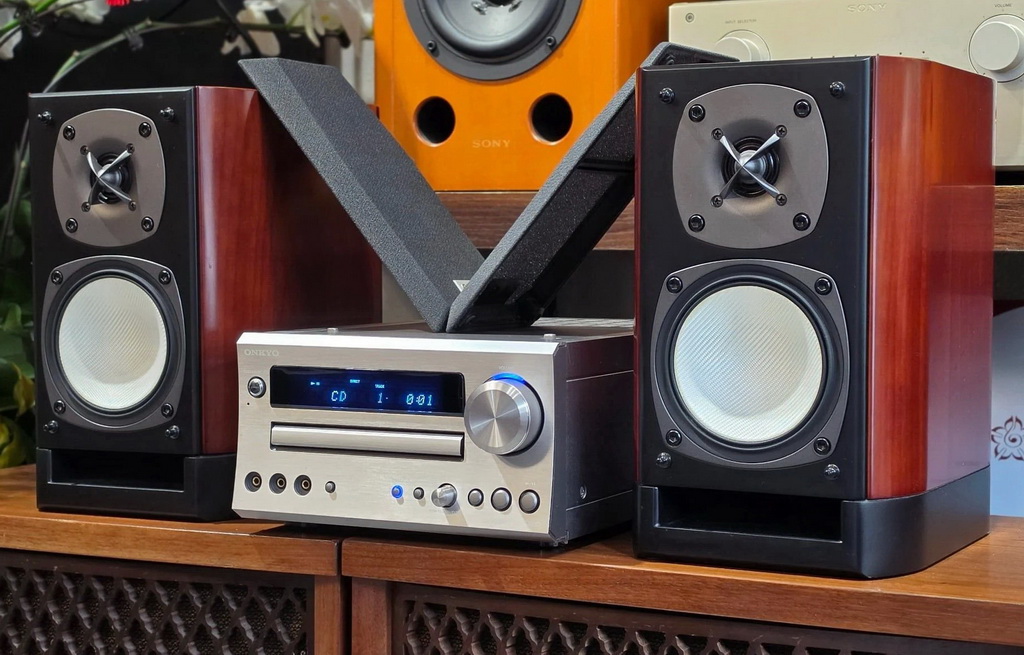
Formats have changed, and the sources feeding a stereo may now be far less visible than a shelf of discs. The underlying design question has not gone away: what should be combined for convenience, and what should remain flexible enough for the owner to choose? The compact music centre made that question part of mainstream hi-fi. Onkyo's CS, Intec and Separate names are a reminder of the category's breadth, even where the surviving record does not permit a precise account of each range.