
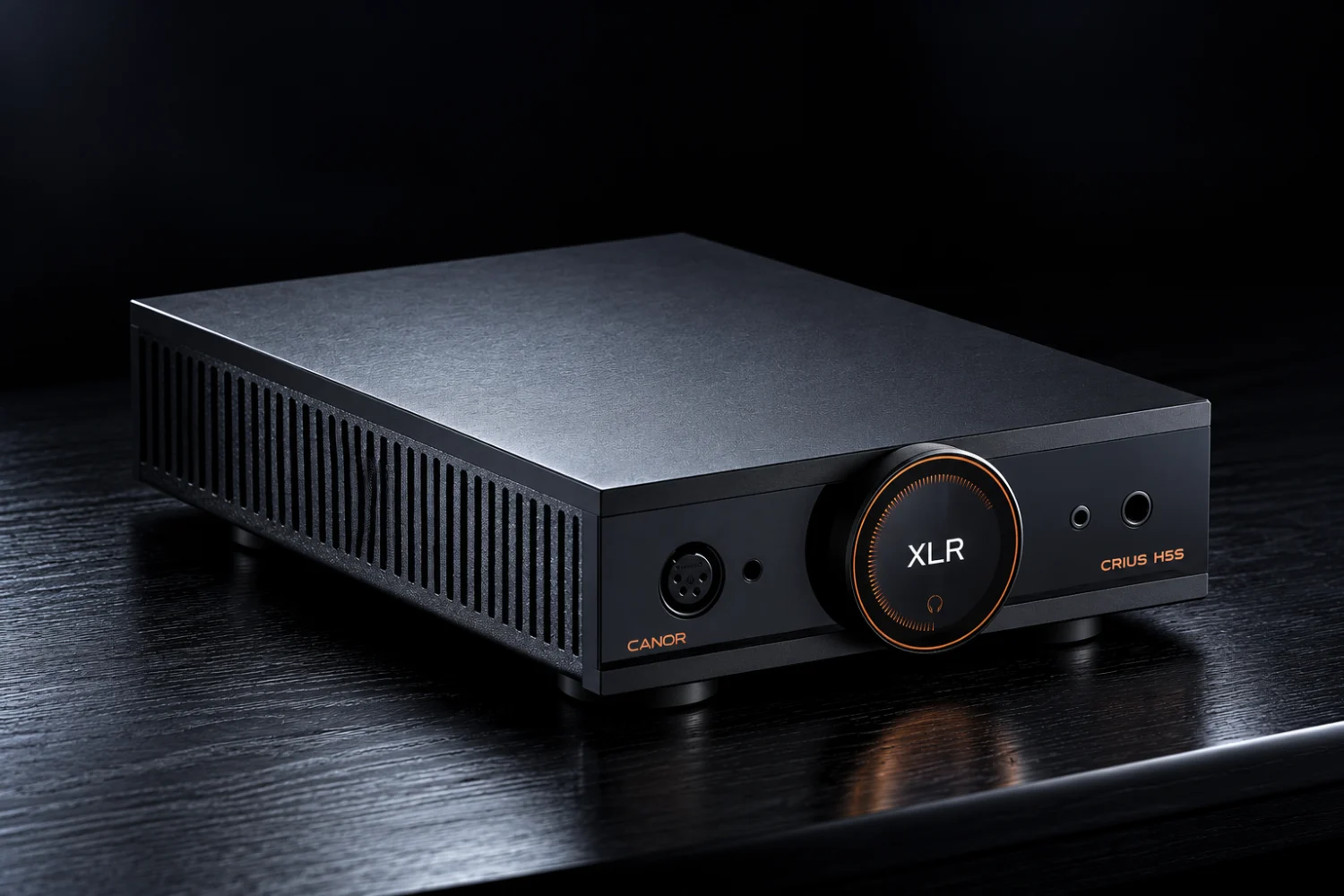
Canor has finalized the production specification of the Crius H5S, a compact component designed to handle the jobs that often require several separate desktop boxes. Introduced in preliminary form at High End Vienna 2026, the first member of the Canor Essential Line combines a solid-state headphone amplifier, dual-mono DAC and fully balanced preamplifier. The most important revision is inside: two ESS ES9039Q2M converters replace the ES9038Q2M chips originally planned. Four headphone sockets, digital and analog inputs, and line-level outputs give the H5S a role beyond private listening, allowing it to serve as the control center for active speakers or a power amplifier as well.
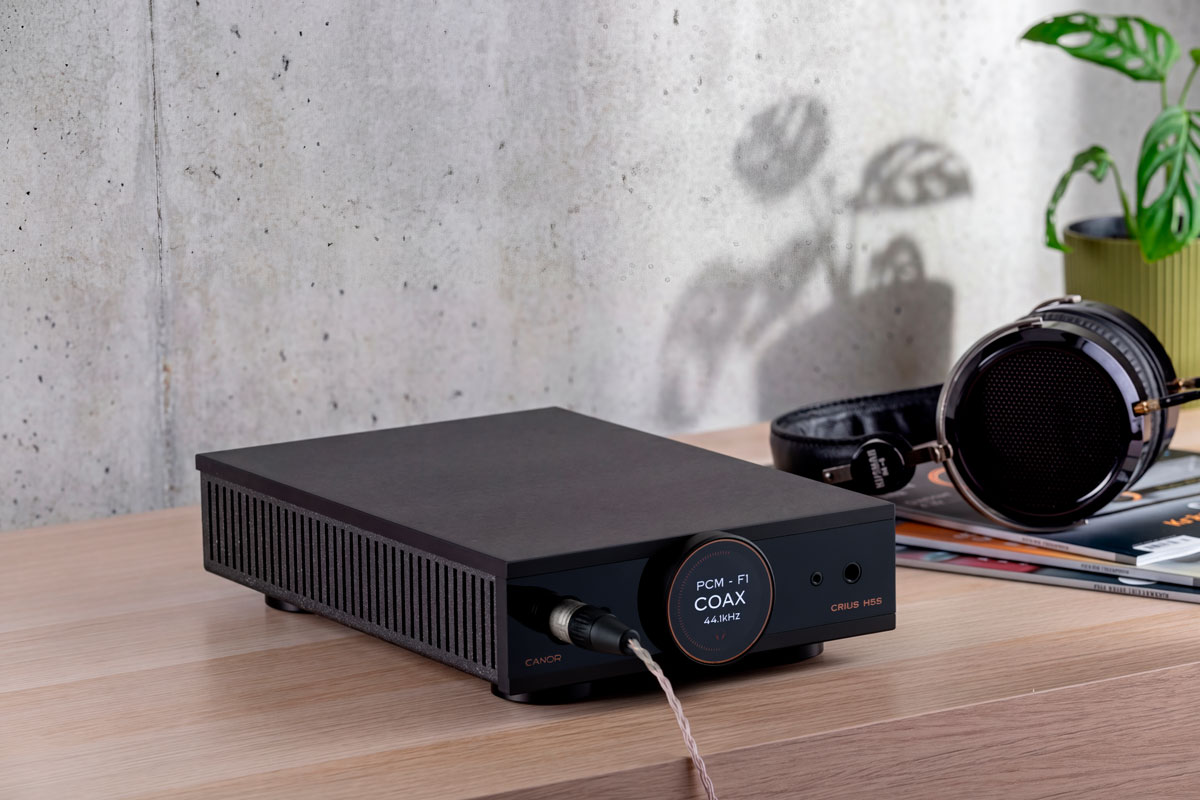
A 210mm-wide control center for the desk
At 210 × 75 × 300mm, the Crius H5S is proportioned for a desk or a compact stereo installation rather than a full-width equipment rack. That smaller footprint does not reduce it to a USB-only headphone accessory. Canor has placed the power supply inside the enclosure and included both digital and analog signal paths, avoiding the need for an external power brick or a separate source selector.
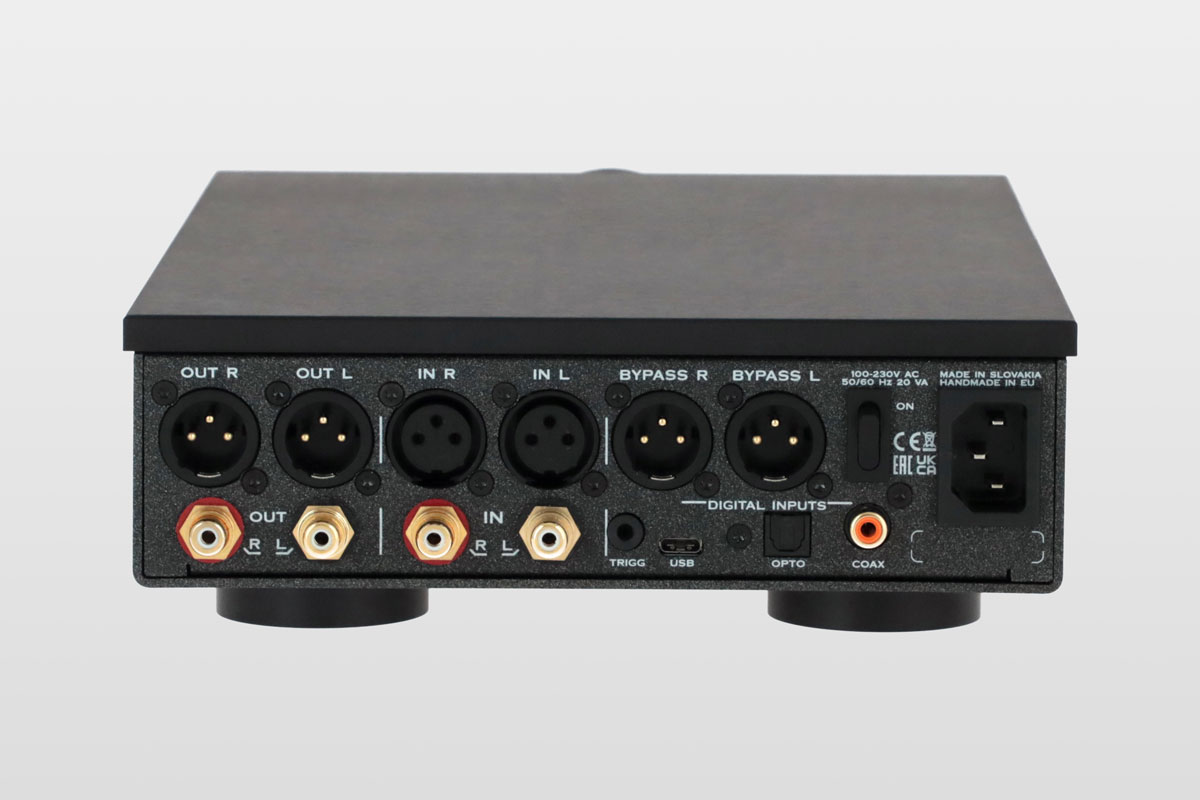
That arrangement should simplify systems where computer audio, traditional digital components and an analog source all need to share the same headphones or speakers. Balanced and unbalanced analog inputs and outputs are provided, while an XLR bypass adds another routing option. The documented connection set makes the H5S relevant to more than one type of owner: it can sit beside a computer, act as a preamplifier in a compact speaker system, or bridge those two uses in the same room.
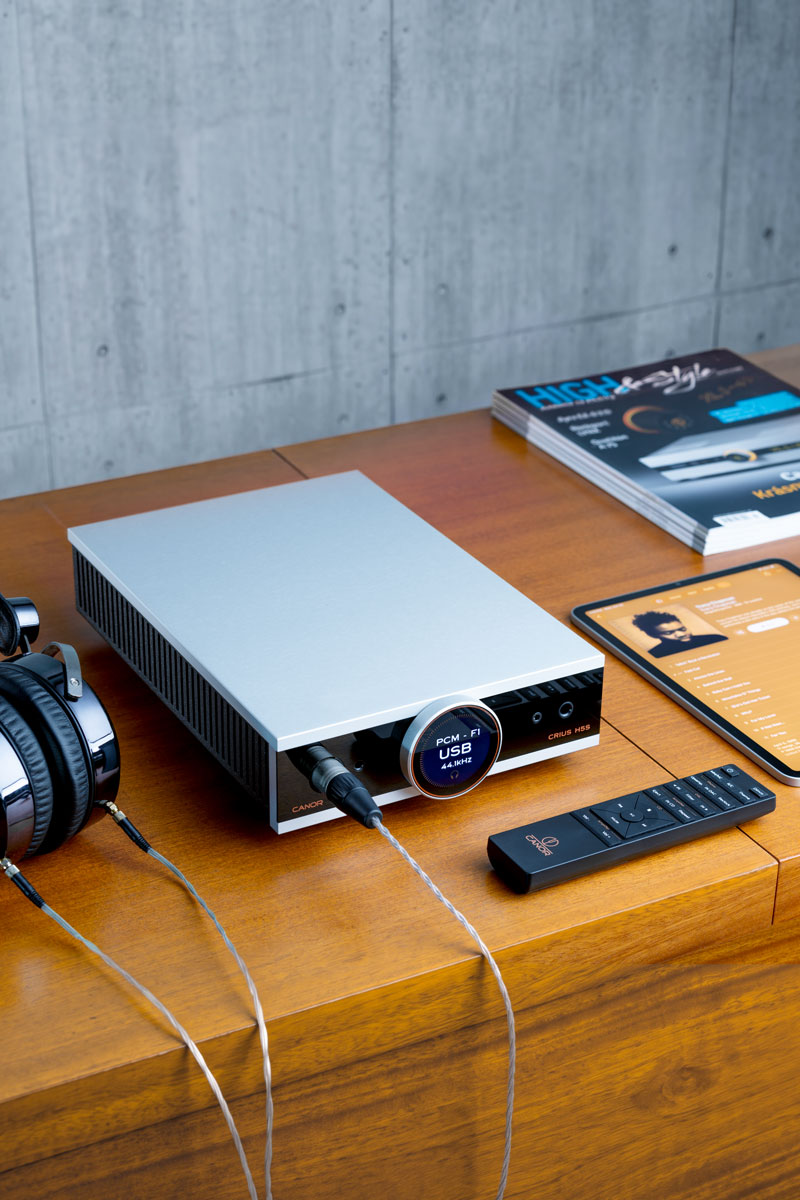
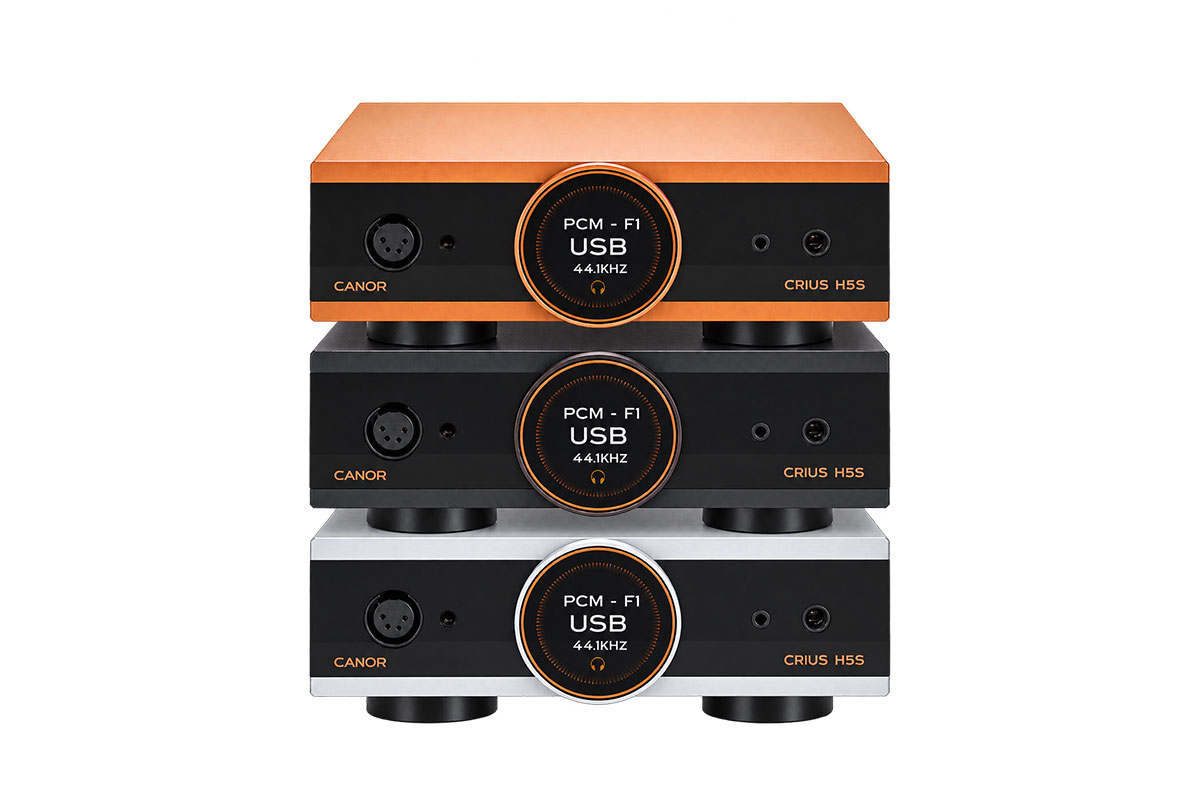
The Essential Line is intended to transfer elements of Canor’s established high-end construction into smaller components. For the H5S, that idea is expressed less through a single headline feature than through consolidation. A user who needs conversion, headphone drive and volume control can obtain all three functions in one chassis, with black, silver and bronze finishes available to suit the surrounding equipment.
The production version moves to two ES9039Q2M DACs
Canor’s principal change since the Vienna presentation is the move to a newer ESS conversion platform. The final H5S uses one ES9039Q2M chip for each stereo channel in a dual-mono configuration, rather than the pair of ES9038Q2M devices specified for the earlier version. Each converter feeds a discrete, balanced analog output stage.
Assigning a DAC chip to each channel maintains the channel-separated architecture around which the product was conceived. Canor associates this layout with precise processing, high dynamic range and low distortion, although the chip substitution alone is not enough to establish how the finished unit will sound. What can be said is that the revision occurred before series production and leaves the broader operating concept unchanged.
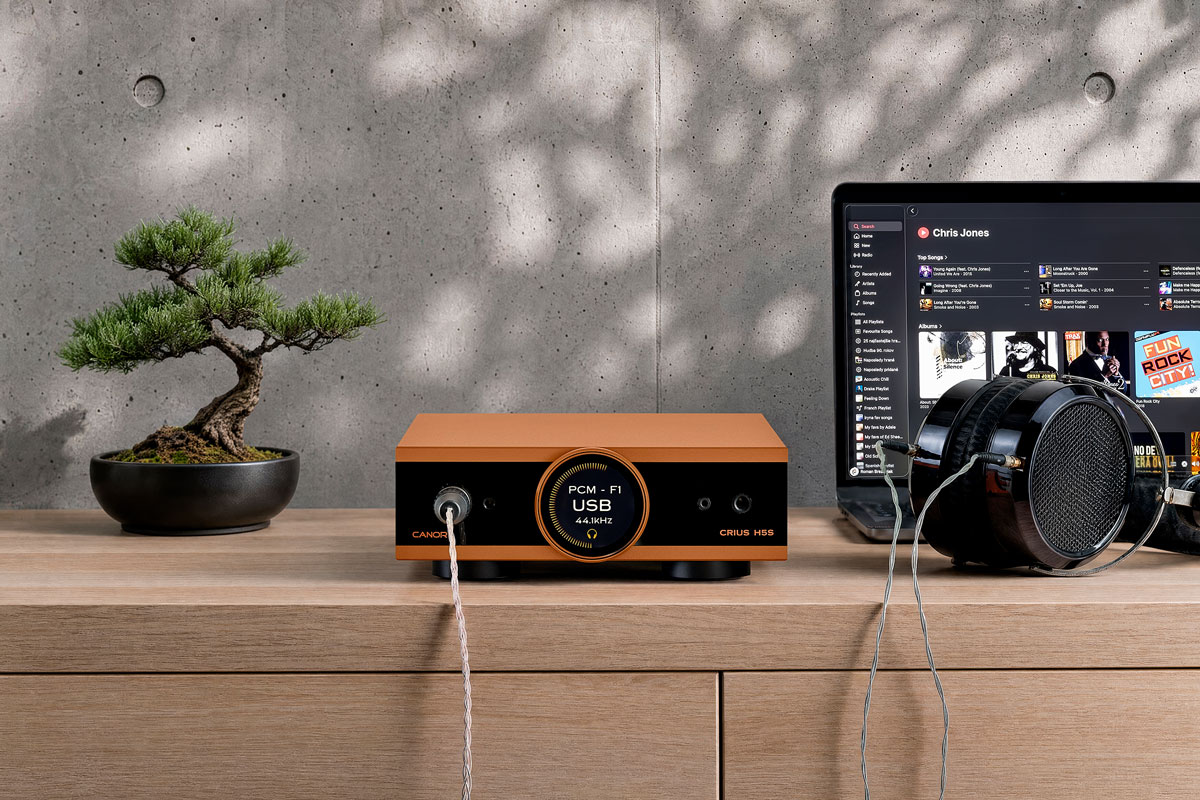
For owners, the more consequential point may be that this is not merely a DAC feeding a headphone socket. The conversion stage is integrated with balanced analog circuitry and a preamplifier section, so digital sources can be routed onward to a power amplifier or active loudspeakers without adding another volume-control component.
USB-C covers high-rate PCM and DSD playback
A computer can connect through USB-C, with support for linear PCM at up to 32-bit/768kHz. DSD is accepted up to DSD256 using DoP and up to DSD512 in native mode. Those ceilings provide broad compatibility with high-resolution libraries, though they should not be mistaken for a requirement to use such files; the same input also accommodates ordinary computer playback.
Optical and coaxial S/PDIF inputs expand the setup beyond USB, and both accept signals up to 24-bit/192kHz. A CD transport, television with a compatible optical output, dedicated network transport or another conventional digital source can therefore share the internal DAC with the connected computer. The exact source mix will depend on the rest of the system, but owners are not locked into a computer-first arrangement.
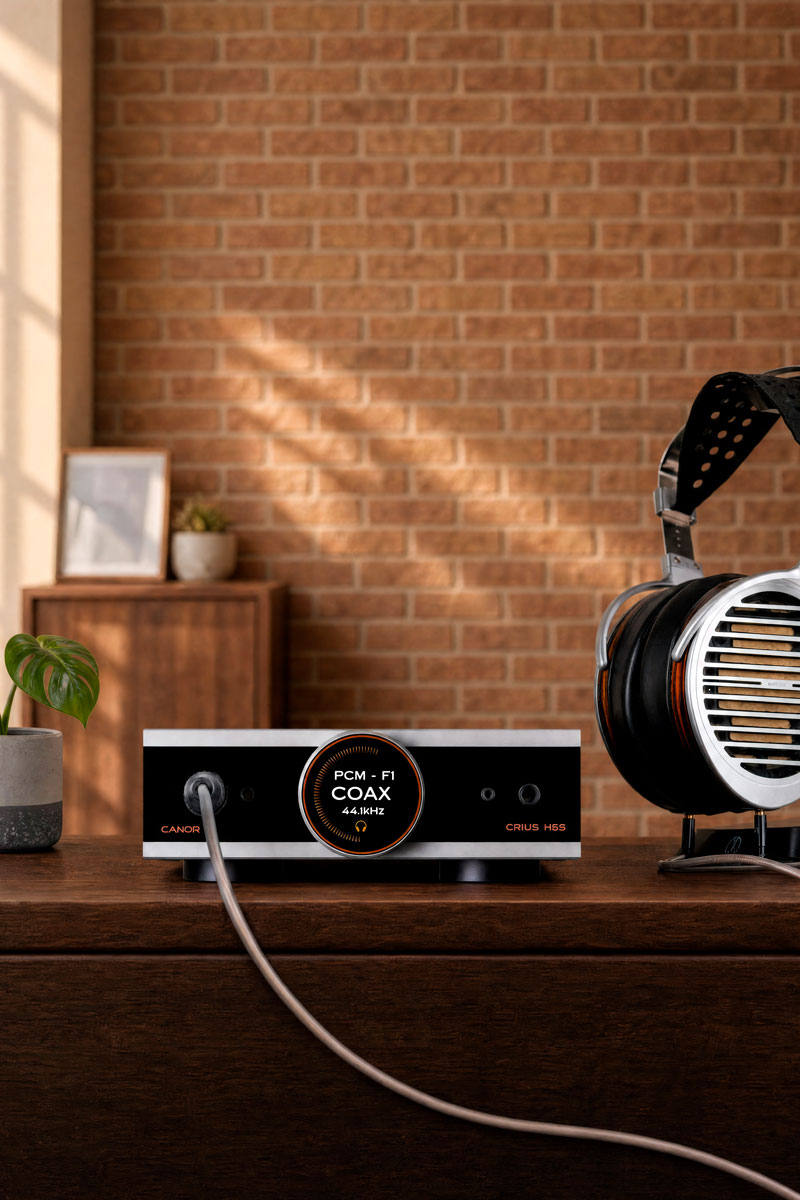
Nine selectable digital filters allow the converter’s behavior to be adjusted. Canor has not supplied listening comparisons for those filters, so their audible significance should not be presumed. Their inclusion nevertheless gives users a degree of configuration that can be explored without changing software, cables or external hardware.
Four sockets reduce the need for headphone adapters
Front-panel accommodation is unusually broad. Balanced headphones can plug into either a four-pin XLR socket or a 4.4mm Pentaconn connection. The unbalanced side is covered by 6.3mm and 3.5mm jacks. Collectively, those four formats address many common full-size and portable headphone terminations and should reduce how often an owner needs to keep adapters within reach.
Power depends on the connection and load. Through the balanced outputs, the H5S is rated at up to 4W into 30 ohms and 500mW into 300 ohms. Unbalanced output is specified as 1W into 30 ohms and 130mW into 300 ohms. Those distinctions matter when matching headphones: the balanced path carries the higher stated output figures, while the unbalanced sockets prioritize compatibility with conventional plugs.
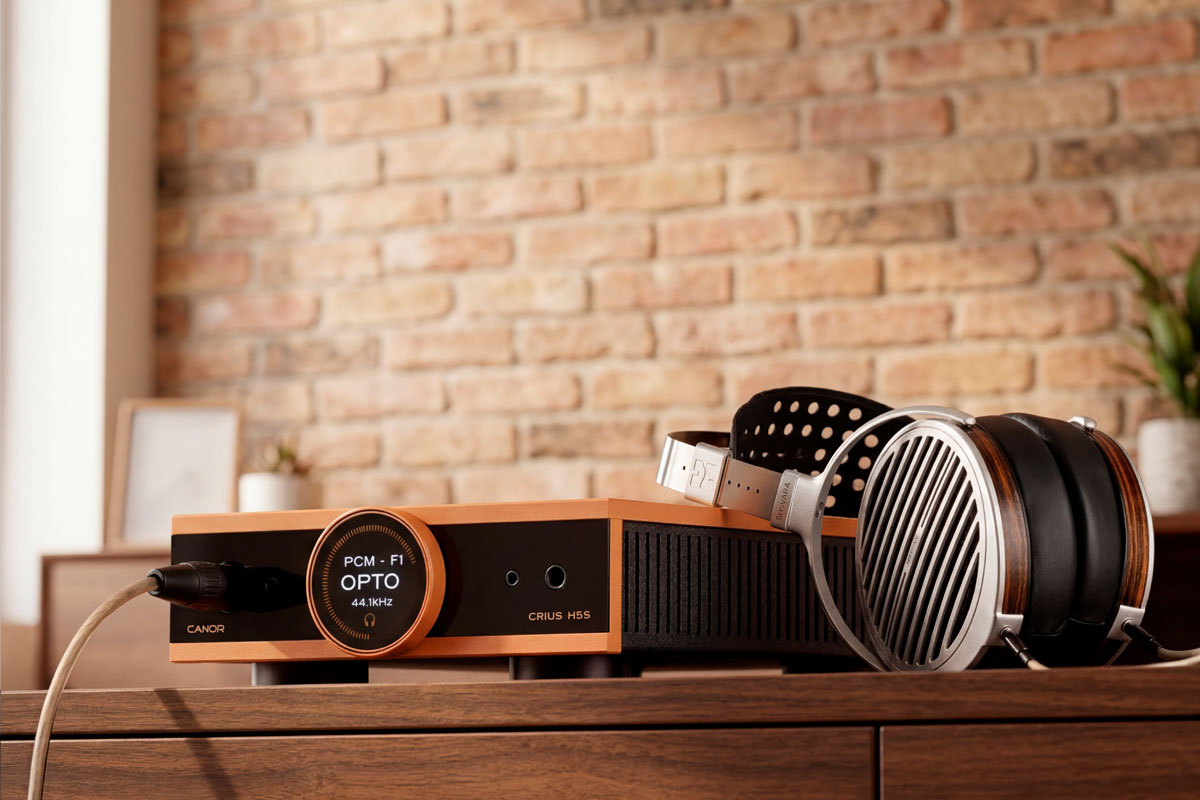
Output impedance is specified below 0.02 ohms in both operating modes. That low figure gives the H5S a documented basis for use with varied headphone designs, although power requirements and connector choice still need to be considered for each model. Canor specifically positions the available reserves for both conventional dynamic headphones and more demanding planar-magnetic designs.
Discrete circuitry and adaptive bias behind the sockets
The analog signal path is built from discrete semiconductors, without operational amplifiers or coupling capacitors in the path. Canor also favors optimized local feedback circuits rather than pronounced global feedback. These are architectural choices rather than listening results, but they show that the compact enclosure has not led the manufacturer to adopt a generic integrated amplifier stage.
An adaptive bias circuit shifts the amplifier stages between Class A and Class AB operation. Its purpose is to combine the operating characteristics of Class A with more practical power delivery when demand increases. For day-to-day ownership, that design is relevant because the H5S must cover a wide range of loads while remaining small enough for desktop placement; Canor has not provided thermal or power-consumption figures, however, so those aspects remain to be assessed.
Speaker-based use is supported by the fully balanced preamplifier function and the analog outputs. Connecting the H5S directly to active loudspeakers or a separate power amplifier could make the same source selection and conversion available for both headphone and room listening. The XLR bypass also indicates provision for integration into a larger analog chain rather than treating the unit as an isolated personal-audio device.
The Crius H5S appears aimed at listeners who want a serious headphone station without building a stack of narrowly focused components. Its four front-panel connector formats are the clearest everyday advantage, while USB-C, two S/PDIF inputs and analog connections broaden the range of sources that can remain attached. Balanced preamplifier outputs also leave a practical route from desktop listening to active speakers or a separate power amplifier.
Several ownership questions remain open, including pricing, release timing, power consumption and how the nine filters are operated in daily use. Those details will be important when the H5S reaches systems outside a show environment. For now, the finalized dual-mono ES9039Q2M architecture and discrete amplifier establish the Essential Line’s first model as a compact hub rather than simply another DAC-equipped headphone amplifier.


Sound Off
0Join the discussion if you have something to add.