
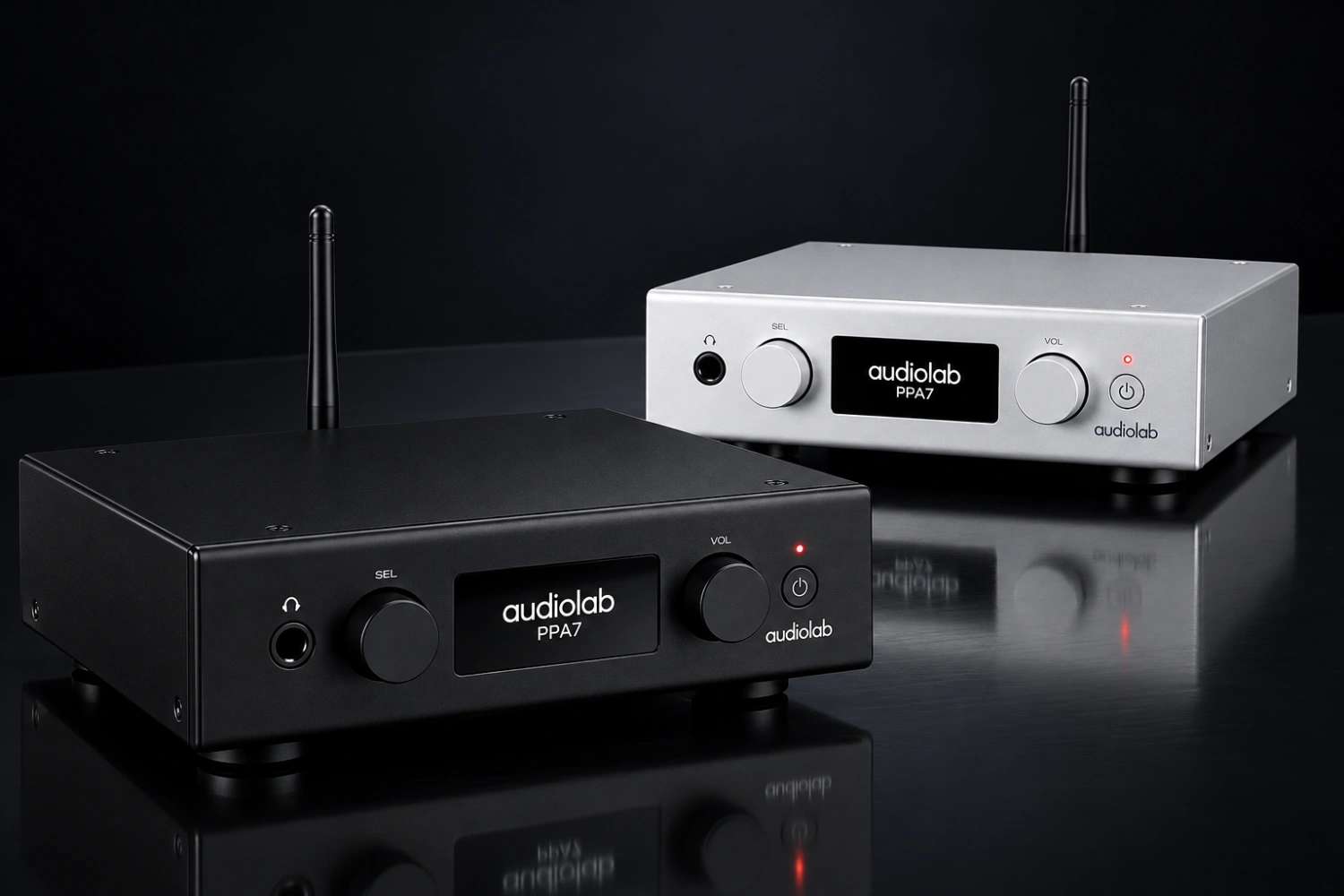
Nearly two decades after its last standalone phono amplifier, Audiolab is returning to the category with a model that reaches beyond conventional record playback. The PPA7 is built around adjustable moving-magnet and moving-coil inputs, but its broader role is defined by three additions: a headphone amplifier, Bluetooth transmission and USB-C recording. Those facilities allow one turntable front end to serve a traditional amplifier, active speakers, wired or wireless headphones, and a computer used for vinyl archiving. A variable line output also gives the compact unit enough control functionality to connect directly to a power amplifier.
Cartridge matching remains the foundation
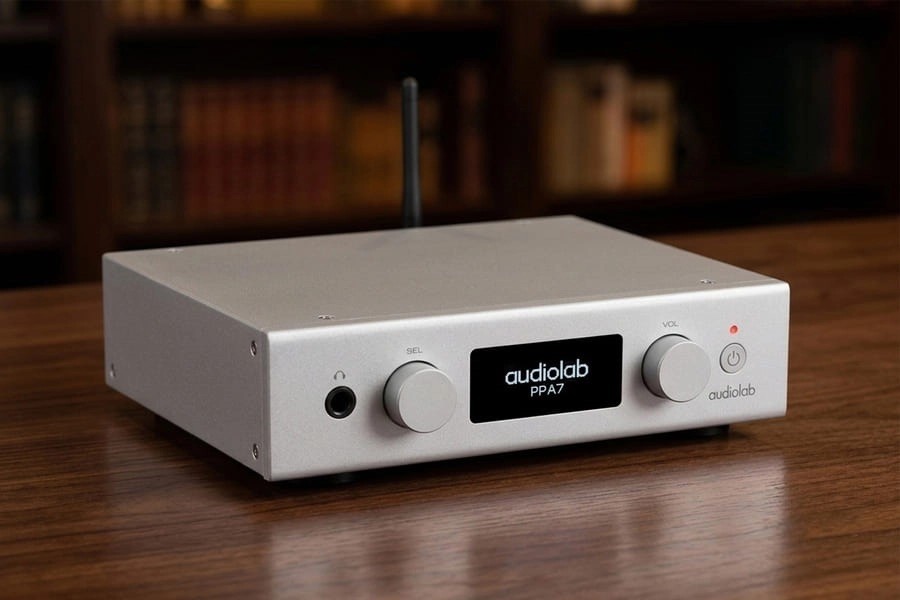
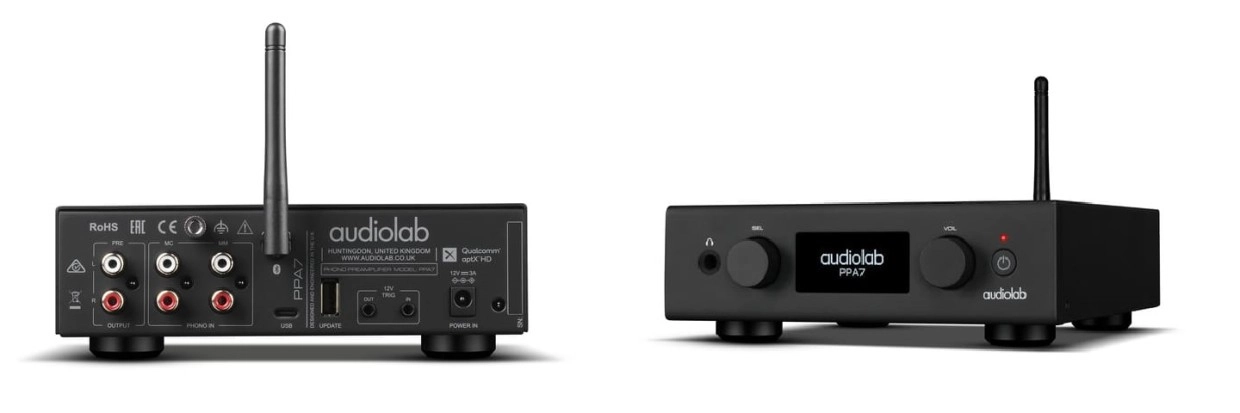
The expanded feature set does not displace the PPA7’s primary job. Separate stereo RCA inputs are provided for moving-magnet and moving-coil cartridges, avoiding the need to share a single configurable input when more than one turntable or tonearm setup is involved. Its RCA output can then feed an integrated amplifier, preamplifier, power amplifier or pair of active speakers, depending on the selected output mode.
For moving-magnet cartridges, input impedance is fixed at 47 kilohms while capacitance can be switched between 100 pF and 220 pF. Moving-coil users can select a load of either 100 ohms or 330 ohms. These are not continuously variable settings, but they provide defined alternatives for matching cartridges whose recommended loading falls within the available options.
Gain can be adjusted in 1 dB increments across a range of plus or minus 6 dB. Maximum gain is 52 dB in moving-magnet mode and 66 dB for moving-coil cartridges. Fine gain steps should make it easier to balance the phono source against other components in a system or to establish an appropriate recording level before digitization, without relying only on downstream volume control.
Fixed or variable output changes its system role
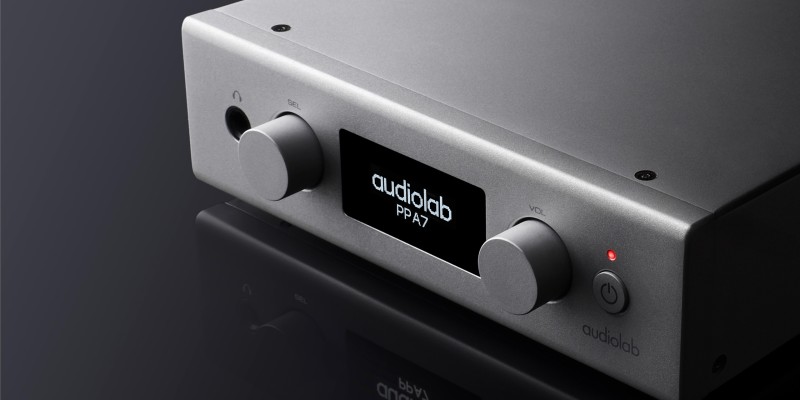
A switchable fixed or variable RCA output is one of the PPA7’s more consequential choices. In fixed mode, it behaves as a conventional source component, leaving volume adjustment to an integrated amplifier or preamplifier. Activating variable output brings the front-panel level control into the signal path and allows the unit to connect directly to a power amplifier.
That option also suits a compact vinyl system based on active loudspeakers. Because the PPA7 combines cartridge amplification and volume control, no separate line-level preamplifier is required for a turntable-only arrangement. The trade-off is equally clear: this is not presented as a multi-input analog preamplifier, so buyers planning to control numerous source components will still need a broader switching solution elsewhere in the system.
Audiolab has included 12V trigger inputs and outputs for coordinated power control with compatible equipment. That detail reinforces the PPA7’s potential place in a component system, particularly when it is connected directly to downstream amplification rather than used solely as an input to an existing integrated amplifier.
Headphones and Bluetooth open two listening paths
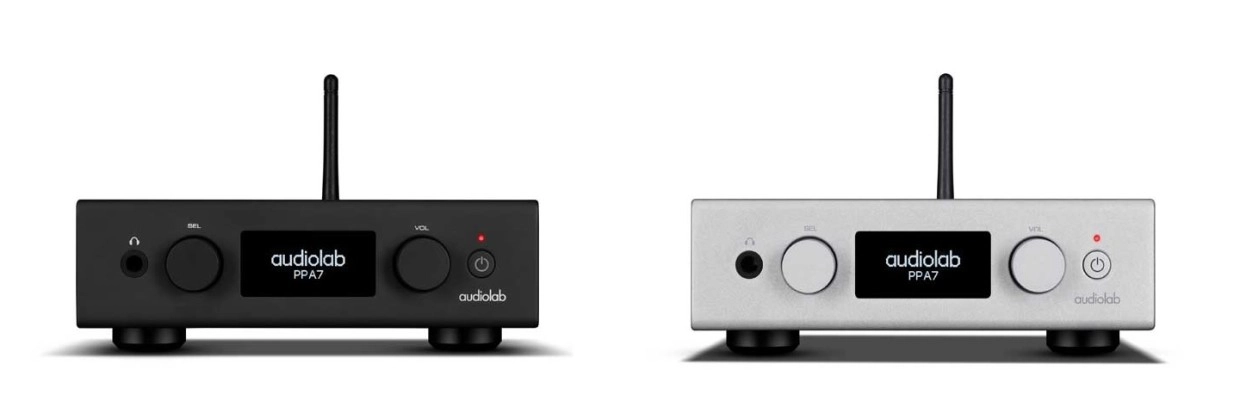
A 6.35 mm headphone socket sits on the front panel, backed by an amplifier specified to support headphones with impedances from 20 to 600 ohms. Maximum output is 600 mW. Audiolab has not supplied output figures at individual impedances, but the stated compatibility range covers a wide selection of conventional hi-fi headphones.
The headphone stage turns the phono amplifier into a self-contained station for private record listening. A turntable, cartridge and headphones are sufficient to form the core of the setup, while the front-panel volume control handles level adjustment. That can be useful where a full loudspeaker system is unavailable or where late-night listening is a priority.
Bluetooth 5.3 transmission provides the wireless alternative, sending the converted record signal to compatible headphones or speakers. aptX HD is supported when the receiving device also offers the codec. Bluetooth here is an output path rather than a way to stream music into the PPA7, an important distinction for anyone evaluating it as a broader wireless source component. Its purpose is specifically to carry the phono signal outward.
The ADC serves wireless playback and vinyl archiving
Both Bluetooth transmission and computer recording depend on the PPA7’s integrated analog-to-digital converter. For archiving, a USB-C output can be connected to a PC or Mac, allowing records to be captured and stored with suitable recording software. The unit supports 16-bit and 24-bit recording at sample rates ranging from 44.1 kHz to 192 kHz.
USB output level is adjustable from -12 dB to +3 dB. That control matters because record and cartridge output levels vary, and digital recordings need sufficient headroom to avoid clipping on louder passages. Audiolab has not specified automatic level management or bundled editing software, so file capture, track splitting and cleanup will depend on the connected computer and the user’s chosen workflow.
The digital facilities do not replace the analog RCA output. Instead, they let the same phono stage support conventional playback, wireless transmission and computer capture without requiring a separate external ADC. For record collectors interested in making personal digital copies, that consolidation is one of the PPA7’s clearest points of differentiation.
A compact chassis shared with the D7
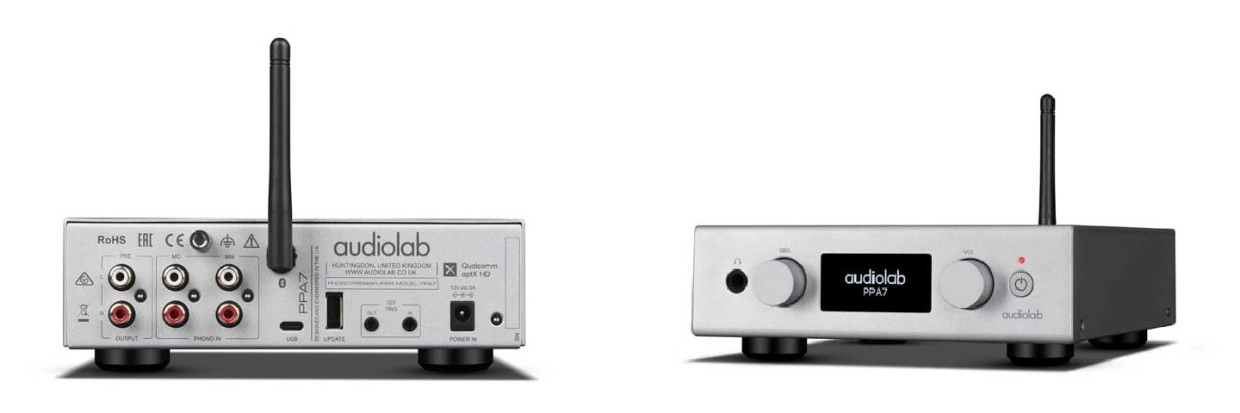
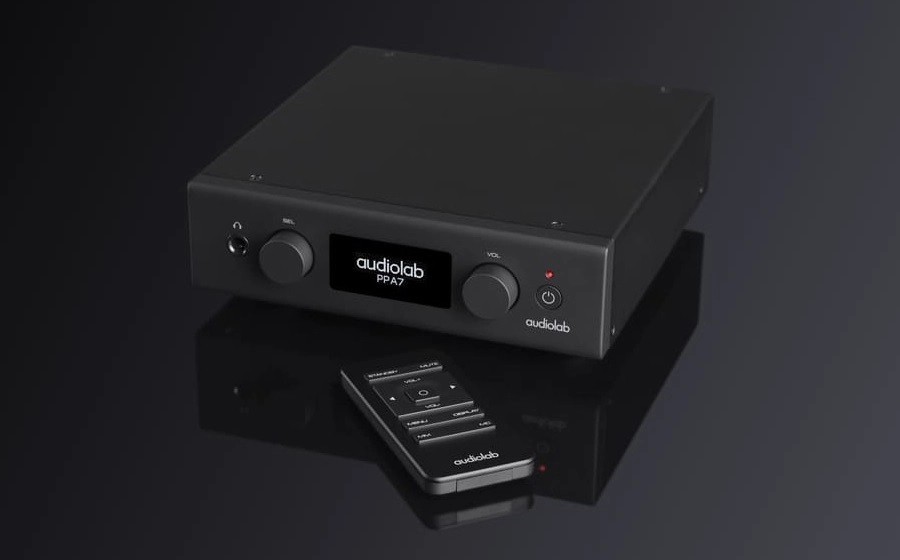
Measuring 208 x 56 x 180 millimeters, the aluminum enclosure matches the format of Audiolab’s D7 digital-to-analog converter. A 33 mm monochrome OLED display occupies the center of the front panel, with a multifunction rotary control on either side. A supplied remote provides another way to reach the unit’s settings and volume functions.
A rear USB-A port is reserved for future firmware updates, while the separate USB-C connection handles audio output to a computer. Internally, the power-supply circuitry converts the incoming 12V DC supply to regulated positive and negative 8.5V rails for the analog stages.
Audiolab expects the PPA7 to go on sale near the end of October 2026. Regional pricing and detailed market availability have not yet been announced, leaving its exact position within Audiolab’s wider component range to be clarified closer to release.
The PPA7 appears aimed at listeners who want cartridge adjustment without committing to a narrowly defined phono box. Its strongest distinction is not any single secondary function, but the way the variable analog output, headphone amplifier and ADC extend the number of systems a turntable can serve. It could sit conventionally ahead of an integrated amplifier, control a streamlined power-amplifier or active-speaker setup, or become a desk-based station for headphone listening and record capture. What remains to be established is how the available loading choices suit a wider range of cartridges, how its digital recording workflow is implemented by computers, and where the unit will be priced. Those details will determine whether its broad functionality is matched by equally broad appeal.



Sound Off
0Join the discussion if you have something to add.