
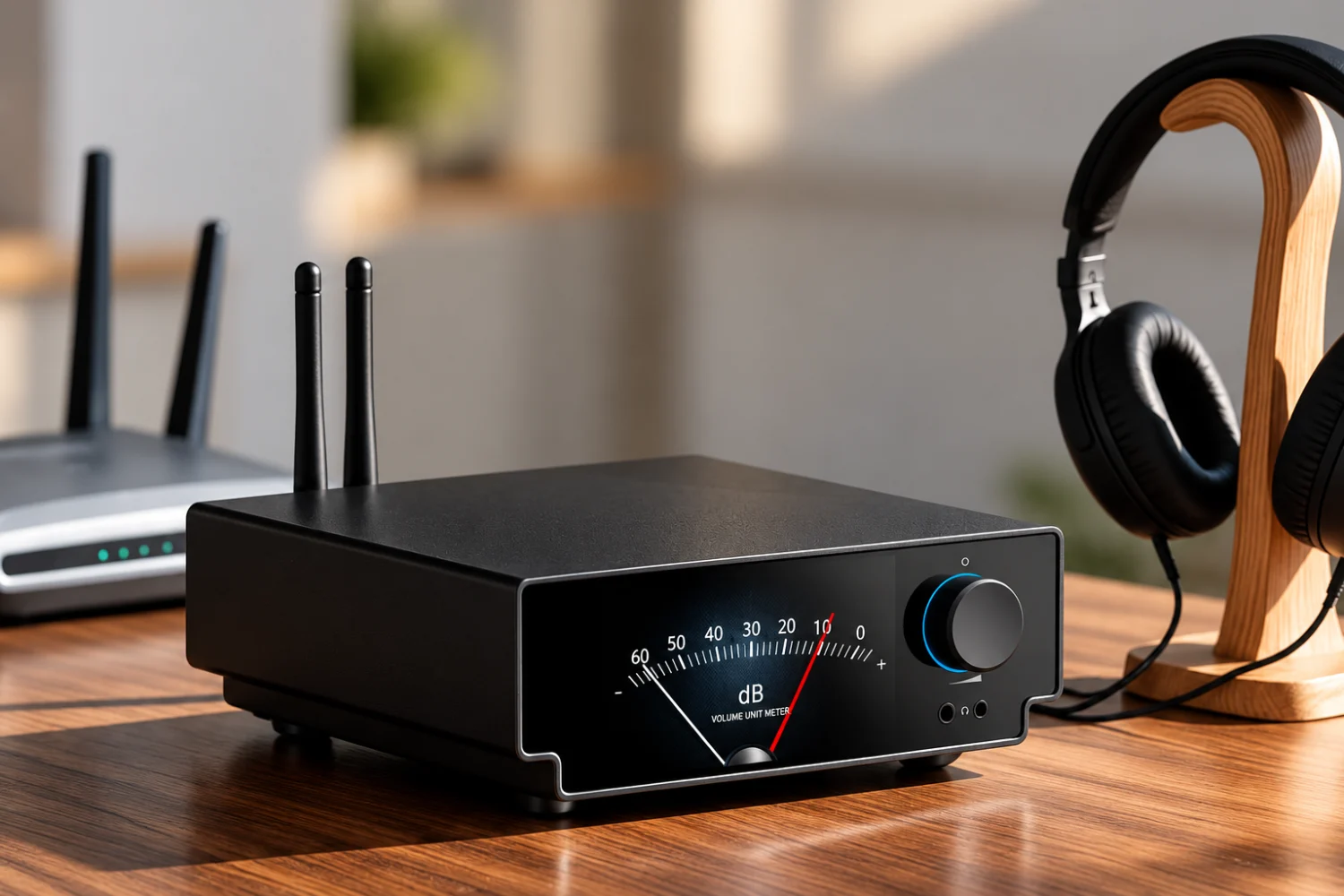
Shanling has expanded its Desktop Line with the SM50, a compact network player intended for listeners who want to reduce the number of components in a digital system. Within a chassis measuring 205 × 188 × 53 mm, it combines network and local-file playback, an ESS-based DAC, fixed or variable analog outputs, and a dedicated headphone amplifier. That breadth gives the SM50 several possible jobs: it can feed an existing integrated amplifier, control an active-speaker or power-amplifier system, or anchor a small wired-headphone setup. A Linux platform replaces the customized Android software used in some other Shanling streamers, placing the emphasis on integrated playback routes rather than a general-purpose app environment.
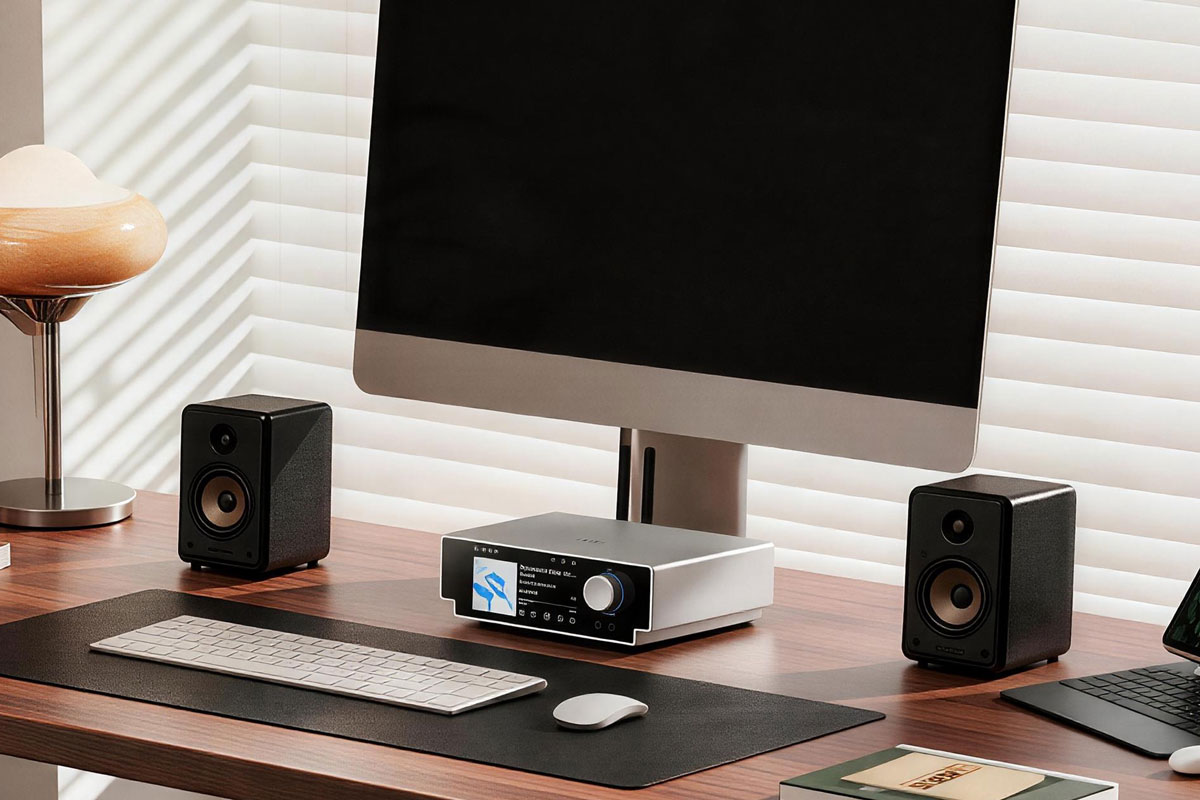
One component, three plausible system roles
The clearest buyer context for the SM50 is a system where space matters but connection flexibility cannot be sacrificed. Its stereo RCA and balanced XLR outputs can operate either at a fixed line level or with variable volume control. In fixed mode, the player can function as a conventional digital source connected to an integrated amplifier or preamplifier. Switching to variable output allows it to assume preamp duties when paired with suitable active speakers or a separate power amplifier.
That distinction is more significant than the presence of two analog connector formats alone. A buyer can begin by adding the SM50 to an established amplifier-based system, then potentially use it in a more streamlined configuration later. The integrated headphone stage adds another listening route without requiring a separate desktop amplifier, so speaker and wired-headphone playback can share the same network source and control interface.
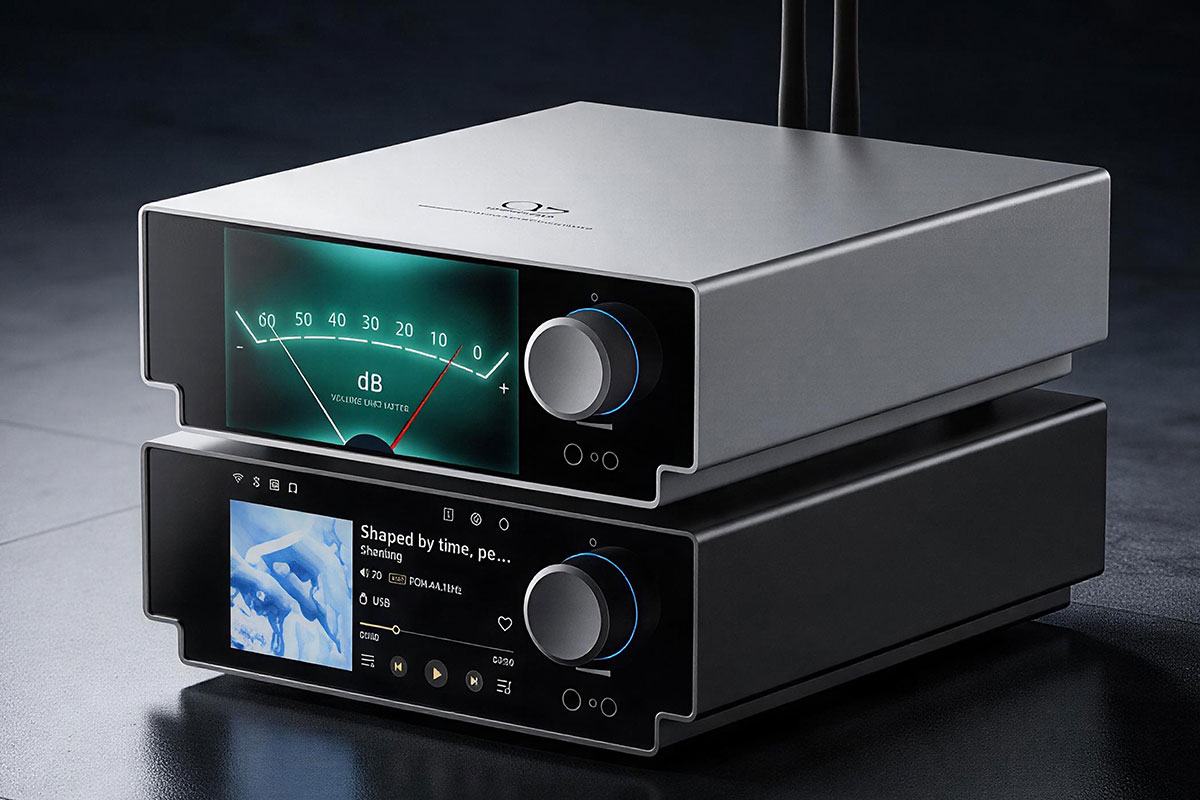
Shanling describes this as its smallest and least expensive network player to date, although no USD price has been announced. Its role is consequently defined less by a single specialist feature than by how many conventional boxes it may replace. Whether all of those functions are needed will depend on the system, but the combination is particularly relevant for desks, shelves and compact racks where adding separate streamer, DAC, preamp and headphone components would consume considerably more room.
Linux narrows the focus to music playback
Instead of adopting the customized Android platform found on some Shanling network products, the SM50 runs a Linux-based operating system developed around audio playback. Shanling associates that choice with lower resource requirements and short response times. The trade-off implied by a dedicated platform is that users depend on the playback services and protocols built into the device rather than treating it like a broadly expandable Android player.
The included options cover several distinct listening habits. TIDAL Connect and Qobuz Connect let subscribers choose music through the respective service apps while directing playback to the SM50. Roon Ready support addresses systems organized around Roon, while Apple AirPlay 2, DLNA and Squeezelite provide additional routes from phones, computers and networked audio environments.
Owners of personal music libraries are not confined to cloud services. The player can access files stored on a NAS and play music from attached USB storage. That makes it relevant to listeners with mixed libraries, including those who alternate between subscription catalogs and locally maintained collections. The range of supported methods also reduces the need for every household member to adopt one control system, although the precise experience will naturally vary by protocol.
An ESS DAC with fixed and variable output paths
Digital-to-analog conversion is handled by an ESS Sabre ES9039Q2M. Shanling has paired it with separate 90 MHz and 98 MHz crystal oscillators as part of the player’s clock architecture. The announcement does not provide a complete set of supported file rates or measured analog performance, so the DAC’s significance here is primarily architectural: it allows the SM50 to deliver analog output directly rather than requiring an external converter.
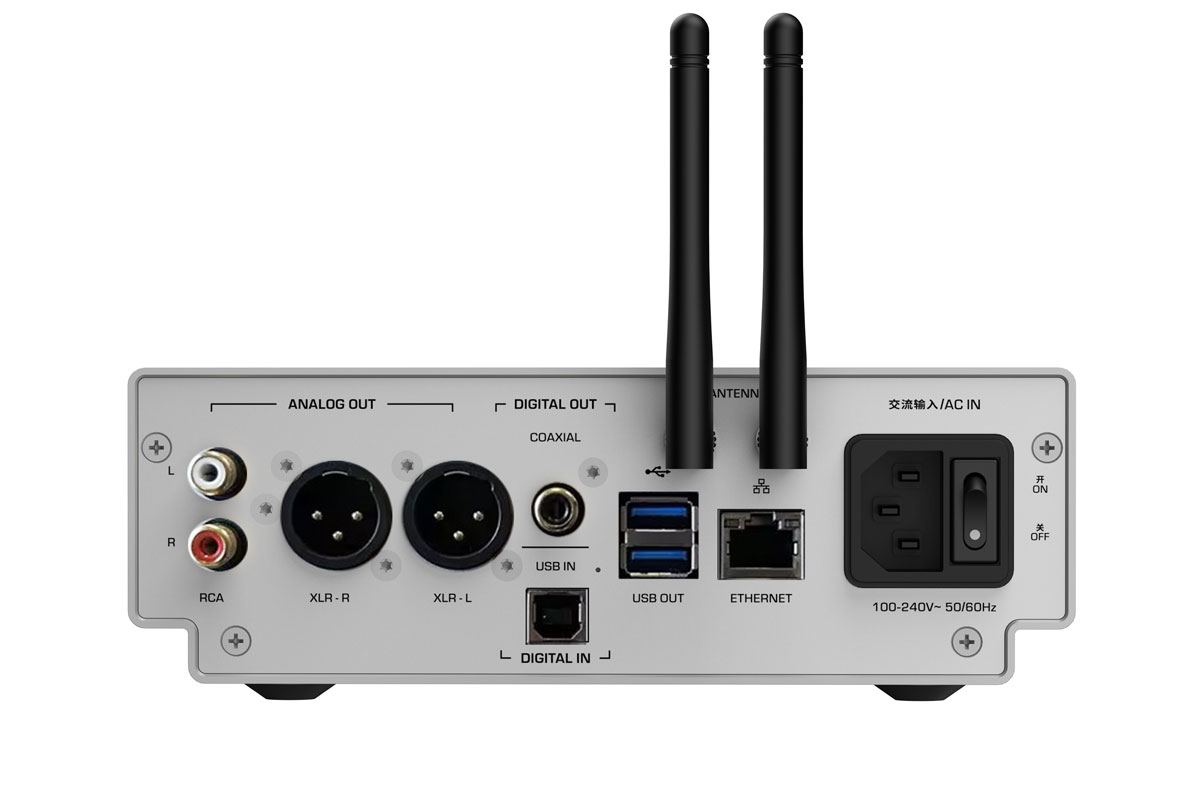
For owners who already have a preferred DAC, the SM50 can instead operate as a digital transport. Coaxial S/PDIF and USB audio outputs are provided for passing the signal to an external converter. Conversely, a USB DAC mode permits the internal ESS stage to handle audio from a connected computer. Those two directions give the unit a useful degree of system flexibility: its streaming section and conversion stage can be used together, or each can participate in a different digital chain.
Balanced XLR outputs may be especially useful when the receiving amplifier or active speakers provide matching inputs, while RCA keeps the player compatible with more conventional stereo equipment. The option to choose between fixed and variable level is the key setup decision. Fixed output leaves volume control to another component; pre-out mode places that responsibility with the SM50.
Headphone listening is more than an auxiliary function
Two front-panel headphone connections divide the wired output options between a 3.5 mm stereo jack and a balanced 4.4 mm Pentaconn socket. Shanling specifies up to 182 mW into 32 ohms from the unbalanced connection and up to 700 mW into 32 ohms from the balanced output. Two selectable gain settings provide adjustment for different headphones, though compatibility should still be judged against the requirements of a particular model.
The substantial difference between the quoted balanced and unbalanced figures makes connector choice relevant rather than cosmetic. Listeners whose headphones support a suitable 4.4 mm cable can access the higher stated output, while the 3.5 mm jack accommodates common single-ended cables. No claims are provided for other impedances, so the published figures should not be treated as a universal indication of performance with every headphone.
For a buyer who divides listening time between speakers and headphones, this section of the specification may be what turns the SM50 from a streamer into a system hub. Music sources, library access and conversion remain in one component, with no need to move a cable from the main amplifier or add another network endpoint solely for private listening.
Touchscreen operation without giving up app control
A 4.5-inch touchscreen with a 1080 × 1920 resolution occupies the front of the aluminum-and-glass enclosure. It provides direct access to playback information and core controls, which matters when the SM50 sits within arm’s reach on a desk. From a listening seat, the Shanling Eddict Controller app offers remote operation by phone or tablet.
Network access is available through wired LAN or dual-band Wi-Fi on the 2.4 GHz and 5 GHz bands. Bluetooth 5.2 provides another path for compatible mobile devices, with LDAC and aptX HD among the supported codecs. Bluetooth is therefore available for quick, device-led playback, while the network options support the SM50’s broader streaming and library functions.
At approximately 1.7 kg and only 53 mm tall, the unit is suited to placements where full-width hi-fi hardware would be awkward. Black and silver finishes are listed. Compact dimensions do not remove the need to plan for rear cables, particularly when XLR, Ethernet and digital connections are used, but the footprint should make the player easier to accommodate on a crowded desktop or narrow shelf.
The SM50 appears best matched to listeners building around flexibility rather than a single fixed configuration. Its most economical use of space will be as a streamer, DAC and volume controller feeding active speakers, or as a combined network source and headphone station on a desk. In a traditional separates system, it can take the simpler role of a fixed-level source while leaving amplification unchanged. International distributor shipments have begun, but Shanling has not supplied USD pricing. Prospective buyers should also watch for fuller format-support details and long-term software information, particularly because the focused Linux platform makes Shanling’s continued integration work central to the product’s usefulness. Even without those remaining details, the documented connection set makes the intended audience clear: people who want several digital playback routes and multiple system paths without committing rack space to separate components.


Sound Off
0Join the discussion if you have something to add.