For much of hi-fi history, the loudspeaker was the obvious destination for an ambitious system. Headphones offered another way to listen, but they were not always treated as the place to concentrate a manufacturer’s most elaborate engineering. The high-end headphone market that emerged around the turn of the twenty-first century challenged that hierarchy. A listener could now choose among radically different driver technologies, substantial dedicated amplifiers and prices once associated with major components in a room-based system. An archival survey of eight costly models captures that change at an unusually revealing moment. Its subjects range from dynamic headphones sold as individual products to electrostatic systems built around a matching amplifier.
The prices in that survey are historical reference points, not current quotations: roughly $4,000 for the Audeze and Focal models, and more than $60,000 for Sennheiser’s HE 1 system. What connects them is not a single recipe for good sound, but a shared claim that headphone listening could sustain serious technical investment. The distinction matters because expense alone tells us little about hi-fi history. These products illustrate competing answers to questions that still shape headphone design: how to move a diaphragm with greater control, how much material and construction matter, and when the amplifier becomes inseparable from the headphone itself.
A New Scale for Personal Listening
The eight products were not expensive in the same way. Focal’s Utopia and Final Audio Design’s Sonorous X were dynamic headphones, using the familiar principle of a driven diaphragm. Audeze’s flagship and the Abyss AB-1266 Phi CC used planar magnetic, also called isodynamic, designs. Stax, HIFIMAN and Sennheiser represented electrostatic listening, in which an extremely light diaphragm is driven by an electric field. Their differing prices therefore cannot be read as a simple ranking of one technology against another.
They also occupied different places in a system. A conventional dynamic or planar magnetic headphone can be discussed as a product in its own right, although its performance still depends on the source and amplification. An electrostatic headphone needs specialized drive electronics. In the survey, the HIFIMAN Shangri-La models and Sennheiser HE 1 were presented as headphone-and-amplifier systems, while the Stax SR-009S was priced separately from its suggested amplifier. That distinction explains part of the enormous spread between the figures.
The market context was a growing willingness to treat private listening as a primary hi-fi experience rather than a compromise made when loudspeakers were impractical. Manufacturers responded by bringing different kinds of expertise to the same small space around the listener’s ears. The resulting products could be compared at a dealer or in an enthusiast’s system, but they were often built around very different ideas of what a flagship headphone should be.
Dynamic Drivers at the Luxury End
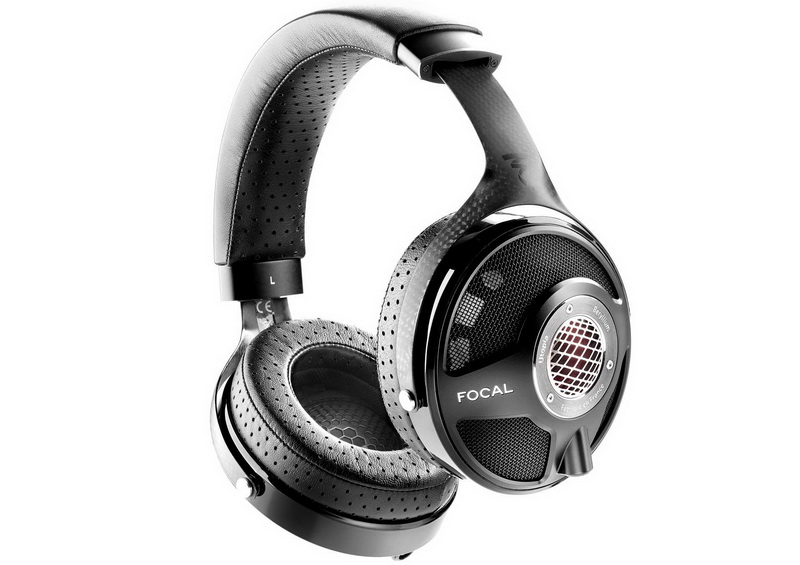
Focal Utopia showed how far a manufacturer could take a conventional driver principle without treating it as conventional engineering. The French company used a 40 mm diaphragm made from pure beryllium, a material selected for its combination of low mass and rigidity. Those properties are relevant to a headphone diaphragm because it must start, stop and change direction rapidly while retaining its shape.
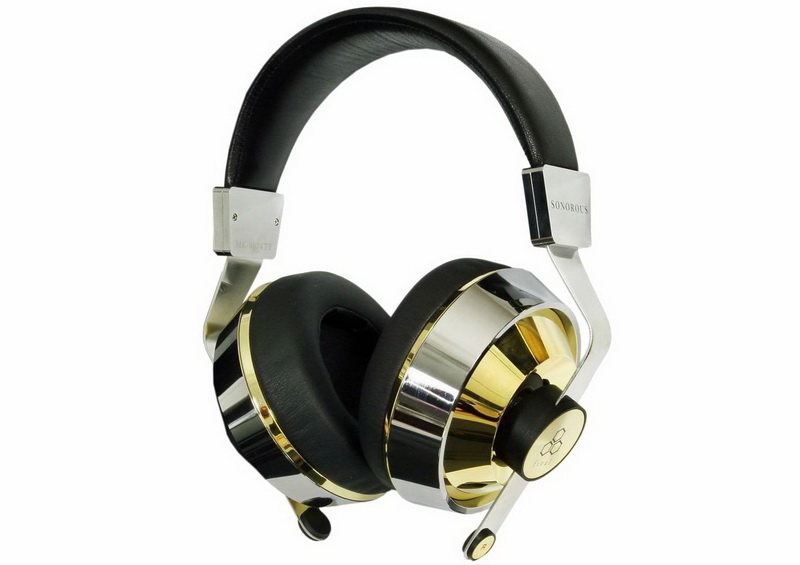
The archival price was about €4,000, putting Utopia in a category where the driver material itself was central to the product’s identity. Final Audio Design’s Sonorous X offered a contrasting interpretation of the costly dynamic headphone. This closed-back Japanese model used a titanium diaphragm, while its cups were machined from solid aluminium and fitted with stainless-steel outer covers. A steel headband contributed to a reported weight of 630 grams. At around $5,000 in the source survey, it made unusually substantial construction a defining characteristic, alongside its driver design.
These two headphones demonstrate why a technology label is only the beginning of a design story. Both were dynamic models, yet their materials, enclosure approaches and physical priorities differed markedly. Utopia put an unusual diaphragm material at the centre of its case; Sonorous X also asked the listener to consider the role of a dense, carefully made enclosure. Neither example proves that a particular metal guarantees better sound. Historically, their importance lies in showing that the established dynamic principle still offered room for expensive, distinctive engineering when newer driver types were attracting attention.
Planar Magnetic Ambition
Planar magnetic headphones provided another route to the high end. Rather than driving a diaphragm from a conventional voice coil attached at one point, a planar design applies force across a thin diaphragm positioned within a magnetic assembly. The practical implementation varies, but the appeal is clear: the driver gives designers a different way to control the moving surface. By the period represented in the survey, that approach had become prominent enough to support several costly flagships. Audeze’s LCD-4 was listed at $3,995.
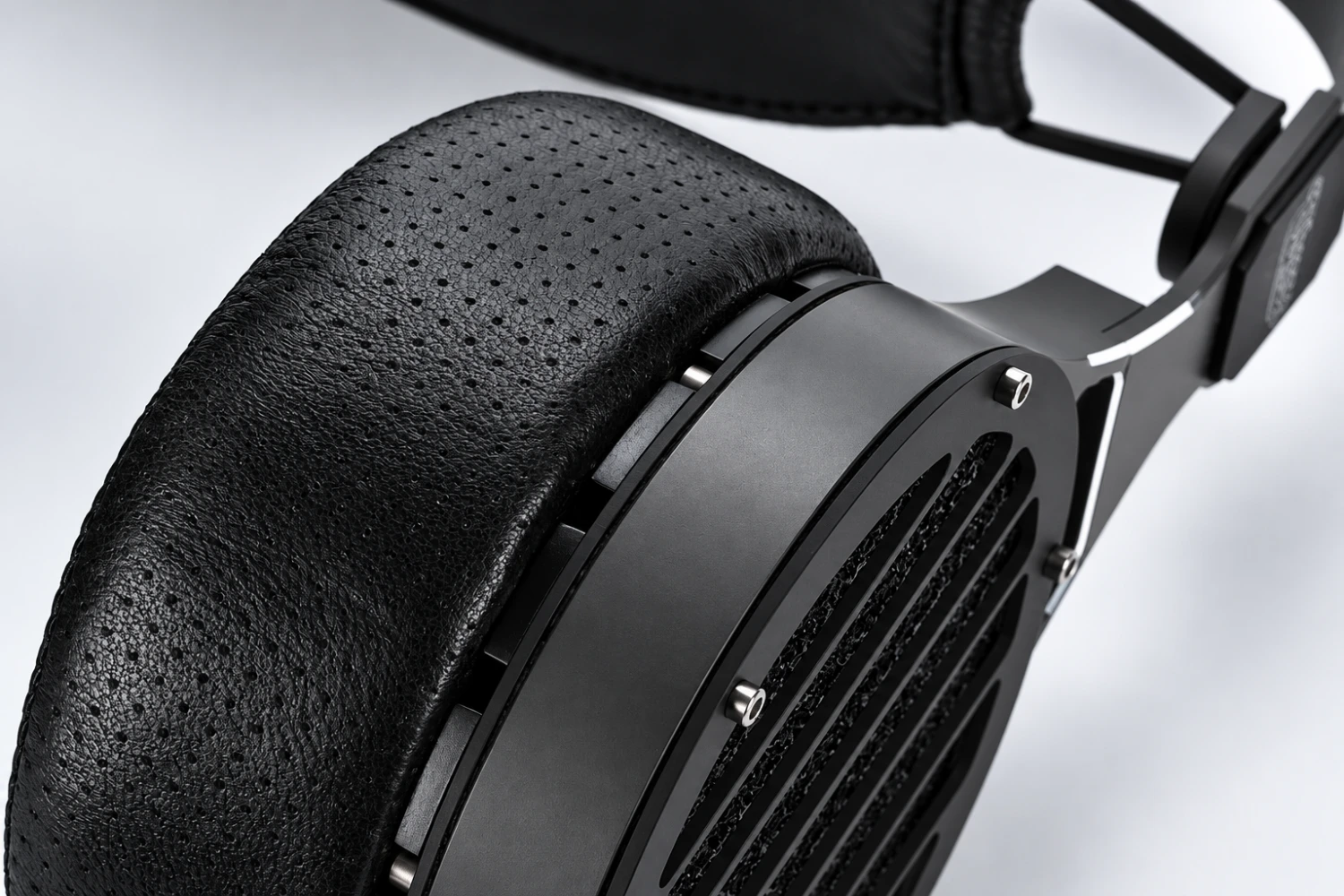
The account highlighted its 1.5-tesla magnetic field, carbon-fibre headband and natural materials used around the cups and ear pads, as well as US manufacture. The magnetic figure identifies a specific engineering priority: creating a powerful field in a compact structure surrounding a delicate driver. The headband and finishes speak to another concern shared by premium headphones, namely how a complex transducer is carried and worn during listening. The American-made Abyss AB-1266 Phi CC approached the same broad driver category differently. Its thin diaphragm operated between flat magnets, while the cups used ceramic-coated aluminium and the construction also incorporated carbon fibre.
The surveyed $7,995 package included a balanced JPS Labs cable, case and stand. Those accessories complicate any direct price comparison with a bare headphone, but they also show how a flagship could be sold as a complete ownership proposition. Taken together, Audeze and Abyss established planar magnetic design as more than an alternative for specialists: it had become one of the main competing languages of high-end personal audio.
Stax and the Electrostatic Tradition
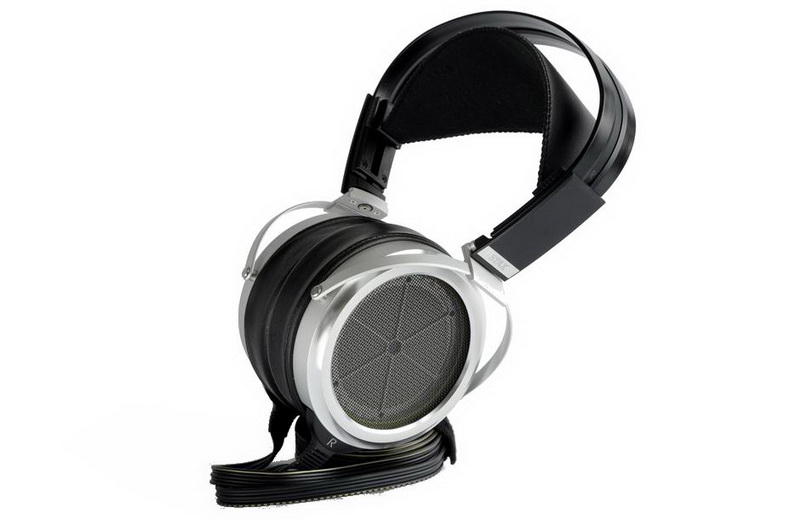
Electrostatic headphones had a different historical position. Stax was already closely associated with the approach when the SR-009S appeared as the company’s flagship. In an electrostatic driver, a very light diaphragm moves between electrodes. That arrangement requires specialized electronics to provide the necessary operating conditions and audio drive. It can therefore lead the buyer toward a matched amplifier or a carefully chosen compatible one, making system design part of the headphone decision. The SR-009S was described in the archival survey as an update to the SR-009, with a gold-plated electrode structure and revised ear pads. Its quoted price was about $4,500 for the headphone.
Paired with Stax’s SRM-T8000 hybrid amplifier, the survey placed the total at roughly $10,000. These were substantial sums, but they remained well below the prices of the most elaborate electrostatic packages in the same group. That contrast is significant. Stax represented continuity in a specialized technology, while the newer ultra-expensive systems showed how far the complete-system idea could be extended. The SR-009S also makes clear that electrostatic development was not confined to spectacular new concepts.
Changes to electrodes and the parts that meet the listener’s head were presented as meaningful refinements to an established flagship. In headphone history, such incremental work is as important as the dramatic price tags: it shows a mature design tradition continuing to evolve.

HIFIMAN’s Two Shangri-La Systems
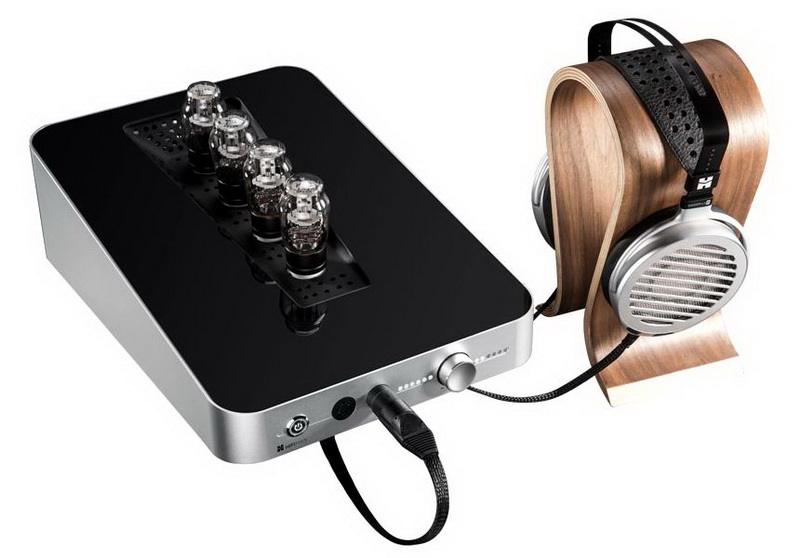
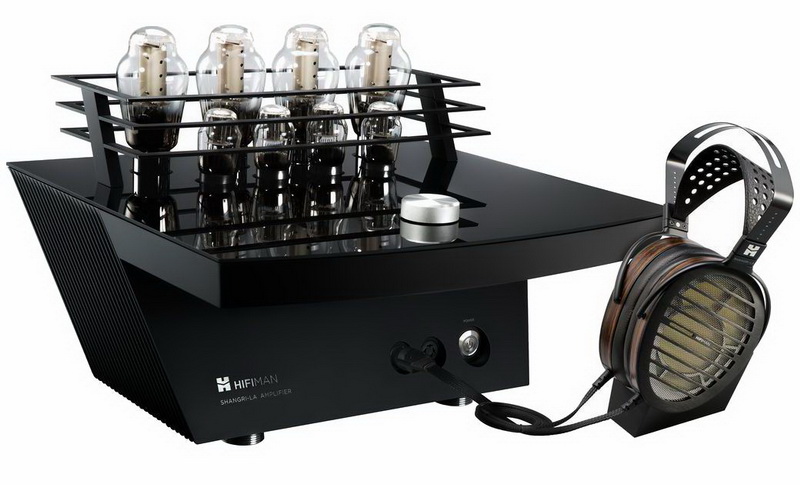
HIFIMAN placed two electrostatic systems in the survey, and their relationship reveals how the headphone market developed a hierarchy within its own most specialized category. The Shangri-La Jr. combined electrostatic headphones with a dedicated tube amplifier. At a surveyed price of about €8,000, it was the less costly interpretation of a concept also expressed by the full Shangri-La. The source described a simpler presentation for the junior model, but the essential proposition remained the same: the headphone and its drive electronics belonged together. The full Shangri-La took that proposition to a reported €50,000. Its electrostatic diaphragm was specified at 0.001 mm thick, a figure that places the lightness of the moving element at the centre of the design. The associated single-ended tube amplifier used four 300B output triodes and allowed two pairs of headphones to be connected at once.
These details help explain why the package was presented as a system rather than a headphone with a convenient accessory. The two models also clarify what a premium line could mean in personal audio. The less expensive product did not abandon the underlying electrostatic-and-amplifier concept; the flagship pursued a more elaborate version of it. As with any quoted bandwidth or diaphragm measurement, a specification on its own cannot establish audible superiority. What it can show is where the designers and marketers placed their emphasis. Here, that emphasis fell on an exceptionally light driver and a purpose-built amplifier, drawing on tube technology familiar from other areas of high-end hi-fi.
From Orpheus to the HE 1
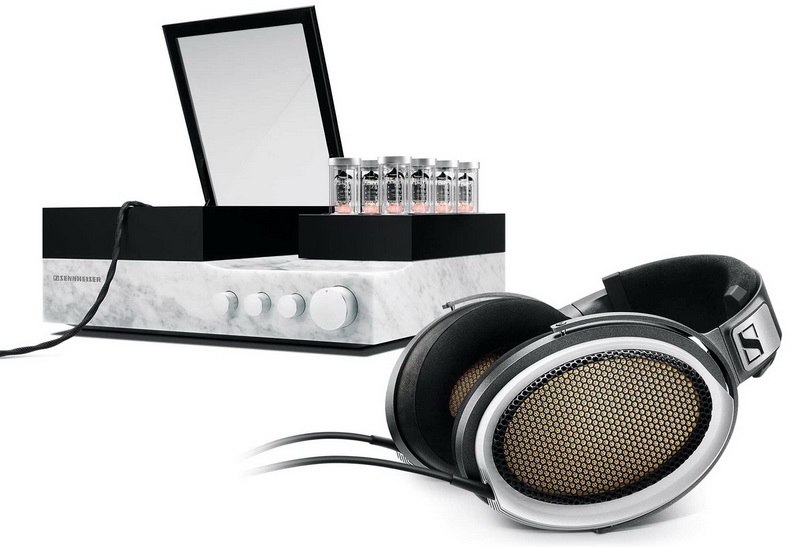
Sennheiser’s HE 1 carried the strongest explicit link to an earlier landmark. The original Orpheus system dated from 1991, establishing a precedent for an extremely ambitious electrostatic headphone paired with dedicated amplification. Decades later, the HE 1 revisited the idea on an even more expensive scale.
The archival survey called it Orpheus HE 1 and placed its price above $60,000; that figure should be understood as a snapshot of the period, not a standing retail price. The HE 1 combined electrostatic headphones with an amplifier housed in Italian marble. Tubes in the amplifier’s preliminary stage rose into view when the system was switched on. That theatrical detail attracted attention, but it sat alongside a technical claim: the survey reported total harmonic distortion of 0.01% at 100 dB. The figure is a stated measurement, not a basis for declaring the system superior to every rival under all conditions.
What made HE 1 historically distinctive was the way it joined engineering, presentation and corporate memory. Its amplifier was not simply a black box required to make an electrostatic driver function; it was visibly part of the product. The reference to Orpheus, meanwhile, connected a contemporary flagship to Sennheiser’s earlier attempt to define the limits of headphone-based listening. The result was a reminder that a high-end headphone could serve both as a working audio system and as a public statement about a manufacturer’s ambitions.
What These Flagships Changed
Viewed together, these eight models document a shift in what the industry was prepared to build for one listener. Dynamic headphones remained relevant at extreme prices. Planar magnetic designs gained a firm place among top-tier alternatives. Electrostatic systems continued to reward specialized development, whether through Stax’s refinements or through the integrated packages offered by HIFIMAN and Sennheiser.
No single driver principle won the argument; instead, the high-end market made room for several competing approaches. The survey also records a change in the meaning of a headphone’s price. A figure could refer to the transducer alone, a package with accessories, or a system that included its own amplifier. Materials such as beryllium, titanium, carbon fibre, ceramic-coated aluminium and marble played different roles within those products. Some were central to the driver; others shaped the enclosure, structure or presentation. Reading the products historically means distinguishing those roles rather than assuming every premium material served the same purpose.
Their lasting place in hi-fi history is therefore broader than their original price ranking. They helped establish personal listening as a field in which established manufacturers and newer specialists could pursue demanding technical ideas, distinctive forms of construction and complete system design. The most expensive headphones did not replace loudspeakers or settle what good sound should be. They made a different point: the space between a listener’s ears could be treated with the same seriousness, resources and variety of engineering long reserved for the rest of the hi-fi system.
The Listening Space Became the System
The striking prices in this archival group are best understood as evidence of a historical change, not as a verdict on value. From Focal’s beryllium dynamic driver to HIFIMAN’s tube-driven electrostatics, these designs expanded the technical vocabulary of headphone listening. Their legacy is a high-end market in which the headphone, its amplifier and the way the two work together can command attention once reserved chiefly for room-based hi-fi.