
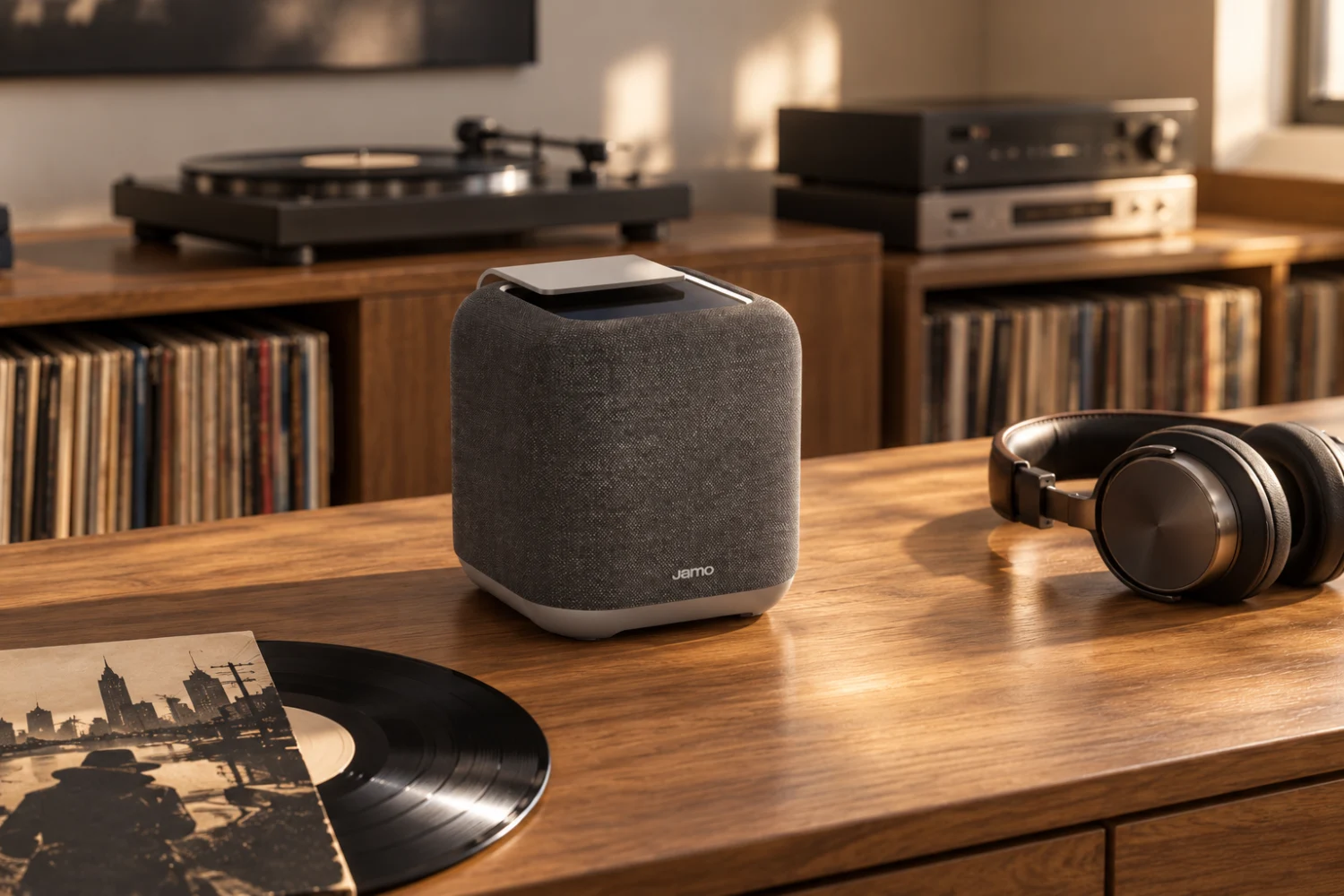
Jamo is expanding its Hyg family with the Hyg 5, a compact all-in-one speaker that treats physical presence as seriously as wireless playback. The fabric-covered cabinet contains streaming hardware, amplification and an active three-driver system, reducing the installation to one enclosure rather than a collection of separate components. Its defining idea comes from the Danish concept of hygge: comfort, calm and time shared at home. That influence extends beyond the appearance to upward-angled drivers, gesture-based waking, adaptive ambient light and custom interface sounds, all intended to make the speaker feel less like equipment that demands attention and more like a permanent part of a living space.
A flagship built around staying home
The Hyg 5 sits at the top of Jamo’s all-in-one Wi-Fi speaker range, but its role is defined as much by location as by hierarchy. Other members of the Hyg family address particular listening situations: Hyg Reflect is intended for bedside use, Hyg Flow is designed for outdoors, and Hyg Flex can be moved between rooms. Hyg 5 is the model focused on established listening spaces in the home.
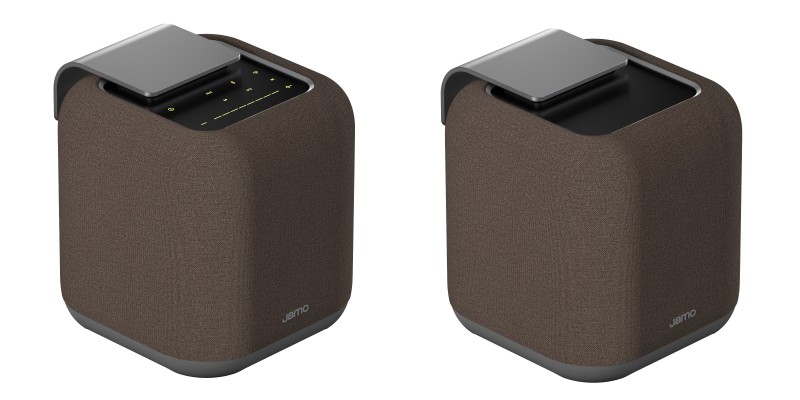
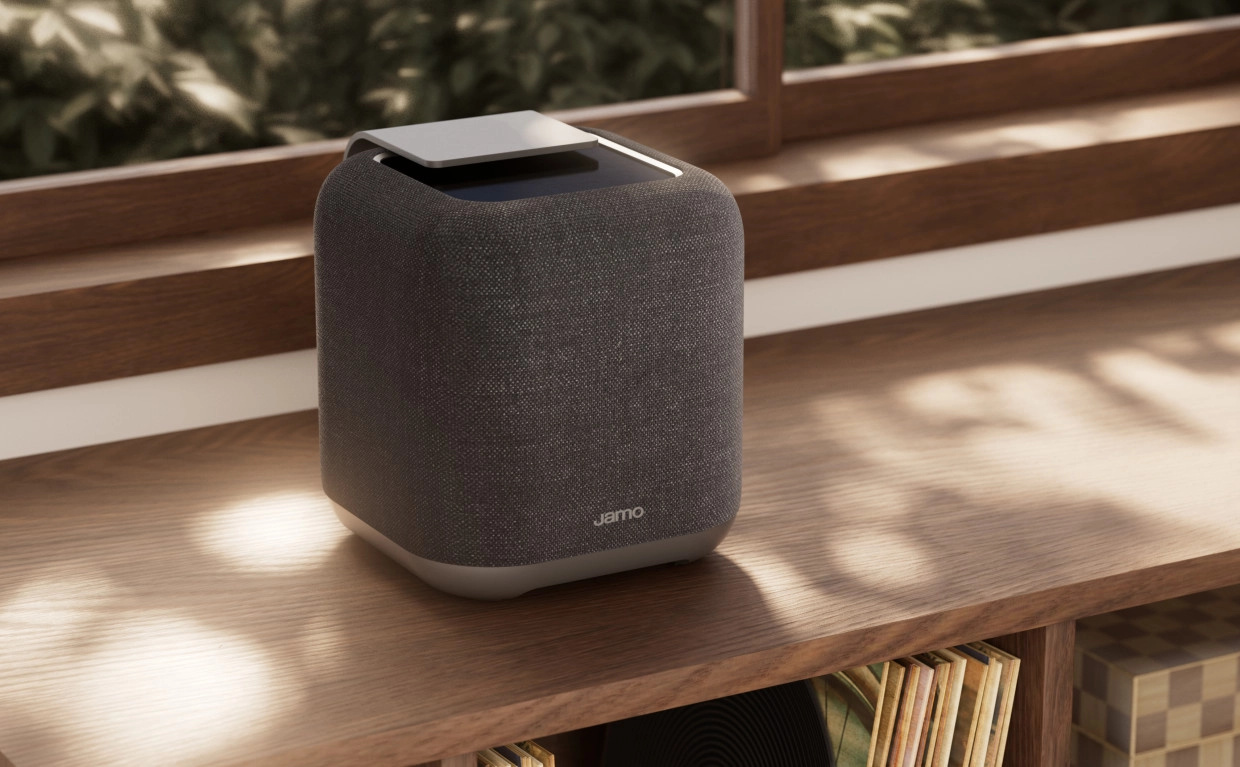
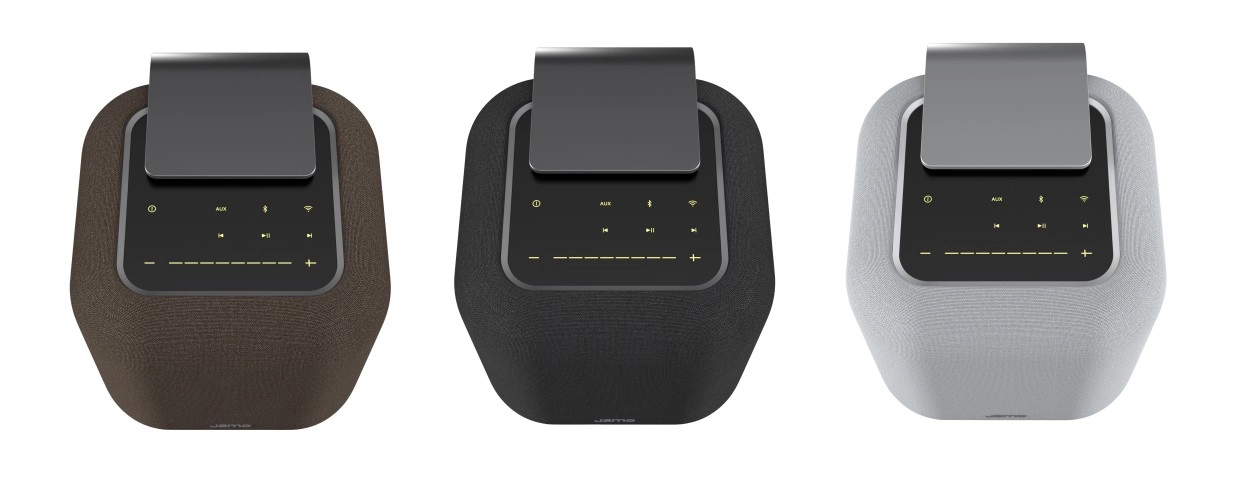
That distinction helps explain the absence of an overtly technical exterior. A continuous textile covering softens the visual impact of the enclosure and allows it to sit more naturally among furniture and domestic materials. Jamo has not eliminated physical interaction, however. A touchscreen is integrated into the top surface, where it remains accessible without turning the front of the speaker into a control panel.
The concept also suggests a different relationship with music from that of a conventional component system. Amplification, streaming and loudspeaker duties are combined inside one cabinet, so there is no requirement to find space for a separate amplifier or network player. The trade-off is a self-contained architecture rather than the mix-and-match flexibility of separates, but that is consistent with a product designed to minimize setup and visual clutter.
Angled drivers widen the presentation beyond one box
Beneath the textile are two 2.5-inch full-range drivers, aimed upward and outward rather than directly toward a single listening position. Jamo intends this arrangement to spread the stereo presentation beyond the physical boundaries of the cabinet. It remains a one-box stereo system, but the driver geometry is designed to avoid concentrating all of the output into a narrow forward-facing area.
Low frequencies are assigned to a downward-firing 4-inch woofer. That orientation keeps the bass driver out of sight and lets the lower section of the cabinet become part of the acoustic layout. The woofer works with two symmetrical flared bass ports positioned underneath the enclosure, giving the base more to do than simply support the speaker.
Ribbed internal port walls are used to limit unwanted vibration. Jamo has not supplied measurements for the port behavior, so the exact acoustic effect cannot be quantified from the announcement. Even so, the construction shows how the exterior design and internal engineering are related: moving the bass system underneath preserves the uninterrupted fabric surfaces, while the ports and their ribbing address the demands created by that arrangement.
Light, touch and sound shape the interface
Interaction begins before a streaming app is opened. A hand gesture wakes the Hyg 5 and resumes the most recently used source, reducing a common playback task to a single movement. When the speaker enters standby, the top touchscreen dims rather than remaining fully illuminated.
Warm ambient lighting is built into the design, with a sensor adjusting its level as the room’s light changes. Manual brightness controls are available through the companion app, including the option to switch the illumination off. That flexibility matters in a product intended for several kinds of shared space: lighting that suits an evening living room may be distracting in a bedroom or unnecessary during daylight.
Jamo has also given the Hyg range its own set of operational sounds. Danish creative sound agency Unmute developed the power, pairing and other audio cues using Scandinavian nature and acoustic instruments as references. These sounds do not change music playback, but they contribute to the interface in the same way as the lighting and fabric finish. Rather than treating alerts as generic electronic beeps, the design attempts to keep the speaker’s character consistent during everyday operation.
Streaming breadth without abandoning wired sources
The network platform covers Spotify Connect, TIDAL Connect, Qobuz Connect, TuneIn and QPlay II. Direct-connect services let playback be initiated from familiar music apps, while TuneIn adds internet radio. AirPlay 2 and Google Cast provide additional casting options and support multiroom playback within their respective ecosystems.
Dual-band Wi-Fi accommodates both 2.4GHz and 5GHz networks, and the Hyg 5 supports audio resolutions up to 24-bit/96kHz. That ceiling is relevant to compatible high-resolution streaming material, although file resolution alone does not establish how the complete speaker will perform. Bluetooth 5.0 offers a more immediate alternative when network streaming or multiroom operation is not required.
A stereo RCA line input prevents the design from being exclusively wireless. It can accept an appropriate line-level connection from equipment such as a CD player or turntable setup, allowing the Hyg 5 to serve as the amplification and speaker stage for an external source. This is a modest connection panel compared with a conventional integrated system, but it broadens the speaker’s role beyond app-based listening.
One app for setup and tonal adjustment
Jamo Play, available for iOS and Android, handles installation and playback control. Keeping those functions in one app supports the product’s low-friction premise, particularly during the initial connection to a home network.
The app also contains a personalized equalizer. That gives users a way to adjust tonal balance for preference or placement without adding external processing hardware. Such control may be especially useful for a compact speaker intended to occupy different domestic surfaces, although Jamo has not detailed the equalizer’s bands, range or presets. The feature should therefore be understood as an available adjustment tool rather than evidence of any particular room-correction capability.
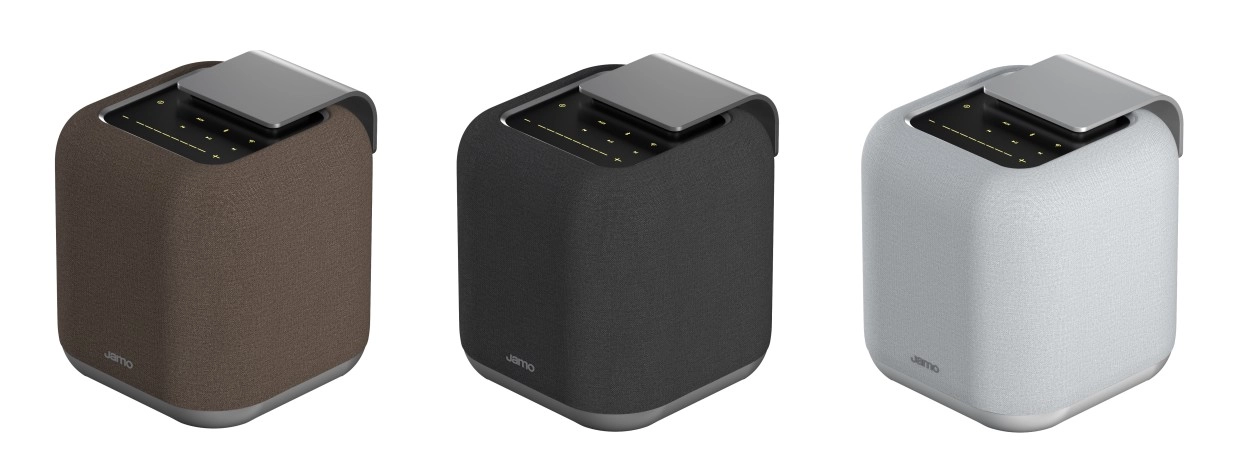
The Hyg 5 appears aimed at listeners who want streaming services, amplification and room-filling intent in a single object, but who do not want that object to dominate the room visually. Its most distinctive decisions are interconnected: fabric disguises the hardware, angled drivers address dispersion from one enclosure, the downward bass system keeps the main surfaces clean, and adaptive light plus gesture control reduce the need for constant screen interaction. Several details still remain open, including cabinet dimensions, amplifier output, finish choices, US pricing and market availability. Those omissions make it difficult to judge placement requirements or final positioning, but the design direction is already clear. The next point to watch is whether Jamo’s domestic-first approach translates into an equally straightforward setup across its supported streaming platforms and multiroom systems.


Sound Off
0Join the discussion if you have something to add.