
Upgrading a CD player is more complicated than replacing an old box with a newer one. A CD player may be the transport, DAC, analogue output stage and headphone amplifier in one component—or it may be little more than a disc-reading mechanism feeding a separate converter. The right upgrade depends on which of those jobs is limiting your system.
That is why the most useful question is not “Which is the best CD player?” It is “What do I need my next digital source to do?” If your current player is reliable and already feeds a capable external DAC, replacing it may produce less change than improving speaker positioning, room interaction or amplification. If, however, you are using an ageing player directly into an amplifier, struggling with a failing transport or looking for SACD, USB, headphone or streaming-adjacent functionality, the category becomes much more interesting.
Should you upgrade this first?
Start by identifying the actual limitation. There are four common reasons to replace a CD player:
- Reliability: the drawer sticks, discs take too long to load, the laser struggles to read discs or the player is becoming difficult to operate.
- Connectivity: you need balanced outputs, a digital output, USB input, a headphone socket or a direct connection to a power amplifier.
- Format coverage: you want SACD playback, CD-R support, computer audio or a way to archive discs.
- System refinement: the player’s analogue stage is now the weakest part of an otherwise resolved system.
The last point deserves caution. A CD player is not automatically the system bottleneck simply because it is older or less expensive than the amplifier. If your amplifier has a competent DAC and you use the player only through its coaxial or optical output, the player’s internal analogue circuitry is bypassed. In that situation, a new transport may improve usability or reliability, but the audible change can be smaller than expected.
Conversely, if the player is connected through its analogue RCA outputs, its DAC and output stage are directly involved. That makes analogue output quality, gain structure and system balance more relevant. You should also check whether the amplifier has a sensible input level and enough available inputs before choosing a player with an unusual connection strategy.
There is a practical way to test the decision. Borrow or temporarily substitute a source with the same connection method as the proposed upgrade. Keep the amplifier, speakers, cables and listening position unchanged. If the improvement is obvious across familiar recordings—not merely different in tonal balance—the source may be worth prioritising. If the difference is marginal, spend first on a problem you can identify more clearly.
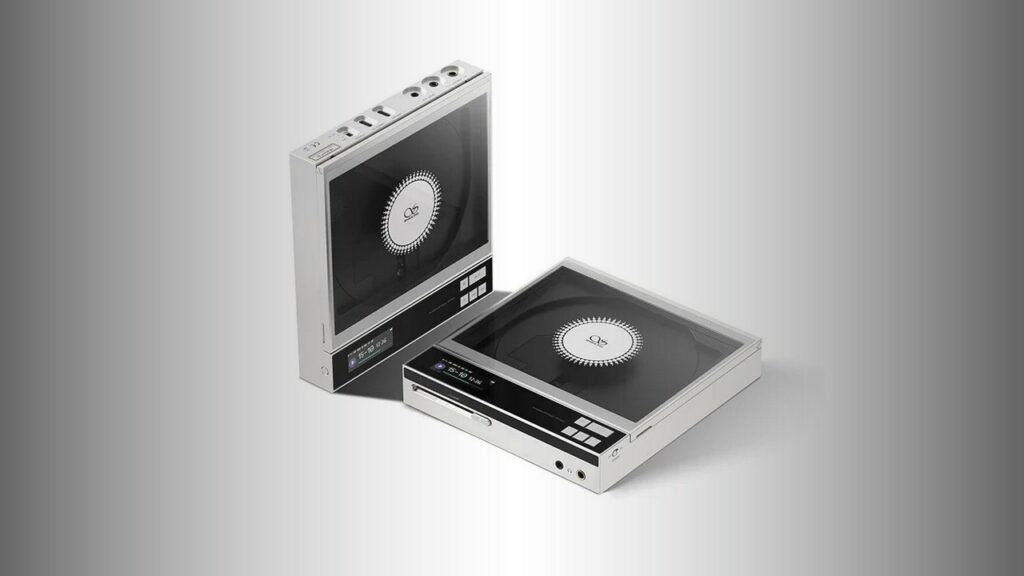
The five very different designs in this category show why this diagnosis matters. The compact Shanling EC Zero is not simply a conventional hi-fi deck made smaller. It combines CD playback with a USB DAC, Bluetooth transmission, headphone outputs, line-level outputs, coaxial/optical digital output and CD ripping to WAV on FAT32 drives. That makes it a potentially valuable upgrade for someone whose current system lacks several of those functions, even if it would be the wrong choice for a large fixed installation built around separate components.
What to match
Compatibility begins with the signal path, not the brand. Decide whether the new player will be used as an all-in-one source, an analogue CD player, a transport or a combination of these.
Analogue output into an integrated amplifier
This is the simplest arrangement: the player’s internal DAC and analogue stage feed a line input on the amplifier. It is also the arrangement in which the character and implementation of the CD player matter most. Check whether the player provides RCA, XLR or both, and whether the amplifier offers the corresponding input.
Balanced connection can be useful where the rest of the system supports it, particularly over longer cable runs or in a system susceptible to ground noise. It is not, by itself, a guarantee of better sound. Use the connection that is electrically appropriate and mechanically convenient for the equipment you already own.
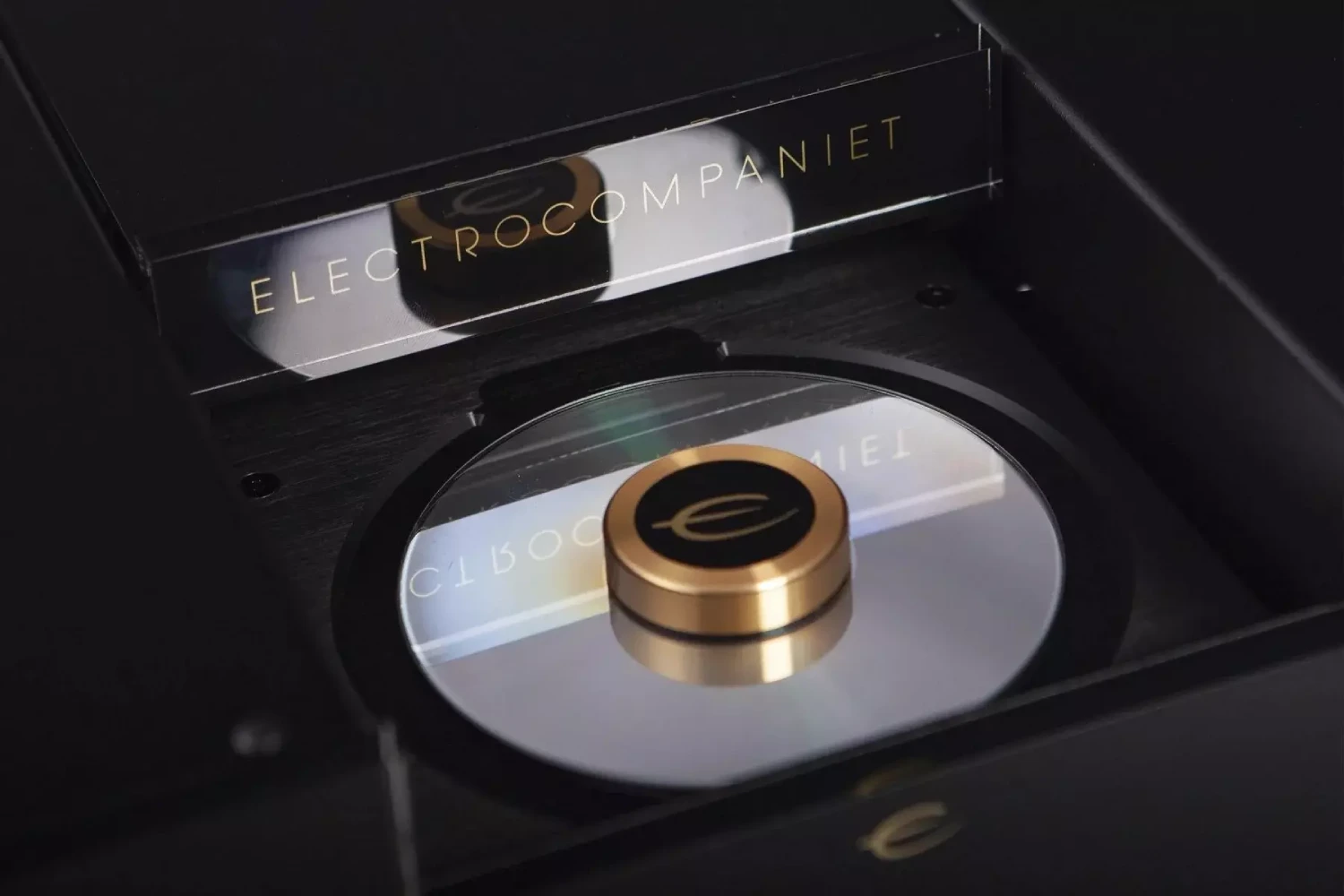
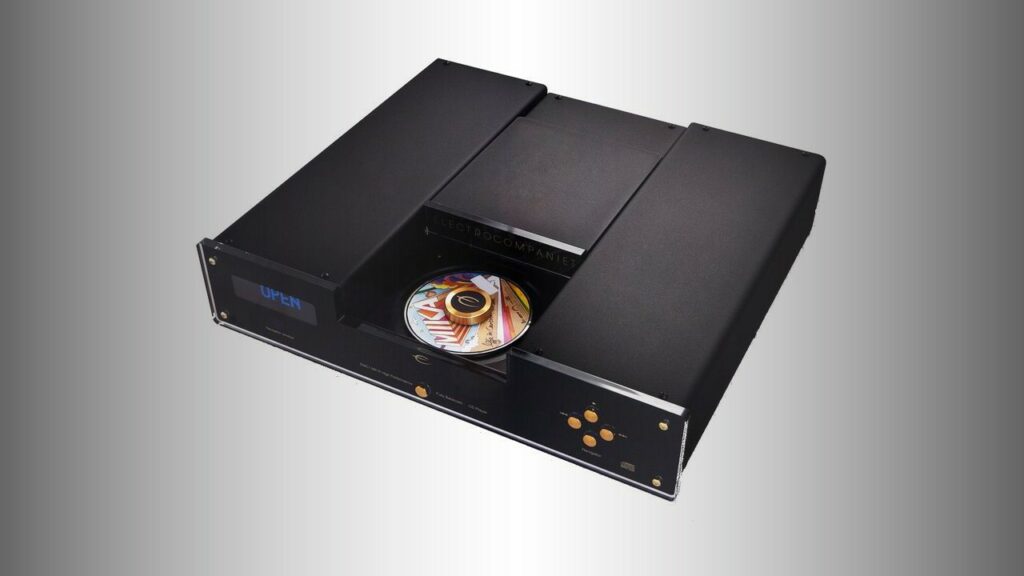
The Electrocompaniet EMC 1 MKV, for example, offers both RCA and XLR analogue outputs, as well as coaxial and optical digital outputs. Its fully balanced DAC and discrete analogue circuitry are part of its fixed-player approach, while the digital outputs allow it to work as a transport with an external converter. That flexibility is useful only if your system can exploit it; otherwise, you are paying for possibilities that may remain unused.
Digital output into an external DAC
If you already own a DAC you trust, look for a player with a suitable digital output. Coaxial, optical and AES-EBU are common options, but they are not interchangeable without the appropriate input on the DAC. Confirm the connector type, digital format support and whether the output is active for the discs you intend to play.
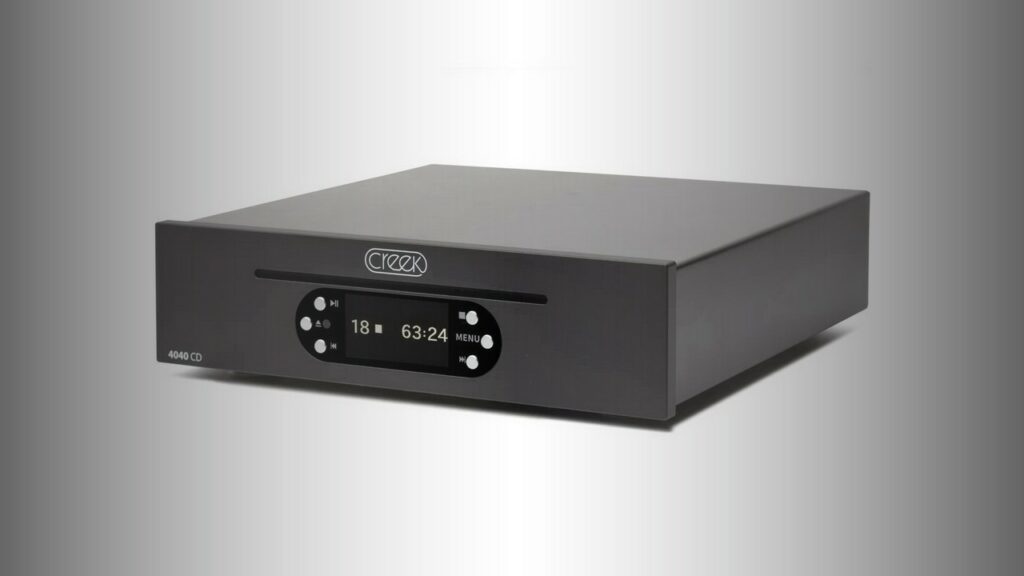
The small Creek 4040 CD is a good example of a transport-led upgrade. It has coaxial RCA, optical TOSLINK and balanced AES-EBU digital outputs, alongside an internal DAC and RCA analogue output. Its compact 21.5 × 6 × 22 cm enclosure and 1.8 kg weight may suit a small system, while its range of digital connections makes it easier to retain an existing converter. The important matching question is not whether the player looks substantial, but whether your DAC has the input you want to use.
Direct connection to a power amplifier
Some CD players include variable analogue outputs and volume control, allowing them to feed a power amplifier without a separate preamplifier. This can simplify a system, but it also removes the input selection, source management and sometimes the headphone facilities provided by a conventional preamp. Make sure the player has a reliable remote volume control and that your other sources can still be accommodated.
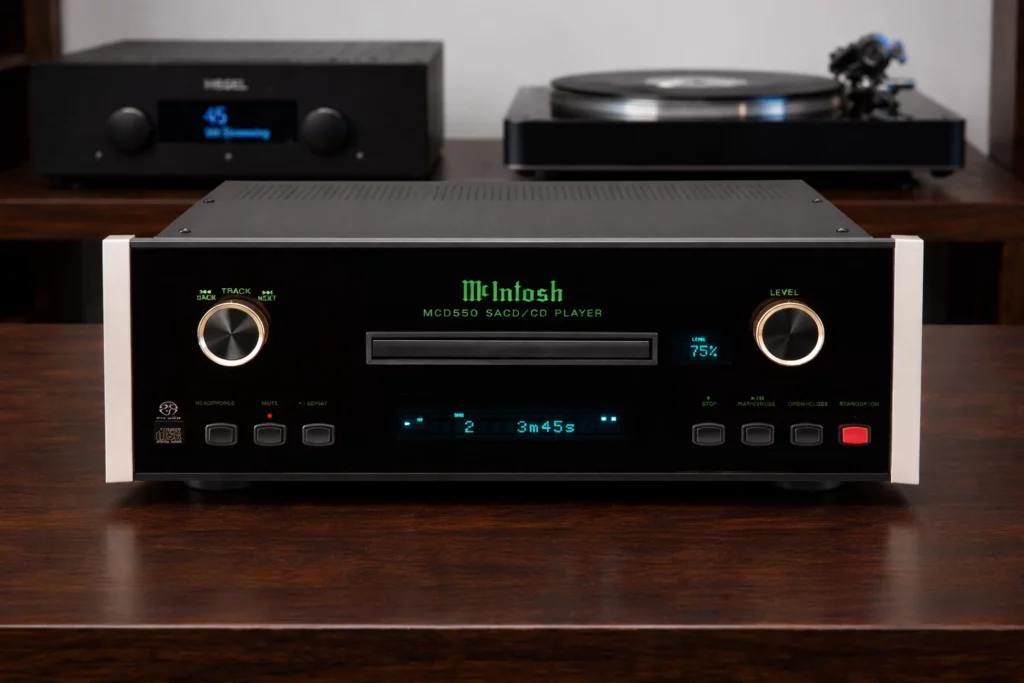
The McIntosh MCD550 illustrates this approach particularly clearly. It has fixed and adjustable RCA and XLR outputs, a built-in volume control, USB input, optical and coaxial inputs, and a 6.3mm headphone output. Its adjustable outputs are specified for direct connection to a power amplifier. That does not make a preamplifier unnecessary in every system, but it gives the owner a genuine choice between a simpler source-to-power-amp setup and a more traditional control-centre arrangement.
Headphones, computers and secondary systems
Headphone listeners should assess the output before assuming that a line-level player will do the job. Headphone impedance and sensitivity vary widely, and a dedicated headphone output can be more useful than a theoretically superior disc transport. The Shanling EC Zero includes 3.5mm and 4.4mm headphone outputs, with its 4.4mm output offering higher specified power when externally powered. It also operates as a USB DAC and Bluetooth transmitter, making it unusually adaptable for a desk, bedroom or mixed headphone-and-speaker system.
For computer audio, distinguish between a player that merely accepts digital input and one that can also pass disc audio to another device. USB implementation, supported resolutions and the operating system’s handling of the connection can all affect convenience. Higher sample-rate numbers are not a substitute for a stable connection and straightforward everyday use.
SACD and physical media
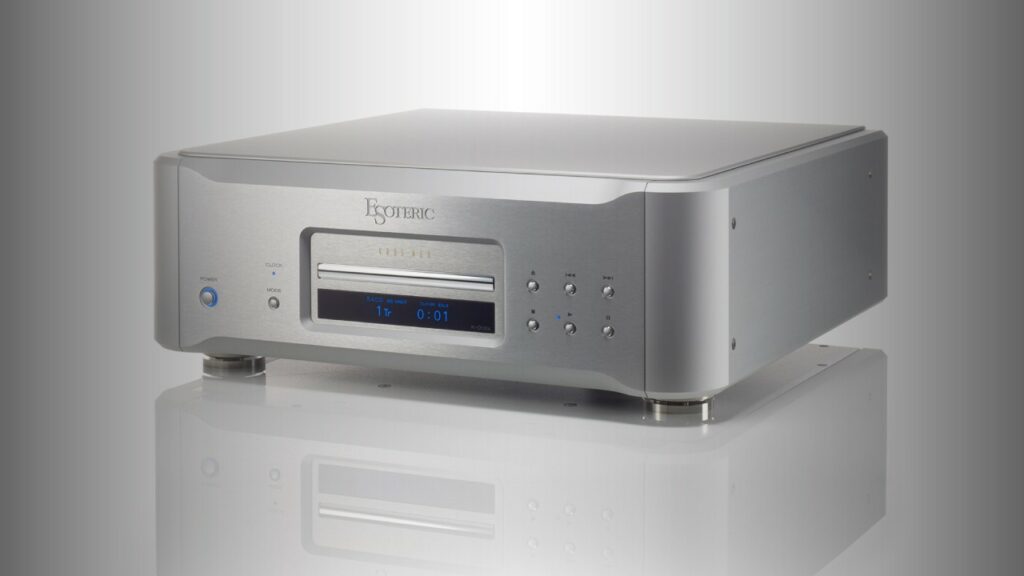
If SACD is important, choose a player designed to read it rather than assuming a CD player will provide the format later. The MCD550 supports SACD, including hybrid discs, while the Esoteric K-01XS supports Super Audio CD, CD, CD-R and CD-RW. The Esoteric also includes USB input, XLR and RCA analogue outputs, digital outputs and a word-sync input.
These are serious fixed installations rather than casual replacements. The K-01XS weighs 31 kg and uses Esoteric’s VRDS-NEOVMK-3.5-20S transport, multiple dedicated power supplies and a rigid aluminium chassis. Those features may be relevant in a revealing, carefully assembled system, but they are not reasons to buy one for a compact second system or if your collection is almost entirely standard CDs.
Where upgrades make the biggest difference
1. When the existing transport is becoming unreliable
Reliability is an underrated upgrade criterion. A player that reads every disc quickly and operates predictably is more valuable than a theoretically superior component that makes listening awkward. Before replacing it, clean the disc surfaces, try several discs and check whether the fault is specific to CD-Rs or present with commercial discs. Persistent mechanical or read errors usually justify replacement more than a subtle debate about DAC architecture.
A new player can also reduce friction. The Creek 4040 CD has an adjustable auto-standby function and can be activated from its front panel or remote; the Electrocompaniet includes a 12-volt trigger input and RS-232 connection for system integration. Those details will matter more in a permanently installed system than in a simple one-box setup.
2. When the current player has the wrong output stage
If your amplifier accepts balanced inputs and your current player is noisy or awkwardly integrated through RCA, a player with XLR outputs may solve a real system problem. The same applies in reverse: do not pay for balanced architecture if the rest of the chain only offers short RCA connections and is already quiet.
Output level is another practical consideration. A player with variable outputs can simplify a power-amplifier system, but it should be used carefully. Keep the volume low when first connecting equipment, verify channel operation, and avoid a setup in which the digital volume is routinely left near its minimum or maximum without a clear reason.
3. When one new component can replace several older ones
Functionality can deliver a larger real-world improvement than a marginal change in sound. A listener who currently needs a CD player, USB DAC and headphone amplifier may benefit more from the Shanling EC Zero’s combination of functions than from a highly specialised transport. Its battery operation, compact format and ripping facility also address use cases that conventional full-size players do not.
At the other end of the scale, the MCD550 combines CD and SACD playback with USB input, analogue volume control, fixed and adjustable outputs, and a headphone socket. Its broad connectivity can be a system upgrade even before questions of tonal preference arise.
4. When the rest of the system is ready
A premium source makes most sense when the amplifier, speakers and room are already working well together. If the speakers are poorly positioned, the room has severe bass problems or the amplifier is struggling to control them, a more elaborate CD player may not address the dominant limitation.
Only then should you consider the more ambitious engineering choices represented by the EMC 1 MKV and K-01XS: vibration control, separate power supplies, advanced transports, balanced analogue stages and high-end mechanical construction. Those designs are intended to serve as complete reference sources, not as universal cures for an unsettled system.
When not to upgrade
Keep your current CD player if it reads your discs reliably, has the outputs your system needs and is not clearly undermining the music. There is no advantage in replacing it simply because a newer model supports extreme PCM or DSD rates that you do not use. The Shanling EC Zero supports PCM up to 768 kHz and DSD512 in USB DAC mode, for example, but those capabilities are irrelevant if your listening is standard CD playback through an existing amplifier.
Do not upgrade the player to solve a speaker-placement problem. Move the speakers, adjust toe-in and listening position, and address room reflections first. Likewise, do not buy a heavier or more expensive player on the assumption that mass alone guarantees better results. The EMC 1 MKV weighs 18 kg and the K-01XS 31 kg, but weight is only one element of a broader design. It does not make either model automatically suitable for every amplifier or room.
Think twice if your plan is to use a new player only as a transport while keeping the same DAC, unless the current mechanism is unreliable or the new unit offers a connection your DAC needs. In that arrangement, much of the player’s analogue and conversion hardware is unused. A carefully chosen replacement can still be worthwhile, but the case should be convenience, format support or transport quality—not the expectation that every internal specification will translate into a major system change.
Finally, avoid upgrading when you have not decided what you want to improve. “More detail” is too vague. Do you need quieter operation, faster access to discs, SACD, balanced connection, headphones, computer audio or simpler control? A clear answer will narrow the field quickly.
A sensible upgrade path
For most systems, the safest order is straightforward. First, confirm that the CD player is genuinely a limitation. Second, map the connections you already have. Third, decide whether you need a transport, a complete analogue source or a multi-function digital hub. Fourth, audition at the same output level if possible, because level differences can make a louder component seem more impressive.
A compact system with headphones and computer audio may point towards the Shanling EC Zero. A small separates system with an external DAC may favour the Creek 4040 CD. A power amplifier and no preamp could make the MCD550’s adjustable outputs useful. A high-end, SACD-focused installation may justify examining the EMC 1 MKV or Esoteric K-01XS, provided the rest of the system is sufficiently revealing and the formats are central to your listening.
The best CD player upgrade is therefore not necessarily the most ambitious one. It is the component that removes the limitation you can actually identify, connects properly to the equipment you own and adds functions you will use often. If your current player already does those things, keeping it—and improving the rest of the system—may be the most genuinely high-fidelity decision of all.


Sound Off
0Join the discussion if you have something to add.