
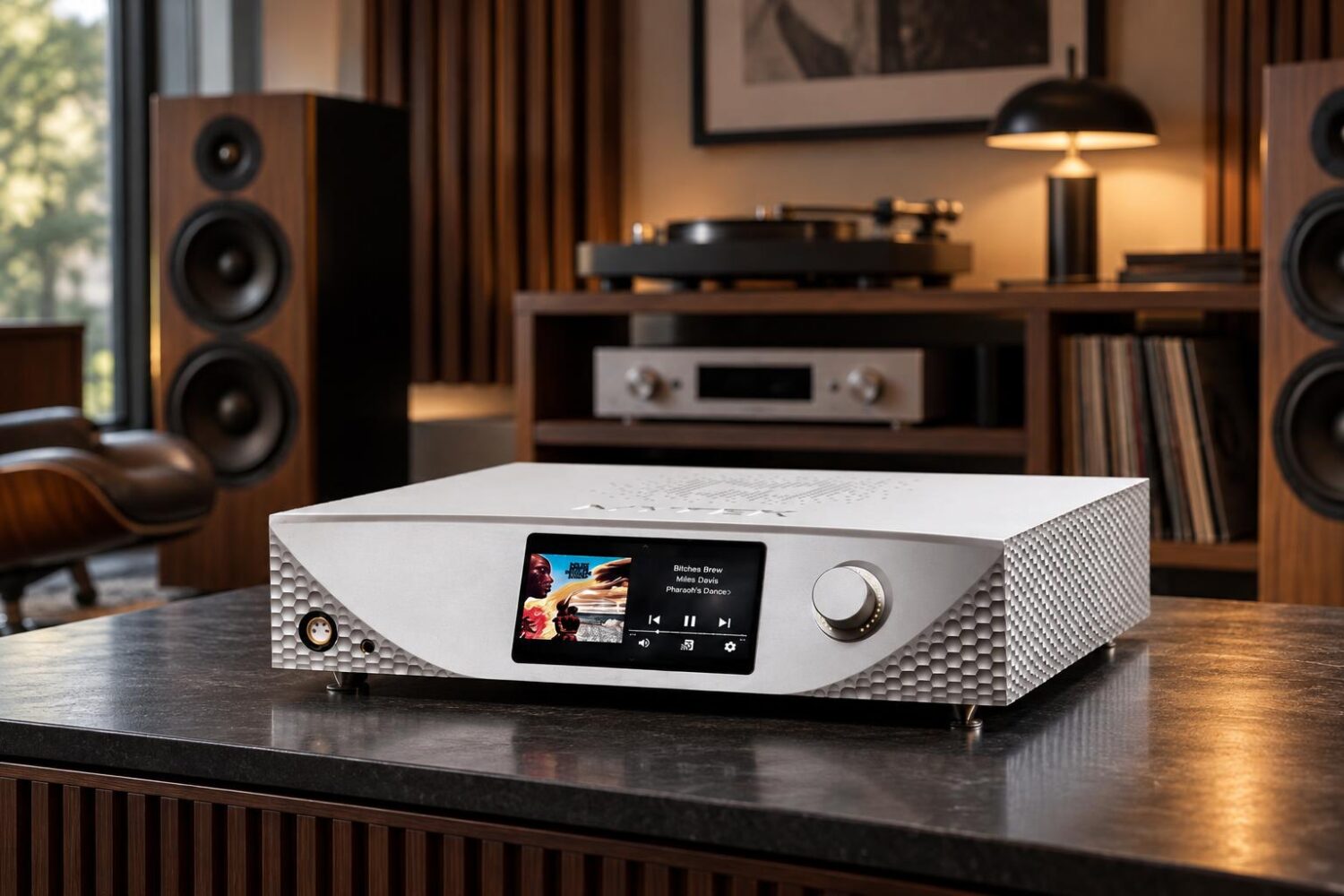
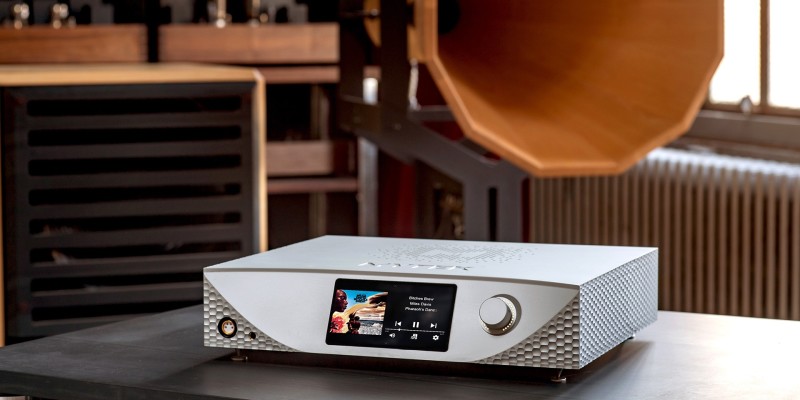
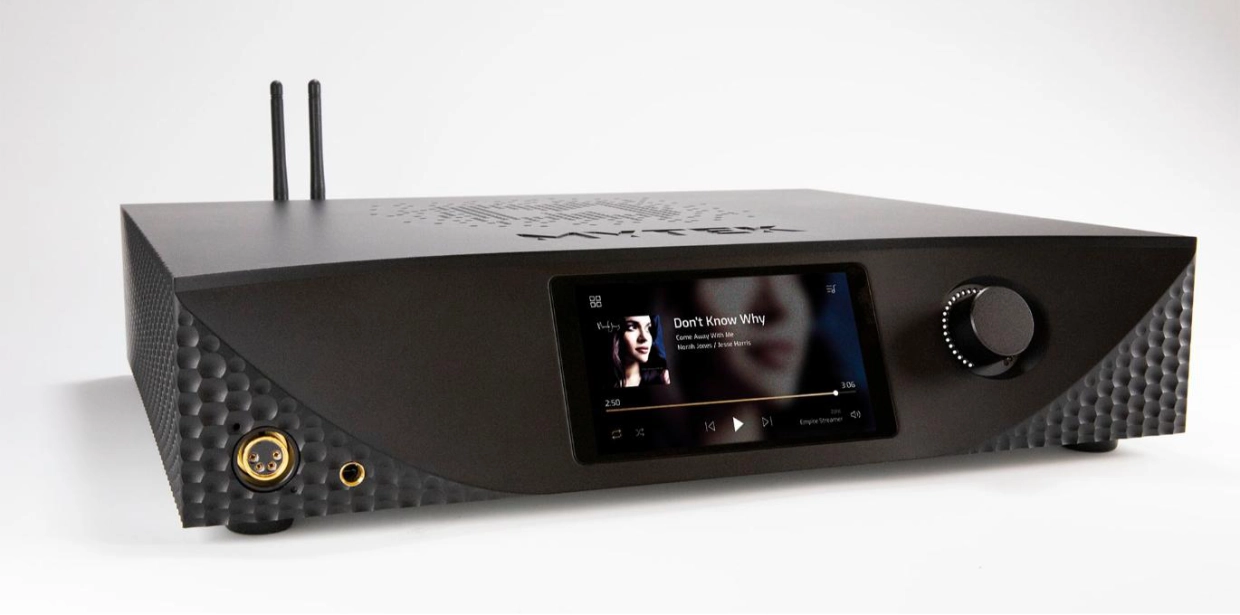
Mytek Audio’s Empire V2.0 is designed to occupy the central position in a system rather than serve as a narrowly focused digital converter. Introduced at the Audio Video Show in Warsaw, the flagship combines a revised dual-mono hybrid 6-bit DAC, network playback, preamplifier functions, substantial internal storage and a mastering-grade analog-to-digital converter. Its practical appeal lies in how those elements interact: owners can connect digital and analog sources, store a large local library, control volume, record vinyl or other analog material and operate the unit from either its front panel or a mobile device.
One component, several possible system roles
Founded in New York in 1992 by Michal Jurewicz, Mytek initially developed digital audio equipment for professional recording studios. The company now makes professional and consumer products, with its headquarters in New York and European operations and manufacturing in Warsaw. That studio background remains visible in the Empire V2.0, particularly in its combination of playback, signal processing and recording functions.
As the successor to the original Empire, V2.0 can operate as a standalone DAC, but that is only its simplest use case. The inclusion of volume control and six analog inputs allows it to take over preamplifier duties in a broader system. Users can select either analog or digital volume adjustment, providing two documented approaches to level control without requiring a separate line-stage component.
That flexibility makes system planning important. Someone building around digital playback can use the Empire V2.0 as a streamer, converter and controller, while an owner with multiple analog sources can bring those into the same interface. Mytek has not detailed the unit’s output configuration in the announcement, so matching it to power amplifiers or active speakers will depend on the full connection specifications.
A dual-mono signal path with separate power supplies
At the conversion stage, Mytek uses a revised dual-mono hybrid 6-bit architecture combining custom chipsets with digital signal processing. PCM support extends to 32-bit/768kHz, while native DSD playback reaches DSD512. Those limits accommodate high-resolution libraries well beyond standard CD material, although format support alone does not establish how a component will sound.
The left and right channels receive separate power transformers, and Mytek has also revised the analog output stage. Together, these choices indicate an emphasis on maintaining channel independence through both power delivery and analog output circuitry. The company has not supplied measurements in the announcement, so the specific performance consequences remain to be established.
For day-to-day ownership, the broader point is that the Empire V2.0 is not merely an Intel-based music server feeding an off-the-shelf conversion section. Its computing hardware, DAC architecture, power supplies and analog stage have been treated as parts of one integrated component. That can reduce the number of separate boxes in a system, though it also concentrates several critical functions in a single chassis.
Enough inputs to keep legacy sources involved
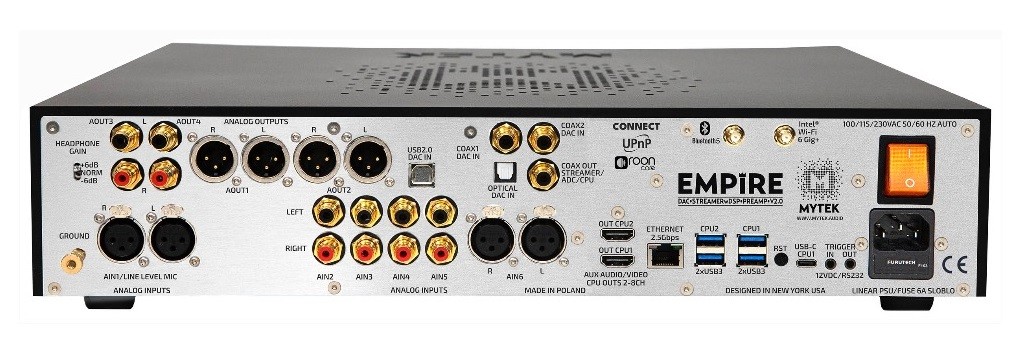
Six analog inputs are provided: two balanced XLR connections and four RCA inputs. This is a notably broad analog allocation for a product led by its DAC and streaming functions. It allows sources such as a phono stage, tape deck or another line-level component to remain part of the system, although a turntable will still require an appropriate phono stage because none is specified here.
Digital sources connect through two coaxial inputs, one optical input and USB. A disc transport, television, computer or other compatible digital source could therefore share the Empire V2.0’s conversion stage, subject to the output options of those devices. The mix also leaves users less dependent on network playback when they want to retain existing hardware.
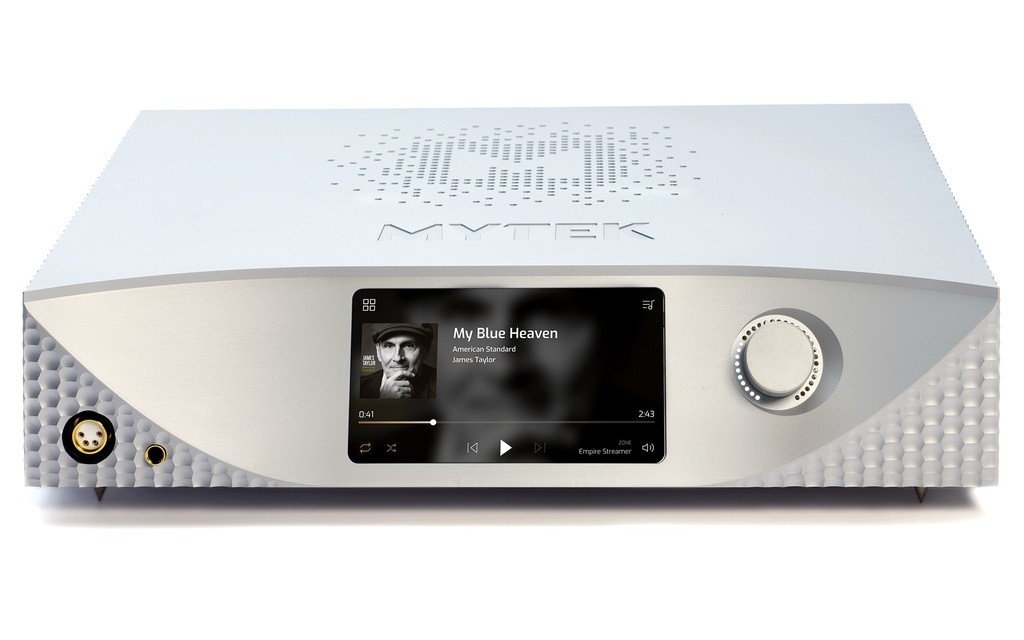
Front-panel operation is handled through a touchscreen, while smartphone and tablet control is also supported. That dual approach matters for a component intended to remain in a system for regular use: basic access does not have to depend entirely on having a mobile device nearby, while browsing and library management can move to a larger handheld screen.
Local storage changes the streaming workflow
An Intel NUC platform runs Mytek OS, which is based on Ubuntu Linux. The standard internal solid-state drive has a capacity of 8TB, and custom configurations can increase that to 16TB. Mytek positions this storage as sufficient for thousands of CD albums in bit-perfect form, giving owners the option to maintain a substantial local collection inside the player rather than rely exclusively on external servers.
External USB drives and network storage are supported as well. The result is a choice between three library arrangements: keeping music inside the Empire V2.0, attaching local storage directly or accessing files elsewhere on the network. A mixed setup is also a reasonable implication of that support, although the announcement does not describe the software’s library-merging behavior.
Roon compatibility is confirmed. Mytek also identifies Tidal and Spotify Connect as planned additions, so buyers should not treat those two services as present features until their integration is released. The precise list of other supported streaming services has not been detailed in the supplied announcement, making software status an important point to verify during setup.
Analog recording and an expandable DSP platform
A built-in mastering ADC gives the Empire V2.0 an unusual second direction of travel: it can convert analog sources into high-resolution digital recordings and save them to its internal drive. Vinyl is one stated application. In a suitably configured system, an owner could play a record through an external phono stage, feed that analog signal into the Empire and retain a digital copy for later playback.
This recording function connects directly with the large internal SSD. Instead of moving captured files immediately to a computer or separate server, recordings can remain alongside the rest of the local music library. The announcement does not specify recording resolutions, file-management procedures or editing tools, so those practical details still need clarification.
Mytek has designed the DSP architecture to accommodate software plug-ins for uses including room correction and noise reduction. Internet-delivered updates are intended to add functions and DSP options over time. This makes the software platform central to the ownership experience, but prospective buyers should distinguish the architecture’s stated expansion capability from plug-ins that are actually available at launch.
The Empire V2.0 is offered in black or silver aluminum, but Mytek has not supplied USD pricing or detailed regional rollout information in the material provided. Its most obvious audience is the listener who wants to consolidate a network player, high-resolution DAC, analog preamplifier, music server and recording interface without abandoning existing sources. The hardware specification is extensive; the remaining questions are largely operational. Buyers will want confirmation of current streaming-service support, the exact DSP plug-ins available, recording formats, output arrangements and how future updates are managed. Those details will determine whether the Empire V2.0 works best as an ambitious DAC with useful extras or as the single control center Mytek’s architecture suggests it is intended to become.


Sound Off
0Join the discussion if you have something to add.