
Audeze MM-520 Review: Studio Precision With Serious Planar Bass
High-end planar headphones with powerful bass, natural mids, smooth treble and impressive clarity, built for both serious listening and studio work.
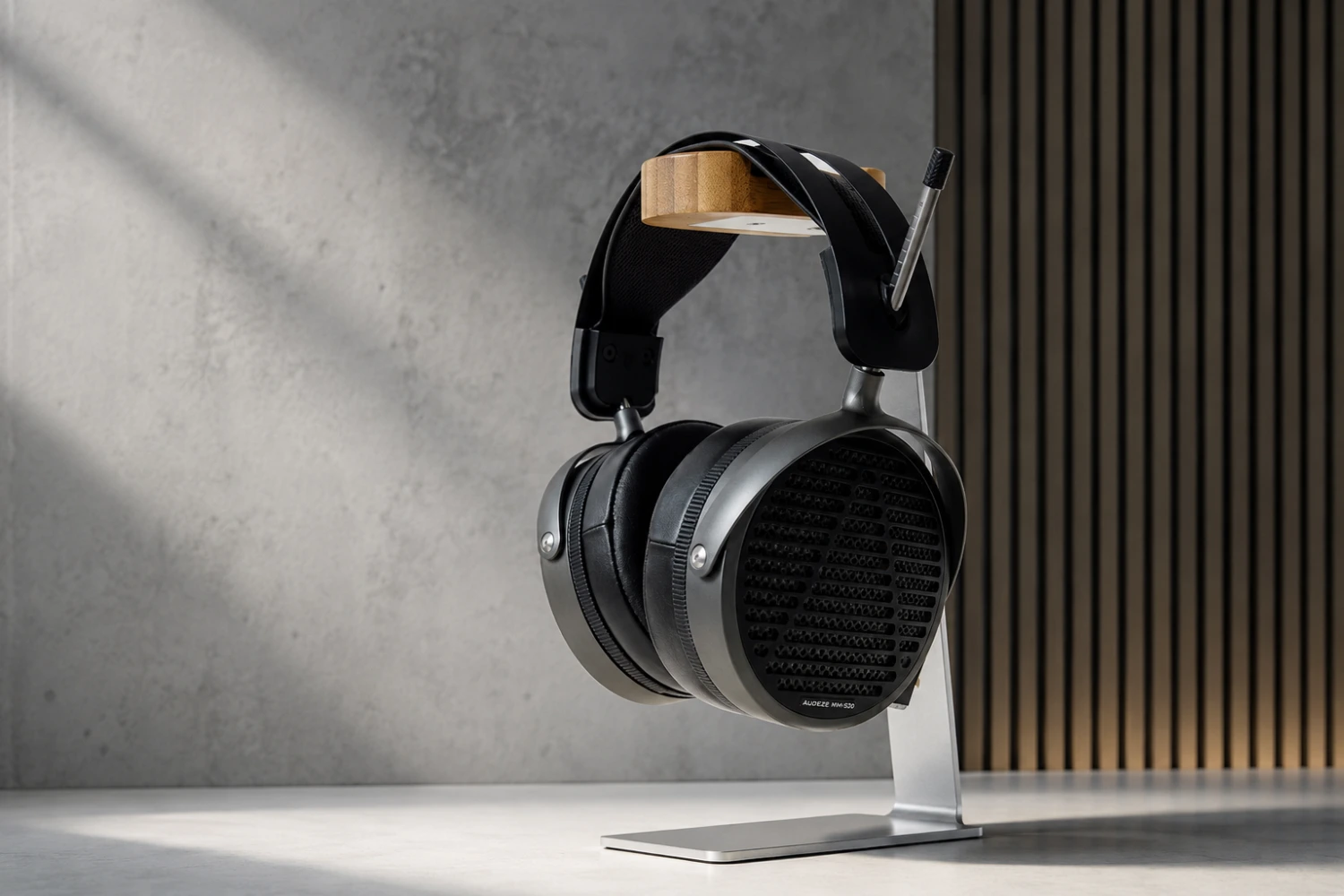
Audeze has built much of its reputation around planar-magnetic headphones that blur the boundary between professional monitoring and high-end listening. The MM Series pushes that idea further, combining the company’s established planar technology with tuning developed around the requirements of producers, engineers and musicians.
The Audeze MM-520 sits at the top of that family. At around $1,700 before local taxes, it enters a fiercely competitive part of the headphone market where technical ability alone is not enough. Resolution, tonal balance, comfort and amplification requirements all matter—and at this level, buyers should expect a headphone capable of revealing substantially more than simply “good sound.”
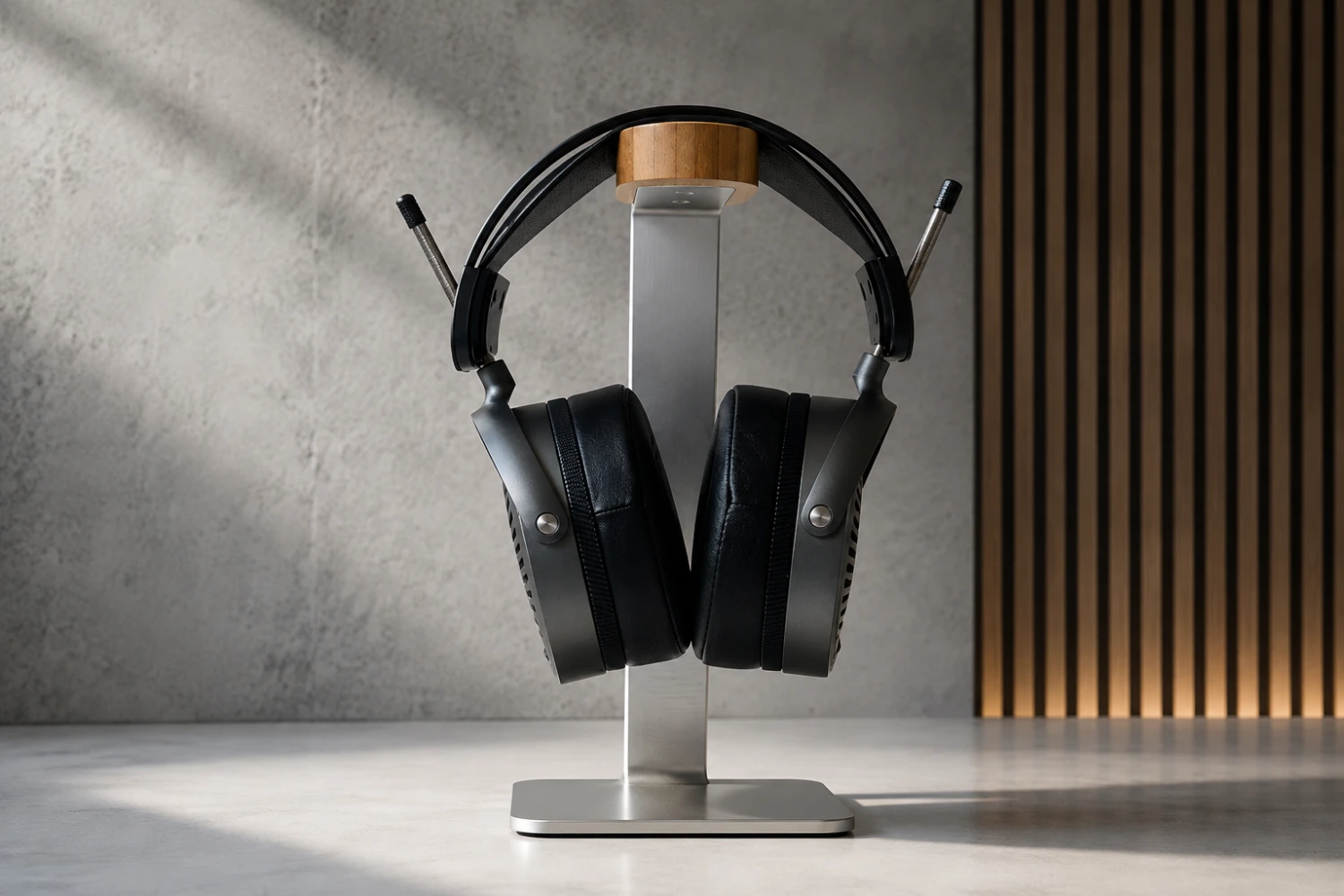
The MM-520 also introduces something particularly interesting for an open-back Audeze: greater emphasis on low-frequency performance. Its SLAM acoustic technology is intended to improve bass behavior while retaining the speed and control expected from a planar driver.
That makes the MM-520 an intriguing proposition. This is ostensibly a professional monitor, but its combination of deep bass, smoothness and Audeze’s familiar planar presentation could make it equally attractive to serious home listeners.
After extended listening, one thing becomes clear: the MM-520 isn’t simply an MM-500 with a little more bass. It has its own personality.
Design and Build Quality
There is no mistaking the MM-520 for anything other than an Audeze.
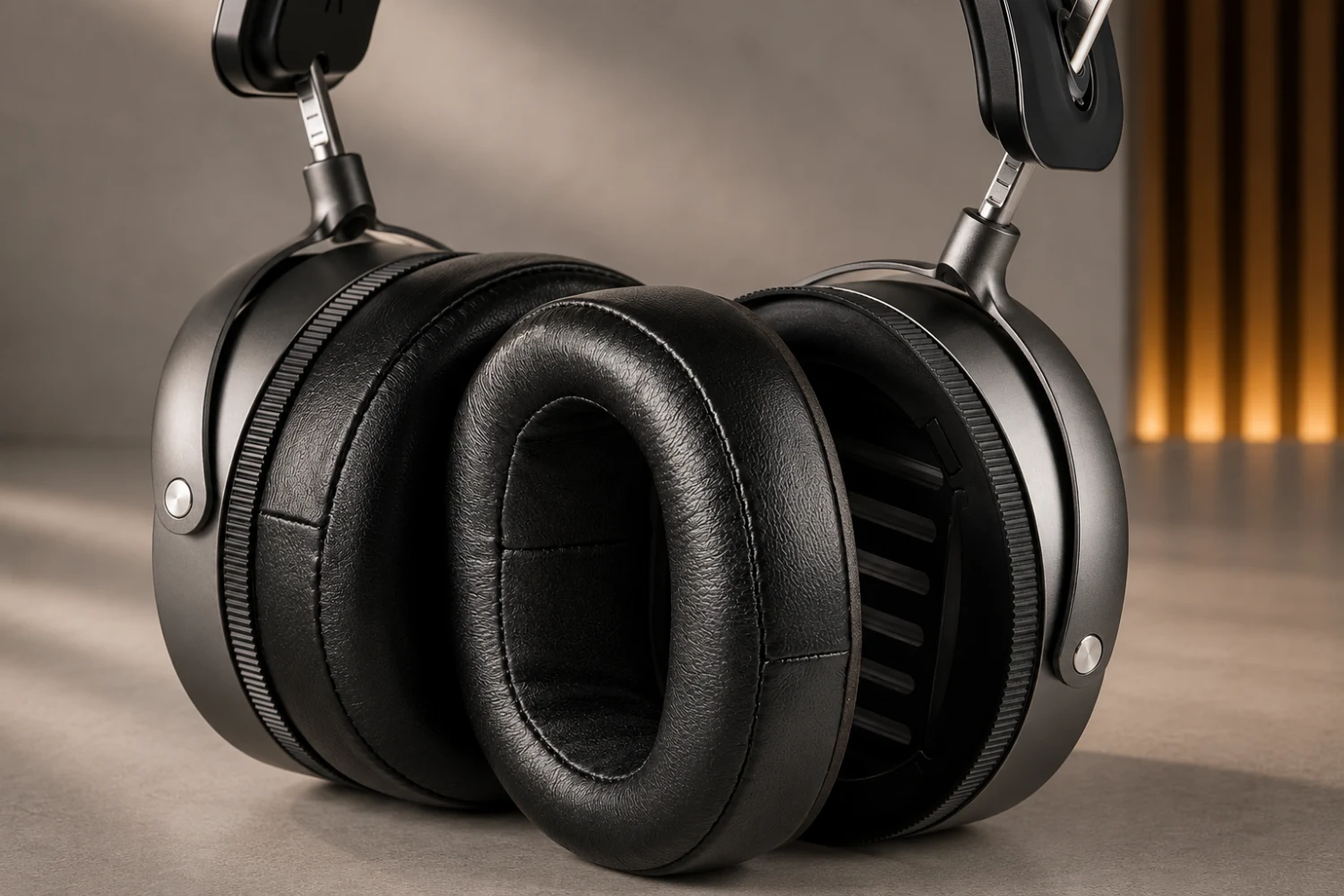
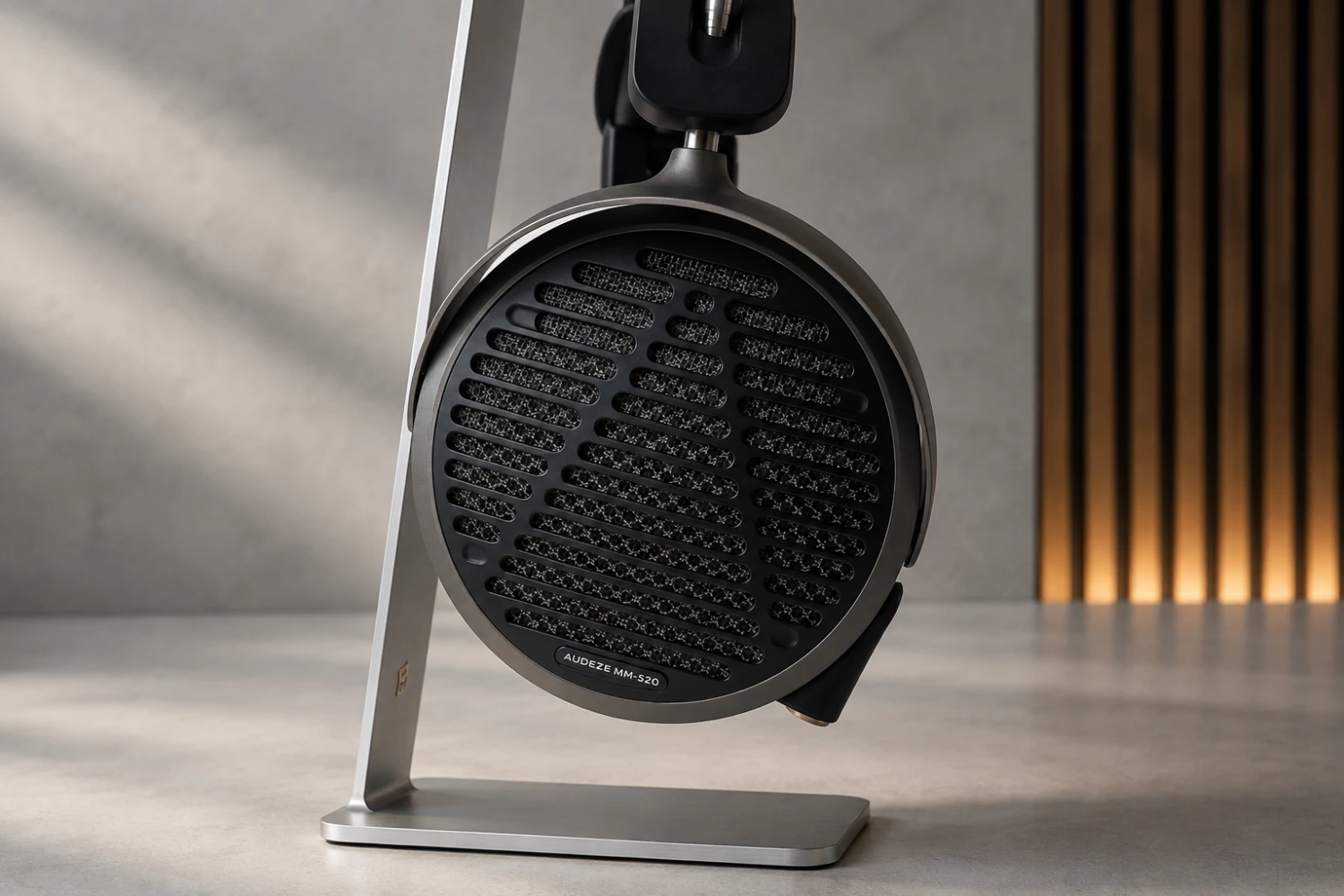
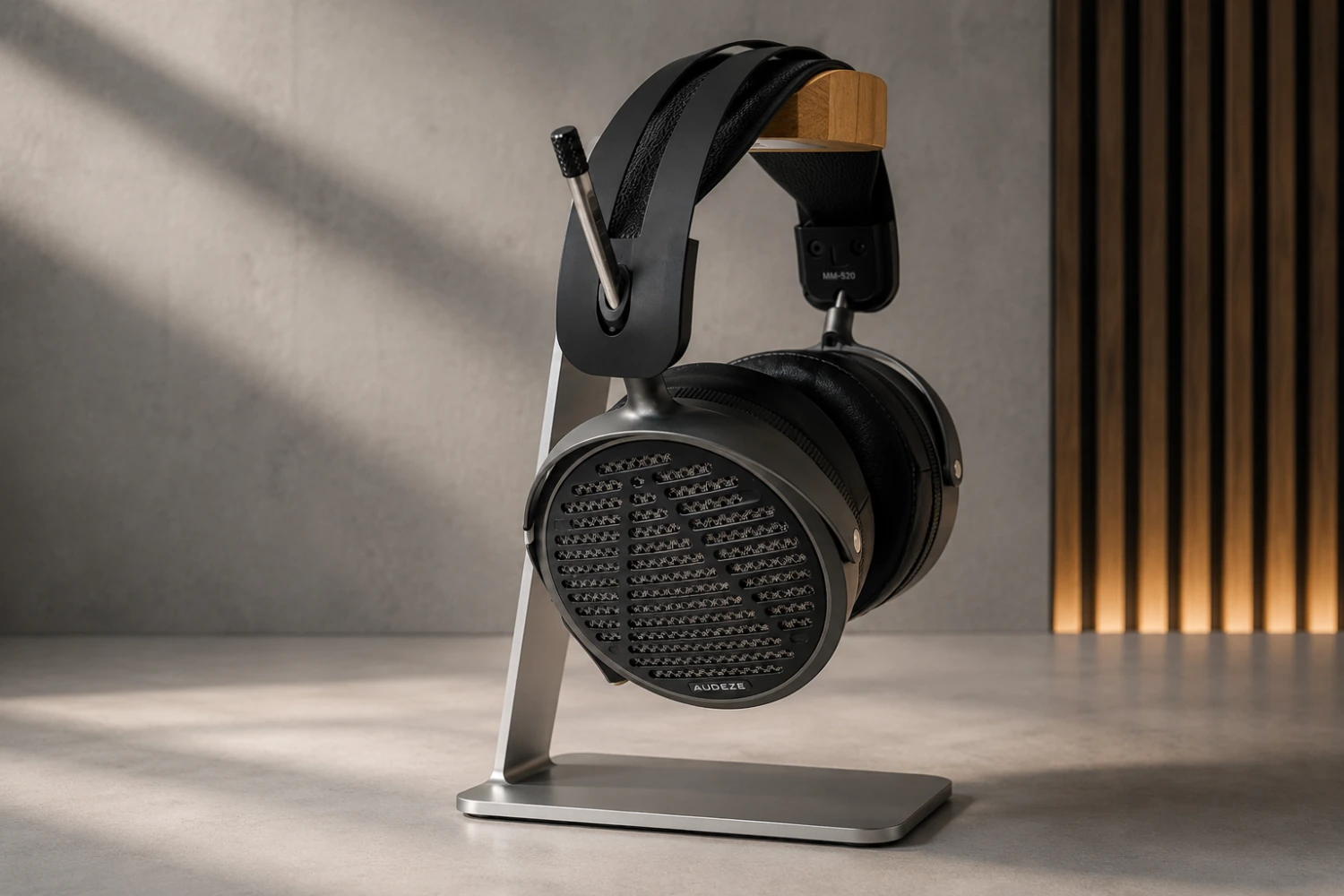
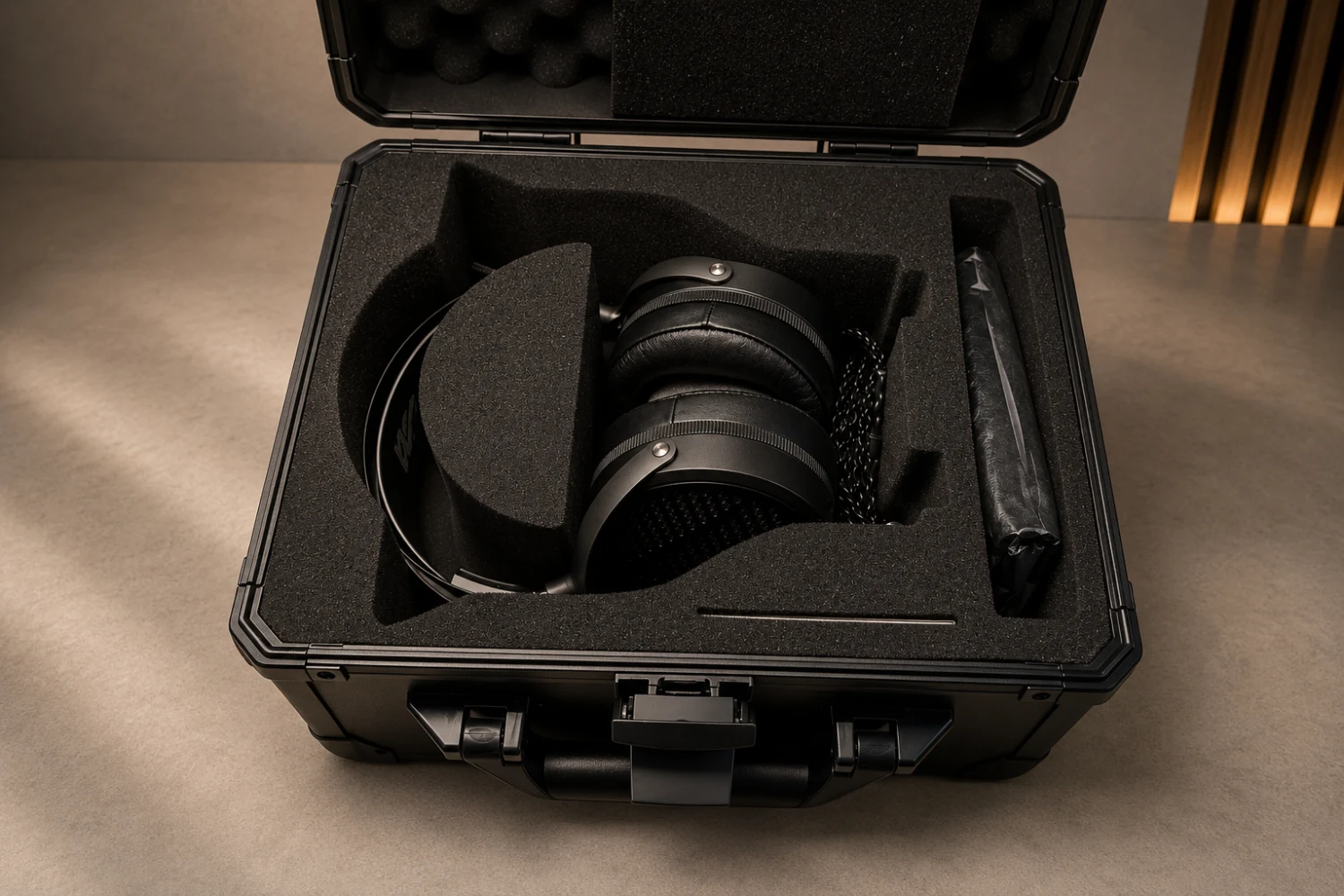
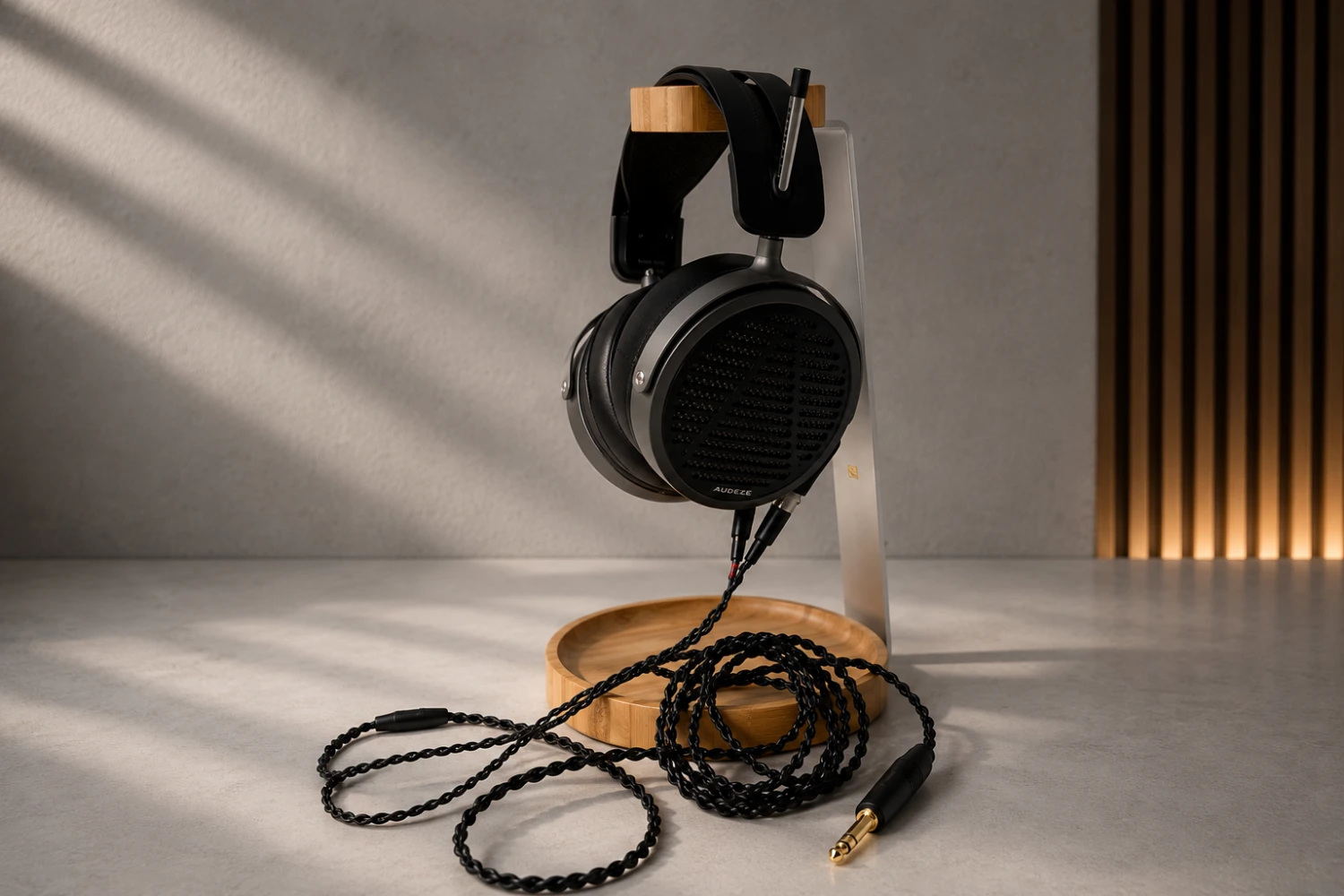
The large circular earcups, exposed industrial aesthetic and substantial construction follow the company’s established design language. The chassis uses matte aluminum, while the generously padded leather ear cushions attach magnetically.
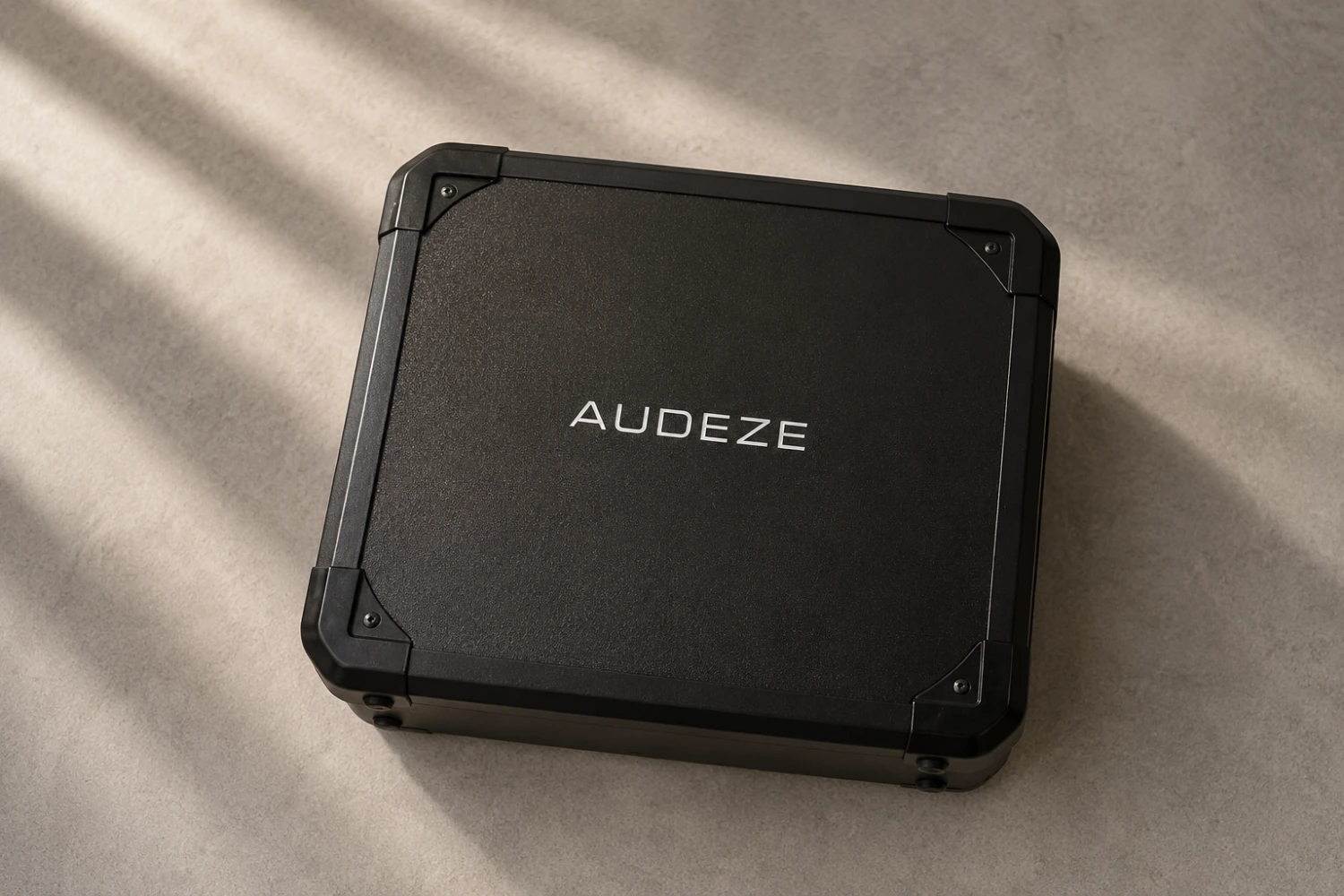
Everything feels reassuringly substantial.
That impression extends to the packaging. The headphones arrive with a proper transport case, alongside an MM-Series fabric pouch, a 2.5-meter braided cable terminated in 6.35 mm and a 3.5 mm adapter. The headphone-side connectors are Audeze’s familiar mini-XLR arrangement.
The omission of a balanced cable is disappointing at this price, particularly given that many owners are likely to pair the MM-520 with serious desktop headphone amplifiers.

The biggest specification to consider, however, is weight.
At approximately 550 grams, these are undeniably heavy headphones. Yet the number doesn’t tell the whole story.
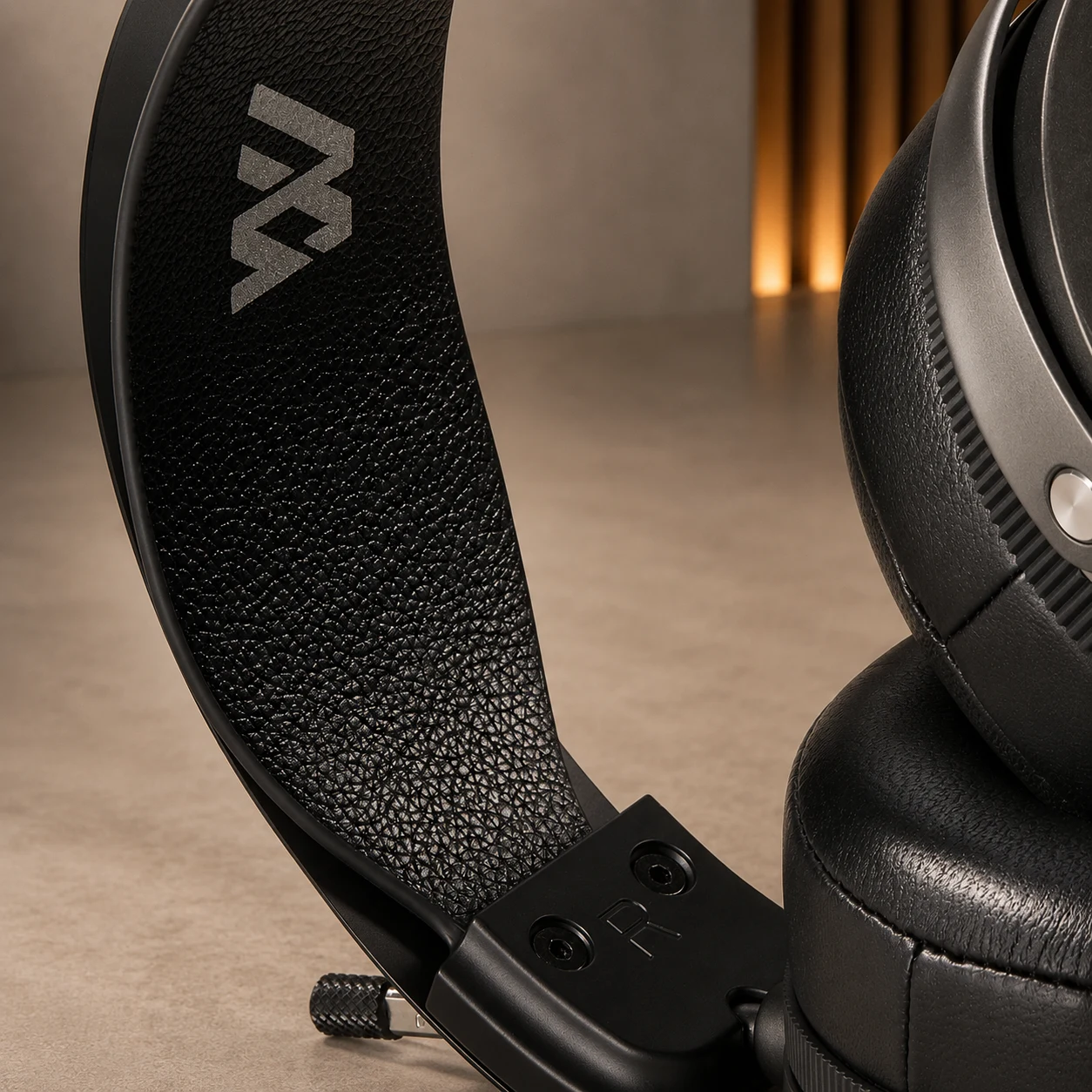
Audeze has managed the distribution remarkably well. The headband spreads the load effectively, the clamping pressure feels secure without becoming excessive, and the thick ear pads provide excellent support. The original listening notes report surprisingly little fatigue even during extended sessions despite the substantial weight.
You will always know you’re wearing a large planar headphone, but the MM-520 is considerably more comfortable than its specification sheet might suggest.
Technology
At the heart of the MM-520 is a 90 mm planar-magnetic driver built around several familiar Audeze technologies.
The ultra-thin Uniforce diaphragm is combined with N50 neodymium magnets, Audeze’s Fluxor magnetic structure and Fazor waveguides. The major addition is SLAM—Symmetrical Linear Acoustic Modulator—which is intended to improve low-frequency reproduction.
The supplied specifications list:
- Frequency response: 5 Hz–50 kHz
- Impedance: 18 ohms
- Sensitivity: 102 dB
- 90 mm planar-magnetic drivers
- Ultra-Thin Uniforce diaphragm
- Fluxor magnet array
- Fazor waveguides
- SLAM acoustic technology
The relatively low impedance might suggest that the MM-520 is easy to drive, but that would be misleading.
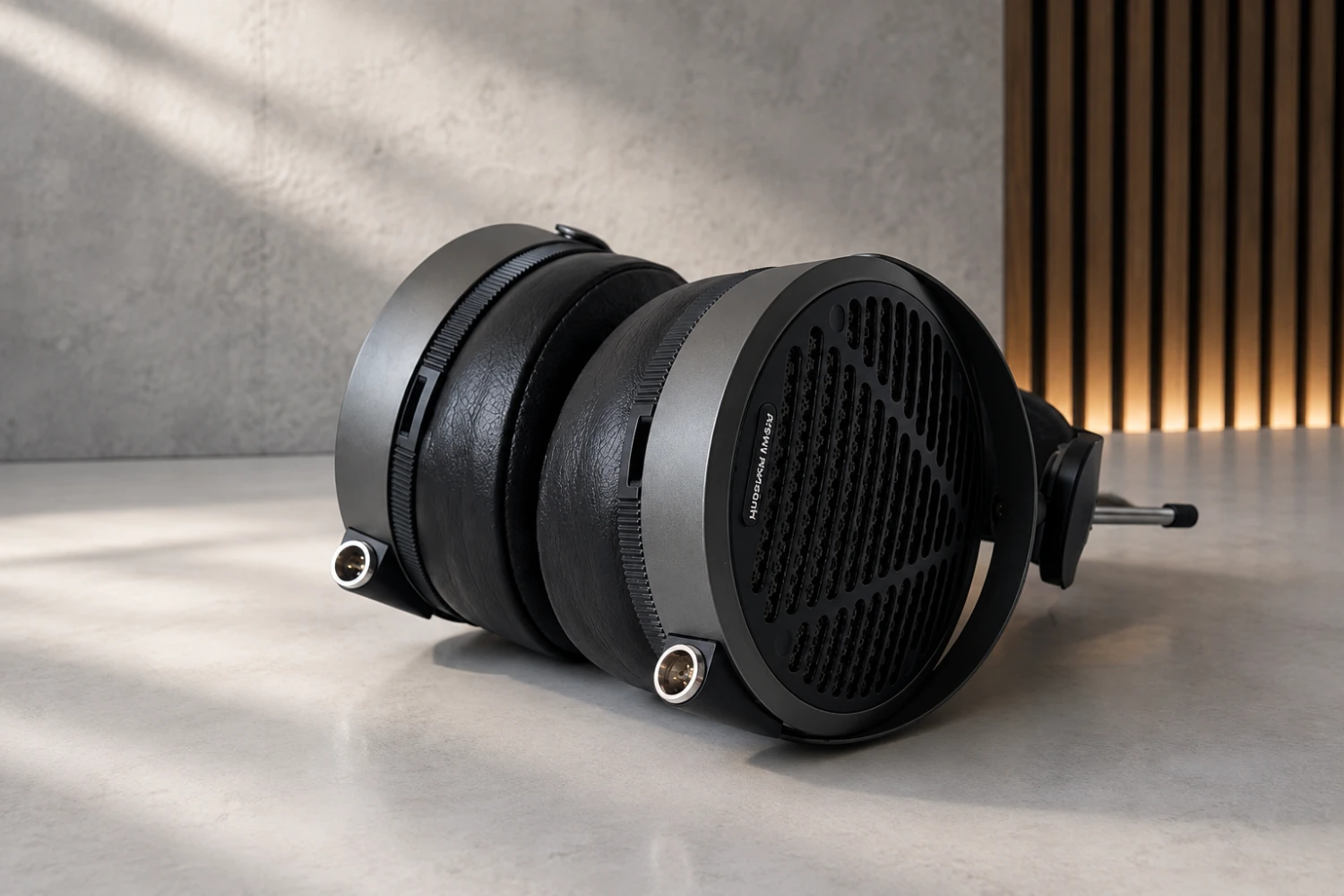
These headphones respond noticeably to amplifier quality and available current. The source review found portable players and smaller dongle-style DAC/amps less convincing, particularly when it came to dynamics and frequency-extreme authority. A capable desktop amplifier is therefore the more natural partner.
Sound Quality
The most interesting thing about the MM-520 is not its resolution or bass extension.
It is its restraint.
Many expensive headphones attempt to impress immediately. They exaggerate treble detail, create enormous artificial soundstages or emphasize transient attack so that everything sounds spectacular during the first few minutes.
The MM-520 takes almost the opposite approach.
Its presentation is composed, controlled and mature. It doesn’t constantly demand your attention, yet there is plenty of information available when you listen for it.
That makes “calm” an appropriate description—but calm should not be confused with slow.
Transients remain clearly defined. Percussion retains impact. Dense arrangements remain organized. What the MM-520 avoids is adding unnecessary aggression to the recording.
When a track is explosive, the headphone can sound explosive. When it isn’t, the MM-520 doesn’t manufacture excitement that wasn’t there in the first place.
For studio monitoring, that behavior makes considerable sense.
For audiophile listening, it becomes a matter of preference.
Listeners accustomed to bright, hyper-detailed headphones may initially find the MM-520 understated. Give it time, however, and its strengths become increasingly obvious.
The tonal presentation is smooth without becoming overly warm, detailed without turning clinical, and substantial without sounding ponderous. Most importantly, there is a natural coherence to the presentation that makes long listening sessions exceptionally easy.
The original testing was carried out with equipment including the iFi iCAN Phantom, iBasso D16 Taipan, iFi iDSD Valkyrie and iFi iDSD Diablo 2.
Bass: An Open-Back Headphone With Real Authority
Bass is arguably the MM-520’s defining characteristic.
Open-back planar headphones are often praised for speed and articulation rather than sheer low-frequency weight. The MM-520 challenges that expectation.
Its bass is deep, dense and physically convincing.
Sub-bass has genuine presence, while the mid-bass carries enough weight to give kick drums, bass guitars and electronic music convincing foundations. There is considerably more low-frequency authority here than you might expect from an open professional monitor.
Importantly, this isn’t loose bass.
The planar driver retains good texture and speed, allowing individual bass notes to remain distinguishable rather than merging into a generalized low-frequency rumble. The presentation can become powerful when the recording demands it, but the bass remains disciplined enough not to overwhelm the midrange.
Quantity may actually be the more divisive issue.
The source listening impressions describe the bass as somewhat elevated and potentially too thick for listeners who prefer a leaner reference balance.
For anyone who has previously dismissed open-back headphones because they lack low-end authority, however, the MM-520 deserves attention.
Midrange: The Star of the Show
As impressive as the bass is, the midrange may ultimately be the MM-520’s greatest strength.
Vocals have convincing body and physical presence. Acoustic instruments retain their natural texture, while complex mixes remain easy to examine without sounding dissected.
There is a particularly appealing balance between transparency and smoothness.
Some studio headphones achieve impressive resolution by pushing upper-midrange or treble energy forward. The result can sound spectacularly detailed but become tiring over longer sessions.
The MM-520 doesn’t rely on that trick.
Instead, details emerge naturally from the recording. Instrument boundaries are clearly defined, vocal textures remain easy to follow, and there is enough tonal density to prevent the presentation from becoming sterile.
The soundstage itself isn’t enormous. Rather than creating an exaggerated sense of width, the MM-520 produces a relatively intimate presentation with convincing layering and positional information.
For monitoring, that may ultimately prove more useful than an artificially expansive stage.
Treble: Detailed Without Becoming Ruthless
The upper frequencies continue the same philosophy.
Treble has energy and definition, with enough presence to preserve cymbal texture, acoustic detail and spatial information, but the MM-520 stops short of becoming aggressively bright.
There is some additional shine lower in the treble, while the highest frequencies are smoother and more relaxed.
That creates an easygoing presentation that should work particularly well during long listening or mixing sessions.
Listeners who actively seek maximum sparkle and air may want more extension and brilliance. Those sensitive to aggressive treble, however, may find the balance close to ideal.
The important point is that smoothness hasn’t been achieved by making the headphone dull. Treble remains articulate and tonally convincing; it simply isn’t pushed forward for effect.
MM-520 vs MM-500
The comparison with the MM-500 is particularly interesting.
The MM-500 has a lighter, more immediate character, with greater perceived brightness and a more energetic upper-frequency presentation. That can make it feel quicker and more exciting.
The MM-520 moves in another direction.
Bass has considerably greater authority, the overall tonal balance feels fuller, and resolution improves. The presentation consequently feels more substantial and mature.
That doesn’t automatically make it more enjoyable for everyone.
Listeners who value the MM-500’s liveliness may actually prefer its leaner and brighter personality. But for professional monitoring—or anyone who wants an Audeze with genuinely convincing low-frequency weight—the MM-520 is the more complete proposition.
The original comparison similarly found the MM-100 and MM-500 brighter and livelier, while judging the MM-520 to be more balanced, higher in resolution and substantially stronger in the bass.
Who Is the Audeze MM-520 For?
The MM-520 occupies an interesting middle ground.
It is serious enough for professional use but not so brutally analytical that music becomes an exercise in examining recording flaws.
That distinction matters.
There are headphones that impress through spectacle and headphones that impress through accuracy. The MM-520 belongs primarily to the latter group, but Audeze has injected enough bass weight, tonal richness and smoothness to prevent it from feeling like a laboratory instrument.
It is particularly compelling for listeners who want one high-end open headphone capable of handling both critical listening and long recreational sessions.
The biggest considerations are straightforward: it is heavy, it deserves a powerful amplifier, the supplied cable isn’t balanced, and listeners looking for an aggressive or highly sparkling presentation may find it too restrained.
Conclusion
The Audeze MM-520 is a confident evolution of the company’s professional headphone concept.
Its greatest achievement is not simply resolution. Plenty of expensive headphones are detailed. What distinguishes the MM-520 is how naturally it combines that information with genuinely substantial bass, convincing midrange texture and a smooth, fatigue-resistant upper register.
The new low-frequency tuning is particularly significant. There is real depth and physical weight here, yet the bass rarely compromises the clarity that a professional monitor requires.
It isn’t a headphone designed to manufacture excitement. The soundstage isn’t enormous, the treble doesn’t constantly sparkle, and its transient presentation isn’t deliberately sharpened to produce instant wow factor.
Instead, the MM-520 sounds controlled, substantial and remarkably composed.
For studio professionals, that makes considerable sense. For audiophiles, it may be even more interesting: this is a monitoring headphone you can actually forget you’re monitoring with.
At around $1,700, expectations are understandably high. But if you want an open planar that combines Audeze’s technical strengths with deeper bass and a smoother, more mature character, the MM-520 deserves a place near the top of your audition list.
Pros: Deep and unusually authoritative bass for an open-back design; excellent midrange; high resolution without excessive brightness; strong build quality; surprisingly comfortable despite its weight.
Cons: Heavy at around 550 g; benefits considerably from serious amplification; no balanced cable included; restrained character won’t suit listeners chasing maximum excitement.
Verdict: A sophisticated open planar that combines studio-grade honesty with the bass weight and musicality many reference headphones leave behind.









 VS
VS VS
VS VS
VS VS
VS VS
VS VS
VS VS
VS VS
VS

Comments 0
Share your experience, questions and perspective with other hi-fi enthusiasts.