
Marshall Milton ANC Review: Serious ANC Headphones in a Compact On-Ear Design
Marshall Milton ANC combines a compact on-ear design with adaptive noise cancellation, Bluetooth 6.0, LDAC, impressive battery life and a distinctly energetic sound. With up to 80 hours of playback, replaceable components and classic Marshall styling, it offers a compelling alternative to bulkier premium wireless headphones.
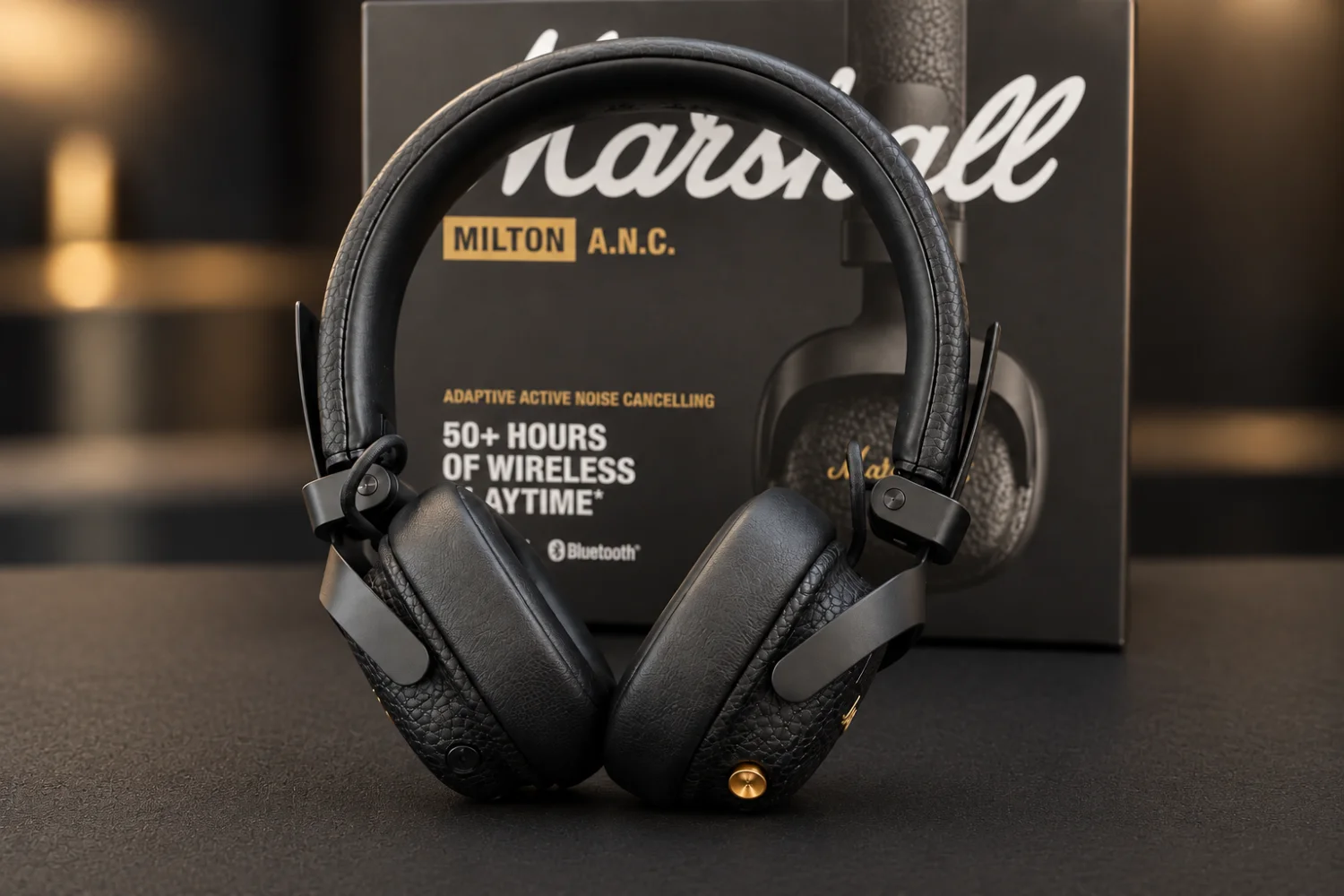
Marshall has spent years building headphones that are immediately recognizable, but the Milton ANC is more interesting than another exercise in retro styling. It fills a genuine gap in the company’s range, combining the compact proportions of an on-ear headphone with features normally associated with larger premium models.
At $229.99 in the US, the Milton ANC sits between Marshall’s simpler Major series and its flagship Monitor ANC models. More importantly, it arrives with an unusually complete specification for an on-ear design: adaptive active noise cancellation, Bluetooth 6.0, LDAC, LC3, multipoint connectivity, spatial processing, configurable controls and battery life rated at up to 80 hours.
It is also considerably more repairable than the average wireless headphone. The battery is replaceable, the ear cushions can be changed and Marshall offers several other components through its repair network.
That combination makes the Milton ANC one of the more technically ambitious on-ear headphones currently available. The remaining question is whether all that technology improves the experience or simply turns a compact headphone into an unnecessarily complicated one.
Fortunately, Marshall appears to have kept the fundamentals firmly in view.
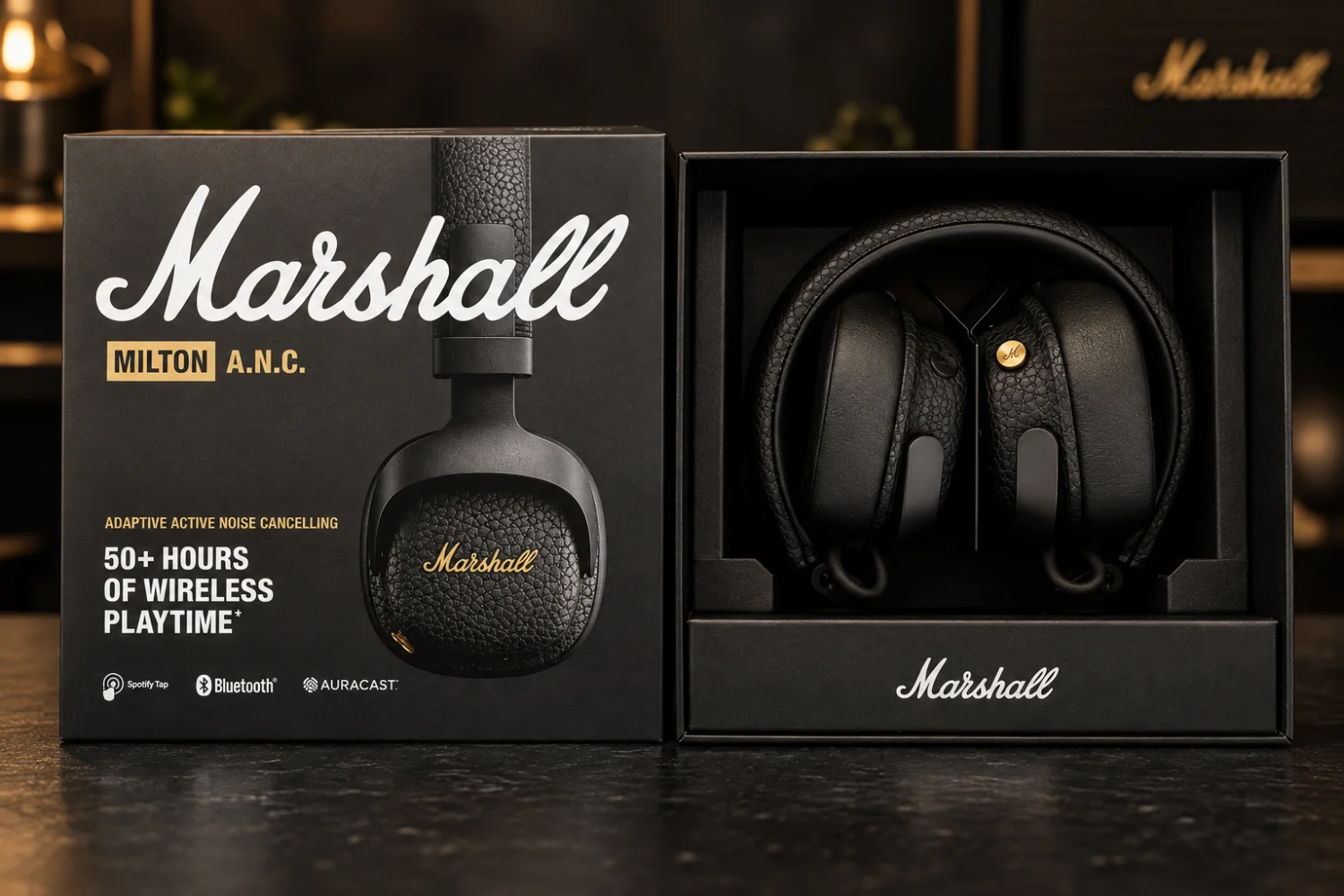
Design & Build Quality
The Milton ANC is unmistakably a Marshall product.
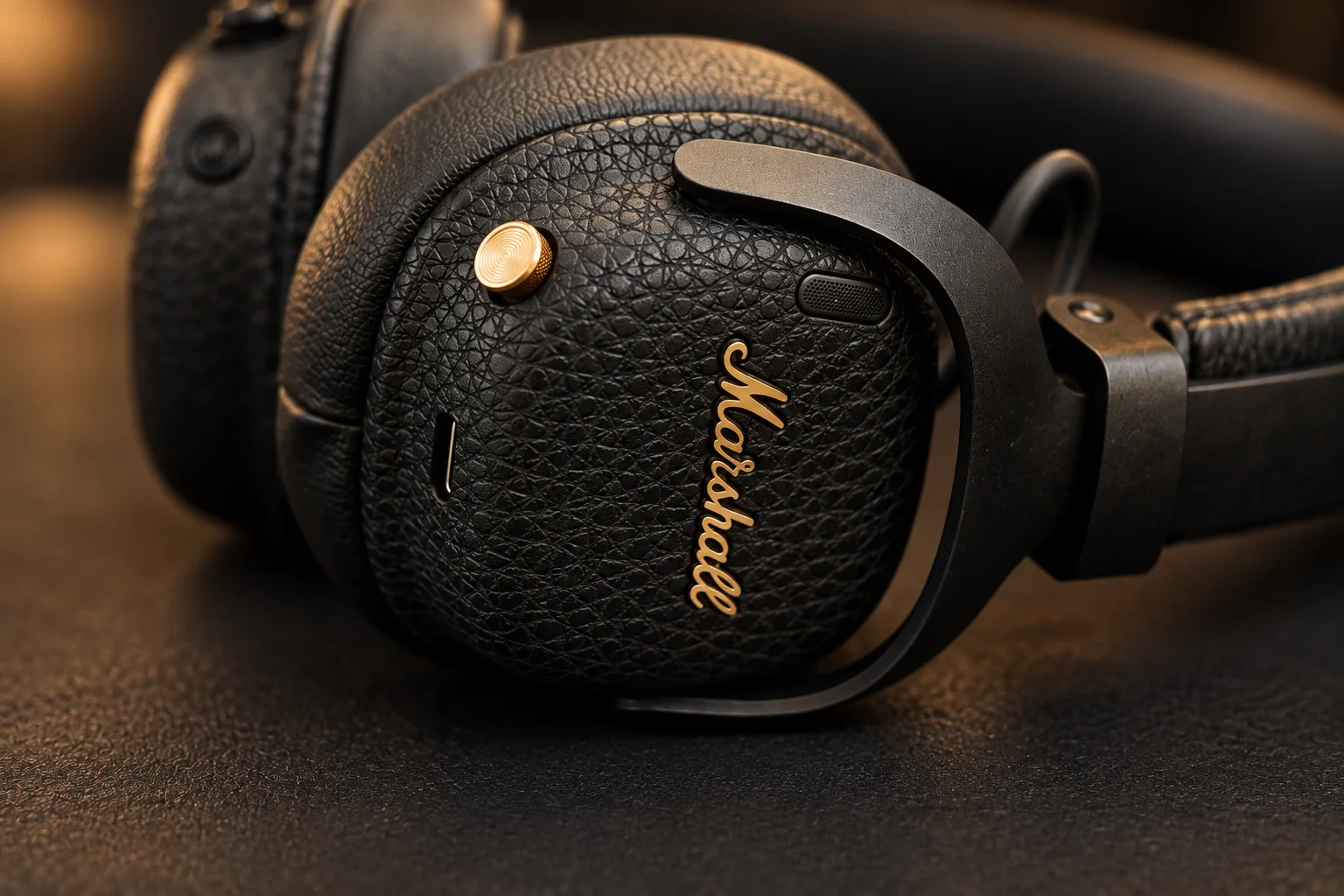
Instead of following the smooth, minimalist design language used by many mainstream wireless headphones, Marshall continues with textured surfaces, visible branding and small details inspired by its amplifier heritage. The result has considerably more personality than most similarly priced Bluetooth headphones.
The Milton is an on-ear rather than over-ear design. Its cushions therefore rest against the ears instead of surrounding them completely.
That distinction matters.
On-ear headphones are smaller, lighter and generally easier to transport, but they can also create more localized pressure during long listening sessions. They usually provide less passive isolation as well, making the implementation of active noise cancellation considerably more challenging.
Marshall has tried to minimize those disadvantages with generously padded ear cushions and a relatively light 200 g construction.
Independent testing has produced largely positive comments regarding comfort, although fit appears to be more individual than with larger over-ear models. Some reviewers have found the Milton unusually comfortable for an on-ear headphone, while others have found the square cushions too small for their ears. That makes trying the Milton before purchasing particularly worthwhile if you already know that you are sensitive to on-ear pressure.
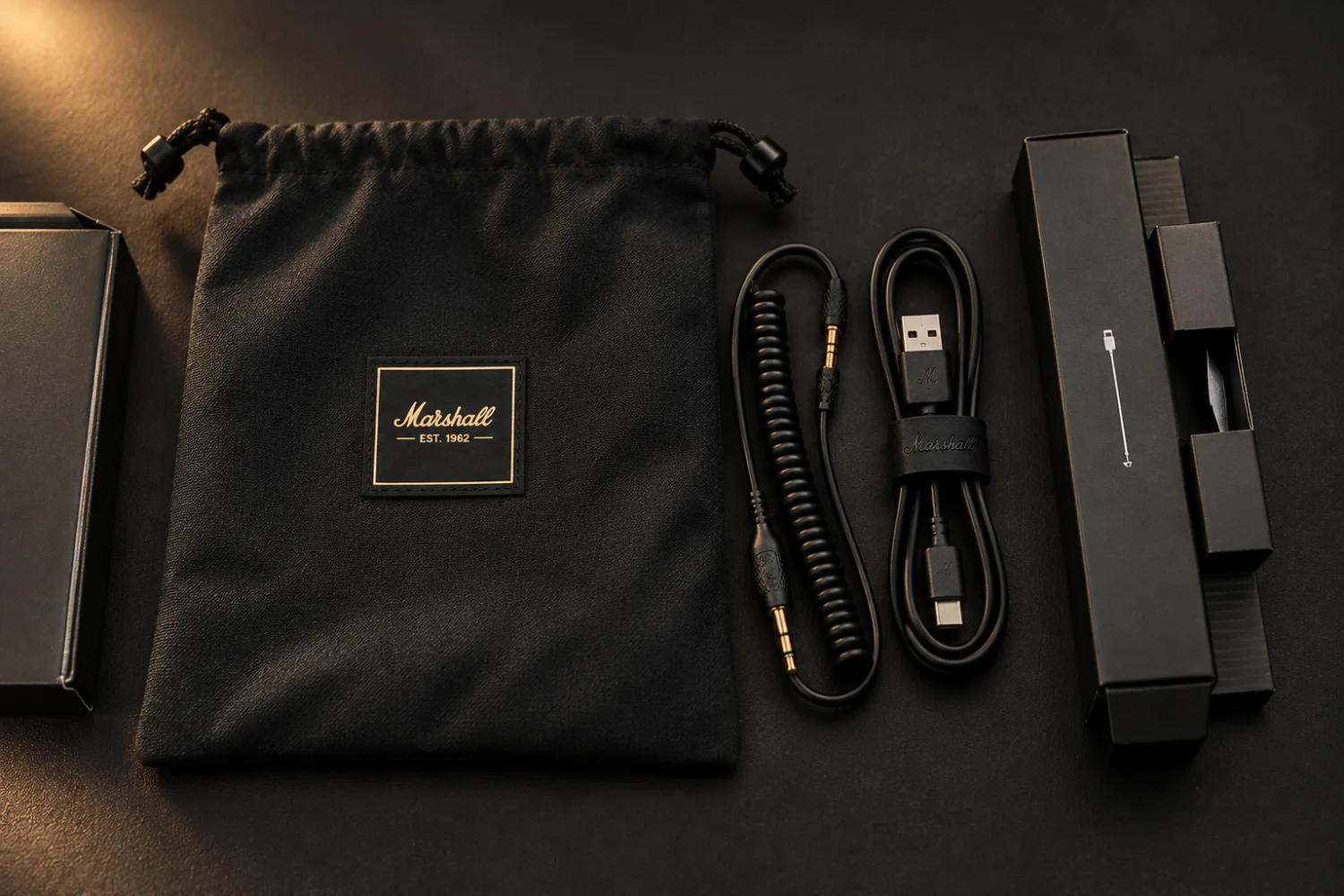
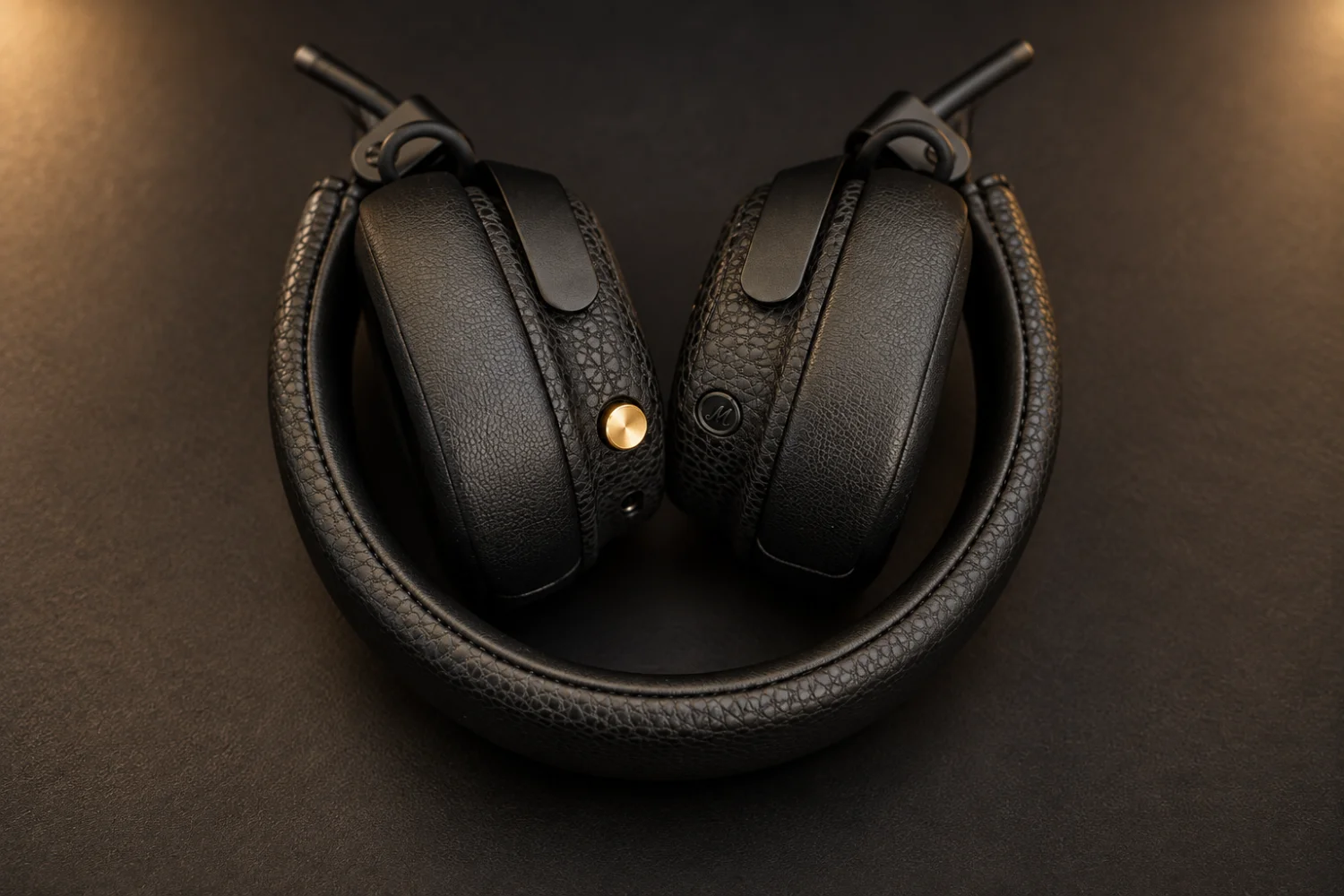
The headphone folds inward for transport, reducing the amount of space it occupies in a bag. Marshall includes a pouch rather than a substantial hard case, which makes sense given the Milton’s emphasis on portability, although travelers wanting maximum physical protection may still prefer an aftermarket case.
Construction is also unusually serviceable for a modern wireless product. Marshall offers the battery, ear cushions and USB-C cable as spare parts, while additional components including parts of the headband and control assembly can be serviced through authorized repair centers. Marshall additionally states that approximately 41% of the product’s weight consists of recycled material.
That approach deserves attention.
Wireless headphones have historically been difficult to justify as long-term products because a degraded internal battery can effectively determine their usable lifespan. Making the battery replaceable gives the Milton ANC a much better chance of remaining useful beyond the first few years of ownership.
Controls & Everyday Usability
Marshall continues to use its multidirectional control knob, and it remains one of the more intuitive alternatives to touch-sensitive surfaces.
Physical controls are particularly welcome on portable headphones. Capacitive panels can look cleaner, but they frequently become frustrating when wearing gloves, walking or trying to adjust volume without looking at the headphone.
The Marshall control lets the listener handle playback, volume and navigation through tactile movements.
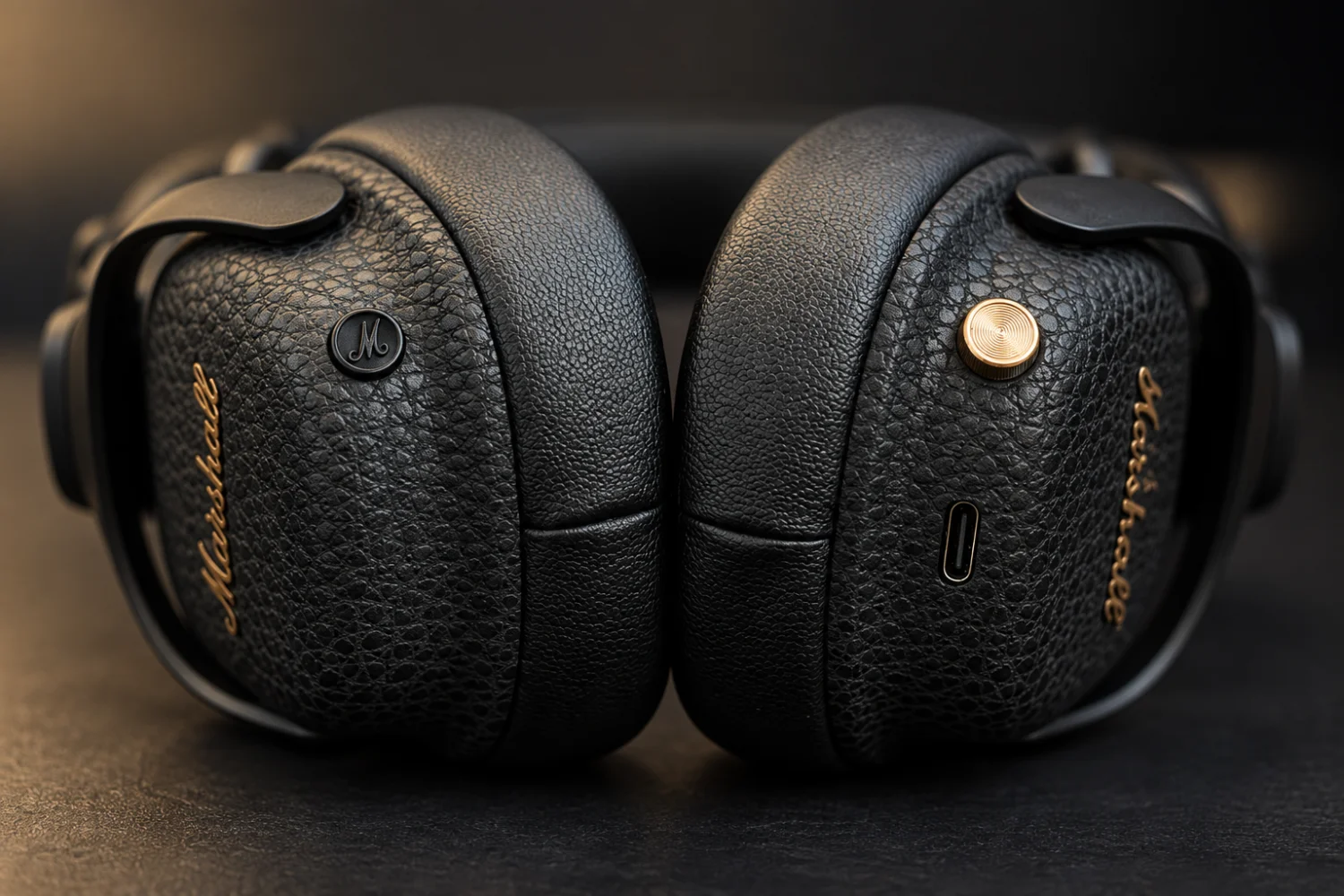
There is also the familiar customizable M-button.
Through the Marshall Bluetooth app, this button can be configured to provide quick access to functions including ANC, Transparency mode, EQ settings, Soundstage processing, Spotify Tap or a voice assistant.
It is a small feature, but it significantly reduces the need to repeatedly open a phone application.
The Milton ANC also supports over-the-air firmware updates through the Marshall Bluetooth app, giving the company an opportunity to refine performance after launch.
One notable omission compared with some competing premium headphones is automatic wear detection. The Milton does not automatically pause playback when removed from the head.
Whether this matters depends heavily on listening habits, but at this price it is one of the relatively few convenience features that appears conspicuously absent.
Bluetooth 6.0 and Connectivity
The connectivity specification is unusually strong.
Milton ANC uses Bluetooth 6.0 and supports SBC, AAC, LC3 and LDAC codecs.
LDAC is particularly significant for Android users because compatible devices can transmit considerably more audio data than conventional SBC or AAC Bluetooth connections. Marshall specifies a frequency response of 20 Hz to 20 kHz when using SBC, AAC or LC3, extending to 40 kHz when using LDAC at 96 kHz.
That should not be interpreted to mean that a codec automatically determines sound quality, but it does mean the Milton avoids one of the compromises frequently encountered on lifestyle-focused headphones.
Marshall has not limited it to basic Bluetooth purely for convenience.
Multipoint Bluetooth is included as well, allowing the headphone to maintain connections with two devices. Someone working on a laptop while keeping a phone connected for calls is therefore unlikely to need constant manual switching.
Wired listening is supported through the supplied USB-C-to-3.5 mm cable.
This is increasingly valuable as manufacturers remove analog connections from wireless headphones entirely. It provides a useful fallback when Bluetooth is undesirable and gives the Milton more flexibility with computers, portable players and other source equipment.
32mm Dynamic Drivers
Inside each earcup is a 32 mm dynamic driver.
On paper, that might appear modest compared with the 40 mm and larger drivers commonly advertised by over-ear competitors, but driver diameter alone tells very little about sound quality.
What matters considerably more is the relationship between the driver, enclosure, damping, acoustic volume and DSP.
The on-ear format also places the driver closer to the ear than most circumaural designs, allowing Marshall to work with a physically smaller acoustic system.
The drivers have a nominal impedance of 32 ohms and sensitivity of 99.3 dB SPL at 1 mW and 1 kHz. In normal use those figures are largely academic because the Milton contains its own amplification, but they reinforce that this is fundamentally a straightforward dynamic-driver design rather than an exotic multi-driver system.
Sound Quality
Marshall headphones have rarely pursued laboratory-style neutrality, and the Milton ANC does not appear to represent a dramatic philosophical change.
Published listening tests consistently point toward an energetic presentation with substantial low-frequency weight, good spaciousness and a warmer overall balance rather than an analytical studio-monitor character.
Bass has considerable presence.
That gives drums, bass guitars and electronic material convincing physical momentum, and it suits the energetic presentation traditionally associated with the Marshall brand. Independent reviewers have described the Milton as powerful, lively and occasionally somewhat bass-heavy in its default configuration.
Importantly, the lower frequencies do not appear to define the entire presentation.
Reviews also consistently mention good clarity and a surprisingly spacious image for an on-ear design. That is important because compact closed headphones can easily sound congested when strong bass is combined with restricted acoustic space.
The Milton seems to avoid that trap reasonably well.
Vocals remain sufficiently prominent, while guitars have the energy and texture expected from a headphone wearing the Marshall name.
Listeners searching for the most strictly neutral tonal balance may still prefer alternatives with more restrained bass tuning. The Milton is designed to sound engaging rather than clinically detached.
For many listeners, that will be exactly the attraction.
EQ and Personalization
The Marshall Bluetooth app provides EQ adjustment, which becomes particularly useful given the Milton’s energetic default tuning.
Listeners who prefer a leaner presentation can reduce low-frequency emphasis, while those using the headphones primarily for rock, electronic music or contemporary pop may find relatively little reason to move far from Marshall’s intended balance.
App-based EQ is becoming commonplace, but its value should not be underestimated.
There is no universally correct headphone tuning, particularly when variations in ear shape, pad position and listening volume can change perceived frequency balance significantly.
Having meaningful adjustment available gives the Milton much broader appeal than a fixed tuning would allow.
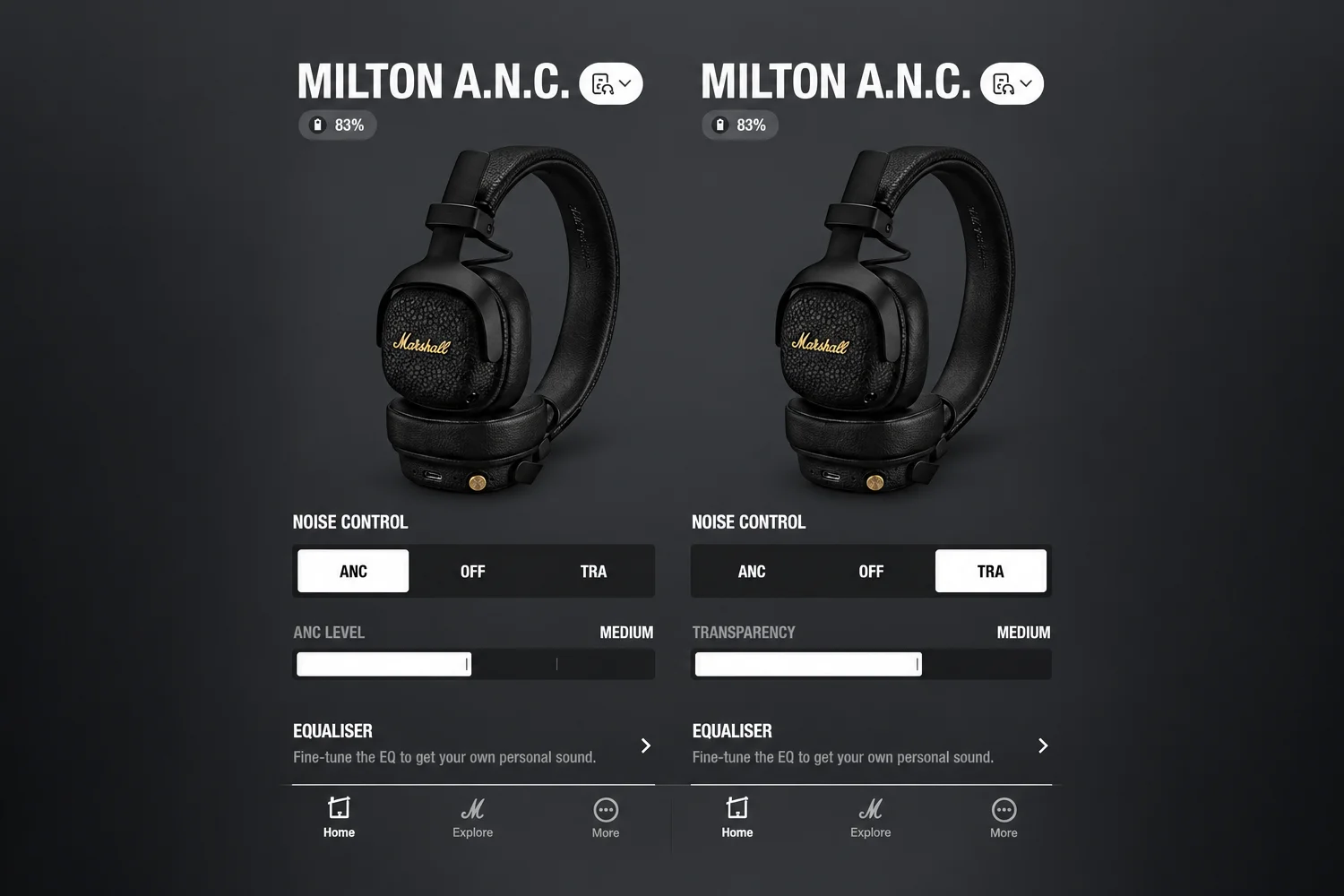
Adaptive Loudness
One of the more unusual features is Adaptive Loudness.
This system changes the tonal balance according to playback level and surrounding noise.
Human hearing does not perceive all frequencies equally at different volumes. Bass and lower frequencies in particular can appear to diminish as playback level decreases.
Marshall’s Adaptive Loudness attempts to compensate for this behavior, adjusting bass and lower midrange so the presentation maintains more of its fullness when listening quietly or when environmental noise begins masking parts of the spectrum.
This is the type of DSP feature that makes considerably more sense than adding processing simply for marketing purposes.
Portable headphones are rarely used under consistent conditions. A listener may move from a quiet room to a street, train or office without changing headphones.
Automatic compensation has the potential to make those transitions less noticeable.
Purists may prefer disabling such processing and controlling everything manually. For everyday wireless listening, however, Adaptive Loudness is a logical feature.
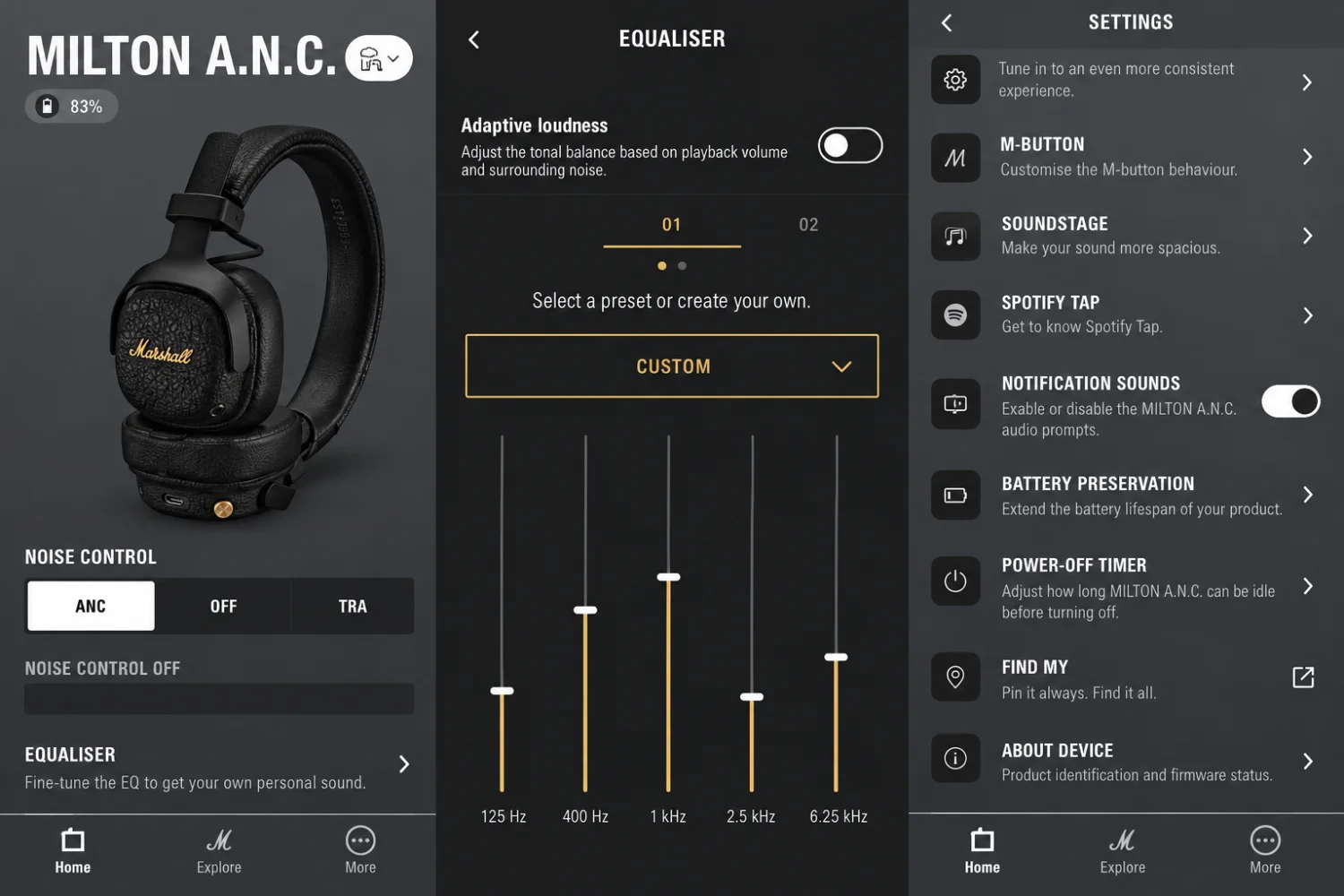
Marshall’s settings menu includes Soundstage processing, Spotify Tap, battery preservation and customizable M-button controls.
Soundstage Spatial Audio
Marshall also includes its own Soundstage spatial-audio processing.
The objective is to create additional width and depth from conventional stereo material rather than confining instruments entirely between the ears.
Marshall describes this as an internally developed spatialization algorithm, and it can be enabled from the application.
As with most spatial processing, its usefulness will depend considerably on the material.
A well-produced stereo recording already contains carefully constructed spatial information, and additional processing will not necessarily improve it. On recordings that feel particularly narrow through headphones, however, a subtle widening effect can create a more relaxed sense of scale.
The important point is that Soundstage is optional.
Those who prefer the original stereo mix can simply leave it disabled.
Active Noise Cancellation
Active noise cancellation is arguably the defining feature of the Milton.
ANC in an on-ear headphone is inherently more difficult than ANC in an over-ear model because the physical seal is weaker. External sound can reach the listener through more than just the electronically controlled acoustic path.
Marshall addresses this with adaptive ANC supported by six microphones.
Rather than applying one static amount of cancellation, the system continuously responds to environmental noise.
Published testing suggests the result is impressively effective by on-ear standards. Reviewers have generally found it useful for reducing steady environmental noise, while also noting the inevitable limitation of the physical format: an on-ear headphone will still struggle to isolate as completely as the best tightly sealed over-ear ANC designs.
That distinction is important.
Someone whose primary objective is maximum isolation during frequent long-haul flights will probably still be better served by a high-end over-ear headphone.
The Milton offers a different compromise.
It provides meaningful active noise reduction while remaining substantially smaller, lighter and less enclosing.
For commuting, office use and everyday travel, that may actually be the preferable balance.
Transparency Mode
A Transparency mode reverses the objective of ANC and deliberately allows external sound through the microphone system.
This is useful when ordering coffee, listening for announcements or having a brief conversation without removing the headphones.
On-ear headphones naturally allow somewhat more environmental sound through than tightly sealed over-ear designs, but an electronic transparency mode still makes a practical difference because it improves awareness without requiring the listener to physically reposition the headphone.
The M-button can be configured to make switching between modes easier.
Battery Life
Battery performance is one of the Milton ANC’s strongest specifications.
Marshall rates the headphone for approximately 50 hours of Bluetooth playback with active noise cancellation enabled.
Switch ANC off and the figure increases to as much as 80 hours.
Those numbers comfortably exceed what most users will require between charges.
Even listeners using the Milton for several hours every day should be able to go many days without connecting a charger.
There is useful fast charging as well.
A 15-minute charge is rated to provide approximately 9.5 hours of playback, while a complete recharge takes around two hours.
That quick-charge figure is particularly impressive because it means even a short charging session before leaving home should provide enough power for an entire working day.
The replaceable battery makes the specification more meaningful over the long term as well.
A huge initial battery rating matters less if degradation eventually turns an otherwise functional headphone into electronic waste. Marshall has at least provided a practical route around that problem.
Call Quality and Microphones
Six microphones are integrated into the Milton ANC.
These serve multiple purposes, including adaptive noise cancellation and voice communication.
Published reviews have generally reported respectable call performance, which matters because wireless headphones at this price are increasingly expected to function as everyday communication devices rather than music-only products.
For hybrid working, video calls and occasional phone conversations, the Milton therefore offers the expected modern functionality alongside its music features.
It should not be confused with a dedicated communications headset with a boom microphone, but that is not what Marshall is attempting to build.
Portability
Portability may ultimately be the strongest argument for choosing the Milton instead of a conventional premium over-ear headphone.
At 200 g, it is substantially lighter than many full-size ANC alternatives.
The folding mechanism further reduces its footprint.
An over-ear headphone can certainly provide greater passive isolation and potentially superior long-session comfort, but those advantages come with additional bulk.
The Milton instead provides many of the same electronic features in something closer to the size and convenience traditionally associated with simple portable headphones.
That makes it particularly attractive for commuters and travelers who dislike carrying large headphone cases.
Repairability Is a Genuine Advantage
One feature deserves more attention than it will probably receive in most comparisons: repairability.
Consumer wireless headphones have increasingly become sealed electronics.
Pads may wear out. Batteries degrade. Cables fail. A relatively inexpensive component can eventually render an otherwise perfectly functional headphone unusable.
Marshall is moving in a more sensible direction.
The Milton’s battery and ear cushions can be replaced, while Marshall also provides access to other parts through its service network. The headphone additionally contains a claimed 41% recycled material by weight.
This does not automatically make it environmentally perfect, but it gives the product a considerably more convincing longevity story than simply placing recycled material in an enclosure and leaving the electronics unserviceable.
At $229.99, that matters.
A headphone capable of being maintained for many years represents considerably better long-term value than one designed around the lifespan of its original battery.
Where the Milton ANC Fits in Marshall’s Range
Marshall effectively positions the Milton between two existing approaches.
The Major series emphasizes compact on-ear portability, while the Monitor line provides the more substantial over-ear experience.
Milton combines elements of both.
It retains the smaller, folding on-ear architecture while bringing adaptive ANC and more advanced processing into the equation. Marshall itself describes the model as providing the portability associated with Major while adding the greater isolation and sound-processing capabilities found further up the range.
That makes its position unusually clear.
Buy the Major if simplicity, size and price are the primary considerations.
Move toward the Monitor family if maximum isolation and an over-ear fit are priorities.
Milton is aimed at listeners who want something between those extremes.
Value for Money
At an official US price of $229.99, the Milton ANC is not an inexpensive on-ear headphone.
It is, however, difficult to call the specification sparse.
Bluetooth 6.0, LDAC, LC3, multipoint, adaptive ANC, Transparency mode, EQ, Adaptive Loudness, optional spatial processing, wired connectivity, a replaceable battery and 50-to-80-hour battery life form an unusually complete package.
The real purchasing decision is therefore less about missing features and more about physical format.
A buyer willing to carry a larger over-ear headphone has many competitors available around this price.
The Milton’s appeal comes from delivering a similarly sophisticated feature set in a significantly more compact design.
There is also the Marshall aesthetic.
Some buyers will consider the amplifier-inspired styling a major part of the attraction. Others will regard it as secondary to sound and comfort.
Either way, the price is supported by substantially more than branding.
Pros
- Engaging, powerful sound with strong bass presence
- Surprisingly spacious presentation for an on-ear headphone
- Adaptive active noise cancellation
- Transparency mode
- Excellent battery life
- Up to 50 hours with ANC enabled
- Up to 80 hours without ANC
- 15-minute quick charge provides up to 9.5 hours
- Bluetooth 6.0
- LDAC, LC3, AAC and SBC support
- Bluetooth multipoint
- Lightweight 200 g construction
- Compact folding design
- Physical control knob
- Customizable M-button
- Useful Marshall Bluetooth app
- Adaptive Loudness
- Optional Soundstage spatial processing
- Replaceable battery and ear cushions
- Wired listening option
- Strong repairability compared with most wireless headphones
Cons
- On-ear fit will not suit everyone
- Ear cushions may become warm during longer sessions
- Bass-forward default tuning may be too rich for listeners seeking neutrality
- ANC cannot completely overcome the isolation limitations of an on-ear design
- No automatic wear detection
- Soft pouch provides less protection than a proper hard case
- $229.99 places it against several capable over-ear alternatives
Verdict
The Marshall Milton ANC succeeds because it is more than a smaller version of a conventional noise-cancelling headphone.
Marshall has taken the portability of the on-ear format and added enough modern technology to make the Milton a legitimate alternative to much larger premium wireless models.
Its strongest assets are easy to identify: exceptionally long battery life, broad codec support, useful adaptive ANC, a compact 200 g construction and a level of repairability that remains disappointingly uncommon in wireless headphones.
The sound is deliberately entertaining rather than strictly neutral. Bass has weight, dynamics are lively and the overall presentation appears engineered to make music enjoyable rather than expose every recording flaw. Listeners wanting studio-monitor neutrality may look elsewhere, but Marshall has never really built its headphone reputation around clinical restraint.
ANC performance also needs to be considered in context. The Milton cannot create the same passive acoustic barrier as a large circumaural headphone, yet the adaptive cancellation appears impressively capable within the limitations of the format.
And that is essentially the Milton ANC’s reason to exist.
It is not trying to be the ultimate isolation headphone.
It is trying to provide most of the advantages of a modern premium ANC headphone without the size, weight and heat associated with wearing a large over-ear design.
For the right listener, that is arguably a more useful product.
Conclusion
Marshall Milton ANC is one of the more interesting additions to the wireless headphone market because it addresses a category that has received surprisingly little attention.
Premium active noise cancellation has become almost synonymous with large over-ear headphones. Marshall demonstrates that it does not necessarily have to be.
The Milton combines a lightweight 200 g on-ear construction with adaptive ANC, Transparency mode, Bluetooth 6.0, LDAC, LC3, multipoint connectivity, app-based EQ, Adaptive Loudness and optional Soundstage spatial processing.
Then there is the battery.
Up to 50 hours with ANC and 80 hours without it places charging anxiety very low on the list of concerns, while obtaining around 9.5 hours from a 15-minute charge makes the Milton particularly convenient for travel.
More importantly, Marshall has thought beyond the initial specification sheet.
A replaceable battery, replaceable ear cushions and broader parts availability significantly improve the prospects for long-term ownership. Combined with the company’s use of recycled materials, it gives the Milton a much more credible durability and sustainability argument than many disposable wireless designs.
There are compromises.
On-ear comfort is inherently personal, and listeners who dislike pressure directly against their ears are unlikely to be converted simply because Marshall has produced better cushions. The physical format also prevents ANC from reaching the near-silence possible with the best over-ear designs.
The default sound appears to favor excitement over absolute neutrality as well. There is generous bass weight and a distinctly energetic presentation, which suits rock, pop, electronic music and everyday listening particularly well but may not satisfy someone searching for a deliberately analytical headphone.
None of those compromises undermines what Marshall has achieved.
The Milton ANC is best understood as a genuinely portable premium headphone rather than a reduced-size substitute for something larger. It offers most of the connectivity, processing and noise-control technology expected from modern flagship wireless headphones while remaining light enough and compact enough to carry almost anywhere.
At $229.99, it faces serious competition, but relatively few competitors offer this particular combination of size, battery endurance, codec support, ANC and repairability.
For listeners who want the convenience of an on-ear headphone without accepting the basic feature set traditionally associated with the format, the Marshall Milton ANC makes a remarkably convincing case for itself.

Comments 0
Share your experience, questions and perspective with other hi-fi enthusiasts.