
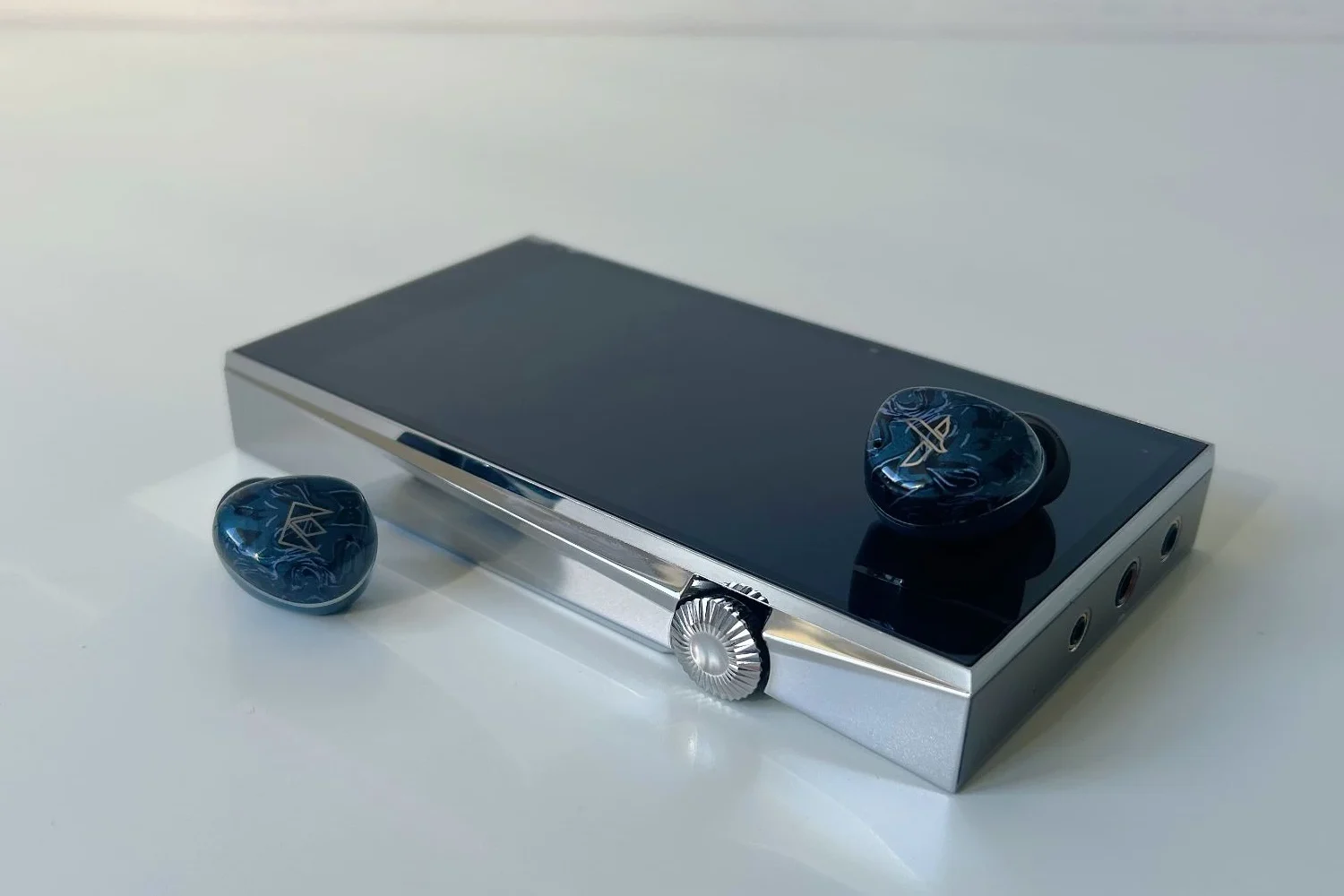
The Noble Audio Osprey is positioned as an accessible route into the company’s boutique approach to personal audio. Priced at $200 before local taxes, these true wireless earbuds combine a 10mm dynamic driver with a balanced-armature driver, adding Bluetooth 6.0, LDAC, active noise cancellation and multipoint connectivity. The specification is ambitious, although limited battery life with ANC, absent aptX support and a deliberately bright sound profile define the compromises.
Design & Build Quality
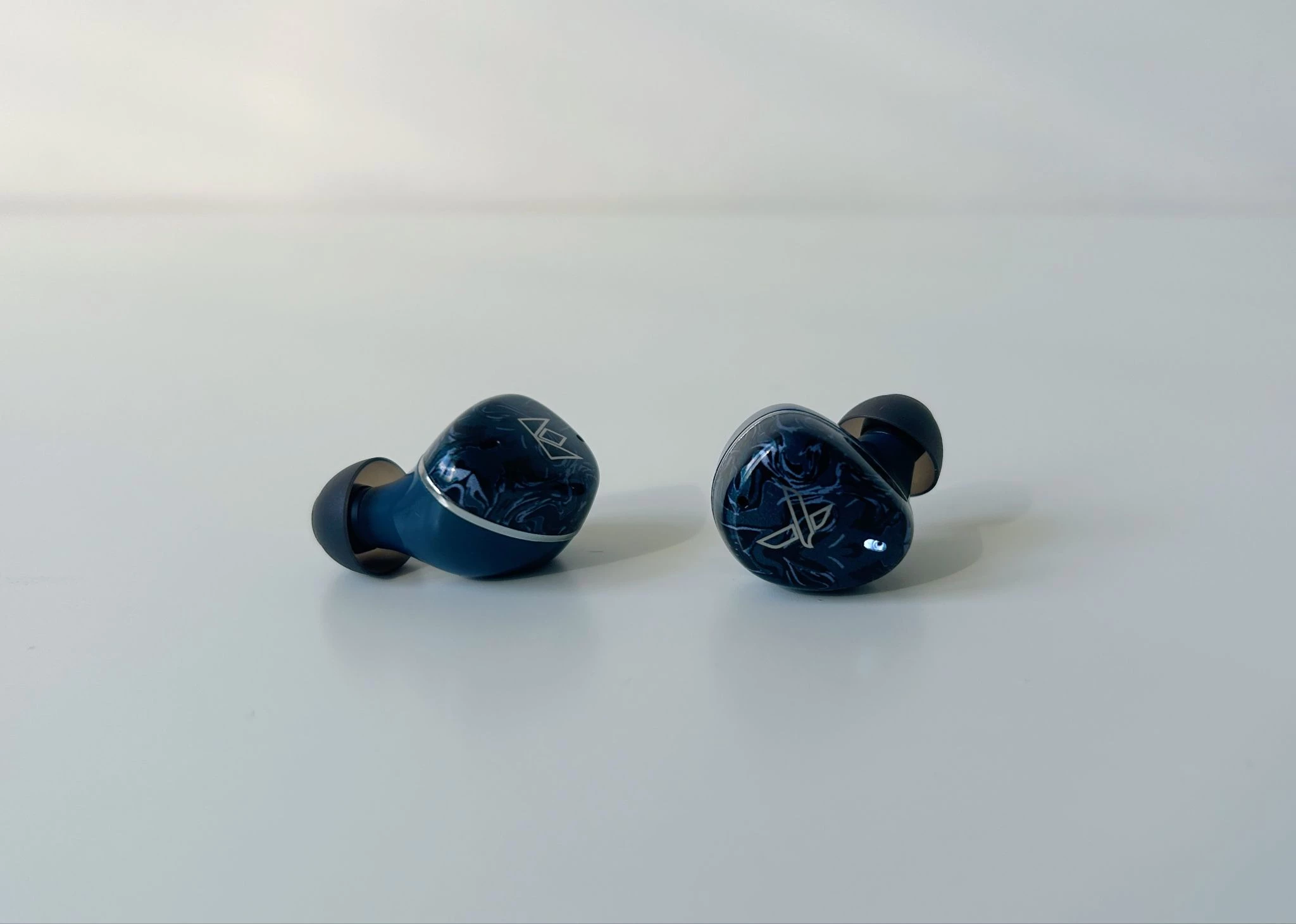
The Osprey avoids the anonymous appearance common to many true wireless earbuds. Its lightweight acrylic shells feature layered blue faceplate patterns, giving the model a closer visual connection to boutique in-ear monitors than to conventional mass-market wireless designs. Rounded edges and an anatomically shaped enclosure are intended to support comfortable everyday wear.
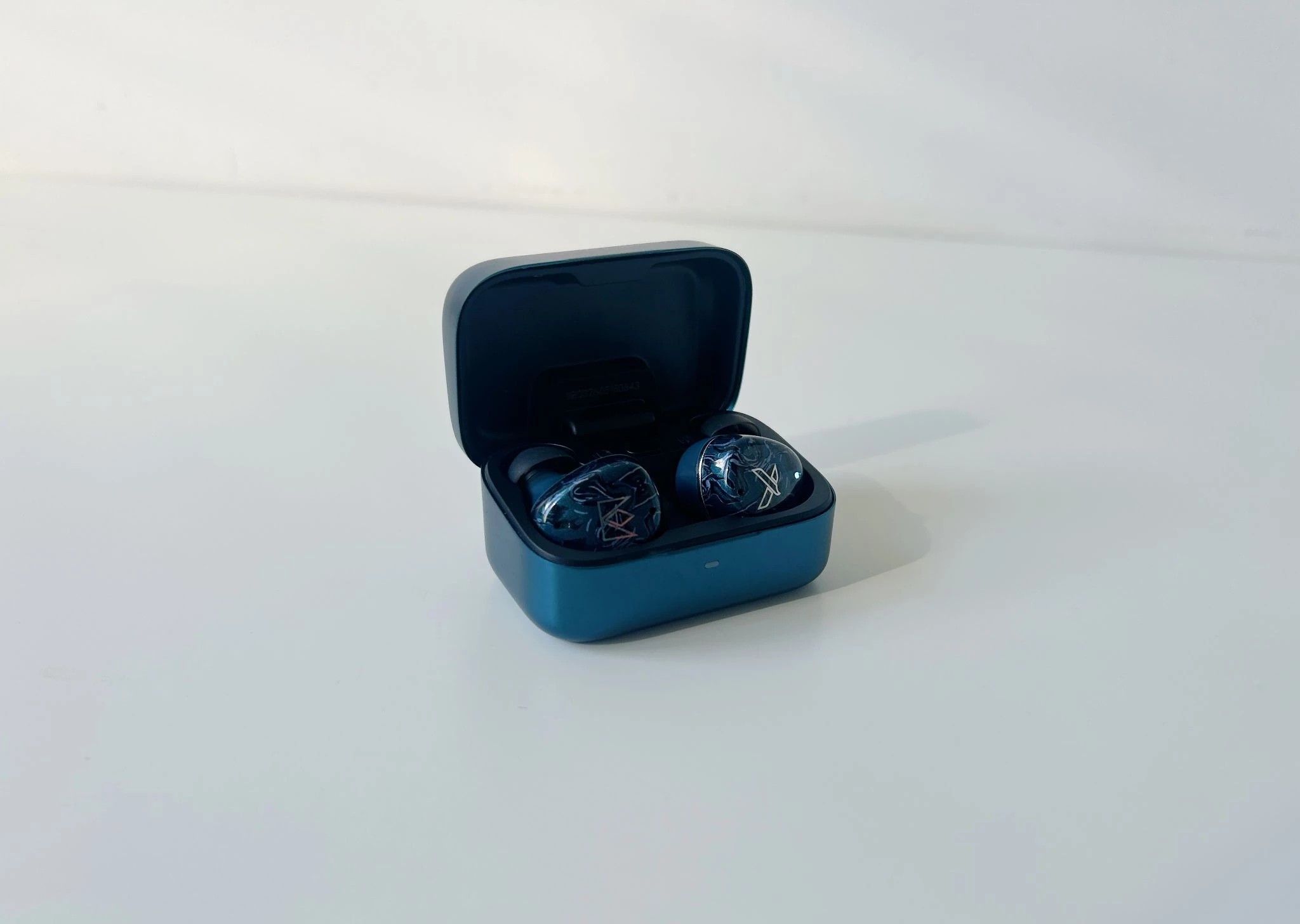
There are some material compromises consistent with the price. The earbuds are extremely light, and the joint between each shell and faceplate remains visible. Consequently, the physical impression may not be quite as luxurious as the decorative finish initially suggests. The aluminum charging case is more understated, with a matte surface designed to resist fingerprints. It is not exceptionally small but remains reasonably compact.
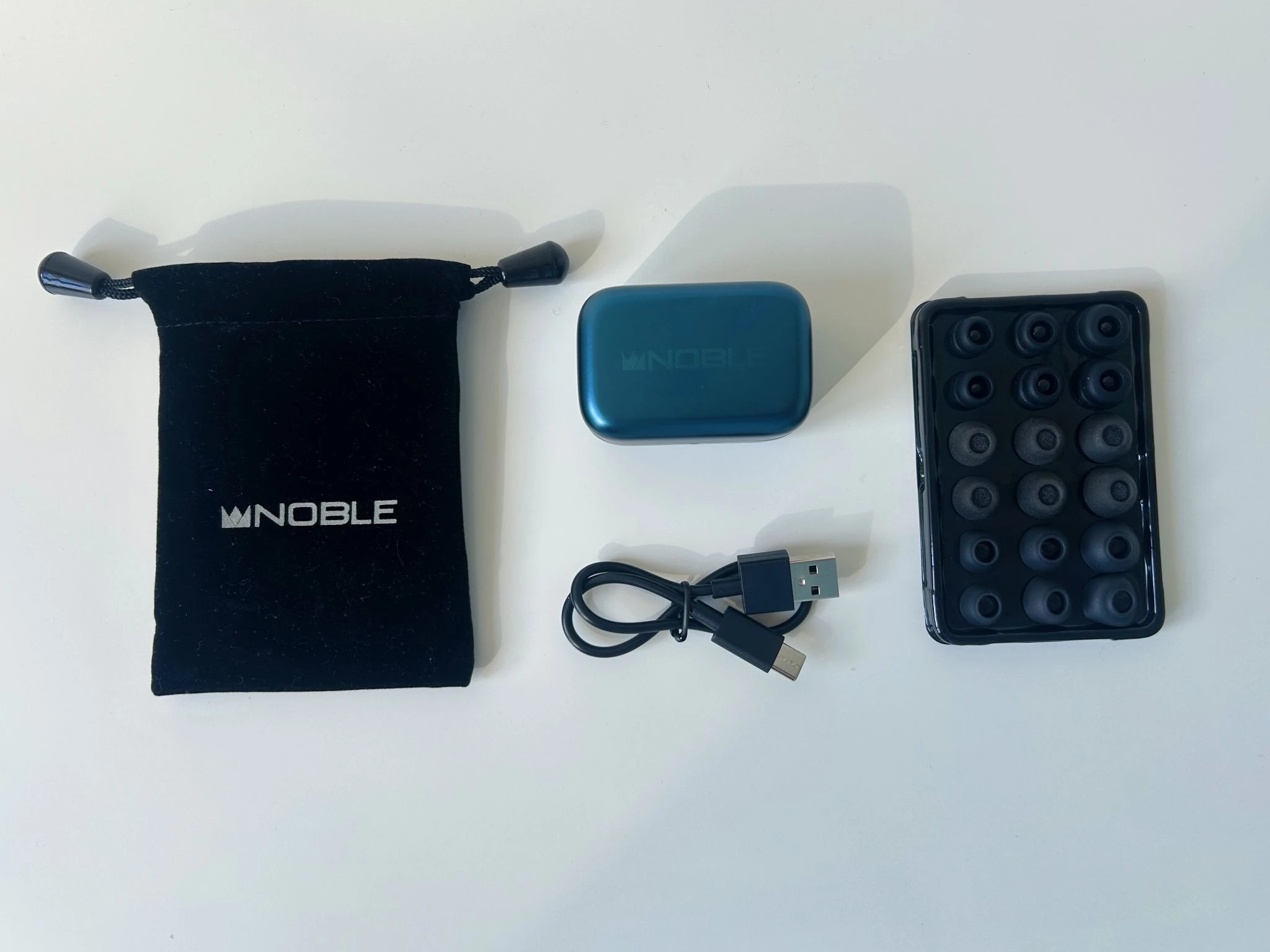
The included accessory selection is notably comprehensive. Noble supplies four pairs of standard silicone ear tips, three pairs of foam tips and three pairs of dual-flange tips, alongside a USB-C charging cable and velvet transport pouch. That range should provide more scope for adjusting fit and isolation than the minimal tip selections packaged with many true wireless models.
Hybrid Drivers and Audio Architecture
Each Osprey earpiece uses a two-driver hybrid configuration consisting of a 10mm dynamic driver and one balanced-armature driver. This traditional division of driver technologies gives Noble the ability to use the dynamic unit for low-frequency weight while assigning upper-frequency duties to the armature. The manufacturer specifies a frequency range of 20Hz to 40kHz, although a quoted range alone cannot establish real-world resolution or tonal accuracy.
Documented listening notes characterize the Osprey as clear, energetic and detail-focused rather than relaxed or warm. The overall balance is described as a contemporary V-shaped presentation, with substantial bass, an emphasized upper midrange and bright treble. Bass is reportedly deep, dense and forceful but sufficiently controlled to avoid overwhelming the midrange. The middle frequencies are presented as fast, transparent and slightly dry, with vocals given additional presence and emotional emphasis.
Treble is the more divisive part of the tuning. It is described as airy, lively and extended rather than softened, but it can also sound thin or sharp. Listeners who are sensitive to elevated high frequencies may need to use the equalizer. Driver integration is not portrayed as seamless, and the presentation prioritizes speed, separation and excitement over natural warmth or tonal richness. Soundstage width is considered respectable, while depth is less developed.
Bluetooth, Codecs and App Control
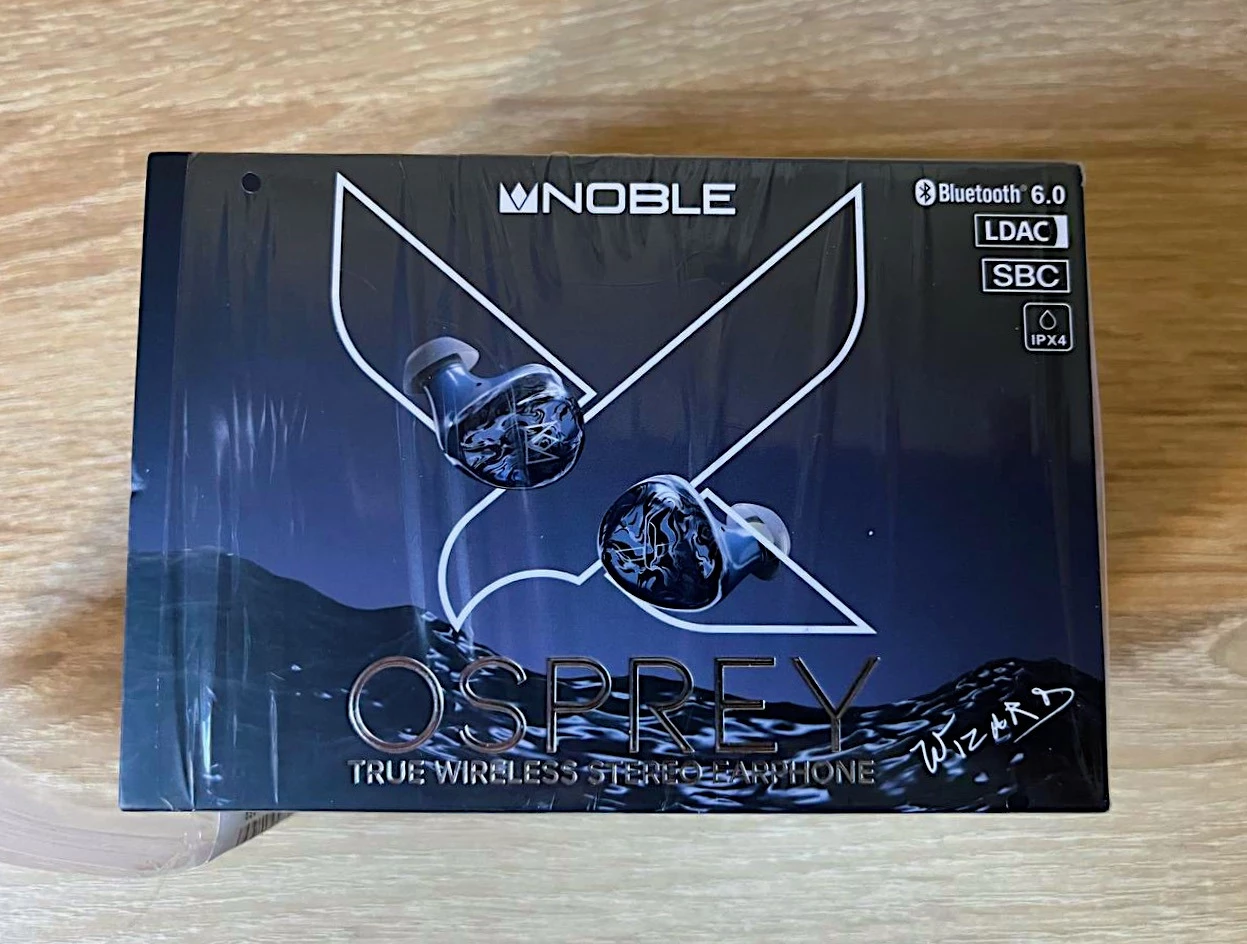
An Airoha 1571 chipset provides Bluetooth 6.0 connectivity. Codec support covers SBC, AAC and LDAC, giving compatible devices access to a higher-bandwidth wireless option. AptX is not supported, which may matter to listeners whose existing source equipment is built around that codec family.
TrueWireless Mirroring is included to improve connection management between the source and two earpieces. Multipoint support is another useful addition, allowing the Osprey to remain connected to more than one device. These capabilities strengthen its suitability for listeners who regularly move between a phone, tablet or computer.
The Noble FoKus application provides firmware updates, configurable touch controls and a 10-band equalizer. The EQ is particularly relevant because it offers a means of moderating the Osprey’s energetic upper frequencies. The touch panels respond quickly, but the documented experience also notes frequent accidental activation, making control sensitivity a potential usability concern. Track navigation, volume adjustment, listening modes and call handling are all available from the earbuds.
Noise Control and Calls
The Osprey includes active noise cancellation, a Hearing Through transparency mode and a third mode that disables both systems. The ANC is not presented as exceptionally powerful, but it is described as unobtrusive and comfortable in operation. This points to noise reduction intended to complement music listening rather than deliver maximum possible isolation.
Hearing Through passes surrounding sounds clearly, although some background hiss has been reported. The ability to switch every processing mode off is welcome for listeners who prefer passive isolation or want to minimize unnecessary signal processing.
Two microphones are fitted to each earpiece, with cVc Noise Reduction used to reduce wind interference during calls. Voice communication is functional, but call clarity is not identified as one of the Osprey’s strongest attributes. Buyers whose priority is frequent conferencing or exceptionally clean outdoor calls should keep that limitation in mind.
Battery Life and Everyday Use
Noble specifies up to seven hours of playback from the earbuds with ANC disabled, falling to five hours when noise cancellation is active. The charging case has a stated capacity of 500mAh. These figures are serviceable, but they do not make endurance a headline feature, particularly for listeners who intend to leave ANC enabled throughout the day.
Fast charging partly offsets that limitation. A 10-minute charge is rated to provide another two hours of music playback. Charging is handled over USB-C, and the combination of multipoint, app-based customization and several listening modes gives the Osprey a practical foundation for daily use.
Value for Money
At $200 before local taxes, the Osprey makes a credible value argument through its combination of hybrid drivers, LDAC, Bluetooth 6.0, multipoint, adjustable controls and active noise cancellation. Its patterned acrylic design and broad selection of ear tips further distinguish the package.
The trade-offs are equally clear. Battery life with ANC is moderate, aptX is absent, touch controls can be triggered accidentally, and the microphone system is more serviceable than exceptional. The bright tonal balance will also be a matter of taste. Even so, the specification supports Noble’s positioning: this is an enthusiast-oriented true wireless model that emphasizes design, clarity and energetic sound without moving into the company’s more expensive territory.
Pros
- Two-driver hybrid design with a 10mm dynamic driver and balanced armature
- Bluetooth 6.0 with LDAC, AAC and SBC support
- Multipoint connectivity and TrueWireless Mirroring
- Distinctive patterned acrylic shells and matte aluminum case
- Generous selection of silicone, foam and dual-flange ear tips
- 10-band equalizer and configurable controls through the Noble FoKus app
Cons
- No aptX codec support
- Battery life falls to five hours with ANC enabled
- Touch controls may activate accidentally
- Call quality is not a standout strength
- Bright treble may fatigue sensitive listeners
Verdict
The Noble Audio Osprey is a feature-rich and visually distinctive $200 true wireless model for listeners who favor clarity, strong bass and energetic treble over warmth and restraint.
Conclusion
The Noble Audio Osprey succeeds by bringing several enthusiast-oriented features into a comparatively accessible true wireless package. Its hybrid dynamic and balanced-armature configuration, LDAC support, Bluetooth 6.0, multipoint connectivity and 10-band equalizer form a strong technical foundation. Distinctive acrylic faceplates, an aluminum case and an unusually broad ear-tip selection also give it more personality and flexibility than a purely utilitarian design.
Its limitations should guide the buying decision. The reported tuning is bright, fast and V-shaped, with forceful bass and clear upper frequencies rather than relaxed warmth. Treble-sensitive listeners may need the app’s equalizer, while imperfect driver coherence means this is not positioned as the final word in natural presentation. Five hours of playback with ANC is merely adequate, aptX is missing, touch controls can be overly easy to trigger, and the microphones are better suited to occasional calls than communication-first use.
At $200 before local taxes, however, the Osprey presents a convincing blend of boutique styling and modern wireless functionality. It is best suited to listeners who want an animated, detail-forward sound and value LDAC, multipoint and customization. For that audience, it earns a confident recommendation, provided its bright tonal balance and moderate ANC battery life align with the intended use.


Sound Off
0Join the discussion if you have something to add.