
Hegel H200 Review: A Modern Hi-Fi Powerhouse Without the Gimmicks
The Hegel H200 is an integrated Class AB amplifier built around 150 watts per channel, extensive network playback, an internal DAC and a dedicated phono input. Its restrained interface keeps attention on system integration rather than visual spectacle.
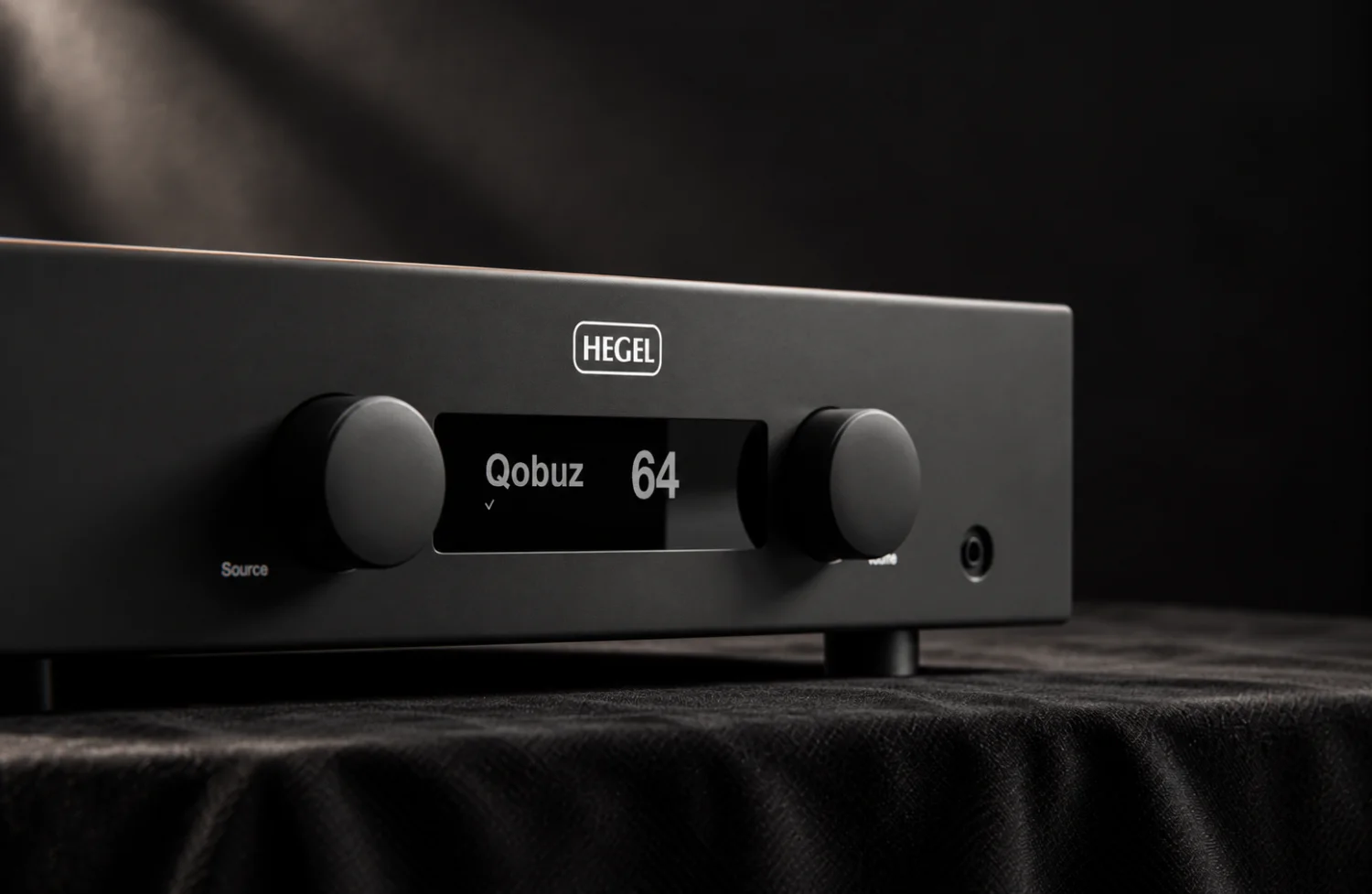
The Hegel H200 is a deliberately focused all-in-one amplifier. It combines substantial Class AB output, digital conversion, network streaming and vinyl support without adopting the large color display or broad wireless checklist found on some modern rivals. Based on its documented design, it is best viewed as a performance-led system hub rather than a lifestyle-oriented smart amplifier.
Design & Build Quality
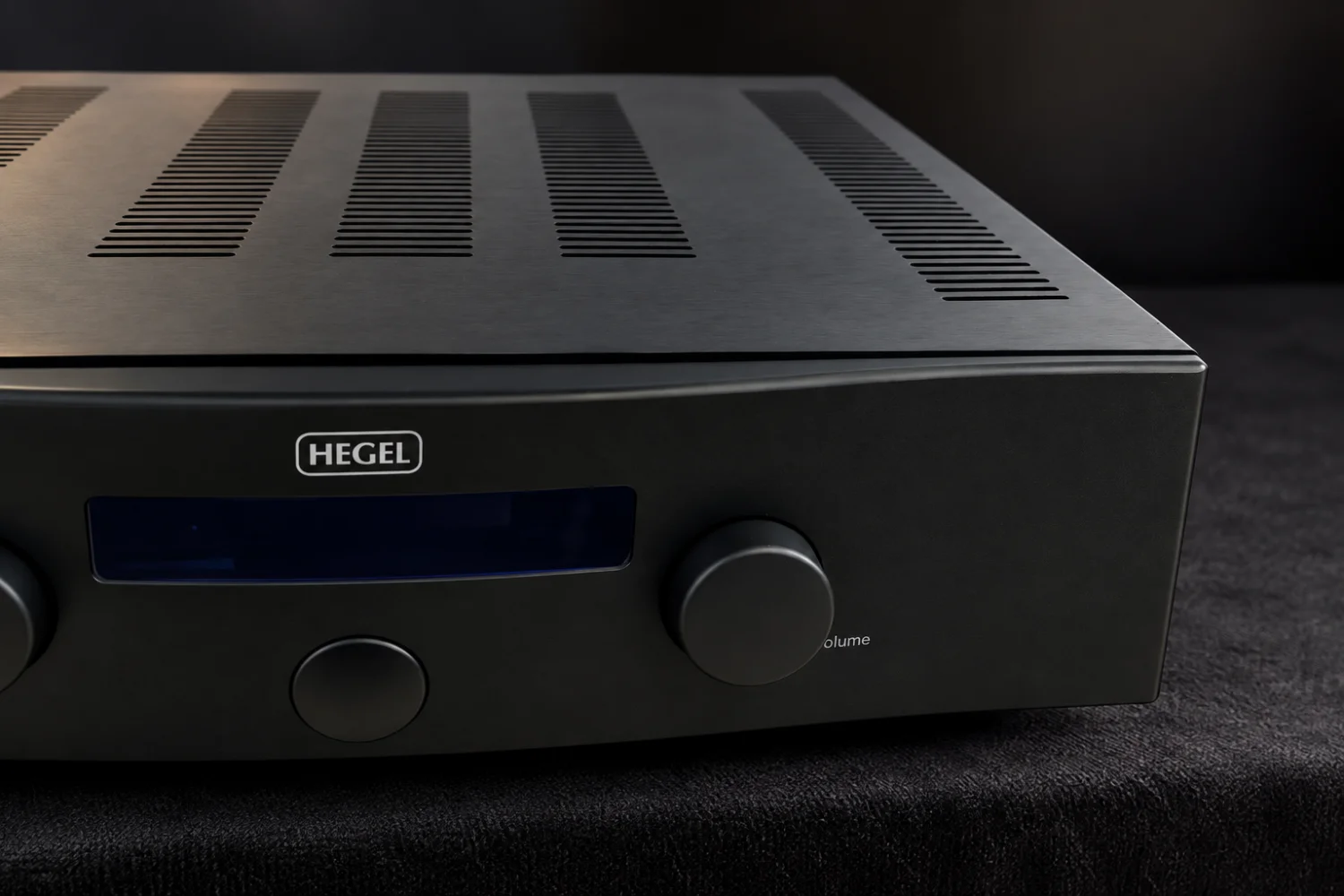
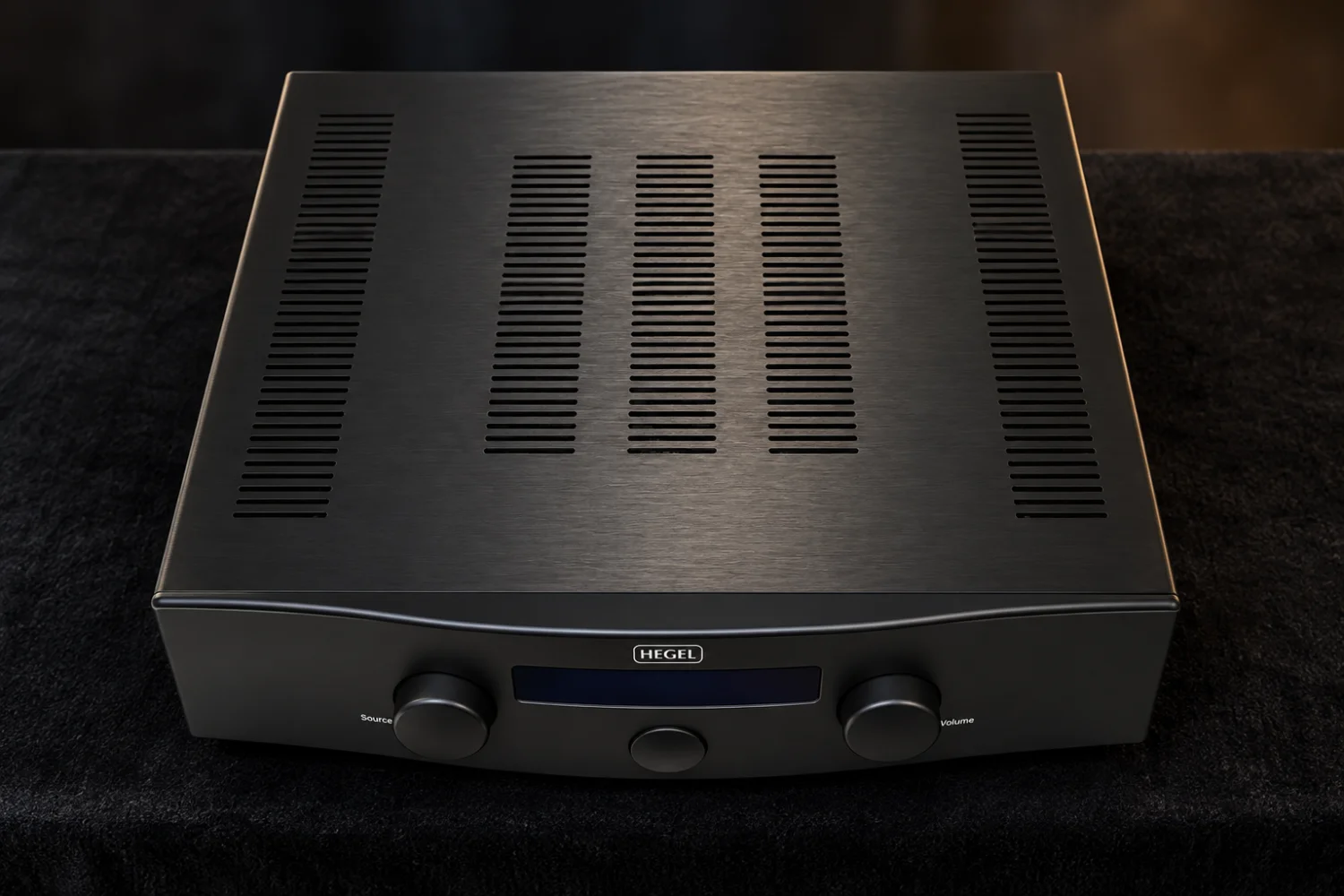
Hegel has retained its established minimalist design language for the H200. The gently curved front panel carries two rotary controls for source selection and volume, positioned on either side of a central display. Branding and labeling are sparse, giving the amplifier a restrained appearance that should integrate discreetly into a listening room.
The display presents essential information such as the selected input, volume level and, where applicable, sampling rate. It does not show album artwork or animated VU meters. That simplicity will appeal to buyers who prefer an unobtrusive component, although listeners seeking a visually rich streaming interface may find it austere.
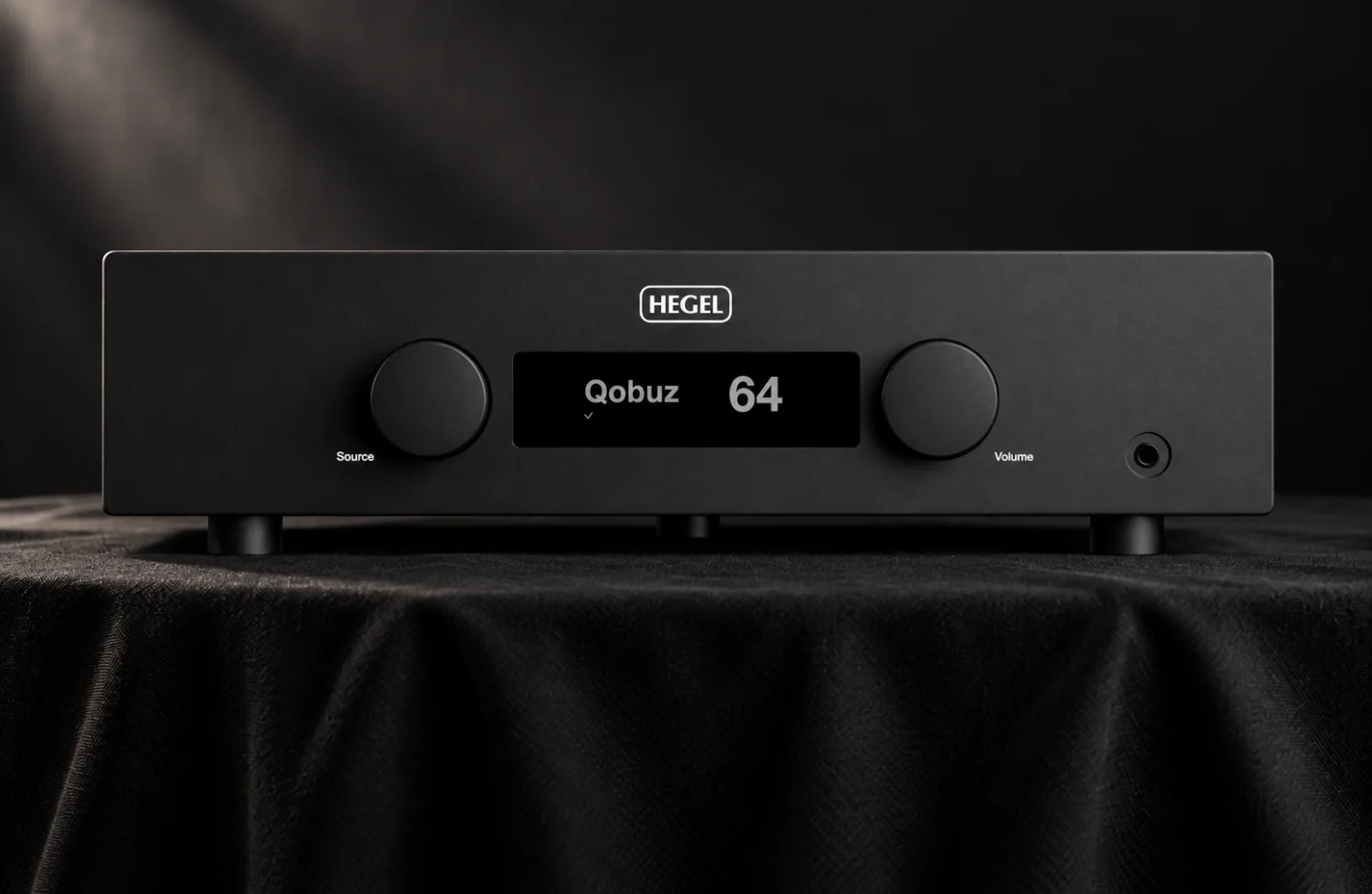
The H200 is offered in powder-coated black or white finishes. The availability of white distinguishes it from some of Hegel’s higher-tier integrated amplifiers and provides useful flexibility for contemporary interiors.
Amplification & Engineering
At the center of the H200 is a Class AB amplifier rated at 150 watts per channel into 8 ohms. Hegel’s SoundEngine 2 feed-forward system is designed to identify and correct distortion generated during amplification without relying solely on conventional global feedback techniques.
Hegel specifies a damping factor of 4,000. Manufacturer damping-factor figures do not describe an amplifier’s complete performance, but this unusually high stated value signals an engineering emphasis on controlling loudspeaker-driver movement. The practical result will still depend on the connected speakers, their impedance behavior and the wider system.
The circuit-board layout has also been optimized to reduce interference by routing signals away from potential noise sources. These documented choices support the H200’s positioning as an amplifier in which power-supply behavior, signal integrity and speaker control take priority over decorative features.
Streaming, DAC & Phono Facilities
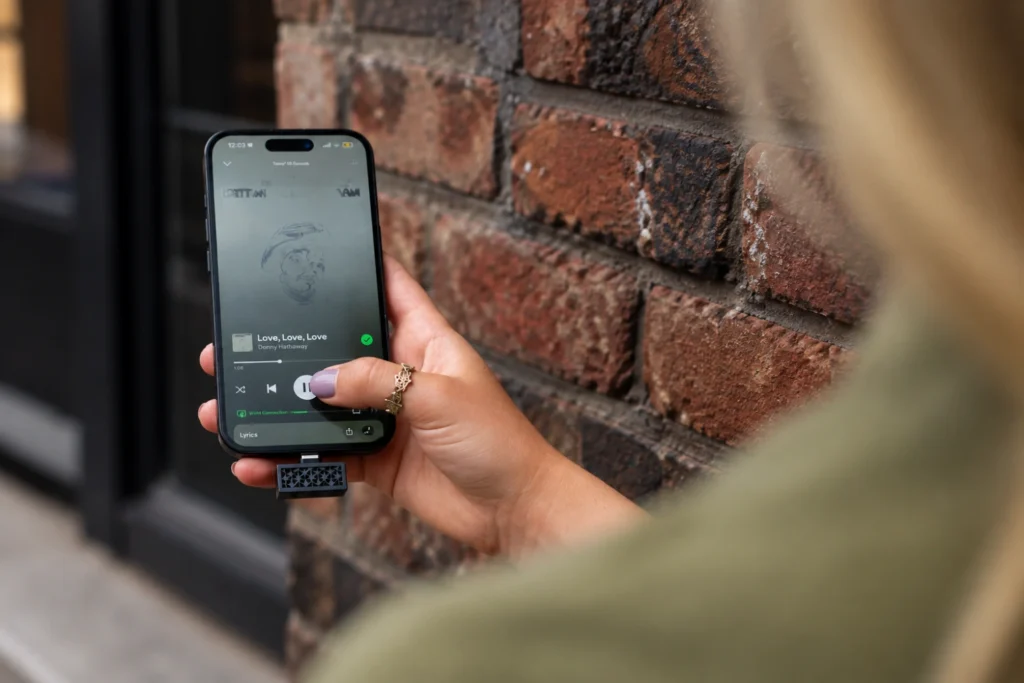
The H200 uses the streaming platform first introduced in Hegel’s H600. Supported playback options include Roon, Qobuz Connect, AirPlay, Google Cast and Spotify Connect, with lossless support stated for the latter. The Hegel Control app adds access to internet radio, podcasts and locally stored music.
Files can be played from USB storage connected to the rear USB port. The amplifier can also retrieve music from a DLNA share on network-attached storage, although listeners who want a more elaborate library interface may prefer compatible third-party playback software.
Its internal digital-to-analog conversion has been improved and is described by Hegel as being based on the DAC architecture developed for the H590. The H200 also accommodates vinyl through a dedicated phono input. Importantly, incoming analog signals are not digitized, preserving a fully analog path for connected analog sources.
Connectivity & Everyday Usability
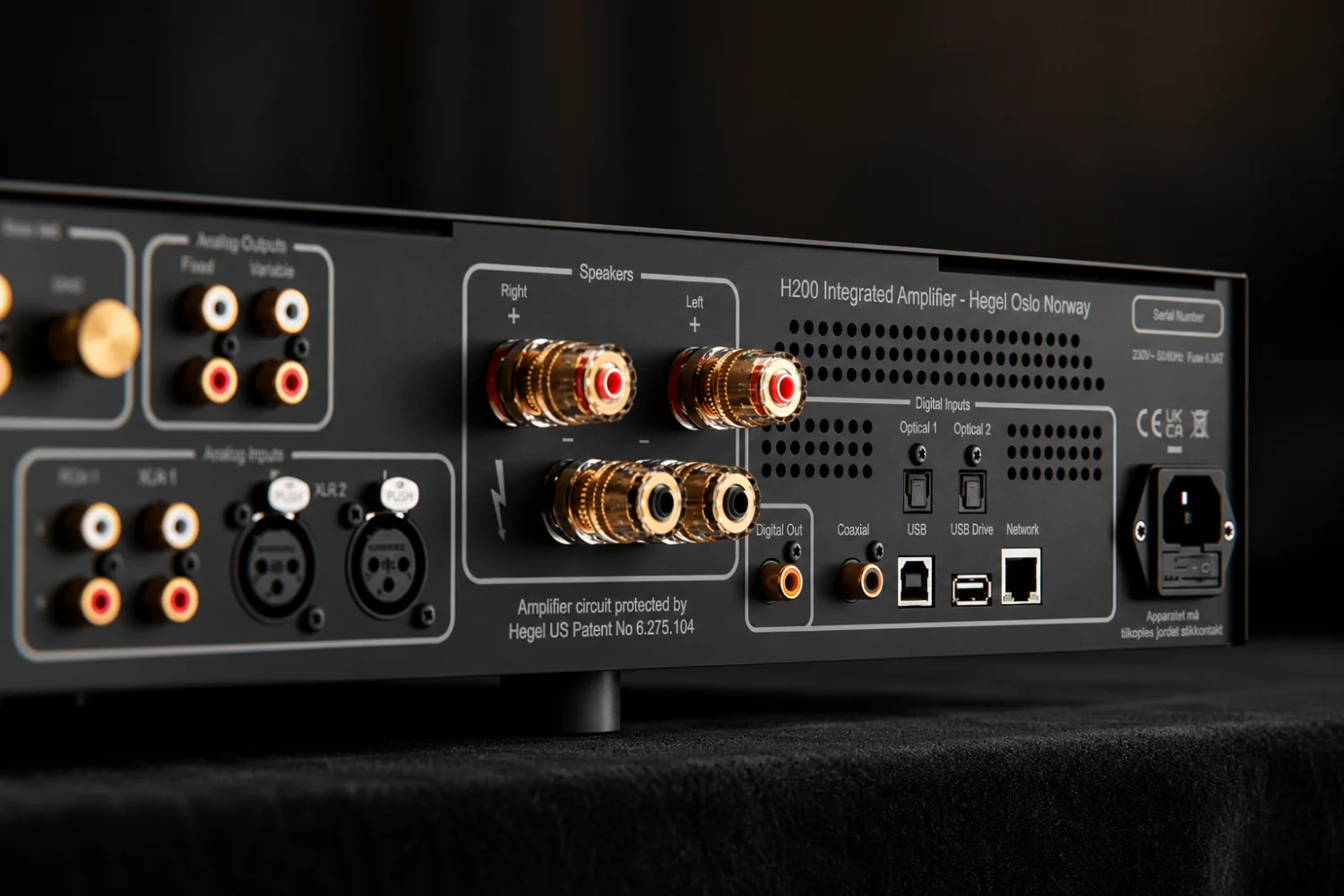
Balanced XLR connections are included alongside the H200’s other analog and digital inputs, making it suitable for systems with a mixture of source types. Setup is intentionally uncomplicated, and deeper configuration options are accessed by holding the play button on the remote control rather than navigating a permanently visible menu structure.
One distinctive feature is DAC-Loop. This routes a digital signal from the H200 to an external DAC and returns the converted analog output to an amplifier input. It gives owners a straightforward way to evaluate or add a separate converter while retaining the H200 as the central source and amplification platform.
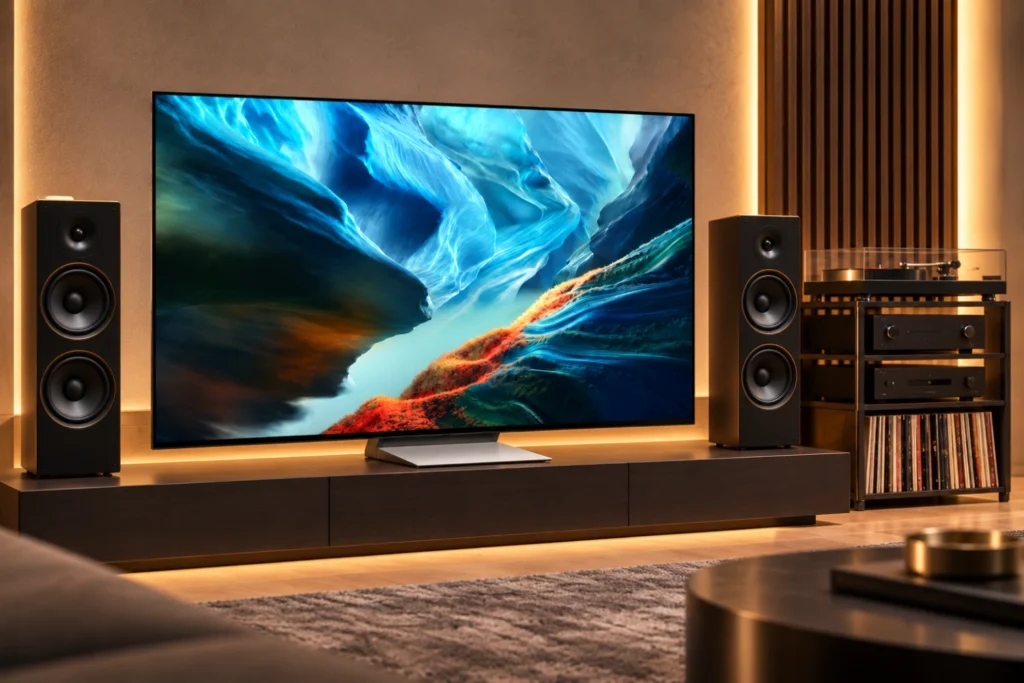
There is no HDMI input. Television audio can instead be connected optically, with the amplifier able to recognize infrared commands from a range of television remotes, including models associated with Samsung, LG and TCL displays. The H200 can respond to television volume commands and switch to the relevant input when the screen is activated, providing much of HDMI’s everyday convenience through an optical connection.
Bluetooth is also omitted. Hegel’s network options provide higher-quality alternatives within a home network, but visitors or household members accustomed to instant Bluetooth pairing may still notice its absence.
Performance Potential
Without independent listening or laboratory verification, the H200’s performance can only be assessed from its documented architecture and specifications. Its 150-watt-per-channel rating, Class AB topology, SoundEngine 2 system and high claimed damping factor indicate a design intended to combine useful output capability with firm electrical control over connected speakers.
The optimized circuit layout and efforts to limit interference are equally relevant to low-level information, particularly when the amplifier is serving as a DAC, streamer or phono-equipped analog integrated amplifier. These design elements establish credible performance potential, but they do not eliminate the importance of appropriate loudspeaker matching.
The H200’s broad source support also reduces the number of separate components and interconnects required. That can simplify system architecture while allowing analog signals to remain analog. Buyers interested in external digital conversion are not locked into the internal DAC because DAC-Loop provides a planned upgrade path.
Pros
- 150 watts per channel into 8 ohms from a Class AB design
- Roon, Qobuz Connect, AirPlay, Google Cast and Spotify Connect support
- Dedicated phono input with analog signals kept in the analog domain
- DAC-Loop simplifies integration of an external converter
- USB storage and DLNA network playback
Cons
- No HDMI input
- No Bluetooth connectivity
- Display cannot show album artwork or VU meters
- Its full value depends on using the integrated digital and streaming features
Verdict
The Hegel H200 is a thoughtfully integrated amplifier for listeners who prioritize amplification, flexible streaming and analog source support over elaborate displays or exhaustive convenience features.
Conclusion
The Hegel H200 presents a coherent alternative to assembling separate amplification, streaming, digital-conversion and phono components. Its core specification is serious: a Class AB output stage rated at 150 watts per channel into 8 ohms, SoundEngine 2 distortion-control technology and a manufacturer-claimed damping factor of 4,000. An optimized circuit layout, balanced analog connectivity and a non-digitized analog signal path reinforce its performance-first engineering approach.
Its network platform is broad enough for many modern systems, covering Roon, Qobuz Connect, AirPlay, Google Cast, Spotify Connect, USB storage and DLNA playback. DAC-Loop is an especially useful provision for owners who may later adopt an external converter. The dedicated phono input also means vinyl users are not treated as an afterthought.
There are clear limitations. The display is informational rather than graphical, while HDMI and Bluetooth are absent. Television integration through optical input and infrared control partly addresses the lack of HDMI, but it is not an identical substitute. Value will depend heavily on whether the owner needs the digital platform; analog-only buyers should consider the related A200 instead. For someone seeking a restrained, powerful centerpiece that can manage both network and traditional sources, the H200 appears carefully targeted and easy to recommend for consideration, subject to suitable speaker matching and final system requirements.




 VS
VS VS
VS VS
VS VS
VS VS
VS VS
VS VS
VS VS
VS

Comments 0
Share your experience, questions and perspective with other hi-fi enthusiasts.