

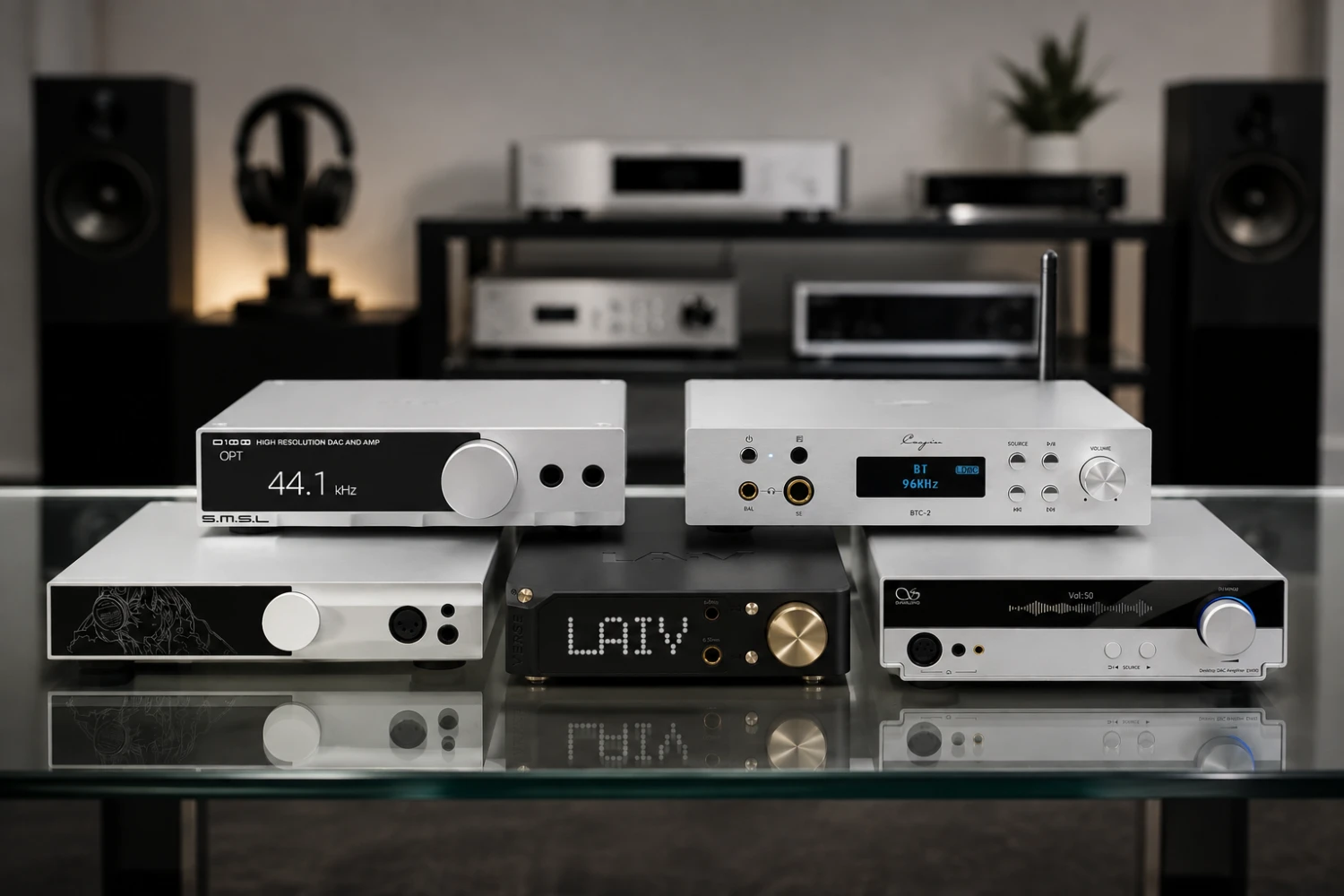
Wired headphones are enjoying something of a renaissance. While wireless models dominate everyday listening, serious headphone enthusiasts still turn to a dedicated amplifier when sound quality takes priority over convenience.
The modern desktop headphone amplifier has evolved considerably in the process.
Rather than requiring separate DACs, preamplifiers and headphone amplifiers, many of today's best designs combine all three functions in a single chassis. USB audio, balanced headphone outputs, Bluetooth, preamp functionality and increasingly sophisticated digital processing have become common even at relatively accessible prices.
There is also more variety than ever. Conventional delta-sigma DACs remain popular, but R-2R ladder converters are becoming increasingly common. Powerful balanced amplifiers capable of driving demanding planar-magnetic headphones are appearing at lower prices, while some manufacturers are experimenting with touchscreens, DSP and entirely new user interfaces.
The seven models below represent some of the more interesting desktop DAC/headphone amplifier combinations available or emerging in 2026, ranging from affordable compact units to substantial Class A designs.
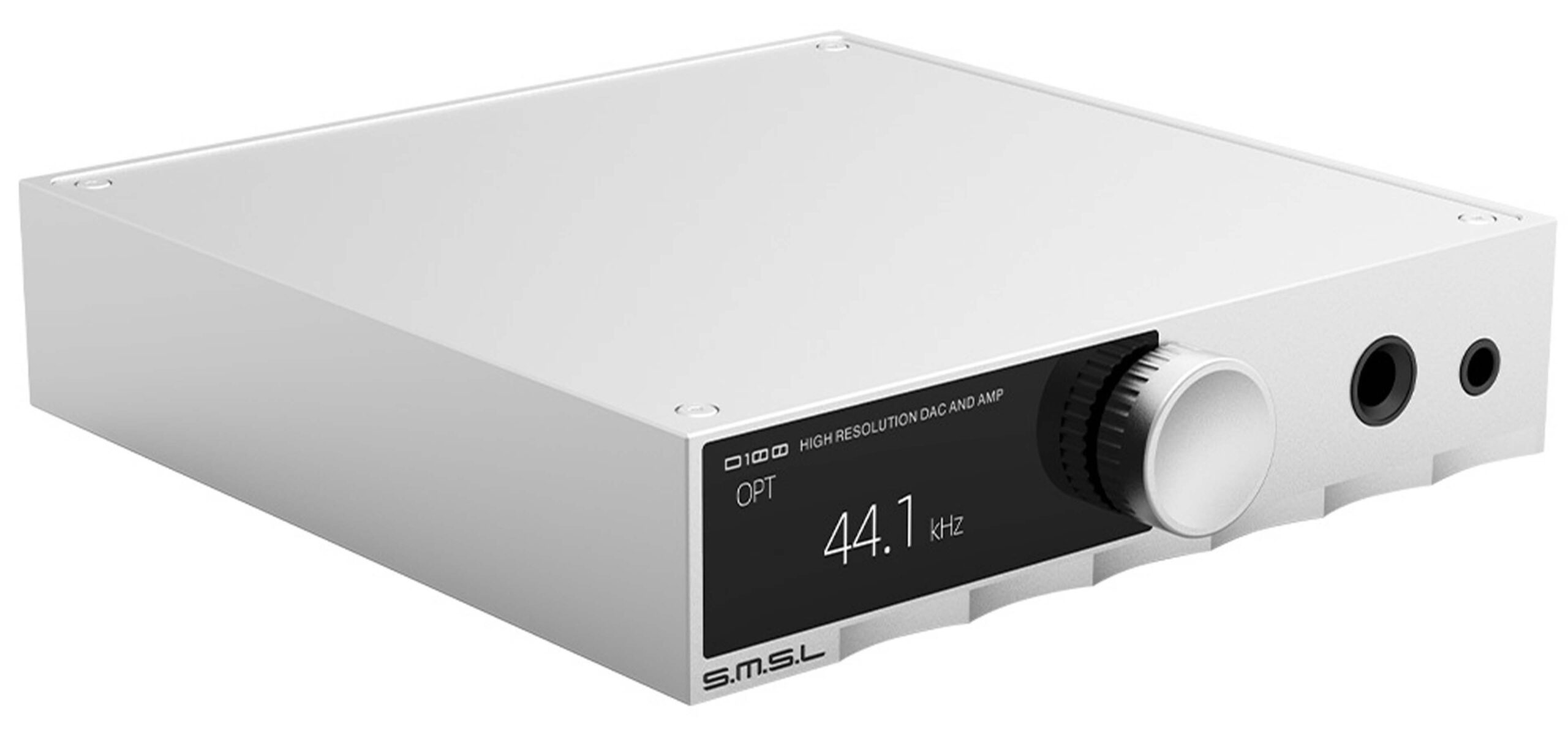
7. SMSL D100
Price: Around $139
- DAC: ESS ES9081
- USB interface: XMOS XU-316
- PCM: Up to 32-bit/768kHz via USB
- DSD: Up to DSD512
- Headphone outputs: 6.35mm and balanced 4.4mm
- Balanced output power: Up to 400mW per channel into 32 ohms
- Digital inputs: USB-C, optical and coaxial
- Display: 1.66-inch
Pros: Excellent value, modern digital architecture, balanced output
Cons: Limited power for demanding full-size headphones
Verdict: An inexpensive desktop DAC/amp best suited to efficient headphones and IEMs
The SMSL D100 demonstrates just how much digital audio hardware can now be packed into an affordable desktop component.
At its heart is the ESS ES9081, an eight-channel DAC that SMSL operates in a parallel configuration. USB duties are handled by the XMOS XU-316 interface, allowing the D100 to accept PCM streams up to 32-bit/768kHz and native DSD up to DSD512.
Those are impressive numbers at this price, although supported sampling rates should never be confused with sound quality on their own.
More important is the D100's flexibility.
USB-C is joined by coaxial and optical S/PDIF inputs, making the unit suitable not only for a computer but also for CD transports, televisions and streamers.
Two headphone connections are positioned on the front panel: conventional 6.35mm and balanced 4.4mm Pentaconn.
The balanced amplifier can deliver up to approximately 400mW per channel into 32 ohms. That is perfectly respectable for efficient dynamic headphones and most in-ear monitors, but enthusiasts using insensitive planar-magnetic headphones should look toward the considerably more powerful models further down this list.
The compact chassis and 1.66-inch display keep the D100 relatively simple. There are no enormous touchscreens or elaborate industrial-design tricks here.
And that is part of its appeal.
For someone assembling a first desktop headphone system, the SMSL D100 provides the essential ingredients without demanding a serious investment.
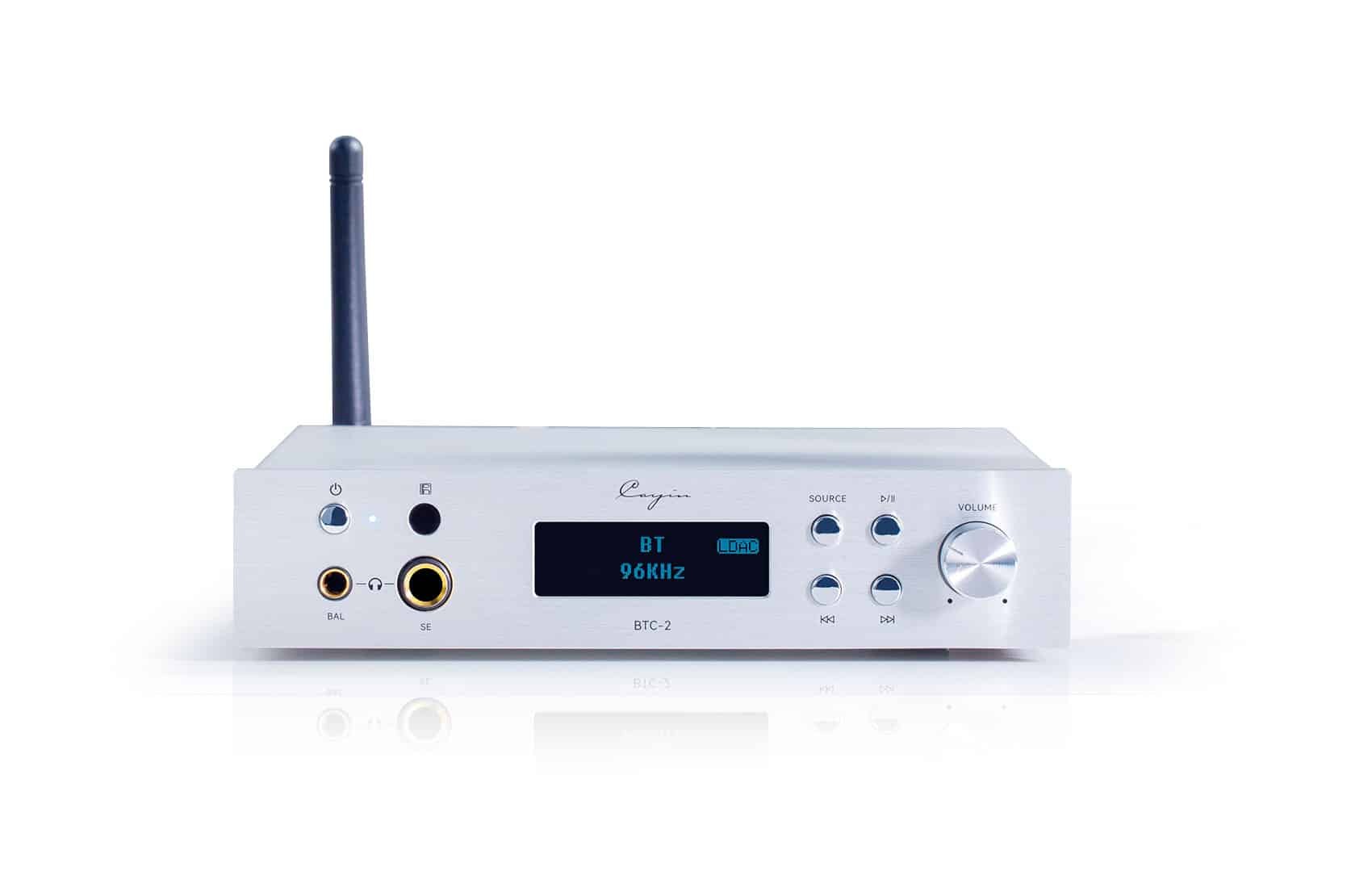
6. Cayin BTC-2
Price: Around $200
- DAC: ESS ES9018K2M
- Headphone outputs: 6.35mm and balanced 4.4mm Pentaconn
- Balanced power: Up to 280mW per channel
- Bluetooth: AAC, aptX HD and LDAC
- S/PDIF support: Up to 24-bit/192kHz PCM
- Functions: DAC, headphone amplifier, Bluetooth receiver and preamplifier
- Volume control: ALPS potentiometer
- Remote control: Included
Pros: Excellent connectivity, Bluetooth support, useful preamp functionality
Cons: Modest headphone output power
Verdict: A versatile control center for an affordable desktop audio system
Cayin takes a slightly different approach with the BTC-2.
Rather than designing it purely as a headphone amplifier, Cayin has created a compact audio hub capable of acting as a DAC, Bluetooth receiver, headphone amplifier and preamplifier.
That makes it particularly useful for desktop systems where headphones and powered speakers share the same source.
Digital-to-analog conversion is handled by the established ESS ES9018K2M, while the analog architecture is fully balanced. Headphones can be connected through either a conventional 6.35mm jack or the increasingly ubiquitous 4.4mm Pentaconn connection.
Maximum balanced output is approximately 280mW per channel, which means the BTC-2 is more about flexibility than brute-force amplification.
Efficient headphones should present few problems, but owners of difficult planar designs will want something more muscular.
Bluetooth is one of the BTC-2's strongest features.
Support for AAC, aptX HD and LDAC makes wireless playback genuinely useful rather than an afterthought, while wired S/PDIF sources can deliver PCM streams up to 24-bit/192kHz.
There is even a digital S/PDIF output, allowing the BTC-2 to operate within a more complex digital system.
Volume is controlled by an ALPS potentiometer, and Cayin includes an infrared remote.
For listeners who alternate between headphones, active speakers and wireless playback, that combination of features may ultimately matter more than headline output figures.
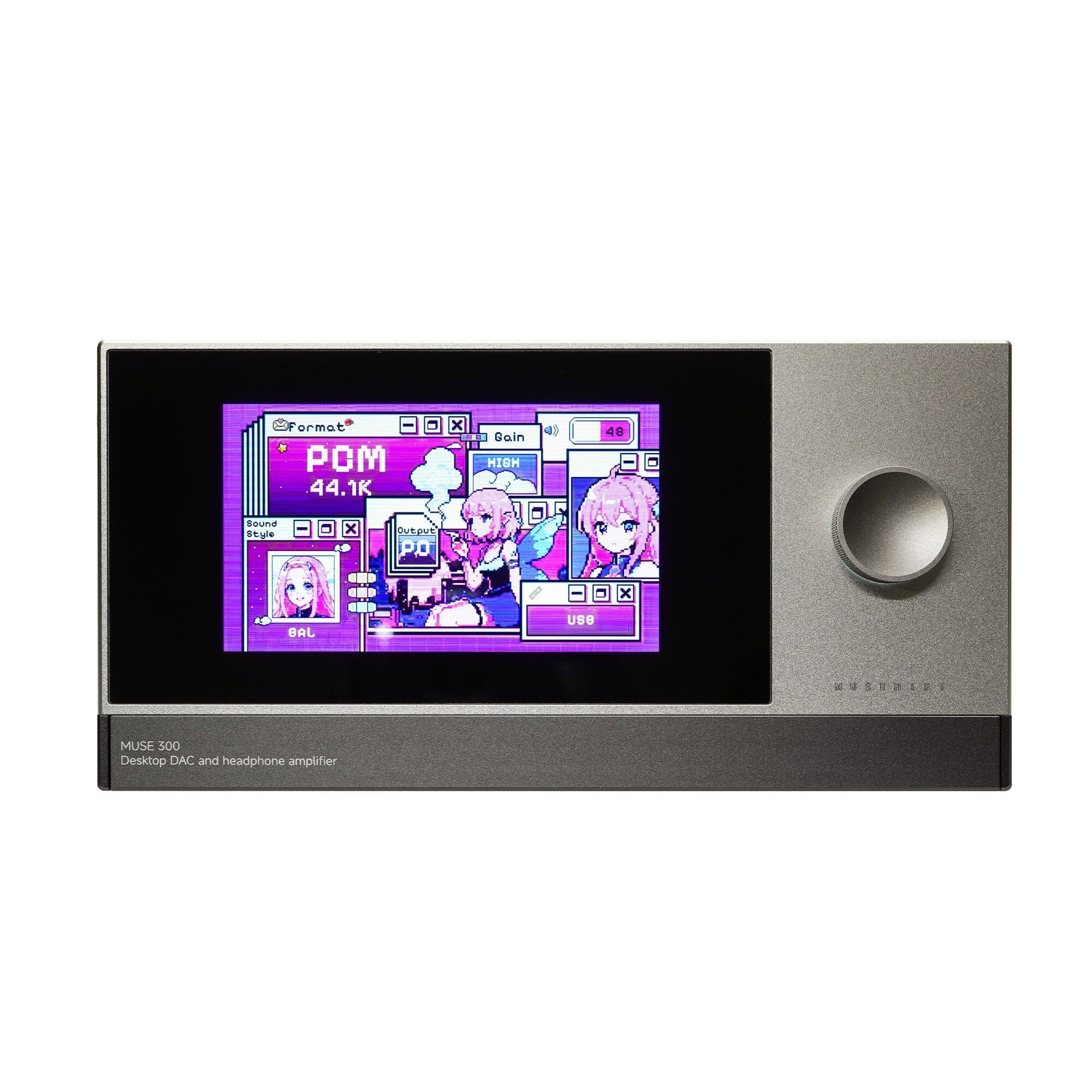
5. Muse HiFi Muse 300
Price: Around $379
- DAC: ESS ES9039 series
- Amplification: TPA6120-based architecture
- Display: 5-inch high-resolution screen
- Inputs: USB, optical, coaxial and Bluetooth
- Headphone outputs: 6.35mm and balanced 4.4mm
- Interface: Dedicated MCU-based operating system
Pros: Innovative interface, large display, ambitious DAC architecture
Cons: Availability remains more limited than established alternatives
Verdict: One of the more unusual attempts to rethink the desktop DAC/amp
Most DAC/headphone amplifiers are variations on the same basic formula: metal box, small display, large volume knob.
The Muse HiFi Muse 300 tries something different.
Its defining feature is a dedicated operating environment developed specifically for the hardware rather than simply placing a conventional Android interface on top of an audio component.
A large 5-inch display becomes central to the experience.
It provides access to settings and playback information while allowing users to change the visual character of the device through several interface themes, ranging from restrained minimalist graphics to considerably more colorful cyberpunk and ACG-inspired designs.
Whether that improves the listening experience is subjective, but it certainly gives the Muse 300 an identity in a market filled with visually similar components.
Underneath the interface is serious audio hardware.
Digital conversion is built around ESS's high-end ES9039 family, while the headphone amplifier uses TPA6120-based circuitry. USB, optical, coaxial and Bluetooth connectivity are available, alongside 6.35mm and balanced 4.4mm headphone outputs.
The Muse 300 therefore isn't interesting simply because it has a large screen.
It represents an attempt to rethink how users interact with a desktop DAC/amp. Whether this approach becomes influential remains to be seen, but it makes the Muse 300 one of the more distinctive products in this group.
4. Moondrop x SMSL DHA15
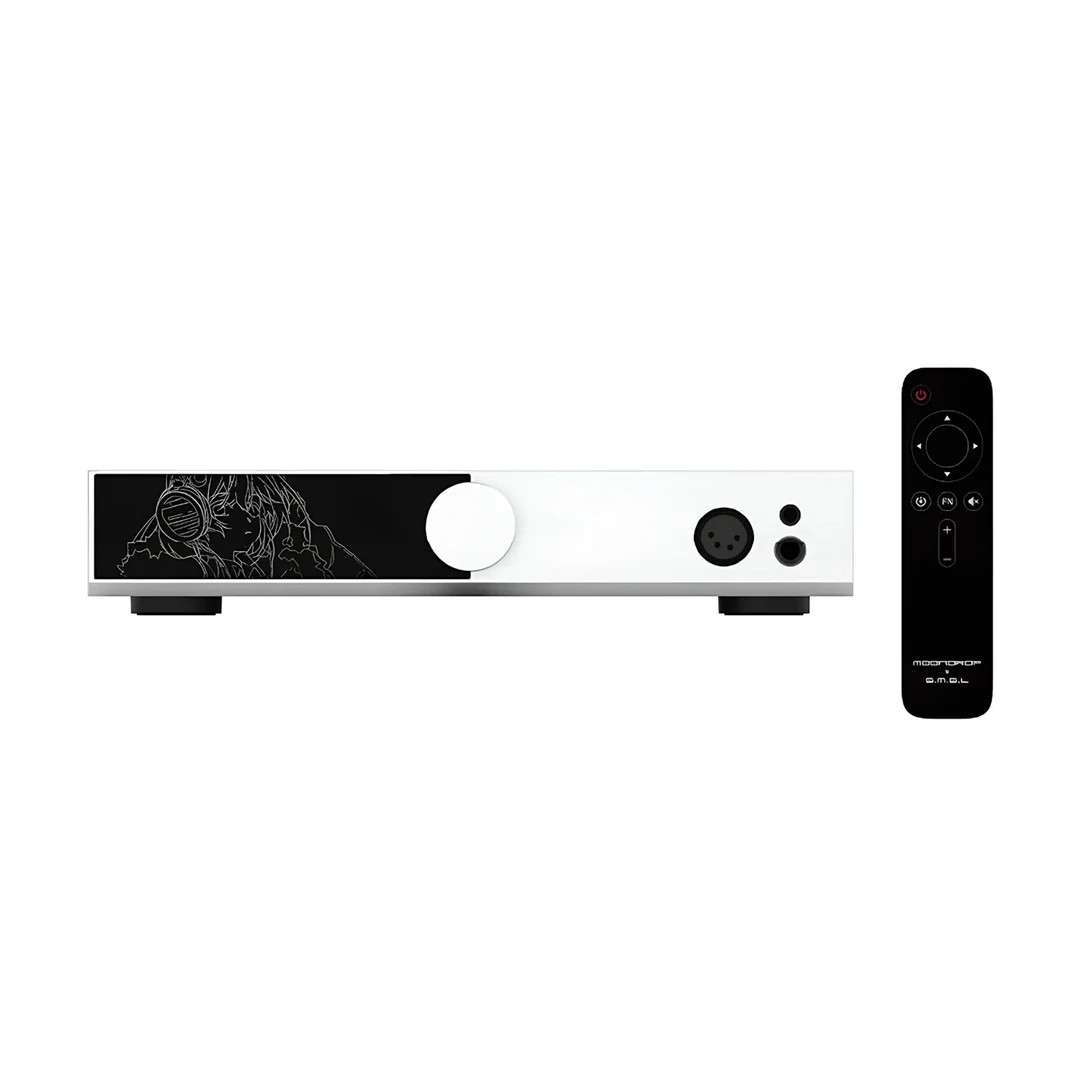
Price: Around $650
- DAC: Dual Cirrus Logic CS43198
- Amplifier: Fully balanced discrete Class A
- Maximum claimed output: Up to 15W per channel
- PCM: Up to 32-bit/384kHz
- DSD: Native DSD256
- Headphone outputs: 6.35mm, 4.4mm Pentaconn and 4-pin XLR
- Volume: 99-step control
- DSP: Moondrop Online Interactive DSP
- Analog inputs: RCA and XLR
Pros: Huge output capability, DSP functionality, excellent connectivity
Cons: Considerably more amplifier than many headphones actually require
Verdict: A powerhouse DAC/amp with unusual tuning flexibility
The DHA15 is what happens when Moondrop's headphone expertise meets SMSL's considerable experience building desktop electronics.
The specification that immediately grabs attention is power.
Its fully balanced discrete Class A amplifier architecture is claimed to deliver output reaching 15 watts per channel under the appropriate load conditions. That puts the DHA15 into an entirely different category from small desktop DAC/amps intended primarily for efficient dynamic headphones.
It should have ample reserves for demanding planar-magnetic designs.
Digital conversion comes from a pair of Cirrus Logic CS43198 DACs, with support for PCM up to 32-bit/384kHz and native DSD256.
Headphone connectivity is similarly comprehensive.
There is a 6.35mm output for conventional headphones, a balanced 4.4mm Pentaconn socket and a full-size four-pin XLR connection.
But the DHA15's most interesting feature may actually be its DSP implementation.
Integration with Moondrop's Online Interactive DSP platform provides access to parametric equalization, allowing frequency, gain and Q values to be adjusted individually. Users can therefore build correction profiles for specific headphones rather than relying on broad bass and treble controls.
For enthusiasts who already use EQ to compensate for headphone frequency-response characteristics, this is potentially extremely useful.
The DHA15 combines enormous amplifier reserves with the sort of digital tuning flexibility increasingly expected from modern headphone systems.
3. LAiV Crescendo VERSE
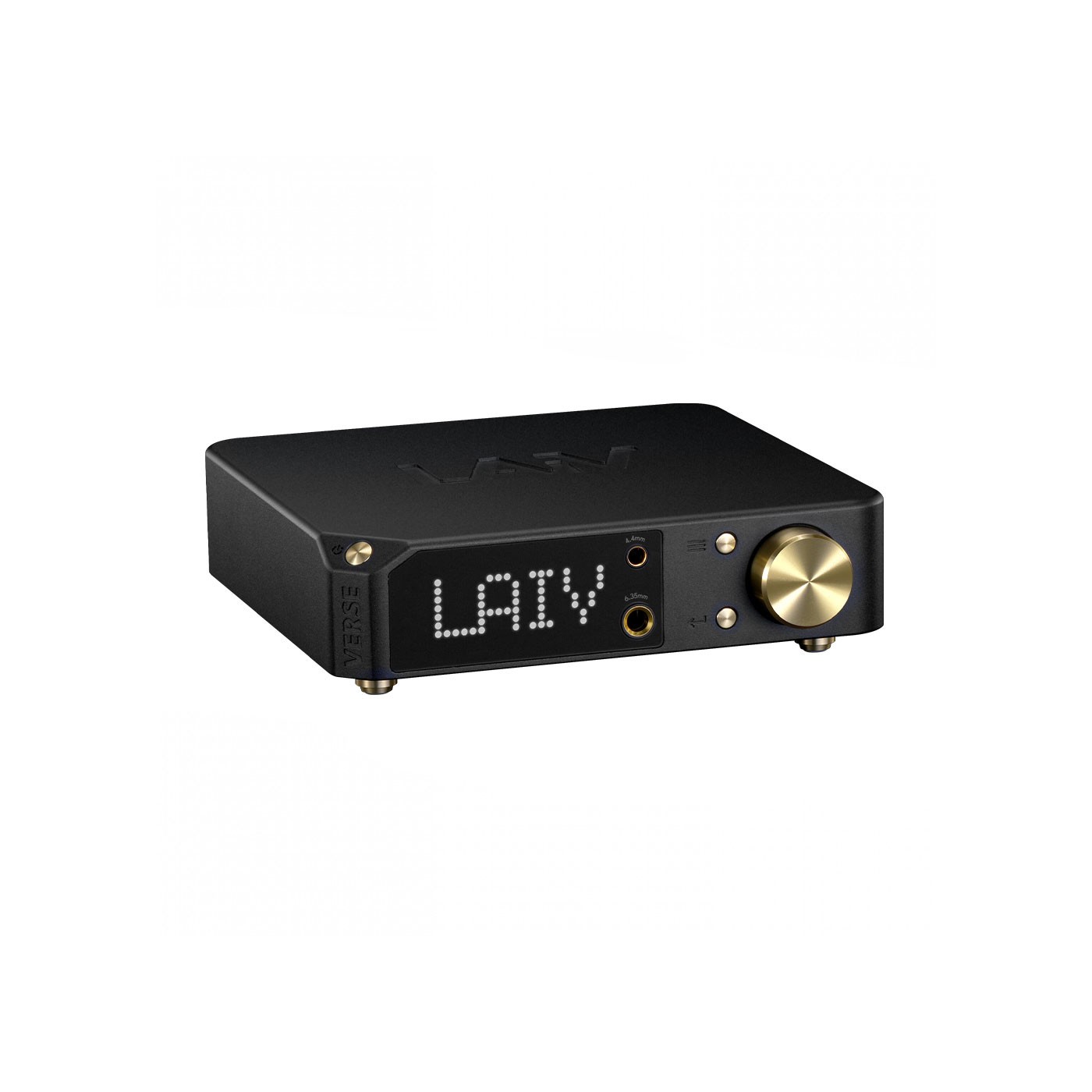
Price: Around $849
- DAC architecture: Proprietary balanced R-2R ladder
- PCM: Up to 768kHz
- DSD: Native 1-bit processing
- Upsampling: PCM up to 16× and DSD up to DSD512
- Inputs: USB, optical, coaxial and configurable I²S
- Headphone outputs: 6.35mm and balanced 4.4mm
- Balanced output power: Up to 1.1W per channel
- Preamplifier: Discrete analog stage
Pros: R-2R conversion, discrete analog architecture, extensive digital connectivity
Cons: Industrial design will not appeal to everyone
Verdict: A fascinating alternative to conventional ESS and AKM-based DAC/amps
LAiV's Crescendo VERSE moves the list into a very different area of digital conversion.
Instead of relying on an off-the-shelf delta-sigma DAC chip, LAiV employs its own balanced R-2R resistor ladder.
R-2R conversion has enjoyed a significant revival in high-end digital audio. Rather than using conventional oversampling delta-sigma conversion, precisely matched resistors form the conversion network itself.
In the VERSE, LAiV specifies resistor matching to 0.05%.
The architecture supports PCM up to 768kHz and native 1-bit DSD processing, while internal sample-rate conversion allows PCM upsampling as high as 16× and DSD processing up to DSD512.
There is considerable flexibility on the input side as well.
USB, optical and coaxial connections are joined by configurable I²S, making the VERSE suitable for enthusiasts using dedicated digital transports.
The analog side receives similar attention.
Both the preamplifier and headphone amplifier employ discrete circuitry, with analog-domain volume control and multiple gain settings.
Balanced headphone output reaches approximately 1.1 watts per channel. That doesn't compete with the extraordinary numbers claimed by the DHA15, but raw wattage isn't the objective here.
The VERSE is aimed at listeners interested in discrete circuit design and R-2R conversion without moving into the much higher prices traditionally associated with ladder DACs.
That makes it one of the more intriguing entries in this ranking.
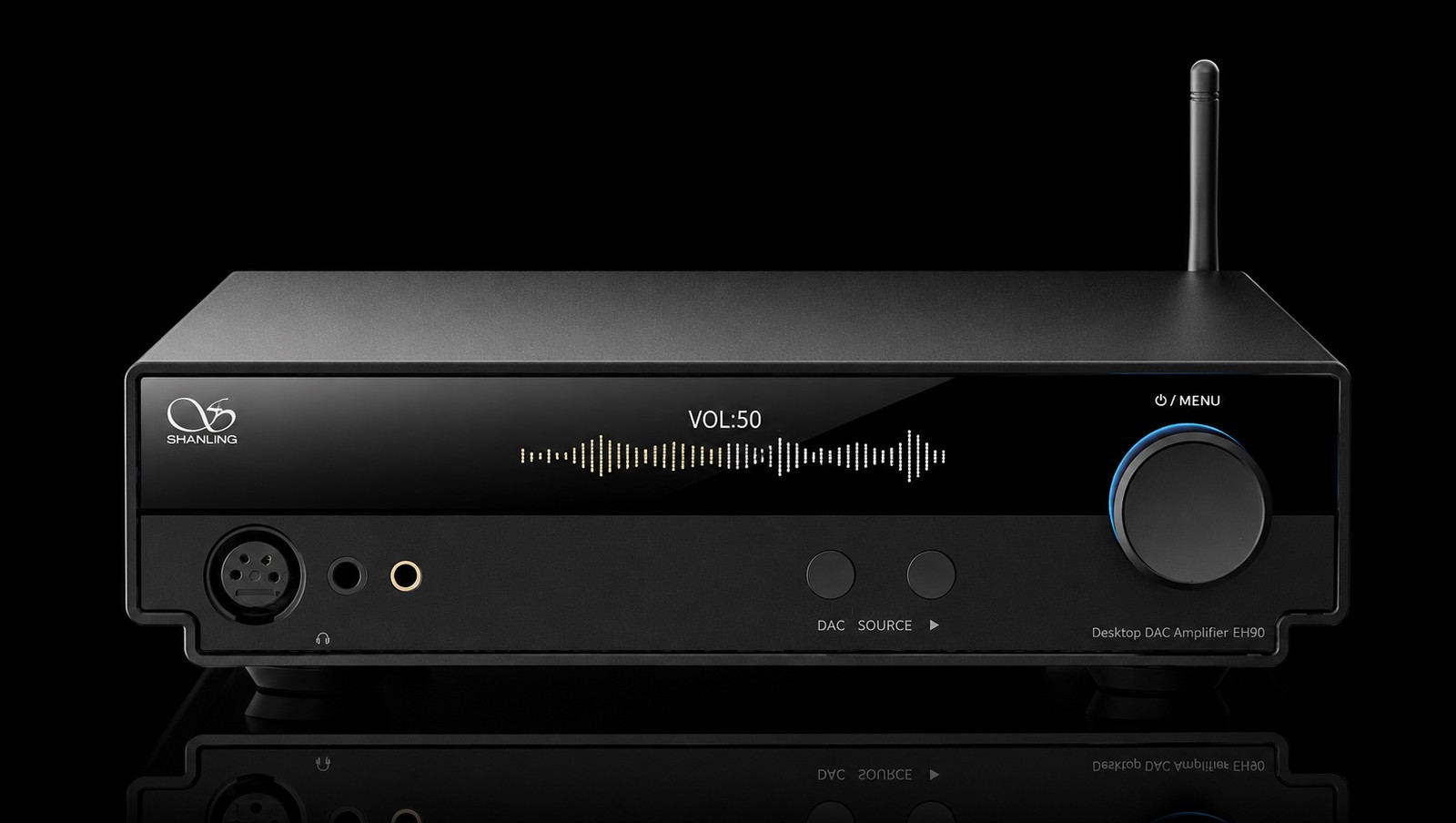
2. Shanling EH90
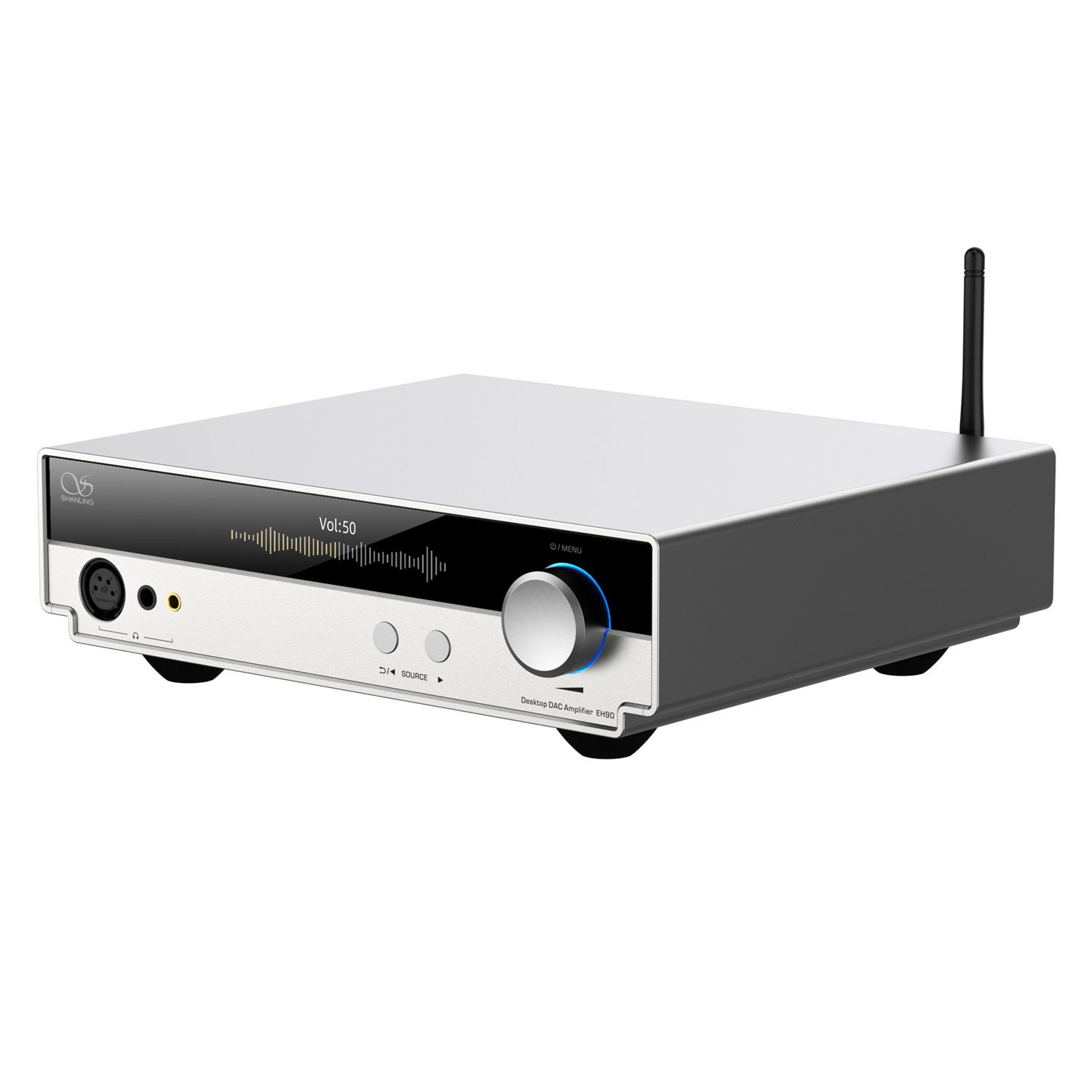
Price: Around $1,199
- DAC: Shanling PRO R-2R architecture
- Balanced power: Up to 5.2W per channel into 32 ohms
- Single-ended power: Up to 1.32W per channel
- Headphone outputs: 4-pin XLR, 4.4mm Pentaconn and 6.35mm
- USB/I²S: PCM up to 32-bit/768kHz and DSD512
- Digital inputs: USB, I²S, AES/EBU, coaxial and optical
- Bluetooth: Bluetooth 5.4
- Codecs: LDAC, aptX Lossless, aptX Adaptive, aptX HD, AAC and SBC
- Display: 4.8-inch color screen
Pros: Powerful amplification, R-2R DAC, superb connectivity
Cons: Large and relatively expensive
Verdict: One of the most complete high-end desktop DAC/amps in its class
The Shanling EH90 combines two trends that have become increasingly important in high-end headphone equipment: R-2R conversion and seriously powerful balanced amplification.
Shanling uses its proprietary PRO R-2R architecture, technology derived from work previously undertaken for the company's high-end disc players.
Power-supply design receives particular attention.
The analog and digital sections use separate supplies, with a 35-watt linear supply dedicated to the analog circuitry and another 10-watt supply serving the digital section. Shanling specifies more than 12,000µF of filtering capacitance.
Then there is the headphone amplifier.
Through its balanced outputs, the EH90 can deliver a claimed 5.2 watts per channel into 32 ohms. Even the single-ended 6.35mm connection reaches approximately 1.32 watts per channel in high-gain mode.
That gives the EH90 enough headroom for a broad selection of demanding full-size headphones.
Connectivity is equally ambitious.
USB and I²S accept PCM streams up to 32-bit/768kHz and DSD512, while AES/EBU, coaxial and optical inputs support more conventional digital sources. External clock synchronization is also available for more elaborate digital systems.
Bluetooth 5.4 brings LDAC, aptX Lossless, aptX Adaptive and aptX HD support, making wireless playback considerably less compromised than it would have been on high-end equipment only a few years ago.
A 4.8-inch color display and large physical control complete what is essentially a desktop digital control center.
For enthusiasts who want one component capable of handling almost every source and almost every headphone, the EH90 makes a very strong argument.
1. Sendy Audio KYLIN
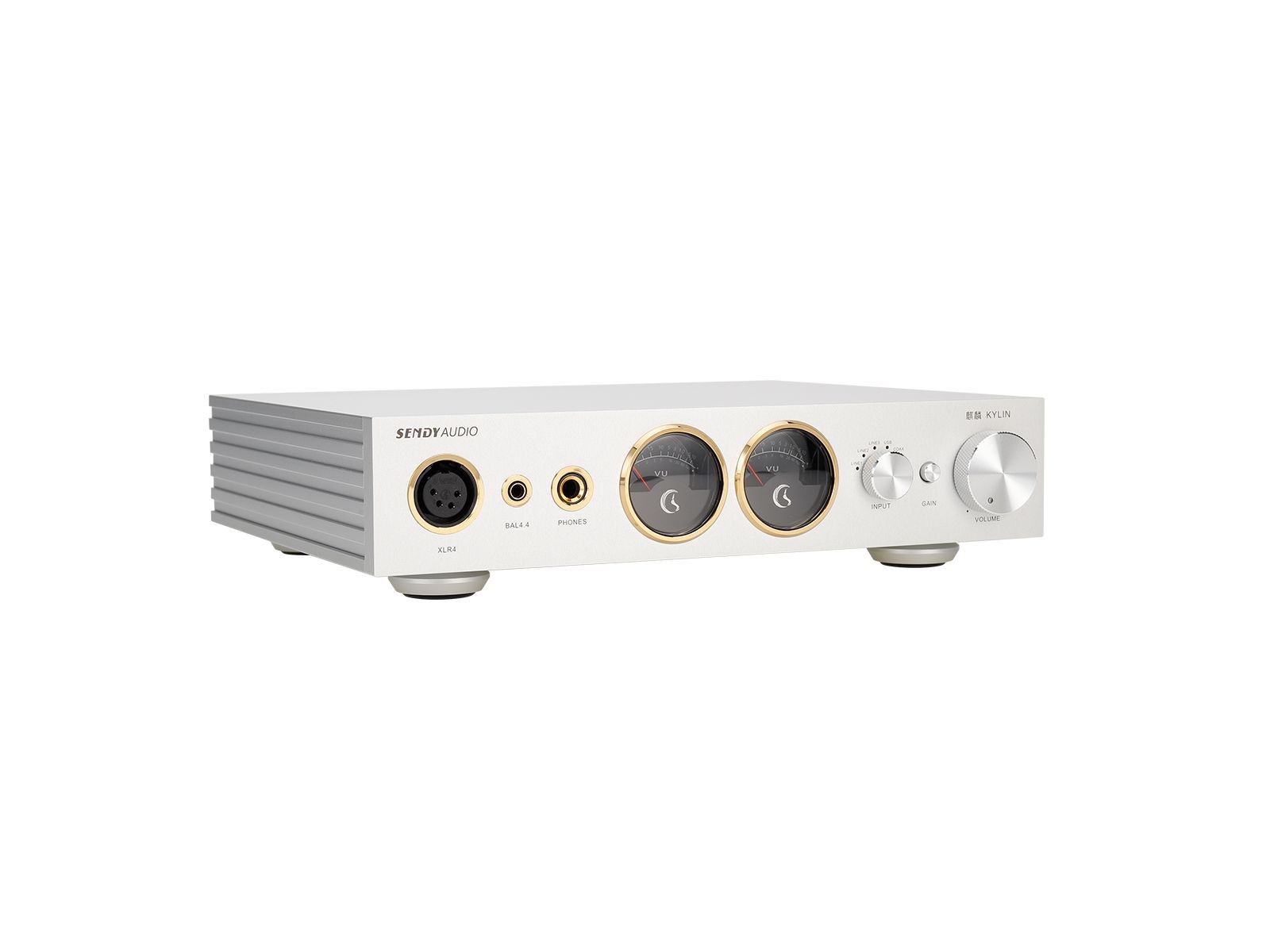
Price: Around $1,499
- DAC: ESS ES9038Q2M
- USB interface: XMOS
- Amplifier: Pure Class A with matched transistor output stages
- DSD: Up to DSD512
- Headphone outputs: 4-pin XLR, balanced 4.4mm and 6.35mm
- Volume control: Japanese ALPS potentiometer
- Construction: Machined aluminum chassis
Pros: Serious Class A amplification, premium construction, distinctive design
Cons: Expensive
Verdict: A luxurious desktop amplifier built around traditional high-end analog engineering
The Sendy Audio KYLIN takes first place for a very different reason than many of the products below it.
There is relatively little emphasis on screens, apps or elaborate DSP.
Instead, the KYLIN follows a more traditional high-end philosophy: substantial construction, carefully selected components and a pure Class A analog output stage.
The chassis is machined from aluminum, providing both mechanical rigidity and the heat dissipation required by Class A circuitry.
Inside, Sendy uses matched pairs of Hitachi transistors for the output stage alongside components from WIMA and Nichicon. Burr-Brown OPA604 operational amplifiers are also incorporated into the circuit.
Digital conversion is handled by the ESS ES9038Q2M, while an XMOS USB interface manages computer audio and high-resolution formats including DSD512.
Three headphone connections cover almost every conventional termination.
There is a four-pin XLR output for balanced full-size headphones, a 4.4mm Pentaconn connection and a standard 6.35mm jack.
Volume control comes from a Japanese ALPS potentiometer rather than a touchscreen or digital attenuation system.
The KYLIN therefore feels deliberately old-school compared with something like the Muse 300.
And that is precisely the point.
It is designed for listeners who want their desktop headphone amplifier to behave like a miniature piece of traditional high-end amplification rather than another connected digital appliance.
Its $1,499 price places it firmly in premium territory, but its combination of substantial construction and Class A amplification gives the KYLIN an appeal that specification-sheet comparisons alone cannot capture.
Which DAC/Headphone Amplifier Should You Buy?
There is a considerable difference between what these seven products are trying to achieve.
For an inexpensive desktop system, the SMSL D100 provides an impressive collection of modern digital features for very little money. The Cayin BTC-2 sacrifices some headphone-driving power but gains Bluetooth and useful preamplifier functionality.
The Muse HiFi Muse 300 is the experimental choice, particularly for listeners interested in a more visual, software-driven interface.
Things become considerably more serious with the Moondrop x SMSL DHA15. Its enormous amplifier reserves make it particularly attractive for difficult planar-magnetic headphones, while parametric EQ adds genuine practical value.
The LAiV Crescendo VERSE is arguably the enthusiast's choice of the group. Its R-2R architecture and discrete analog circuitry offer an interesting alternative to the increasingly standardized DAC architectures found in much of the market.
Shanling's EH90 combines R-2R conversion with considerably more power and connectivity, making it perhaps the strongest all-rounder here.
The Sendy Audio KYLIN sits at the top for listeners who value traditional Class A engineering, premium construction and a more purist approach to headphone amplification.
Don't Choose a Headphone Amp by Wattage Alone
The biggest number isn't automatically the best amplifier.
A headphone amplifier needs enough voltage and current for the headphones being used, but once that requirement is satisfied, noise performance, gain structure, channel balance, output impedance and volume-control quality can matter far more than another few watts of theoretical output.
This is particularly important with sensitive IEMs. An amplifier designed to produce enormous power for inefficient planar headphones may be less appropriate than a quieter, lower-powered design.
The opposite is equally true. Some demanding full-size headphones can expose the limitations of small USB-powered amplifiers surprisingly quickly.
The best DAC/amp is therefore not necessarily the most powerful or expensive model.
It is the one that best matches your headphones, sources and the way you actually listen.

Join the discussion
Share your thoughts, listening impressions or product experience.