
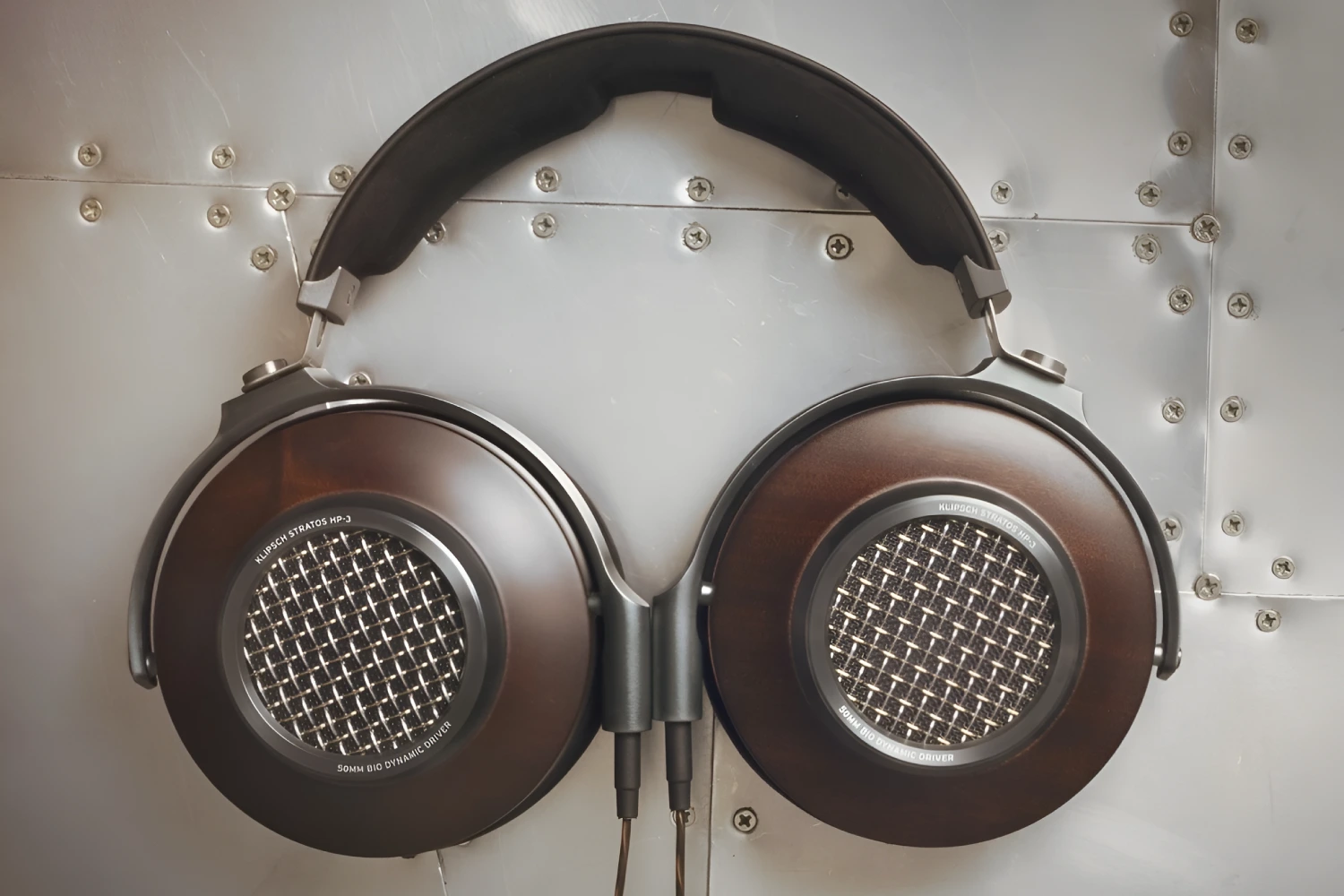
Klipsch is returning to premium over-ear headphones with two wired models that pair wooden ear cups with an unusual two-way driver arrangement. The Stratos HP-2 is a closed-back design, while the HP-3 uses semi-open cups; each combines a dedicated tweeter with a larger driver for bass and midrange. The announcement also marks the company’s 80th anniversary and follows an earlier public showing under the Atlas name, when specifications had yet to be finalized. With detachable balanced and unbalanced cables included, both models are aimed at listeners who want a wired connection, whether the source is a phone or a dedicated headphone amplifier.
Two drivers, two approaches to the ear cup
The defining engineering feature of both headphones is a two-way coaxial driver arrangement. Rather than relying on a single driver to cover the entire range, each model pairs a bio-cellulose bass and midrange driver with a 10 mm dynamic tweeter. The HP-2 uses a 40 mm main driver; the HP-3’s measures 50 mm.
Those shared principles sit inside different cup designs. The HP-2 is closed-back and is positioned around deep bass and isolation, with Klipsch also identifying studio monitoring as a use. The HP-3 is semi-open, a distinction that matters when choosing where to listen: its construction differs from the more enclosed HP-2, rather than simply offering a larger driver in the same housing.
Klipsch describes the HP-3’s sound as warm and powerful in the bass, with clear, bright treble. That is a manufacturer description, not a listening-test finding. Its earlier presentation under the Atlas name emphasized spacious, speaker-like reproduction for critical stereo listening; the change in description does not establish how the final headphone sounds.
What the published figures tell buyers
Klipsch specifies the HP-2 at 15 Hz to 18 kHz and the HP-3 at 16 Hz to 22 kHz, both within a ±5 dB tolerance. The stated ranges differ, but those figures alone cannot describe either model’s tonal balance or establish which will suit a particular listener.
Impedance is listed at 32 ohms for the HP-2 and 24 ohms for the HP-3, with sensitivities of 100 dB and 102 dB respectively. Both have a stated power rating of 30 mW. Klipsch says they are designed for sources ranging from smartphones to high-end headphone amplifiers, although the published figures do not guarantee the same result with every device.
The company also lists total harmonic distortion below 0.1% at 1 kHz for the HP-2 and below 0.15% for the HP-3. Its full-system figures are below 1.5% and 1%, respectively. As with the frequency ranges, these are published specifications rather than independent measurements.
Sapele, copper and a headband shaped for comfort
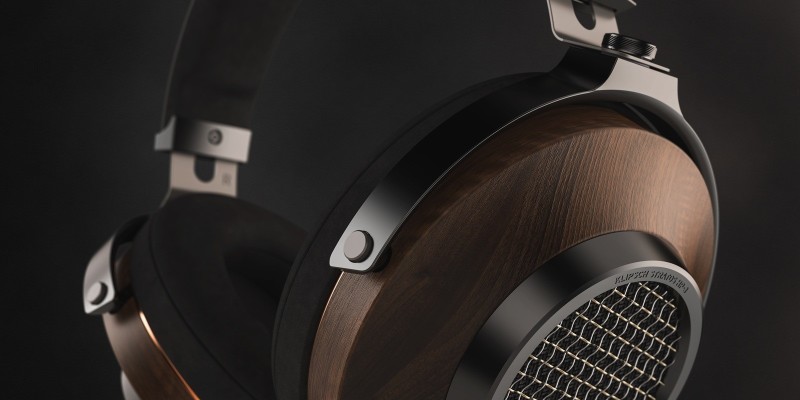
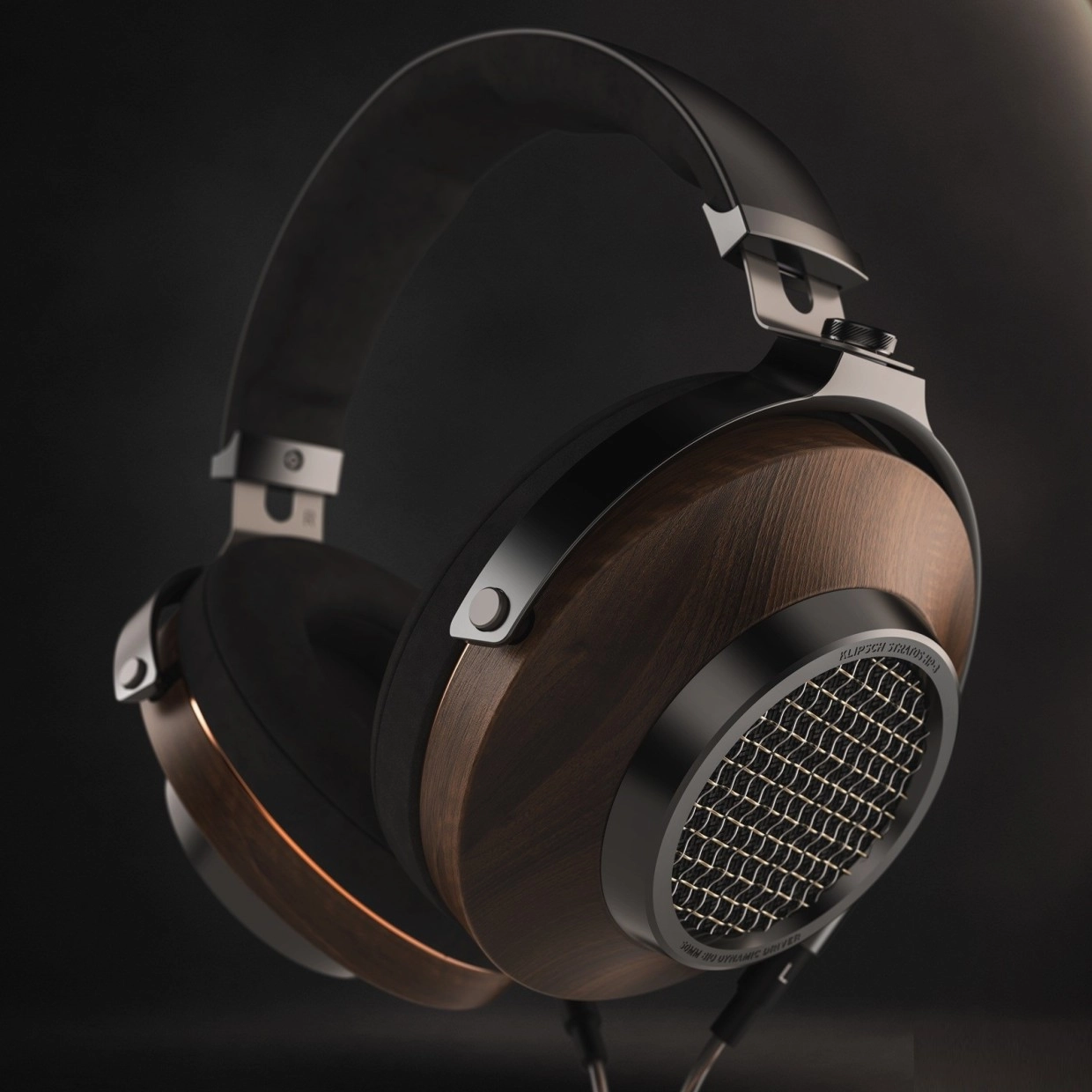
The visual connection to Klipsch loudspeakers is explicit. Both headphones use stained sapele wood ear cups, copper rings, milled aluminum brackets and contact points, and Klipsch Heritage Twitchell speaker cloth. Protein-leather headbands complete the finish.
Underneath that presentation, the headband has open-cell foam padding and a recess intended to reduce pressure points and hot spots at the crown. The ear cushions are covered in microsuede and held on magnetically, allowing them to be removed and refitted without a fixed attachment.
Weight is one practical difference to consider alongside cup type: the HP-2 is listed at 380 grams, while the HP-3 weighs 458 grams. The design features are intended to help with longer sessions, but comfort will depend on the wearer and cannot be established from those details alone.
A cable for each type of headphone output
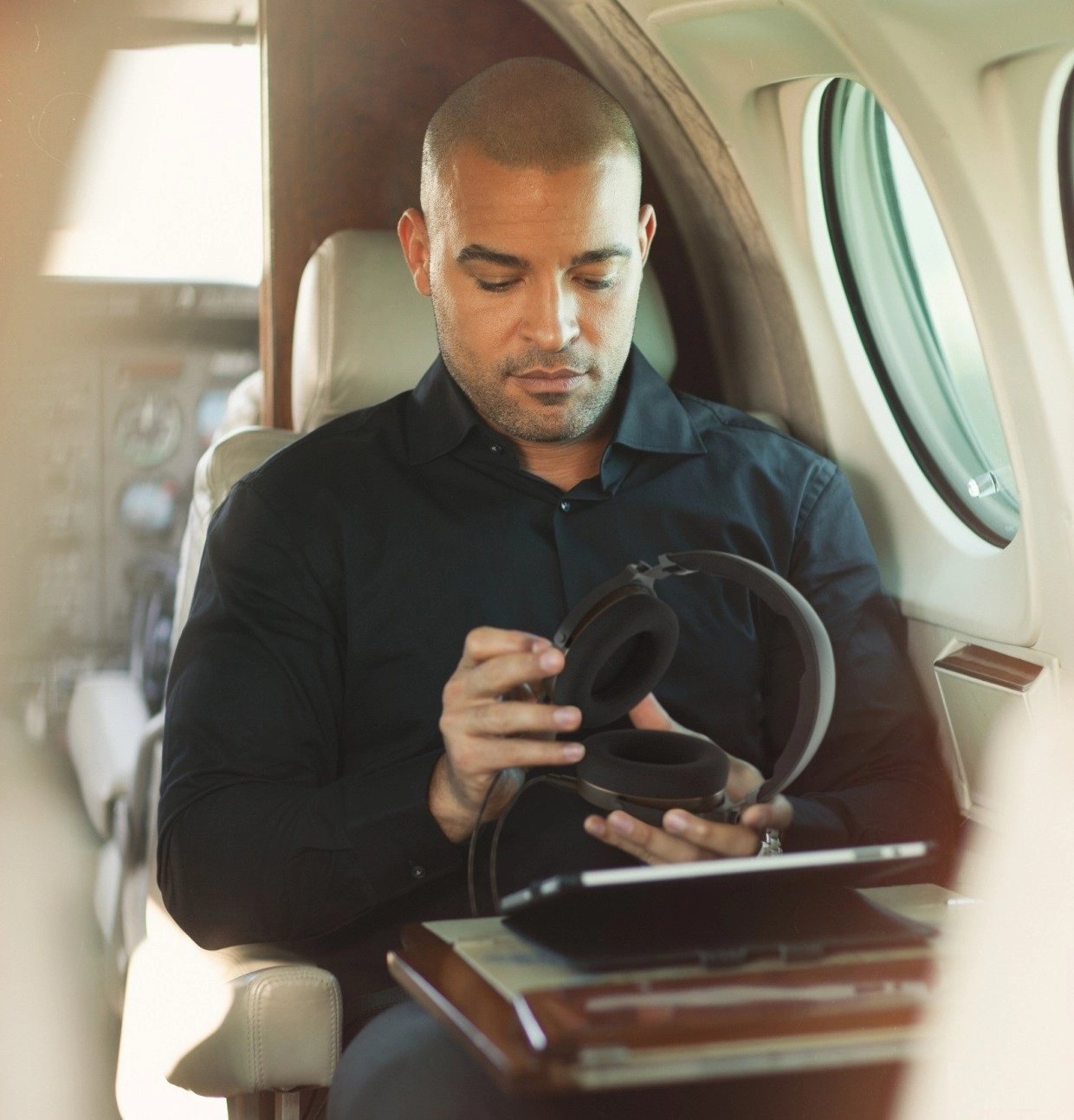
Each pair comes with two detachable, braided nylon cables. One is a 2.5-meter unbalanced cable with a 3.5 mm plug; the other is a shorter, 1.37-meter balanced cable with a 4.4 mm plug. Both connect to the headphones through dual-mono terminations.
That selection gives buyers a choice of common headphone output connections without needing to purchase a second cable immediately. A 3.5 mm female-to-quarter-inch male adapter is also included for equipment with the larger socket. Users will still need to match the cable to the output provided by their own source or amplifier.
Klipsch plans an optional headphone stand with walnut veneer and copper accents. Earlier information about the Atlas HP-3 had described a dedicated stand as part of the proposed package; for the Stratos announcement, the stand is an optional accessory.
From the Atlas preview to Stratos
The headphones were shown earlier at the High End audio show in Vienna as Atlas models, before their specifications were settled. Their world premiere as the Stratos series is at CanJam Dallas. The shared model numbers and closed or semi-open configurations link the two presentations, but the earlier descriptions should not be treated as a separate set of verified performance results.
There is also a longer historical thread: in 1919, a 15-year-old Paul W. Klipsch conducted an acoustic experiment using a small loudspeaker in a primitive headphone. Klipsch still retains that original pair, linking the anniversary announcement to an early episode in its founder’s work.
A wireless Stratos HP-1 is expected to be detailed in early 2027. An earlier Atlas concept was described with active noise cancellation and other planned features, but those have not been confirmed for the Stratos HP-1.

The HP-2 and HP-3 are expected to become available for delivery during January 2027. No USD prices were supplied, so buyers in the United States will need to wait for local pricing. The immediate decision between them is not just about driver size: the closed HP-2 is the model positioned for isolation and monitoring, while the heavier, semi-open HP-3 offers a different cup construction. Both provide the same broad choice of wired connections and emphasize materials associated with Klipsch’s loudspeakers. What remains to be established is how they perform in use, including comfort over longer sessions and their behavior with different sources. Those questions will matter as much as the published specifications once the headphones reach listeners.


Sound Off
0Join the discussion if you have something to add.