
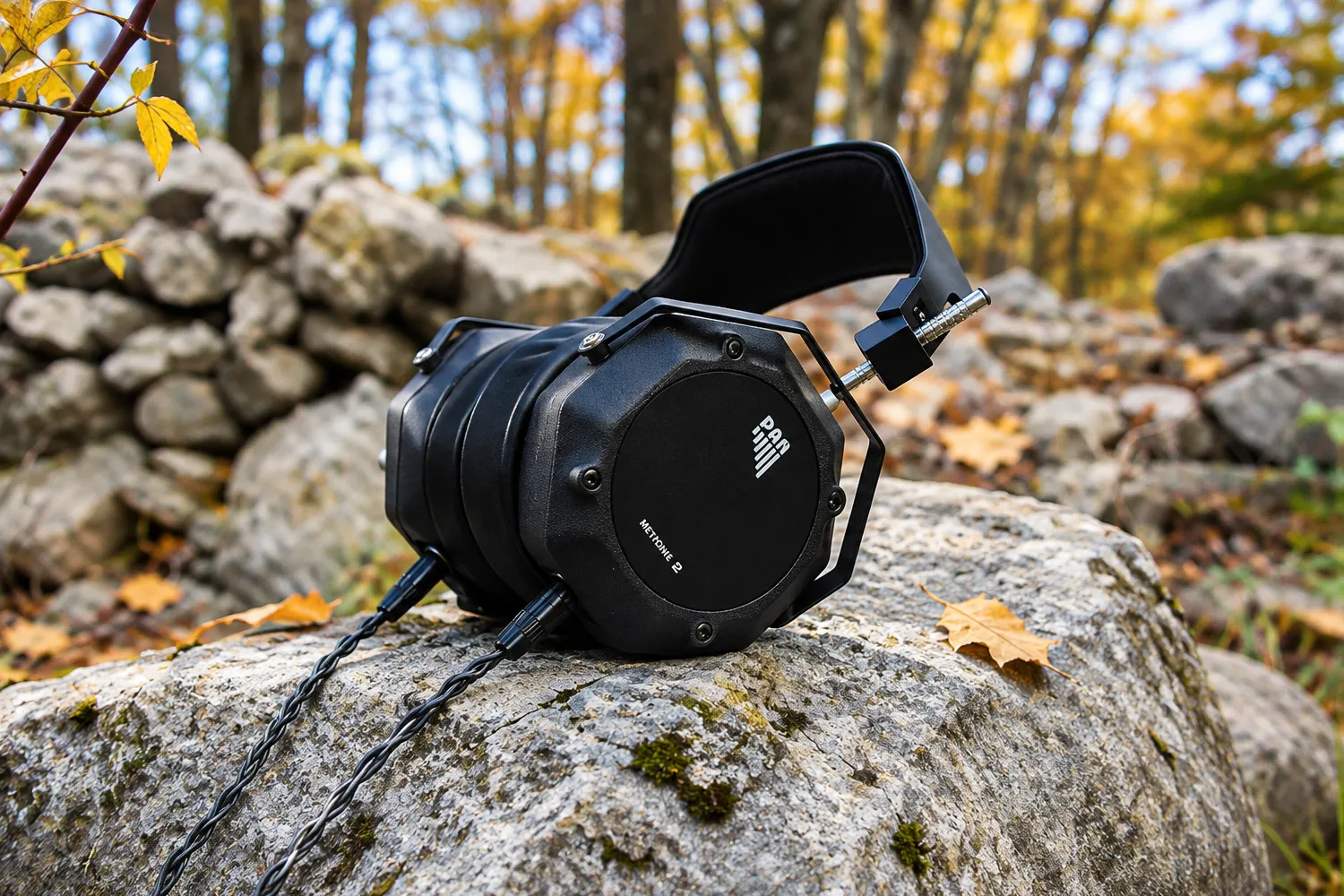
Erzetich Audio has added a closed-back option to its headphone range for the first time. Called Pan, the over-ear model is intended for listeners who want isolation alongside the sound quality expected from a dedicated hi-fi headphone. Rather than using a single driver in each earcup, the Slovenian manufacturer has chosen a pair of 40 mm dynamic drivers per side. The arrangement gives the Pan a distinct technical identity within the Erzetich family, while its 64-ohm impedance, detachable cable and replaceable parts point to a headphone designed for use with a variety of systems and for continued service over time.
A Different Role in the Erzetich Range
The Pan’s most important distinction is its closed construction. For a manufacturer introducing its first fully closed headphone, that is more than a change in appearance: it gives the range an option for listeners who value separation from their surroundings. Erzetich identifies sound isolation as one of the design’s goals, although no numerical isolation figure has been supplied.
That goal places different demands on the acoustic design. The enclosed space inside a closed earcup can produce unwanted reflections and resonances, potentially affecting how naturally music is reproduced. Founder and chief designer Blaž Erzetič explored alternative approaches to those challenges, leading to the Pan’s two-driver arrangement.
Erzetich positions the Pan’s intended sound character between its Mania V2021 and Phobos 4 models. That provides a reference point within the existing range, but it is not a specification or a substitute for hearing the headphones. The announcement does not set out a detailed comparison of their construction or performance.

Two Dynamic Drivers in Each Earcup
Each side of the Pan contains two 40 mm dynamic drivers with a titanium coating, for four drivers in total. The configuration increases the combined driver area compared with using one driver of the same diameter per earcup. Erzetich presents it as its answer to the acoustic challenges of a closed design.
The manufacturer describes the intended presentation as balanced and detailed, with well-defined high frequencies. Those are characterizations of the design rather than independently verified listening results. The information supplied does not explain how the two drivers in each cup share the audio signal, so their precise division of duties remains an open question.
The distinction matters because the number of drivers alone does not establish how a headphone will sound. Their implementation, including how they work within the enclosed earcup, is central to the design. For prospective buyers, the Pan’s arrangement is therefore a reason to investigate the model, not a performance guarantee.
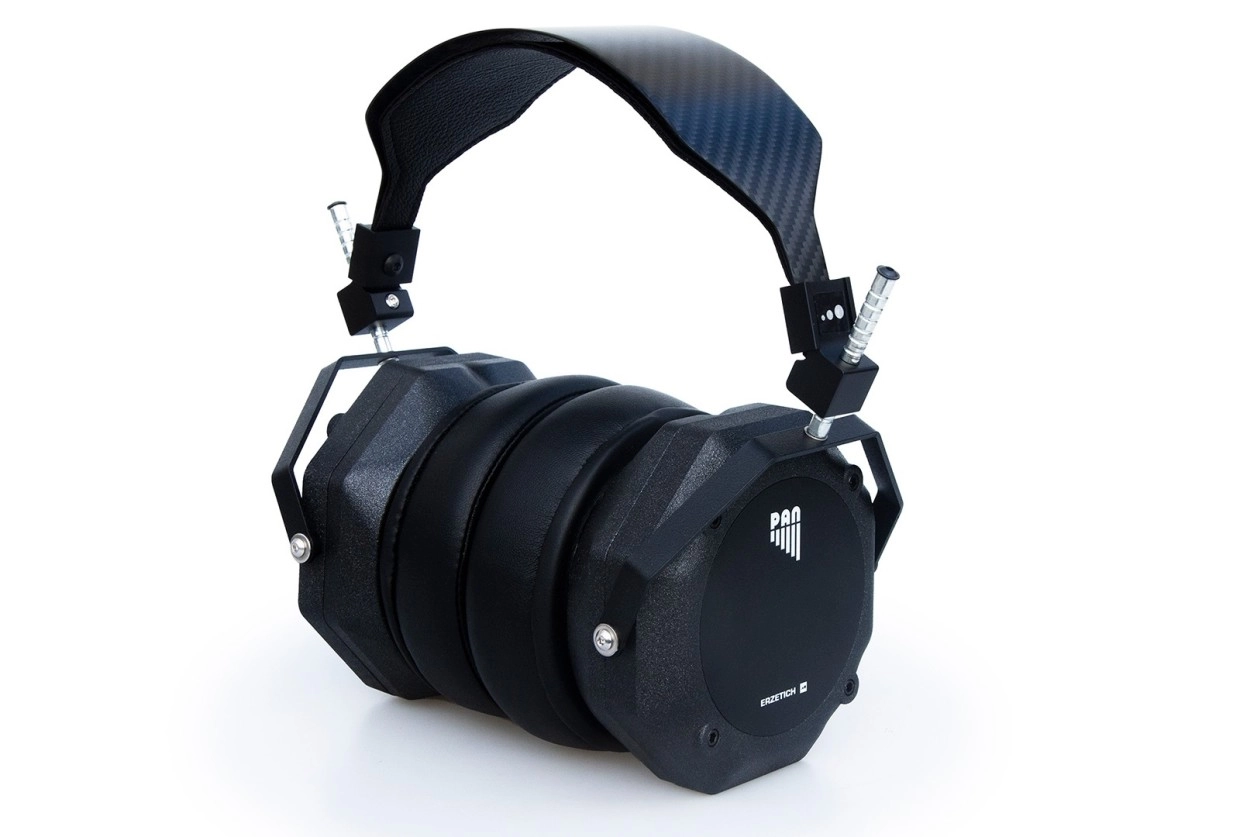
Amplifiers, Portable Players and Replaceable Parts
With a specified impedance of 64 ohms, the Pan is presented as relatively easy to drive and suitable for use with dedicated headphone amplifiers as well as portable digital audio players. That gives prospective owners more than one plausible system context: a stationary headphone setup or a player-based listening arrangement.
Impedance, however, is only one part of amplifier matching. Sensitivity and power requirements are not included in the supplied information, so the figure alone cannot establish how loudly the Pan will play from a particular device. Owners considering a portable player should check the pairing rather than assume that every output will provide the same results.
The headphones weigh 490 grams and use a detachable cable. Erzetich also states that all Pan parts are replaceable, a significant ownership detail for a product intended to remain in service. The supplied information does not specify replacement-part prices, service arrangements or cable connector types. The stated weight is also useful to consider when assessing the Pan for longer listening sessions, although comfort will depend on the individual wearer.
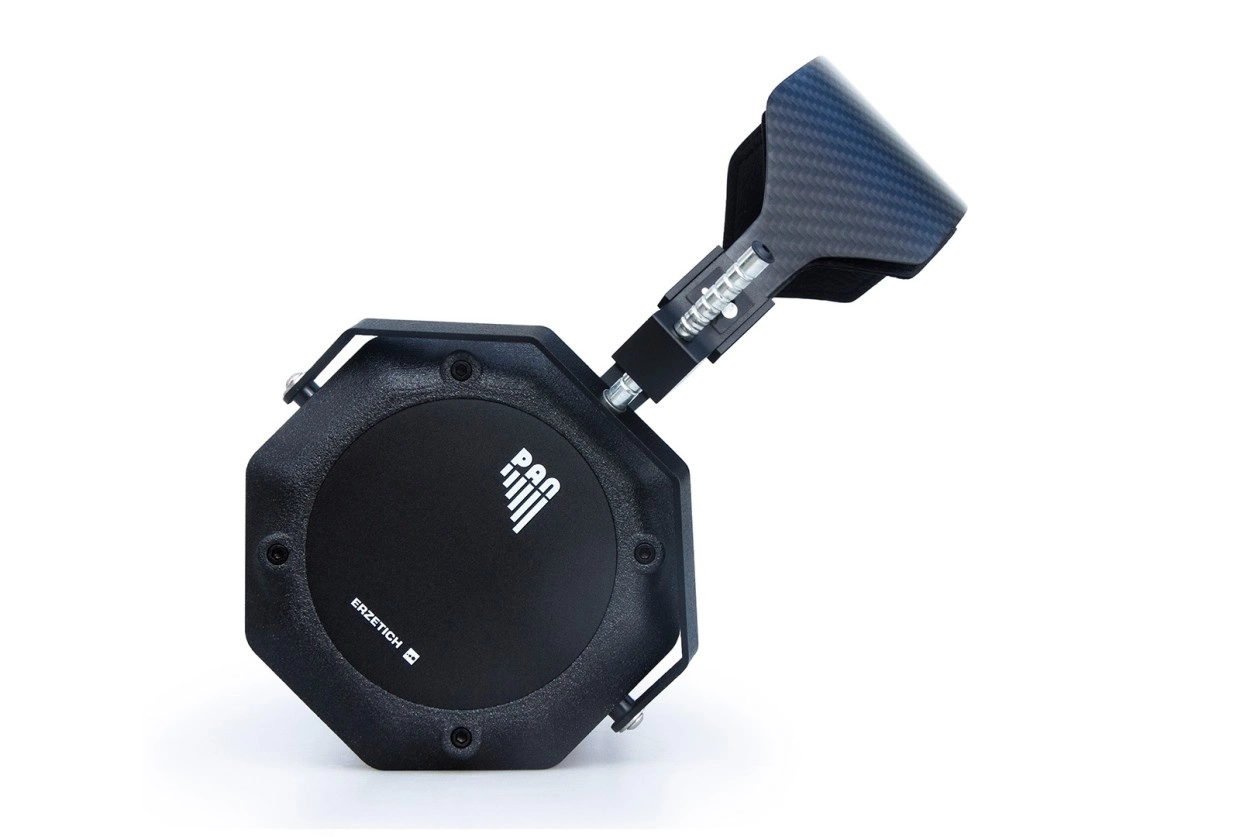
The Pan Name and Its Musical Reference
The model takes its name from Pan, the Greek mythological figure associated with nature, music and the wilderness. The connection appears in the product logo, which incorporates the shape of a pan flute. It is a small visual link between the headphone’s name and its musical purpose rather than a technical feature.
For buyers comparing the Pan with other Erzetich headphones, the more consequential distinction remains the closed earcup and its unusual internal driver layout. Its place between the Mania V2021 and Phobos 4 is described in terms of sound character, while the Pan establishes a separate role for those specifically seeking a closed design.
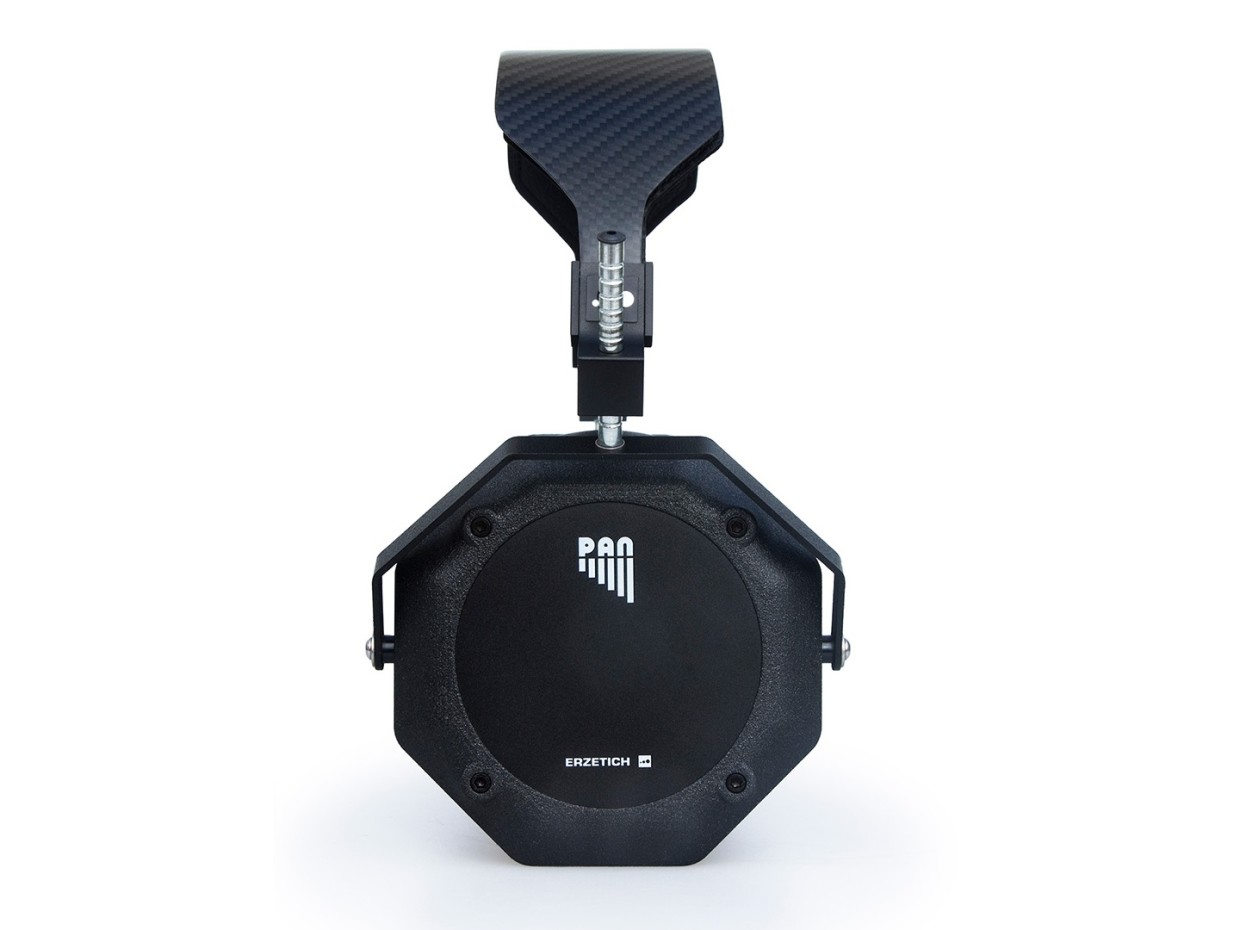
The Pan is available, although the supplied announcement does not specify regional availability or a USD price. It appears aimed at listeners who want a closed headphone for a dedicated audio system or a portable player, and who place value on the possibility of replacing parts over time. Several details remain to be clarified before choosing a system around it, including sensitivity, connector types and the practical arrangements for replacement components. The most interesting question is how Erzetich’s four-driver configuration performs inside its first closed earcups. The design addresses a stated acoustic challenge, but its effectiveness—and the resulting sound character—will ultimately need to be assessed through listening.


Sound Off
0Join the discussion if you have something to add.