
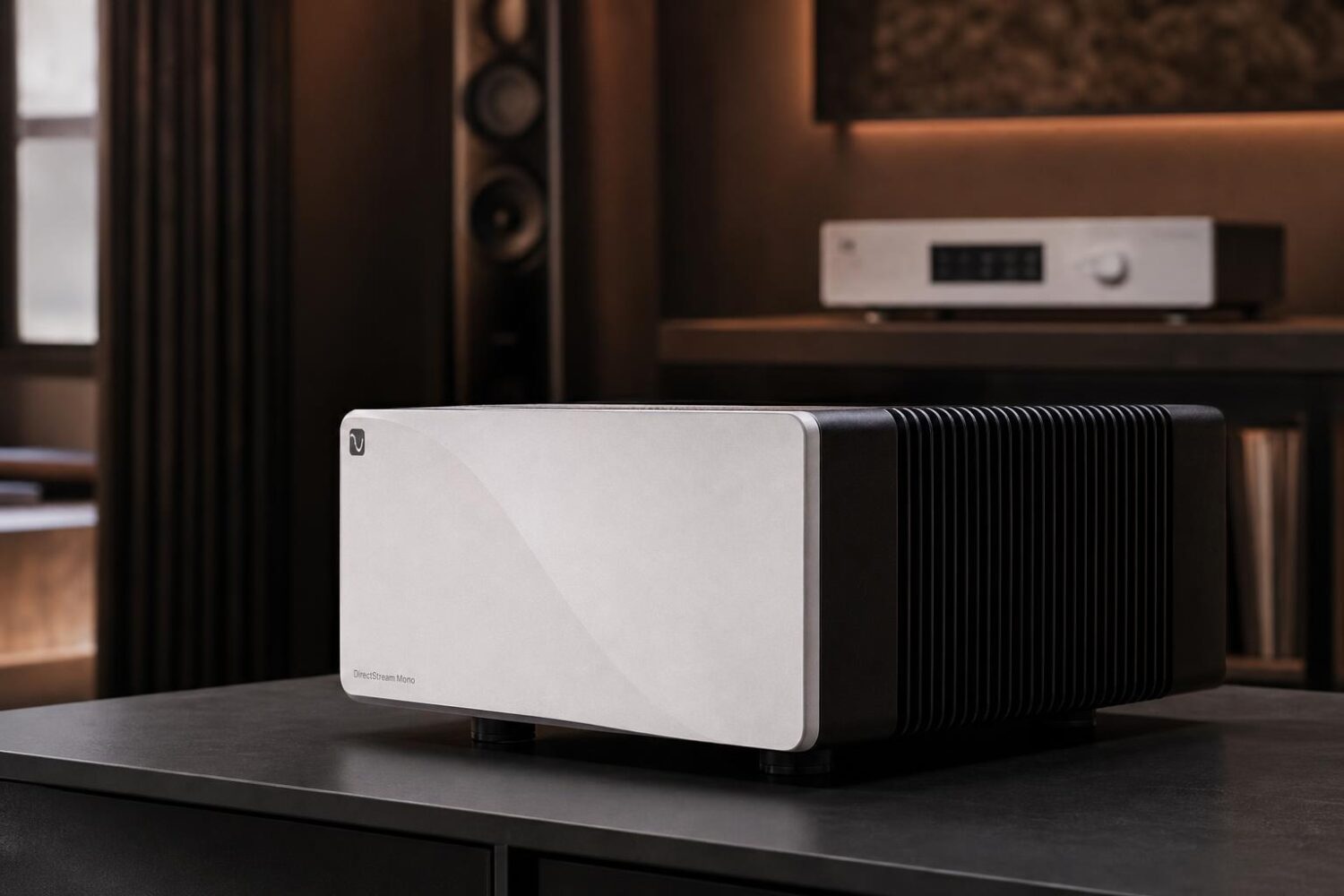
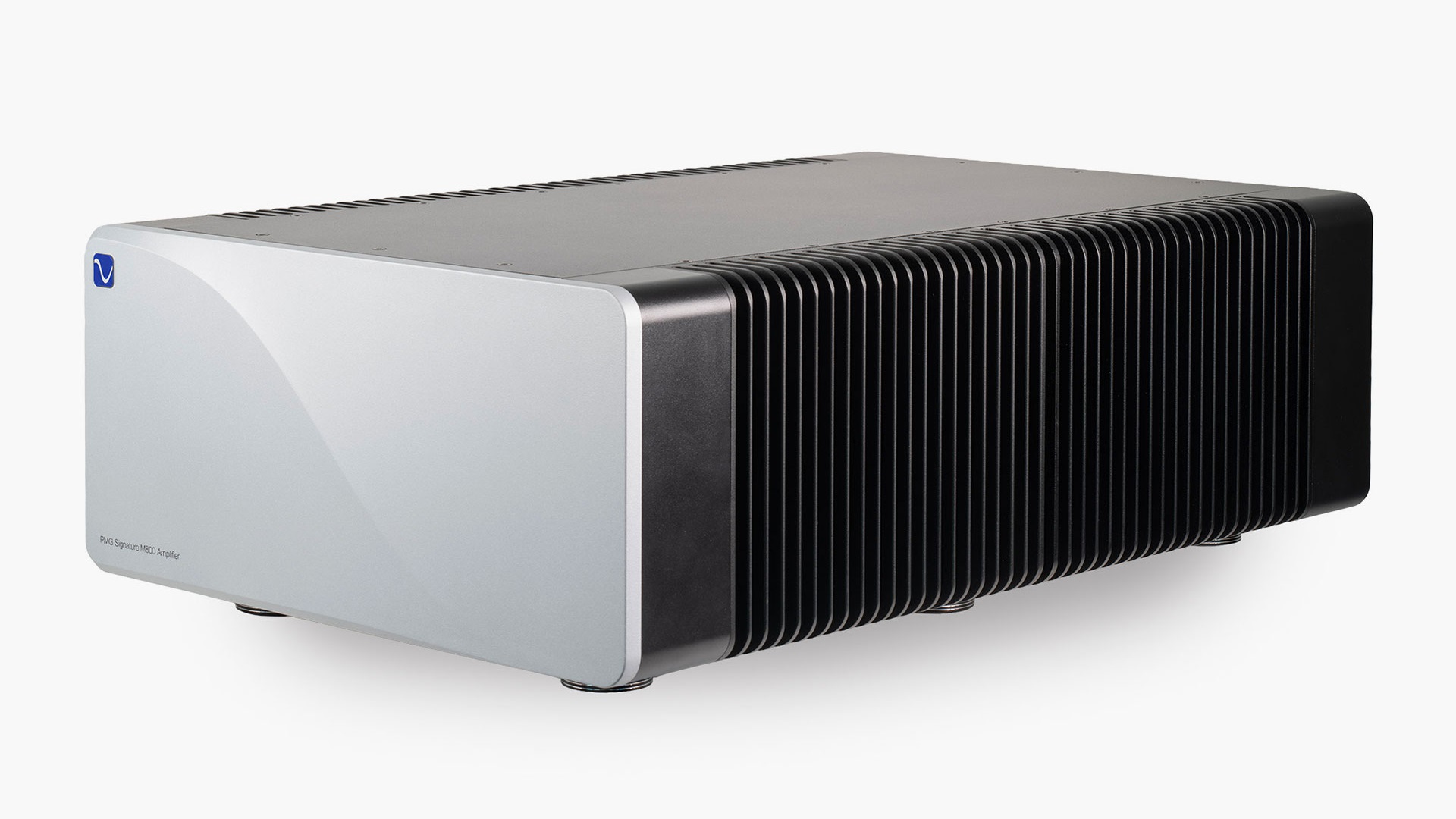
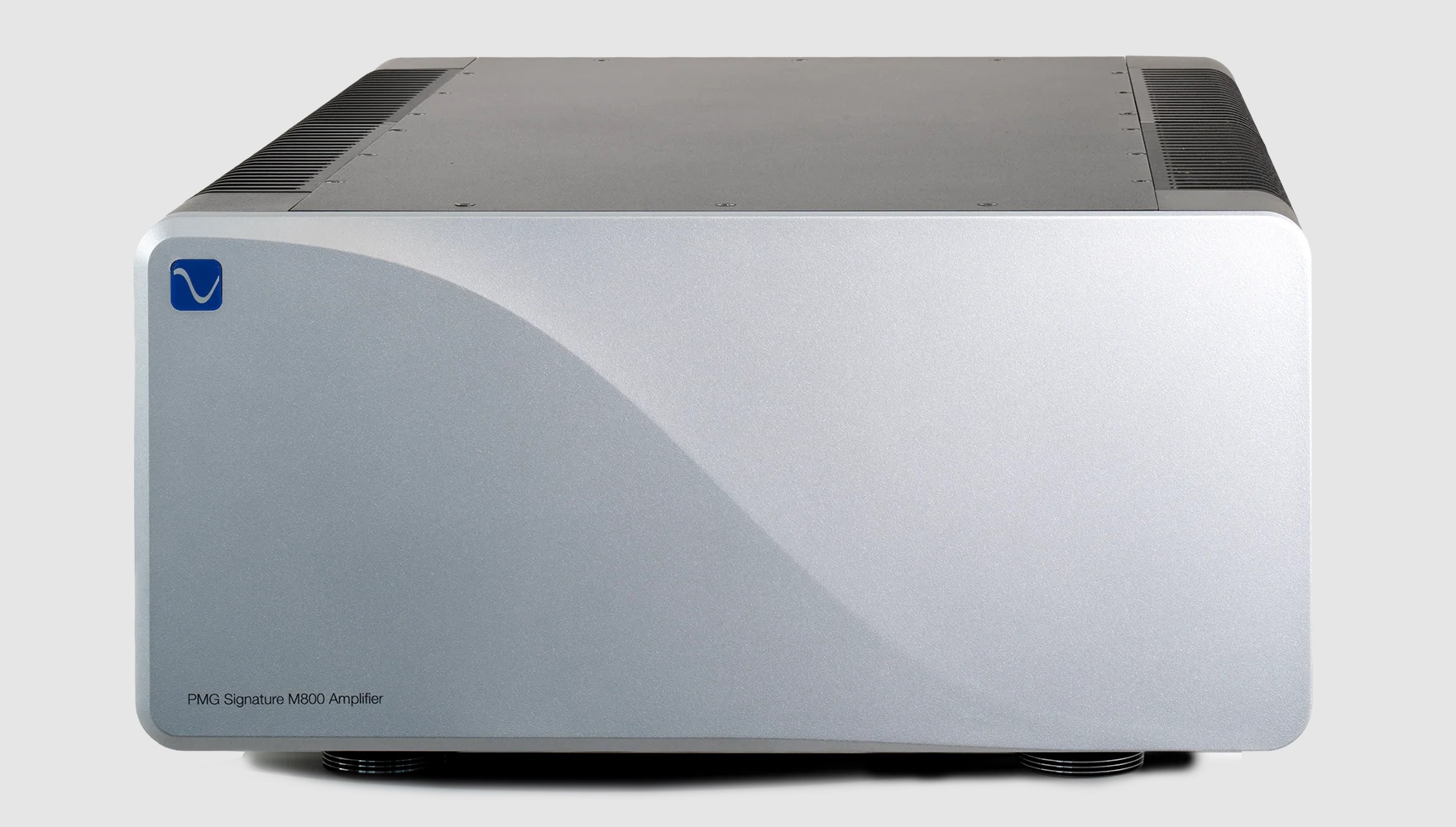
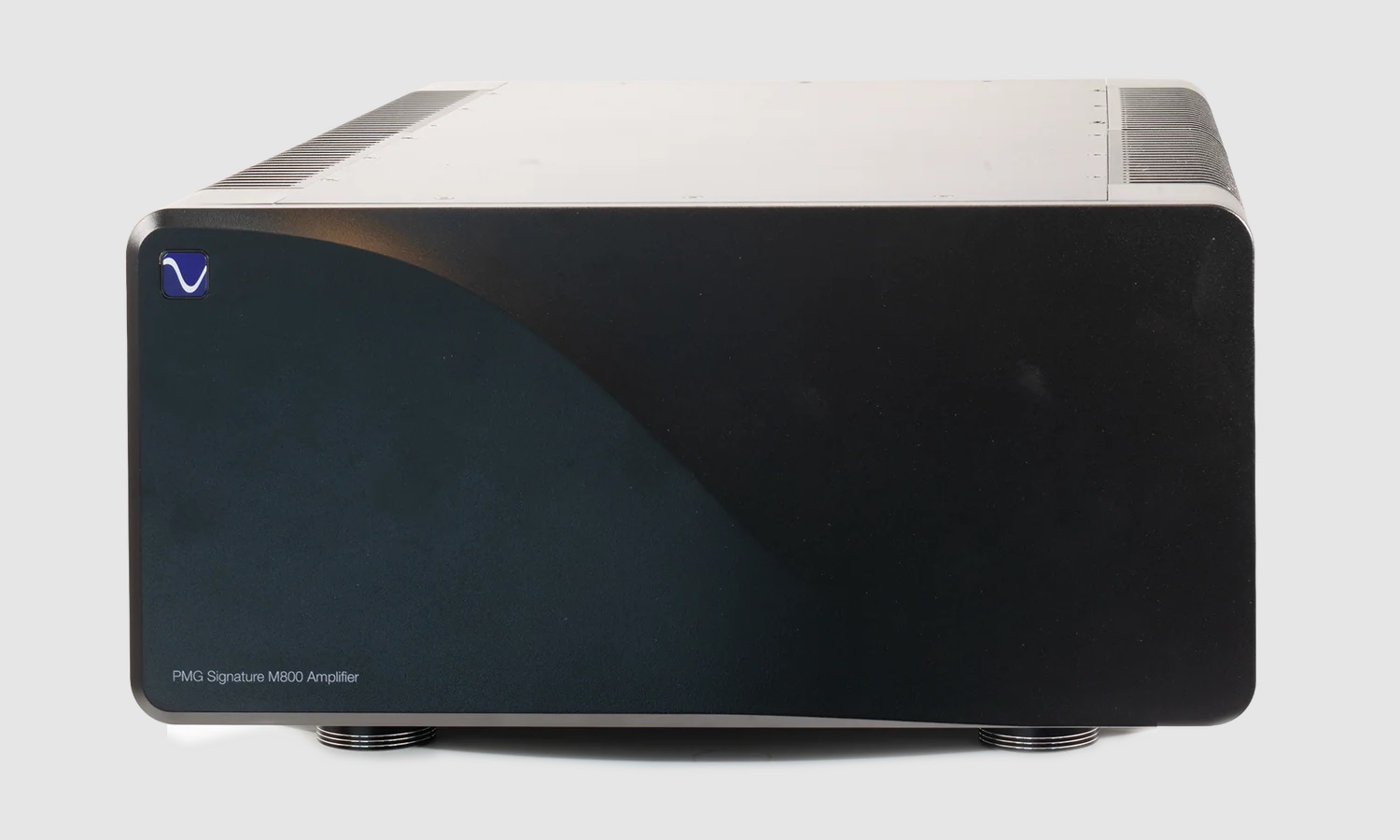
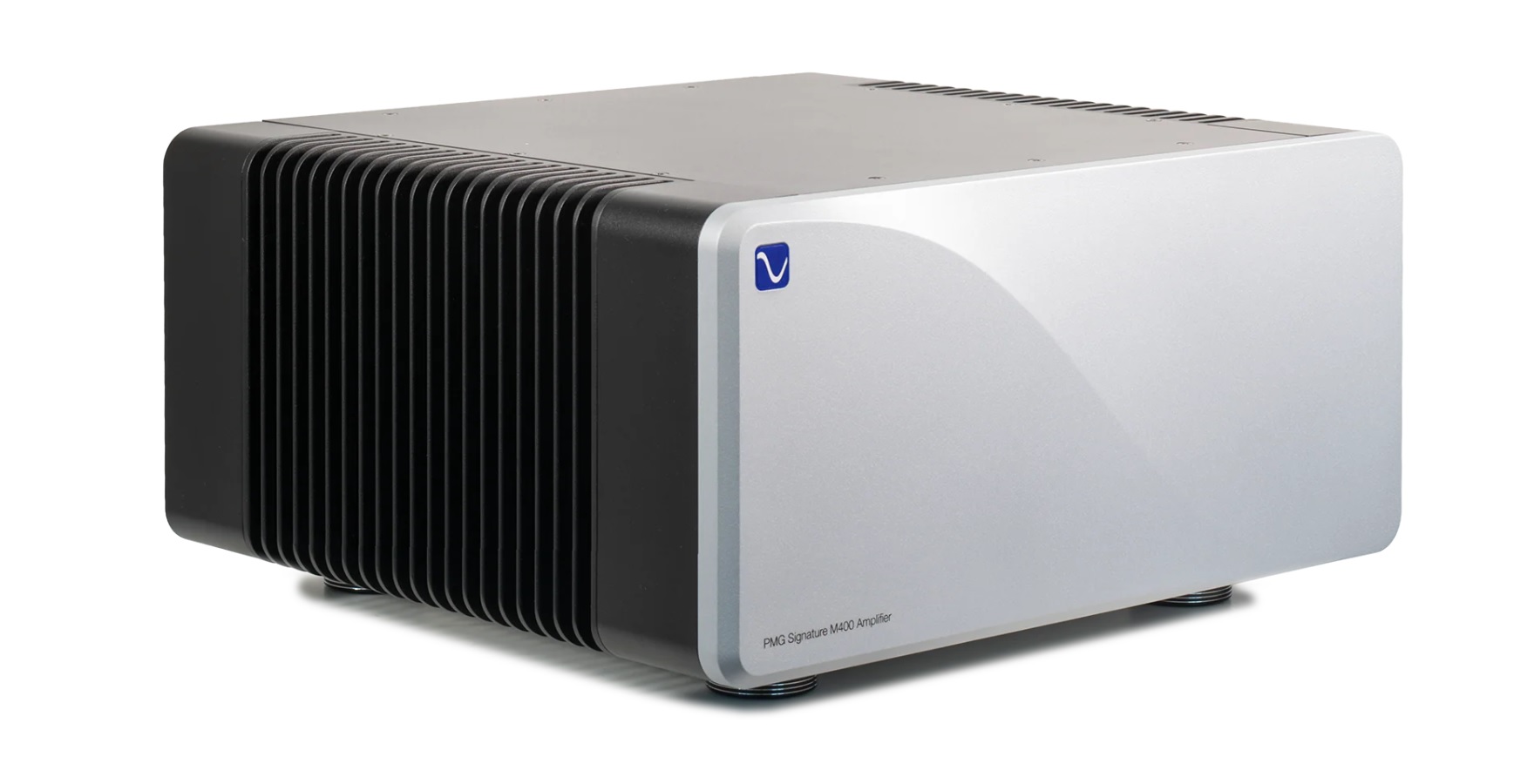
PS Audio’s Signature PMG M400 and M800 are intended for systems in which each loudspeaker has its own power amplifier. The monoblock format is only part of their appeal: both models combine high rated output with Class A operation at lower levels, a current-controlled topology, wide specified bandwidth and switch-mode power supplies selected to support rapid current delivery. They also expand the PMG Signature platform without departing from the engineering principles established by its S200 and S400 stereo amplifiers.
Dedicated amplification for each channel
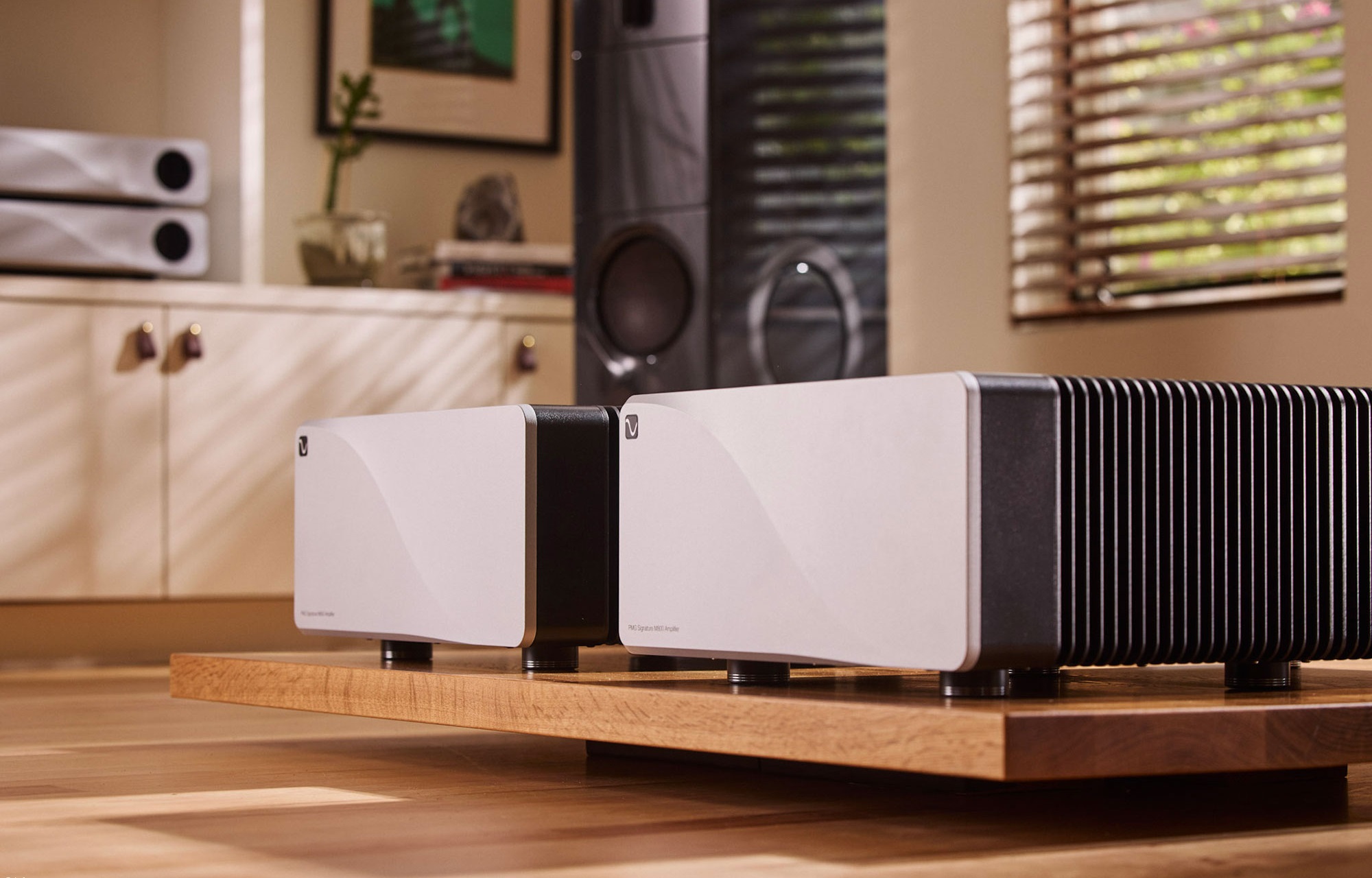
A monoblock contains one amplification channel, so a two-channel system requires a pair. This arrangement allows the left and right loudspeakers to be powered by physically separate amplifiers rather than two channels sharing one enclosure and power-supply system. For owners building a highly separated two-channel installation, that architecture can be attractive both electrically and practically.
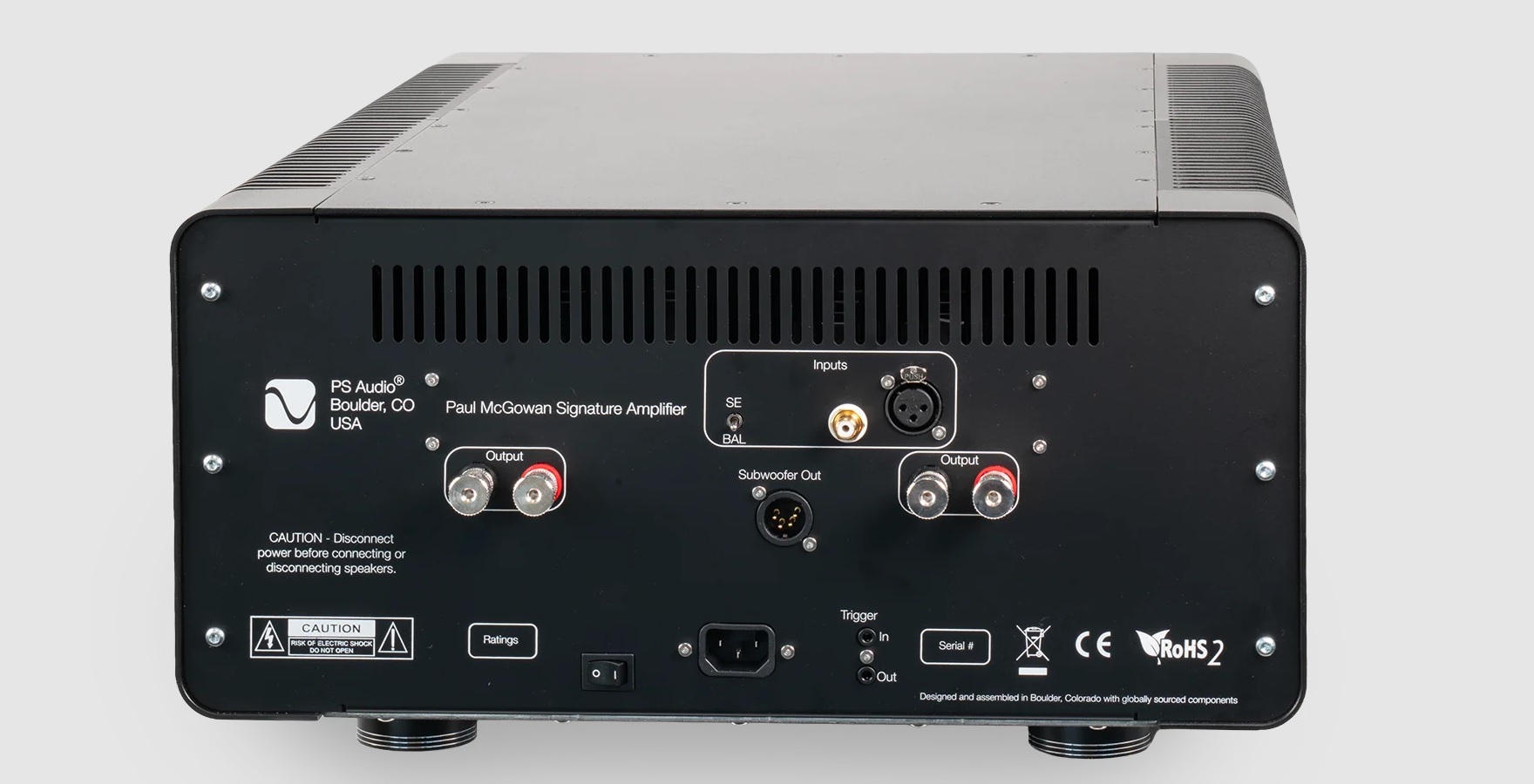
The format also introduces placement flexibility. Depending on the system and room, each amplifier can be positioned relatively close to its loudspeaker, potentially allowing shorter speaker-cable runs. Alternatively, a pair can be installed together on a suitable equipment rack. The trade-off is straightforward: two chassis require more space, power connections and planning than one stereo amplifier.
The M400 and M800 consequently complement rather than replace the Signature PMG S200 and S400. The stereo models offer two channels in one chassis, while the monoblocks address installations that prioritize dedicated amplification and greater output per channel. That gives the PMG Signature family a coherent choice between conventional stereo packaging and a more ambitious dual-chassis arrangement.
Two power levels for different system demands
The Signature PMG M400 is rated at 200 watts into 8 ohms and 400 watts into 4 ohms. The larger M800 doubles those figures, with stated outputs of 400 watts into 8 ohms and 800 watts into 4 ohms. Because each unit powers one channel, those ratings apply to an individual monoblock.
These figures provide a clear basis for system matching. The M400 offers substantial output for owners who want the monoblock architecture without automatically moving to the largest model. The M800 is aimed at systems requiring more power reserve, whether because of loudspeaker demands, listening distance, room scale or desired playback levels. Loudspeaker sensitivity, impedance behavior and manufacturer recommendations should still guide the choice; a larger power rating is not inherently necessary in every system.
The way the ratings increase from 8 to 4 ohms is also relevant. Each amplifier is specified to double its output into the lower impedance, documenting an emphasis on current delivery as well as headline wattage. That does not establish compatibility with every possible loudspeaker load, but it gives prospective owners useful information when discussing system matching with a dealer or loudspeaker manufacturer.
A meaningful Class A operating region
Both monoblocks operate in Class A through the lower part of their output range. The M400 remains in Class A up to a stated 30 watts, while the M800 extends that region to 50 watts. Once more output is required, the amplifiers can draw on their much higher overall power ratings.
This dual emphasis is one of the most distinctive aspects of the design. A system does not continuously use its maximum rated output, and many listening situations require considerably less power for much of the time. PS Audio has therefore provided a defined Class A region intended to cover a meaningful portion of lower-level operation, while retaining the capacity needed for more demanding passages.
The M400 and M800 also differ notably from their stereo relatives in this respect. The S200 is specified with 10 watts of Class A operation, while the more powerful S400 provides 5 watts. The monoblocks raise the available output per channel and expand the stated Class A window, making them more than stereo models repackaged into separate enclosures.
Current-controlled circuit architecture
At the center of the PMG Signature design is a current-controlled amplifier topology. The circuit architecture is credited to Darren Myers and was refined by Bob Stadtherr. Instead of using the more conventional internal voltage-driven approach, the amplifier is governed by current.
That distinction matters because it identifies a specific engineering direction rather than simply another increase in power. PS Audio specifies a slew rate of 200 volts per microsecond and distortion below 0.002% for the design. These are published technical figures rather than listening results, but they illustrate the platform’s focus on rapid response and linear operation.
The amplifiers also use very low overall feedback and have a specified bandwidth extending beyond 500 kHz. Bandwidth far outside the audible range should not be interpreted as audible content in itself. In design terms, however, it indicates that the circuit has been engineered for high-frequency extension and speed well beyond the frequencies reproduced as music. The low-feedback approach is another deliberate part of that architecture rather than an isolated specification.
Why the power supply is part of the story
PS Audio uses switch-mode power supplies in the M400 and M800. The company’s stated rationale is that the current-controlled topology requires a faster supply approach than a conventional passive transformer-based arrangement can provide.
That makes the power supply a functional element of the amplifier concept, not merely a packaging decision. It is intended to support the current delivery and speed demanded by the circuit. Prospective owners should therefore view the switch-mode supply, current-controlled topology, wide bandwidth and specified slew rate as connected parts of one design strategy.
This is useful context because power amplifiers are often reduced to wattage alone. In the PMG monoblocks, output remains important, particularly with the M800, but the supporting architecture helps explain how PS Audio has approached the task of delivering that power.
A consistent Signature PMG platform
The M400 and M800 are hand-built in Boulder, Colorado, alongside the broader PMG Signature program. They extend a four-model amplifier family comprising the S200 and S400 stereo amplifiers and the M400 and M800 monoblocks.
That consistency gives owners and system designers several ways to work within the same engineering platform. A straightforward two-channel installation can use one of the stereo models, while a system requiring separate amplification for each speaker can move to the monoblocks. The M400 and M800 preserve the family’s current-controlled architecture and lower-level Class A operation while offering higher per-channel output and greater physical separation.
Their position is therefore defined by both construction and intended application. These are upper-tier amplifiers for carefully planned systems, with the monoblock format placing additional importance on rack space, ventilation, mains access and cable layout.
Who the M400 and M800 are most suitable for
The M400 is likely to be the more relevant model for listeners who want dedicated left- and right-channel amplifiers, substantial rated power and a 30-watt Class A region without requiring the M800’s maximum output. The M800 is better aligned with large-scale systems or loudspeakers whose documented requirements justify its 400-watt rating into 8 ohms and 800-watt rating into 4 ohms.
Either model may appeal to owners who value a defined engineering platform rather than choosing on power alone. The combination of current control, low feedback, wide bandwidth and switch-mode power supplies gives the PMG Signature models a distinct technical identity.
They will be less suitable for installations where space is restricted, a single chassis is preferred or the loudspeakers need only modest amplification. Two monoblocks also require more infrastructure than one stereo amplifier. In those circumstances, the S200 or S400 may provide a more practical route into the same amplifier family. The appropriate choice depends on loudspeaker requirements and installation priorities, not simply on selecting the highest rating.
Conclusion
The Signature PMG M400 and M800 broaden PS Audio’s amplifier range with two purpose-built monoblocks that combine dedicated single-channel operation with substantial power reserves. Their strongest documented qualities are the 30- and 50-watt Class A operating regions, current-controlled circuit architecture, switch-mode power supplies, wide specified bandwidth and low overall feedback. The M400 offers a measured step into this format, while the M800 addresses systems with greater power demands. Both are best suited to owners planning a spacious, high-capability two-channel installation and willing to accommodate separate amplifiers for each loudspeaker.


Sound Off
0Join the discussion if you have something to add.