
TOPPING MA4 Active Monitors Favor Analog Simplicity Over DSP
The TOPPING MA4 is a compact active stereo monitor system built around two-way drivers, dedicated Class D power and an entirely DSP-free architecture.
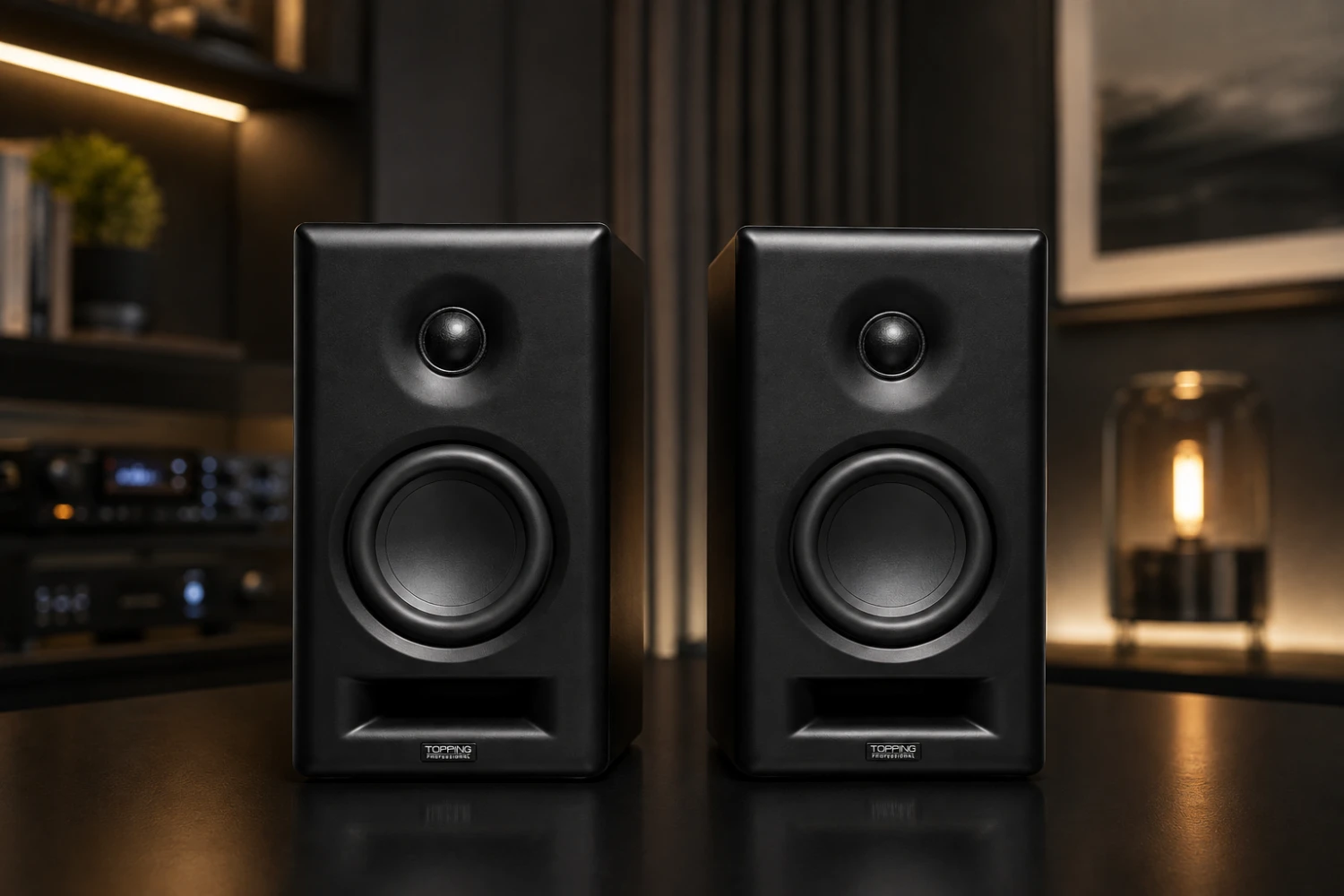
TOPPING has introduced the MA4, a pair of compact active studio monitors aimed at desktop audio systems, content creators and smaller rooms. The two-way design combines separate Class D amplification for each frequency band with an analog crossover, deliberately avoiding digital signal processing and wireless features.
A compact two-way stereo monitor system
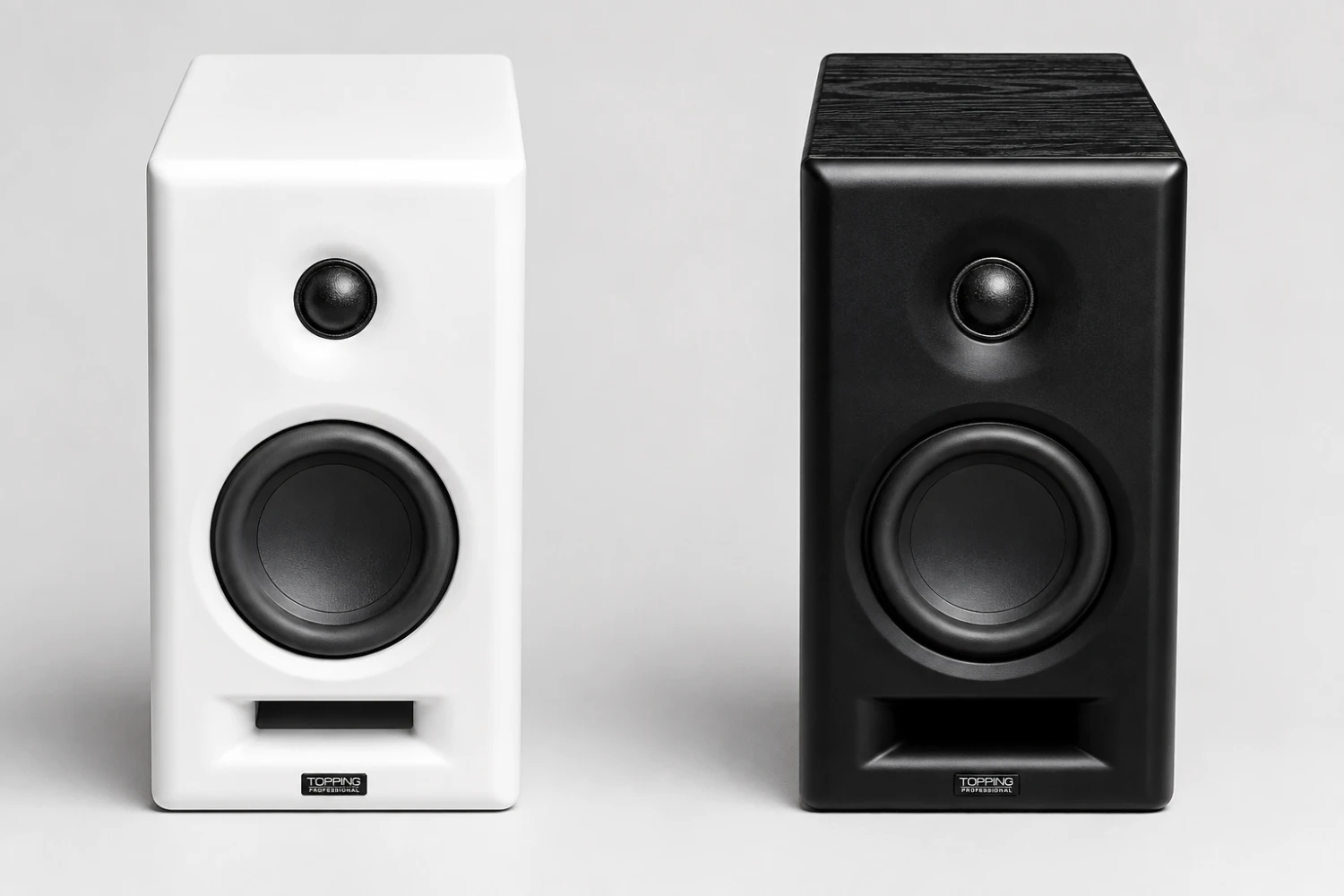
The MA4 is supplied as a stereo pair rather than as a single monitor. Each speaker uses a 4-inch low-frequency driver and a 1-inch high-frequency driver, giving the system a conventional two-way layout in a format intended for close-range and space-conscious installations.
TOPPING specifies a frequency response of 49 Hz to 20 kHz within ±3 dB. Maximum sound pressure level is listed as 105 dB at a distance of one meter. These figures define the stated operating range and maximum output of the compact design without relying on digitally applied frequency correction.
The cabinet also incorporates a front-facing bass reflex port. This places the port opening on the same side as the drivers, an arrangement suited to the MA4’s desktop-oriented design. No cabinet dimensions, enclosure finishes or placement controls were detailed in the supplied announcement.
Class D power for both frequency bands
Amplification is integrated into the speaker system, removing the need for a separate external power amplifier. TOPPING uses Class D amplification, with RMS power ratings of 50 watts and 25 watts assigned to the different frequency bands.
This active architecture allows the low- and high-frequency sections to receive their own specified amplification. The signal is divided before reaching the drivers by the MA4’s internal crossover rather than being sent through a passive network after a single amplifier stage.
An Opti-Wave waveguide is included around the high-frequency section. TOPPING identifies the waveguide as one of the MA4’s principal acoustic design elements, alongside the two-way driver configuration and front bass reflex loading.
Analog crossover with no digital processing
The defining aspect of the MA4 is its decision to use an analog crossover without digital signal processing. TOPPING has not equipped the monitors with DSP, distinguishing them from active speakers that use software-based filtering, room adjustment or digital voicing.
That approach also means the MA4 does not include Bluetooth or USB-C connectivity. There is no companion application, either. Users looking for wireless playback, computer audio over USB or app-controlled adjustments will therefore need to provide those functions through separate source equipment where required.
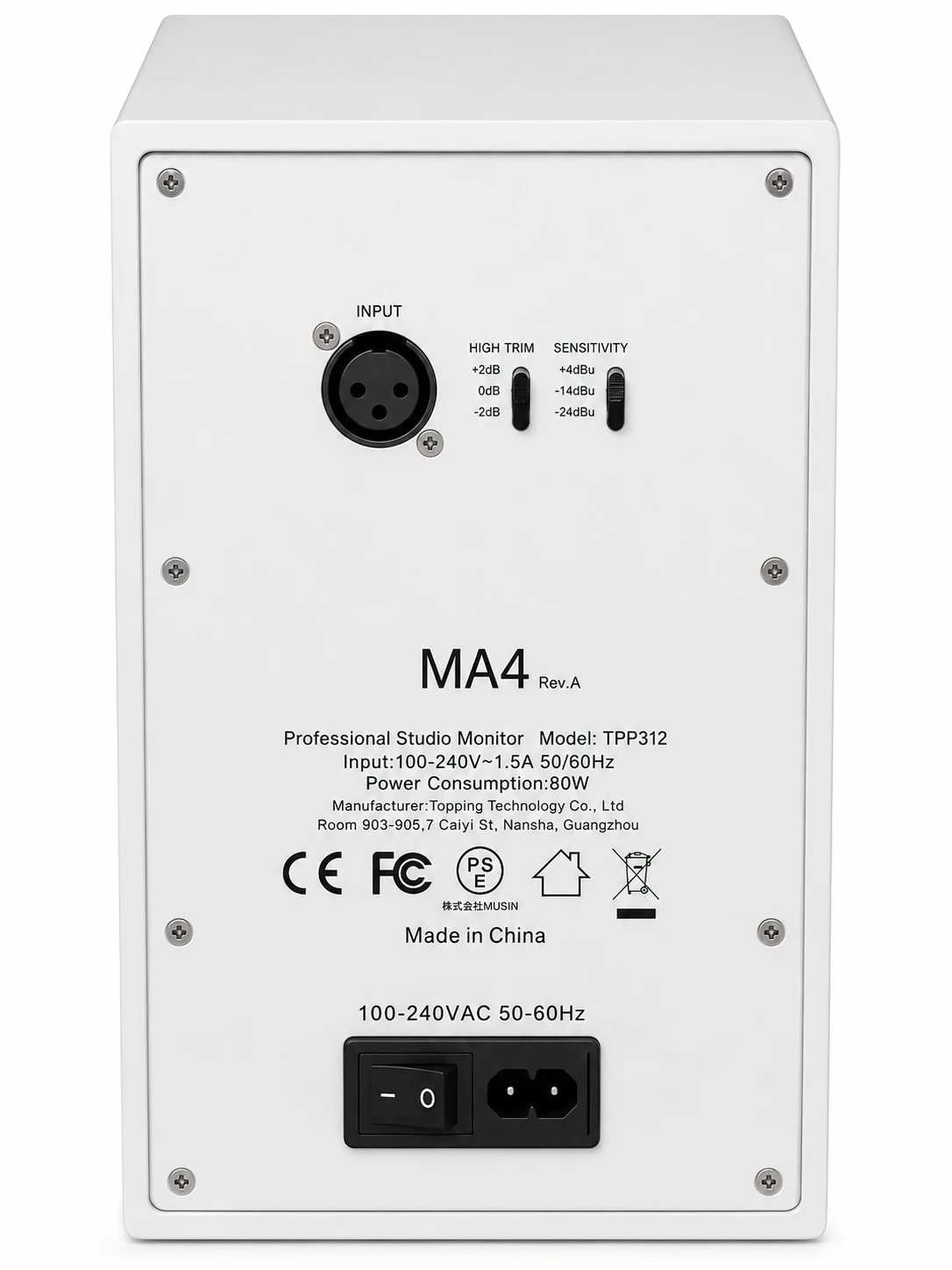
TOPPING’s feature set keeps the focus on the core active-monitor architecture: analog frequency division, built-in Class D amplification and dedicated low- and high-frequency drivers. The company has not announced digital correction features or a software configuration platform for the model.
Designed for desks, creators and smaller spaces
TOPPING positions the MA4 for desktop systems, content-production setups and rooms where a compact stereo monitor pair is appropriate. Its 4-inch woofer format and integrated amplification are consistent with that intended use, while the published 105 dB maximum output is measured at the near-field distance of one meter.
The omission of DSP and networked features gives the MA4 a different emphasis from multifunction wireless speakers. Instead, it is presented as a purpose-built active monitor pair centered on an analog crossover and direct speaker functionality. Pricing and market availability were not included in the supplied product information.
The TOPPING MA4 combines compact two-way cabinets, separate Class D power for its frequency bands and a front-ported acoustic design. Its most notable choice is what it leaves out: there is no DSP, Bluetooth, USB-C connection or control app, making the MA4 a deliberately streamlined active monitor system.












 VS
VS VS
VS VS
VS VS
VS VS
VS VS
VS VS
VS VS
VS

Share your thoughts on this 0
Keep it civil, relevant and respectful.