

Audio Research may be closely associated with tube amplification, but the S-200 and S-100 take a deliberately different route. Both are solid-state Class AB power amplifiers built around bipolar transistors, fully balanced signal paths and dual-mono power supplies. The distinction between them is primarily one of output: the S-200 is rated at 200 watts per channel into eight ohms, while the S-100 supplies 100 watts per channel into the same load. Both double their rated power into four ohms, giving prospective owners a straightforward choice based on system requirements rather than two fundamentally different design philosophies.
These are dedicated power amplifiers rather than all-in-one components. Their appeal lies in focused engineering, substantial construction and the flexibility to work with a separate preamplifier. For listeners assembling a high-performance system from individual components, that specialization can be more useful than a long list of unrelated functions.
Dual-mono architecture from the power supply onward
The dual-mono description applies to more than the arrangement of the audio circuit. Each channel has its own toroidal transformer and associated power-supply path. This separation is intended to limit interaction between the left and right channels and reduce crosstalk, even though both amplifier channels share one chassis.
That architecture is especially relevant in a power amplifier, where changing musical demands can place significant and rapidly varying loads on the supply. Providing a separate transformer for each channel gives the two sides of the amplifier a greater degree of electrical independence. It also explains part of the physical substance of the designs: both models measure 48.26 by 17.78 by 44.45 centimeters and weigh 19 kilograms.
The shared dimensions and weight mean that choosing the S-100 does not amount to choosing a compact version of the S-200. Both require a suitably supportive equipment rack and adequate room around their side-mounted cooling fins. The S-100 is instead the lower-output expression of the same broad construction and circuit strategy.
Fully balanced Class AB circuitry
Both amplifiers use a fully balanced signal topology and operate in Class AB. Audio Research’s stated goal is to combine qualities associated with Class A operation with the greater efficiency and power capability available from a transistor-based Class AB design. Importantly, neither model uses tubes or MOSFET output devices. The output stages are built with bipolar transistors.
This makes the S-200 and S-100 distinctive within a brand widely identified with valves. They are relevant to owners who value Audio Research’s approach to separate components but want to avoid tube replacement, warm-up considerations and the other ownership requirements associated with valve power amplifiers.
The choice of bipolar devices is intended to support controlled power delivery and accurate handling of fast signal changes. Those remain design objectives rather than listening conclusions, but the published electrical specifications help define the engineering approach. Both models have a stated frequency response of 20 Hz to 20 kHz within ±0.1 dB. The S-100 is also specified for total harmonic distortion below 0.1 percent from 0.25 watt to its rated output into eight ohms.
Two power levels for different systems
The S-200 delivers 200 watts per channel into eight ohms and 400 watts per channel into four ohms. That doubling of output as impedance is halved indicates that the amplifier is designed with more demanding speaker loads in mind. Its specified damping factor of 300 from 20 Hz to 1 kHz also reflects an emphasis on maintaining electrical control over connected loudspeaker drivers.
At 100 watts per channel into eight ohms and 200 watts per channel into four ohms, the S-100 offers exactly half the rated output while retaining the same core topology. It may therefore be the more proportionate choice for systems that do not need the S-200’s additional headroom, including setups using more sensitive loudspeakers or listening at less demanding levels.
The important point is that the S-100 is not presented as a simplified circuit in a lightweight enclosure. It retains separate toroidal transformers, fully symmetrical circuitry and bipolar output devices. The decision between the two can consequently be based on speaker requirements, listening-room demands and desired power reserve.
Preamplifier matching and connection flexibility
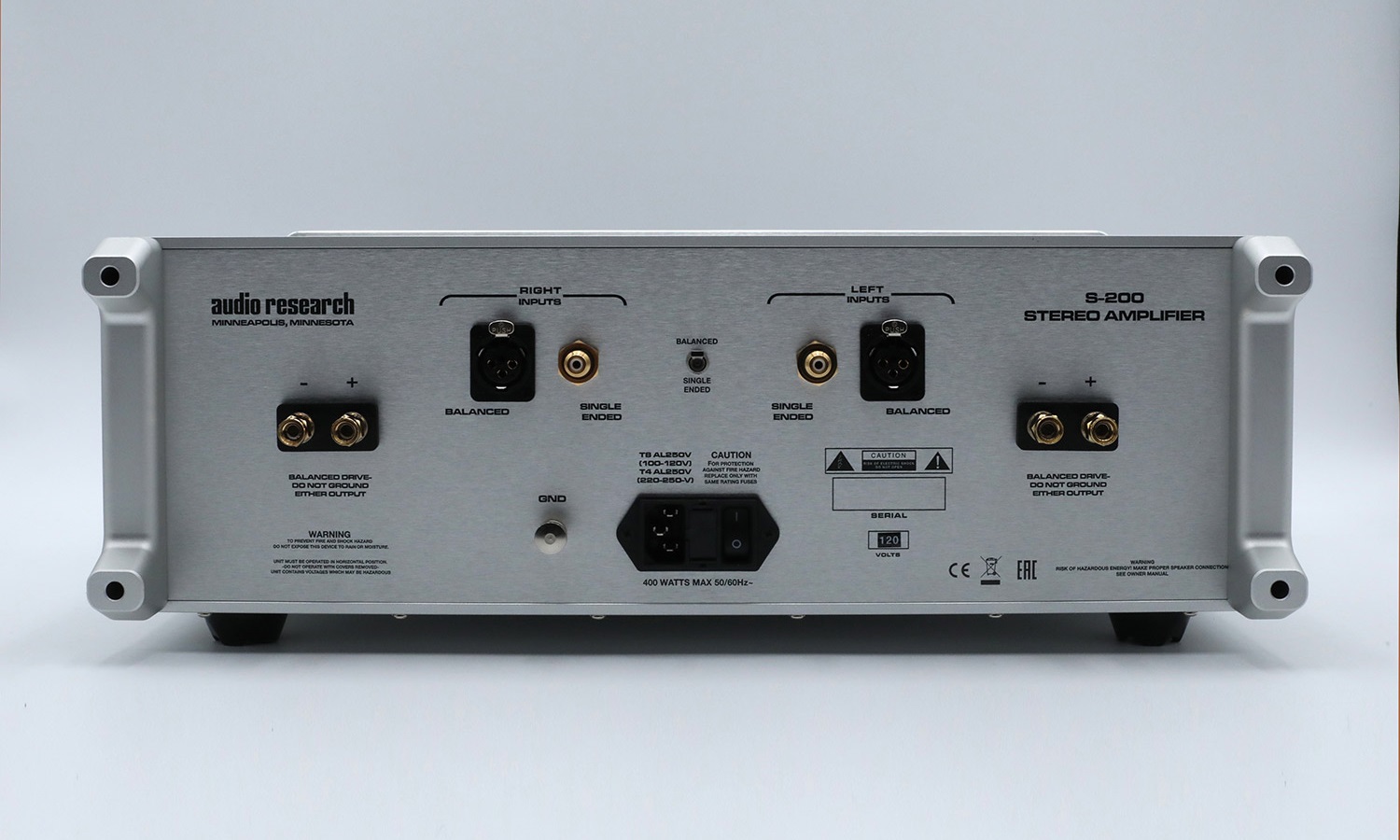
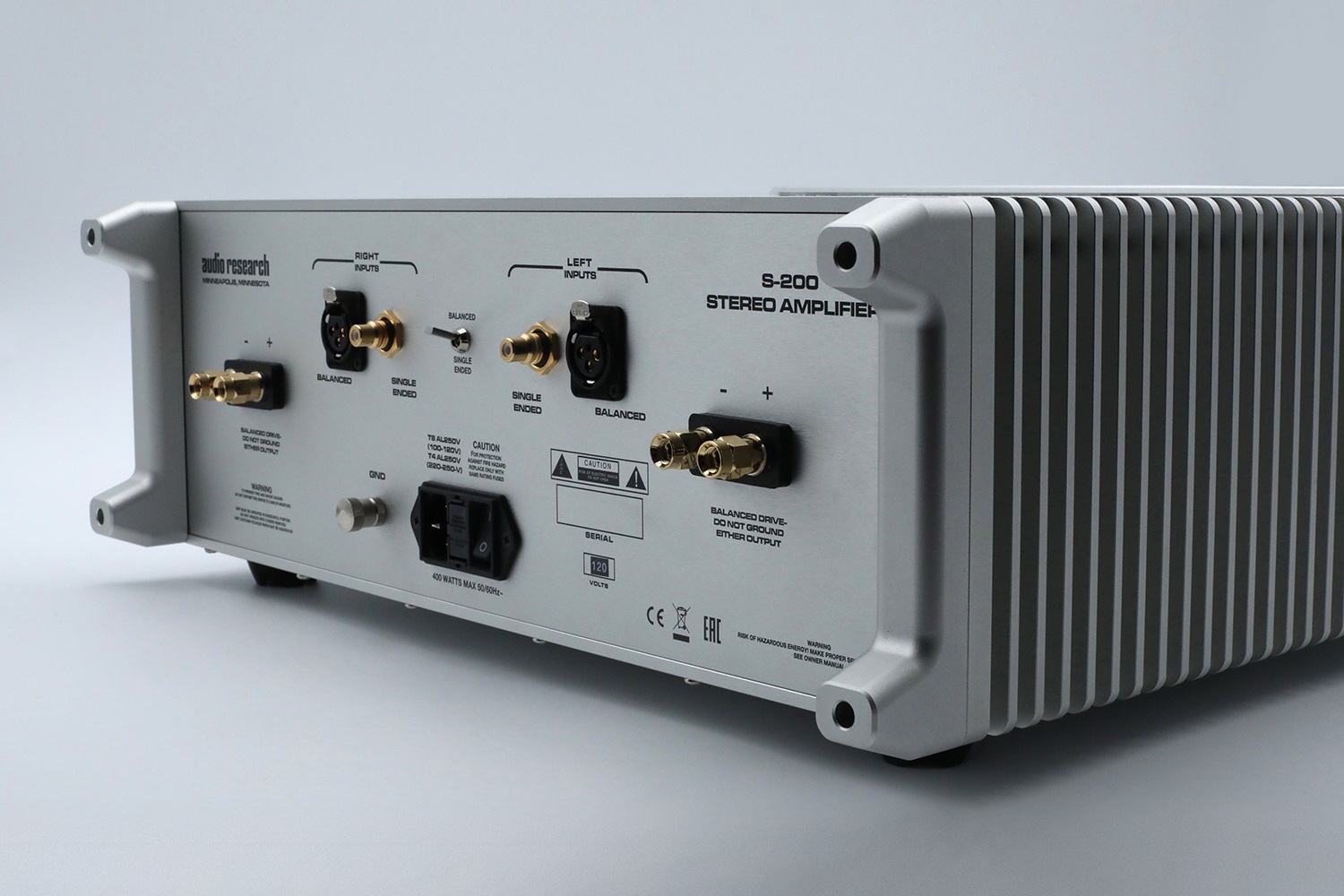
The S-200 provides balanced and unbalanced inputs, making it easier to place in systems built around different preamplifier connection standards. Its input sensitivity is 1.8 volts RMS for rated output, while its input impedance is 100 kilohms. The S-100’s balanced input specification is 1.4 volts RMS for rated output, again with a 100-kilohm input impedance.
A high input impedance generally places a relatively light load on the preamplifier. That is useful when mixing components from different manufacturers or when partnering a solid-state power amplifier with a preamplifier that may have a higher output impedance. The specified sensitivities are also within the range expected from many conventional hi-fi preamplifiers.
Owners should still consider the complete gain structure of their systems, but these figures show that the amplifiers are not designed around an unusually difficult input requirement. The S-200’s inclusion of both balanced and unbalanced connections is particularly helpful for existing systems that use RCA cables but may later migrate to balanced connections.
Purposeful industrial design
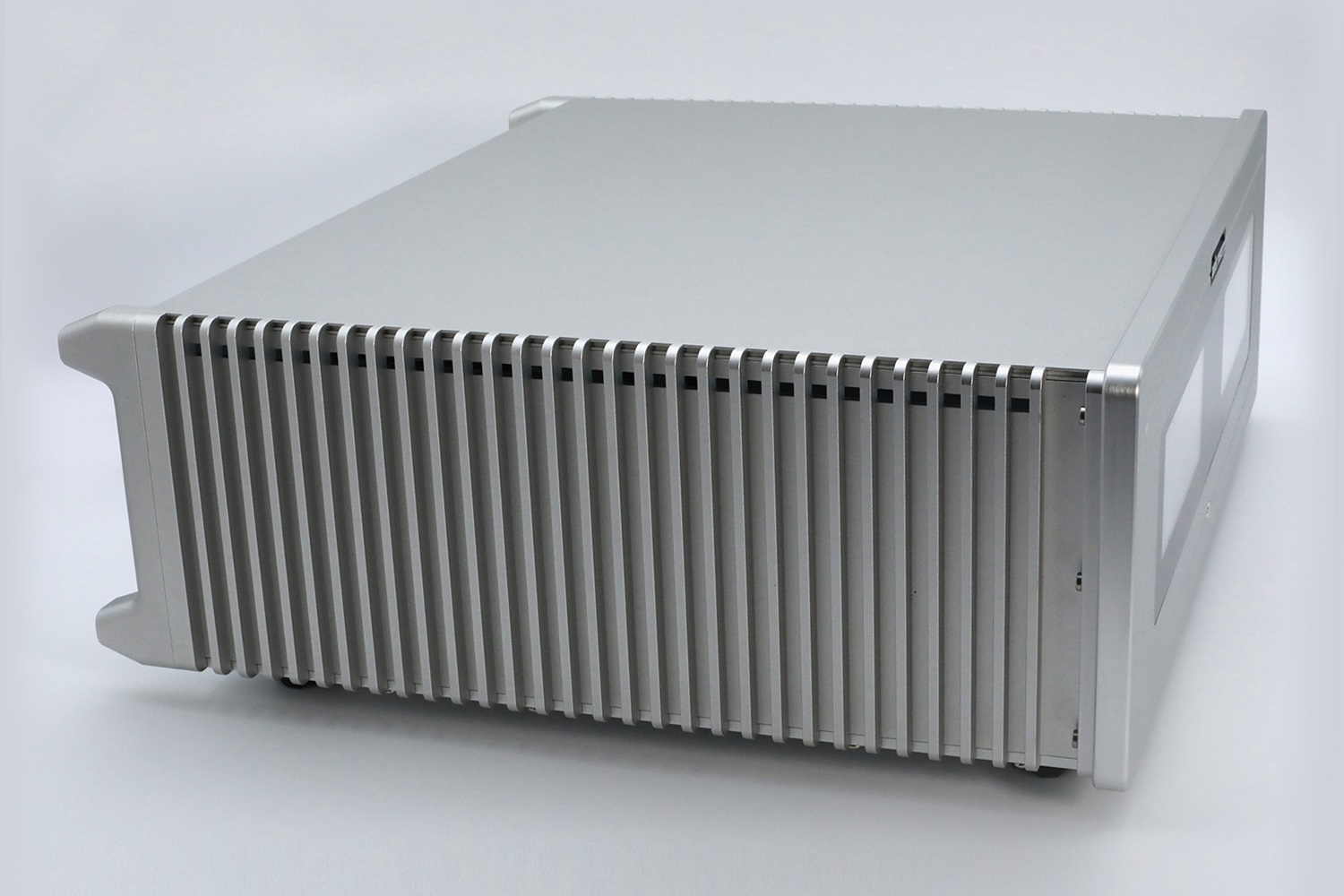
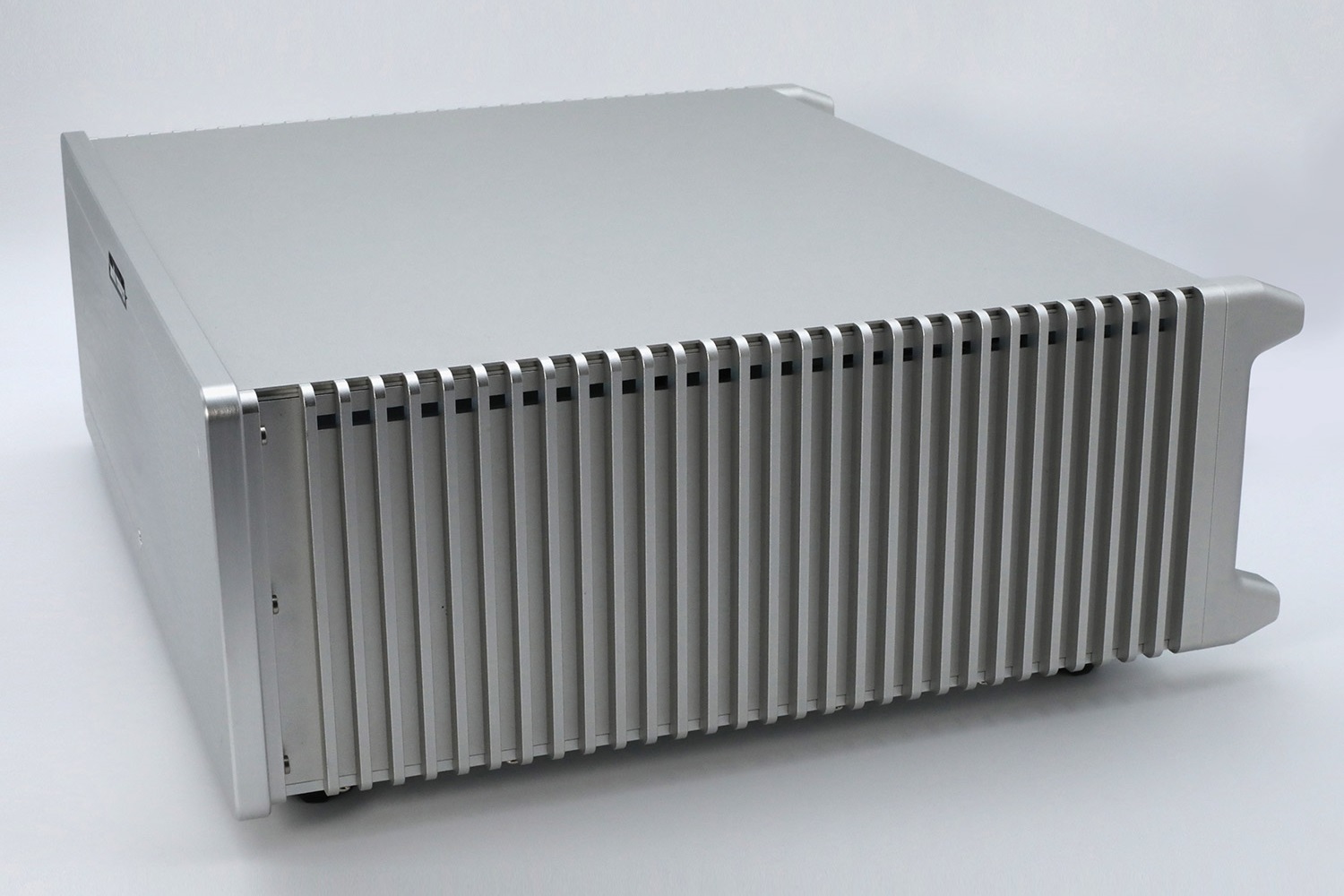
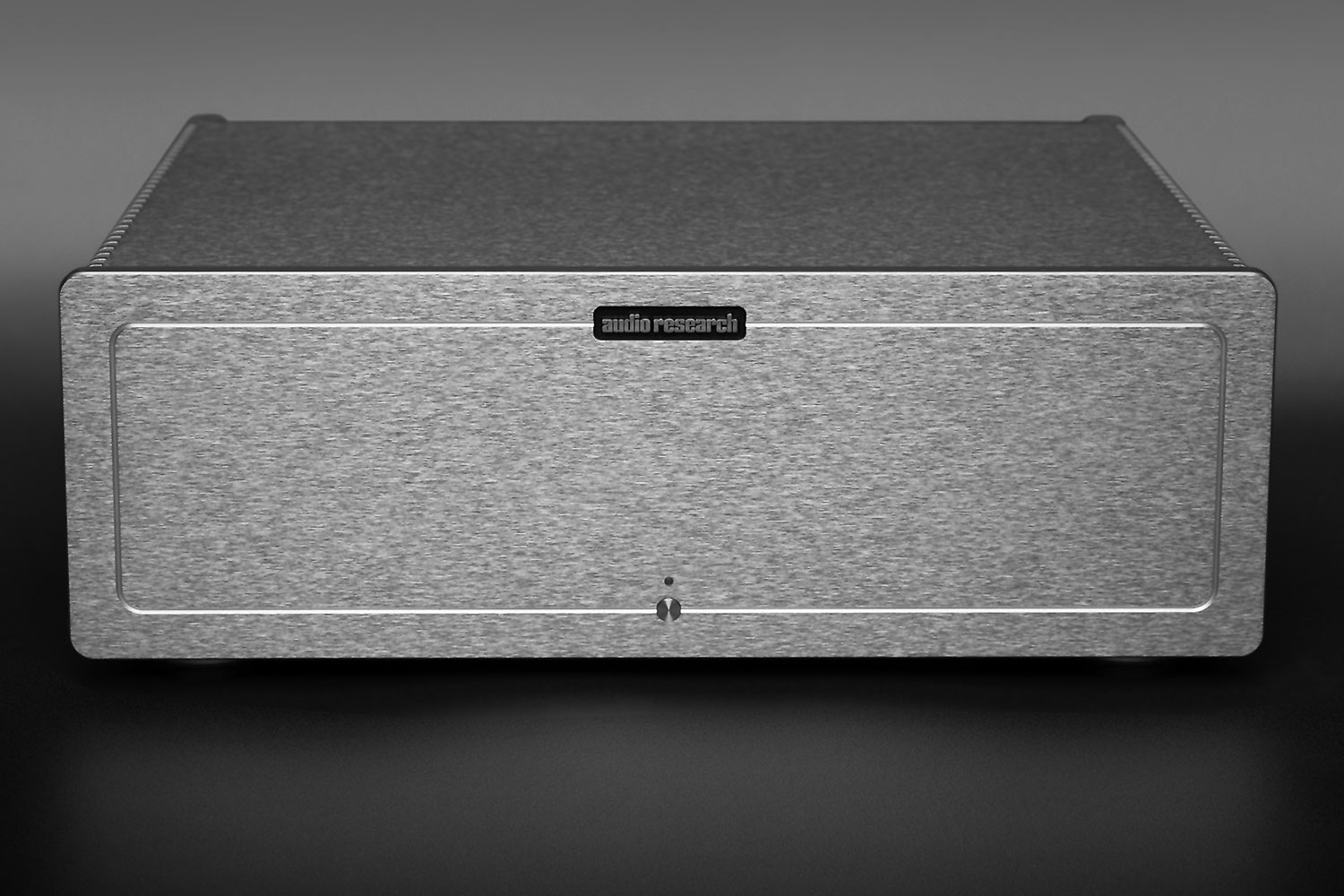
Both models use substantial aluminum construction and are available with black or silver anodized finishes. Their large side-mounted cooling fins are functional elements as well as central parts of the visual design, providing the passive surface area required by their Class AB output stages.
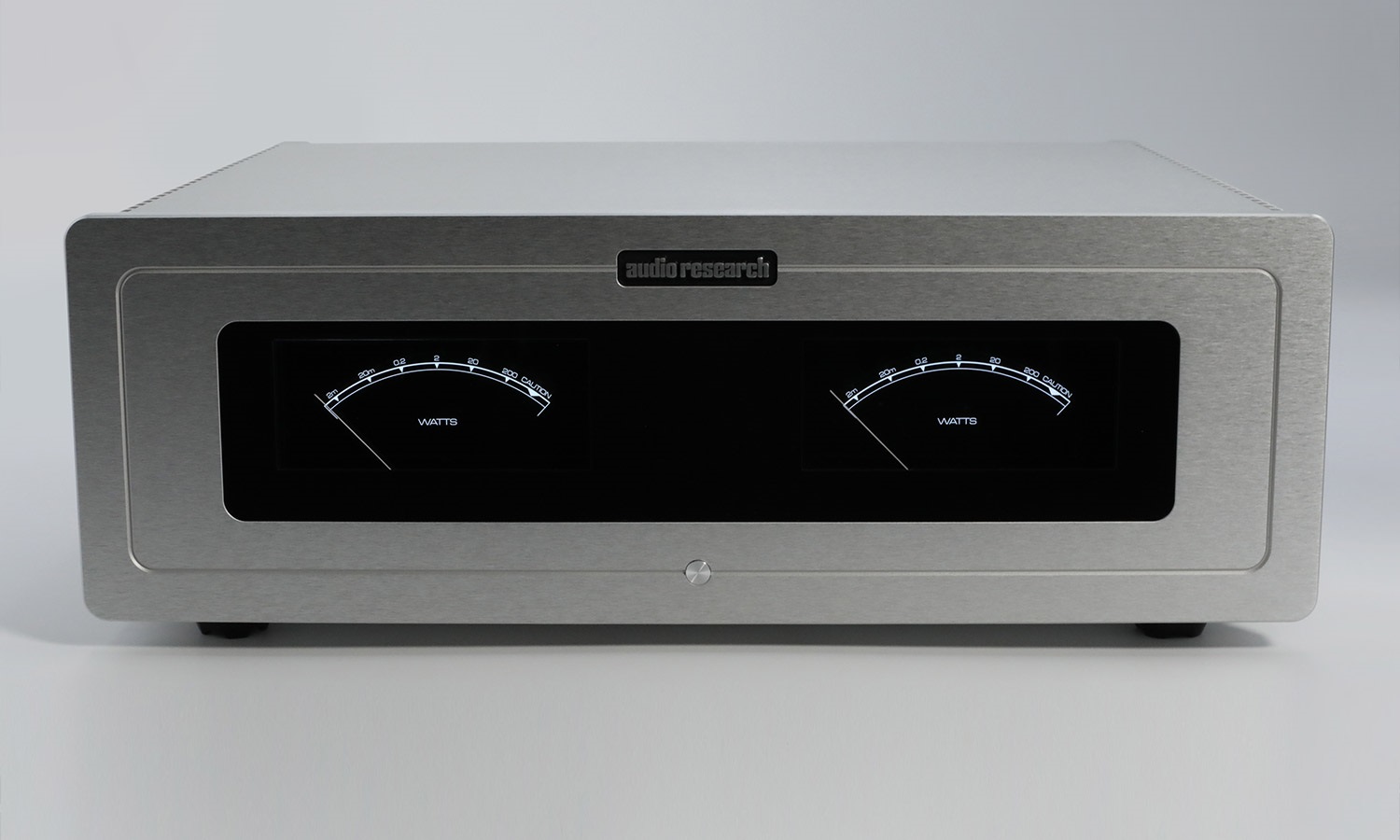
The S-200 is immediately identifiable by the VU meters recessed into its front panel. These provide a visual reference to amplifier activity and give the more powerful model a stronger studio-instrument character. The S-100 takes a more restrained approach, with a clean front panel free of visible screws. Its custom-machined cooling fins maintain the same sense of physical purpose without the S-200’s meter display.
Because the two amplifiers share the same external dimensions and weight, their visual presence is similarly substantial. Neither is intended to disappear into a small shelf system. Their precision-milled metalwork and integrated heatsinks instead suit installations where a full-width power amplifier can be given appropriate space and ventilation.
Who the S-200 and S-100 are for
These amplifiers are most suitable for listeners building a component-based two-channel system around a separate preamplifier. The S-200 is the logical candidate when higher output, additional headroom, unbalanced input compatibility or front-panel VU meters are priorities. Its 400-watt rating into four ohms also makes it the more relevant model for speakers with greater power demands.
The S-100 is aimed at listeners who want the same fundamental dual-mono, fully balanced and bipolar-transistor architecture but do not require 200 watts per channel into eight ohms. Its lower rating should not be confused with compact construction: it still needs the rack space and support appropriate for a 19-kilogram component.
Neither model is an obvious match for someone seeking a small integrated amplifier, a tube output stage or a single-box system. They are specialized power amplifiers whose value depends on being partnered with a suitable preamplifier and loudspeakers. Prospective owners should therefore choose between them by considering speaker impedance, sensitivity, room size and expected listening levels rather than assuming that more output is automatically necessary.
Conclusion
The Audio Research S-200 and S-100 are defined by a consistent set of documented strengths: separate toroidal transformers for each channel, fully balanced Class AB signal paths, bipolar output stages and substantial aluminum construction. The S-200 adds greater power, balanced and unbalanced input flexibility, a specified damping factor of 300 and prominent VU meters. The S-100 preserves the central engineering concept at half the rated output, with a cleaner front-panel treatment. Both are best suited to owners assembling a serious separates-based system who want tube-free Audio Research amplification and can provide the space, preamplifier and system matching that these dedicated power amplifiers require.

Sound Off
0Join the discussion if you have something to add.