
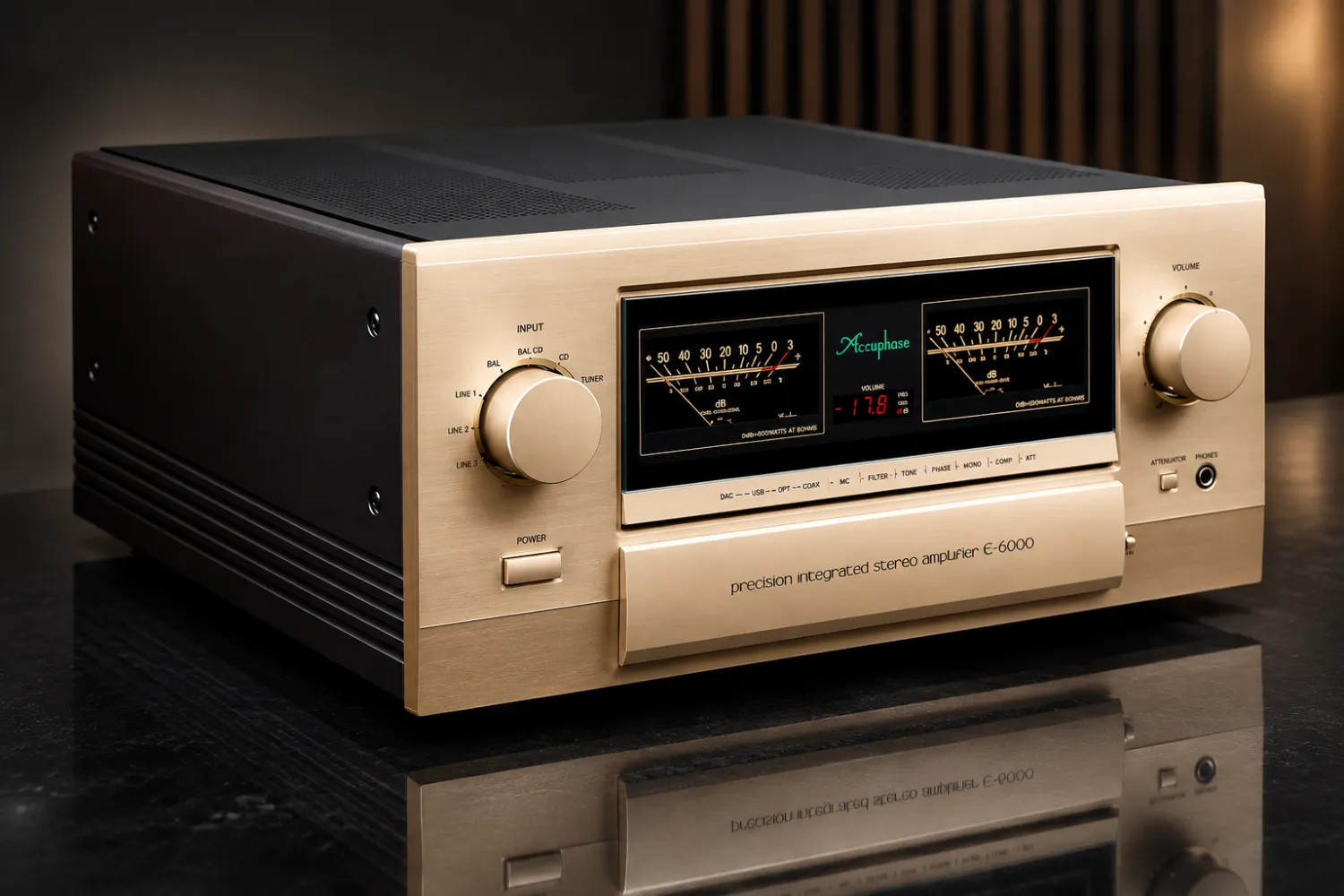
Accuphase has announced the E-6000, a class AB integrated amplifier for listeners who want substantial speaker-driving power alongside room to tailor their source connections. Replacing the E-5000, the Japanese manufacturer’s new flagship integrated model is rated at 260 watts per channel into 8 ohms and combines a revised output stage and larger power supply with changes to its volume-control circuitry. Two expansion slots allow buyers to add optional digital and phono capabilities, while separate preamplifier outputs and power-amplifier inputs offer flexibility beyond a conventional all-in-one setup. It is the most powerful integrated amplifier Accuphase has made to date.
A stronger output stage than the E-5000
The E-6000 builds on the architecture of the E-5000, which was introduced in 2021. Its headline output rating rises from 240 to 260 watts per channel into 8 ohms, but the numerical increase is only one part of the update. Accuphase has also revised the output stage and power supply, changes relevant to buyers considering an amplifier for speakers that place heavier demands on their electronics.
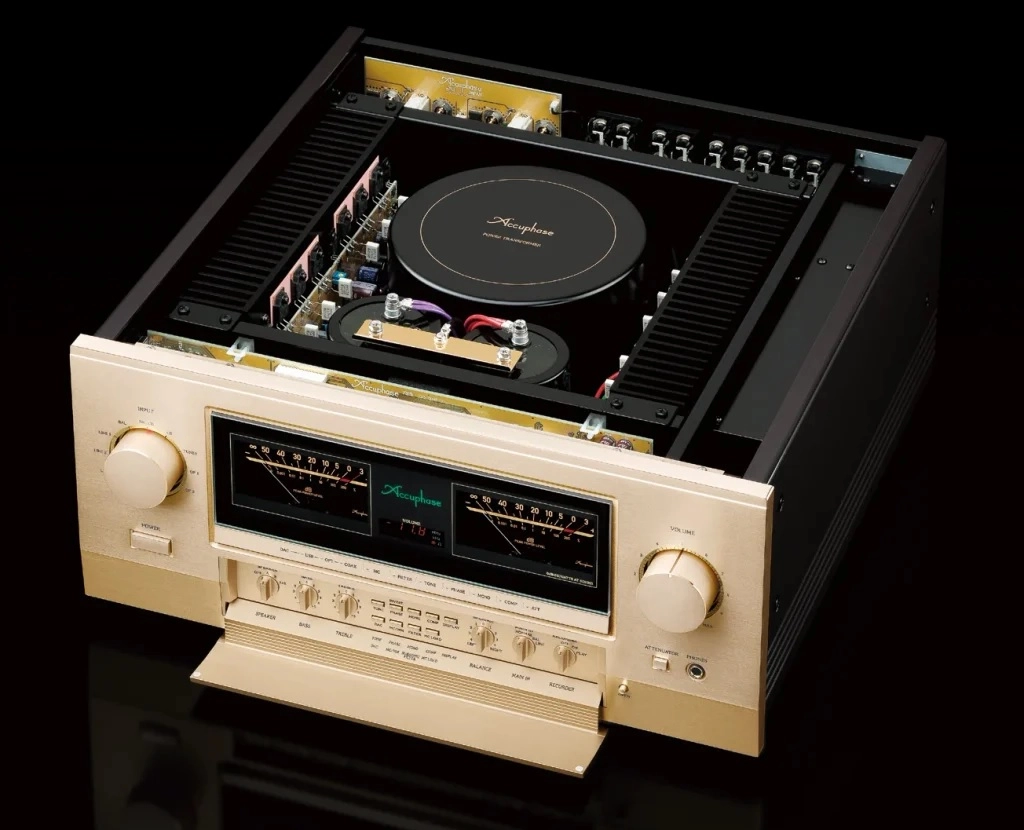
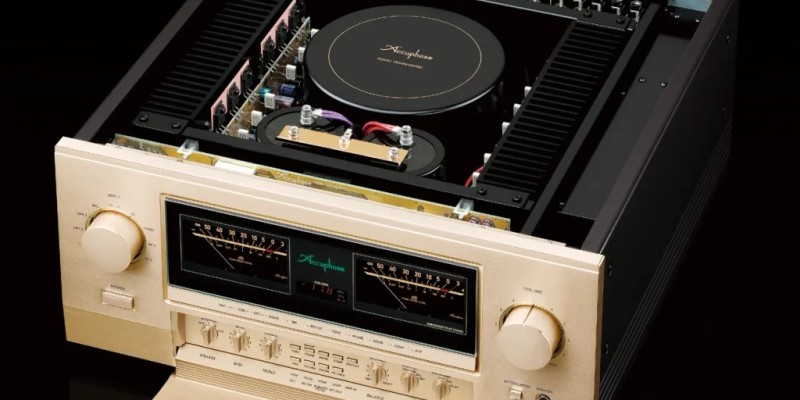
Each channel now uses six parallel push-pull transistor pairs, compared with five in the E-5000. Sharing the workload among more output devices reduces the burden on each transistor, alongside the increase in rated power. The amplifier remains a class AB design rather than a departure from the approach used in its predecessor.
A larger toroidal transformer is accompanied by two main filter capacitors rated at 47,000 microfarads each, up from 40,000 microfarads apiece. That increase in filter capacity provides a larger energy reserve for demanding passages. Neither the capacitor figure nor the power rating alone establishes how the amplifier will perform with a particular speaker, but together they show where Accuphase has concentrated its changes.
A revised approach to volume and noise
The E-6000 also adopts Accuphase Noise and Distortion Cancelling Circuit, or ANCC, technology within its Balanced AAVA volume-control system. Rather than relying on a conventional potentiometer, AAVA regulates volume by controlling the combination of multiple signal currents.
ANCC adds a secondary low-noise amplifier to compensate for noise and distortion in the main current-to-voltage conversion stage. Accuphase has used the combination of AAVA and ANCC in less expensive class AB amplifiers; its arrival here brings that approach to the company’s top integrated model.
Accuphase claims the revised circuitry improves the rated signal-to-noise ratio from 111 dB to 112 dB and reduces noise by 14 percent at normal listening volumes. Those are manufacturer figures, not a substitute for an independent measurement or listening assessment. Still, the focus on volume-control noise addresses a different aspect of everyday use from the higher maximum power rating.
Analog inputs first, with two slots for expansion
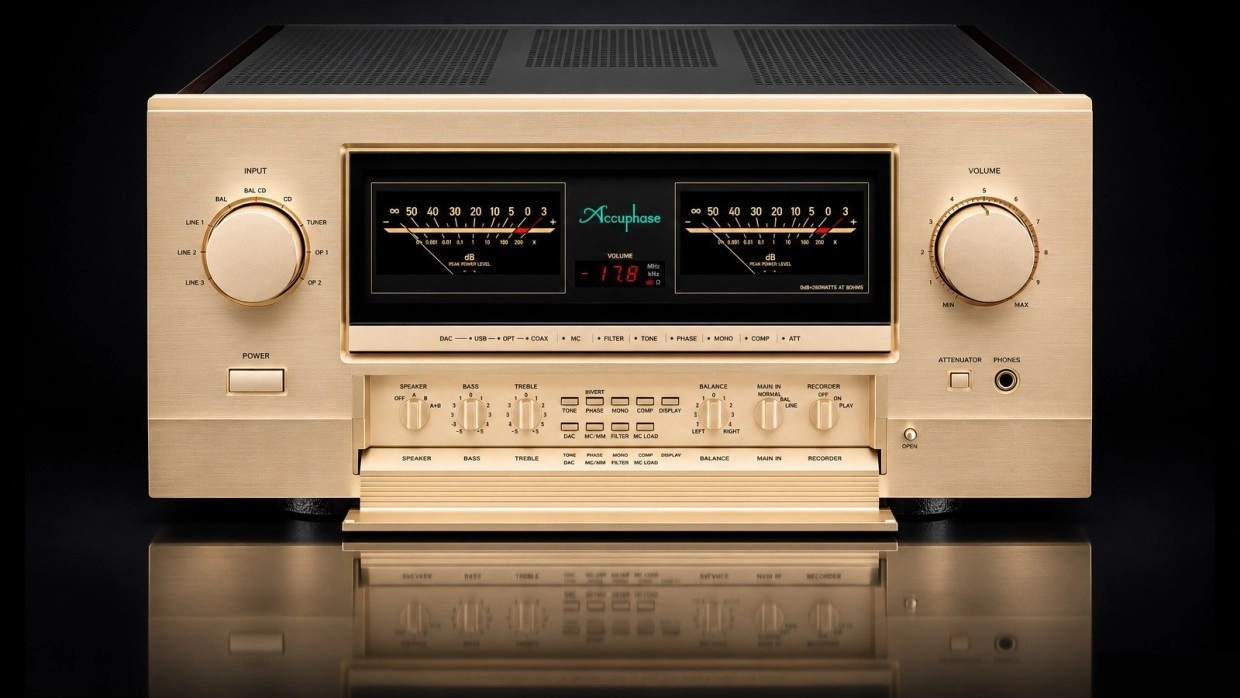
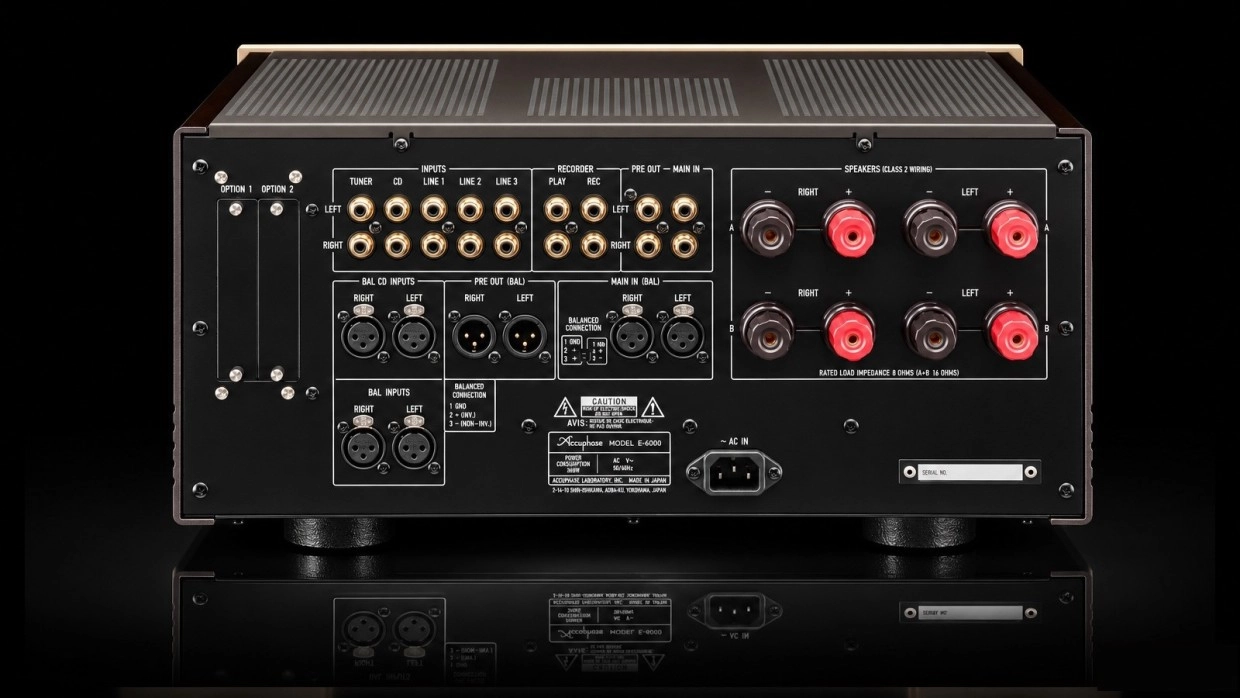
The standard input provision is suited to a system built around separate source components: five unbalanced RCA line inputs sit alongside two balanced XLR inputs. Buyers with several analog sources therefore have a choice of connection types without needing to add an input module.
Two expansion slots accommodate optional cards, including the DAC-60 digital input card and AD-60 phono amplifier. The AD-60 supports both moving-magnet and moving-coil cartridges, with additional loading options and a subsonic filter. For a turntable owner, that offers a way to add phono capability within the amplifier; a digital-source user can instead consider the DAC-60.
The modular arrangement leaves buyers free to choose the capabilities they need, but the cards are optional rather than features to assume are included. The announcement does not specify the DAC-60’s digital connections or supported formats, so those details warrant checking when planning a system.
Separate system options in a larger chassis
Separate preamplifier outputs and power-amplifier inputs extend the E-6000’s possible role beyond using its preamp and power stages together. That provision gives an owner more flexibility when configuring a system, though the supplied details do not spell out every possible connection arrangement.
The signal architecture is fully balanced from input to output, and Accuphase claims a damping factor of 1,000. The company has also revised the speaker-protection circuit, using lower-resistance MOSFET switches to minimize impedance in the output path. These are design details rather than guarantees of a particular result with any given loudspeaker.
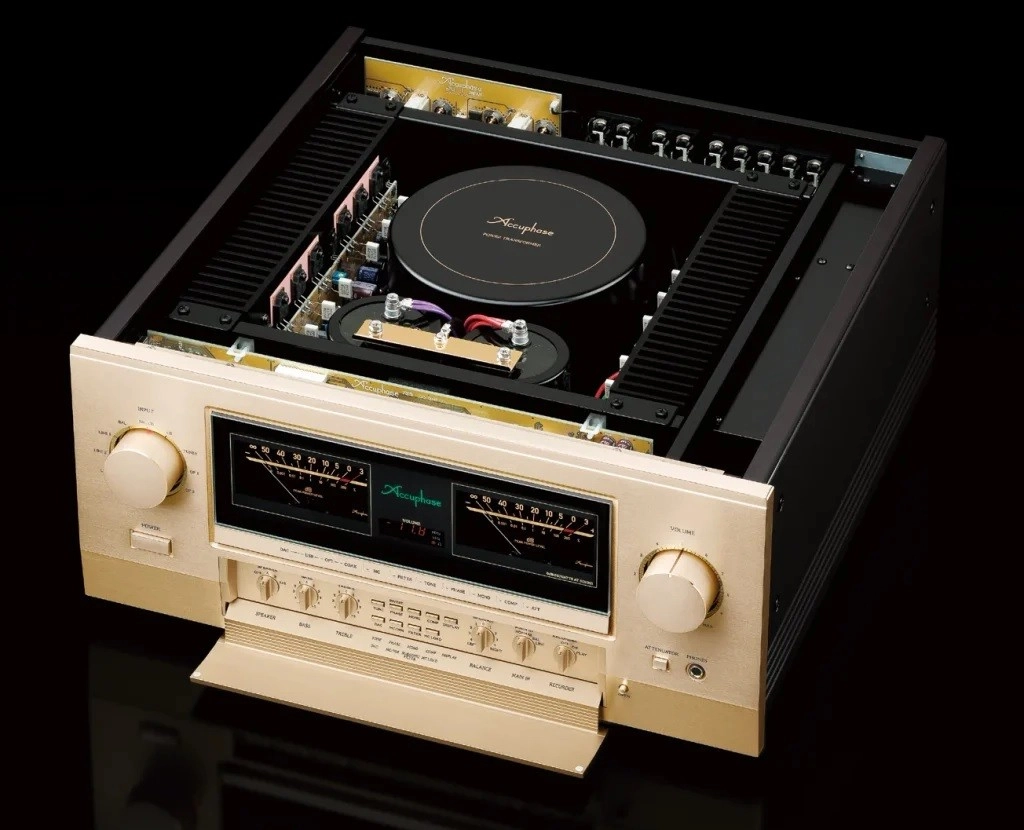
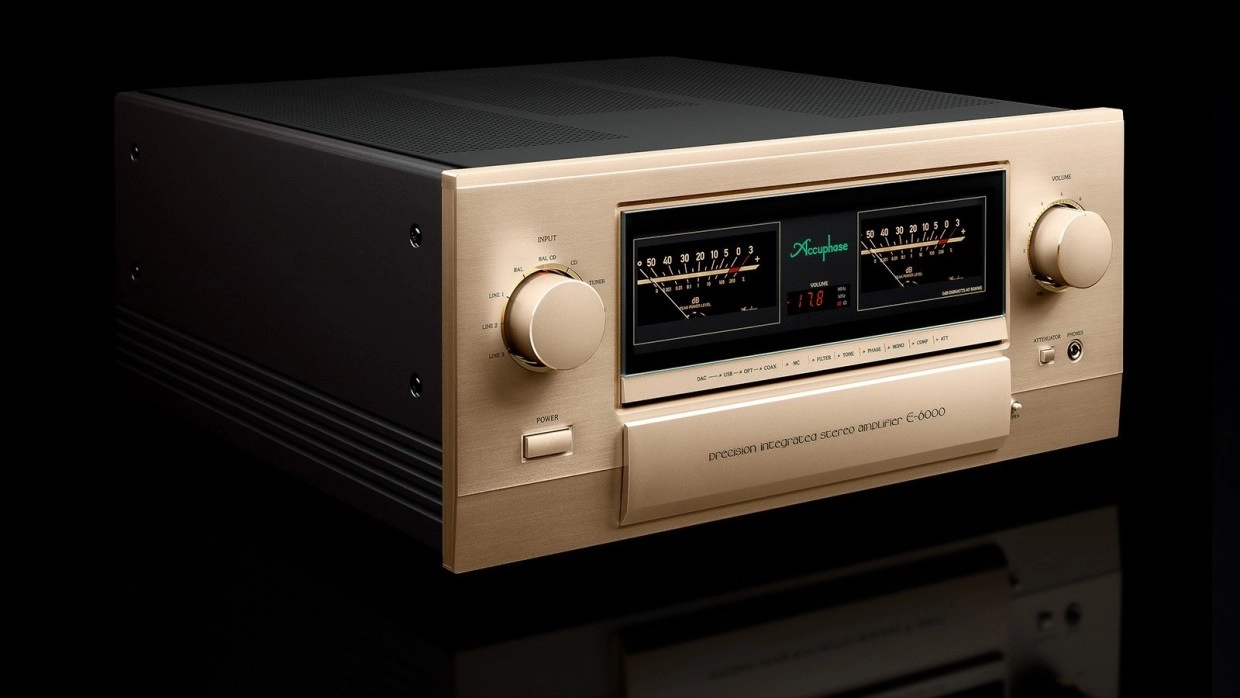
There is also a separate headphone amplifier for listening away from the speakers. Outside, the E-6000 retains Accuphase’s champagne-colored front panel and two analog power meters. Its dimensions are 465 x 221 x 502 mm, with a chassis 10 mm taller than the E-5000’s. Weight rises from 33.8 kg to 38.6 kg, making shelf space and the strength of the supporting furniture important considerations before purchase.
The E-6000 is aimed at a listener who wants the convenience of an integrated amplifier without giving up the option to adapt its inputs or use separate preamp and power-amplifier connections. Its increased output capacity, revised volume circuitry and optional phono and digital cards make the system-planning questions as important as the headline power figure: which sources need connecting, which modules are required, and whether the intended location can accommodate a 38.6 kg amplifier. Pricing and delivery information for the Benelux region had not been announced in the supplied details, and no US price or availability information was provided. Prospective buyers should also check module details and compatibility before finalizing a setup.


Sound Off
0Join the discussion if you have something to add.