
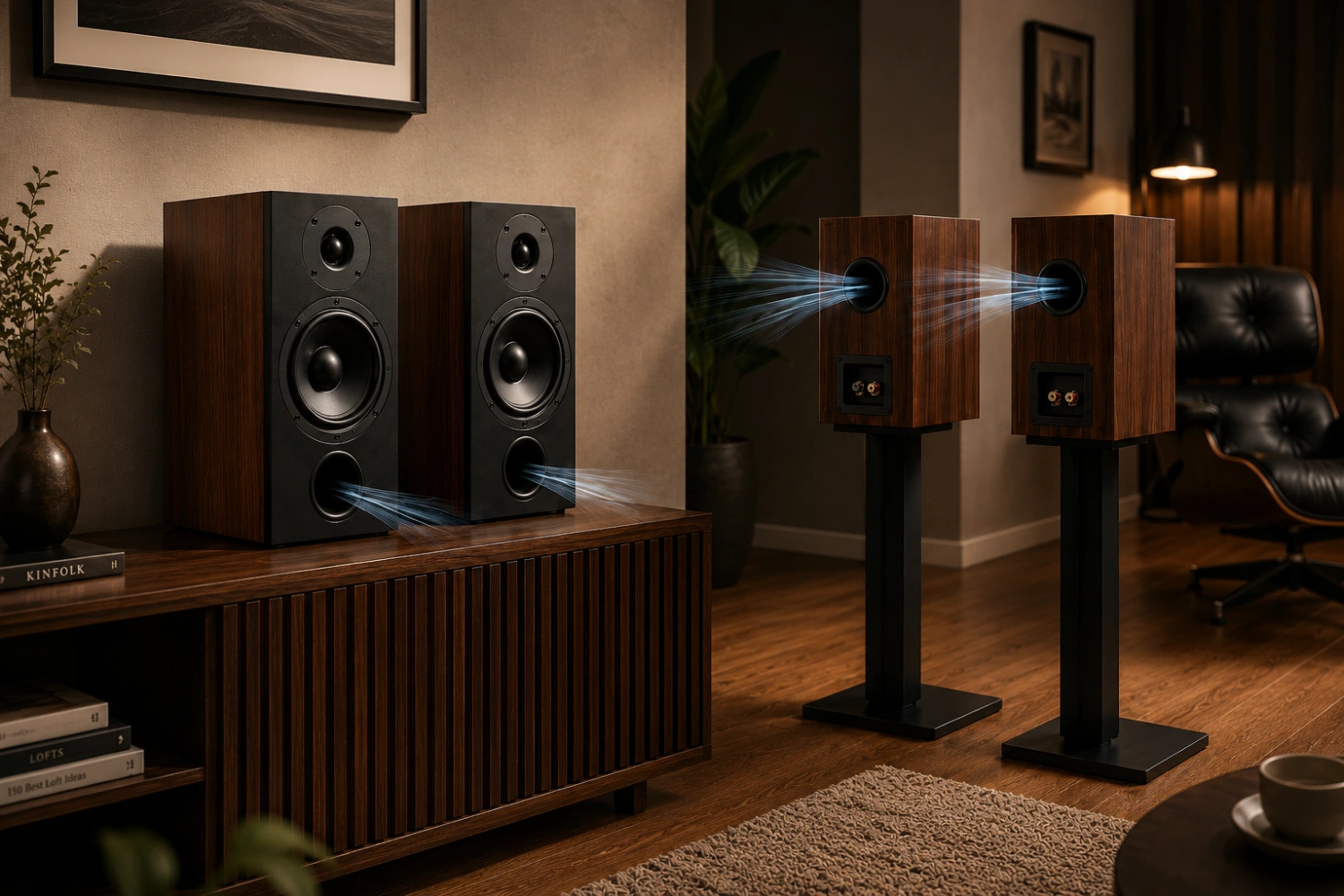
Bass-reflex speakers usually place their port on either the front or rear of the cabinet. At first glance, the difference might seem largely cosmetic, but port position can affect speaker placement, interaction with nearby walls, audible turbulence and how easy a loudspeaker is to integrate into a particular room.
However, the subject is often oversimplified. A front-facing port does not automatically mean a speaker can be pushed against a wall, and a rear-facing port does not necessarily require a huge amount of space behind it.
The room, the tuning of the speaker and the distance from nearby boundaries usually matter more than the direction in which the port points.
Here is what actually changes between front- and rear-ported loudspeakers.
What Is a Bass Reflex Port?
A bass-reflex enclosure uses an opening in the cabinet, normally connected to an internal tube or duct, to increase acoustic output around the speaker's low-frequency tuning point.
This system is based on the principle of a Helmholtz resonator.
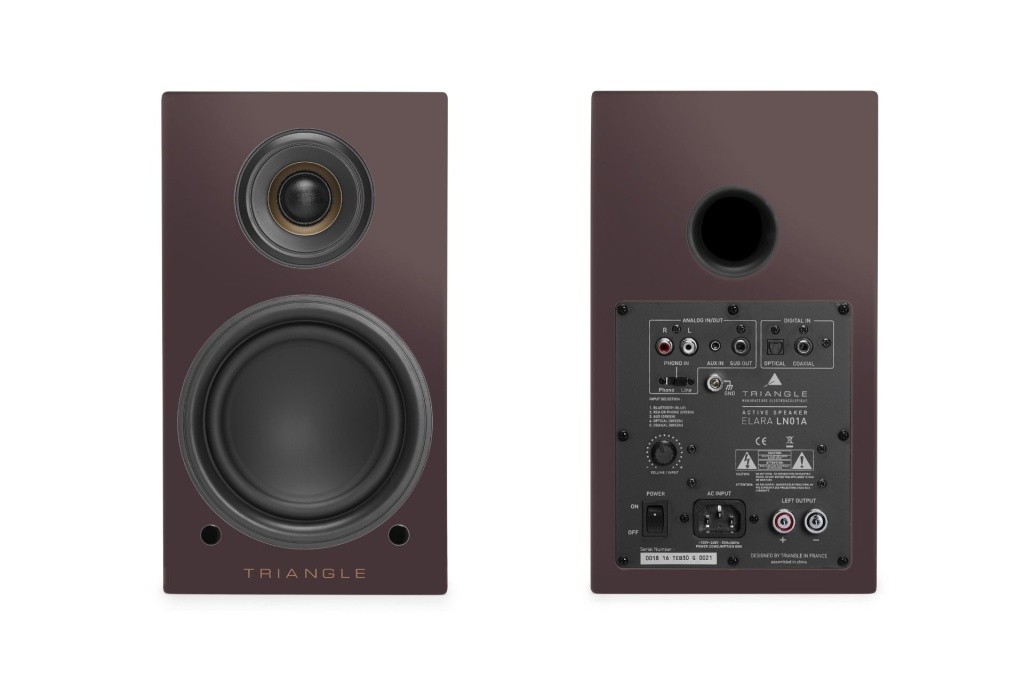
When a woofer moves, it produces acoustic energy from both the front and rear sides of its cone. In a sealed loudspeaker, the energy generated inside the cabinet remains contained and contributes primarily to controlling the movement of the driver.
In a bass-reflex design, the cabinet and port are tuned so that energy inside the enclosure drives the air mass within the port at low frequencies.
Around the speaker's tuning frequency, the port can contribute a considerable amount of the total bass output while simultaneously reducing the amount of movement required from the woofer.
The result can be deeper bass, greater efficiency and higher low-frequency output than would otherwise be possible from a similarly sized sealed enclosure.
Port tuning depends on several factors, including:
- Cabinet volume
- Port length
- Port diameter or cross-sectional area
- Woofer characteristics
- The intended low-frequency tuning
Ports may be circular, oval, rectangular or formed as a long slot integrated into the cabinet.
Their location is another part of the loudspeaker designer's overall acoustic strategy.
Rear-Firing Bass Reflex Ports
A rear-ported speaker directs the output of its bass-reflex system toward the wall behind the cabinet.
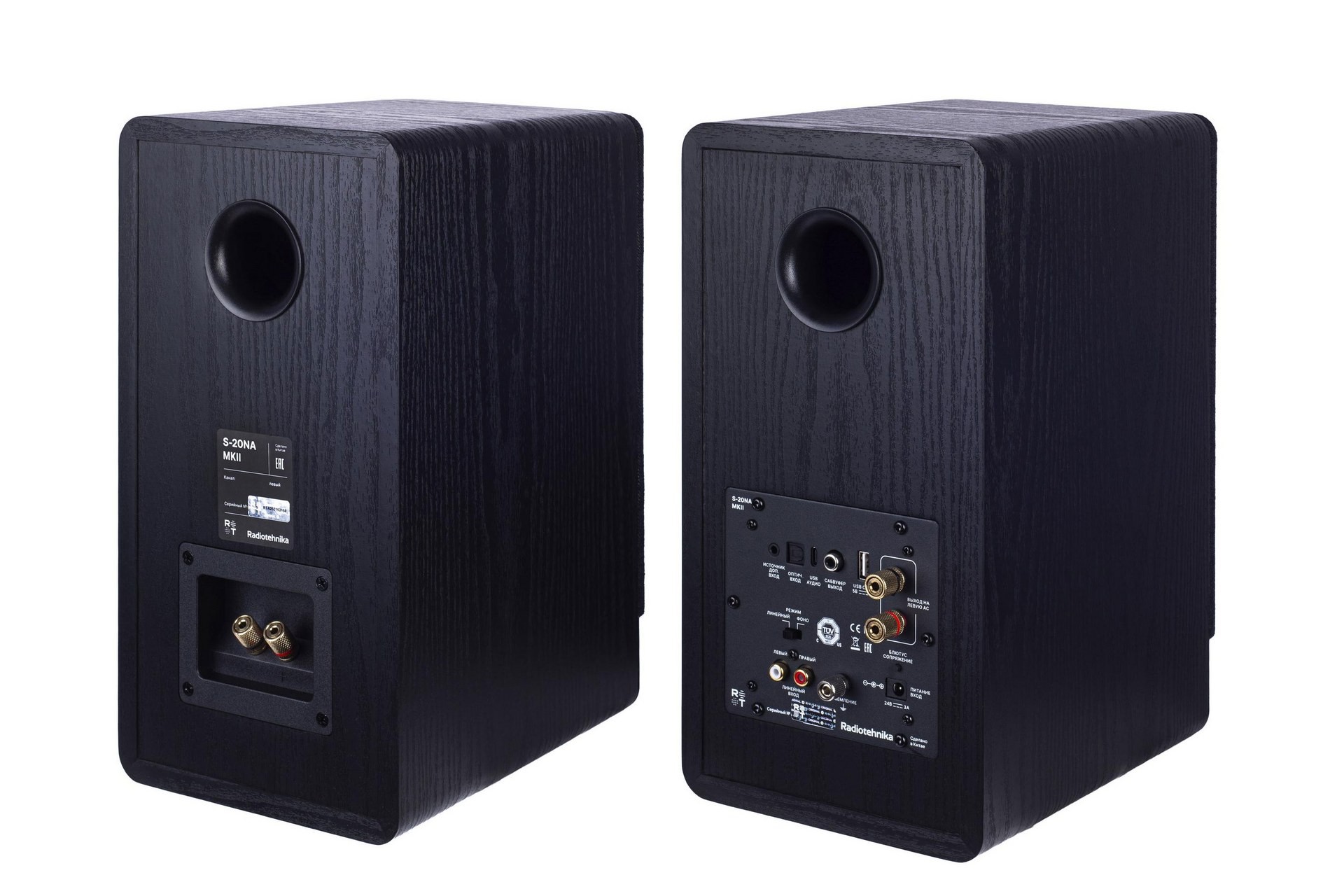
This makes the distance between the port and the wall an important practical consideration.
If the speaker is positioned extremely close to the wall, airflow from the port can become restricted. Depending on the design, this can increase turbulence or make port-related noise more noticeable.
The nearby wall also reinforces low frequencies.
This boundary reinforcement is not exclusive to rear-ported speakers, but because the rear port physically faces the wall, placement can become particularly important.
Move the speaker closer to the wall and bass output will often increase. Move it farther into the room and the tonal balance may become leaner and more controlled.
There is no universal correct distance.
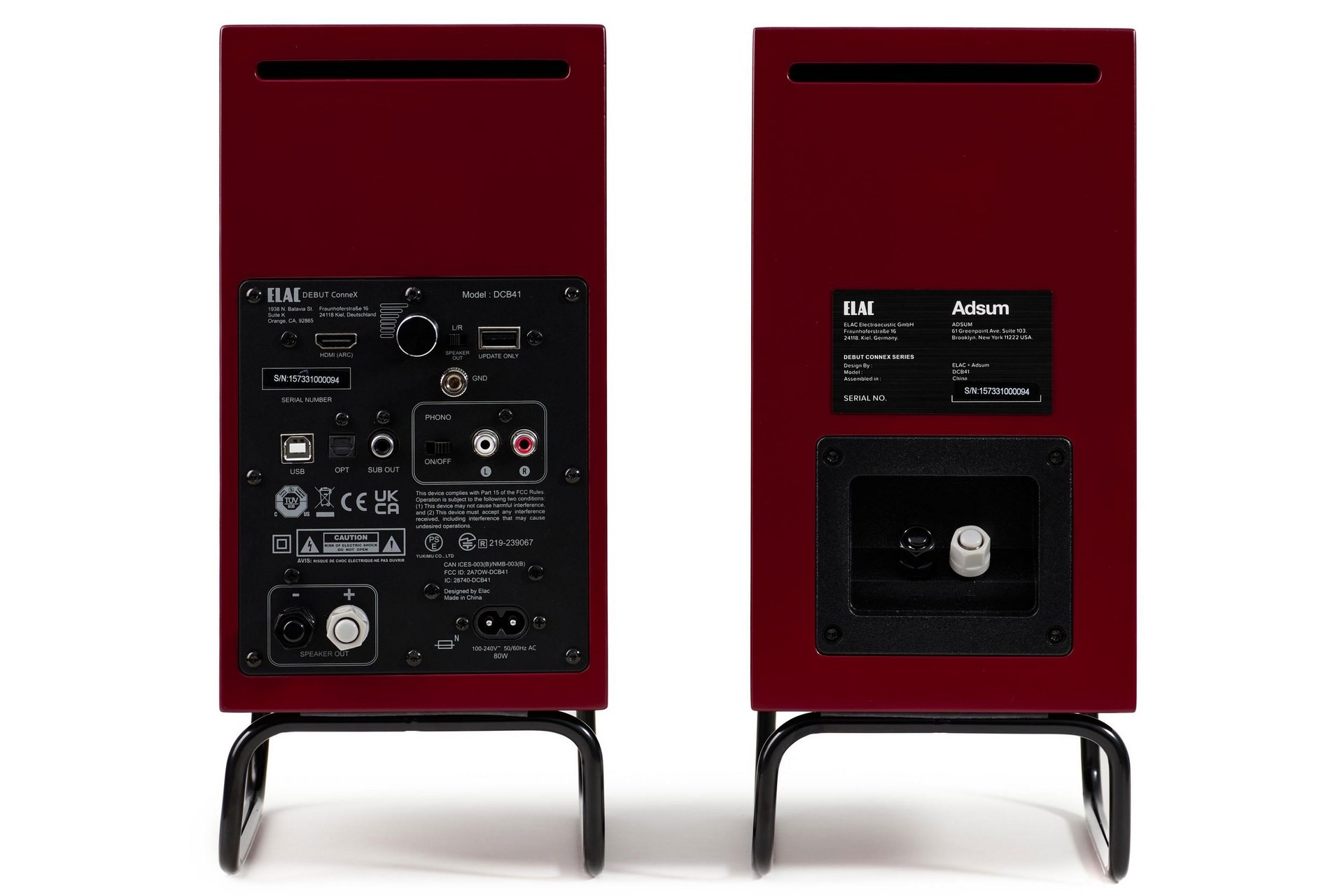
Some rear-ported speakers perform perfectly well relatively close to a wall, while others may need considerably more breathing room before the bass becomes properly balanced.
The manufacturer's recommendations are therefore a good starting point.
From there, small changes in position can make a surprisingly large difference.
Why Rear-ported Speakers Can Sound Boomy
When a rear-ported speaker sounds excessively heavy or boomy near a wall, the port itself is not necessarily the only culprit.
Several effects occur simultaneously.
The woofer and port are both producing low-frequency energy, while the speaker's proximity to room boundaries reinforces particular frequencies.
The listening room also contains resonant modes determined by its dimensions.
Move the speaker only 20 or 30 centimeters and its interaction with those room modes can change substantially.
This is why pulling a speaker farther from the wall can sometimes transform the bass even when the port tuning itself has obviously not changed.
The goal is normally to find a position where bass sounds extended and powerful without becoming slow, thick or dominant.
Advantages of Rear-Firing Ports
One potential benefit of positioning the port behind the speaker is that unwanted port noise is directed away from the listener.
Air rushing through an inadequately designed port can create turbulence sometimes described as chuffing.
Modern loudspeakers frequently use flared ports and carefully optimized airflow to minimize this effect, but placing the opening at the rear can make any residual noise less obvious at the listening position.
Rear placement also gives designers greater freedom when creating a clean front baffle.
Removing the port from the area around the drivers can simplify the visual design and potentially reduce unwanted interactions on the front surface of the cabinet.
Front-Firing Bass Reflex Ports
Front-ported speakers place the bass-reflex opening on the same side of the cabinet as the drivers.
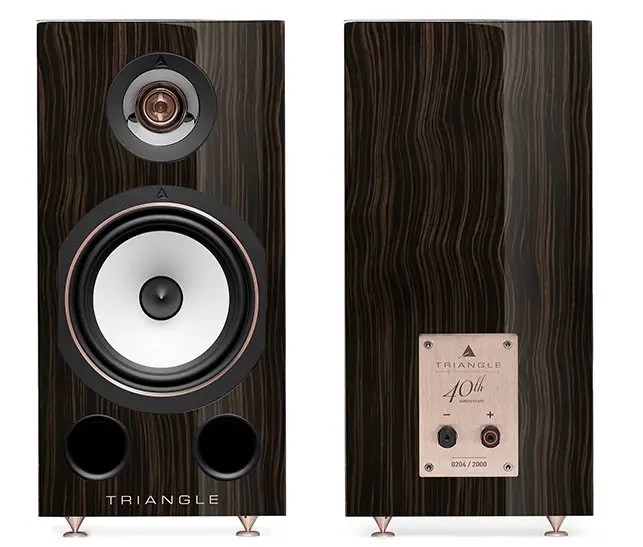
One of the main practical advantages is that the port itself is less likely to be obstructed by the wall behind the loudspeaker.
This can make front-ported models easier to accommodate in rooms where the speakers need to sit relatively close to a rear boundary.
But there is an important qualification.
Front-firing ports do not eliminate the acoustic effects of placing a loudspeaker close to a wall.
Low-frequency wavelengths are extremely long compared with the dimensions of the speaker cabinet. As a result, bass energy does not simply travel forward because the port faces forward.
The entire loudspeaker still interacts with the surrounding walls, floor and room.
Moving a front-ported speaker toward the wall can therefore increase bass output just as it can with a rear-ported design.
Are Front-ported Speakers Better Near Walls?
Sometimes — but not automatically.
A front port can offer a practical advantage because its opening remains unobstructed even when the rear of the cabinet is relatively close to the wall.
This is particularly useful in smaller listening rooms, living rooms where furniture dictates speaker position, or installations where the loudspeakers cannot be pulled far into the room.
However, the speaker's overall tuning remains important.
A generously tuned front-ported speaker may still produce excessive bass close to a wall, while a carefully designed rear-ported model may work extremely well in exactly the same position.
Port orientation should therefore be viewed as one factor rather than a guarantee of placement flexibility.
Port Noise Can Be More Noticeable From the Front
The disadvantage of placing a bass-reflex port on the front panel is that any unwanted airflow noise is directed toward the listener.
A properly engineered port should remain quiet throughout most normal listening conditions.
Designers can reduce turbulence by increasing the port area, rounding or flaring its entrances and optimizing its geometry.
Nevertheless, very compact speakers attempting to produce substantial deep bass sometimes require high air velocity through relatively small ports.
Under demanding conditions, audible chuffing can appear.
With a rear-facing design, some of that noise may be naturally masked by the position of the cabinet.
With a front-facing port, it can be easier to hear.
Does Port Direction Affect Bass Timing or Speed?
A common claim is that front-facing ports produce faster or more precise bass while rear-facing ports sound slower.
Port direction alone does not determine bass speed.
What listeners often perceive as “fast” or “slow” bass is influenced by several things:
- Driver behavior
- Enclosure tuning
- Port resonance
- Frequency response
- Room modes
- Speaker placement
- Listening position
- Bass decay within the room
A speaker with excessive energy around a room resonance may sound slow or boomy regardless of where its port is positioned.
Conversely, a well-designed rear-ported speaker in a properly optimized room can produce exceptionally controlled bass.
Does a Rear Port Need the Wall to Work?
No.
A rear-facing bass reflex port does not require a nearby wall to function.
The port is part of the loudspeaker's acoustic system and operates because of the relationship between the woofer, internal cabinet volume and port tuning.
Moving the speaker farther from the wall does not stop the port from working.
What changes is the speaker's interaction with the room.
Close placement generally provides stronger boundary reinforcement, while moving the speaker farther into the room often reduces it.
This distinction is important because the wall is not an extension of the bass-reflex system itself.
It is part of the listening environment.
What About Down-Firing Ports?
Some manufacturers avoid the front-versus-rear question entirely by placing the port underneath the cabinet.
A downward-facing port can provide relatively predictable clearance when the speaker uses a fixed plinth or carefully designed feet.
This approach is common in both loudspeakers and subwoofers.
It does not remove room interaction, but it allows the manufacturer to control the distance immediately in front of the port rather than relying entirely on how the owner positions the speaker.
Front vs Rear Ports in Small Rooms
If your speakers must sit close to the wall, a front-ported design can be easier to work with.
The physical opening will remain unobstructed, and you do not need to maintain as much clearance simply for airflow.
That does not mean positioning becomes irrelevant.
In small rooms especially, low-frequency room modes can dominate what you hear.
A speaker that produces wonderfully balanced bass at one position can sound dramatically different after moving only a short distance.
Experimentation is therefore essential.
Try moving the speakers forward or backward in relatively small increments while listening to familiar recordings with consistent bass.
You may find that positioning has a considerably larger effect than changing between front- and rear-ported speakers.
Can You Put Rear-Ported Speakers Against a Wall?
It depends on the loudspeaker.
Some manufacturers explicitly design rear-ported models to operate close to room boundaries.
Others recommend considerable clearance.
If the port opening is almost touching the wall, however, airflow may become restricted and the port may no longer operate exactly as intended.
As a practical starting point, provide reasonable clearance around the opening and follow the manufacturer's placement guidance where available.
Then adjust according to the bass response in your own room.
If the sound becomes overpowering, muddy or excessively warm, moving the speakers farther from the wall is one of the first adjustments worth trying.
What Are Bass Reflex Port Plugs?
Many bass-reflex speakers include foam plugs or bungs that can be inserted into the port.
These are particularly useful when speakers must be positioned close to walls.
Blocking or partially restricting the port changes the low-frequency behavior of the loudspeaker and can reduce excessive bass reinforcement.
Some manufacturers provide two-stage plugs that allow the port to be partially or completely blocked.
This gives the listener another way of adapting the loudspeaker to the room without electronic equalization.
It is generally best to use plugs specifically supplied or recommended by the manufacturer rather than improvising with objects that could become lodged inside the enclosure.
Front vs Rear Bass Reflex: Which Is Better?
Neither arrangement is inherently superior.
A front-facing port can provide greater practical freedom when a speaker has to be positioned close to a wall, and the port itself is less likely to become physically obstructed.
A rear-facing port can keep the front baffle cleaner and may make residual airflow noise less noticeable.
But these differences should not be confused with overall sound quality.
The performance of a bass-reflex speaker depends far more on the quality of its engineering than on whether the port happens to face forward or backward.
A properly designed rear-ported loudspeaker can outperform a mediocre front-ported design in virtually every meaningful respect — and vice versa.
The Most Important Factor Is Your Room
When choosing between front- and rear-ported speakers, consider where the loudspeakers will actually be used.
If they must sit very close to a wall or inside a constrained area, a front-facing port may make installation easier.
If you have freedom to position the speakers well into the room, port orientation becomes much less significant.
Either way, do not underestimate the influence of placement.
The difference between moving a speaker 30 centimeters forward or backward can sometimes be greater than the difference between two completely different port arrangements.
Bass reflex design matters, but the speaker and room ultimately work as one acoustic system.
The best position is therefore not determined by the direction of the port alone. It is the position where the speaker, port and room combine to produce the smoothest, most controlled and most convincing bass response at your listening position.


Sound Off
0Join the discussion if you have something to add.