
7 Best Subwoofers for Music in 2026: From SVS to Sonus faber
From the compact SVS SB-1000 Pro to the formidable Sonus faber Gravis VI, these seven subwoofers take distinctly different approaches to extending a stereo system’s low-frequency reach.
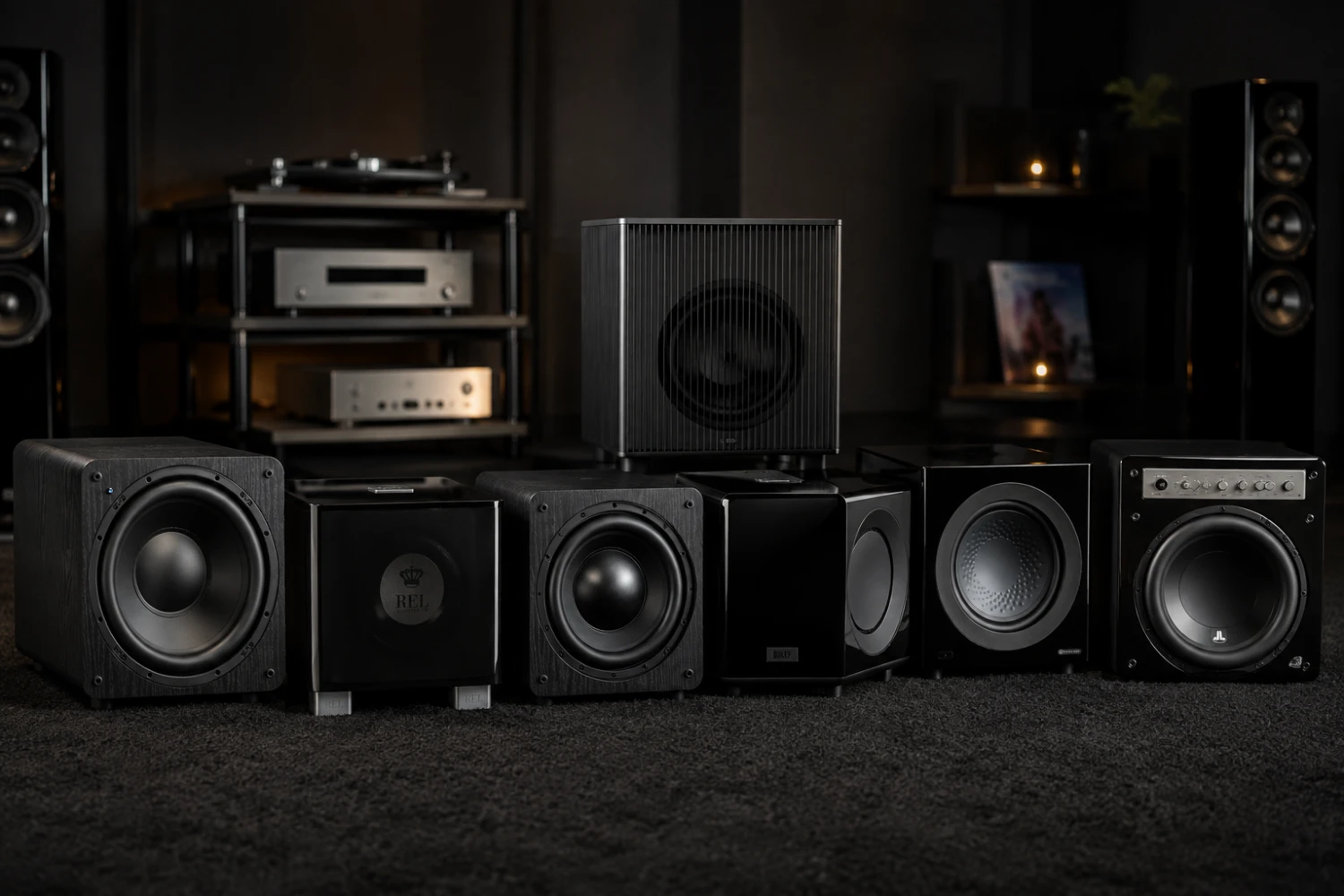
For years, adding a subwoofer to a serious two-channel system was surprisingly controversial. Purists argued that a properly designed pair of loudspeakers should reproduce all the bass a music system needs, while subwoofers were often associated more with home cinema explosions than accurate stereo reproduction.
That view is increasingly difficult to defend.
A well-integrated modern subwoofer does far more than simply add bass. Properly configured, it can extend the system into the lowest octave, increase scale and physical presence, reveal more of the acoustic space around recordings and reduce the burden placed on smaller loudspeakers. The best designs can do all of this without drawing attention to themselves.
Integration is the key. A great music subwoofer should not sound like a separate box producing low frequencies in the corner of the room. It should make the main speakers sound larger, more effortless and more complete.
From compact sealed designs to uncompromising high-end bass systems, these are seven of the most compelling subwoofers for two-channel music systems in 2026.
7. SVS SB-1000 Pro
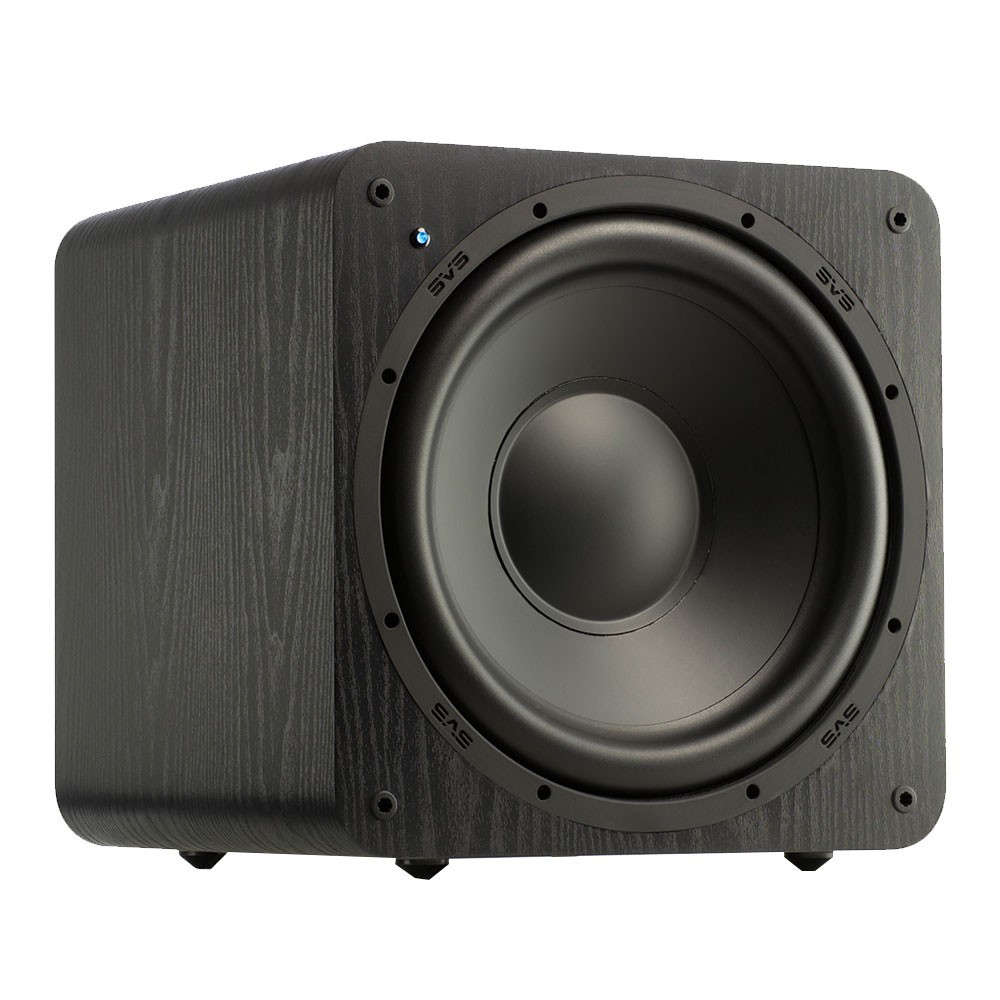
- Configuration: Sealed enclosure
- Driver: 12-inch high-excursion woofer
- Amplifier: Sledge STA-325D Class D, 325W RMS / 820+W peak
- DSP: Analog Devices 50 MHz processor
- Frequency response: 20Hz–270Hz ±3dB
- Control: Bluetooth app, three presets, parametric EQ
- Connections: Stereo RCA and speaker-level inputs
Pros: Outstanding value, compact dimensions, excellent app-based tuning
Cons: More expensive models offer greater texture and finesse
Verdict: One of the easiest ways to add serious low-frequency extension to an affordable stereo system
The SVS SB-1000 Pro demonstrates just how capable a relatively compact sealed subwoofer can be.
Its 12-inch high-excursion driver is powered by a 325-watt RMS Sledge amplifier, giving the SB-1000 Pro considerably more authority than its dimensions might suggest. More importantly for music listeners, the sealed cabinet helps produce the quick, controlled presentation required for convincing integration with stereo loudspeakers.
There is genuine low-frequency weight here. The SB-1000 Pro can reach down to a claimed 20Hz within its ±3dB window, giving smaller speakers access to an octave they simply cannot reproduce on their own.
Its greatest strength, however, may be usability.
SVS provides app-based control over crossover, phase, volume, presets and parametric equalization. That makes experimentation considerably easier than repeatedly reaching behind a subwoofer to adjust conventional controls.
Pair it carefully with compact speakers such as the KEF LS50 Meta and the result can be transformative. Bass gains weight and depth, but the entire presentation can also appear larger and more effortless.
There are more sophisticated subwoofers further up this list, particularly when it comes to low-frequency texture and ultimate resolution. At its level, however, the SB-1000 Pro remains an exceptionally convincing starting point for serious stereo bass.
[buy_product url=”https://www.pricerunner.com/uk/api/frontend-transition-page/gotostore/v1/UK/14afee63b97f90efe9084db25ff32817?productId=3200118666&clickarea=retailer&refPos=pdp_product_ai_visualized_images_1&refSite=adrunner_uk_stereoindex&pagetype=pl&litudeClickId=aa9ce188-2280-402e-a56e-da87a0249300&clientClickId=aa9ce188-2280-402e-a56e-da87a0249300″ text=”Check out the SVS SB-1000 Pro”]
6. REL T/7x
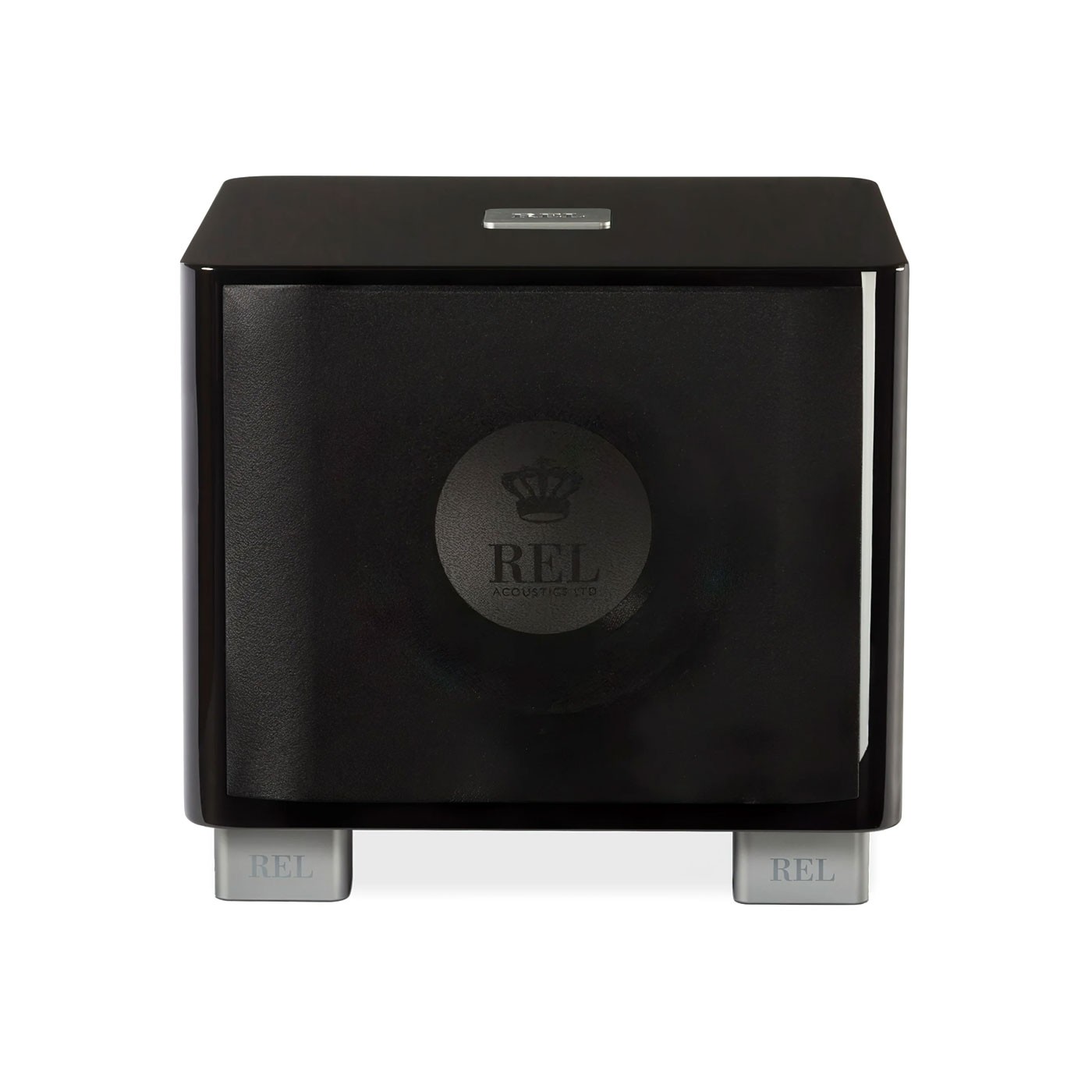
- Configuration: Active driver with passive radiator
- Driver: 8-inch FibreAlloy long-throw driver
- Passive radiator: 10-inch downward-firing unit
- Amplifier: 200W Class A/B
- Low-frequency extension: 30Hz at -6dB in-room
- Crossover: 30–120Hz
- Connections: High-level Neutrik Speakon and line-level input
- Dimensions: 356 × 320 × 363mm
- Weight: 17.5kg
Pros: Superb integration, excellent timing, high-level connection
Cons: Limited ultimate output for very large rooms
Verdict: A highly musical subwoofer that can disappear into a stereo system
REL has spent decades promoting a simple idea: a subwoofer intended for music should behave as an extension of the main loudspeakers rather than as an independent source of bass.
The T/7x is an excellent example of that philosophy.
Its 8-inch active driver works alongside a downward-firing 10-inch passive radiator, while a 200-watt Class A/B amplifier provides the power. On paper, those figures may look modest compared with some of the monsters elsewhere in this ranking, but specification-sheet dominance isn’t what the T/7x is about.
Integration is.
REL’s preferred high-level connection takes its signal from the same amplifier output feeding the main speakers. This allows the T/7x to follow the sonic character and gain structure of the complete system, and when correctly adjusted it can be remarkably difficult to identify where the speakers end and the subwoofer begins.
Rather than producing conspicuous bass, the T/7x tends to make a system feel larger. Kick drums gain physical impact, bass guitars become easier to follow and recordings acquire greater scale and ambience.
This makes it particularly attractive alongside high-quality standmount speakers such as the ProAc Tablette 10 or Sonus faber Lumina I.
It isn’t the obvious choice for filling an enormous room at extreme levels. For listeners who prioritize timing, coherence and musical integration, however, the REL T/7x remains one of the most persuasive options in its class.
[buy_product url=”https://www.pricerunner.com/uk/api/frontend-transition-page/gotostore/v1/UK/8faced1676cafdb73b42d85b17a9b9ca?productId=3200145084&clickarea=retailer&refPos=pdp_product_ai_visualized_images_1&refSite=adrunner_uk_stereoindex&pagetype=pl&litudeClickId=5064b31f-8d95-4c46-966f-cb50c5b5371f&clientClickId=5064b31f-8d95-4c46-966f-cb50c5b5371f” text=”Check out the REL T/7″]
5. Velodyne DB-12
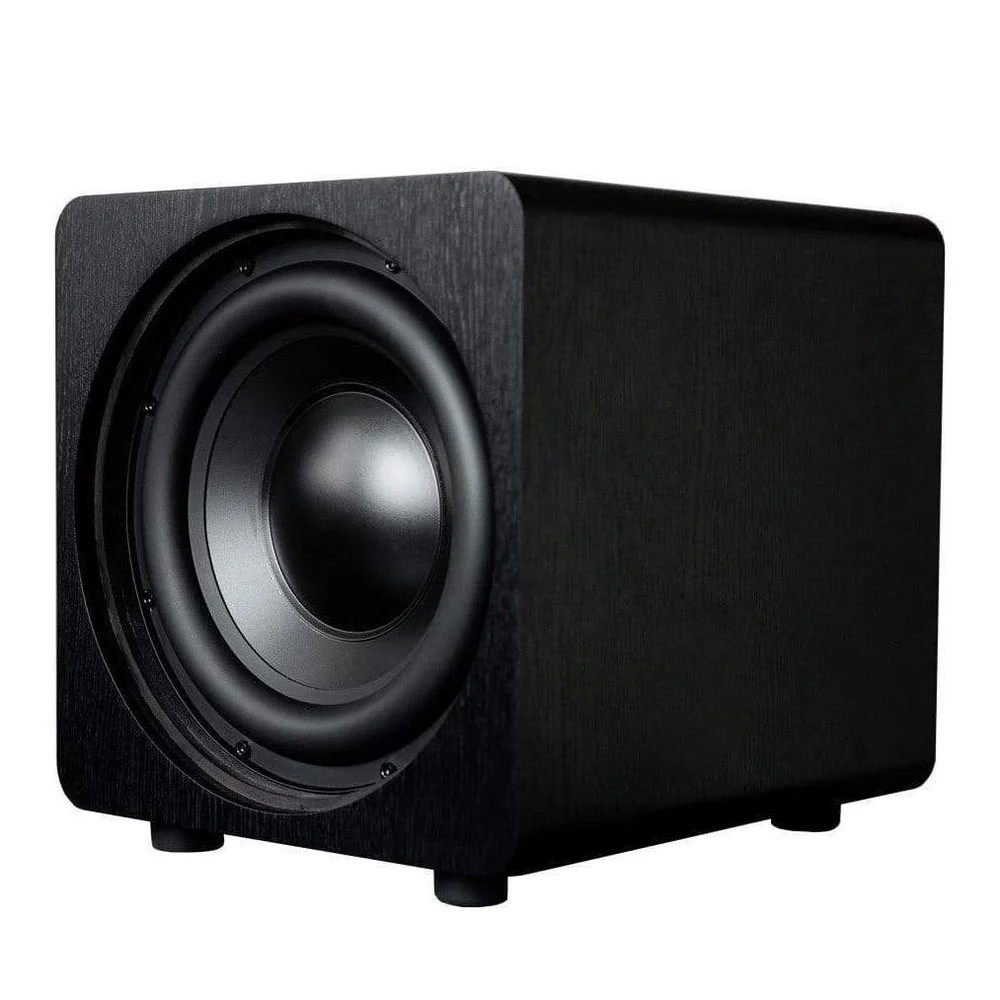
- Configuration: Sealed enclosure
- Driver: 12-inch / 310mm woofer
- Amplifier: Class A/B, 350W RMS / 850W dynamic
- Frequency response: 26Hz–250Hz at -3dB
- Phase adjustment: Continuously variable 0–180 degrees
- Connections: RCA, LFE and high-level
- Output: LFE pass-through
- Dimensions: 350 × 370 × 388mm
Pros: Powerful, punchy bass and useful high-level connectivity
Cons: Functional rather than luxurious design
Verdict: Classic big-driver bass with impressive control and impact
Velodyne is one of the names most closely associated with dedicated subwoofer engineering, and the DB-12 takes a refreshingly traditional approach.
There is no attempt to turn the subwoofer into a lifestyle gadget. Instead, Velodyne combines a substantial 12-inch driver, sealed enclosure and muscular Class A/B amplification with straightforward analogue adjustment.
The result is bass with genuine physical authority.
The DB-12 is particularly convincing when a recording demands impact. Kick drums hit with force, electronic bass lines carry convincing weight and large orchestral recordings gain the foundation required to reproduce their full scale.
Yet this isn’t simply about quantity.
The sealed architecture helps keep the presentation disciplined, while continuously variable phase adjustment makes it possible to achieve considerably better integration than a simple 0/180-degree switch allows.
High-level inputs are another important advantage for traditional stereo systems. They make the DB-12 compatible with amplifiers lacking dedicated subwoofer outputs and can be particularly useful when integrating it with older or minimalist equipment.
Some rivals provide more advanced DSP, app control and automated room correction. The Velodyne counters with something more fundamental: a large driver, substantial amplifier and an unapologetically physical presentation.
For listeners who want their subwoofer to deliver real punch without turning music into an uncontrolled wall of bass, the DB-12 remains a compelling proposition.
[buy_product url=”https://www.pricerunner.com/uk/api/frontend-transition-page/gotostore/v1/UK/15625bdb017f64de2799005160263d74?productId=3412421870&clickarea=retailer&refPos=pdp_product_ai_visualized_images_1&refSite=adrunner_uk_stereoindex&pagetype=pl&litudeClickId=3dacdd9e-f4db-4251-b936-cf70489c8208&clientClickId=3dacdd9e-f4db-4251-b936-cf70489c8208″ text=”Check out the Velodyne DB-12″]
4. KEF KC92
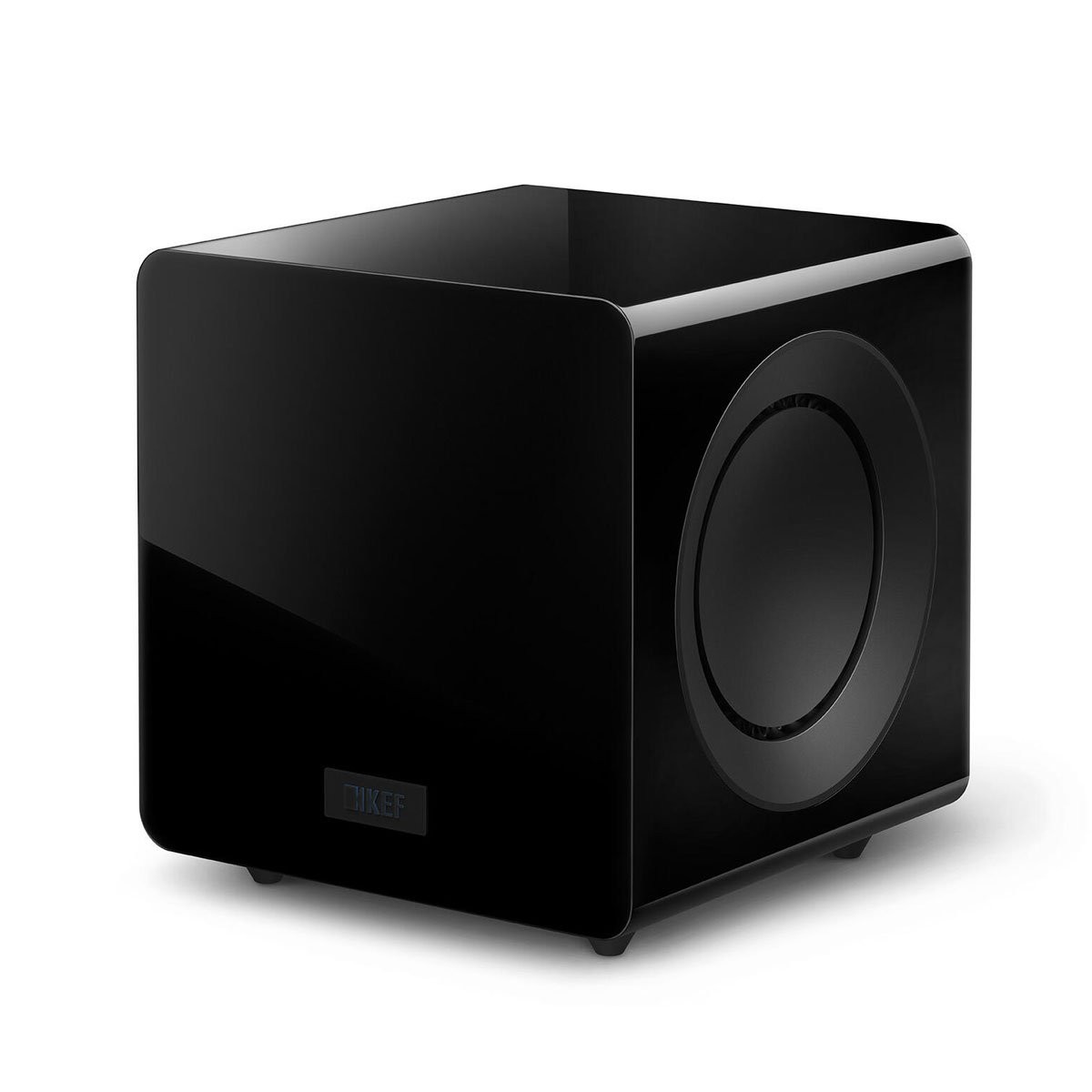
- Configuration: Sealed enclosure with opposed force-cancelling drivers
- Drivers: 2 × 9-inch
- Amplification: 2 × 500W Class D
- Claimed low-frequency extension: Down to 11Hz with Intelligent Bass Extension
- DSP: Music Integrity Engine
- Placement presets: Five
- Crossover: Up to 140Hz
- Connections: Speaker-level and line-level inputs, high-pass line output, SmartConnect
- Wireless option: KEF KW1 adapter
- Weight: 20kg
Pros: Extraordinary output for its size, sophisticated DSP, compact design
Cons: Premium pricing
Verdict: One of the most technically impressive compact subwoofers available
The KEF KC92 approaches subwoofer engineering very differently from the more traditional designs in this ranking.
At its heart are two opposing 9-inch drivers arranged in a force-cancelling configuration. As one cone moves outward, the other moves in the opposite direction, dramatically reducing the mechanical forces transferred into the enclosure.
That architecture allows KEF to extract remarkable output from a cabinet that remains relatively compact.
Each driver receives its own 500-watt Class D amplifier, giving the KC92 a combined 1,000 watts of amplification. KEF’s Music Integrity Engine DSP then manages the system, including its Intelligent Bass Extension processing.
The headline figure is a claimed extension down to 11Hz under suitable conditions. Numbers that low always require context, particularly when output level and room gain enter the equation, but there is no question that the KC92 is capable of exceptional low-frequency reach for its dimensions.
What makes it interesting for two-channel systems is that this technical muscle is accompanied by precision.
The opposed-driver arrangement helps the cabinet remain composed when the system is working hard, contributing to bass that can sound unusually clean and well defined.
Connectivity is equally comprehensive. Speaker-level inputs make integration with conventional stereo amplifiers possible, while line-level connections, high-pass filtering and optional wireless operation give the KC92 considerable flexibility.
If you want very deep bass but don’t want an enormous black box dominating the listening room, the KC92 is one of the strongest solutions currently available.
[buy_product url=”https://www.pricerunner.com/uk/api/frontend-transition-page/gotostore/v1/UK/7613192c5f93999e54c94407cec574b6?productId=3200071604&clickarea=retailer&refPos=pdp_product_ai_visualized_images_1&refSite=adrunner_uk_stereoindex&pagetype=pl&litudeClickId=d3e5f0a2-a89d-4f60-ab4c-2415fcdd7e9b&clientClickId=d3e5f0a2-a89d-4f60-ab4c-2415fcdd7e9b” text=”Check out the KEF KC92″]
3. Monitor Audio Anthra W12
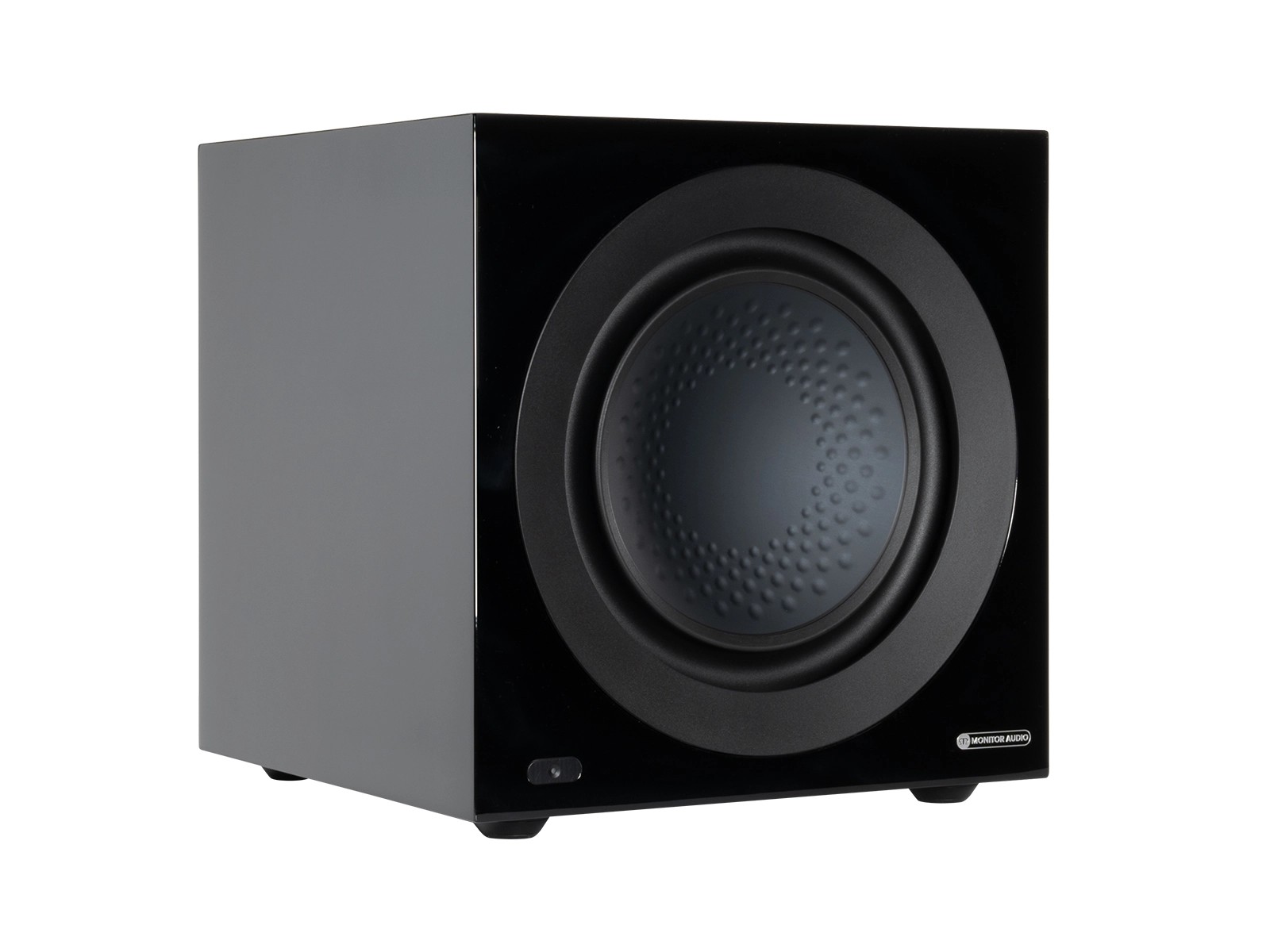
- Configuration: Sealed enclosure, 25mm MDF with 36mm front baffle
- Driver: 12-inch C-CAM with RST II technology
- Maximum driver excursion: 50mm peak-to-peak
- Amplifier: 900W RMS / 1,700W peak Class D
- Low-frequency extension: 16Hz at -6dB
- DSP: 28-bit processing, eight-band parametric EQ
- Crossover: 20–200Hz with 3–48dB/octave slopes
- Connections: RCA and balanced XLR inputs and outputs
- Control: MaestroUnite app and front LCD interface
- Dimensions: 374 × 374 × 374mm
- Weight: 32.4kg
Pros: Exceptional adjustment options, enormous power, deep extension
Cons: No speaker-level input
Verdict: A powerful and unusually configurable subwoofer for ambitious systems
Monitor Audio’s Anthra series occupies an interesting position between conventional premium subwoofers and the genuinely exotic high-end.
The W12 may be the sweet spot.
Its 12-inch C-CAM driver offers a substantial 50mm peak-to-peak excursion and is driven by a 900-watt RMS Class D amplifier. Monitor Audio claims extension to 16Hz at -6dB, giving the W12 the potential to reproduce frequencies that are felt as much as heard.
But raw power is only half the story.
The W12 provides an unusually comprehensive set of tools for integrating that output into a real listening room. Its DSP includes eight-band parametric equalization, while the crossover can be configured between 20 and 200Hz with slopes ranging from a gentle 3dB to an extremely steep 48dB per octave.
That flexibility matters.
Subwoofer performance depends enormously on placement, room modes, crossover frequency and phase alignment. Having precise control over these parameters can make the difference between impressive bass and genuinely transparent bass.
Monitor Audio’s MaestroUnite application makes those adjustments more approachable, while balanced XLR connectivity is welcome in higher-end systems.
The notable omission is speaker-level connectivity, meaning the Anthra W12 is most naturally partnered with equipment providing suitable preamp or subwoofer outputs.
For systems where that isn’t a limitation, this is an exceptionally capable combination of power, extension and configurability.
[buy_product url=”https://www.pricerunner.com/uk/api/frontend-transition-page/gotostore/v1/UK/1d6043a7de5c6b3a0c5ec63b7ce596c7?productId=3221873935&clickarea=retailer&refPos=pdp_product_ai_visualized_images_1&refSite=adrunner_uk_stereoindex&pagetype=pl&litudeClickId=0afd0c3a-ffd2-47b7-aa86-832388ae7ebe&clientClickId=0afd0c3a-ffd2-47b7-aa86-832388ae7ebe” text=”Check out the Monitor Audio Anthra W12″]
2. JL Audio Fathom f110v2
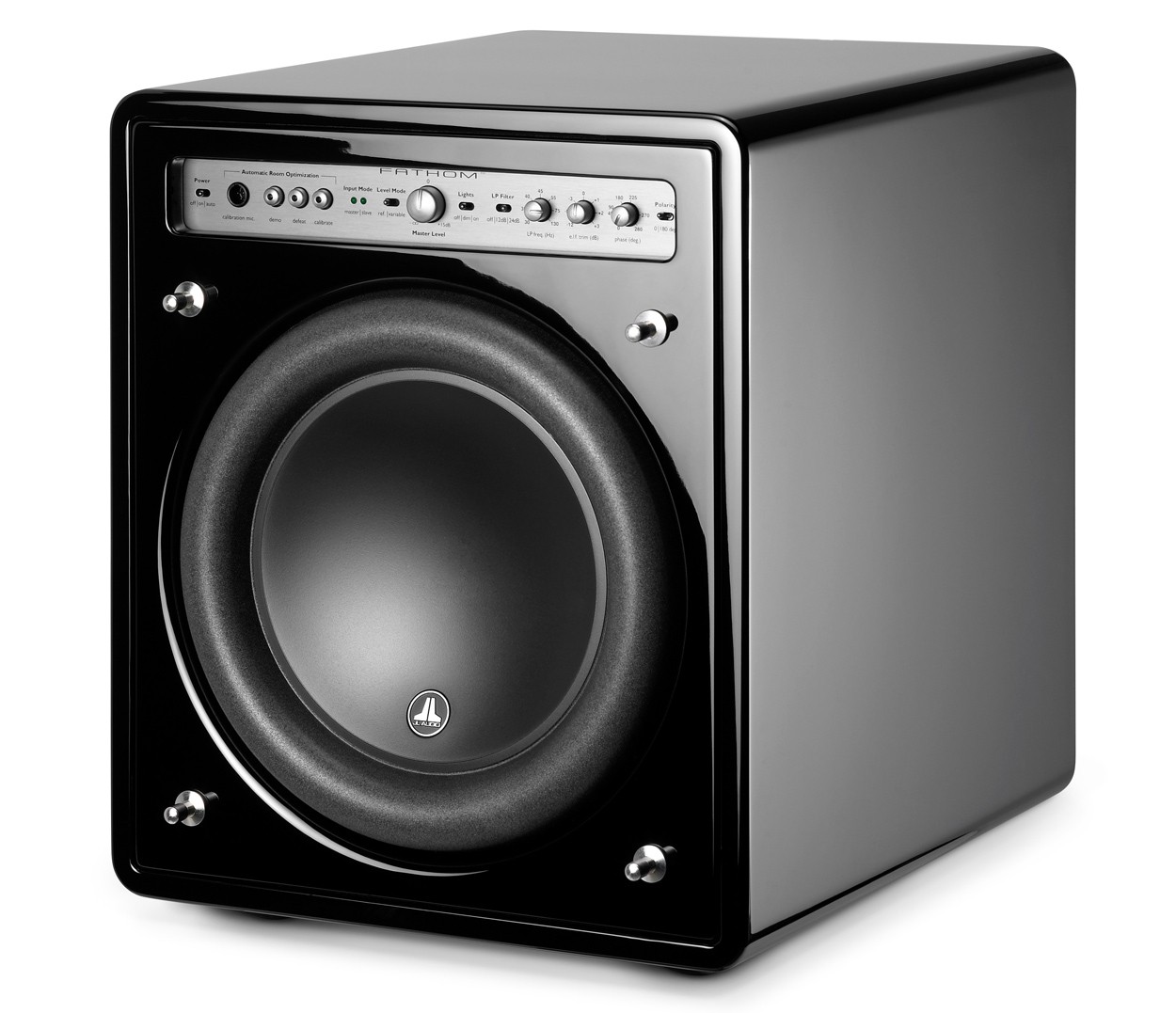
- Configuration: Sealed enclosure
- Driver: 10-inch W7-derived ultra-long-excursion woofer
- Amplifier: 1,100W RMS Class D
- Frequency response: 27–111Hz ±1.5dB
- Extension: -3dB at 25Hz / -10dB at 19Hz anechoic
- Room correction: DARO 18-band automatic equalization
- Connections: Balanced XLR and RCA
- Multi-sub configuration: Master/Slave via XLR
- Dimensions: 400 × 330 × 440mm
- Weight: Approximately 32kg
Pros: Exceptional speed and control, powerful amplifier, effective room optimization
Cons: Expensive
Verdict: Reference-grade bass performance from a surprisingly compact enclosure
The JL Audio Fathom f110v2 is a reminder that driver diameter alone tells you remarkably little about a subwoofer’s capabilities.
Its 10-inch driver may appear relatively modest alongside the 12-inch units elsewhere in this ranking, but this is an extreme-excursion design derived from JL Audio’s formidable W7 platform and backed by a 1,100-watt amplifier.
The result is tremendous control.
Where less accomplished subwoofers can turn complex low-frequency passages into a homogeneous rumble, the Fathom is designed to preserve individual bass notes, changes in texture and the leading edges of percussion.
That ability is especially valuable in a serious music system.
Bass should have pitch, timing and character. An acoustic double bass should not sound like a synthesizer, and a kick drum should have an identifiable attack rather than simply producing pressure in the room.
Integration is assisted by JL Audio’s Digital Automatic Room Optimization system. DARO uses an included calibration microphone and an 18-band equalizer to compensate for some of the room-induced peaks that can otherwise dominate low-frequency reproduction.
It cannot repeal the laws of acoustics, but it provides a powerful tool for extracting more consistent performance from difficult rooms.
The Fathom f110v2 is expensive, but this is where subwoofer performance begins to move beyond simply producing deeper bass. Its combination of output, speed and control makes it a genuine high-end reference.
1. Sonus faber Gravis VI
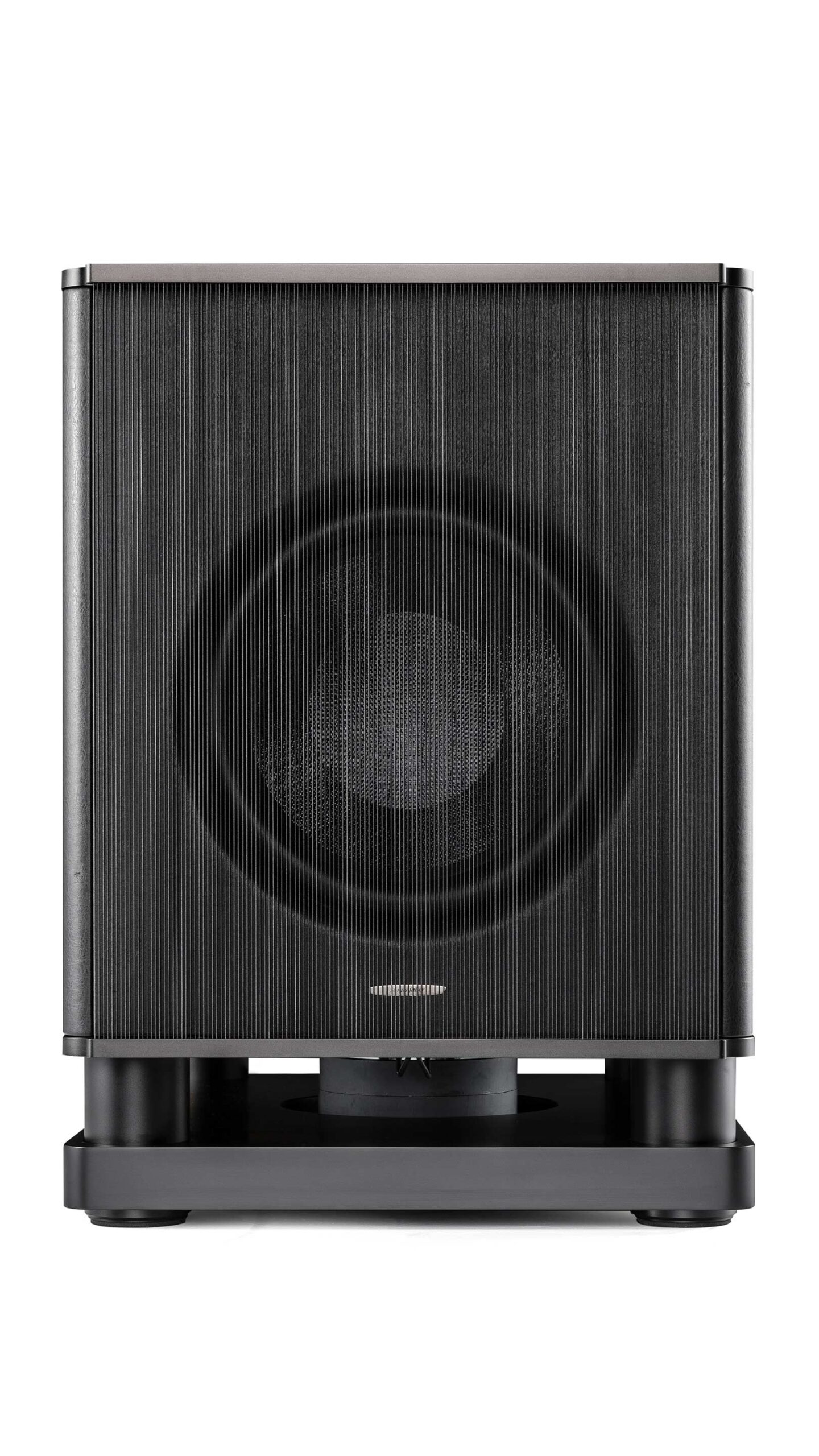
- Configuration: Sealed enclosure with dual active drivers
- Drivers: 2 × 12-inch / 320mm dual-voice-coil woofers
- Cone construction: Sandwich diaphragm with honeycomb core
- Amplifier: Class A/B, 1,700W nominal / 2,400W peak
- Low-frequency extension: 18Hz at -6dB
- Crossover: 40–150Hz, 24dB/octave
- Control: App with four presets and continuously variable phase
- Connections: High-level Speakon, balanced and unbalanced line-level
- Wireless option: Gravis Transmitter
Pros: Monumental performance, luxurious construction, excellent integration potential
Cons: Extremely expensive and physically substantial
Verdict: A true flagship subwoofer built for equally ambitious loudspeaker systems
The Sonus faber Gravis VI sits at the opposite end of the spectrum from affordable compact subwoofers.
This is not merely a bass module. It is effectively a high-end loudspeaker dedicated entirely to the bottom octaves.
Two enormous 12-inch drivers operate in a sealed enclosure, with one firing forward and the second toward the floor. Each uses a dual voice coil and sophisticated sandwich-cone construction, while amplification comes from a formidable Class A/B design rated at 1,700 watts nominal.
Those numbers tell only part of the story.
The Gravis VI was created to complement Sonus faber’s upper-tier loudspeakers, including models from its Homage and Reference families. Consequently, the emphasis is not simply on producing maximum sound-pressure levels.
The objective is to reproduce low frequencies with the same sense of refinement expected from the loudspeakers around it.
Bass has enormous scale and weight, but the Gravis VI’s real appeal lies in its ability to make that foundation feel connected to the music rather than added on top of it. In an appropriately matched system, the subwoofer can expand the apparent dimensions of the entire performance.
There is considerable flexibility too. Balanced and unbalanced line inputs are joined by a high-level Speakon connection, while crossover, phase and presets can be adjusted through Sonus faber’s control system.
And then there is the construction.
Sonus faber treats cabinetry as part of the product rather than merely somewhere to mount a driver. Leather, carefully finished surfaces and wood detailing give the Gravis VI the appearance expected of equipment designed to accompany some of the world’s most luxurious loudspeakers.
The price ensures it will remain an aspirational product for most listeners. But as a statement of what a dedicated music subwoofer can become when cost and scale are secondary considerations, the Gravis VI is an appropriate flagship for this ranking.
[buy_product url=”https://www.pricerunner.com/uk/api/frontend-transition-page/gotostore/v1/UK/07a8e47b4f65a4b4666018021b847eb5?productId=3209694815&clickarea=retailer&refPos=pdp_product_ai_visualized_images_1&refSite=adrunner_uk_stereoindex&pagetype=pl&litudeClickId=abbb7ad8-da06-42ff-a270-035f19f77ae7&clientClickId=abbb7ad8-da06-42ff-a270-035f19f77ae7″ text=”Check out the Sonus faber Gravis”]
Which Subwoofer Should You Buy?
There is no universal best subwoofer because the room, loudspeakers and available integration options matter almost as much as the subwoofer itself.
For smaller systems and sensible budgets, the SVS SB-1000 Pro offers exceptional flexibility and genuine deep-bass extension without requiring a huge enclosure.
The REL T/7x takes a different approach. It sacrifices some outright depth and output in exchange for beautifully natural integration, making it particularly attractive for listeners using high-quality standmount speakers.
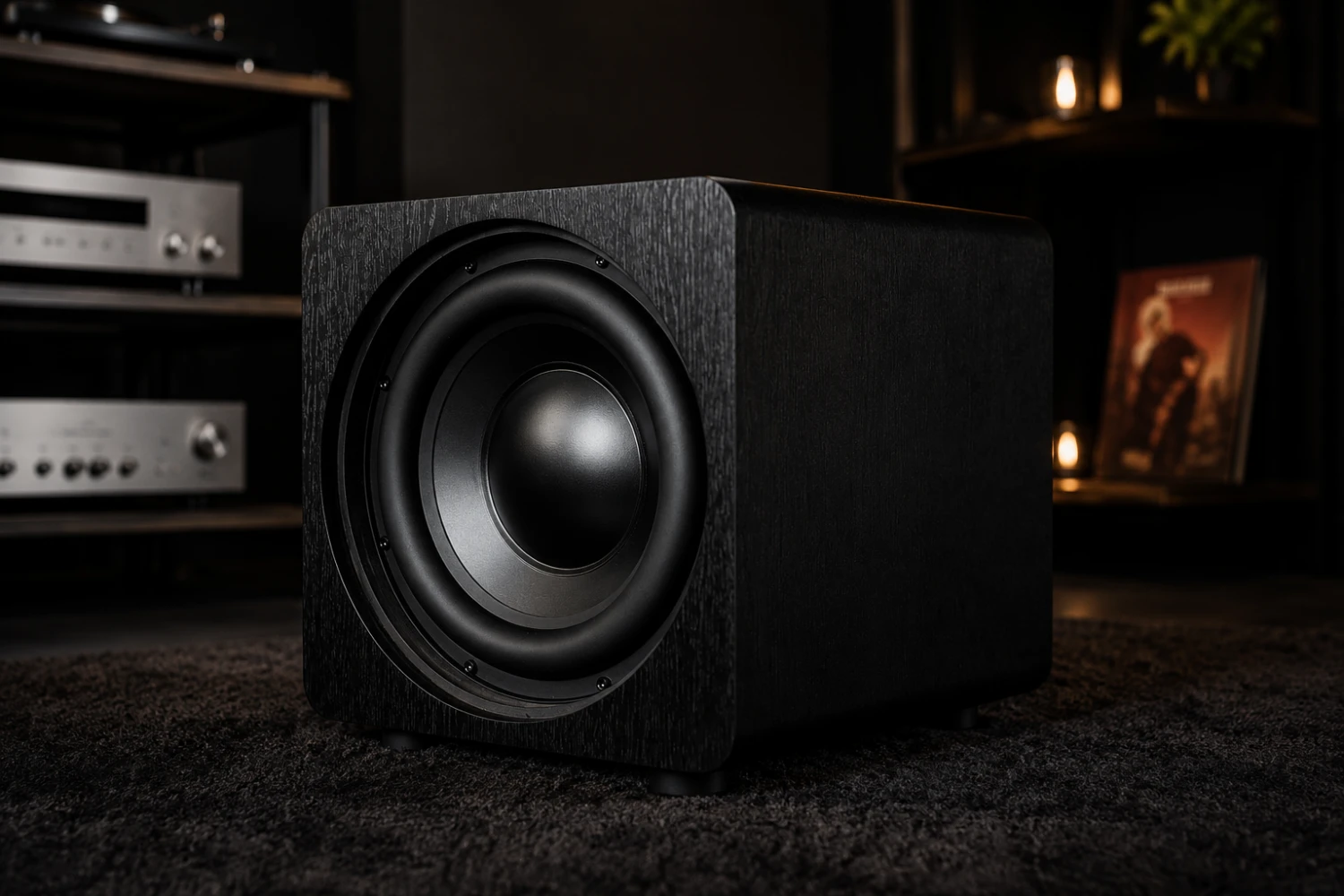
Velodyne’s DB-12 is the traditional powerhouse of the group: simple, muscular and satisfying.
The KEF KC92 is arguably the technological standout. Its opposed-driver architecture, enormous amplification and sophisticated DSP allow it to generate remarkable low-frequency performance from a relatively compact enclosure.
Monitor Audio’s Anthra W12 is the choice for listeners who want extensive control over integration, while the JL Audio Fathom f110v2 moves into genuine reference territory with outstanding transient control and useful room optimization.
And at the top sits the Sonus faber Gravis VI: extravagant, beautifully constructed and designed for systems where the subwoofer must match world-class loudspeakers in both performance and presentation.
Final Thoughts
The best indication that a subwoofer has been configured correctly is surprisingly simple: you stop noticing it.
Switch it off, however, and the system suddenly sounds smaller.
The deepest notes disappear, but so can some of the scale, atmosphere and physical presence that made the recording convincing in the first place. That is why a properly integrated subwoofer can improve considerably more than bass response.
For modern two-channel systems, the question is increasingly not whether a subwoofer belongs in serious hi-fi.
It is how well you can integrate one.




Comments 0
Share your experience, questions and perspective with other hi-fi enthusiasts.