
Five Streaming Hi-Fi Options Compared: Which One Fits Your System?
These five streaming products take very different approaches, from a €399 transport for an existing DAC to luxury players with built-in conversion and local storage. Here is which one makes the most sense for each kind of listener.

Streaming hi-fi now covers far more than a network box connected to an amplifier. The five products here range from a firmware-supported Cambridge Audio StreamMagic platform and a focused iFi transport to luxury network players from Goldmund, Kalista and Voxativ. Some are designed to work with a DAC you already own; others build digital conversion, storage or a complete control environment into the product.
That distinction matters more than a long feature list. The right choice depends on whether you value low cost, familiar app control, long-term support, local music storage, a built-in DAC or the highest-end system architecture. This guide compares what the sources actually establish about each option, including its likely system role, usability and stated sound priorities.
Quick verdict
Best Overall: iFi ZEN Stream 3. It is the most balanced proposition for a broad range of existing hi-fi systems: a dedicated transport, broad direct-app support, local playback from NAS or USB, a €399 recommended retail price and an intentionally straightforward operating approach. It does not include a DAC, but that is an advantage for owners who already have a converter they like.
Best for existing Cambridge owners: Cambridge Audio StreamMagic devices. The free update adds Qobuz Connect and continues support for Spotify and Amazon Music features on many devices released from 2014 onwards. It is the strongest value story here if you already own compatible Cambridge hardware.
Best for storage and Roon: Goldmund x Pink Faun Eidos. Its 8TB of local storage, Roon-focused Pink Faun OS and compatibility with Goldmund active speakers make it unusually complete for a high-end digital system.
Best for a reference-level digital system: Kalista DreamPlay S or SC. The S is intended for an external DAC, while the SC includes its own DAC and balanced analogue outputs. Both offer an unusually broad set of protocols and connections, although pricing and delivery information have not been announced.
Best for a high-resolution integrated digital architecture: Voxativ Streamer. Its dual ESS ES9038PRO DACs, separate linear supplies for each channel and fully balanced analogue output stage are clearly specified, but important connectivity, control and pricing details remain unavailable.
| Product | System role | Key usability strengths | Sound and hardware emphasis | Best suited to |
|---|---|---|---|---|
| Cambridge Audio StreamMagic devices | Existing network players, AV receivers and streaming preamplifiers | Automatic free firmware update; Qobuz Connect; Spotify and Amazon Music integration via StreamMagic | Long-term software support rather than a new hardware design | Owners of compatible Cambridge devices who want to extend their useful life |
| Goldmund x Pink Faun Eidos | Network player and Roon Core-oriented high-end source | Wired or wireless networking; 8TB local storage; Roon access to Tidal, Qobuz and KKBOX | Passive cooling, CNC-milled aluminium chassis and Goldmund custom integration | Goldmund systems, Roon users and listeners with large local libraries |
| Kalista DreamPlay S | Network player without a DAC | Ethernet and Wi-Fi; USB 2.0; Roon Ready, Qobuz Connect, TIDAL Connect, Spotify Connect and more | PCM to 32-bit/384kHz and DSD64 to DSD256; separate Elektra power supply | Owners of a high-quality external DAC seeking a luxury source |
| Kalista DreamPlay SC | Network player with integrated DAC | Same broad streaming support as the S, with balanced and unbalanced analogue outputs | ES9039MPRO DAC; stated THD+N below -122dB and 137dB dynamic range | Listeners wanting streaming and conversion in one Kalista component |
| iFi ZEN Stream 3 | Dedicated streaming transport without a DAC | Qobuz Connect, TIDAL Connect, Spotify Connect, AirPlay 2, DLNA/UPnP, NAS and USB playback | Femto clock, iPurifier, Active Noise Cancellation, Exclusive Modes and optional K2 processing | Existing hi-fi systems needing an accessible, flexible streaming upgrade |
| Voxativ Streamer | Network player with integrated DAC and analogue output stage | Roon Ready, AirPlay 2, Spotify Connect, TIDAL Connect and listed Qobuz support | Dual ESS ES9038PRO DACs, femto clocking, separate linear supplies and balanced analogue output | High-resolution listeners prepared to wait for full specifications |
Cambridge Audio StreamMagic devices
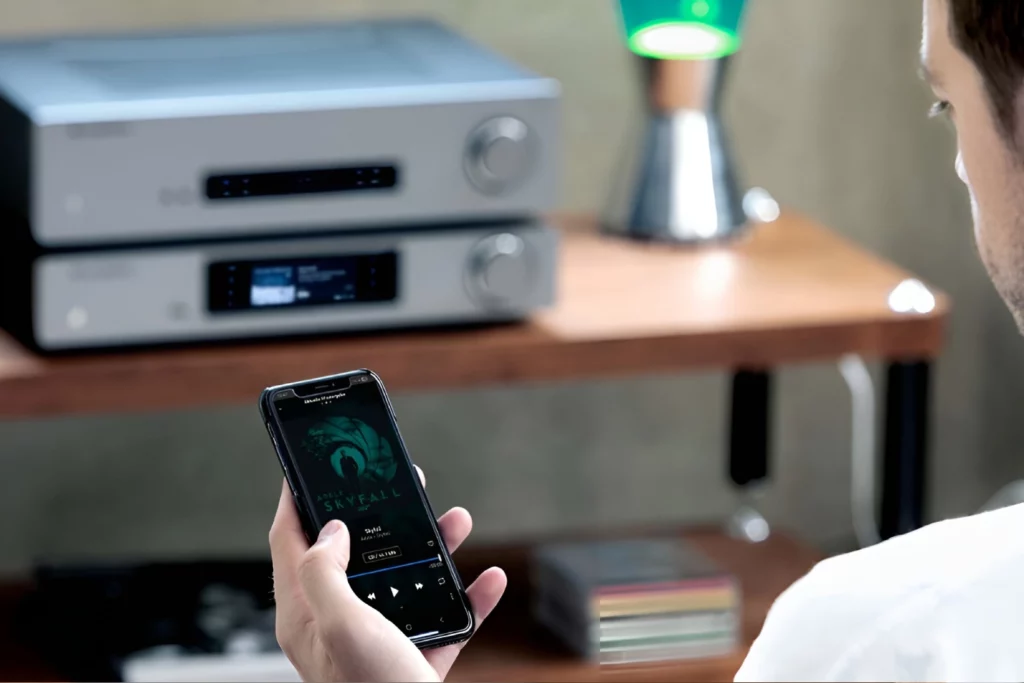
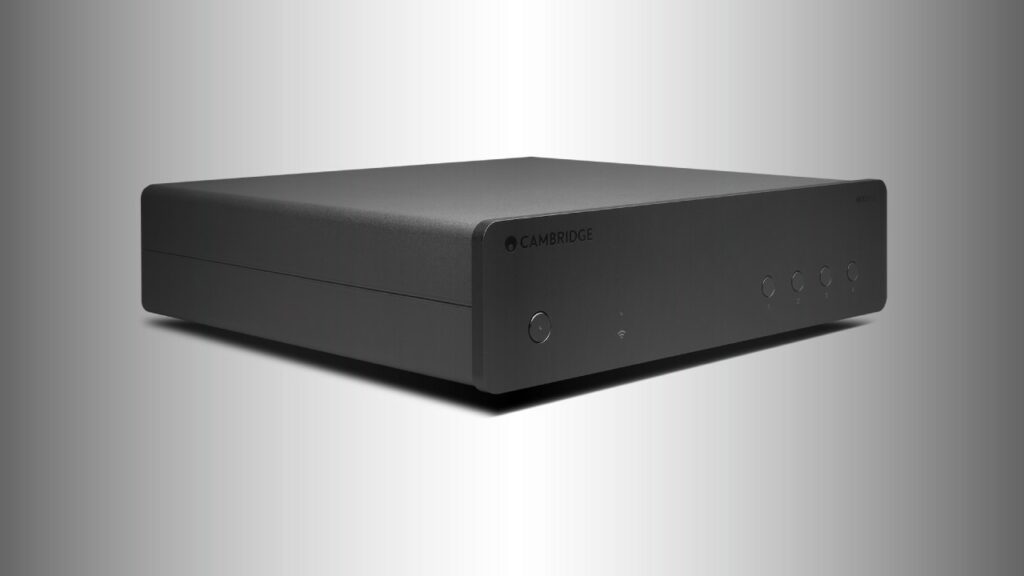
Cambridge Audio is the outlier in this comparison because the source is not announcing a new streamer. It covers a free firmware update for network players, AV receivers and streaming preamplifiers using second- and third-generation StreamMagic software. According to Cambridge Audio, that includes models released from 2014 onwards, although the update applies where the hardware allows it.
The practical benefit is substantial for an existing owner. Qobuz Connect allows a compatible Cambridge device to be selected directly inside the Qobuz app, so the phone or tablet does not have to act as the audio source. Spotify and Amazon Music integration in the StreamMagic app had already been added through firmware updates and are also available on older platforms covered by the announcement.
This is the clearest value proposition in the group, but only for the right buyer. It is not a reason to replace a functioning Cambridge component, nor does the source provide a new model, price or performance comparison with the other products here. Instead, it demonstrates a different kind of usability: long-term platform support. The update is automatically distributed to internet-connected devices, with the user confirming the installation and download.
Cambridge Audio’s continued support is especially relevant because network products can lose usefulness when apps and services stop being maintained. The company presents its proprietary StreamMagic platform and ongoing updates as part of a broader sustainability approach. For Cambridge owners, that can be more valuable than buying a new box simply to gain current streaming access.
Choose it if: you already own a compatible Cambridge Audio StreamMagic component and want Qobuz Connect and continued access to supported services without replacing the hardware. Look elsewhere if: you need a new standalone streamer, an integrated DAC, local storage or a product with fully described new hardware.
Goldmund x Pink Faun Eidos
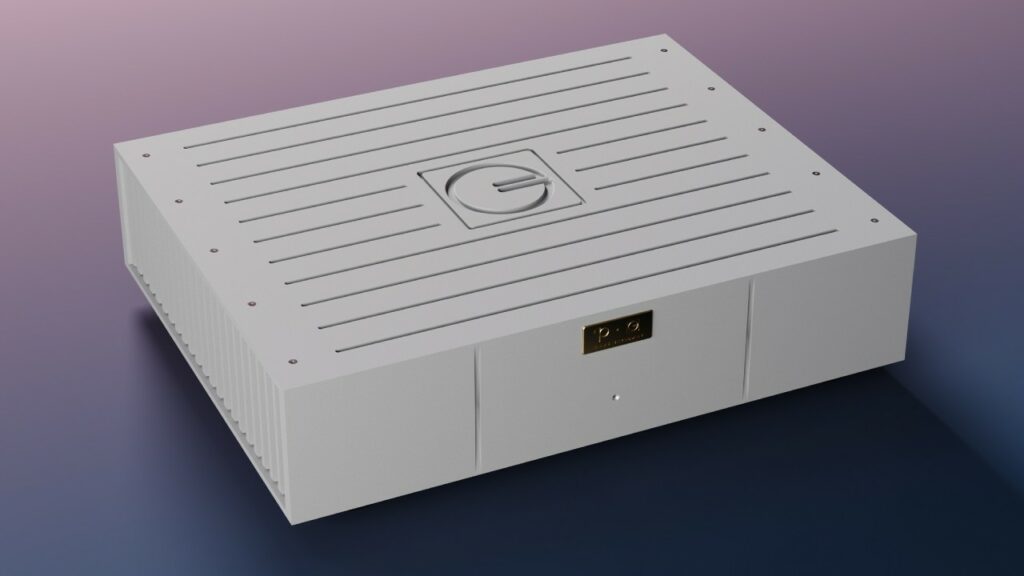
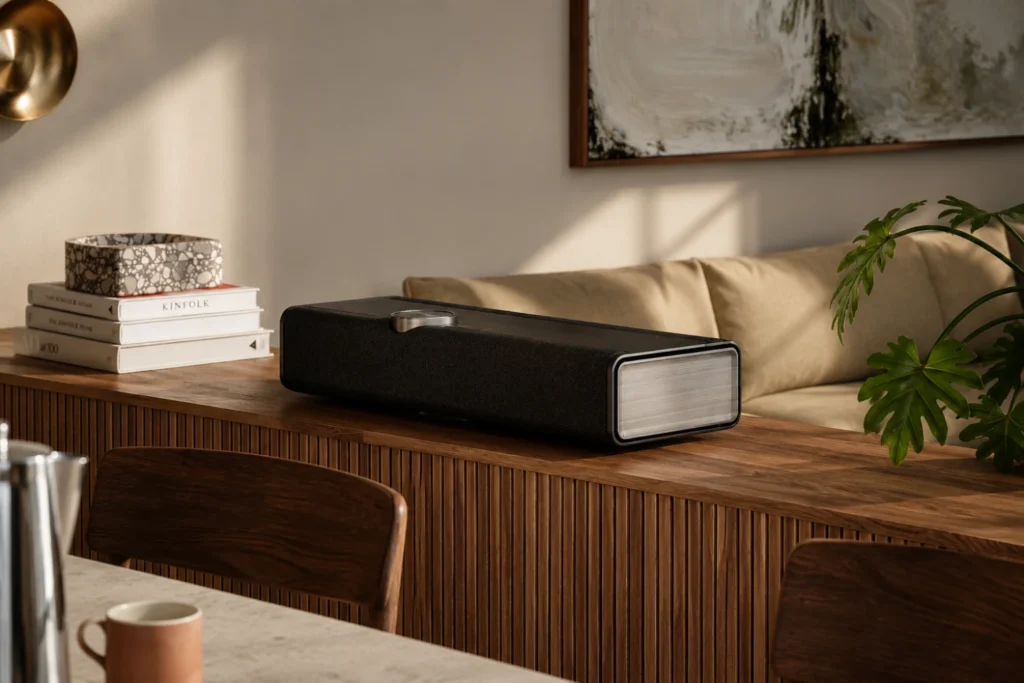
The Goldmund x Pink Faun Eidos Streamer is aimed at a more specialised system than the iFi or Cambridge options. Goldmund is entering streaming with help from Pink Faun, whose technology provides the Pink Faun OS and an emphasis on Roon Core compatibility. The result is a network player designed to combine streaming, a local library and close hardware-software integration.
Its most distinctive practical feature is 8TB of local storage. That immediately makes the Eidos more appealing to listeners who have a substantial music collection and want the library housed within the player rather than relying solely on external storage or a separate computer. Through the Roon app, the system also provides access to Tidal, Qobuz and KKBOX.
Control is therefore more Roon-centred than the direct-app approach of the iFi ZEN Stream 3. That is a strength for someone already committed to Roon and particularly relevant to Goldmund active-speaker owners, since the Eidos is designed to complement those systems. It supports wired or wireless networking, and all modern file formats and codecs are supported according to the source.
The hardware reflects its high-end positioning. Passive cooling uses water-filled heatpipes for silent and stable operation, while the chassis is CNC-milled aluminium and available in grey or black. Goldmund’s customisations cover areas such as CPU timings, noise adjustment and integration with its active speakers. The source describes the Eidos as focused on superior sound quality and seamless control, but it does not provide independent measurements or listening comparisons, so the buying case should rest on its architecture, storage and ecosystem fit rather than unsupported claims about audible superiority.
Choose it if: you want 8TB of integrated storage, use Roon, own or plan to build around Goldmund active speakers, and value a substantial high-end chassis. Look elsewhere if: you want a clearly stated price, a simple direct-app transport or an economical upgrade for an existing DAC-based system.
Kalista DreamPlay S and DreamPlay SC
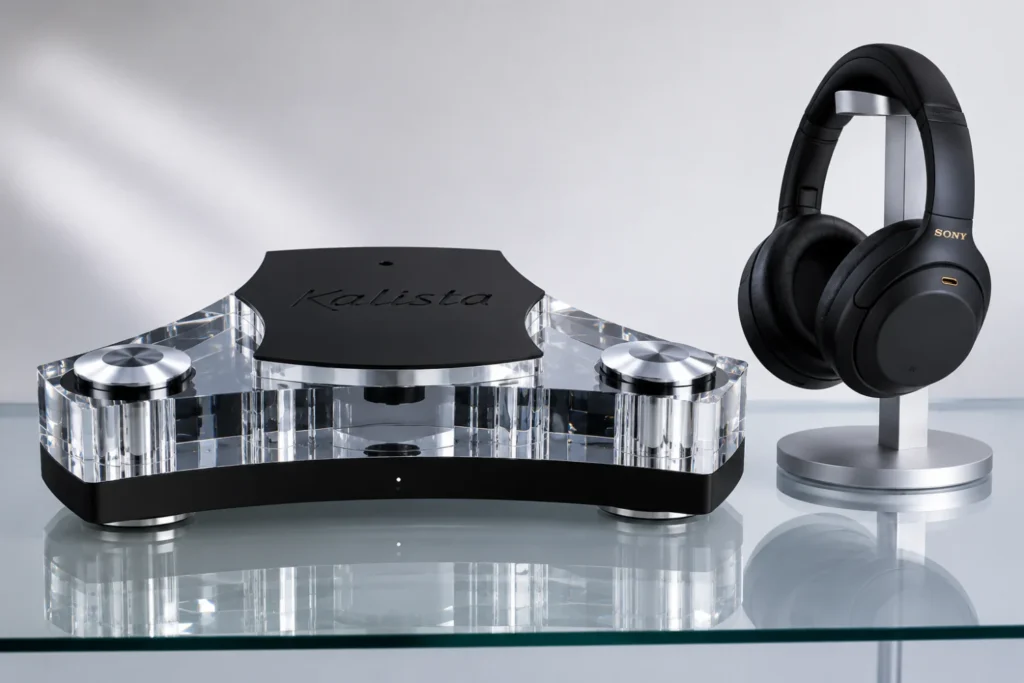
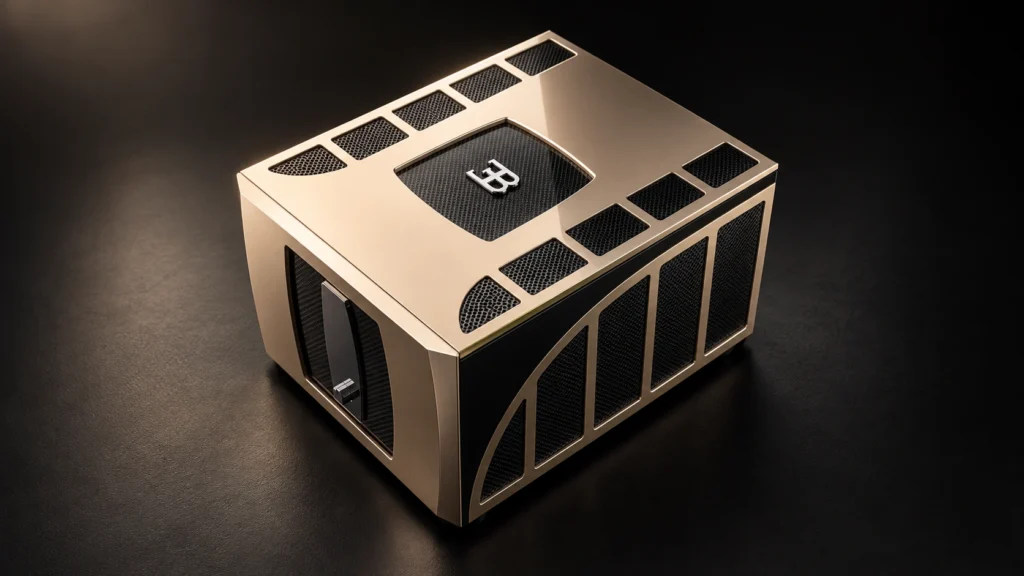
The Kalista DreamPlay S and DreamPlay SC occupy the most uncompromising end of the comparison. Both are handcrafted in France and presented as streaming sources for the reference level, with the distinctive materials and sculptural design associated with the Kalista brand.
The choice between them is straightforward in principle. The DreamPlay S is a network player without a DAC for listeners who already own a high-quality external converter. The DreamPlay SC adds an on-board DAC, making it the more self-contained option and providing both balanced XLR and unbalanced RCA analogue outputs. It also includes an ES9039MPRO DAC, with the stated technical figures of THD+N below -122dB and a 137dB dynamic range.
The S is not merely a stripped-down version in terms of connectivity. It offers Ethernet and Wi-Fi, USB 2.0 for external storage, I2S, S/PDIF and AES/EBU, plus a separate Elektra power supply module. It natively processes PCM from 32-bit/44.1kHz to 384kHz and DSD64 to DSD256. The SC shares the broad digital and streaming concept while adding digital conversion and analogue outputs.
Usability is one of the Kalista pair’s strongest areas on paper. Both support DLNA/UPnP, Audirvana, Spotify Connect, Roon Ready, Deezer, TIDAL Connect, Qobuz Connect and vTuner, as well as MQA rendering up to 32-bit/384kHz. Ethernet is available at up to 1Gbps, with dual-band 2.4GHz and 5GHz Wi-Fi. That is a more extensive protocol list than the iFi source provides, although it also points to a more complex, luxury-oriented purchase.
The limitation is commercial clarity. Métronome Technologie has not announced prices or delivery information. That makes the Kalista devices difficult to recommend as a value purchase, even though they are the most fully specified options here for users who want either a separate-source architecture or a complete high-end streaming-and-DAC component.
Choose the DreamPlay S if: your system already has a high-quality DAC and you want extensive digital outputs, high-resolution support and luxury construction. Choose the DreamPlay SC if: you want the Kalista design and streaming platform with conversion and balanced or unbalanced analogue outputs built in.
iFi ZEN Stream 3
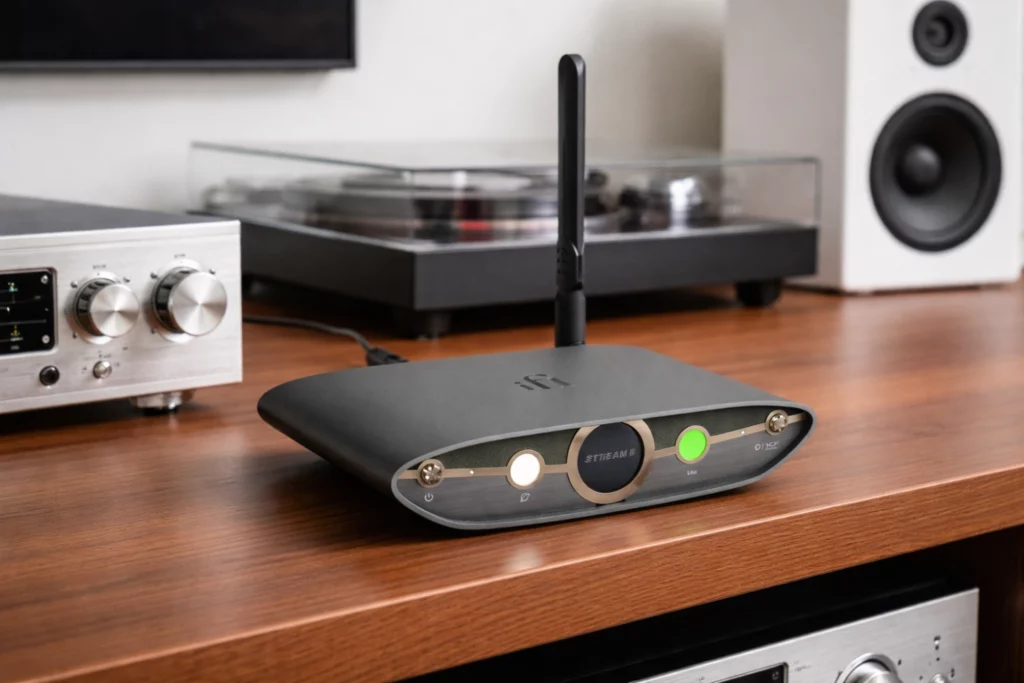
The iFi ZEN Stream 3 is the most convincing all-round recommendation because it concentrates on the job most existing hi-fi owners actually need: adding modern streaming to a system that already has an amplifier, speakers and DAC.
It is a transport rather than an all-in-one player. There is no DAC or amplification stage, so the owner can retain a preferred external converter. That makes it less suitable for someone starting from scratch, but a strong fit for a listener who has already chosen the sound of a particular DAC and does not want to replace it.
Daily operation is also unusually clear. Native support includes Qobuz Connect, TIDAL Connect, Spotify Connect, Apple AirPlay 2 and DLNA/UPnP. Local music can be played from a NAS or USB storage. Control happens through familiar service apps, while the iFi Nexis app handles quick integration through the product’s IoT-based setup system. This avoids forcing the user into a closed control ecosystem.
The source also identifies several design choices intended to support clean, stable playback: a redesigned power supply stage with upgraded polymer capacitors and ELNA Silmic II components, iPurifier technology, Active Noise Cancellation and a femto-precision clock. Exclusive Modes disable unnecessary system processes for audio playback. These are hardware and software features rather than proof of a particular measured or listening outcome, but together they explain the product’s purist transport brief.
There is one unusual option: JVCKENWOOD’s K2 technology. It is intended to reconstruct harmonic information lost during recording or compression, with the stated aim of adding body to vocals, spatial depth and a less clinical presentation. The source describes the effect as subtle and says the processing occurs before the DAC, allowing a connected converter to benefit.
At a recommended retail price of €399, the ZEN Stream 3 is the only product here with a clearly stated accessible price. That does not make it automatically suitable for every system, but it gives the iFi a decisive value and usability advantage over the luxury products whose prices have not been supplied. It is therefore the Best Overall for the broadest group of buyers.
Choose it if: you want a reasonably priced transport, already own a DAC, prefer familiar streaming apps and need NAS or USB playback. Look elsewhere if: you require a built-in DAC, integrated local storage or a Roon Core-oriented high-end server.
Voxativ Streamer
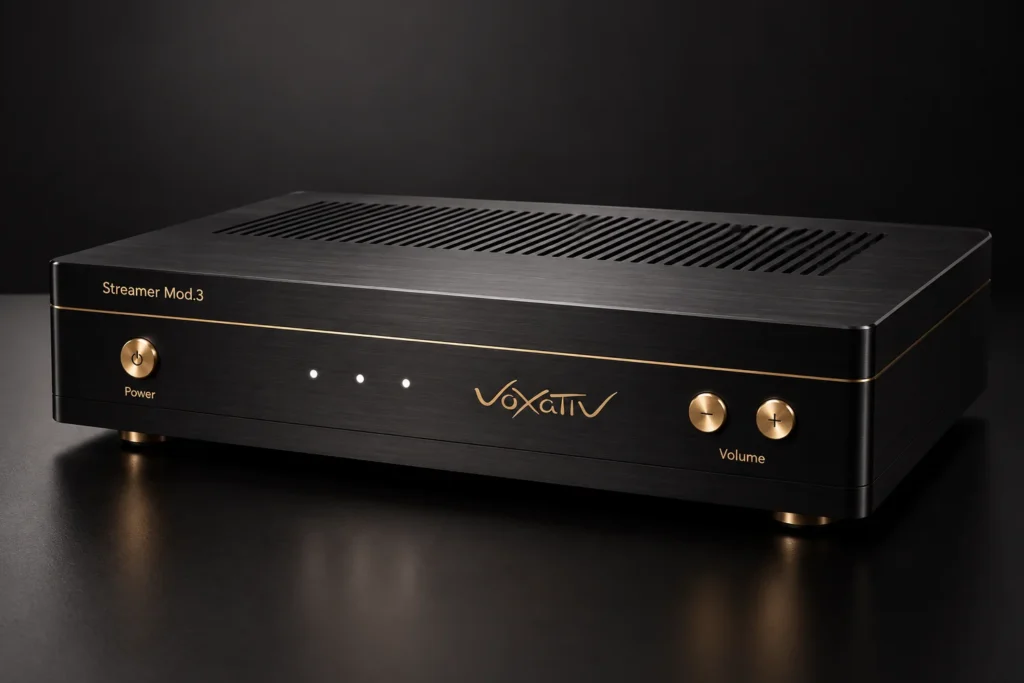
The Voxativ Streamer takes the integrated route. Unlike the iFi and Kalista DreamPlay S, it includes digital conversion and a fully balanced analogue output stage. Its core architecture comprises two ESS ES9038PRO DAC chips, femto clocking and a separate linear power supply for each channel.
For listeners who prioritise high-resolution playback, PCM support extends to 32-bit/768kHz, and DSD is supported, although Voxativ has not stated the maximum DSD rate. The manufacturer describes the design as aiming for clarity, naturalness and depth. Those are claimed sonic objectives, not independent test findings, and the source explicitly notes that no measurements or further internal-circuit details have been disclosed.
The streaming ecosystem is reasonably broad. The unit is Roon Ready and supports AirPlay 2, Spotify Connect and TIDAL Connect. Qobuz support is listed, but the method of access and control has not been explained. That uncertainty is important when comparing it with the iFi and Kalista products, whose supported services and control routes are more clearly described.
Voxativ has also not provided full information about network protocols, file compatibility, storage options, inputs, outputs, a dedicated control interface, price, regional availability or a firm delivery date. The Streamer is handmade in Germany and deliveries are expected to begin soon, but those missing details make it a product to watch rather than the safest immediate recommendation.
Choose it if: the dual-DAC, high-resolution and balanced-output architecture matches your system priorities, and you are prepared to wait for the complete specification. Look elsewhere if: you need a confirmed price, detailed connectivity, defined local-storage support or a fully explained control experience before buying.
How they differ
System role is the biggest divide. The iFi ZEN Stream 3 and Kalista DreamPlay S are transports for an external DAC. Cambridge’s announcement concerns existing network-enabled components rather than a new product. The Eidos is a more complete Roon-oriented source with 8TB of storage, while the Kalista SC and Voxativ Streamer include integrated DAC stages and analogue outputs.
Usability also varies. iFi emphasises familiar service apps and direct connections through Qobuz, Tidal and Spotify. Kalista offers the widest stated list of protocols, including Roon Ready, Audirvana, Qobuz Connect, TIDAL Connect, Spotify Connect and DLNA/UPnP. Eidos is built around Roon and a local library. Cambridge’s appeal is continued compatibility through StreamMagic. Voxativ has several important integrations, but its control interface has not yet been announced.
Storage is another clear separator. Eidos includes 8TB of local storage. iFi supports local playback from NAS or USB, while Kalista supports external storage through USB 2.0. The available source does not confirm storage options for Voxativ, and the Cambridge update article does not describe storage capabilities.
Sound character should be interpreted carefully. iFi’s design brief is stability and a clean, flexible signal path, with K2 processing intended to add body and depth. Voxativ describes its architecture in terms of clarity, naturalness and depth. Kalista and Goldmund position their products as reference-level or high-performance sources, but neither source supplies independent comparative listening evidence. For a fair buying decision, system compatibility and supported features are more defensible differentiators than claiming one will sound universally better.
Value is easiest to judge for iFi and Cambridge. The iFi costs €399 at recommended retail, while the Cambridge update is free for compatible existing devices. Prices for Eidos, Kalista and Voxativ are not provided in the supplied material, so they cannot be ranked on cost.
Which one should you buy?
- Buy the iFi ZEN Stream 3 if you want the safest general recommendation: a dedicated transport, familiar app control, broad direct streaming, NAS and USB playback, and a stated €399 price.
- Keep and update Cambridge Audio StreamMagic hardware if you already own a compatible Cambridge device. The free firmware update may deliver the modern Qobuz, Spotify and Amazon Music functionality you need without buying another component.
- Choose the Goldmund x Pink Faun Eidos if Roon is central to your system, you have a large local library and 8TB of integrated storage is more important than a low purchase price or a simple transport design.
- Choose the Kalista DreamPlay S if you own a separate high-quality DAC and want the broadest combination of high-resolution support, digital outputs and streaming protocols in a luxury source.
- Choose the Kalista DreamPlay SC if you want those Kalista ambitions with an integrated DAC and both XLR and RCA analogue outputs, avoiding the need for a separate converter.
- Consider the Voxativ Streamer if its dual ESS conversion, dual linear-supply architecture and balanced analogue stage align with your high-resolution system. Wait for full connectivity, pricing and delivery information before making a final decision.
Additional picks: Cambridge is the Best Upgrade Value for compatible owners because the update is free and extends functionality on older hardware. The Kalista pair earns the Best Features distinction on the information available, thanks to broad protocol support, extensive digital connectivity and the choice between external and integrated conversion. Eidos is the Best for Local Storage because its 8TB capacity is explicitly built in.
Final verdict
The iFi ZEN Stream 3 is the Best Overall because it combines the clearest price, straightforward operation and useful compatibility with the flexibility of an external DAC. It is not the most ambitious product here, but it solves the common problem cleanly and without forcing a system redesign. Cambridge is the smarter choice for existing owners, Eidos for Roon and local storage, Kalista for luxury reference systems, and Voxativ for listeners drawn to a high-resolution integrated architecture once its remaining details are confirmed.





 VS
VS VS
VS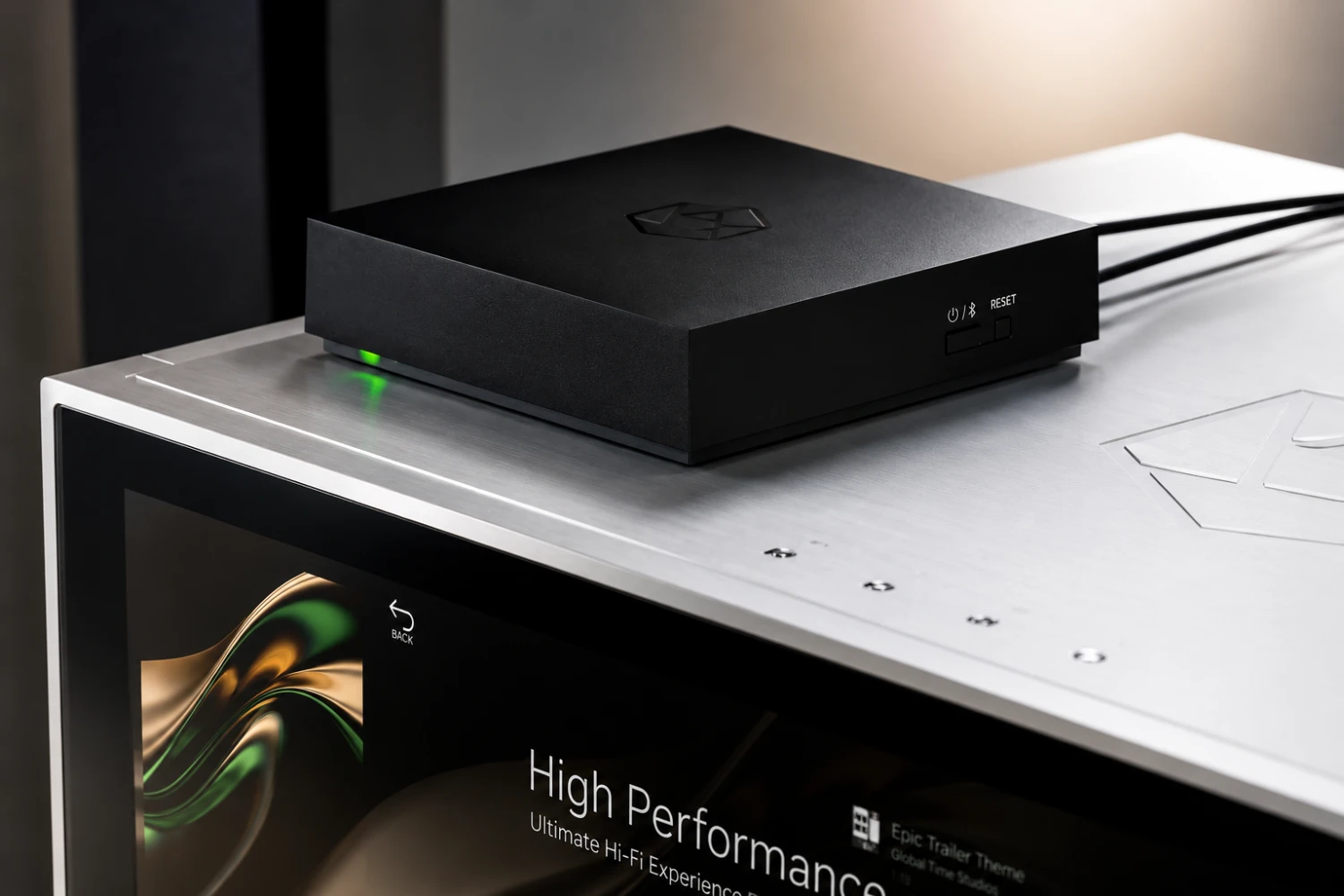 VS
VS VS
VS VS
VS VS
VS
Comments 0
Share your experience, questions and perspective with other hi-fi enthusiasts.