
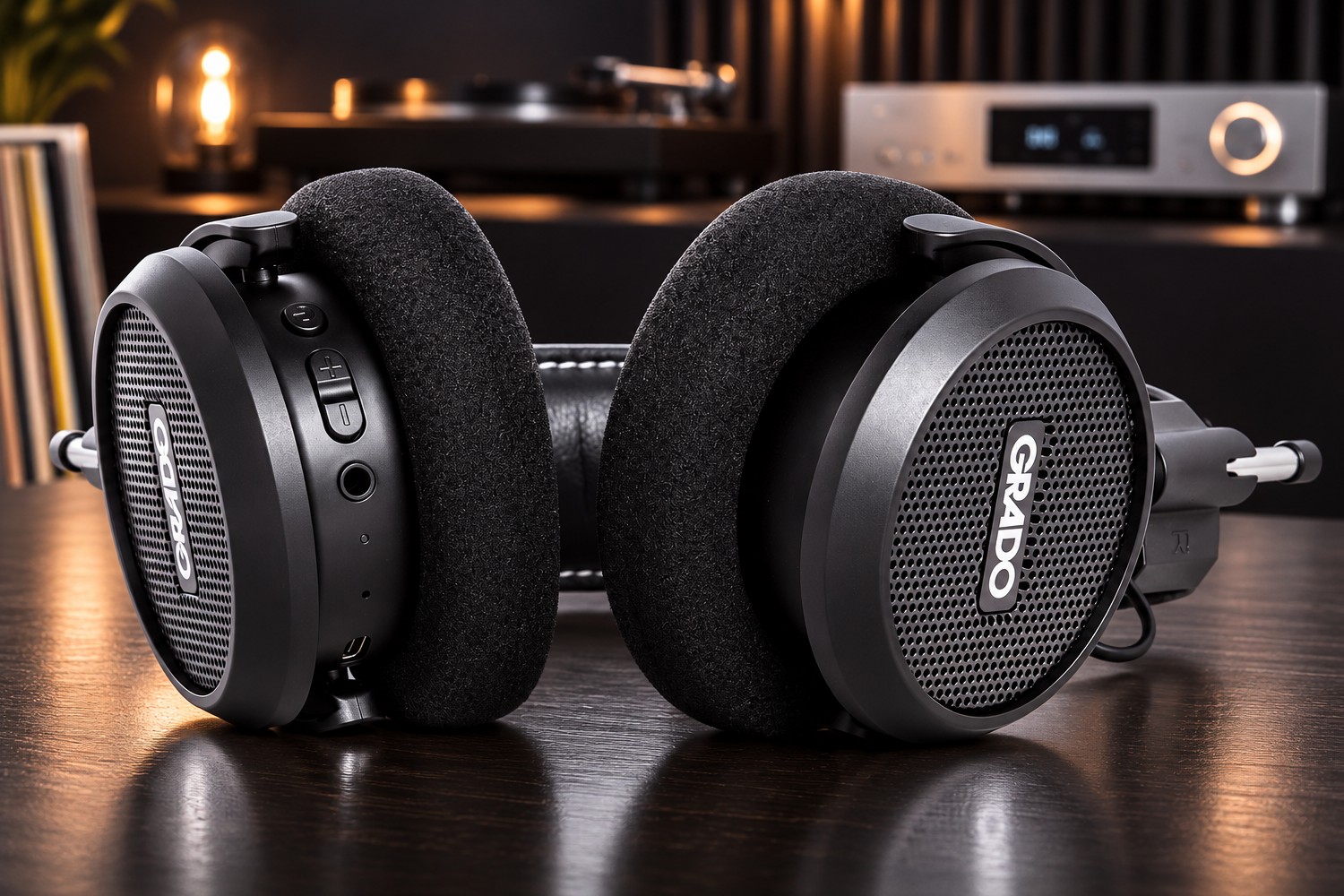
Grado Labs has announced the GW200, an open-back wireless headphone that draws on the company's Signature Line while retaining the option to listen through a conventional cable. Its defining component is a newly developed 44 mm S-driver with a paper-composite diaphragm, derived from the larger drivers used in two existing Grado models. Bluetooth 5.4 and a claimed battery life of more than 60 hours make wireless listening central to the design, but the headphone can also operate without battery power. A revised headband and compatibility with Grado's full earpad range distinguish it from the earlier GW100 models.
A Signature Line driver in a wireless headphone
At the heart of the GW200 is Grado's new 44 mm S-driver, which uses a paper-composite diaphragm. Its design is derived from the larger S-drivers in the HP100 SE and S950 headphones, extending that family of driver technology to a wireless model. Grado describes the driver as an effort to retain clarity, detail and a natural musical character; those are design aims rather than qualities established here by a listening test.
The open-back construction is equally important to the product's identity. Rather than sealing the driver inside a closed earcup, the GW200 uses an open design with internal acoustic slots intended to encourage airflow. Grado also selects its F earpads as part of the headphone's overall acoustic tuning.
That construction has implications for where the GW200 will be used. Open-back headphones generally allow more sound to pass in and out than closed designs, so a quiet room is likely to suit them better than a shared space where leakage or outside noise would be a concern. Wireless operation removes the cable from the listening position, but it does not change that basic trade-off.

Bluetooth for long sessions, plus a battery-free cable input
The GW200 supports Bluetooth 5.4 and a broad set of audio codecs: Qualcomm aptX Lossless, aptX Adaptive, aptX HD and aptX, alongside AAC and SBC. Which codec is used depends on compatibility with the transmitting device, so the presence of aptX Lossless on the headphone alone does not establish that every phone or player will use it.
Grado quotes more than 60 hours of battery life, with charging handled through USB-C. A charging cable is included. The figure suggests that frequent charging need not be central to ownership, although the supplied information does not specify the conditions behind the estimate or a charging time.
A 3.5 mm audio input offers another way to use the headphones. One cable connection serves both earcups, and the GW200 can play without a Bluetooth connection or battery power. That makes the wired input more than a backup for a poor wireless connection: it also permits listening when the battery is empty, provided a suitable audio source and cable are available.
A revised fit and more room to change earpads
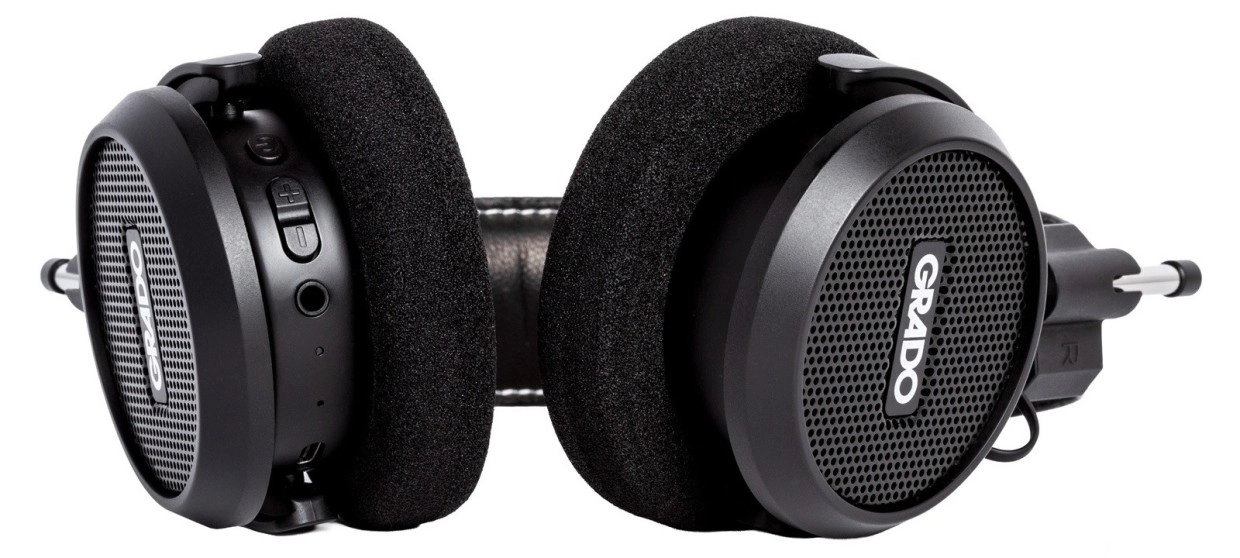
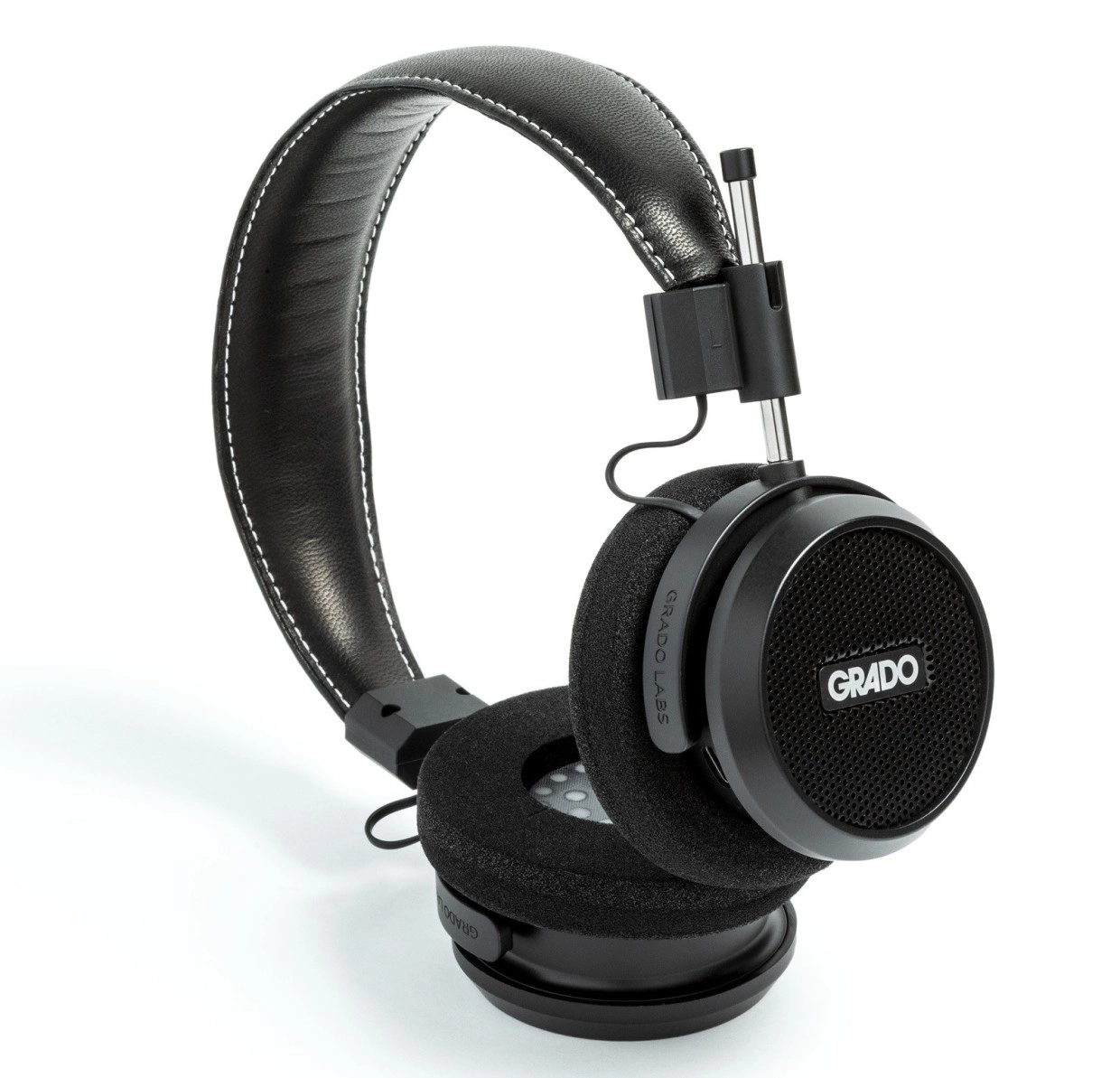
The matte-black housing is paired with Grado's latest Signature headband, which has a padded leather band and a flexible steel section. The steel band can be adjusted inward to change tension, giving users a way to tailor the fit rather than relying only on height adjustment. The stated weight is 235 grams.
Grado has also redesigned the matte-black gimbals and uses stainless-steel height-adjustment rods and reinforced connecting blocks. Controlled rotation of the housing is intended to limit unnecessary movement while allowing enough flexibility for fit. These details describe the adjustment mechanism, though comfort over a long session will still depend on the individual wearer.
The supplied F pads are not the only option. Unlike the earlier GW100 models, the GW200 is compatible with Grado's complete earpad range. That gives owners a documented route to experiment with both fit and sound, although the announcement does not quantify how particular alternative pads change the headphone's presentation.
Where the GW200 fits in a listening setup
The combination of open earcups, wireless playback and a passive wired option points toward a listener who wants flexibility without giving up Grado's open headphone format. Bluetooth can serve a compatible phone or player without a cable, while the 3.5 mm input provides a connection to an audio source when wireless operation is not wanted.
There are still practical choices to make around that flexibility. A buyer interested in a specific Bluetooth codec will need to check the source device as well as the headphone, and someone planning to listen near other people should account for the open construction. Those considerations are separate from the claimed battery life and the convenience of USB-C charging.
The most useful questions for prospective buyers now concern price, release timing and how the GW200 performs with the sources and earpads they intend to use. Its specifications make the appeal clear enough: this is an open-back Grado for someone who wants wireless listening but does not want a depleted battery to rule out a wired session. The new S-driver and wider pad compatibility also give it a distinct relationship to Grado's existing headphones, though neither establishes how it will sound in a particular setup. Until more information is available, the choice between its open construction and the isolation of a closed design remains an important consideration.


Sound Off
0Join the discussion if you have something to add.