
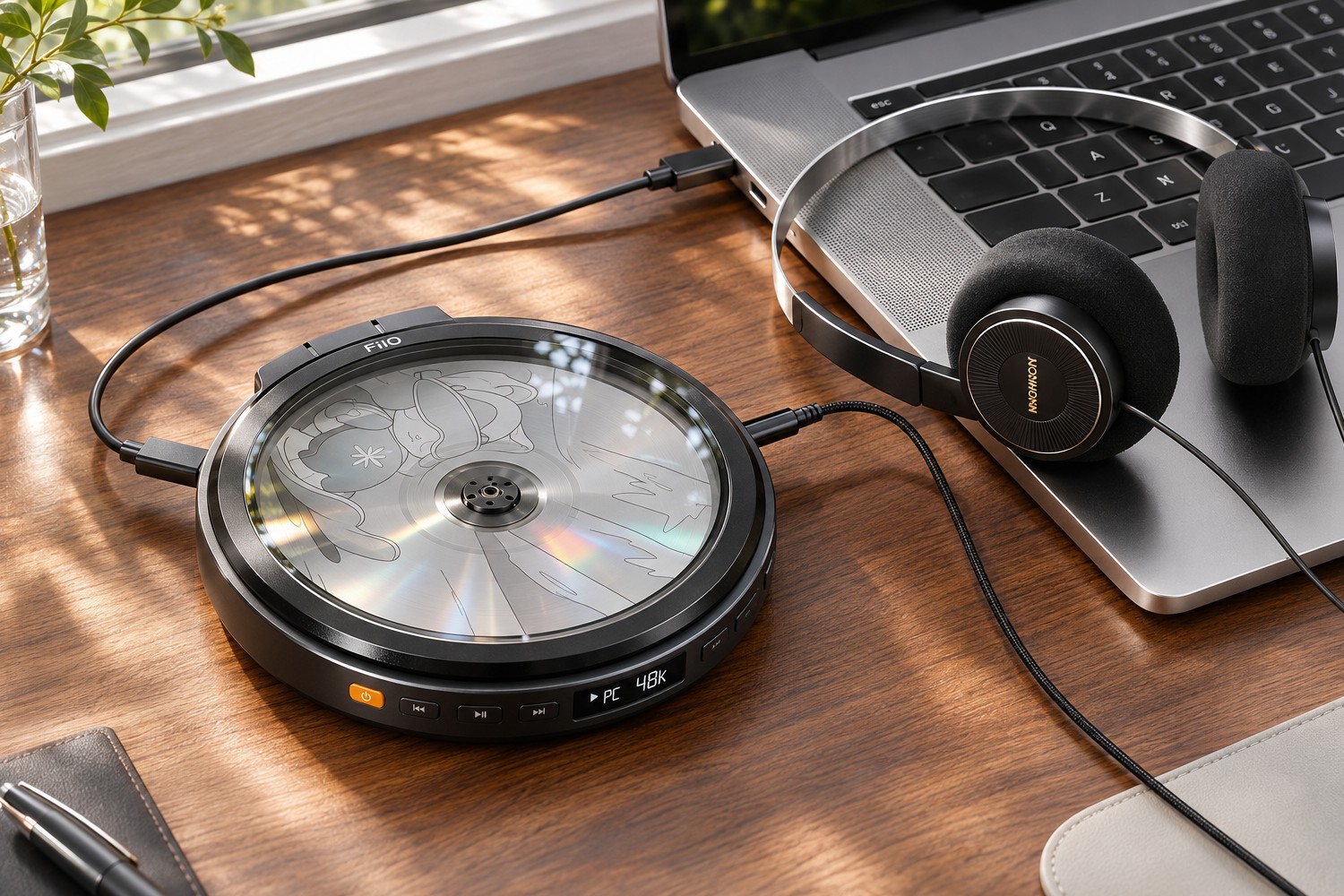
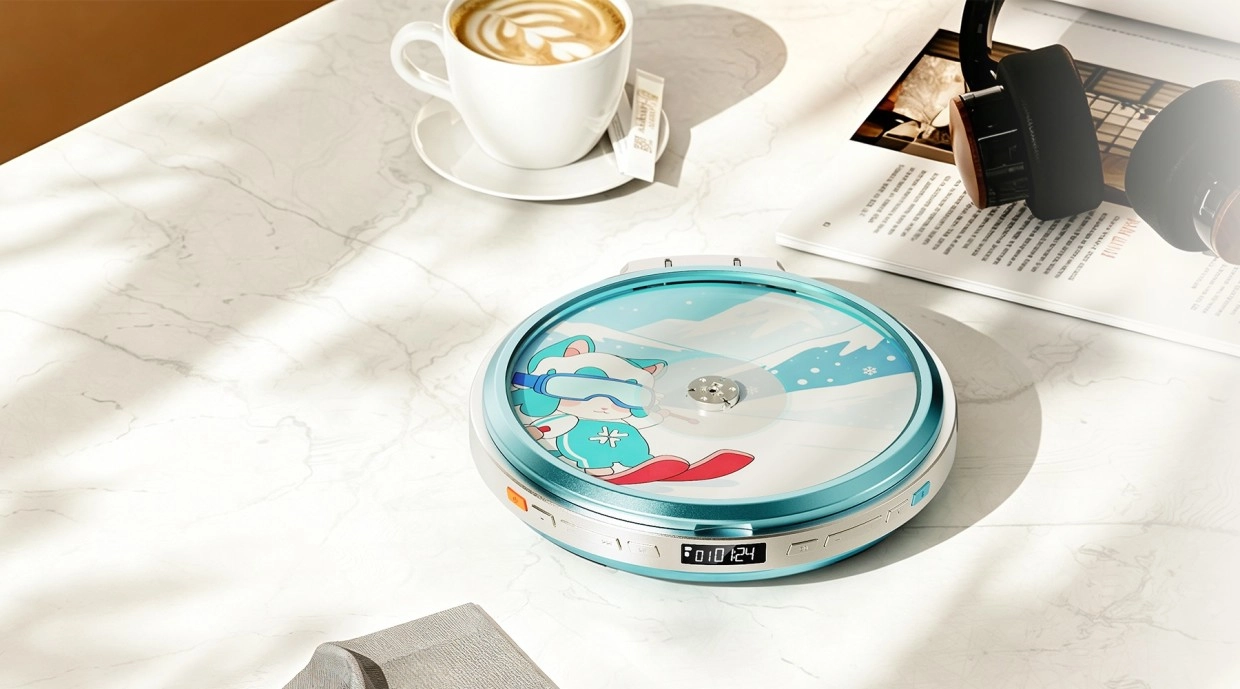
A portable CD player no longer has to serve only as a way to listen to discs on the move. FiiO's DM11 also operates as a USB DAC and can copy CDs to a USB stick without a computer, giving a physical music collection a role beyond the player itself. Its round aluminum body and transparent lid recall personal CD players of the 1990s, but the connections address a broader range of uses: headphones, an external digital audio system and a laptop, phone or tablet. Electronic Shock Protection is included for listening while walking.
A portable player for both pressed and burned discs
The DM11 plays commercially pressed CDs as well as CD-R and CD-RW discs. It also supports files in FLAC, WAV, WMA, AAC and MP3 formats on disc. That makes it relevant to listeners whose collections include homemade compilations or archived music alongside conventional albums.
A hardened-glass lid reveals the spinning disc, while a small display shows the current track. The round enclosure is made from aluminum and measures 25 mm thick; the player weighs 263.5 grams. FiiO describes it as compact enough for a jacket pocket.
The physical format remains central to the experience: unlike a player built around a stored digital library, the DM11 requires a disc for CD playback. Its file support extends the usefulness of that disc slot, rather than replacing it with USB-stick playback.
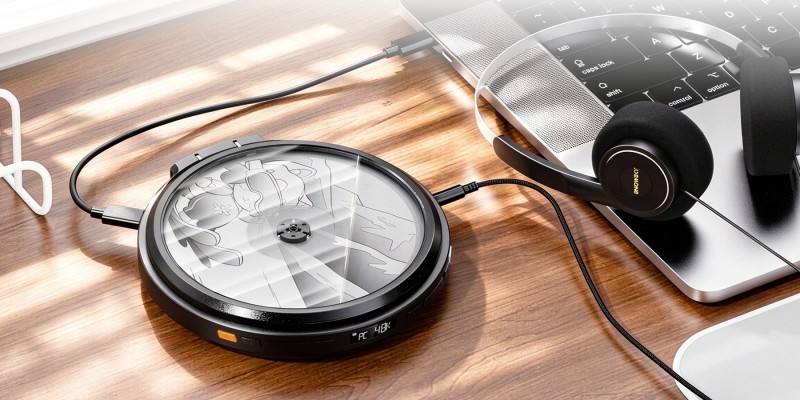
Copying a CD without a computer
One of the DM11's most distinctive functions is its ability to rip a CD directly to a USB stick. Connect the stick at the rear and the player saves the music as lossless WAV files, without requiring a computer for the transfer.
That arrangement gives someone with a CD collection a straightforward way to make files for use elsewhere, while still retaining the original discs for playback. WAV is the specified output format; the supplied information does not establish whether other ripping formats or options are available.
There is an important distinction between recording to USB storage and using it as a music source. The DM11 cannot play music back from the USB stick, so buyers looking for a portable file player with direct USB-library playback will need to account for that limitation.
Two headphone sockets and a Cirrus Logic DAC
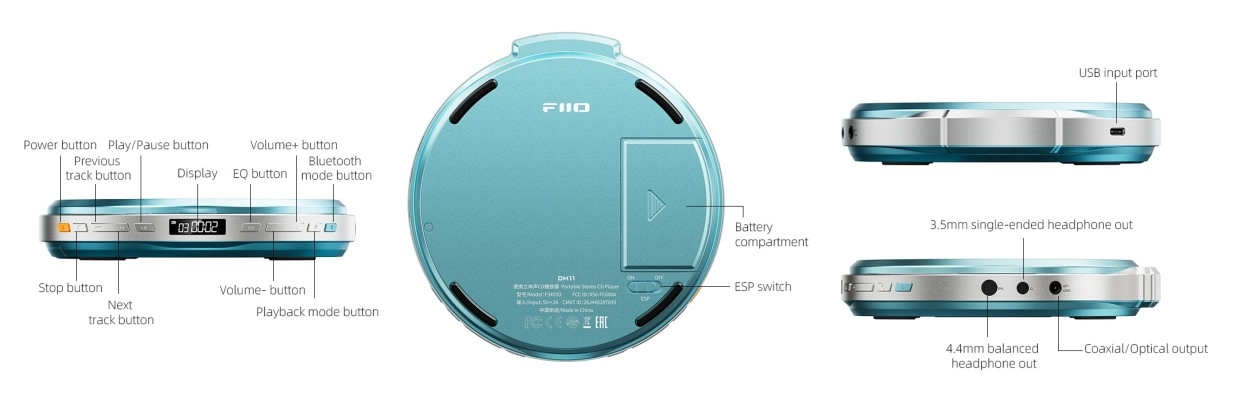
Inside the player is a Cirrus Logic CS43198 digital-to-analog converter, accompanied by two amplifiers. For wired personal listening, the DM11 offers both a 4.4 mm headphone output and a conventional 3.5 mm jack.
FiiO specifies output power of 525 mW from the 4.4 mm connection and 140 mW from the 3.5 mm connection. The figures give buyers a reason to consider which socket their headphones use, particularly if they intend to connect larger headphones rather than relying solely on a small portable set.
Those power numbers should not be treated as a complete guide to headphone compatibility: the supplied information does not state the load conditions for the ratings. Still, having both connections built into the player makes the DM11 useful with different wired headphone setups without making the user choose between the two socket types at purchase.
A disc player that can also serve a laptop or phone
The USB-C interface adds another role. When used as a USB DAC, the DM11 handles digital-to-analog conversion for a connected laptop, smartphone or tablet. That can make the same player useful when the source is not a CD, while retaining its wired headphone connections.
For a separate audio system, a combined optical and coaxial digital output provides a digital connection rather than requiring the buyer to use a headphone socket as the only route out. Bluetooth 5.4 is also included, although the supplied details do not specify its supported codecs or operating modes.
Together, those connections suggest a player intended for more than occasional disc listening away from home. A buyer can consider it as a portable CD transport and headphone device that also has a place beside another digital source. The announcement does not specify every cable, adapter or compatibility requirement for those arrangements.
Shock protection and replaceable batteries
Electronic Shock Protection, activated by a physical switch, is intended to keep music playing when the player is subject to movement. It uses buffer memory to maintain the audio data stream if a shock or vibration briefly disrupts the disc-reading mechanism.
That feature matters for a portable CD player because walking can disturb a spinning disc in a way that does not arise with a purely file-based source. The trade-off is power consumption: enabling ESP uses somewhat more energy, although no battery-life figures are supplied.
Power comes from two replaceable 14500 rechargeable batteries, each rated at 1,000 mAh. They can be changed through a compartment on the underside, giving owners access to the batteries rather than requiring the enclosure to be opened for replacement.
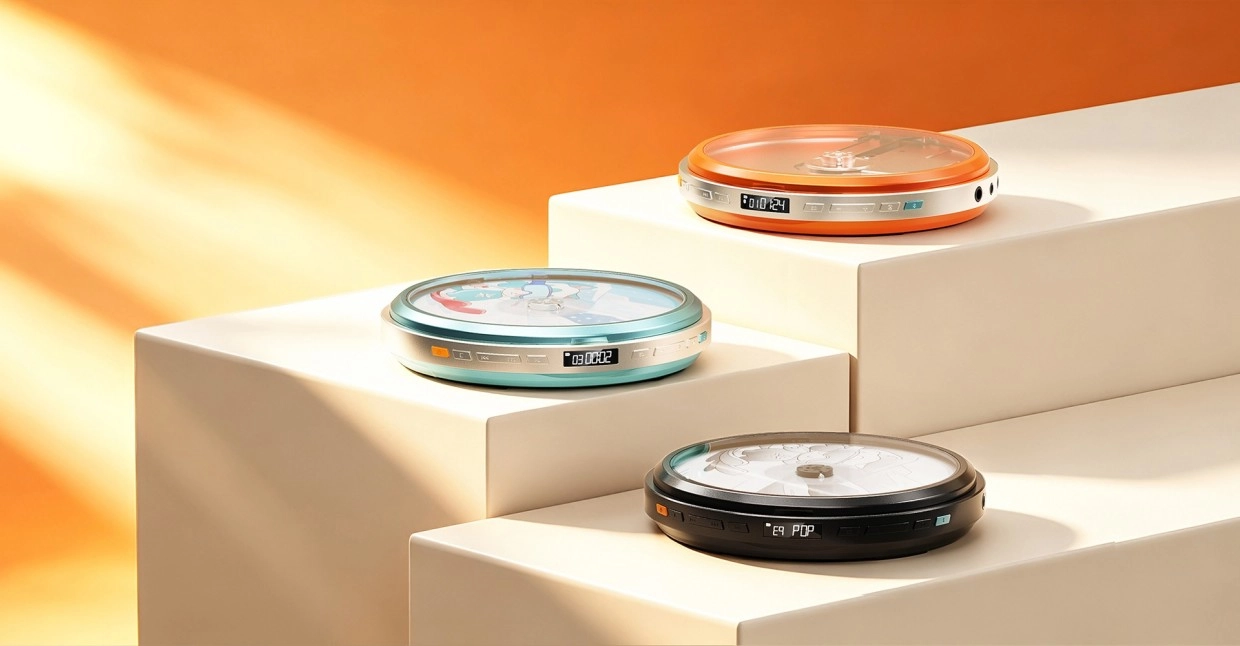
The DM11 is priced at approximately $120 in the United States and China and is offered in three colors. Pricing and delivery information for Europe have not yet been announced. For a buyer, the most useful distinction is between its three jobs: playing discs, making WAV copies and working as a USB DAC. Those functions could suit someone who still buys or owns CDs but also wants files for use on another device. The limits deserve attention too: USB sticks are for ripping rather than playback, and details such as battery life, Bluetooth modes and headphone-output test conditions remain unspecified in the supplied announcement. Those are sensible points to check before choosing it for a particular setup.


Sound Off
0Join the discussion if you have something to add.