
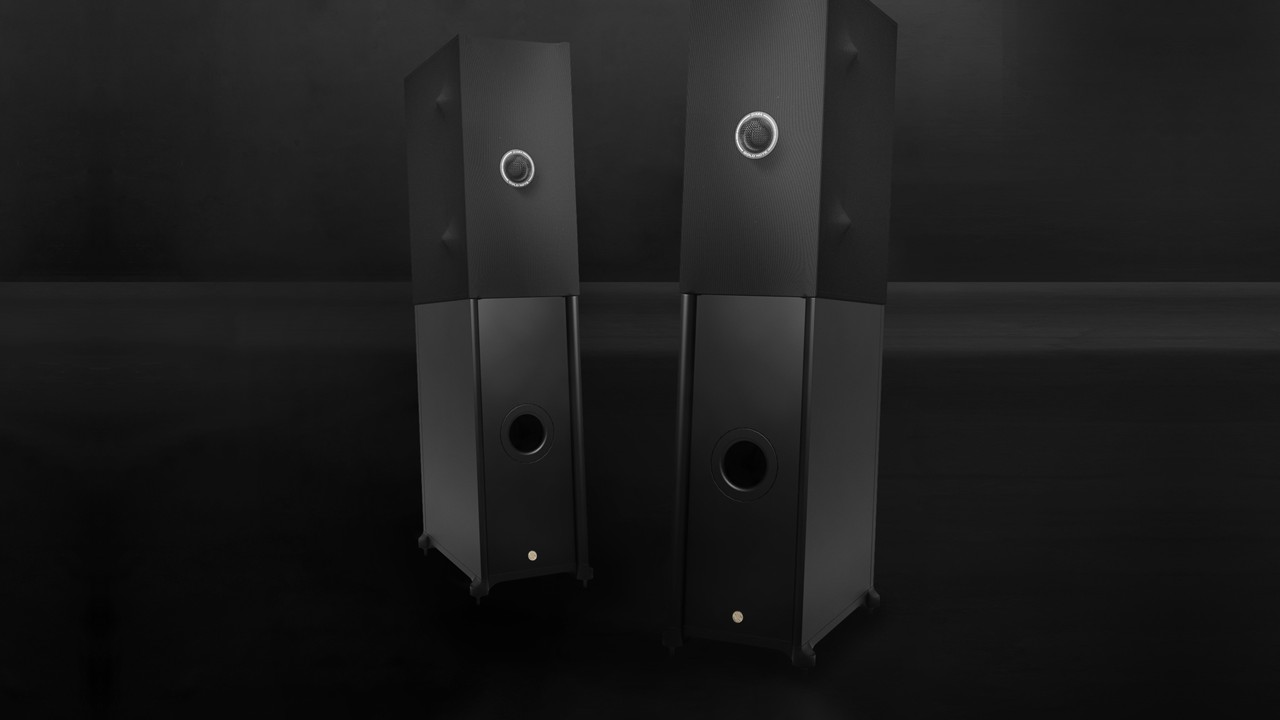
The Gold Note Diana series takes a less conventional route to building a loudspeaker system. Rather than offering only a standmount model and a separate floorstander, the Italian manufacturer has created two passive monitors that can be combined with a dedicated floorstanding passive subwoofer. This modular structure lets owners select the monitor configuration that suits their system while retaining the option of a visually coordinated low-frequency module. Distinctive cabinet materials, magnetic mounting and a matching center speaker further broaden the concept beyond a simple pair of bookshelf speakers.
Two monitors built around a common design language
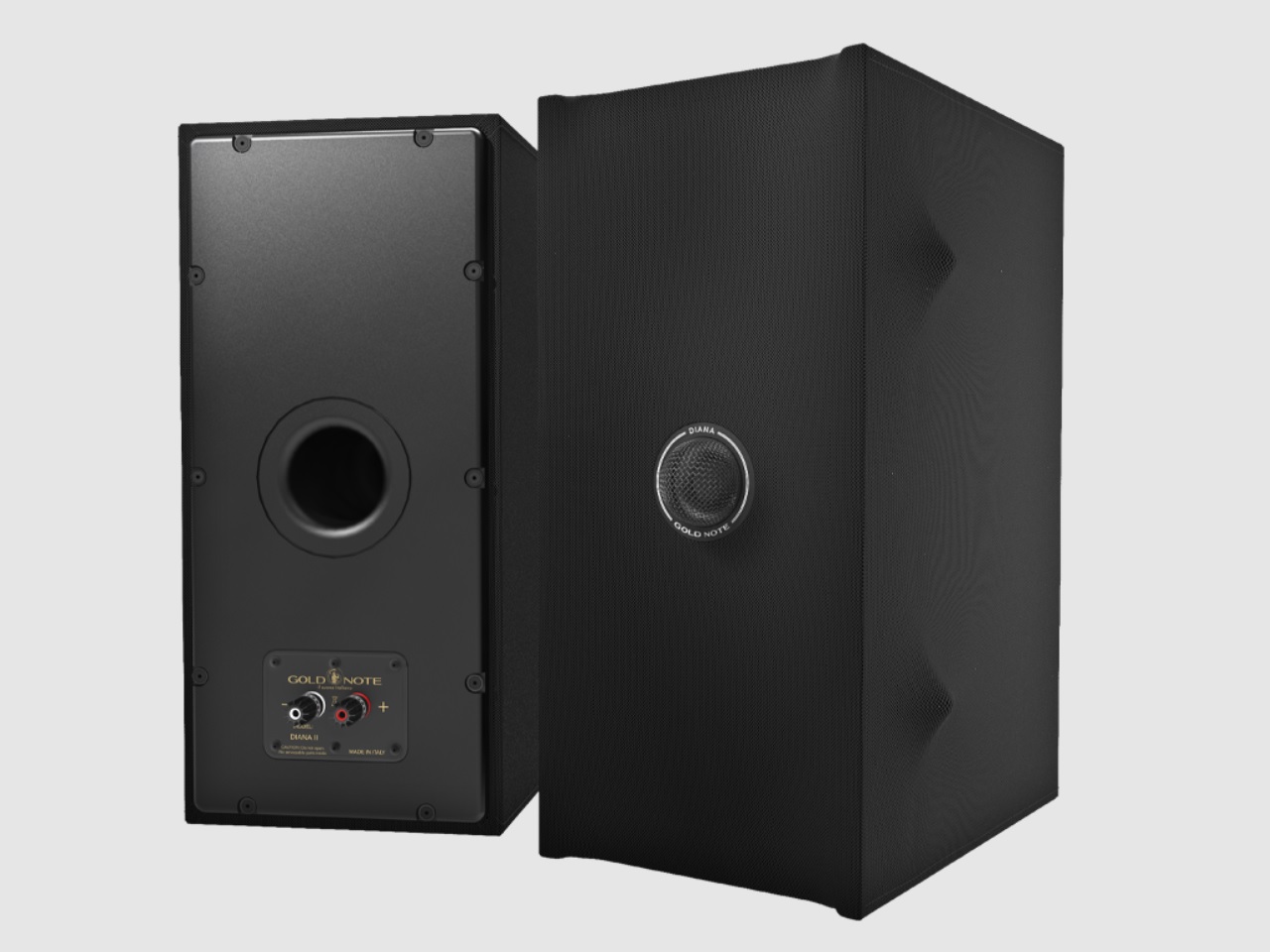
The Diana range begins with the Diana I and Diana II, both of which are passive two-way monitor speakers. Their shared architecture includes a 1.1-inch silk-dome tweeter and glass-fiber-cone drivers, giving the two models a clear family relationship while allowing for different system requirements.
The Diana I uses one 6.5-inch glass-fiber-cone midrange driver and has a specified sensitivity of 88 dB. The Diana II adds a second 6.5-inch driver and raises the stated sensitivity to 91 dB. This gives prospective owners a practical distinction beyond cabinet size or appearance: the Diana II’s higher sensitivity may be relevant when considering amplifier matching, while the more compact driver arrangement of the Diana I may appeal where space and visual discretion carry greater importance.
Both speakers remain conventional passive designs in the sense that amplification must come from elsewhere in the system. That leaves owners free to choose an integrated amplifier, power amplifier or wider electronics chain according to their preferences. Gold Note does not force the user into a built-in amplification or streaming platform, which may be attractive to listeners who already own electronics or expect to upgrade individual components over time.

A floorstanding subwoofer completes the modular concept
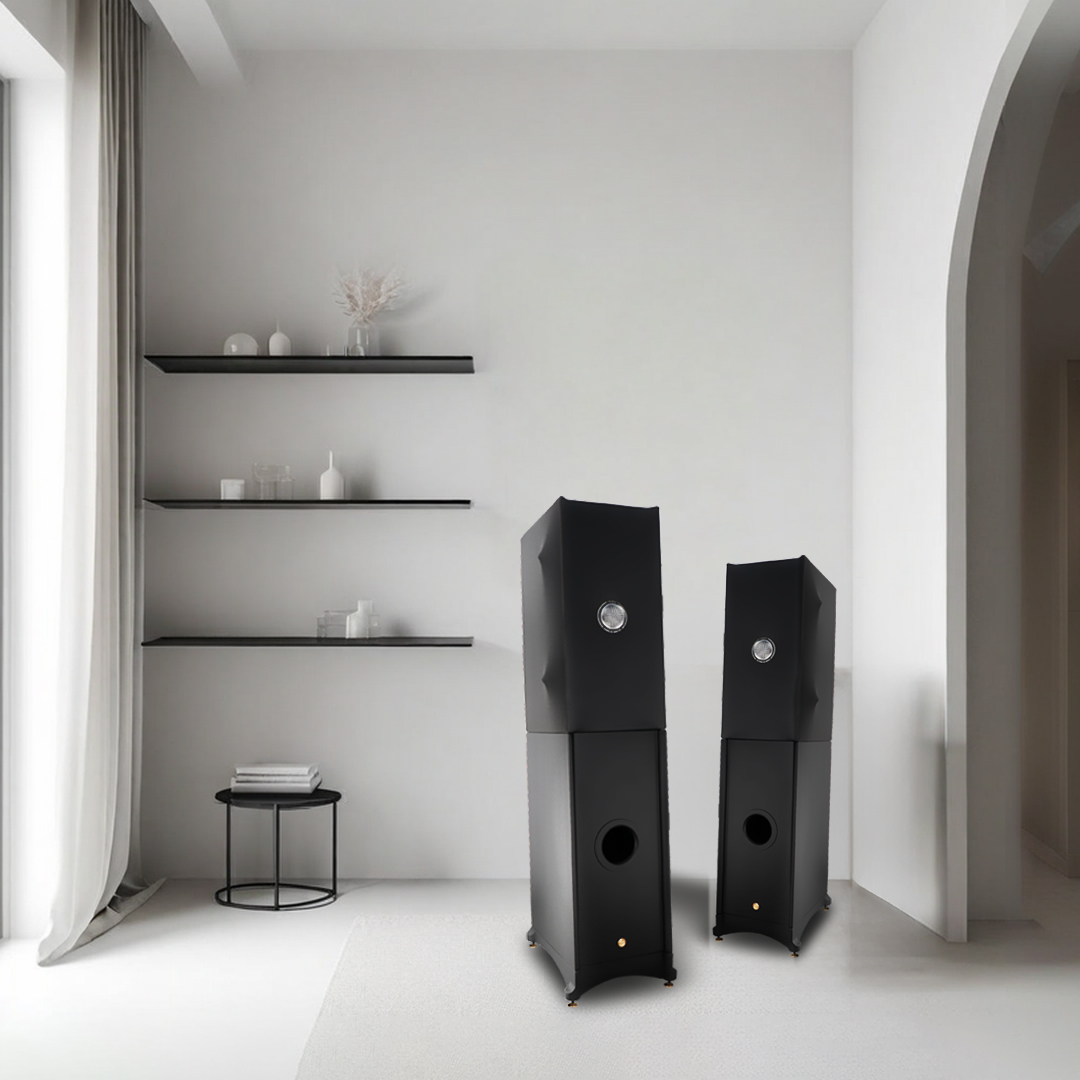
The Diana III-F is the component that makes this series particularly distinctive. It is a floorstanding subwoofer designed to support either Diana monitor, with the selected speaker positioned on top. The monitors are held in place magnetically, creating a purpose-designed physical relationship rather than requiring a generic speaker stand.
Like the monitors, the Diana III-F is passive. It uses a 6.5-inch glass-fiber driver and can be adjusted according to which monitor is installed above it. That adjustability matters because the Diana I and Diana II do not have identical driver complements or sensitivity ratings. Gold Note has therefore treated the low-frequency section as part of a configurable family rather than as an unrelated add-on.
The passive design should be understood before planning a system. The Diana III-F does not follow the common powered-subwoofer formula with amplification built into the enclosure. Suitable external amplification and appropriate system configuration will consequently be part of the installation. The available information does not specify the required amplification arrangement or adjustment controls, so those details would need to be confirmed when assembling a complete Diana setup.
For owners who value a visually unified installation, placing the monitor directly on the floorstanding bass module also avoids the appearance of combining unrelated speakers and stands. It creates a scalable system format: the monitors are the starting point, while the Diana III-F provides a route toward a taller and more physically integrated loudspeaker system.

Durable fabric replaces a conventional cabinet finish
Gold Note has also given the Diana series an unusual exterior treatment. The cabinet fabric incorporates recycled material sourced from race-car seats and is described as substantially more resistant than traditional wood or lacquer finishes. This is not merely a decorative textile laid loosely over the enclosure: the fabric is laminated onto internal foam damping, linking the exterior finish with the cabinet’s internal construction.
That approach may have practical value in rooms where loudspeakers are likely to encounter regular contact. Lacquer can show scratches, fingerprints and small impacts, while natural wood finishes require their own level of care. A hard-wearing textile surface offers a different ownership proposition, particularly for speakers used in shared living spaces rather than isolated listening rooms.
The recycled origin of the material also gives the design a clear identity without relying solely on unusual shaping. Instead of imitating familiar furniture finishes, the Diana series draws on an automotive-derived material and applies it to a domestic audio product. The result is intended to combine resilience, damping and visual character within the same cabinet treatment.
Tweeter dispersion and room usability
In front of the 1.1-inch silk-dome tweeter is a mechanical dome phaser. Gold Note designed this element to create an expansive sweet spot. Although no dispersion measurements are provided, the stated objective is relevant to how the speakers are intended to function in a room: not every listener will remain fixed in one narrowly defined position.
A broader listening area can be useful when music is shared by more than one person or when the speakers form part of a multipurpose living environment. It also complements the modular nature of the range, which is not limited to a single traditional two-channel arrangement. The presence of a Diana Center in matching colors indicates that Gold Note has considered visually coordinated multichannel systems as well.
Only the center speaker’s existence and color coordination are documented, so its driver configuration and other specifications should not be assumed. Even so, its place in the family gives buyers a path toward maintaining a consistent appearance across the front of a system rather than mixing unrelated cabinet designs.

System matching and configuration choices
The most immediate choice is between the Diana I and Diana II. The Diana I’s single 6.5-inch driver and 88 dB sensitivity make it the simpler of the two monitor configurations. The Diana II doubles the number of 6.5-inch glass-fiber drivers and increases specified sensitivity to 91 dB. Amplifier capability, room constraints and the desired physical scale of the system are therefore sensible factors to consider.
Sensitivity alone does not establish complete amplifier compatibility, and no impedance specifications are provided in the available product information. Buyers should consequently avoid selecting amplification from the sensitivity figure alone. The passive Diana III-F adds another consideration because it also depends on external system resources rather than providing its own internal amplifier.
The modular arrangement is most useful for someone who wants to make these decisions in stages. A pair of monitors can form the basis of the system, while the matching floorstanding bass modules can be considered when greater low-frequency support or a more substantial format is required. The magnetic mounting system helps preserve the intended physical presentation when the components are combined.
Who the Gold Note Diana system is for
The Diana family is particularly suitable for owners who appreciate passive hi-fi systems and want control over their choice of amplification. It may also appeal to those who prefer a coordinated speaker range that can move from a monitor-based setup to a floorstanding modular configuration without abandoning the original speakers.
Its durable textile finish could make it relevant to design-conscious shared spaces where conventional lacquer or wood surfaces may feel too delicate. The matching center option also gives the range potential for a visually consistent multichannel installation, although detailed center-channel specifications would need to be checked separately.
Conversely, the system is less obviously suited to someone seeking self-powered speakers, a plug-and-play wireless solution or a conventional active subwoofer with amplification inside the enclosure. Prospective owners must account for the fact that every Diana component, including the III-F subwoofer, is passive. Those who prefer an all-in-one platform may find that requirement less convenient, while enthusiasts building a component-based system may see it as valuable flexibility.

Conclusion
The Gold Note Diana series stands out through a coherent modular structure rather than one isolated feature. Buyers can choose between two passive monitors with different driver complements and sensitivity ratings, add a dedicated floorstanding passive subwoofer, and incorporate a color-matched center speaker. Magnetic monitor mounting, a tweeter dome phaser intended to widen the sweet spot, and a durable cabinet fabric made with recycled race-car-seat material reinforce the system’s distinctive design. It is best suited to listeners who want a coordinated, component-based speaker system and are comfortable selecting the external amplification required by an entirely passive range.


Sound Off
0Join the discussion if you have something to add.