
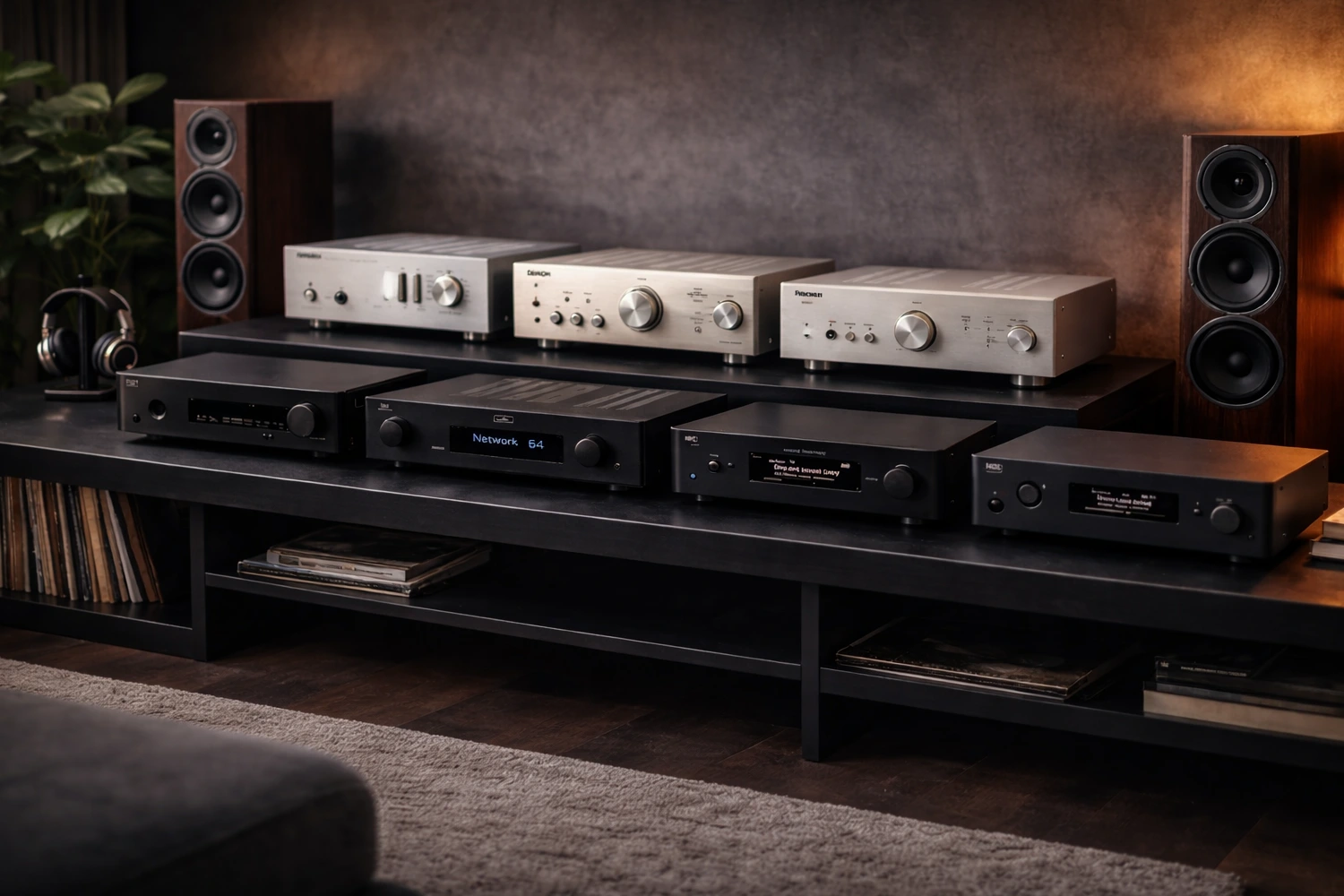
The best audio amplifiers of 2025–2026 aren’t about brute force anymore. Modern audiophiles care less about headline wattage and more about control, noise levels, connectivity, and how well an amplifier works with today’s speakers and digital sources.
Streaming has become the primary music source for many listeners, vinyl is enjoying a strong comeback, and speakers have grown more demanding. As a result, the ideal amplifier today needs to be quiet, flexible, stable, and musical, not just powerful.
To reflect this shift, we’ve selected ten of the most compelling integrated amplifiers available right now, grouped into budget, mid-range, and near-premium classes. Each model has been chosen for sound quality first—features come second.
Budget amplifiers
Budget amplifiers today are far more capable than they used to be. If you have bookshelf speakers or efficient floorstanders and listen at sensible volumes, these models deliver clean, enjoyable sound without unnecessary extras.
Yamaha A-S301
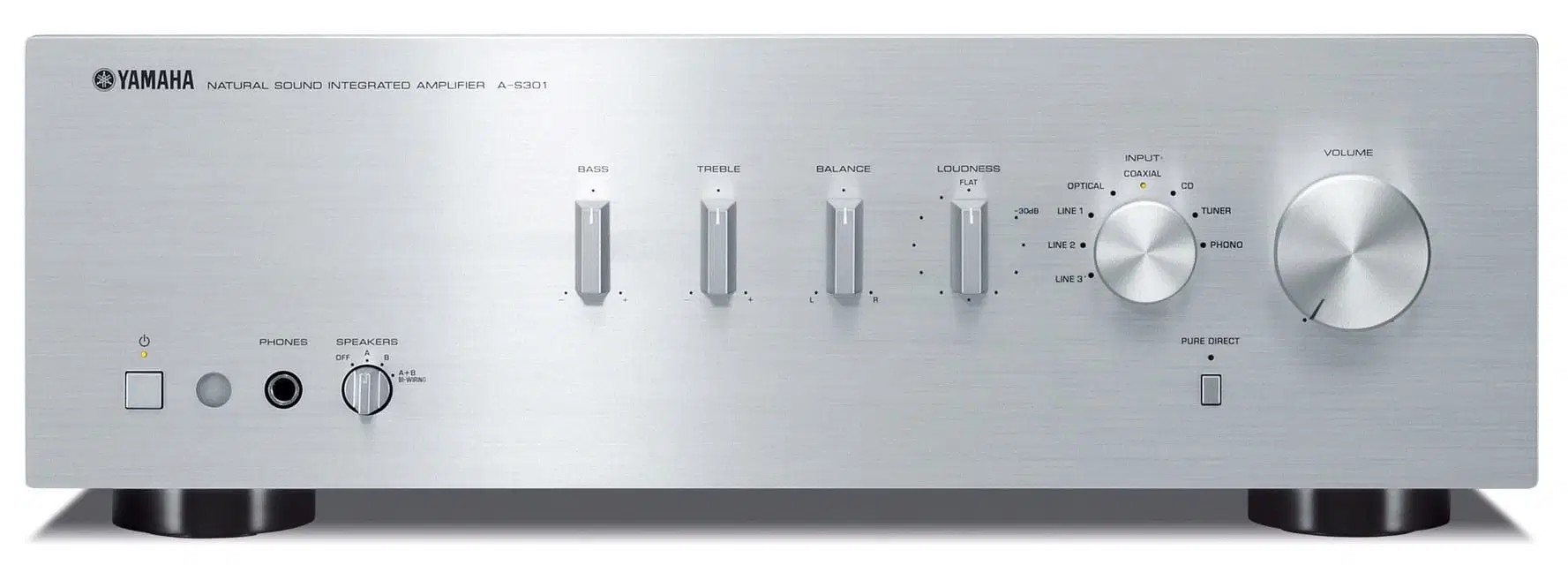
The Yamaha A-S301 punches well above its price. With around 2 × 60 watts into 8 ohms, it offers a surprisingly composed and balanced presentation.
The sound is neutral and well controlled, especially through the midrange, where vocals remain clear and stable. Bass control is solid for the class, helped by a respectable damping factor. While the circuit is simpler than Yamaha’s higher-end ToP-ART designs, phase coherence and overall cleanliness remain strong.
This amplifier works best with speakers rated at 86 dB sensitivity or higher, making it a reliable choice for compact living rooms and classic stereo setups.
Denon PMA-600NE
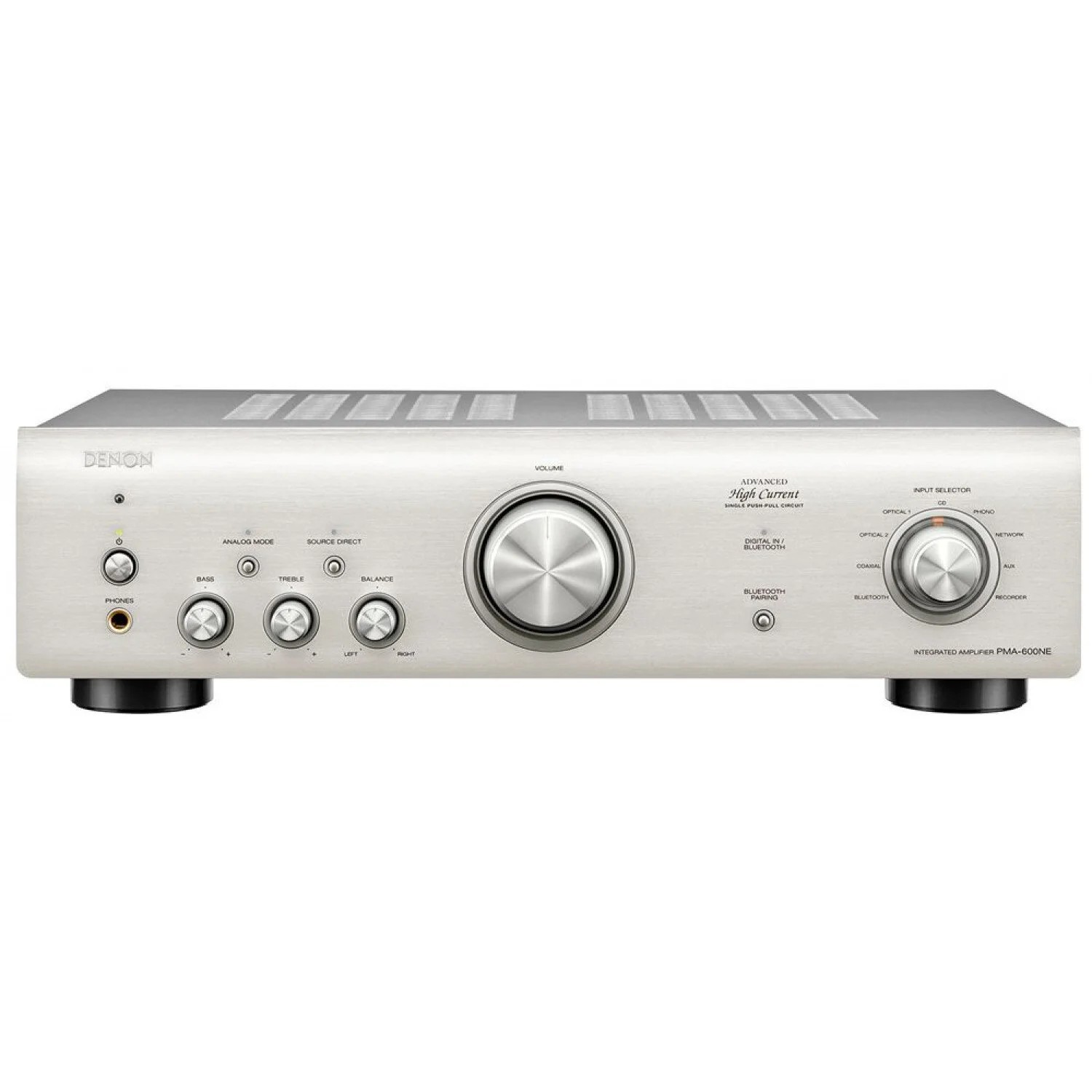
The Denon PMA-600NE is aimed at listeners who want modern connectivity without complexity. It offers optical inputs, Bluetooth, and a built-in MM phono stage alongside its traditional analog inputs.
Sonically, Denon leans warm and inviting. Vocals sit slightly forward, and the background remains impressively quiet—ideal for jazz, acoustic recordings, and relaxed listening sessions. Power output is modest at roughly 45 watts per channel, so pairing it with demanding 4-ohm speakers at high volumes isn’t recommended.
For mixed digital and vinyl systems, however, it’s one of the most complete budget amplifiers available.
Pioneer A-10AE
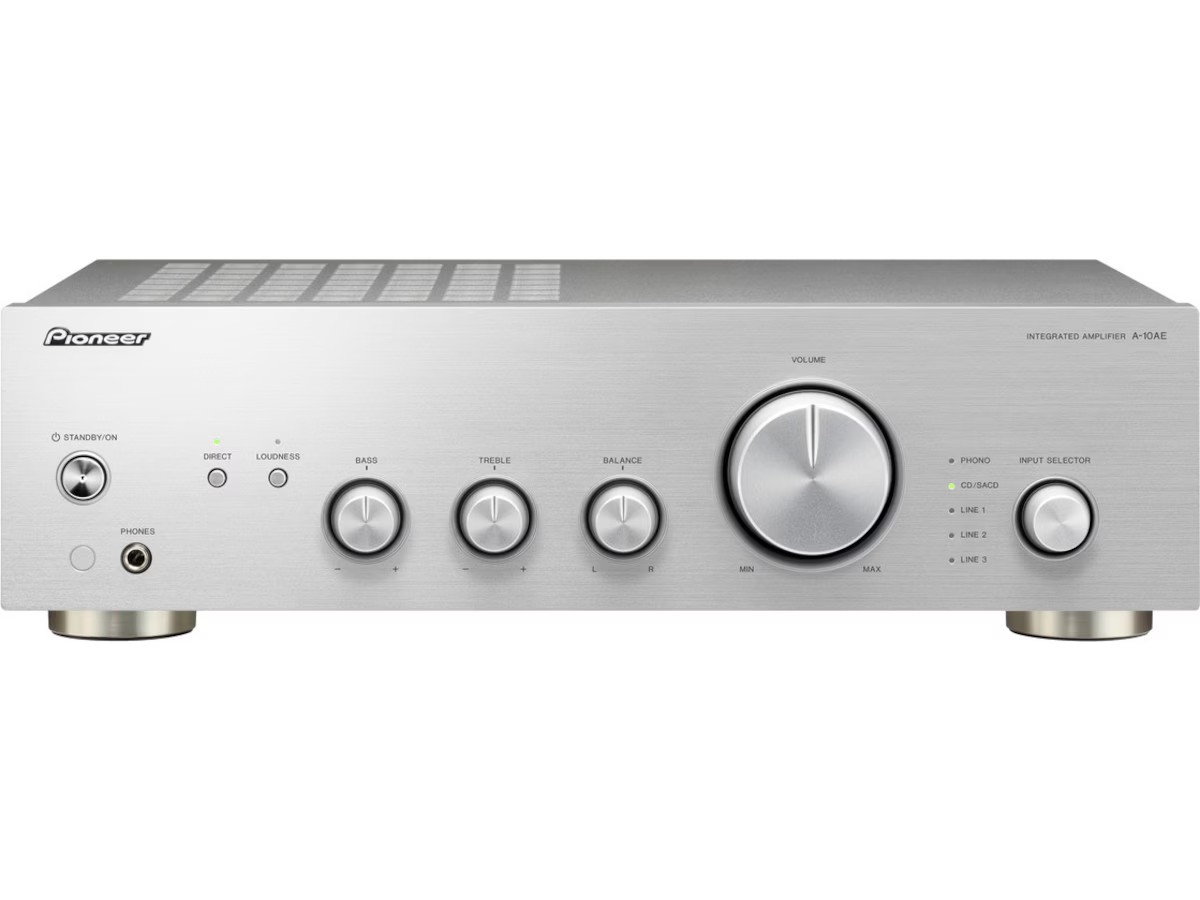
The Pioneer A-10AE is refreshingly old-school. No digital inputs, no wireless features—just a straightforward analog amplifier with a built-in MM phono stage.
Power output is limited, but the sound is smooth and musical, with a pleasant midrange that flatters vinyl playback. Total harmonic distortion is higher than modern competitors, but subjectively the presentation remains cohesive and easy to listen to.
This is an amplifier for listeners who value simplicity and classic analog character over raw performance.
Mid-range amplifiers
Mid-range amplifiers are where sound quality, power, and modern functionality truly come together. These models are capable of driving a wide range of speakers while integrating seamlessly into both digital and analog systems.
Marantz PM6007
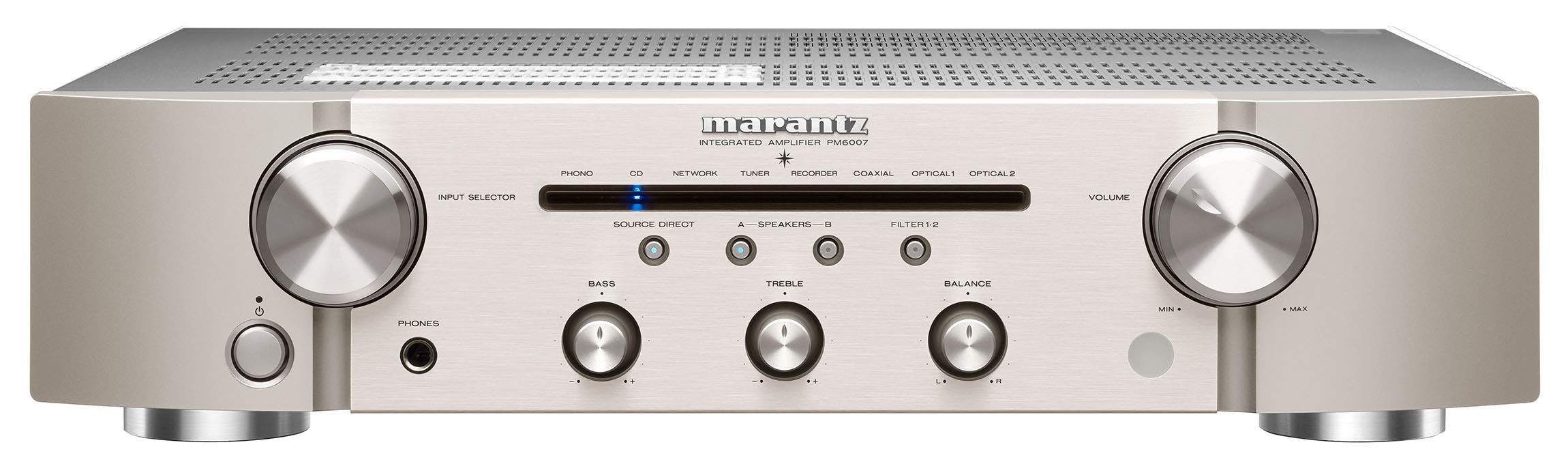
The Marantz PM6007 is a textbook example of Marantz’s house sound: smooth, musical, and refined without losing detail.
Its built-in DAC makes it an easy match for streamers and TVs, while the MM phono input caters to vinyl lovers. The amplifier delivers around 45 watts per channel, but thanks to excellent power supply design and low distortion, it sounds more confident than the numbers suggest.
Bass remains tight, highs are open but never sharp, and the overall balance makes long listening sessions effortless.
Rotel A11 Tribute
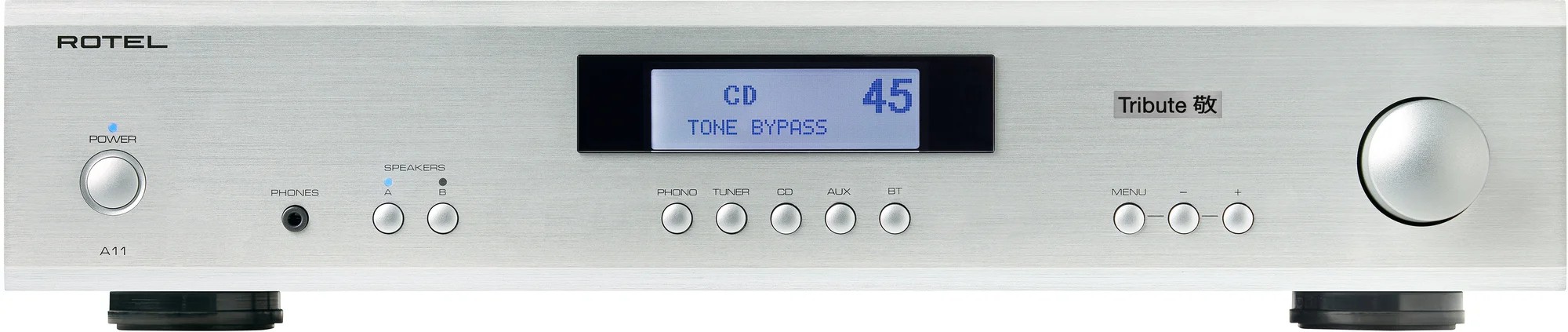
The Rotel A11 Tribute is all about clarity and control. With roughly 50 watts per channel and a high-quality power supply, it delivers strong dynamics and precise imaging.
The sound is neutral with a slightly analytical edge in the treble, which rewards well-recorded material. Bass control is excellent, and the amplifier handles transient peaks without strain.
This is a great match for sensitive speakers and listeners who value accuracy over warmth.
Cambridge Audio AXA35
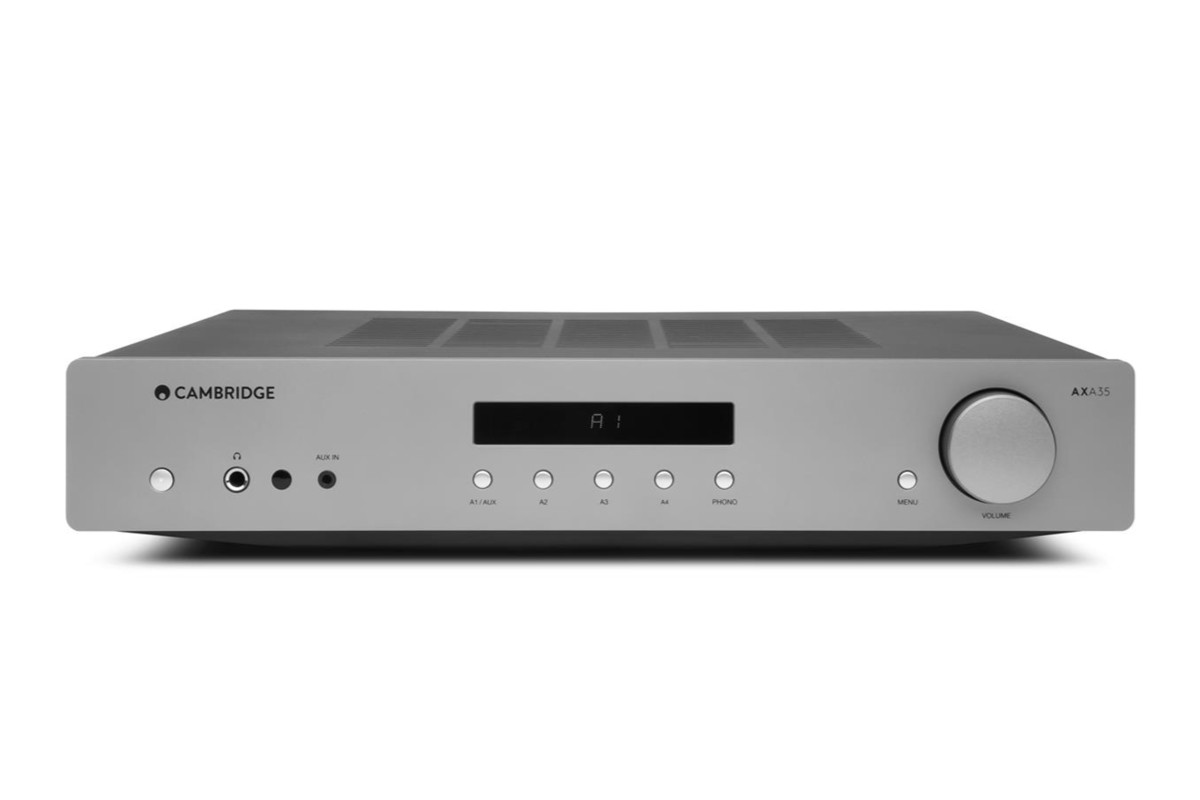
The Cambridge Audio AXA35 proves that modest power doesn’t mean modest sound. With 35 watts per channel, it’s clearly designed for smaller rooms, but within its limits it performs beautifully.
It offers a clean, detailed presentation with low distortion at normal listening levels. The built-in MM phono stage makes it an easy entry point for vinyl systems, and the compact design fits neatly into modern living spaces.
Paired correctly, the AXA35 delivers far more refinement than its size suggests.
Yamaha A-S701
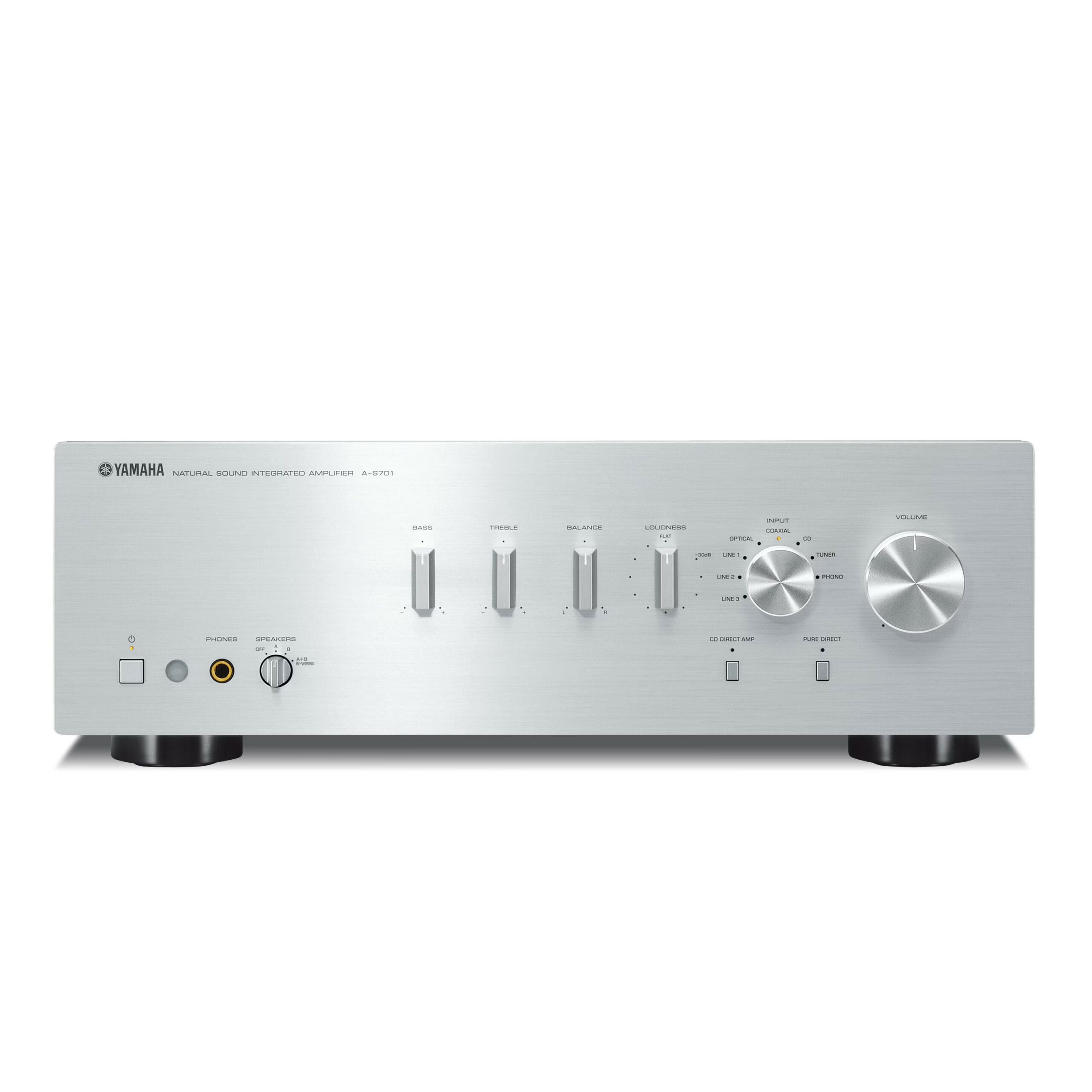
The Yamaha A-S701 takes a significant step up in authority. With approximately 100 watts per channel, a large transformer, and high damping factor, it has no trouble driving demanding speakers.
Bass is deep and controlled, dynamics are effortless, and the amplifier remains composed even at higher volumes. Pure Direct and CD Direct modes strip the signal path down for maximum clarity.
This is an excellent choice for listeners planning to upgrade to larger speakers or move into a bigger room.
Near-premium amplifiers
These amplifiers are designed for serious systems—larger rooms, complex speaker loads, and listeners who want everything in one box without sacrificing sound quality.
Rotel RA-1572 MKII
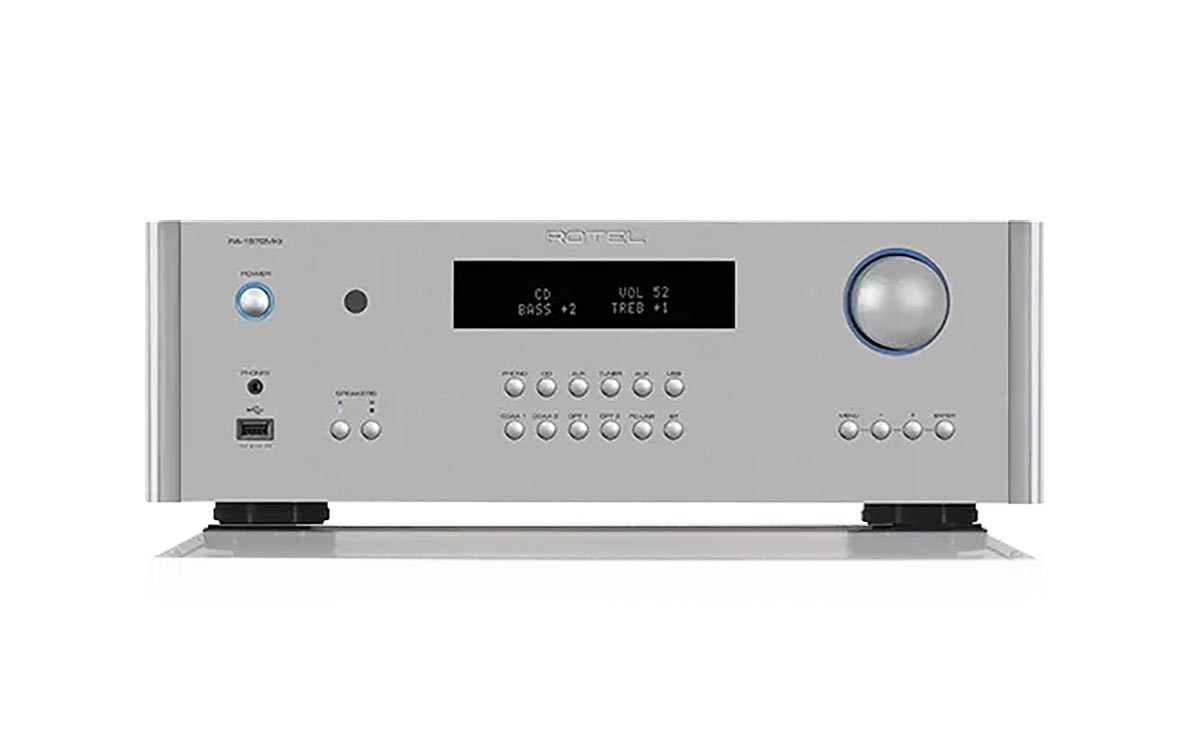
The Rotel RA-1572 MKII is a true all-in-one solution. With 120 watts per channel, extensive digital inputs, USB audio, Bluetooth, XLR input, and a phono stage, it covers virtually every source.
The sound is neutral and authoritative, with excellent low-frequency grip and a wide, stable soundstage. Digital performance is clean and low-jitter, making it a strong choice for high-resolution streaming setups.
Hegel H95
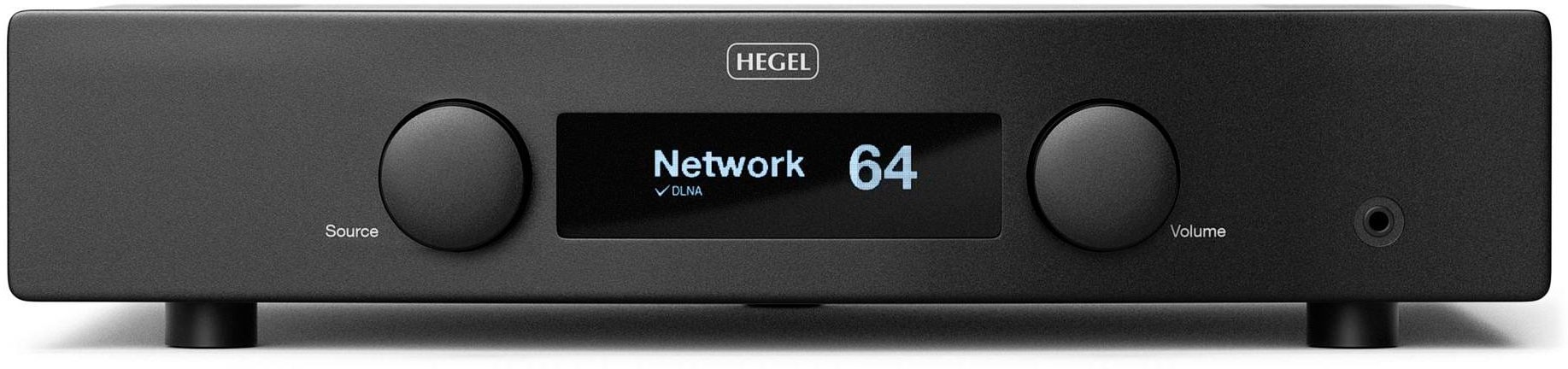
The Hegel H95 focuses on purity rather than features. Rated at around 60 watts per channel, it uses Hegel’s proprietary output stage to achieve extremely low distortion and high transparency.
The result is a sound that feels effortless and uncolored. Soundstage precision and micro-detail are outstanding, making it ideal for listeners who value neutrality and realism.
Paired with high-quality speakers, the H95 reveals subtle textures that lesser amplifiers often mask.
NAD C 399
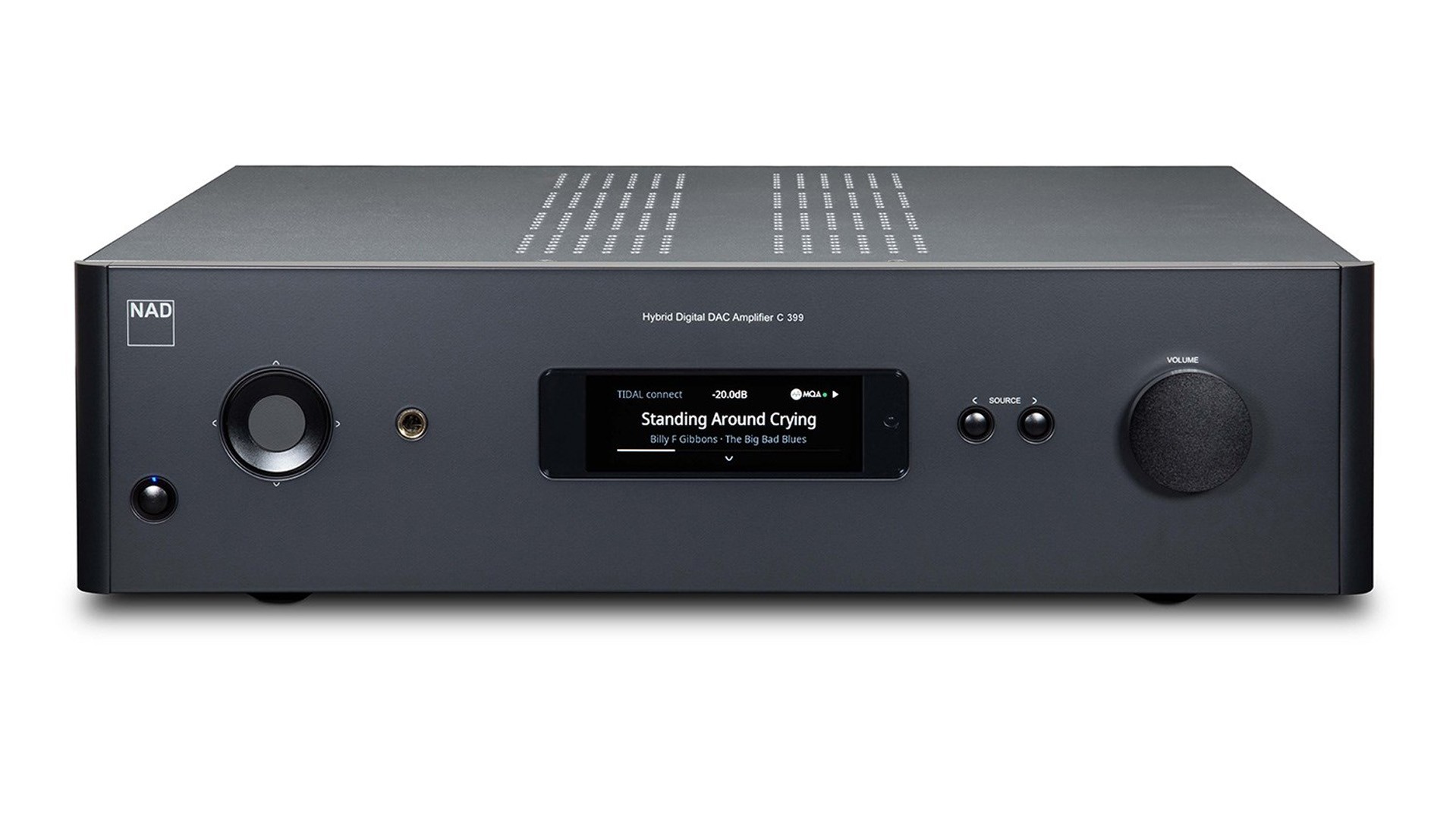
The NAD C 399 is built for power and scalability. Its hybrid design delivers massive headroom, making it suitable for low-sensitivity speakers and large rooms.
Sound character is clean and controlled rather than romantic, with excellent bass authority and dynamic stability. The modular architecture allows future upgrades, making it a long-term investment for evolving systems.
How to choose the right amplifier
A good amplifier should sound balanced at low and medium volumes, not just when pushed hard. Pay close attention to bass control—poor damping often reveals itself as loose or blurry low frequencies.
Complex music with wide dynamics is an excellent test. If the sound compresses or hardens during peaks, the amplifier may lack sufficient power reserves for your speakers.
Ergonomics matter too. A smooth volume control, logical input layout, and quiet operation all contribute to real-world enjoyment.
Common mistakes to avoid
Many beginners buy amplifiers that are too powerful or poorly matched to their speakers. Power without control leads to distortion, not better sound.
Ignoring speaker sensitivity is another classic error. Even a high-quality amplifier can sound underwhelming if it’s constantly pushed beyond its comfort zone.
Finally, poor placement, inadequate ventilation, and cheap cables can undermine even expensive equipment.
Conclusion
The best amplifier isn’t the one with the biggest numbers—it’s the one that fits your room, your speakers, and how you actually listen to music. Today’s integrated amplifiers are more versatile and better sounding than ever, making it easier to build a system that’s both modern and musically satisfying.
Choose wisely, match carefully, and let the music do the rest




Sound Off
1Join the discussion if you have something to add.
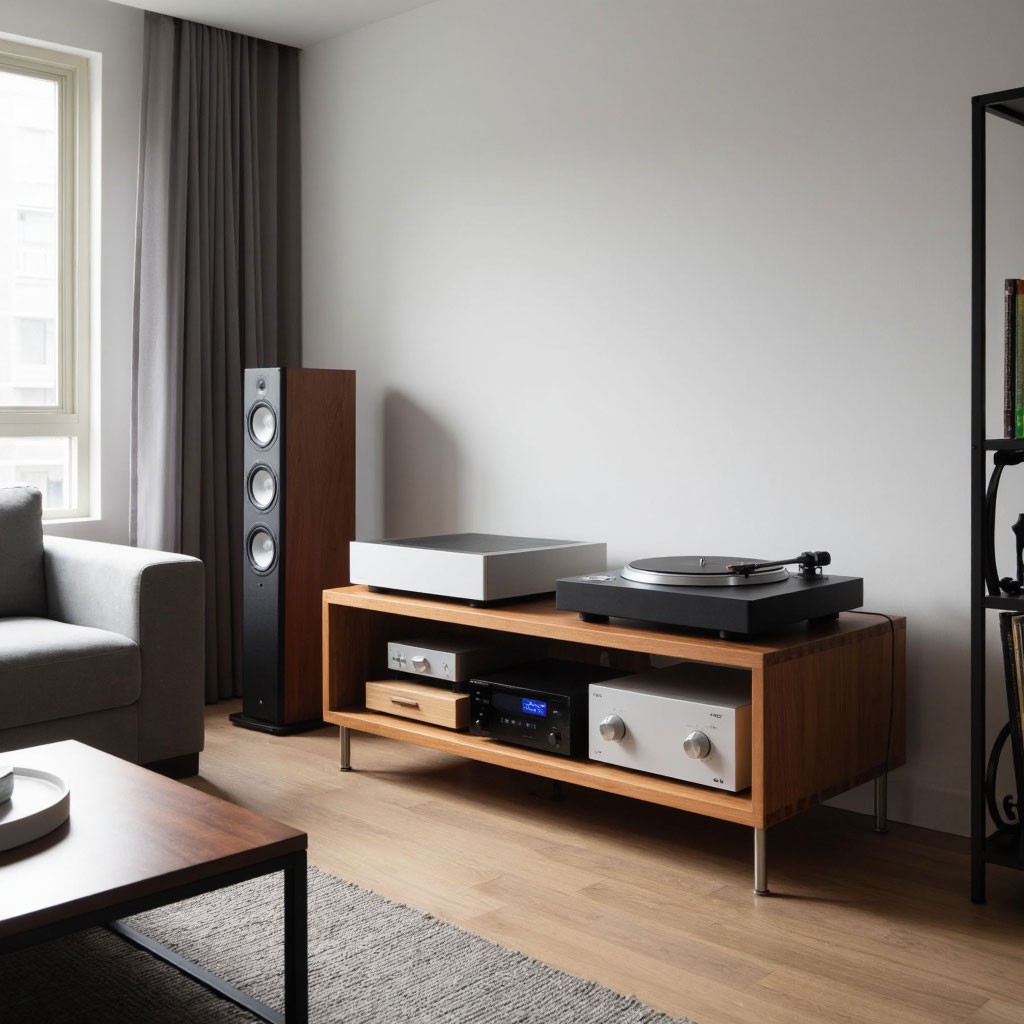
What is the large amp at the bottom right of the cabinet–the one with two rotary controls? I'm guessing one selects the input and the other is the volume control.