

The Audio-GD HE-9 MK3 occupies two important positions in an analog audio system. It is both a high-power headphone amplifier and a fully balanced preamplifier, allowing it to serve as the control center for headphones, active loudspeakers, or a separate power amplifier. Its appeal lies not in a long list of digital conveniences, but in a concentrated analog design: discrete Class A circuitry, multiple connection standards, a 100-step volume control, two gain settings, and an unusually substantial power-supply architecture. At 22 kg and with three toroidal transformers, this is clearly intended as a permanent full-size system component rather than a compact desktop accessory.
A dual-purpose analog component
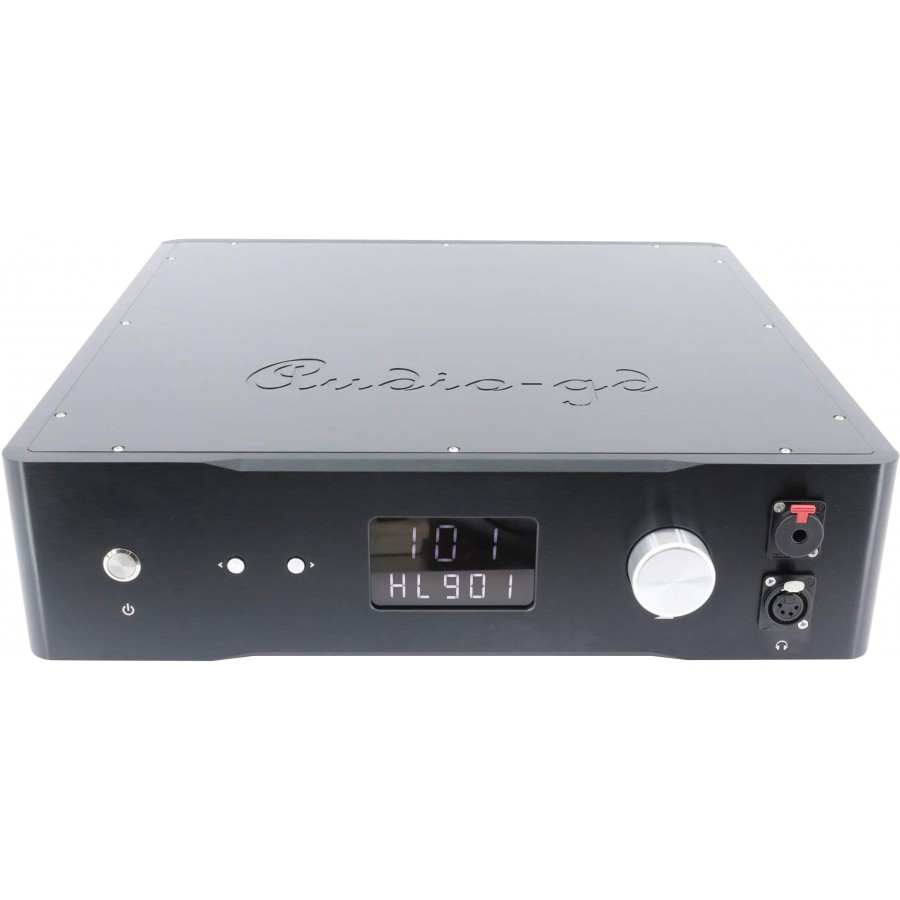
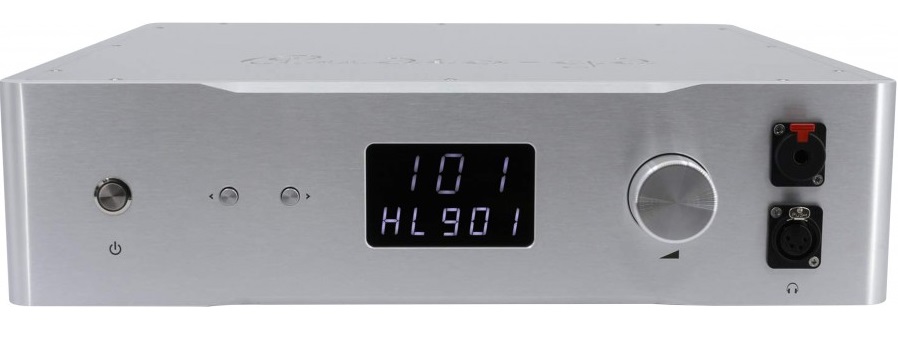
Combining headphone amplification and preamplifier duties can simplify a system without restricting how it is configured. The HE-9 MK3 provides balanced 4-pin XLR and conventional 6.35 mm headphone connections, alongside XLR, RCA, and ACSS preamplifier outputs. An owner can therefore use it for private listening, control a power amplifier, or feed compatible active loudspeakers from the same central volume control.
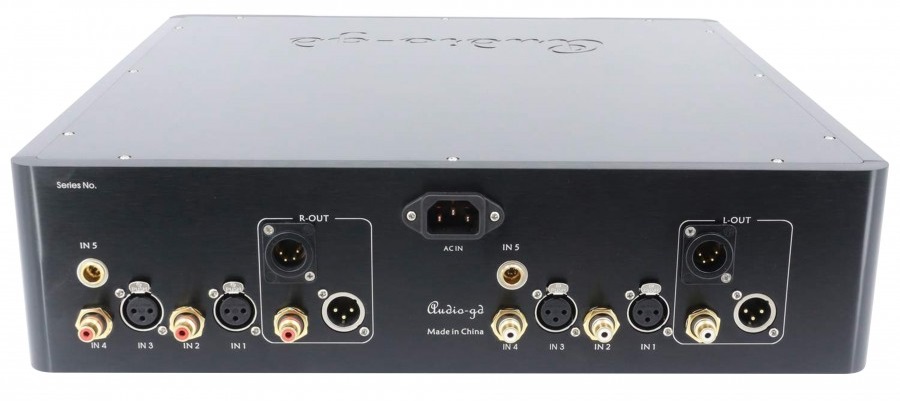
The input selection is similarly practical. Five analog inputs comprise two RCA pairs, two XLR pairs, and one ACSS connection. This gives the HE-9 MK3 room for balanced and unbalanced sources without requiring adapters or an external switching unit. A system might include a balanced DAC, an RCA-output phono stage, and an additional line-level source while retaining ACSS for compatible Audio-GD equipment.
There is no digital input section, network streaming platform, or DAC specified. That focused approach will suit listeners who already own their preferred digital source or who want the preamplifier and headphone amplifier to remain independent of changing digital formats. It also positions the HE-9 MK3 as an analog hub that can stay in place while source components are upgraded separately.

Discrete balanced Class A architecture
The amplifier is built around a fully discrete, balanced Class A circuit and does not use operational amplifiers. Audio-GD also employs paired modules for the two channels, with the stated aim of maintaining accurate signal transmission. For prospective owners, the significance is architectural: the signal passes through a circuit designed specifically for this component rather than through general-purpose integrated amplifier stages.
The MK3 adds output buffer stages for preamplifier operation. Buffering is useful because a preamplifier must drive the input stage of a downstream power amplifier as well as the connecting cable. The specified preamplifier output impedance is 10 ohms through XLR, which should make the balanced output straightforward to integrate with conventional high-input-impedance power amplifiers. Maximum output levels are listed as 19 V for XLR and 9.5 V for RCA, giving the unit considerable output capability for system-level matching.
The published electrical figures include a signal-to-noise ratio greater than 130 dB, crosstalk below -130 dB, and total harmonic distortion plus noise below 0.0025%. The XLR frequency response is specified as 20 Hz to 100 kHz within 4 dB. These figures describe the intended operating performance, while Audio-GD states that every unit is tested with Audio Precision 2700 Series analyzers before completion.

Power for a wide range of headphones
The HE-9 MK3’s balanced headphone output is specified at 15 W into 25 ohms, 10 W into 40 ohms, 4 W into 100 ohms, and 1.35 W into 300 ohms. Its unbalanced output delivers 4 W into 25 ohms, 2.5 W into 40 ohms, 1 W into 100 ohms, and 350 mW into 300 ohms. Those figures show that the 4-pin XLR connection is not merely an alternative socket: it provides substantially higher rated output across the listed impedances.
That capacity makes the HE-9 MK3 relevant to owners of demanding full-size headphones, particularly models equipped for balanced operation. At the same time, a conventional 6.35 mm connection preserves compatibility with standard headphone cables. The balanced headphone output has a specified impedance of 2 ohms, while two gain settings provide +10 dB at low gain and +20 dB at high gain.
The ability to select gain matters because source voltage, headphone sensitivity, and listening level can vary considerably. Low gain offers a more suitable operating range for easier loads, while high gain is available when additional voltage is required. Volume is adjusted over 100 steps with an exponential curve. Combined with dual volume control and paired channel modules, this arrangement is intended to support accurate level setting and channel matching rather than relying on a basic continuously variable potentiometer.
ACSS and conventional system connectivity
ACSS, short for Audio-GD Current Signal System, is the product’s most distinctive connection option. The patented interface transfers the signal in the current domain and is intended to reduce coloration while preserving detail. It can be used between the HE-9 MK3 and compatible Audio-GD source or amplification components, creating a dedicated signal path through an otherwise conventionally connected system.
The inclusion of ACSS does not make the HE-9 MK3 dependent on proprietary equipment. XLR and RCA inputs and outputs remain available for standard balanced and single-ended components. This makes ACSS an optional system-building route rather than a requirement. Owners can begin with conventional equipment and use the dedicated interface only if other compatible components are added.
There is one operational point to consider: selecting the ACSS output automatically disables the XLR and RCA analog outputs. Users planning to feed several downstream devices simultaneously will need to account for that switching behavior. It is a deliberate separation of output modes rather than a provision for running every connection at once.
A substantial regenerative power supply
Three toroidal transformers provide a combined transformer rating of 260 W. The supply also incorporates 100,000 µF of Nover capacitor capacity and regenerative technology. Audio-GD separates the power-supply and audio sections with aluminum screens to minimize electromagnetic interference between the high-current supply circuitry and the signal path.
The output stage uses eight transistors rated at 150 W each, while the component’s Class A operating consumption is specified at 66 W. Class A operation and a large power supply inevitably make this a more substantial ownership proposition than a small headphone amplifier. Ventilation, shelf strength, and energy use should all be considered when planning its installation.
The black aluminum enclosure measures 430 x 445 x 123 mm and weighs 22 kg. Its width is consistent with full-size audio components, but its depth and mass require meaningful rack space. These dimensions reinforce the HE-9 MK3’s intended role as part of a dedicated home system rather than a device that will be moved regularly between locations.
Who the HE-9 MK3 is most suitable for
The strongest match is an enthusiast building a serious analog-centered headphone system, especially one involving demanding balanced headphones. It is also relevant to listeners who want a single volume-control and source-selection component for both headphone listening and a separate power amplifier or active loudspeakers. Multiple RCA and XLR inputs make it practical for systems with several line-level sources.
Existing Audio-GD owners may gain additional value from the ACSS input and output, while users of other brands retain comprehensive standard connectivity. The HE-9 MK3 may also appeal to people who prefer discrete circuitry, Class A operation, and a power supply physically separated from the audio path within one enclosure.
It is less suitable for someone seeking a compact desktop amplifier, an all-in-one streaming solution, or an integrated DAC and headphone amplifier. Its 22 kg weight, 445 mm depth, 66 W power consumption, and need for appropriate ventilation make it better suited to a dedicated equipment rack. Owners who do not need preamplifier functionality or substantial balanced headphone output may also find its scale unnecessary for their systems.
Conclusion
The Audio-GD HE-9 MK3 is defined by its combination of high-output balanced headphone amplification and flexible analog preamplifier control. Its fully discrete Class A topology, buffered preamplifier stage, 100-step volume adjustment, dual gain settings, five analog inputs, and three output formats give it broad system utility. ACSS provides a distinctive option for compatible Audio-GD installations without displacing conventional XLR and RCA connectivity. Supported by three toroidal transformers, a regenerative power supply, and extensive internal screening, it is designed for owners who value substantial analog engineering and need one component to manage both headphones and a larger audio system. Its size, weight, heat, and lack of digital facilities make it a specialized choice, but those same priorities give it a clear role in dedicated, component-based listening setups.


Sound Off
0Join the discussion if you have something to add.