
DACs may perform the same basic conversion task, but that does not make them interchangeable.
Some of the products covered here are dedicated source components for systems with separate amplification, while others add headphone drive, volume control, preamplifier functions, streaming or portable operation.
One entry is a converter chip for manufacturers, and another comparison includes a USB-to-digital bridge rather than a DAC. Start with the role the component must perform. A desktop headphone system benefits from suitable outputs and adequate amplifier power, whereas a traditional separates setup may be better served by a focused DAC without volume control or headphone circuitry. Network playback, USB-C connectivity, balanced outputs, filter selection and support for high-resolution formats are relevant only when the rest of the system can use them. The three comparison articles work as broader system-selection maps, while the individual product articles examine more specialised approaches. Together, they cover compact computer audio, portable listening, network sources, tube-based conversion, R2R designs and conventional DAC-to-amplifier systems.
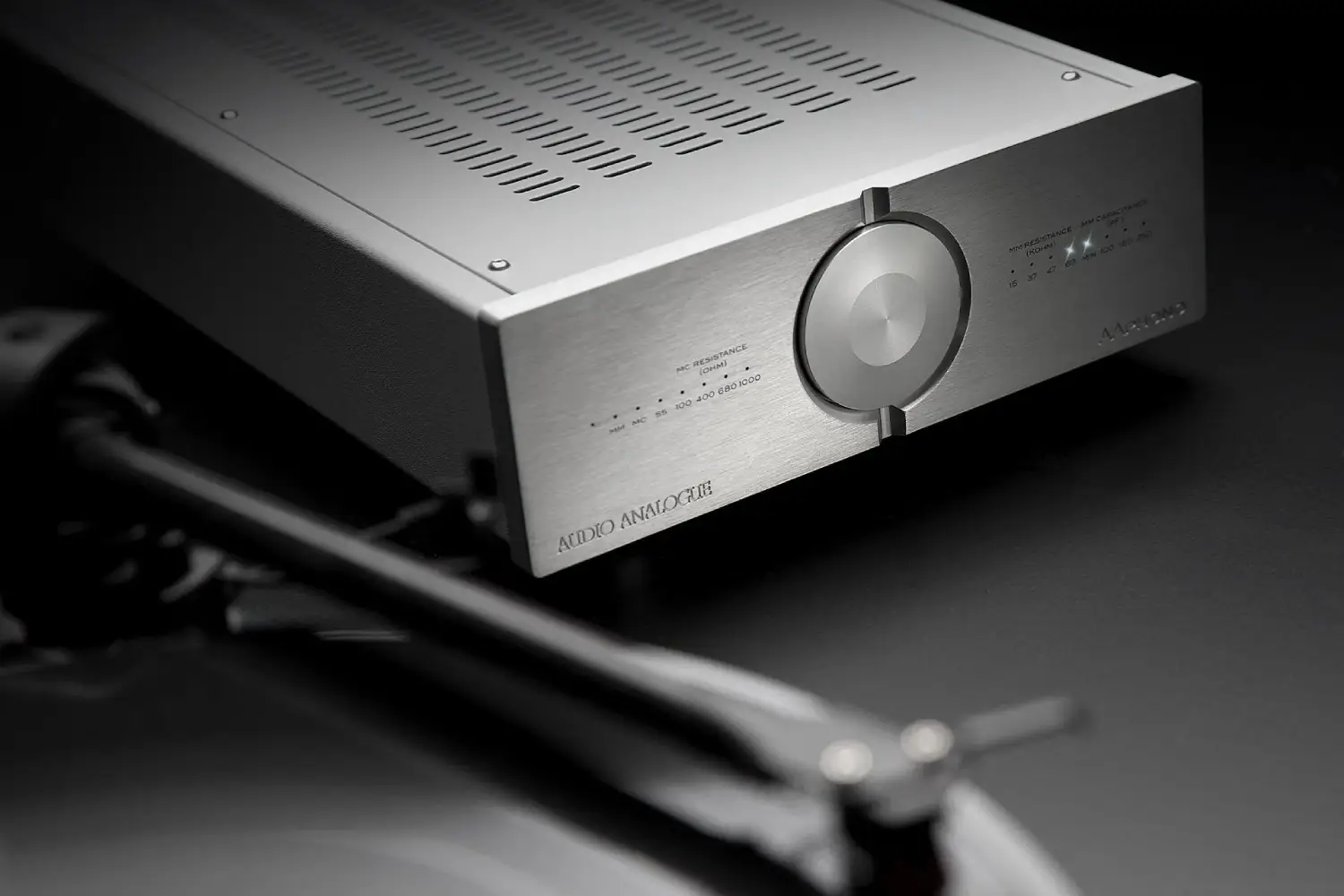
1. Five DACs Compared: Which Desktop Converter Fits Your System?
The five-way comparison covers an AKM converter chip, the Denafrips Ares 12TH-1 and three desktop DAC and headphone-amplifier combinations.
This comparison is useful because its five subjects do not perform the same job.
The AKM AK4498EXVQ is a converter chip intended for manufacturers, while the Denafrips Ares 12TH-1 is a dedicated balanced R2R DAC with NOS and OS operation for systems that already have amplification.
Topping’s DX9 Discrete, the SMSL D100 and the Shanling EH2 combine conversion with headphone amplification, but target different desktop requirements. The DX9 Discrete is presented as the most complete option, with balanced preamplifier operation, extensive inputs, Bluetooth, parametric EQ and crossfeed. The EH2 provides proprietary 24-bit R2R conversion, selectable NOS and OS modes, tone controls and strong balanced headphone output. The smaller D100 is the more natural match for a space-conscious computer setup requiring USB-C, RCA line output and a balanced 4.4 mm headphone connection.
Best for: Comparing dedicated DACs with all-in-one desktop headphone units
- Distinguishes a converter chip from complete desktop components
- Denafrips option for dedicated balanced R2R conversion
- DX9 Discrete includes PEQ, crossfeed and preamplifier functions
- D100 combines USB-C with a compact desktop format
Verdict: Use this comparison to decide what your DAC must do beyond conversion, with the DX9 Discrete offering the broadest functionality and the Ares 12TH-1 serving the more focused separates system.
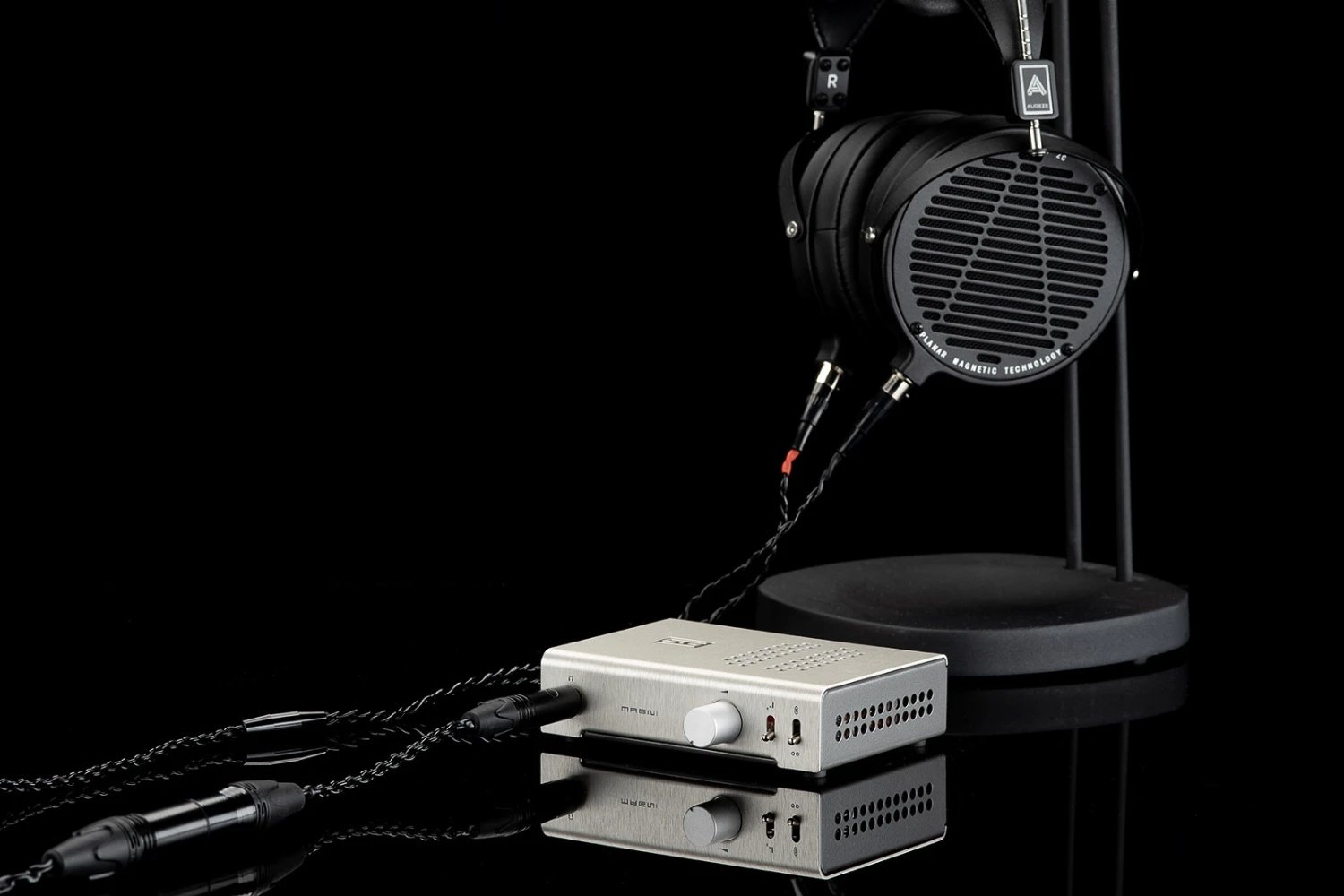
2. Five DACs Compared: Which One Fits Your System Best?
The comparison ranges from the pocket-sized Fiio KA5 to specialist converters from Weiss and SPEC and the multifunction TOPPING Centaurus.
Portability, control and system architecture separate the five options in this comparison.
The TOPPING Centaurus is the versatile all-rounder, combining R2R-based PCM conversion with balanced and unbalanced outputs, USB, Bluetooth, processing modes, parametric EQ, preamplifier operation and a 12V trigger.
The Schiit Modi 5 takes a simpler value-oriented approach, while the Fiio KA5 packages a screen, gain control and 3.5 mm and 4.4 mm outputs into a portable USB dongle. The Weiss DAC205 MK2 is the specialist choice for a purist digital system with a suitable transport or streamer already in place. SPEC’s RMP-DAC3X instead centres its design on instrument timbre and expressive detail while adding volume control and headphone outputs. These differences make the comparison more useful as a system-matching exercise than as a direct specification contest.
Best for: Choosing between portable, value-focused, purist and fully featured DAC designs
- Centaurus combines R2R conversion with extensive system control
- Modi 5 prioritises value and practical connectivity
- KA5 provides portable 3.5 mm and 4.4 mm headphone outputs
- Weiss and SPEC offer distinct specialist approaches
Verdict: The Centaurus is the broadest system hub, but the other four make more sense when portability, simplicity or a specialised design brief takes priority.

3. Rockna Wavedream Reference: Flagship reference-grade DAC from Romania
The Rockna Wavedream Reference combines discrete R2R modules, FPGA processing, five digital inputs and a built-in network renderer.
The Rockna Wavedream Reference is aimed at systems requiring a dedicated R2R converter that can also act as a network source.
Its proprietary processing platform uses an AMD ZYNQ chip and four FPGAs, with each FPGA managing a discrete ladder DAC module.
Two FPGAs are assigned to each channel for channel-separated, symmetrical analog conversion. Five digital inputs are provided: optical and coaxial S/PDIF, AES/EBU, USB and I2S. Incoming signals are upsampled before conversion, and users can select linear, minimum-phase or hybrid-phase filters. The integrated network renderer supports LAN playback through Roon, UPnP, OpenHome, AirPlay, HQPlayer NAA and Spotify Connect, reducing the need for a separate network bridge in a compatible system.
Best for: Reference-grade systems needing both R2R conversion and network playback
- Proprietary FPGA-controlled discrete ladder conversion
- Five digital inputs including USB, AES/EBU and I2S
- Integrated LAN network renderer
- Three selectable digital filters
Verdict: The Wavedream Reference suits a high-end digital front end where proprietary ladder conversion, broad wired connectivity and an integrated network renderer are all required.
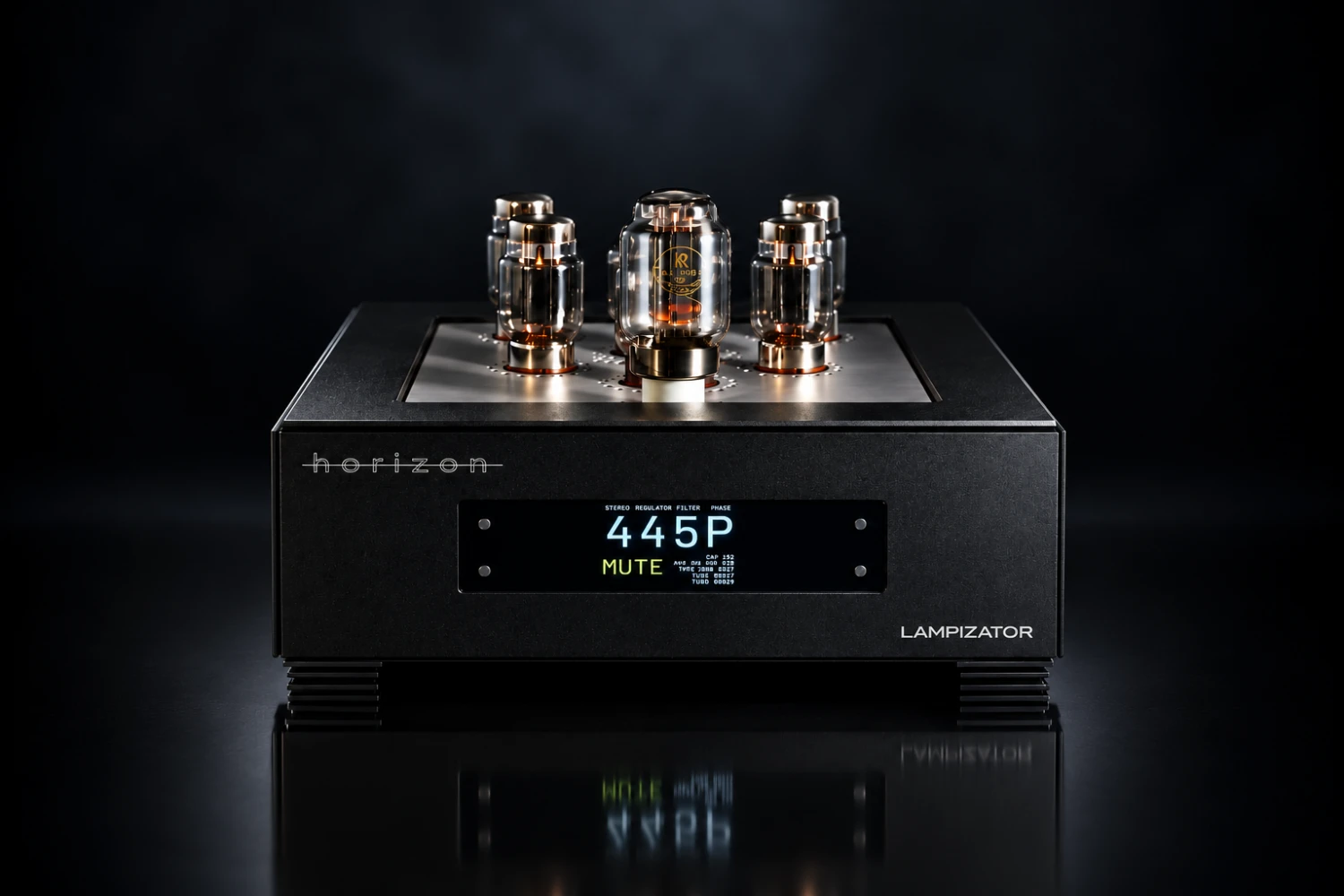
4. Lampizator Horizon 2 DAC Brings New Technology and an Upgrade Path
The Lampizator Horizon 2 retains the established Horizon format while introducing a redesigned analog stage and updated conversion platform.
Lampizator’s Horizon 2 is a tube-based DAC for systems built around the company’s distinctive conversion and output architecture.
Its redesigned analog stage uses 6SN7 conversion tubes and KT88 output tubes with a tube-rectified power supply.
The SuperVolume system includes a bypass function, allowing the DAC to use its internal level control or feed an external preamplifier. The updated platform uses firmware-controlled conversion and lists support for PCM up to 768 kHz and DSD512. Its USB implementation adds reclocking and optical isolation. Lampizator has retained the established chassis dimensions, tube complement and output capacitors, enabling the new electronics to be installed in compatible earlier models through a factory conversion program.
Best for: Tube-based high-end systems and compatible Horizon owners
- Tube-based conversion and output circuitry
- Volume control can be used or bypassed
- USB implementation includes reclocking and optical isolation
- Factory conversion path for compatible earlier models
Verdict: The Horizon 2 is a specialist choice for listeners committed to Lampizator’s tube architecture, with flexible volume operation and a meaningful factory upgrade route.

5. T+A 200: DAC capable of working with ultra-high resolution files
The T+A DAC 200 places separate PCM and DSD conversion systems and a Class A preamplifier inside its midi-format chassis.
The T+A DAC 200 is designed to handle conversion and preamplifier duties in the same component.
Separate architectures process PCM and DSD: PCM uses a double-symmetrical differential arrangement with four 32-bit Burr-Brown chips per channel, while DSD is handled by T+A’s true 1-bit DSD converter.
Published format support extends to DSD1024 and 32-bit/768 kHz PCM. Users can choose among T+A’s proprietary filtering approaches, including FIR, Bezier and NOS options. Galvanic isolation separates the DAC from incoming noise, while the digital and analog paths are also separated internally. The company’s second-generation De-Jitter system uses a proprietary PLL algorithm and precision clock generators. A discrete, dual-mono Class A preamplifier and relay-based volume control allow the DAC 200 to connect directly to suitable downstream amplification.
Best for: High-resolution digital systems needing DAC and preamplifier functions
- Separate conversion architectures for PCM and DSD
- Multiple proprietary filter and NOS options
- Galvanic isolation and an in-house De-Jitter system
- Discrete dual-mono Class A preamplifier
Verdict: The DAC 200 is best matched with a system that can use its extensive format support, selectable processing and integrated Class A preamplifier.

6. iFi Zen Dac 3: DA converter and headphone amplifier
The iFi Zen Dac 3 combines USB-C conversion, a front 4.4 mm balanced headphone output and rear line connections in a compact desktop enclosure.
The iFi Zen Dac 3 is primarily suited to a desktop computer system, combining USB-C conversion with headphone amplification and line-level connectivity.
A balanced 4.4 mm headphone output is fitted to the front, while the rear provides a balanced connection for other hi-fi equipment alongside stereo RCA outputs.
It can therefore feed headphones, an amplifier or a pair of active speakers. Format support includes PCM up to 32-bit/768 kHz, DSD512 and MQA decoding. The familiar iFi features are also present: PowerMatch adjusts gain to suit different headphones, while XBass+ provides analog bass processing. Improved DC-offset and USB-C input surge protection are included in the design.
Best for: Compact USB-C desktop and headphone systems
- USB-C input for desktop computer systems
- Balanced headphone and rear equipment connections
- RCA outputs for conventional amplifiers or active speakers
- PowerMatch and XBass+ analog processing
Verdict: The Zen Dac 3 is a practical one-box desktop option when USB-C, headphone drive and connections for external amplification or active speakers are all needed.

7. Five DACs Compared: Which One Is Right for Your System?
The comparison spans the desktop Shanling EH2, network-ready Gustard R26 II, portable Snowsky Retro Nano, SPEC RMP-DAC3X and Schiit Eitr 2 bridge.
This comparison is particularly helpful for identifying product type before considering specifications.
The Shanling EH2 is the most complete desktop option, combining a 24-bit R2R DAC with headphone amplification, Bluetooth, USB-C, coaxial and optical inputs, plus RCA line output.
The Gustard R26 II is the more appropriate choice for a network-based system requiring a dedicated discrete R2R DAC and extensive streaming support. The SPEC RMP-DAC3X concentrates on instrument timbre, component selection and headphone listening. At the other end of the scale, the 28-gram Snowsky Retro Nano is a portable Bluetooth and USB DAC with headphone functionality. Schiit’s Eitr 2 must be treated differently because it is a USB-to-digital bridge intended to improve the connection to an existing DAC rather than perform digital-to-analog conversion itself.
Best for: Sorting desktop, network, portable and USB-bridge requirements
- EH2 combines R2R conversion with desktop headphone drive
- R26 II adds network readiness and streaming support
- Retro Nano offers portable Bluetooth and USB operation
- Clearly identifies the Eitr 2 as a bridge rather than a DAC
Verdict: Choose the EH2 for an all-in-one desktop system, the R26 II for network audio, the Retro Nano for portability or the Eitr 2 only when an existing DAC needs a USB bridge.

8. Fezz Audio Equinox: The first DAC in the history of the Polish company
The Fezz Audio Equinox combines a Burr-Brown PCM1794 converter with ECC88 and 12AU7 tube circuitry and is offered in eight colors.
The Equinox is Fezz Audio’s first digital-to-analog converter and was developed with input from Lampizator founder Lukasz Fikus.
It uses a Burr-Brown PCM1794 converter chip followed by analog paths built around ECC88 and 12AU7 tubes.
A power supply was designed specifically for the model and uses a transformer from Toroidy. Connectivity is straightforward: optical, coaxial and USB Type-C inputs feed a pair of RCA outputs. The absence of DSD support is an important system consideration, making the Equinox more suitable for a PCM-centred library and conventional unbalanced amplification. Eight finish options provide some scope for matching the component to the rest of the system visually.
Best for: PCM-focused systems seeking a tube-based DAC with RCA output
- ECC88 and 12AU7 tubes in the analog paths
- Optical, coaxial and USB Type-C inputs
- Dedicated power-supply design
- Eight available color options
Verdict: The Equinox fits a conventional separates system that values tube-based analog circuitry and USB-C connectivity but does not require DSD or balanced outputs.
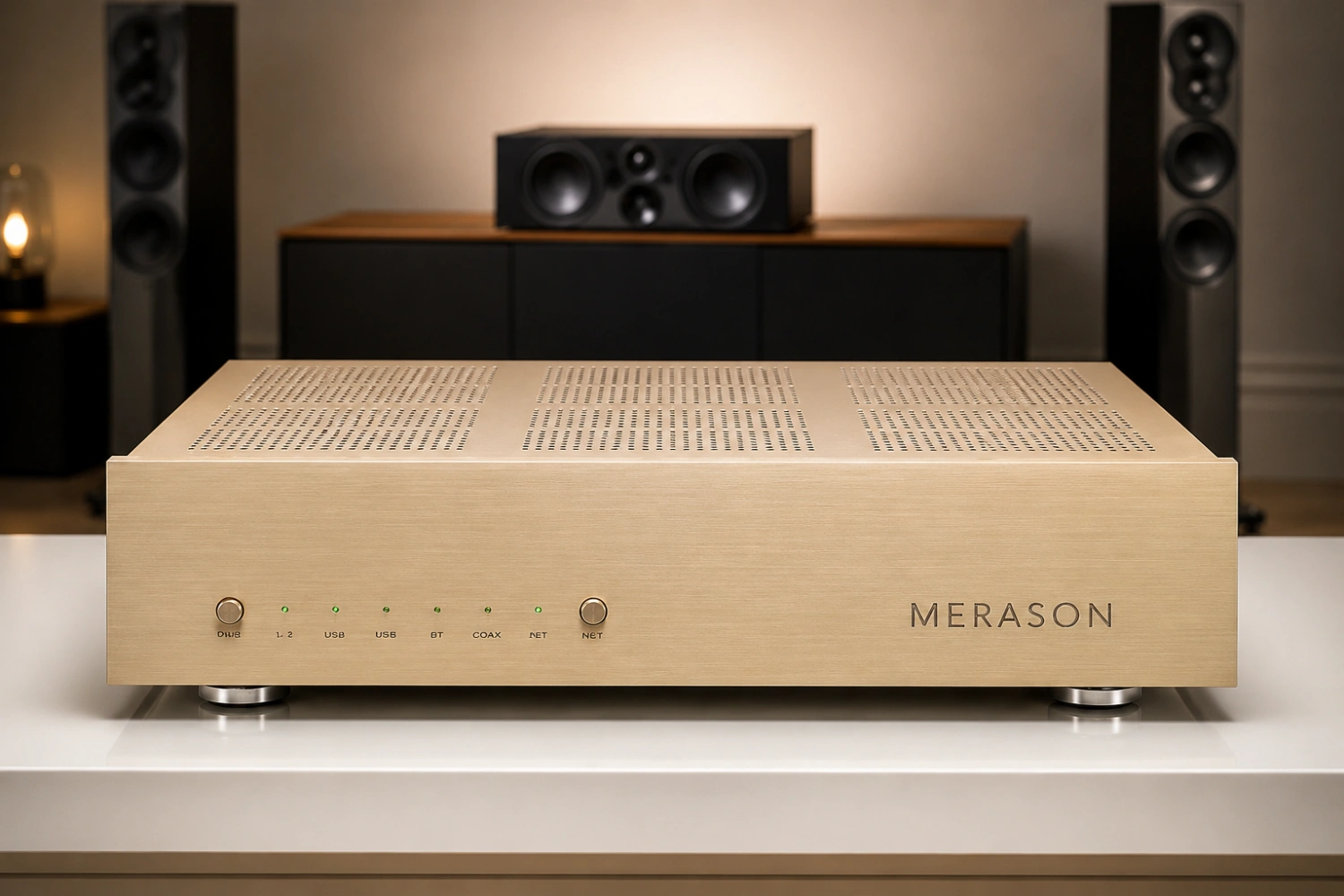
9. Merason DAC 2 Strips Digital Conversion Back to Essentials
The Merason DAC 2 is a dedicated dual-chip converter without integrated volume control or headphone amplification.
The Merason DAC 2 follows a deliberately focused brief: it converts digital sources and leaves volume control, headphone amplification and system management to other components.
With no internal level adjustment or headphone output, it is intended to feed an external preamplifier or integrated amplifier rather than operate as a self-contained digital hub.
Conversion is handled by two Burr-Brown PCM1794A chips. Merason assigns dedicated conversion hardware within a differential configuration instead of using one chip for both stereo channels. The resulting architecture will appeal most to listeners who already own suitable amplification and prefer each component to have a narrowly defined role.
Best for: Traditional separates systems with existing amplification
- Dedicated conversion-only architecture
- Dual Burr-Brown PCM1794A converter chips
- Differential conversion configuration
- Designed for use with an external preamplifier or integrated amplifier
Verdict: The DAC 2 is a logical match for a system that needs focused digital conversion rather than headphone drive, volume control or streaming functions.

10. HiFiMAN EF500: High-precision DAC and headphone amplifier
The HiFiMAN EF500 combines Hymalaya LE ladder conversion with balanced and single-ended headphone connections in a desktop chassis.
The HiFiMAN EF500 combines the company’s Hymalaya LE ladder DAC with a desktop headphone amplifier.
Its R2R conversion system uses an array of precision resistors, while the amplifier provides both a 3.5 mm single-ended headphone output and a four-pin XLR balanced output.
The source lists maximum output at 4.5 watts per channel into 32 ohms through the balanced connection and 1.32 watts per channel into 32 ohms unbalanced. USB-C, USB-B and coaxial connections provide options for digital sources, and single-ended RCA outputs allow the EF500 to feed another amplifier. A front volume control supports its desktop role. This combination makes more sense for a headphone-led setup than for a system seeking a conversion-only source component.
Best for: Desktop systems built around balanced or single-ended headphones
- Hymalaya LE R2R ladder conversion
- Balanced four-pin XLR and single-ended headphone outputs
- USB-C, USB-B and coaxial inputs
- RCA outputs for connection to external amplification
Verdict: The EF500 is best treated as a headphone-focused desktop DAC and amplifier that can also provide an RCA source output to a wider hi-fi system.


Sound Off
0Join the discussion if you have something to add.