
These five DAC options are not variations on the same product. The AKM AK4498EXVQ is a converter chip intended for manufacturers, while the Denafrips Ares 12TH-1 is a dedicated balanced NOS R2R DAC. Topping’s DX9 Discrete, SMSL’s D100 and Shanling’s EH2 are desktop units that add headphone amplification, but their power, connectivity and control systems differ substantially.
That distinction matters more than a headline specification. A listener building a full-size headphone system may need serious balanced power, while a compact computer setup may value USB-C, a small footprint and a simple RCA output. The right choice depends on what the DAC has to do after the digital signal arrives.
Quick verdict
- Best Overall: Topping DX9 Discrete. It is the most complete product here, combining a high-performance DAC, powerful headphone amplifier, balanced preamplifier functionality, extensive inputs, Bluetooth, PEQ and crossfeed.
- Best R2R alternative: Shanling EH2. Choose it for its proprietary 24-bit R2R design, selectable NOS and OS modes, tone controls and very strong balanced headphone output.
- Best compact desktop option: SMSL D100. Its small chassis, USB-C input, RCA output and balanced 4.4 mm headphone connection suit a space-conscious desk system.
- Best dedicated DAC: Denafrips Ares 12TH-1. It is the specialist choice for a separate amplifier, with balanced R2R conversion, NOS/OS modes and a full set of digital inputs.
- Technology to watch: AKM AK4498EXVQ. This is a DAC chip and two-chip platform for future network audio devices, USB DACs and wireless speakers—not a complete retail DAC to connect directly to a system.
| Model | What it is | Headphone provision | Digital connectivity | Most meaningful advantage |
|---|---|---|---|---|
| AKM AK4498EXVQ | Stereo DAC chip for manufacturers | None by itself | Works with AK4191EQ in a two-chip design | Separated digital and analog architecture |
| Denafrips Ares 12TH-1 | Balanced NOS R2R DAC | None | USB-B, I2S over HDMI, coaxial, optical | Dedicated converter with RCA and XLR outputs |
| Topping DX9 Discrete | Desktop DAC, headphone amplifier and preamplifier | 4.4 mm, 6.35 mm and 4-pin XLR; up to 7 W per channel into 32 ohms | USB-B, AES, I2S, two optical, two coaxial and Bluetooth 5.1 | The broadest feature set and highest headphone power |
| SMSL D100 | Compact desktop DAC and headphone amplifier | 6.35 mm and 4.4 mm balanced; up to 400 mW per channel into 32 ohms | USB-C, optical and coaxial | Small footprint with balanced headphone output |
| Shanling EH2 | R2R DAC and headphone amplifier | Balanced 4.4 mm and unbalanced 6.3 mm; 4,351 mW at 32 ohms balanced | USB-C, coaxial, optical and Bluetooth 5.2 | R2R conversion, tone controls and powerful balanced drive |
AKM AK4498EXVQ: a platform for future DAC designs
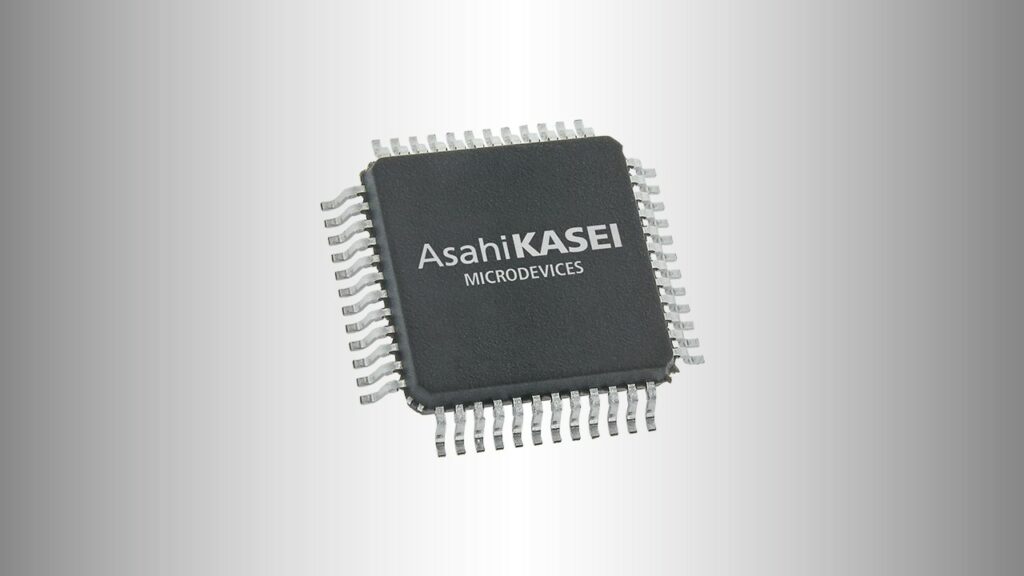
The AKM AK4498EXVQ needs to be judged differently from the four finished desktop units. It is a Stereo Premium DAC chip introduced by Asahi Kasei Microdevices, with mass production anticipated for April 2025. Manufacturers can request samples for design and testing, but the source does not present it as a complete consumer DAC.
Its important feature is architectural. Used with the AK4191EQ digital filter and Delta Sigma Modulator, the AK4498EXVQ separates the processing-intensive digital signal path from the analog conversion section. AKM says this fully partitioned digital and analog architecture improves noise suppression and gives manufacturers greater design flexibility. The chip also includes AKM’s Velvet Sound technology, a Switched Capacitor Filter block and DWA routing technology derived from the flagship AK4499EX.
In a suitable two-chip implementation, the AK4498EXVQ supports PCM up to 64-bit/1536kHz and DSD1024. Those are capabilities for designers rather than a reason for an individual buyer to choose it today; the source notes that no source material is currently available at those resolutions. The published analog-output figures are a 129dB A-weighted signal-to-noise ratio and -117dB THD+N.
Compared with the other entries, the AKM is not competing on connections, headphone power or ease of installation. It is the underlying technology that could appear in future network audio products, USB DACs and wireless speakers. It belongs in this comparison as a reminder that a DAC chip alone does not determine the performance of a finished converter: the surrounding power supply, analog stage, clocking and implementation remain central to the final product.
Denafrips Ares 12TH-1: the dedicated converter specialist
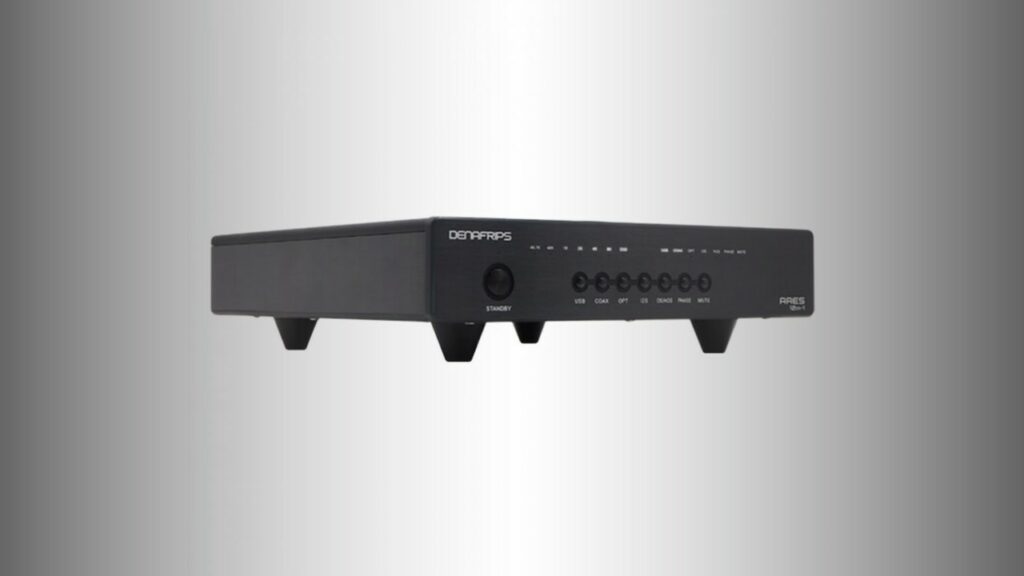
The Denafrips Ares 12TH-1 is the clearest choice for a listener who already owns a separate amplifier or integrated system and wants a dedicated DAC rather than an all-in-one headphone unit. Its conversion stage uses 480 precision resistors with an Altera FPGA, and the power supply includes a 60-watt O-core transformer, eight LDOs and high-performance capacitors.
This is a balanced NOS R2R design, with selectable No Oversampling and Oversampling modes and Slow or Hard filters. The connection set is unusually broad for a dedicated converter: USB-B, I2S over HDMI, optical Toslink and coaxial digital inputs are joined by both RCA single-ended and XLR balanced stereo outputs. That makes it suitable for either a conventional integrated amplifier or a balanced downstream chain.
The Ares 12TH-1 is also the only finished product here that is explicitly built around a traditional resistor-ladder conversion stage without adding a headphone amplifier. That is a benefit if the system already has a preferred headphone amplifier and the buyer wants to avoid paying for duplicated circuitry. It is less convenient for someone who wants one box on a desk to handle headphones directly.
Its USB input supports PCM up to 1536kHz and DSD1024, while optical, coaxial and I2S inputs support PCM up to 24-bit/192kHz and DoP up to DSD64. The published figures include 115dB SNR, more than 119dB dynamic range and 0.004% THD+N. At 215 x 230 x 45mm and 3.5kg, it is compact in depth and height but substantially more substantial than the SMSL D100.
Topping DX9 Discrete: the most complete all-in-one

The Topping DX9 Discrete wins overall because it covers the widest range of real-world systems without reducing its role to a single function. It is simultaneously a DAC, headphone amplifier and preamplifier, with both RCA and XLR line outputs. It also has the strongest stated headphone output in this group, making it the most suitable option for demanding full-size headphones when a separate amplifier is not part of the plan.
Topping’s second-generation discrete 1-bit PSRM DAC is specified at 131dB signal-to-noise ratio and less than 0.00006% THD+N. More importantly for system building, its six-channel discrete NFCA headphone amplifier delivers over 7 watts per channel into 32 ohms. The source also lists balanced headphone output up to 10,000mW x 2 at 16 ohms and unbalanced output up to 3,300mW x 2 at 16 ohms. These figures give the DX9 considerably more stated drive capability than the SMSL D100 and make it a more ambitious headphone component than the Denafrips.
Connectivity is another decisive advantage. The DX9 accepts USB-B, AES/EBU, I2S, two optical inputs, two coaxial inputs and Bluetooth 5.1 through a Qualcomm QCC5125 adapter. It supports LDAC, aptX HD and aptX Adaptive among other codecs. Its outputs include balanced XLR and unbalanced RCA for line-level use, plus 4.4mm, 6.35mm and four-pin XLR headphone connections.
The feature set goes beyond input selection. A fully balanced hybrid relay volume control is intended to preserve channel balance across the volume range, while a 10-band parametric equalizer allows adjustment of frequency, gain and Q. Headphone crossfeed is also available. Two front displays can show FFT spectrum visualisation and VU meter graphics through the Aurora UI.
This breadth explains the Best Overall choice. The DX9 is not merely a high-spec DAC: it can sit between a computer, streamer or digital transport and either headphones, active speakers, a power amplifier or an integrated amplifier. Its suggested retail price is $1,299/€1,299, so it is not the low-cost option, but it is the most capable single-box solution described in the supplied material.
SMSL D100: compact desktop practicality
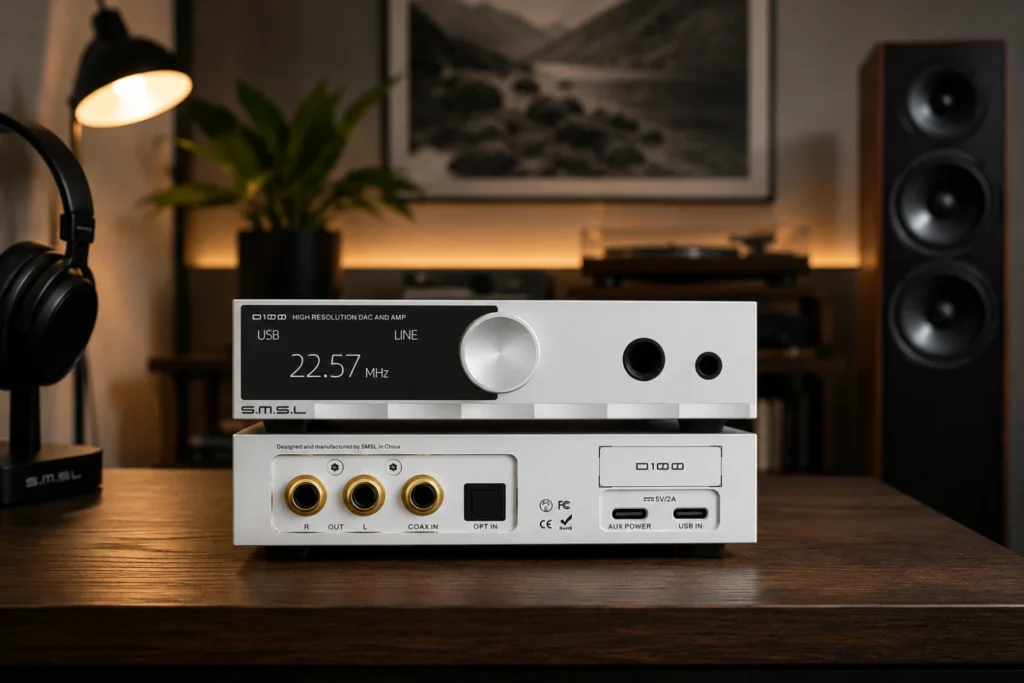
The SMSL D100 is aimed at a different problem: how to fit a useful DAC and headphone amplifier into a very small desktop system. Its CNC-machined aluminum case measures 127 x 31.7 x 126.7mm and weighs 338g. That makes it dramatically easier to place beside a computer than the larger, more powerful Topping, while still providing a fixed RCA line output for active speakers or an external amplifier.
The D100 uses an ESS ES9081 DAC with eight-channel parallel summing and an XMOS XU-316 USB interface. USB-C supports PCM up to 32-bit/768kHz and DSD512, while optical and coaxial inputs support PCM up to 24-bit/192kHz. MQA is supported across USB, optical and coaxial, and the display can show the original sampling frequency when MQA material is played.
Headphone users get both 6.35mm single-ended and 4.4mm balanced connections. The balanced output is specified at up to 400mW per channel into 32 ohms, with published figures covering loads from 16 to 600 ohms. Those numbers make the D100 a flexible desktop headphone unit, but its stated output is far below the DX9 and EH2. It is therefore better matched to listeners who prioritise size and everyday convenience over maximum power reserves.
The D100 has three digital inputs—USB-C, optical and coaxial—and a rear auxiliary USB-C port for 5V power when connected to a phone. Front-panel controls handle input selection, line or headphone mode, filter choice, display brightness and auto-off timing. There are eight digital filters. The source gives no official USD price, so it should not be presented as a price-based value winner. Its strongest case is functional: a small, straightforward digital hub with balanced headphone drive and RCA system integration.
Shanling EH2: R2R character with unusually strong headphone drive
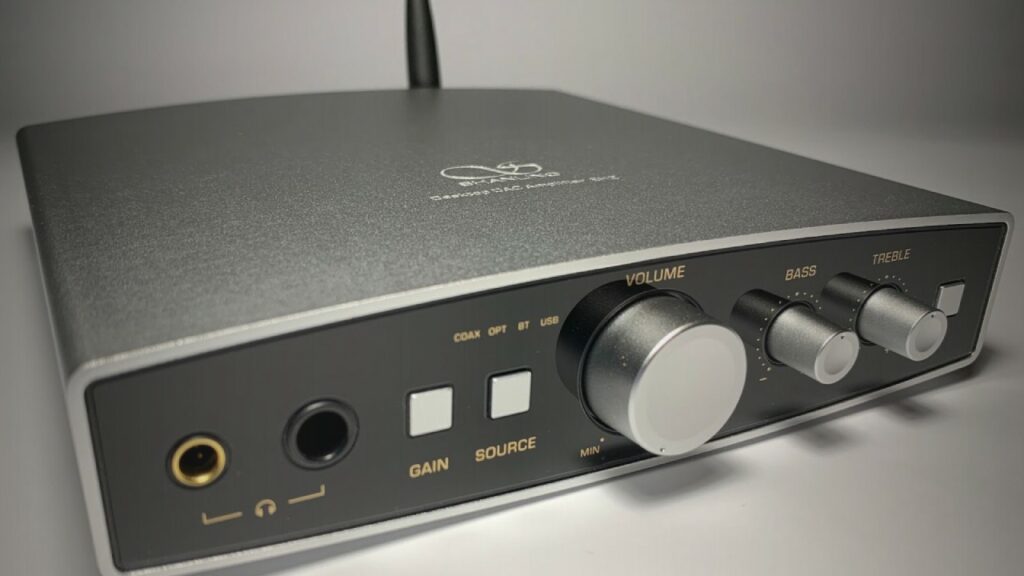
The Shanling EH2 occupies the middle ground between a simple desktop DAC/amp and a more elaborate flagship unit. Its defining feature is a proprietary 24-bit R2R ladder DAC using 192 high-precision resistors. That makes it, alongside the Denafrips, one of the two finished products here that explicitly uses an R2R architecture rather than an ESS or discrete 1-bit design.
The EH2 offers a practical choice between NOS at 44.1kHz and OS at 352.8kHz through a rear switch. It also includes hardware bass and treble controls, with bass adjustment of ±6dB and treble adjustment of ±10dB. Those controls give it a different kind of flexibility from the Topping: the DX9 provides a detailed 10-band PEQ, while the EH2 offers immediate physical tone controls without an app.
Its balanced headphone output is a major strength. The EH2 is specified at 4,351mW at 32 ohms through 4.4mm balanced, compared with 1,280mW single-ended. It also provides 6.3mm unbalanced output, RCA line-out and Bluetooth 5.2 with SBC, AAC, LDAC and aptX-family support. USB-C, coaxial, optical and Bluetooth cover the main desktop sources, although the Topping offers a wider selection of wired digital inputs.
The supplied review describes the EH2 as natural, detailed and emotionally rich, and reports that it handled Sennheiser HD800S headphones confidently from the balanced output. It also describes successful use with FiiO FD5 IEMs and Edifier R2000DB active speakers. Those listening observations make the EH2 the most compelling alternative for someone who specifically wants an R2R DAC/amp with high power and straightforward physical controls.
The EH2 does not have the DX9’s displays, PEQ or range of headphone connectors, and the Shanling Eddict Player app does not support it. Its interface instead relies on hardware controls and LED indicators. That is either a limitation or an advantage depending on whether the buyer wants a tactile, screen-light component or a feature-rich control centre.
How they differ
They are not all the same type of purchase. The AKM is a component for manufacturers, not a finished DAC. The Denafrips is a dedicated line-level converter. The Topping, SMSL and Shanling are desktop DAC/headphone amplifier combinations. A buyer should first decide whether headphone amplification is required at all.
The conversion philosophies are different. Denafrips and Shanling use R2R designs, with the Shanling offering selectable NOS and OS modes and the Denafrips combining NOS/OS operation with Slow and Hard filters. Topping uses a discrete 1-bit PSRM architecture. SMSL uses an ESS ES9081 platform. AKM’s chip uses a switched-capacitor filter and is designed to work with the AK4191EQ in a partitioned two-chip architecture.
Headphone power separates the all-in-ones. The Topping has the highest stated output and the most connection choices, including 4.4mm, 6.35mm and four-pin XLR. The Shanling follows a high-power balanced strategy with 4,351mW at 32 ohms. The SMSL provides balanced output, but at a much lower stated 400mW per channel into 32 ohms. Denafrips has no headphone output, while the AKM chip has none by itself.
Connectivity points to different systems. Topping is the most adaptable, adding AES, I2S, multiple optical and coaxial inputs and Bluetooth. Denafrips is strong for a conventional hi-fi stack, with USB-B, I2S, optical and coaxial plus both RCA and XLR outputs. Shanling includes USB-C, optical, coaxial and Bluetooth. SMSL keeps things simpler with USB-C, optical and coaxial, but its compact size is a genuine advantage.
Control and usability also vary. The DX9 is the most configurable through PEQ, crossfeed, relay volume control and dual displays. The D100 supplies eight filters and front-panel controls in a compact case. The EH2 uses physical tone controls and a rear NOS/OS switch. Denafrips focuses on conversion and output flexibility rather than headphone features. None of these differences makes one design universally superior; they determine how naturally each unit fits a particular system.
Which one should you buy?
Buy the Topping DX9 Discrete if you want one desktop component to do almost everything. It is the most sensible choice for a demanding headphone collection, a computer-based system that may expand into active speakers or a power amplifier, or anyone who values multiple digital inputs, Bluetooth, PEQ and crossfeed. Its published power and connection options are unmatched in this group.
Buy the Shanling EH2 if the attraction of R2R conversion is central and you want a powerful headphone amplifier in the same chassis. It is especially appealing if physical bass and treble controls, Bluetooth and a simple LED-based interface matter more than extensive display functions. The review’s results with both high-impedance headphones and IEMs support its role as a versatile R2R desktop hub.
Buy the SMSL D100 for a small computer desk, bedroom system or compact headphone station. Its dimensions, USB-C audio input, RCA line output and 4.4mm balanced connection are the reasons to choose it. It is not the power champion, but it covers the essentials while taking up very little space.
Buy the Denafrips Ares 12TH-1 when the DAC will feed a separate amplifier and the priority is a dedicated balanced NOS R2R converter. Its XLR and RCA outputs, I2S input and substantial power-supply design make it a natural fit for a component hi-fi system rather than a headphone-first desktop.
Watch the AKM AK4498EXVQ if you are following the next generation of DAC hardware or evaluating a future product built around AKM’s two-chip architecture. It is not a direct alternative to the four finished units here, and the source does not provide a consumer product price or a complete implementation to buy.
Final verdict
The Topping DX9 Discrete is the Best Overall because it combines the strongest stated headphone capability with the widest connectivity and the deepest set of system-level features. The Shanling EH2 is the more distinctive R2R alternative, the SMSL D100 is the compact choice, and the Denafrips Ares 12TH-1 is the specialist dedicated DAC. The AKM AK4498EXVQ is important as a technology platform, but it belongs to manufacturers rather than shopping lists.



Sound Off
0Join the discussion if you have something to add.