
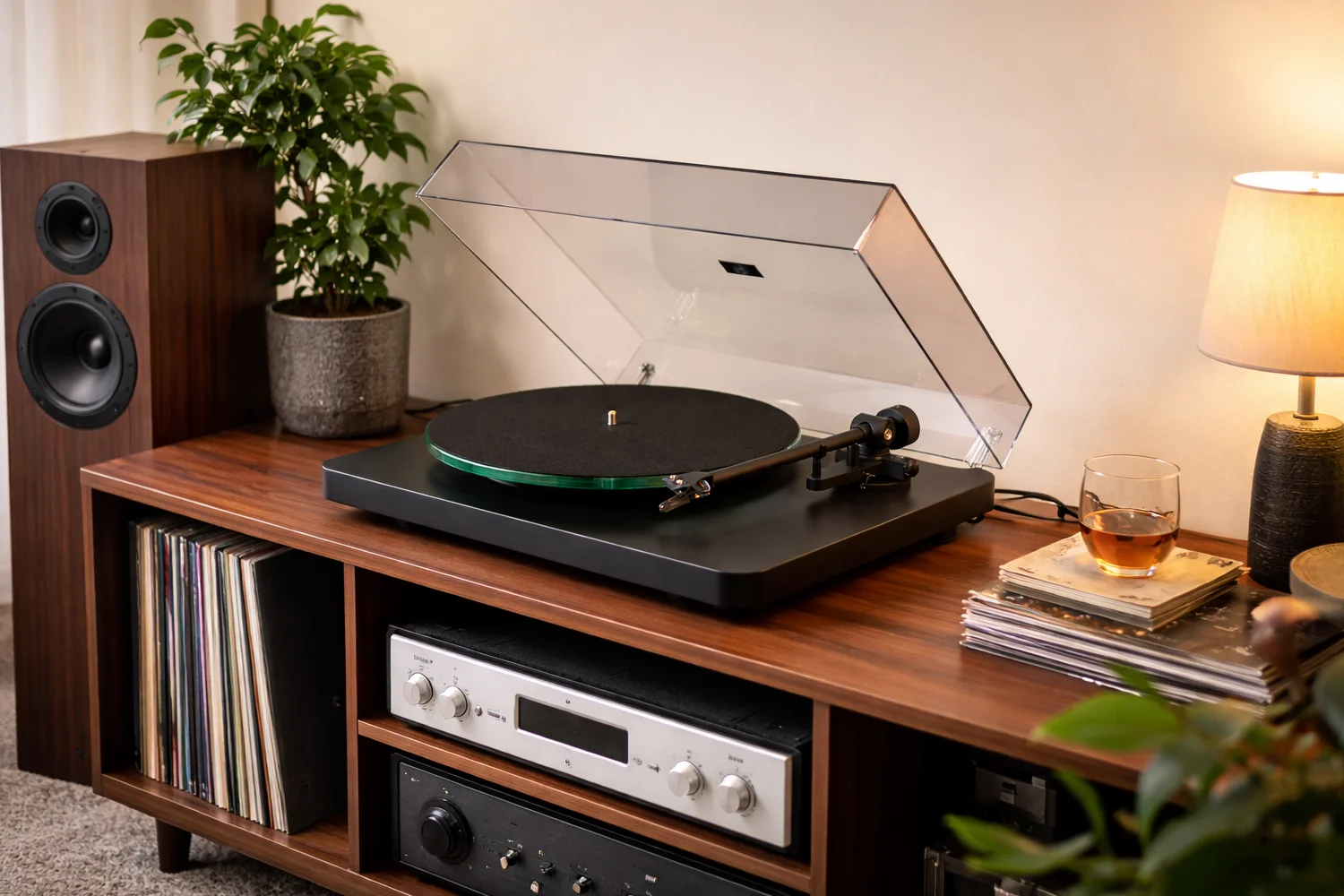
These five turntable-category products are not interchangeable. The NAD C558 and Pro-Ject EU are conventional hi-fi decks, the Mixx Analog Plus combines vinyl with CD playback, the Vestlyd PRO T2 is a hands-on direct-drive DJ turntable, and the Pro-Ject Align it Pro is not a turntable at all but a cartridge-alignment tool.
That difference matters more than any simple ranking. The NAD C558 is the strongest overall choice for a listener who wants a serious, focused vinyl deck, while the Pro-Ject EU makes more sense if Bluetooth, a built-in phono amplifier and distinctive styling are priorities. Mixx is the practical all-in-one option, Vestlyd is the specialist choice for DJ-style use, and the Align it Pro belongs in a setup toolkit rather than on a shortlist of record players.
Quick verdict
- Best Overall: NAD C558 — the most convincing choice for focused hi-fi vinyl listening, with a manual belt-drive design, factory-fitted Ortofon OM10 cartridge and meaningful upgrade potential.
- Best Features: Pro-Ject EU Turntable — the easiest fit for listeners who want vinyl, Bluetooth and a built-in phono amplifier in one stylish package.
- Best All-in-One: Mixx Analog Plus — the clear choice if you want one compact unit for records, CDs and wireless audio.
- Best for DJ Use: Vestlyd PRO T2 — direct drive, pitch control, a stylus light, a felt mat and an Ortofon VNL cartridge make it the most practical option for cueing, mixing and scratching.
- Best Setup Tool: Pro-Ject Align it Pro — a precision alignment accessory, not a playable turntable.
| Product | What it is | Drive and operation | Cartridge or alignment | Connectivity and standout features | Best suited to |
|---|---|---|---|---|---|
| Pro-Ject Align it Pro | Pickup-alignment tool | Not a turntable | Baerwald geometry; markings for 8-, 9-, 10- and 12-inch tonearms | Pointed and flat-ended machine screw; broad tonearm compatibility | Precise cartridge setup |
| Pro-Ject EU Turntable | Premium entry-level turntable | Precision belt drive; 8.6-inch aluminium tonearm | Pre-installed Ortofon OM10 MM cartridge | Bluetooth transmitter, built-in phono amplifier, acrylic dust cover | Convenient home listening with flexible connections |
| Mixx Analog Plus | Turntable and CD player in one unit | 33 and 45 rpm; supports 7- and 12-inch records | Audio-Technica AT3600L cartridge | Bluetooth 5.3 and remote control | Listeners with vinyl and CD collections |
| NAD C558 | Focused hi-fi turntable | Belt drive; fully manual; 33/45 rpm selected by moving the belt | Factory-aligned Ortofon OM10 MM cartridge; tonearm and mass support later cartridge upgrades | Gold-plated RCA outputs, ground terminal, damped dust cover | Dedicated vinyl listening and future upgrading |
| Vestlyd PRO T2 | DJ-oriented turntable | Direct drive; fast start-up; pitch control | Factory-fitted Ortofon VNL; removable SME-mount cartridge housing | Built-in RIAA stage, stylus light, felt mat, dust cover | Cueing, mixing, scratching and robust everyday use |
Pro-Ject Align it Pro
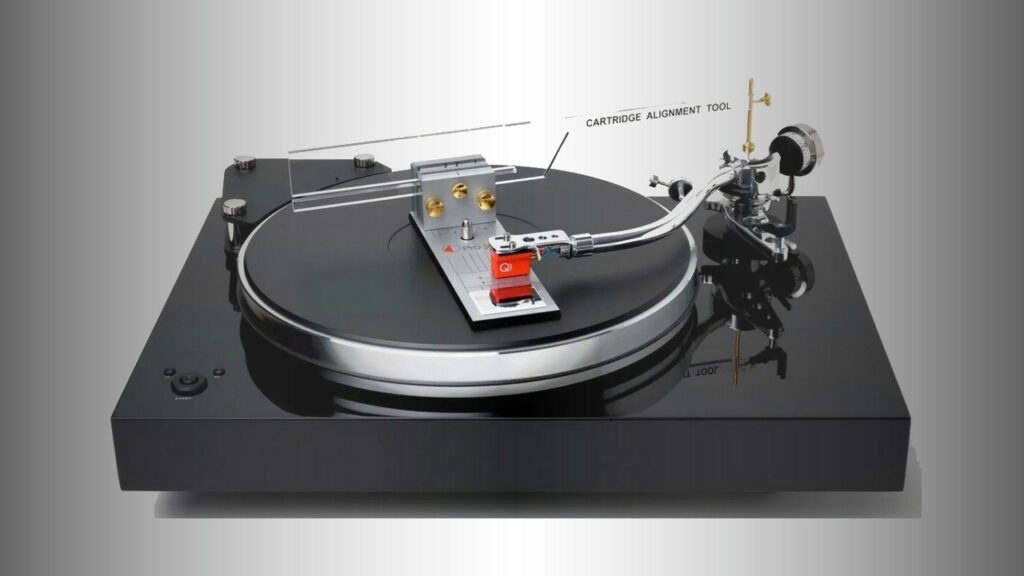
The first product needs a clarification before any buying advice: the Pro-Ject Align it Pro is an alignment tool, not a turntable. It is designed to set pickup geometry and the correct overhang, so it serves a different role from the Pro-Ject EU, NAD C558, Mixx Analog Plus and Vestlyd PRO T2.
Its value is precision during setup. The tool has clear markings for 8-, 9-, 10- and 12-inch tonearm lengths, and Pro-Ject says it can quickly set the exact distance needed for correct overhang without alternating between the inner and outer zero points. It uses Baerwald geometry, which the manufacturer describes as a versatile solution for both beginners and experienced users.
Compatibility is broad, although it is especially tailored to Pro-Ject products. The dual-ended machine screw has a pointed end intended for various tonearms or bearings and a flat end that fits the centre screw on Pro-Ject audio systems. Specific compatible examples include the Pro-Ject X1, X2, 9cc, 10cc and 12cc tonearms and their 9cc Evolution, 10cc Evolution and 12cc Evolution versions.
Why buy it: if you already own a compatible turntable and want a more controlled, repeatable cartridge-alignment process.
Why not buy it as your turntable: it cannot play records. It is an accessory that may improve setup accuracy, not an alternative to a record player.
Pro-Ject EU Turntable

The Pro-Ject EU is the most feature-rich conventional deck in this comparison. It is described as a premium entry-level turntable and combines a solid wood plinth and heavy 8mm glass platter with a precision belt drive, an 8.6-inch aluminium tonearm and a pre-installed Ortofon OM10 moving-magnet cartridge.
Its major advantage is convenience. The built-in phono amplifier means it can connect to any amplifier or preamplifier, while the Bluetooth transmitter allows wireless streaming to compatible speakers or devices. A semi-balanced phono cable and acrylic dust cover are included, so the package is aimed at getting a new listener into vinyl without requiring several additional purchases.
The EU also makes a stronger visual statement than the understated NAD C558. Its vibrant blue finish and twelve gold stars on the top give it an intentionally distinctive appearance. That will appeal to buyers who want their turntable to be part of the room rather than a neutral component hidden among other equipment.
There is a trade-off in choosing it over the NAD. The Pro-Ject EU puts more emphasis on connectivity and presentation, whereas the C558 is described around manual operation, mechanical stability and future cartridge upgrades. The EU is therefore the better match when Bluetooth and the built-in phono stage are central to the brief, not merely optional extras.
The supplied article gives a suggested retail price of €549. That makes the EU a clearly positioned premium entry-level product, but the decision should rest on its feature set rather than price alone.
Why buy it: you want a polished entry-level deck with Bluetooth, a built-in phono amplifier, a supplied cartridge and a dust cover.
Why choose something else: choose the NAD if your priority is a more single-minded, upgrade-friendly hi-fi turntable; choose Mixx if CD playback is essential; choose Vestlyd if you need DJ controls and direct drive.
Mixx Analog Plus
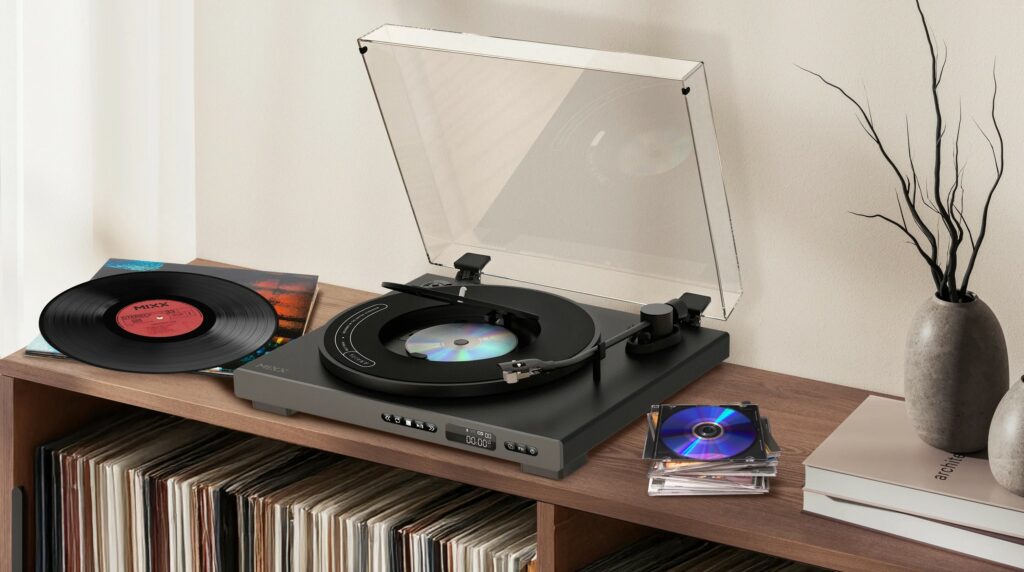
The Mixx Analog Plus is the most unconventional product here. It combines a turntable and CD player in one compact unit, with vinyl records and CDs arranged on different levels around a shared central module. If you have both formats and want to reduce the amount of equipment in the room, that design immediately gives Mixx a reason to exist.
Vinyl playback uses an Audio-Technica AT3600L cartridge and supports both 7-inch and 12-inch records at 33 or 45 rpm. It also includes Bluetooth 5.3 and a remote control, extending the product beyond traditional record playback. This is a system built around access to several kinds of physical and wireless music rather than a purist single-source setup.
That makes it easier to recommend for a particular lifestyle than for a general audiophile ranking. The Mixx is explicitly presented as a compact, accessible solution for listeners who like physical media but do not want separate components taking up space. It is about flexibility, convenience and an unusual format combination.
It is not the direct rival of the NAD C558 for someone whose only concern is a focused hi-fi vinyl chain. The source describes the Analog Plus as not trying to be a purist audiophile statement piece. Its strength is that you can play records, CDs and wireless audio from one product, with sofa-friendly remote operation.
The article places it at around $400. Because the Pro-Ject EU figure is given in euros and the other sources do not provide comparable pricing, it is not sensible to declare a universal price winner. Still, Mixx is the most compelling value proposition for the listener who would otherwise need separate vinyl and CD equipment.
Why buy it: you want one compact player for records, CDs and Bluetooth audio, and convenience matters more than a purist component-by-component system.
Why choose something else: the NAD is more appropriate for a dedicated vinyl-first system, while the Vestlyd is better equipped for physical DJ interaction.
NAD C558
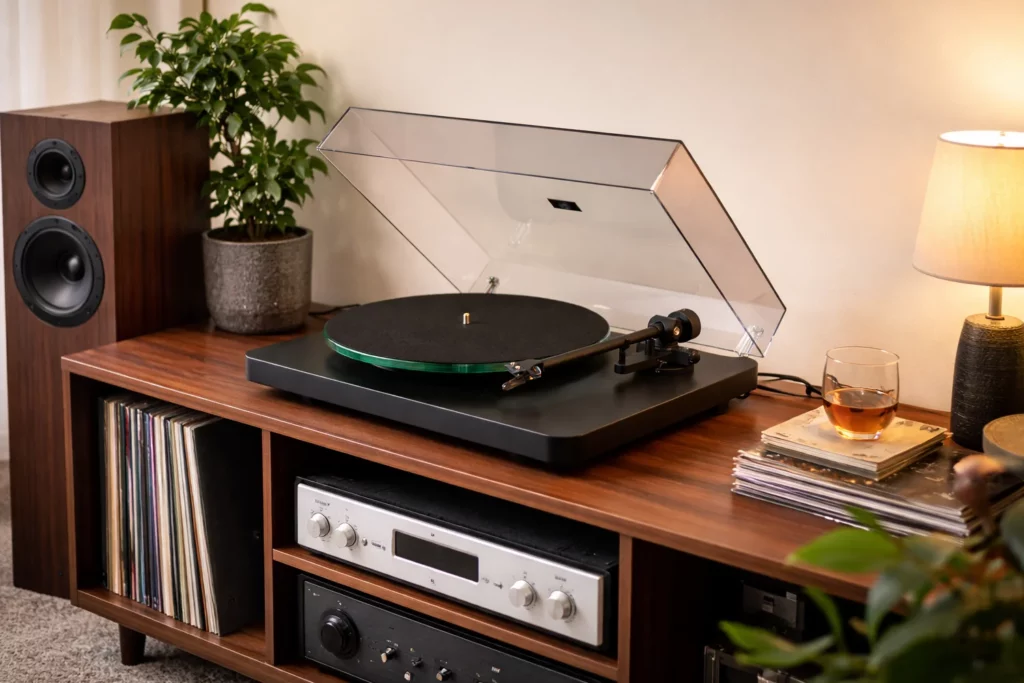
The NAD C558 is the Best Overall because it has the clearest and most disciplined purpose in this group: serious vinyl playback without unnecessary distractions. It is a belt-driven, fully manual turntable with a stable motor and power supply, a 9-inch tonearm, an MDF plinth, a glass platter and a factory-aligned Ortofon OM10 moving-magnet cartridge.
That combination gives it a stronger long-term case than a simple out-of-the-box ranking would suggest. The cartridge is ready to use immediately, but the tonearm and mass are also described as suitable for more ambitious cartridge upgrades, including moving-coil designs. When the stylus wears, the stylus module can be replaced without replacing the entire cartridge.
The C558's construction is equally focused. The source highlights motor isolation, power-supply filtering, a hardened steel spindle running in a brass bearing, and a heavy MDF plinth and glass platter intended to control resonances. Gold-plated RCA outputs and a proper ground terminal also leave room to upgrade the signal cable later.
Its manual operation is a feature for the right buyer, not a defect. You start and stop playback yourself and move the belt by hand to change between 33 and 45 rpm. There is no Bluetooth, built-in phono amplifier or CD player, so this is not the most convenient choice for a minimalist wireless system. But omitting those extras keeps the design centred on the record-playing task.
Compared with the Pro-Ject EU, the NAD offers less built-in connectivity but a more explicitly upgrade-oriented and mechanically detailed presentation in the source material. Compared with the Vestlyd, it is less suited to scratching, cueing and mixing but better aligned with a traditional home-listening ritual. Compared with Mixx, it gives up CD and remote-control convenience in exchange for a more conventional hi-fi component approach.
Why it is Best Overall: it offers the most convincing balance of ready-to-play simplicity, serious construction, manual hi-fi intent and a clear upgrade path for a buyer whose main source is vinyl.
Why choose something else: choose the Pro-Ject EU for built-in wireless and phono connectivity, Mixx for multi-format convenience, or Vestlyd for DJ use.
Vestlyd PRO T2
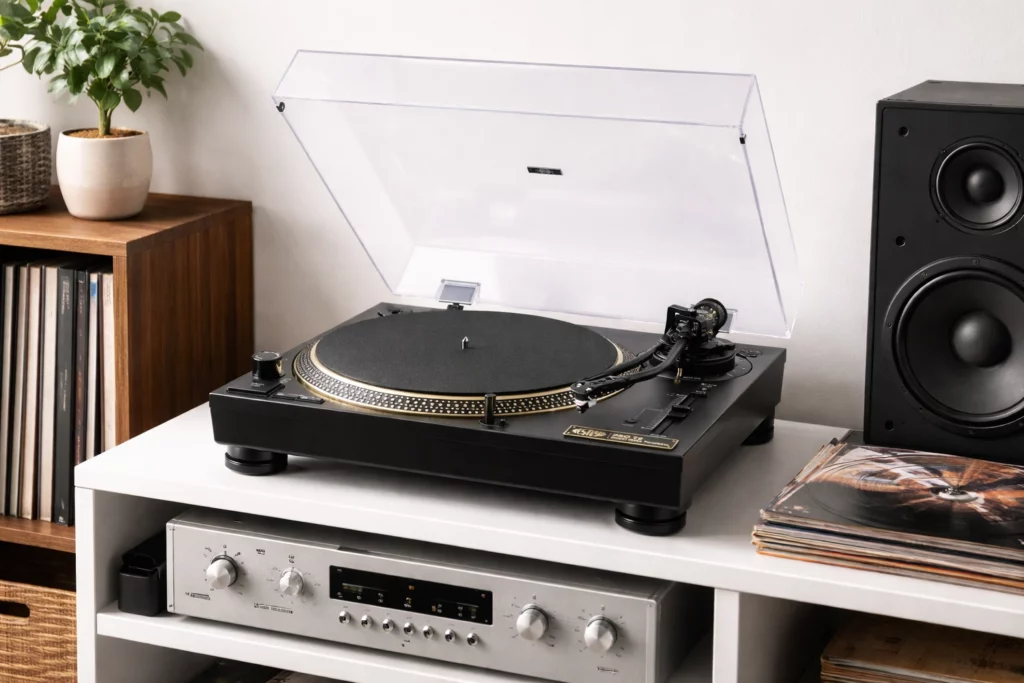
The Vestlyd PRO T2 is the specialist product in this comparison. Its direct-drive motor, fast start-up and pitch control put it in a different category from the belt-driven Pro-Ject EU and NAD C558. It is designed for hands-on use, including cueing, mixing, scratching and back-cueing, and its large controls, sturdy tonearm and heavy chassis reinforce that purpose.
The factory-fitted Ortofon VNL cartridge is designed for durability, tracking stability and versatility in DJ use. The removable cartridge housing uses a standard SME mount, making it easy to keep a spare headshell ready, while the S-shaped tonearm works with a wide range of popular DJ cartridges.
Practical details make the PRO T2 more complete as a DJ-oriented package. It includes a built-in RIAA amplifier, a stylus light, a supplied felt mat and a dust cover. The built-in phono stage allows direct connection to almost any amplifier or active speaker setup, and the cartridge is mounted and aligned out of the box.
The PRO T2 is also the most overtly physical and visually assertive choice. Its retro styling and solid construction are intended to recall DJ equipment from the late 1970s and 1980s. The source says its heavy, well-damped construction helps keep the pickup stable when the room or floor is lively, which supports its use in more active environments.
For ordinary seated listening, the NAD remains the better overall recommendation because it is purpose-built around traditional hi-fi playback rather than DJ control. But that does not make the PRO T2 a poor home-listening turntable. The source specifically presents the Ortofon VNL as capable of enjoyable hi-fi sound as well as heavy-use DJ duties.
Why buy it: you want direct-drive operation, pitch control, cueing and scratching capability, plus an integrated RIAA stage and a durable cartridge.
Why choose something else: the NAD is the more natural choice for a quiet, conventional hi-fi system, and the Pro-Ject EU is better if Bluetooth and a refined entry-level presentation are more important.
How they differ
First, they differ in what they actually are. The Align it Pro is a setup accessory. The other four products play records, but they do not target the same kind of listening. Treating all five as rival turntables would lead to the wrong purchase before any feature comparison begins.
Drive system and operation are the next major divide. The NAD C558 and Pro-Ject EU use belt drive, which fits their conventional home-hi-fi positioning. The Vestlyd PRO T2 uses direct drive with fast start-up and pitch control, specifically supporting DJ techniques. Mixx is defined less by a conventional audiophile platform than by its integrated CD player, Bluetooth 5.3 and compact all-in-one design.
Connectivity separates convenience from simplicity. The Pro-Ject EU has both a Bluetooth transmitter and a built-in phono amplifier. The Vestlyd has a built-in RIAA stage and can connect directly to active speakers or an integrated amplifier. Mixx adds Bluetooth and remote control. The NAD instead supplies gold-plated RCA outputs and a ground terminal, keeping the signal path and system choices conventional.
The cartridges point to different priorities. The Pro-Ject EU and NAD C558 both arrive with an Ortofon OM10 MM cartridge, but the NAD's article gives more attention to later cartridge upgrades. Mixx uses the Audio-Technica AT3600L for everyday listening. Vestlyd supplies the DJ-focused Ortofon VNL and a removable SME-mount housing for easier cartridge changes.
Format support also changes the decision. Mixx is the only option that combines vinyl and CD playback. Its turntable supports 7-inch and 12-inch records at 33 and 45 rpm. The other playable products are presented as dedicated vinyl turntables, while the Align it Pro is strictly a cartridge-alignment tool.
Finally, decide how much interaction you want. The C558 is fully manual, including belt changes for speed selection. The Vestlyd is manual in a more active, DJ-oriented sense, with controls for cueing, pitch adjustment and scratching. The Pro-Ject EU prioritises plug-in convenience, and Mixx prioritises operating several formats from one compact box.
Which one should you buy?
- Choose the NAD C558 if vinyl is your main source and hi-fi quality is the priority. It is the strongest all-round recommendation for a listener who wants a conventional, serious deck that is ready to play now but can also accommodate future cartridge upgrades. Be comfortable with fully manual operation and the absence of built-in wireless or phono amplification.
- Choose the Pro-Ject EU if you want the easiest feature-rich home setup. Its pre-installed Ortofon OM10, built-in phono amplifier, Bluetooth transmitter, cable and dust cover make it a sensible premium entry-level package. Its blue finish and European Union star design will also suit buyers who want a more distinctive piece of equipment.
- Choose the Mixx Analog Plus if you own both records and CDs. It is the most logical solution for a mixed physical-media collection, especially when space and simplicity matter. Bluetooth 5.3 and the remote control add modern convenience, while support for 7-inch and 12-inch records covers the main vinyl formats described in the source.
- Choose the Vestlyd PRO T2 if you plan to cue, mix or scratch. Direct drive, fast start-up, pitch control, the stylus light, felt mat and Ortofon VNL cartridge make it the clear specialist pick. It is also a good fit if you want a substantial retro-styled deck that can connect directly to active speakers through its built-in RIAA stage.
- Choose the Pro-Ject Align it Pro only if you need cartridge alignment. It is the appropriate purchase for improving setup precision on a compatible tonearm, particularly a Pro-Ject model. It should be bought alongside a turntable, not instead of one.
Final verdict
The NAD C558 is the Best Overall choice because it makes the fewest compromises for a dedicated vinyl listener: it is fully manual, mechanically focused, supplied with a ready-to-use cartridge and designed with future upgrades in mind. The Pro-Ject EU is the better alternative for built-in connectivity and visual character, Mixx wins for records-plus-CD convenience, and Vestlyd is the right tool for DJ-style interaction. The Align it Pro has a useful role, but that role begins after you have chosen the turntable.


Sound Off
0Join the discussion if you have something to add.