
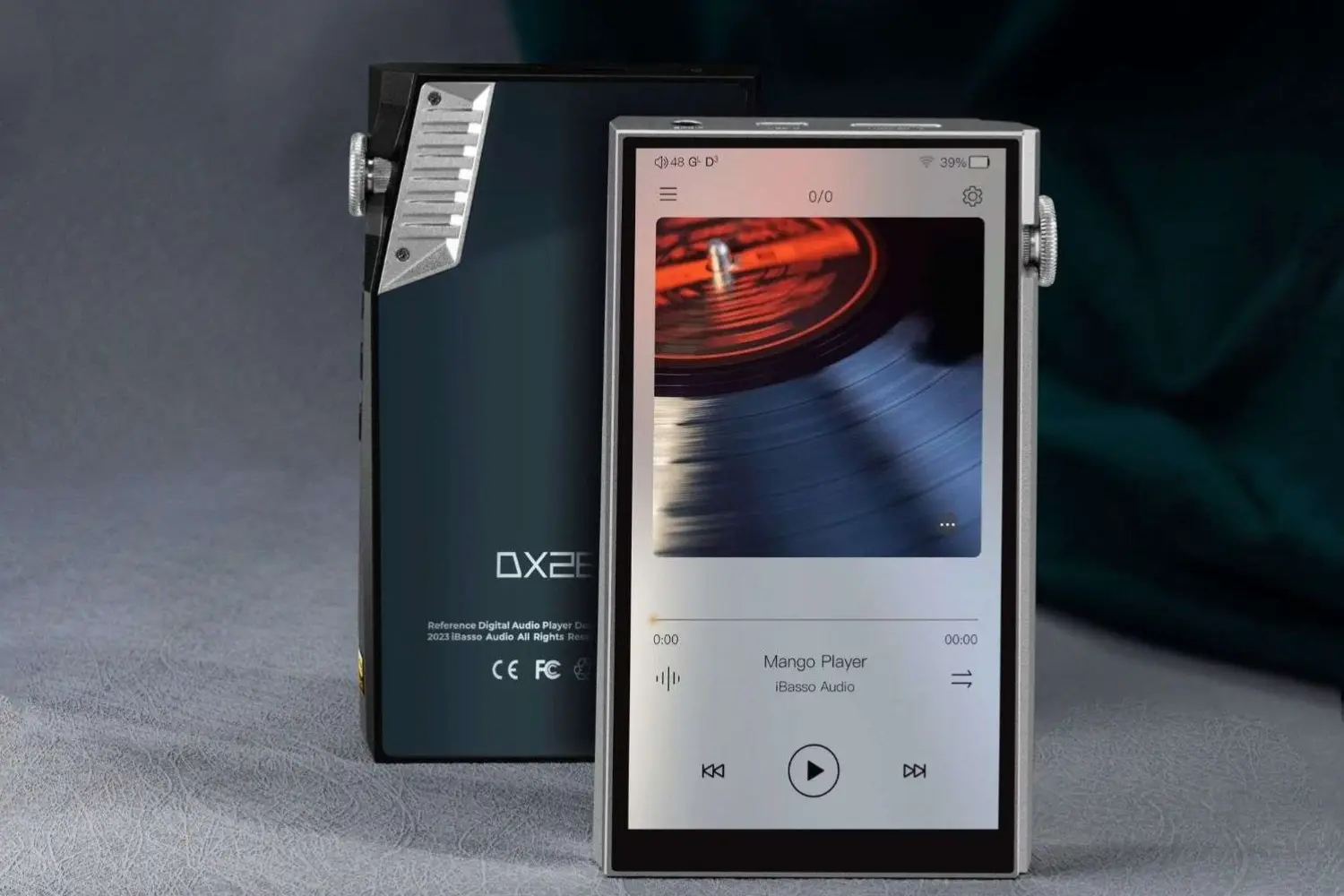
Choosing a digital audio player is less about finding one universally perfect specification and more about balancing sound architecture, power, software, portability, battery life and price. This comparison brings together five very different DAPs: iBasso’s DX260, NiPO’s N2, HiBy’s RS2, Hidizs’ AP80 Pro-X and Astell&Kern’s A&ultima SP4000.
The iBasso DX260 is the strongest all-round choice. It is not the smallest or the most technically elaborate model here, but its combination of Android 11, system-level SRC bypass, 1015mW-per-channel balanced output, two headphone connections, digital output, 14-hour battery life and a $949 price gives it the broadest appeal. The alternatives make more sense when a particular priority matters more: minimum size and cost, R2R architecture, maximum circuit sophistication or an uncompromising high-end design.
Quick verdict
- Best Overall: iBasso DX260 — the most balanced package of power, software, connections, battery life and price.
- Best Value: Hidizs AP80 Pro-X — the clear choice for buyers who want a genuinely small DAP at $172, with dual DACs, Bluetooth and balanced output.
- Best for R2R enthusiasts: HiBy RS2 — its Darwin architecture, R2R design and NOS/OS switching give it the most distinctive playback approach in this group.
- Best for amplifier and processing ambition: NiPO N2 — a premium, fully discrete design with a 2.53W linear amplifier, eight-core processor and dual-band Wi-Fi.
- Best Features: Astell&Kern A&ultima SP4000 — the most ambitious flagship, with separated digital and analogue processing, Android app support and extensive proprietary processing.
| Model | What stands out | Outputs and connectivity | Battery information | Source price |
|---|---|---|---|---|
| iBasso DX260 | Eight CS43198 chips, Android 11, FPGA-MASTER2.0 | 3.5mm and 4.4mm headphone/line outputs; coaxial output; USB-C; card reader | 4400mAh; up to 14 hours | $949 |
| NiPO N2 | Fully discrete amplifier, SLEA/CMMT/DRVC, ES9039 PRO | Dual-band Wi-Fi; Android; local files and streaming | More than 13 hours; up to 1600 hours standby | $2599 |
| HiBy RS2 | Darwin R2R architecture; NOS/OS switch; adjustable FIR filters | 3.5mm and 4.4mm headphone outputs; two microSD slots | 3500mAh; up to 10 hours | Not stated |
| Hidizs AP80 Pro-X | Dual ES9219C DACs; very compact chassis; 8x MQA support | 3.5mm and balanced output; bidirectional Bluetooth 4.2 with aptX, LDAC and UAT | 6–8 hours balanced; 8–11 hours single-ended | $172 |
| Astell&Kern A&ultima SP4000 | Octa audio circuit architecture; separated digital and analogue processing; Advanced DAR | Android with Google Play Store app installation; proprietary ADP for streaming playback | Not stated | Not stated |
iBasso DX260
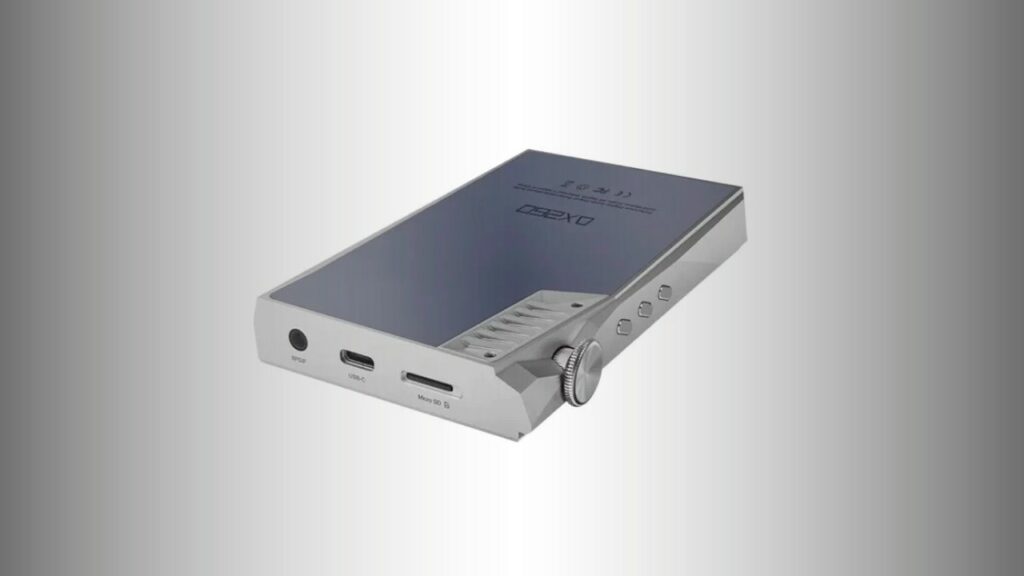
The DX260 wins this group by avoiding a narrow definition of what a DAP should be. It has a serious digital section, a powerful output stage, mainstream Android software and a useful selection of physical connections. That matters because a player can be technically ambitious yet awkward if it cannot accommodate a listener’s headphones, music sources or system connections.
Its DAC section uses a matrix of eight Cirrus Logic CS43198 chips. The source describes this as delivering excellent dynamic range, low distortion and a low signal-to-noise ratio, while the FPGA-MASTER2.0 algorithm coordinates the clock generator and FIR filter. Those are substantial design features, but the more practical advantage is the way the DX260 combines them with usable day-to-day hardware.
Android 11 and system-level SRC bypass give the player a modern software foundation while addressing a common concern around Android playback paths. Volume is controlled by a physical rotary wheel, which is a more tactile arrangement than relying solely on a touchscreen. The player also has 3.5mm and 4.4mm jacks, both of which can be used for headphone output or line output. A 3.5mm coaxial digital output, USB-C port and card reader broaden its role beyond a simple headphone source.
Power is one of the DX260’s biggest advantages. Its balanced output reaches 1015mW per channel into 32 ohms, giving it a much stronger stated output than the HiBy RS2 and making it a persuasive option for listeners who want flexibility with headphone matching. Its 4400mAh battery is rated for up to 14 hours, the longest stated playback figure in this comparison apart from the different usage ranges quoted for the Hidizs.
At $949, the DX260 is far less expensive than the $2599 NiPO N2, while offering a more comprehensive connection set than the tiny AP80 Pro-X. It is larger and heavier than the Hidizs and HiBy, at 123 x 74.5 x 17.5mm and 229g, but that is a reasonable trade-off for its power, battery and connectivity. For buyers who want one DAP to cover local playback, Android use, balanced headphones, line-level duties and digital output, the DX260 is the safest recommendation here.
NiPO N2
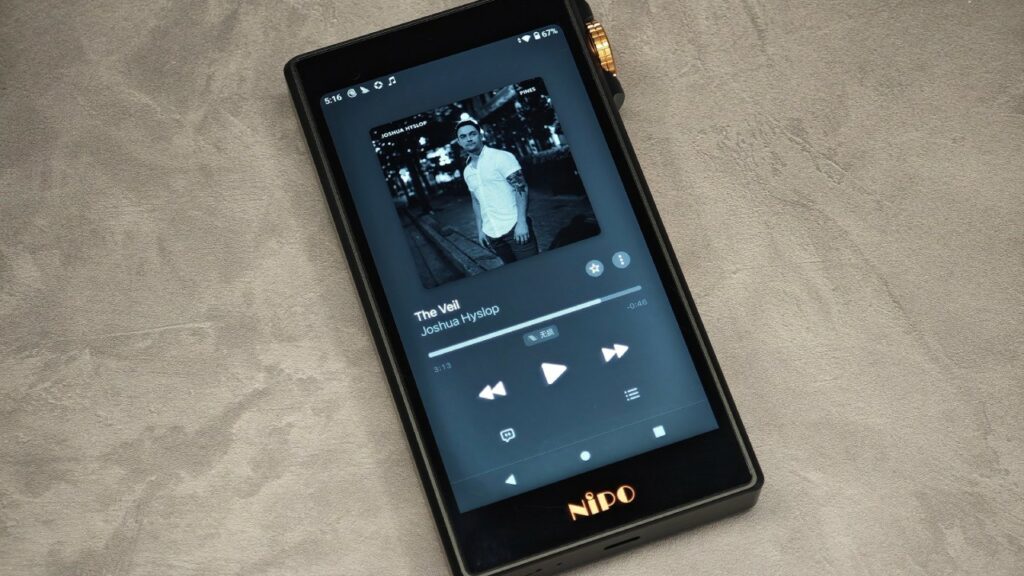
The NiPO N2 is the most overtly engineering-led alternative. Its price of $2599 places it in a different class from the DX260, and the source positions it as a premium player built around sound quality, internal architecture and amplification rather than compactness or value.
The core design is a fully discrete gain architecture with eight pairs of 6A output transistors, alongside a linear amplifier rated at 2.53W. It also uses SLEA, CMMT and DRVC sound-processing and amplification technologies, an ES9039 PRO DAC and a femtosecond crystal oscillator. The 10-layer PCB is intended to reduce interference and maintain a clear signal path, while the source gives an SNR figure of 126dB.
That combination makes the N2 the obvious candidate for a buyer who prioritises amplifier design and premium construction over price. Its eight-core 2.0GHz processor is intended to keep operation responsive, and the source says it starts in under one second. Android and dual-band Wi-Fi support both local high-resolution files and streaming services, so the N2 is not limited to a card-based library.
The trade-off is value. Nothing in the supplied information suggests that the N2 is a better all-round purchase for most listeners than the DX260; instead, it is a more expensive proposition for someone specifically attracted to its discrete amplifier, high output claim, processing technologies and internal construction. Its battery life is more than 13 hours, close to the DX260’s 14-hour figure, and standby time is stated as up to 1600 hours.
Choose the N2 if the fully discrete amplifier architecture and premium technical approach are central to your decision. Choose the DX260 if you want a broader feature set at a substantially lower stated price.
HiBy RS2
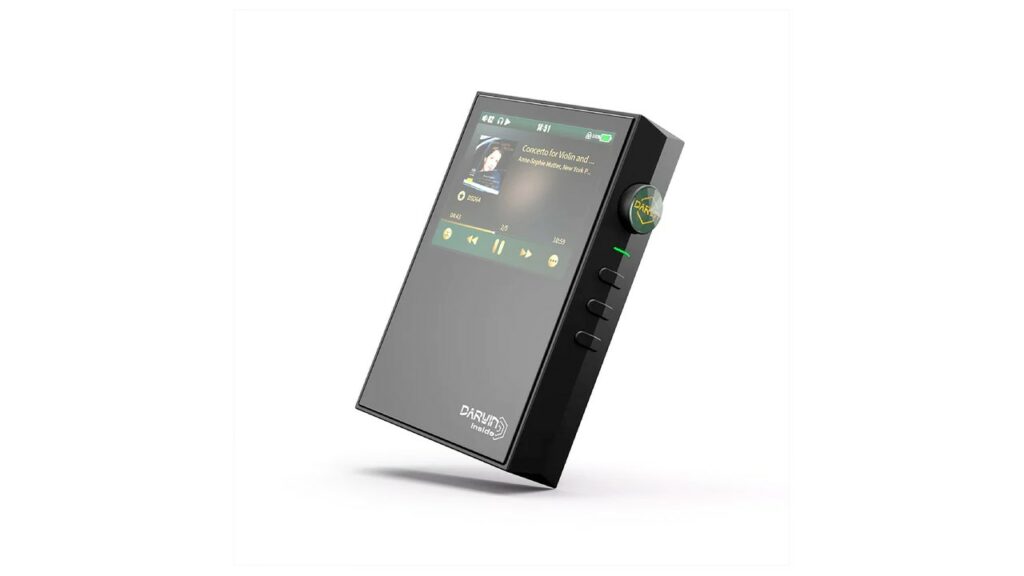
The HiBy RS2 takes the most distinctive route to digital conversion. Rather than centring the comparison on a conventional delta-sigma DAC specification, it uses HiBy’s Darwin architecture and an R2R-based design. The result is a player aimed at listeners who want control over the processing approach as well as a compact, dedicated music player.
Darwin architecture brings several adjustable functions: R2R array linearity compensation, a 256-channel adjustable FIR filter, harmonic control and a NOS/OS switch. The player can perform 16x oversampling in OS mode, or let the user disable oversampling through NOS mode. That makes the RS2 unusually appealing to listeners who want to experiment with digital filtering and processing rather than leave every decision to a fixed signal path.
The RS2 runs PureAudio HiByOS, which is described as an operating system optimised for system-level audio processing. It supports PCM384 and DSD256, along with 8x MQA unfolding. Its output stage uses a current-mode amplifier around the R2R array, with an OPA1652 and two OPA1612 chips in the low-pass filter. Output power is rated at 125mW through 3.5mm and 320mW through 4.4mm.
In practical terms, the RS2 is smaller and lighter than the DX260, measuring 90.3 x 64.8 x 18.8mm and weighing approximately 158g. It has both 3.5mm single-ended and 4.4mm balanced headphone outputs, plus two microSD card slots, each supporting cards up to 2TB. That dual-card arrangement is a significant advantage for listeners with large offline libraries.
The compromises are clear beside the iBasso. Battery life is up to 10 hours rather than 14, and the stated output is considerably lower. The supplied article does not list a price, so value cannot be judged directly against the other models. The RS2 is therefore not the default recommendation, but it is the better choice for a listener who specifically wants R2R-based Darwin processing, NOS/OS selection and two high-capacity microSD slots.
Hidizs AP80 Pro-X
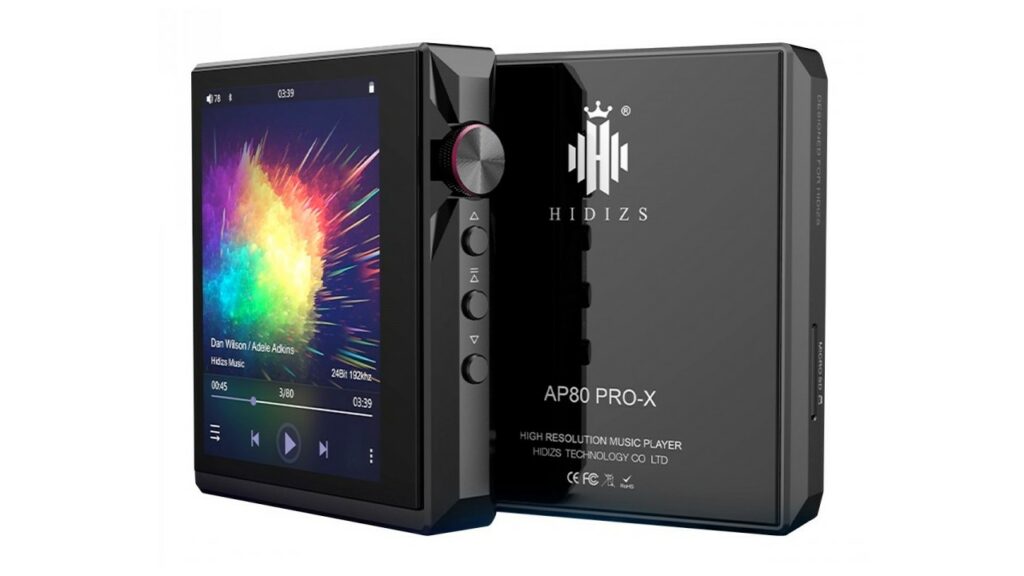
The AP80 Pro-X is the specialist choice for portability and price. At 61 x 54.5 x 13.8mm, it is dramatically smaller than every other player in this comparison, and its stated $172 price makes it the easiest entry point into the group. It is the model to consider when a DAP must disappear into a pocket rather than serve as a large, high-powered source.
Despite its dimensions, the AP80 Pro-X includes two ESS ES9219C DACs, an HBC3000 FPGA and support for PCM up to 32-bit/384kHz and DSD256. The source also lists 8x MQA support, 2Vrms output and analogue gain control intended to reduce output noise. Its CNC-machined aluminium alloy chassis and ALPS volume control add physical controls and a more substantial feel than its size might suggest.
Connectivity is another strength. The player has single-ended and balanced outputs, and bidirectional Bluetooth 4.2 with aptX, LDAC and UAT codecs. That makes it more versatile with wireless equipment than the HiBy RS2 as described in the supplied material, while the compact form makes it particularly suitable for commuting, walking and travel.
The battery is smaller at 800mAh, although the quoted playback figures are useful: six to eight hours when listening through the balanced output and eight to 11 hours through the single-ended output. A claimed 40-day standby time is also provided. The player uses HiBy OS 3.0 and has a 2.45-inch 480 x 360 IPS touchscreen.
The AP80 Pro-X cannot match the DX260’s stated balanced power, larger battery or system connections. It is also less suited to someone seeking a large-screen Android streaming experience, since the source describes HiBy OS rather than Android. But those are not necessarily failures; they reflect its purpose. At $172, this is the best value option for a listener who wants high-resolution playback, Bluetooth, a balanced output and very small dimensions without moving into premium-player pricing.
Astell&Kern A&ultima SP4000
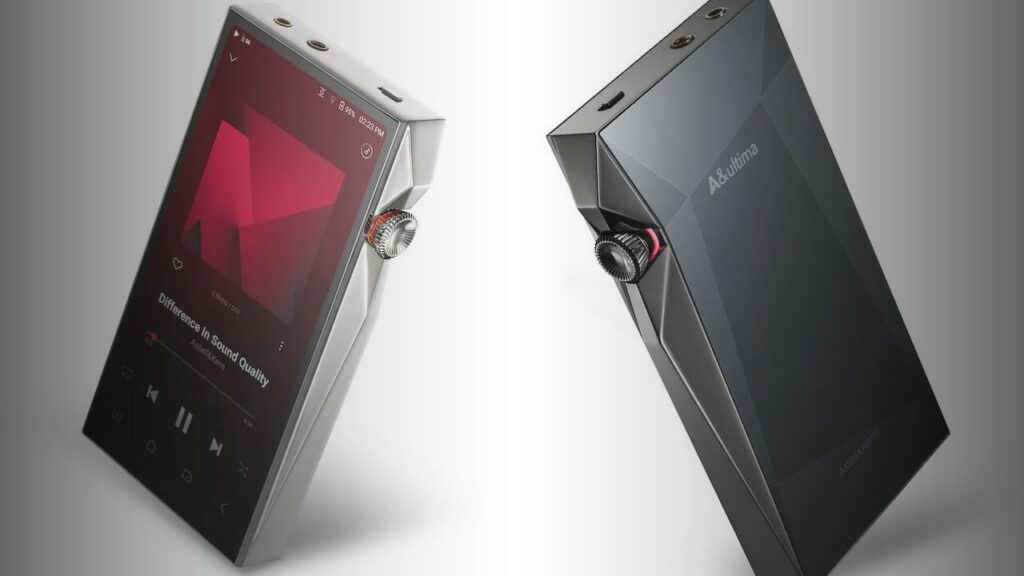
The SP4000 is the flagship statement product in this comparison, and its appeal lies in the depth of its circuit and software development. Astell&Kern’s Octa audio architecture uses one AK4191 digital processor and one AK4499EX analogue DAC in a 1:1 configuration. The source describes this as a true Quad DAC arrangement, with digital and analogue processing physically separated to reduce noise interference.
The player adds two paralleled op-amps and a High Driving mode. Astell&Kern’s patented Enhanced Signal Alignment technology is designed to address timing differences between frequencies, while a redesigned LDO regulator is said to reduce noise by up to 97% compared with earlier models. The design also includes an Any Layer HDI PCB and a 99.9% pure copper Shield Can to control signal loss and electromagnetic interference.
Its processing features are equally ambitious. Advanced DAR uses Virtual Sound Extender to restore lost harmonics before a second upsampling stage. For streaming, the SP4000 supports Android and, for the first time in the A&ultima series according to the source, allows users to install apps from the Google Play Store. Astell&Kern’s ADP technology is intended to bypass Android’s sampling limitation and provide bit-perfect, lossless playback in streaming scenarios.
This is the most comprehensive technical proposition here, but it is not automatically the best purchase for every listener. The supplied article does not provide a price, dimensions, weight, battery rating or output figures, so it is impossible to compare its portability, endurance or value directly with the DX260. Its flagship positioning and extensive architecture make it the obvious choice for buyers who want Astell&Kern’s most advanced platform and are prepared to prioritise that ambition over a clearly documented value case.
How they differ
Power: The iBasso has the strongest clearly stated balanced output at 1015mW per channel into 32 ohms. The NiPO N2 lists a 2.53W linear amplifier, although the supplied material does not specify the same measurement conditions, so those figures should not be treated as a direct apples-to-apples ranking. The HiBy RS2 quotes 125mW single-ended and 320mW balanced, while the Hidizs lists 2Vrms output rather than a comparable wattage figure.
Digital architecture: The DX260 uses eight Cirrus Logic CS43198 chips with FPGA-MASTER2.0. The N2 uses an ES9039 PRO and a fully discrete amplifier supported by SLEA, CMMT and DRVC. The RS2 is the R2R specialist with Darwin processing, adjustable FIR filtering and NOS/OS operation. The AP80 Pro-X uses dual ESS ES9219C DACs and an HBC3000 FPGA. The SP4000 goes furthest in circuit separation, using its AK4191 and AK4499EX architecture to keep digital and analogue processing apart.
Software and streaming: Android appears on the DX260, N2 and SP4000. The DX260 specifically bypasses SRC at system level, while the SP4000 uses ADP for bit-perfect lossless streaming playback and permits Google Play Store app installation. The N2 supports streaming through Android and dual-band Wi-Fi. The RS2 uses PureAudio HiByOS, and the AP80 Pro-X uses HiBy OS 3.0.
Portability: The AP80 Pro-X is the clear size winner at 61 x 54.5 x 13.8mm. The RS2 is also compact and weighs approximately 158g. The DX260 is larger and heavier at 229g, but that physical scale accompanies its larger 4400mAh battery and high output. The supplied N2 and SP4000 information does not provide dimensions or weight, so their portability cannot be ranked fairly.
Storage: The RS2 is especially well suited to offline collections because it has two microSD slots, each supporting up to 2TB. The DX260 includes a card reader, while the supplied information does not specify the card arrangement or capacity. The other source articles do not provide comparable storage details.
Which one should you buy?
Buy the iBasso DX260 if you want one DAP to do almost everything. Its balanced power, Android 11, SRC bypass, physical volume wheel, dual analogue output options, coaxial output, USB-C and 14-hour battery life form the most convincing overall package. The $949 price also keeps it well below the NiPO N2’s stated $2599.
Buy the Hidizs AP80 Pro-X if size and price matter most. It is the obvious travel and pocket player, and it still offers dual DACs, high-resolution PCM and DSD support, Bluetooth codecs, touchscreen control and balanced output. Its lower output and smaller battery make it less universal, but at $172 those compromises are easy to understand.
Buy the HiBy RS2 if you specifically want R2R and Darwin features. The NOS/OS switch, adjustable FIR filter, harmonic control and dual microSD slots distinguish it from the more conventional designs. It is the specialist choice for an enthusiast who values processing control and offline storage more than maximum output power or Android streaming.
Buy the NiPO N2 if its amplifier architecture justifies the premium for you. The fully discrete gain stage, eight pairs of output transistors, 2.53W linear amplifier, ES9039 PRO DAC and dual-band Wi-Fi make it the high-end alternative for buyers focused on internal engineering. Its $2599 price means it should be chosen for those specific priorities rather than general value.
Buy the Astell&Kern SP4000 if you want the most elaborate flagship feature set. Its separated digital and analogue architecture, Advanced DAR, ESA, copper shielding and Google Play Store support make it the most ambitious player on paper. However, because the supplied information omits its price, dimensions, weight, battery life and output figures, the DX260 remains the more defensible all-round recommendation.
Final verdict
The iBasso DX260 is the Best Overall DAP in this comparison. It offers the most complete balance of power, battery life, software flexibility and physical connectivity without approaching the NiPO N2’s price. The Hidizs AP80 Pro-X is the standout value and portability pick, the HiBy RS2 is the specialist R2R choice, the NiPO N2 targets premium amplifier-focused buyers, and the Astell&Kern SP4000 is the flagship for those who want the most extensive technical and software platform.


Sound Off
0Join the discussion if you have something to add.