
These five headphones cover almost every major personal-audio priority: wireless convenience, active noise cancellation, closed-back isolation, open-back hi-fi listening and compact wired IEM portability. They are not interchangeable products, and choosing between them depends more on how and where you listen than on the headline specification count.
The Moondrop Horizon is the strongest overall choice because it combines a balanced, spacious and highly comfortable presentation with flexible cable options and easy source matching. However, the FiiO EH13 is more practical for everyday wireless use, the Final DX4000CL is the specialist closed-back option, the Sivga Lyrebird suits listeners who want a feature-rich wired IEM, and the Écoute Audio TH2 is the most unusual design—but it is not yet available.
Quick verdict
- Best Overall: Moondrop Horizon — the most convincing blend of natural sound, spaciousness, comfort and flexibility for serious home listening.
- Best for wireless everyday use: FiiO EH13 — the practical choice for Bluetooth, ANC, calls, multipoint and long battery life.
- Best closed-back hi-fi option: Final DX4000CL — designed to preserve isolation while creating a more open, natural presentation.
- Most ambitious wired IEM: Sivga Lyrebird — a four-driver-per-earpiece design with a detachable balanced cable and distinctive materials.
- Most distinctive features: Écoute Audio TH2 — a wireless headphone with a built-in Korg Nutube amplifier, but still a future product rather than a currently available purchase.
| Model | Best suited to | Design | Connectivity | Key strengths | Important limitation |
|---|---|---|---|---|---|
| Écoute Audio TH2 | Experimenters and listeners wanting an all-in-one wireless hi-fi concept | Wireless over-ear | USB-C, 3.5mm, Bluetooth 5.3 with AAC/LDAC | Built-in Korg Nutube 6P1 dual-triode, ANC, transparency mode | Not yet available; production depends on the Kickstarter campaign |
| FiiO EH13 | Commuters, office users, travellers and mixed-use listeners | Wireless over-ear | Bluetooth 6.0, SBC/LDAC, 3.5mm | Hybrid ANC, multipoint, app EQ, up to 75 hours without ANC | Wireless-focused rather than a dedicated reference headphone |
| Final DX4000CL | Home hi-fi listeners needing closed-back isolation | Closed-back wired over-ear | Detachable 4.4mm balanced cable; 6.3mm adapter | Open-style acoustic ambition, replaceable pads and serviceable construction | Planned for Q2 2026; substantial 375g design |
| Sivga Lyrebird | Portable wired listening and users with a compatible balanced source | Wired in-ear monitor | Detachable 0.78mm two-pin cable with 4.4mm balanced plug | Four drivers per earpiece, stabilized wood faceplates and supplied case | 4.4mm connection is less universal; final sound and fit require care |
| Moondrop Horizon | Long home listening and open-back audiophile use | Open-back over-ear | Detachable cable with 3.5mm and 4.4mm terminations | Balanced sound, spacious presentation, comfort and 32-ohm impedance | Open-back leakage and no carrying case |
Écoute Audio TH2
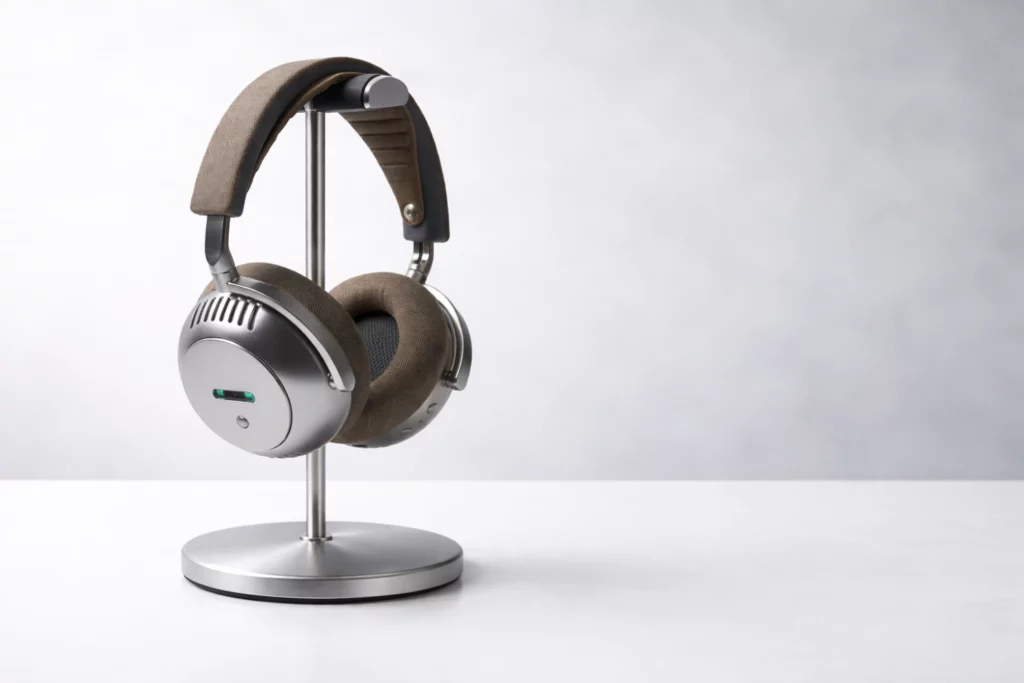
The Écoute Audio TH2 is the most conceptually unusual product here. It is a wireless over-ear headphone with a built-in Korg Nutube 6P1 dual-triode, using a true tube preamp inside the headphone rather than relying on an external amplifier or a digital tube simulation. That makes it fundamentally different from every other model in this comparison.
Its appeal is not simply that it has an unusual component. The TH2 is intended to function as a self-contained portable hi-fi system, integrating the DAC, preamplification and output stages into the headphone itself. For listeners who enjoy distinctive engineering ideas and want a more complete signal path without assembling separate equipment, that is a compelling proposition.
The connectivity is unusually broad. The TH2 supports lossless digital audio over USB-C, analog connection through 3.5mm jacks in active or passive modes, and Bluetooth 5.3 with AAC and LDAC. It also includes active noise cancellation, a transparency mode, phone-call support and voice-assistant compatibility. In feature terms, it reaches further than the dedicated wired headphones in this group.
There is, however, a major buying qualification: the TH2 is not yet available for purchase. The source article says a limited number of pre-production units are planned through a Kickstarter campaign, with general retail availability currently expected in September 2026 if the campaign is successful. That makes it impossible to recommend as the immediate best buy. It is better understood as a product to watch for listeners drawn to tube technology and maximum connection flexibility.
Choose it over the others if: you specifically want a wireless headphone with a genuine built-in tube preamp, USB-C audio, analog operation and ANC in one design. Do not choose it if you need headphones today or want established listening evidence.
FiiO EH13
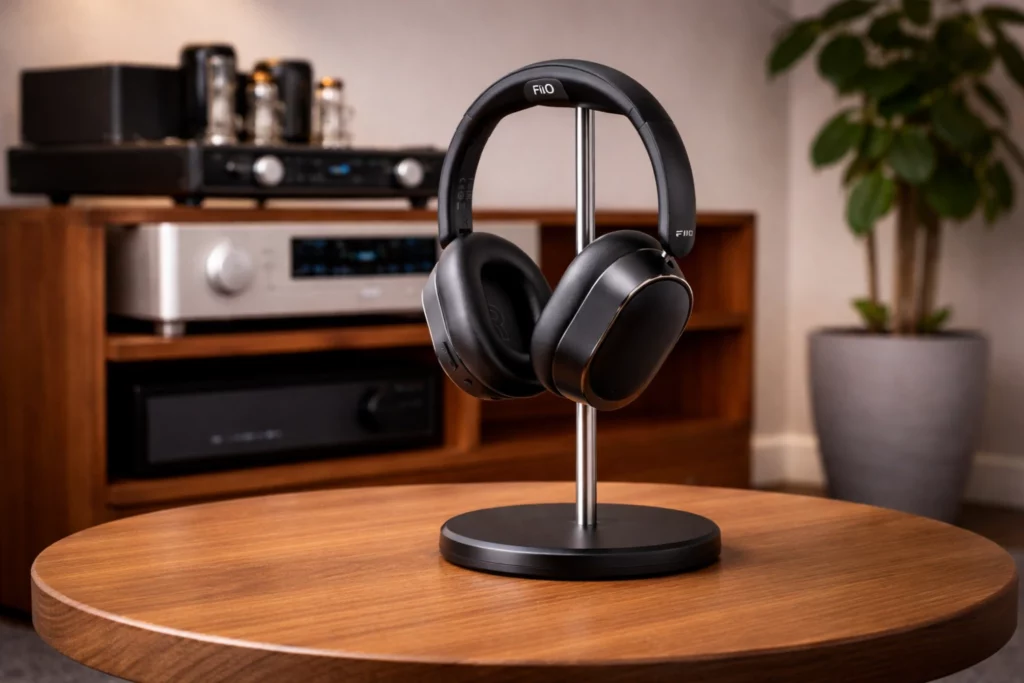
The FiiO EH13 is the most practical all-rounder for everyday life. Unlike the Moondrop Horizon and Final DX4000CL, it does not require a dedicated wired listening setup. Unlike the Sivga Lyrebird, it is designed for use at home, in the office, while travelling and during calls. Its priorities are convenience, adaptability and endurance.
Wireless listening is supported by Bluetooth 6.0, SBC and LDAC, with Hi-Res Audio and Hi-Res Audio Wireless certifications. LDAC gives compatible phones and players a higher-quality Bluetooth option, while the 3.5mm input keeps the EH13 usable with a laptop, on a plane or when its battery is low. Two-device Bluetooth support is particularly useful for anyone moving between a smartphone and a computer without repeatedly reconnecting.
The EH13 also has the clearest noise-control focus in this group. Its hybrid ANC system offers three noise-cancelling levels and a claimed suppression depth of up to -42dB. DSP compensation is intended to reduce changes in sound when ANC is switched on or off. Five built-in microphones and ENC processing support voice calls, giving the FiiO an advantage over the wired audiophile models for work and communications.
Battery life is another decisive strength. FiiO claims up to 75 hours without ANC and up to 45 hours with ANC enabled, with a full charge taking about two hours. The foldable design, rotating earcups and supplied carrying format make it better suited to bags and travel than the open-back Horizon or the substantial Final.
The FiiO Control App adds ready-made EQ presets, custom equalization and separate movie and game profiles. That gives the listener more control than the fixed tuning approach of the wired models. It is therefore the strongest choice here for someone who wants one headphone to cover music, films, games, calls and commuting.
Choose it over the others if: you need ANC, long battery life, multipoint Bluetooth and call support. It is a more sensible everyday purchase than the Horizon if you regularly listen in noisy environments, although it cannot provide the open-back spatial design or the dedicated hi-fi focus of Moondrop’s model.
Final DX4000CL
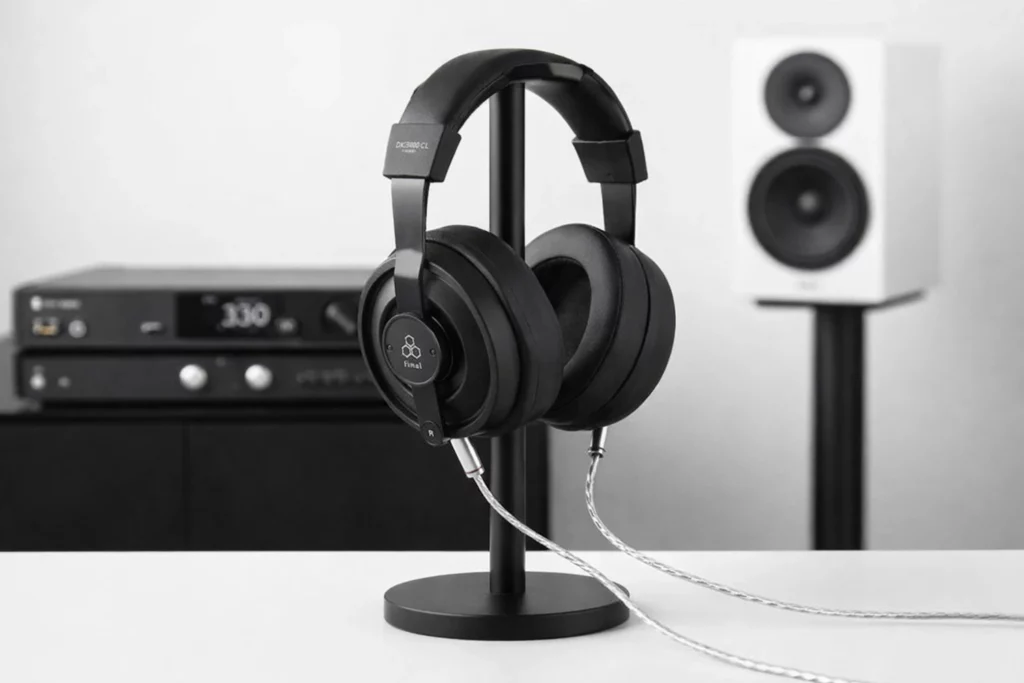
The Final DX4000CL is aimed at the listener who wants the privacy and isolation of a closed-back headphone without accepting the smaller, more enclosed presentation often associated with that format. Its design goal is to combine closed-back bass control and isolation with an acoustic architecture intended to sound more open and spacious.
A newly developed 40mm dynamic driver uses a paper-and-carbon-fiber composite diaphragm. Final pairs that driver with a free-edge structure intended to allow more uniform movement. Behind the driver, an internal diffuser array uses rib structures to scatter reflections in the rear chamber. The idea is similar to the diffusers found in listening rooms and studios, scaled down for the headphone housing.
These design choices make the DX4000CL a direct alternative to the Moondrop Horizon rather than to the FiiO EH13. Both are full-size headphones aimed at serious listening, but their acoustic priorities are opposite: the Horizon is genuinely open-back, while the Final keeps the practical advantages of a closed enclosure. If you share a room, need to keep music private or want less interaction with outside sound, the Final’s format is the more appropriate one.
The construction also shows attention to long-term ownership. The ear pads are around 30mm thick, made from memory foam and synthetic leather, and can be replaced without tools. Final uses O-rings and precision screws rather than excessive glue, making the headphone easier to service over time. A detachable silver-coated cable terminates in 4.4mm Pentaconn balanced connection, and a 6.3mm adapter is included for traditional hi-fi equipment.
At around 375g without the cable, the DX4000CL is slightly heavier than the approximately 350g Horizon. It is planned for release in Q2 2026 with a suggested retail price of €999. That places it firmly in the upper tier of audiophile closed-back headphones, so it should be chosen for its specific combination of isolation and spaciousness rather than as a general-purpose value option.
Choose it over the others if: you want a serious wired headphone for private listening but do not want the sound leakage of an open-back model. The Horizon remains the better fit for listeners who can use an open design and value its reviewed balance and comfort, while the FiiO is more suitable when wireless operation matters most.
Sivga Lyrebird
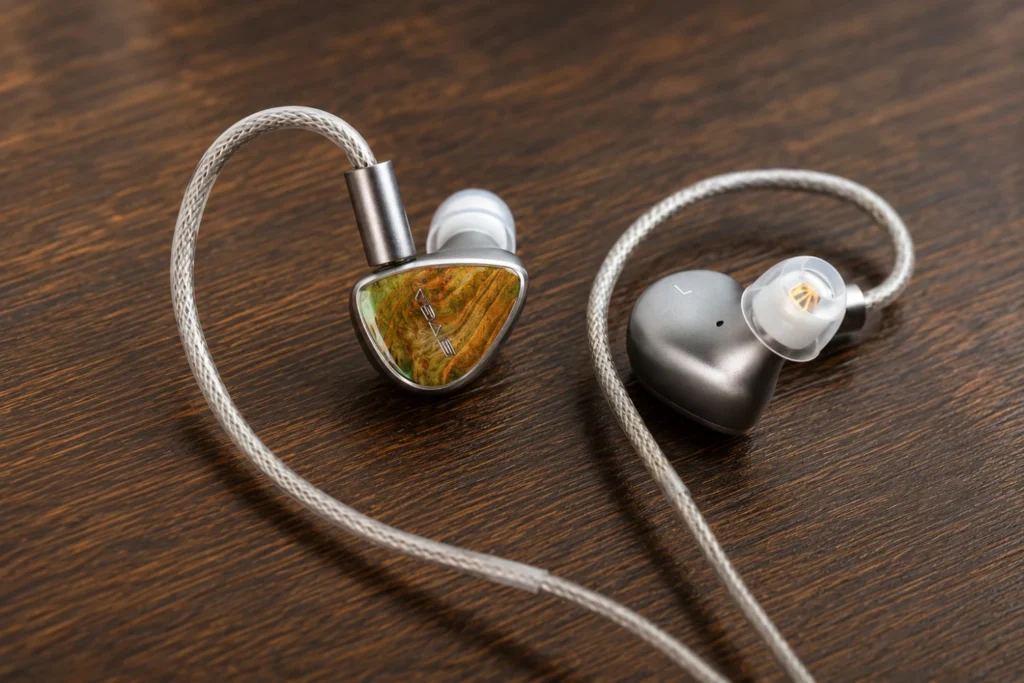
The Sivga Lyrebird takes a different route from all three full-size headphones. It is a wired in-ear monitor built around four drivers per earpiece: a 10mm polymer-composite dynamic driver for low frequencies, a balanced-armature driver for vocals, a micro-planar driver for the midrange and a 9.2mm multilayer piezoelectric ceramic driver for high-frequency detail and extension.
That architecture gives the Lyrebird the most elaborate driver count in the comparison, but it should not be treated as a guarantee of better sound. The source material explicitly notes that the result depends on crossover execution, acoustic chamber design and driver integration. The available information is a design and feature assessment rather than a hands-on listening test, so buyers should be cautious about converting the specification sheet into assumptions about performance.
The Lyrebird is more portable than the over-ear models and avoids the battery and ANC considerations of the FiiO. Its CNC-machined aviation-grade aluminum housings are paired with stabilized wood faceplates, giving it a distinctive materials-led appearance. Sivga says the housings are lightweight and ergonomically shaped for commuting, home listening and longer sessions, although actual comfort will depend on ear shape, nozzle geometry, cable routing and eartip choice.
Its detachable 0.78mm two-pin cable is useful for repair or replacement, and the supplied cable combines several conductor materials before ending in a 4.4mm balanced plug. That termination suits compatible digital audio players, headphone amplifiers and DACs with balanced outputs, but it is less universal than 3.5mm. Anyone planning to connect the Lyrebird directly to a phone, laptop or entry-level player should confirm that the source supports the required connection.
A Crazy Horse leather case and multiple silicone eartips are included. Those accessories matter more here than they might with a home headphone: the case protects the shells and two-pin connectors, while the eartip seal affects isolation, bass response and overall tonal balance.
Choose it over the others if: you want the smallest and most portable wired option, prefer IEMs to full-size headphones and have a suitable 4.4mm balanced source. It is not the right choice for someone seeking wireless convenience, active noise cancellation or the broad, speaker-like presentation described in the Horizon review.
Moondrop Horizon
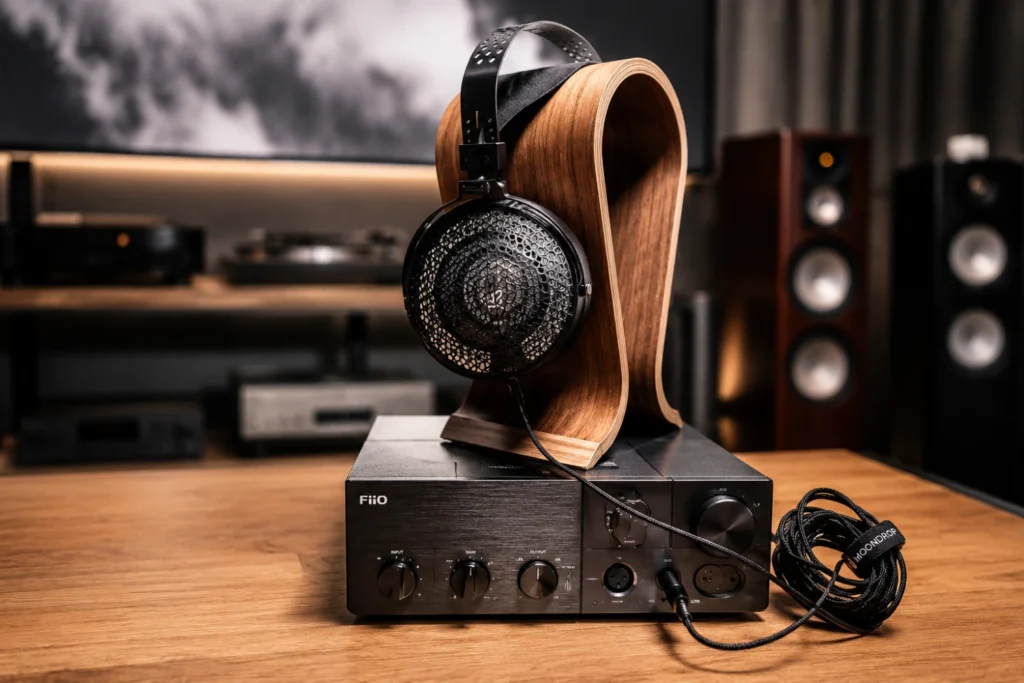
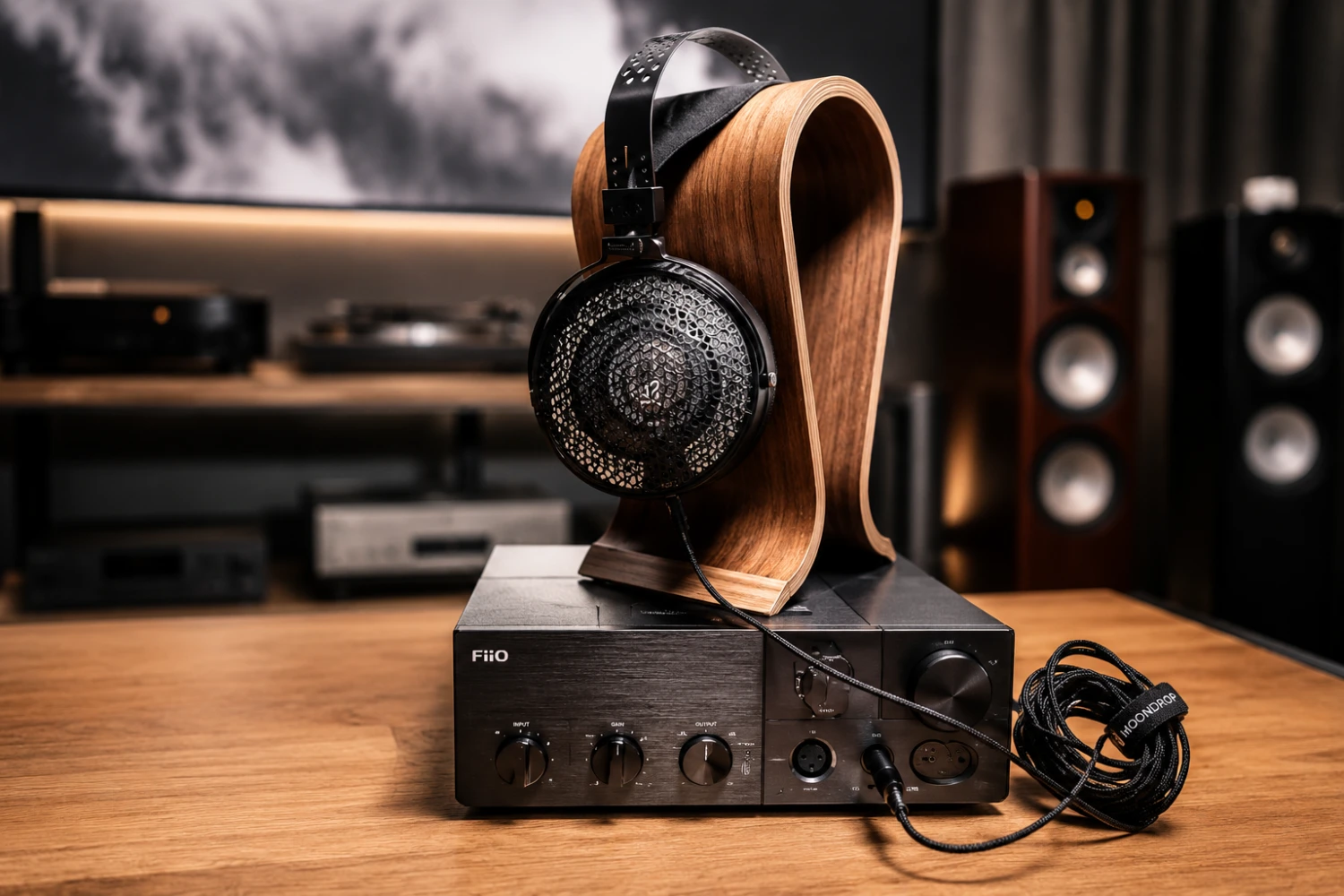
The Moondrop Horizon earns the Best Overall position because it is the most complete choice for the central hi-fi use case: extended, serious listening at home. It does not attempt to solve every lifestyle problem, but within its intended role it combines a spacious open-back architecture, a balanced tuning approach, strong comfort and useful cable flexibility.
Its 50mm titanium-coated dynamic driver and open-back design produce the most explicitly expansive presentation in this comparison. The review describes the sound as balanced, natural and musically coherent rather than aggressively bass-heavy or artificially analytical. Bass reaches deeply while retaining texture and realism, although it does not aim for the hard impact associated with some planar or bass-boosted headphones.
The midrange is a particular strength. Vocals are described as rich, lifelike and engaging, while guitars, pianos, strings and brass benefit from natural tonal reproduction. The Horizon also avoids the thinness sometimes associated with neutral headphones, retaining substance and warmth without abandoning balance. That makes it especially convincing for listeners who spend several hours with varied music rather than chasing a single dramatic sonic effect.
Comfort supports that long-session role. The approximately 350g headphone uses a suspension-style headband to distribute weight, while the earcups rotate and angle to accommodate different head shapes. The review found it comfortable during lengthy listening sessions despite its weight. The main practical drawback is the open-back design itself: it is intended for stationary listening and will leak sound in both directions. There is also no carrying case included.
Source matching is relatively easy. The Horizon has a 32-ohm impedance and 109dB sensitivity, so it can be driven by portable devices. The review nevertheless found that a capable desktop amplifier or powerful digital audio player improves bass control, dynamics and precision. Its detachable cable includes interchangeable 3.5mm and 4.4mm terminations, allowing connection to ordinary portable devices or balanced desktop equipment without buying another cable.
Choose it over the others if: your priority is natural, spacious and comfortable hi-fi listening rather than ANC or portability. It is the best overall recommendation because its limitations are clear and format-specific, while its core performance is described in the source as refined, balanced and easy to enjoy for hours.
How they differ
Open versus closed listening: The Horizon is the only open-back over-ear design, so it has the strongest case for an expansive home presentation but is unsuitable where sound leakage matters. The DX4000CL keeps a closed-back enclosure while specifically attempting to create a more open acoustic impression. The FiiO is also closed and adds ANC for noisy environments, while the Lyrebird uses an in-ear seal for compact isolation.
Wireless convenience: The FiiO is the most practical current-style wireless option, with Bluetooth, LDAC, multipoint, ANC, app control and a long claimed battery life. The TH2 goes further conceptually with USB-C, Bluetooth, analog inputs and a built-in Nutube amplifier, but its planned availability makes it a future proposition. The Final, Sivga and Moondrop are wired products.
Sound priorities: The Horizon is the clearest choice for reviewed balance, naturalness and spatial openness. The Final is designed around closed-back isolation and controlled, spacious reproduction. The Sivga’s four-driver configuration is technically ambitious, but the available source does not provide independent listening evidence. The TH2’s tube preamp is its defining engineering feature, not a verified reason to expect a particular sonic result.
Portability: The Lyrebird is the smallest and easiest to carry, provided the listener has a compatible source and obtains a good seal. The FiiO is the strongest travel and office option because it folds, includes ANC and offers long battery life. The Horizon and Final are full-size hi-fi headphones, with the Horizon primarily intended for home use. The TH2 is designed as a portable wireless concept but is not yet available.
System flexibility: The TH2 has the broadest range of input options on paper. The FiiO offers wireless and 3.5mm wired operation, along with app-based EQ. The Horizon’s interchangeable 3.5mm and 4.4mm terminations make it unusually easy to move between portable and balanced equipment. The Final emphasizes 4.4mm balanced connection with a 6.3mm adapter, while the Lyrebird uses a detachable 4.4mm balanced IEM cable.
Which one should you buy?
- Buy the Moondrop Horizon if you primarily listen at home and want the most natural, spacious and comfortable presentation. It is the Best Overall pick and the strongest choice for long-form music listening.
- Buy the FiiO EH13 if one headphone must handle commuting, office work, calls, films, games and music. Its ANC, multipoint, app control and battery life make it the practical everyday recommendation.
- Buy the Final DX4000CL if you need closed-back isolation but still want an audiophile-oriented presentation. Its replaceable pads and serviceable construction also appeal to listeners thinking beyond short-term ownership. Remember that the source lists release for Q2 2026 and a suggested retail price of €999.
- Buy the Sivga Lyrebird if you specifically prefer a wired IEM and want a distinctive four-driver design with a detachable cable. Check your source for 4.4mm balanced compatibility and treat fit as a major part of the decision.
- Wait for the Écoute Audio TH2 if the built-in Korg Nutube amplifier is the feature that matters most. Its combination of tube preamp, ANC, USB-C, analog and Bluetooth connectivity is unique here, but it is not the product to choose for an immediate purchase.
Final verdict
The Moondrop Horizon is the Best Overall headphone in this five-product comparison because it delivers the most convincing combination of sound quality, comfort and connection flexibility for serious listening. The FiiO EH13 is the smarter choice for daily convenience, the Final DX4000CL for closed-back hi-fi isolation, the Sivga Lyrebird for portable wired IEM use and the Écoute Audio TH2 for those willing to wait for an unusually ambitious wireless tube-headphone design.


Sound Off
0Join the discussion if you have something to add.