Magnat Signature Edelstein Bookshelf Speakers: Compact Form, Material-Led Engineering
Magnat’s Signature Edelstein is a premium bookshelf loudspeaker built around a two-way reflex layout, a wide-surround fabric dome tweeter, a multilayer mid/bass diaphragm, and a cabinet design that combines MDF, solid aluminum and acrylic glass.
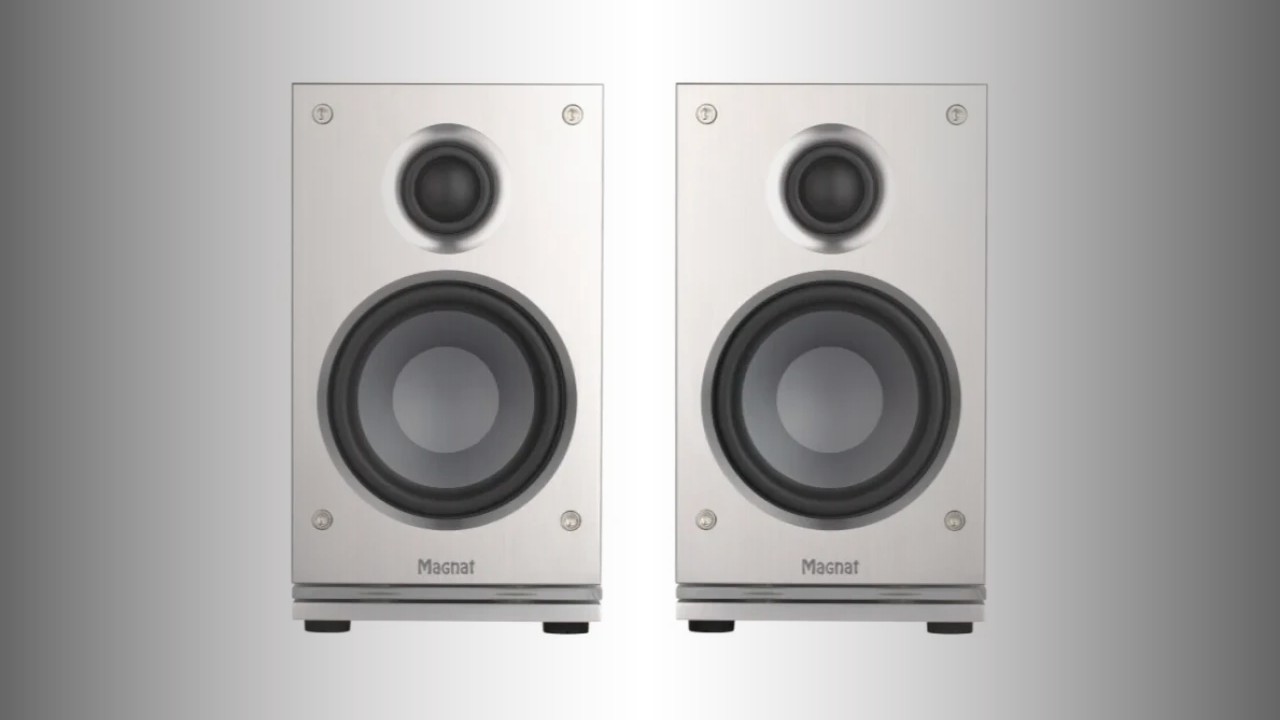
The Magnat Signature Edelstein is a compact premium bookshelf speaker with a clear emphasis on materials, vibration control and visual finish. Rather than relying on a complicated driver count or an oversized cabinet, it uses a two-way reflex architecture and focuses attention on the way the drivers, front baffle and cabinet surfaces are put together. For a prospective owner, that matters because bookshelf speakers often have to balance several competing priorities: they need to be small enough for domestic spaces, rigid enough to support precise driver behavior, attractive enough for visible placement, and flexible enough to work in a serious stereo or home audio system. The Signature Edelstein’s documented design choices point toward a speaker intended for listeners who want a compact loudspeaker that still feels deliberately engineered and carefully finished.
A two-way reflex design with a focused purpose
At the core of the Signature Edelstein is a two-way reflex configuration. In practical terms, that means the speaker divides duties between a high-frequency driver and a mid/bass driver, with the cabinet and reflex tuning contributing to low-frequency output. This is a familiar approach in bookshelf speaker design, but its appeal is easy to understand: it keeps the driver layout relatively simple while allowing each unit to concentrate on a defined frequency range.
For many systems, a well-conceived two-way bookshelf speaker can be easier to place and integrate than a larger floorstanding model. The Signature Edelstein’s format makes it relevant for rooms where space, furniture placement or visual discretion are important. It is not presented as a minimalist lifestyle object, however. The use of a reflex cabinet, a specialized tweeter assembly, a multilayer mid/bass diaphragm and reinforced front construction suggests a compact speaker built with traditional hi-fi priorities in mind.
The fabric dome tweeter and its wide surround
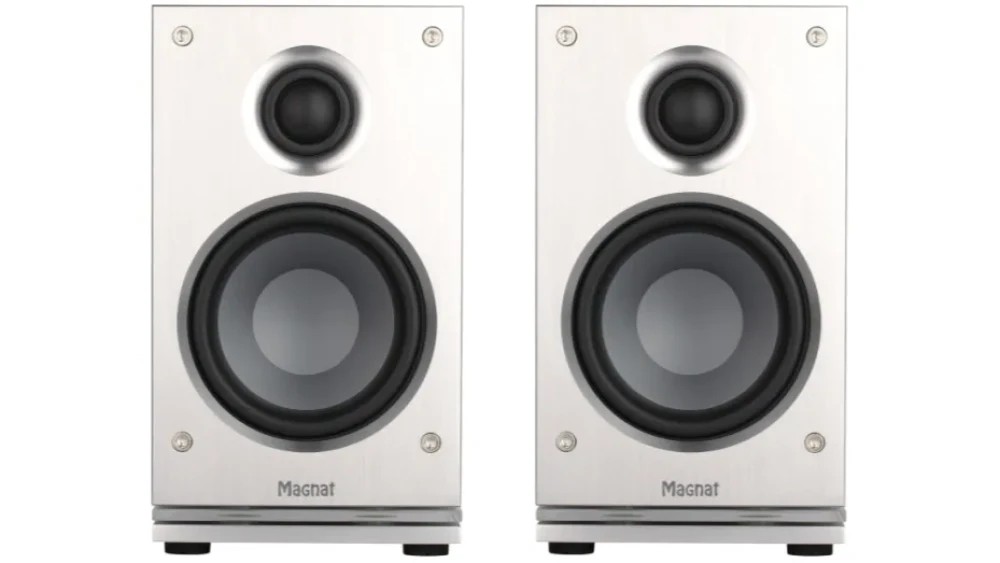
Magnat specifies a 2.5 mm thick fabric dome tweeter for the Signature Edelstein. A fabric dome is a long-established choice in hi-fi loudspeaker design, valued by many manufacturers for its combination of low mass, damping behavior and manufacturing consistency. What distinguishes this implementation in the supplied specification is the extra-wide surround, described by Magnat as a spherical waveguide.
The purpose of this surround is twofold: to help dissipate high frequencies more effectively and to minimize tweeter vibration. Those are meaningful design goals because the tweeter operates in the part of the spectrum where dispersion and mechanical control can strongly influence perceived clarity, image stability and tonal integration. Without making any listening claims, it is fair to say that the way a tweeter launches sound into a room is a critical part of a loudspeaker’s overall design. Magnat’s decision to emphasize the tweeter surround indicates that the company has treated the high-frequency unit as more than a simple off-the-shelf component.
3L Sandwich Diaphragm mid/bass driver
The Signature Edelstein’s mid/bass unit is the other major technical feature. Magnat describes it as using a multi-layer 3L Sandwich Diaphragm made from ceramic, magnesium and aluminum layers. The stated intention behind this kind of construction is to combine the properties of different materials rather than relying on a single cone substance to do everything.
In loudspeaker engineering, the mid/bass diaphragm has a demanding role. It must move enough air for lower frequencies while also remaining controlled through the midrange, where vocals and many instruments sit. A sandwich diaphragm is one way to pursue stiffness, damping and stability within a compact driver. Ceramic, magnesium and aluminum each have different mechanical characteristics, and layering them gives the designer a route to tune the behavior of the moving surface. The source information identifies this diaphragm as a central feature of the Signature Edelstein, and it is one of the clearest signs that Magnat is positioning the speaker as a material-driven design rather than a purely cosmetic premium model.
Cabinet construction: MDF, aluminum and acrylic glass
The cabinet combines MDF construction with a solid aluminum front panel. MDF remains common in loudspeaker cabinets because it is workable, dimensionally stable and suitable for producing rigid enclosures. Adding a solid aluminum front panel changes the character of the structure around the drivers, the area where mechanical stability is especially important. The front baffle is not merely decorative; it is the surface that supports the tweeter and mid/bass driver, so stiffness and resonance control are relevant design considerations.
Each speaker also includes a dual-layer acrylic glass and solid aluminum backing plate intended to further help minimize vibration. This detail is notable because it shows attention to the cabinet as a complete mechanical system, not just a box for the drivers. Loudspeakers generate energy inside and through their enclosures, and unwanted vibration can work against driver precision. The Signature Edelstein’s layered cabinet elements suggest that Magnat has tried to address this through material selection and structural reinforcement.
Finishes and practical ownership details
The Signature Edelstein is available in two finishes: silky matte black and satin white. Both choices are restrained and should make the speaker easier to integrate into contemporary interiors than a more visually aggressive design. The black finish will likely suit darker equipment racks, studio-inspired rooms or systems where the speaker is meant to recede visually. The satin white option offers a lighter, furniture-friendly alternative for brighter spaces.
Removable grilles are included to protect the front panels. This is a simple but useful detail. Some owners prefer listening or displaying speakers with drivers visible, while others want protection from dust, accidental contact or the demands of a shared living room. Removable grilles allow either approach without forcing a permanent visual decision. Combined with the aluminum front panel and acrylic/aluminum backing plate, the finish options reinforce the impression of a compact speaker designed to be seen as well as heard.
System matching and intended use
The available information does not provide sensitivity, impedance, recommended amplifier power, dimensions or weight, so prospective owners should check the manufacturer’s full specifications before matching the Signature Edelstein with an amplifier or stands. That is especially important for any premium bookshelf speaker, because placement, stand height, amplifier compatibility and room interaction can all influence the final result. The two-way reflex format suggests use in a conventional stereo setup, on suitable shelves or stands, or as part of a compact high-quality audio system, but installation details should be guided by Magnat’s own documentation.
The speaker’s strongest appeal is likely to be for listeners who want a compact loudspeaker with visible engineering effort in its drivers and cabinet. It should also interest those who value premium materials, restrained finishes and the flexibility of a bookshelf form factor. It may be less suitable for buyers who need published amplifier-matching data before shortlisting, who require a floorstanding speaker for aesthetic or output reasons, or who are looking for a product with extensive documented connectivity features. As a passive loudspeaker, its role is to integrate into a broader system rather than replace the need for careful component selection.
Market position without the noise
Magnat presents the Signature Edelstein as a premium bookshelf model, and its construction supports that positioning. The combination of a fabric dome tweeter with a specialized surround, a multilayer ceramic/magnesium/aluminum mid/bass diaphragm, MDF cabinet construction, solid aluminum front panel and acrylic/aluminum reinforcement gives the product a clearly defined identity. It is not simply a compact speaker with a luxury finish; its documented features are concentrated on the areas that matter most to loudspeaker design: driver behavior, vibration management and cabinet rigidity.
The UK launch also places the Signature Edelstein in a competitive premium bookshelf category, where buyers often compare engineering choices as closely as brand names. In that context, Magnat’s most distinctive message is material integration. The speaker’s design language and technical story are aligned: compact proportions, controlled surfaces, layered construction and a choice of understated finishes. For a prospective owner, that makes it easier to understand what the product is trying to be.
Conclusion
The Magnat Signature Edelstein stands out through its compact two-way reflex format, wide-surround fabric dome tweeter, 3L Sandwich Diaphragm mid/bass driver, and cabinet construction that combines MDF, solid aluminum and dual-layer acrylic glass. Its appeal lies in a practical mix of premium materials, vibration-focused engineering and domestically adaptable finishes. It is best suited to listeners building a serious compact stereo system who value careful loudspeaker construction, understated styling and the flexibility of a bookshelf design, while still being prepared to check the full technical specifications for amplifier and placement matching.