
Speakers serve very different purposes, and this selection stretches well beyond conventional stereo pairs.
It includes professional active monitors, wireless all-in-one models, soundbars, a portable Sonos speaker, installation-focused subwoofer, compact bookshelf designs and substantial floorstanders.
The right choice depends less on a universal ranking than on the room, source equipment and listening task. For studio work, connectivity, room correction and nearfield suitability matter more than portability. Home cinema systems benefit from straightforward installation and convincing surround coverage, while everyday wireless speakers need to balance battery life, platform support and ease of placement. Larger passive designs place greater demands on space and associated equipment but may offer more flexibility when building a dedicated system. Several entries are based on product announcements containing manufacturer specifications rather than comparative listening tests. Quoted output, frequency extension and design benefits should therefore be treated as selection criteria, not independent verification. The recommendations below focus on the practical differences directly supported by the supplied material.

1. Neumann KH 120 II
The Neumann KH 120 II active monitor combines a 5.25-inch bass-midrange driver, 1-inch tweeter and DSP-based crossover.
The KH 120 II is a two-way active monitor designed around professional output, controlled dispersion and system integration.
Neumann specifies a maximum sound pressure level of 116.8 dB and a frequency response extending from 44 Hz to 21 kHz within ±3 dB.
Its revised DSP supports linear-phase operation and Neumann’s MA 1 room-correction workflow, making it the most studio-focused option in this selection. Analog and digital inputs are included, while a separate AES67 version addresses networked professional environments using standards including ST 2110, ST -7 and RAVENNA.
Best for: Professional nearfield monitoring and networked studios
- 44 Hz to 21 kHz specified frequency response
- 116.8 dB maximum specified output
- DSP with linear-phase operation and MA 1 correction support
- Analog, digital and optional AES67 connectivity
Verdict: A technically comprehensive active monitor for users who can benefit from its DSP, room-correction support and professional connectivity.
2. Huawei Sound X
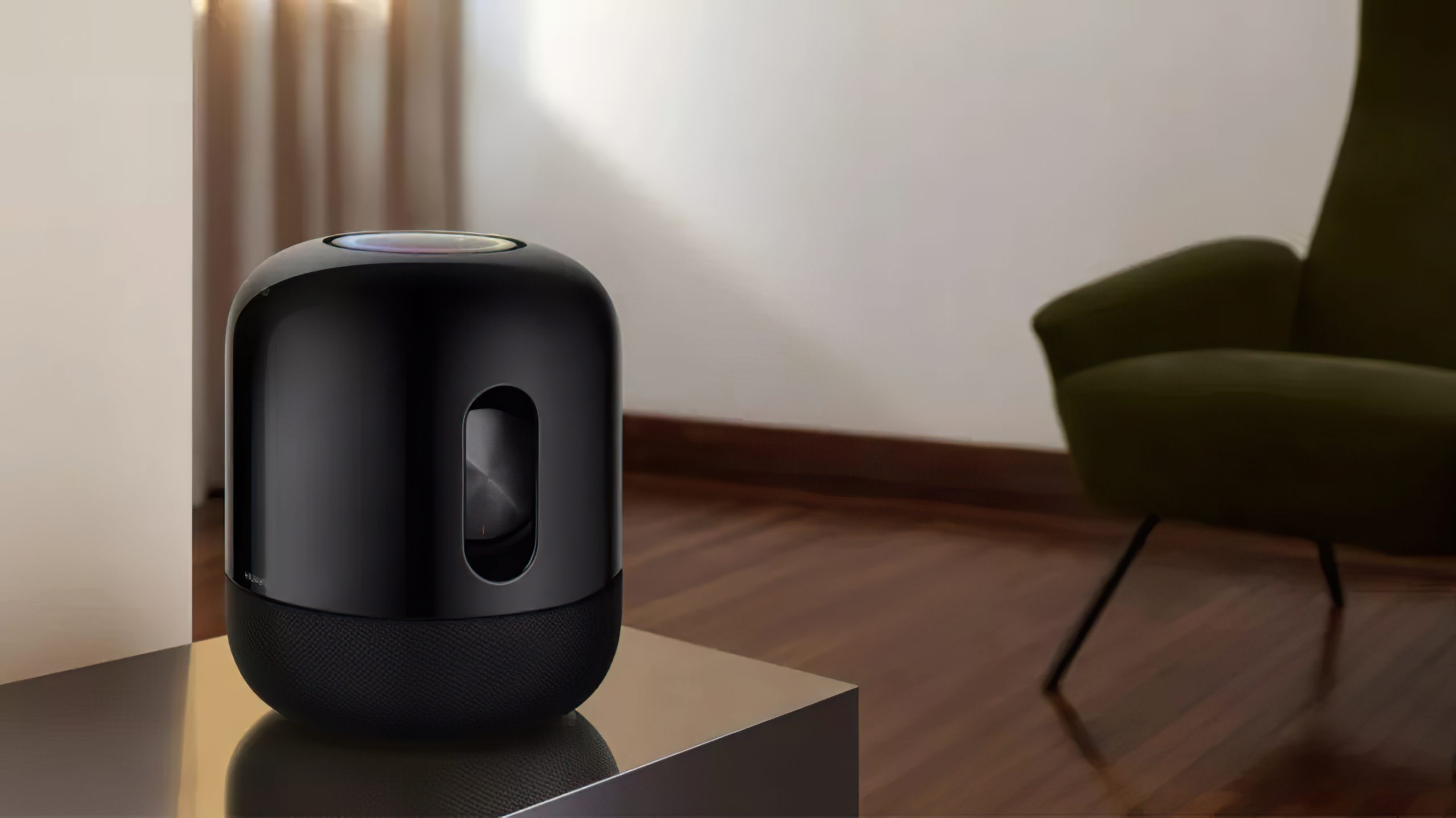
The Huawei Sound X uses opposed bass drivers and Devialet Speaker Active Matching technology in a wireless enclosure.
Huawei’s Sound X is a wireless Wi-Fi speaker built around technology developed with Devialet.
Its Speaker Active Matching system is described as correcting crossover irregularities, optimizing bass response and limiting driver travel as the bass elements approach their maximum excursion.
Two bass drivers are positioned on opposite sides of the enclosure in a push-push arrangement, with up to 60 watts assigned to each; this configuration is intended to reduce cabinet distortion. The source also describes sound distributed in all directions, although it provides less detail about app control, supported services or wider platform integration.
Best for: All-in-one Wi-Fi listening with broad room coverage
- Devialet Speaker Active Matching technology
- Sound distributed in all directions
- Opposed push-push bass-driver configuration
- Up to 60 watts for each bass driver
Verdict: An interesting wireless option for listeners drawn to Devialet-derived bass management, though the supplied information leaves its wider ecosystem less clearly defined.

3. JBL BAR 1300MK2
The JBL BAR 1300MK2 includes detachable battery-powered surrounds and a wireless dual-driver subwoofer.
The BAR 1300MK2 is the most complete home-cinema package here, combining an 11.1.4-channel soundbar system with Dolby Atmos, DTS:X, a wireless subwoofer and detachable surround speakers.
The subwoofer uses two 8-inch drivers, while the battery-powered rear speakers can operate behind the seating position for up to 10 hours before returning to the soundbar to recharge.
Once docked, they work as side speakers, and they can also be used as portable Bluetooth speakers. This integrated approach removes the need for a separate AV receiver and avoids permanent cables running to the rear channels.
Best for: Surround sound without permanent rear-speaker wiring
- 11.1.4-channel Dolby Atmos and DTS:X system
- Battery-powered detachable surround speakers
- Wireless subwoofer with two 8-inch drivers
- Rear modules also function as portable Bluetooth speakers
Verdict: A feature-rich alternative to a component home-theater system for viewers who want physical surround speakers with simpler installation.

4. Paradigm Soundplay
The Paradigm Soundplay can be positioned on furniture or wall-mounted using the supplied installation template.
The supplied information makes the strongest case for Soundplay through installation flexibility rather than detailed audio specifications.
The soundbar can sit on furniture or be mounted on a wall without requiring a separate special bracket, and an installation template is included.
Paradigm also provides an infrared repeater for situations in which the bar obstructs the television’s remote-control receiver. Those details make it a practical candidate for television setups where positioning and reliable remote operation are recurring problems, although the source does not provide enough information for a meaningful assessment of formats, connections or channel configuration.
Best for: TV installations requiring flexible placement
- Suitable for tabletop or wall placement
- Installation template included
- Infrared repeater for an obstructed TV receiver
Verdict: A placement-friendly soundbar whose clearest advantages are its mounting provisions and solution for blocked television infrared receivers.

5. L-Acoustics SB10i
The L-Acoustics SB10i places a 10-inch driver in a shallow enclosure designed for discreet installation.
The SB10i is a specialist compact subwoofer intended for premium residential and commercial installations.
Its enclosure measures 540 by 540 by 170 mm and weighs 15 kg, giving installers a relatively shallow format to work with.
L-Acoustics specifies a 10-inch driver, extension to 27 Hz and maximum sound pressure of 124 dB. Equal attention is given to discreet integration: wires and fasteners can be concealed so the subwoofer is less visually intrusive. The company recommends pairing it with its X4i and 5XT installation speakers for homes, hotels, museums and similar projects.
Best for: Discreet premium home and commercial installations
- Shallow 170 mm enclosure
- Claimed extension to 27 Hz
- Maximum specified output of 124 dB
- Designed to conceal wiring and fasteners
Verdict: A compact, installation-led subwoofer for projects where concealment and substantial specified output matter more than conventional standalone usability.

6. Magico S2
The Magico S2 is a three-way aluminum floorstander with a 5-inch midrange driver and two 7-inch woofers.
Magico’s S2 is a three-way, four-driver floorstander built around an aircraft-grade aluminum enclosure described as being machined from a solid block.
The construction is intended to increase stiffness and reduce vibration, while the internal structure addresses resonance and damping.
A 5-inch midrange driver uses an aluminum sandwich cone reinforced with carbon fiber and graphene, and two 7-inch woofers use related sandwich-cone construction. At more than 60 kg per speaker, the S2 demands careful delivery, positioning and a suitably accommodating room; it is not a casual choice despite occupying the middle of Magico’s S range.
Best for: Dedicated listening spaces able to accommodate heavy floorstanders
- Solid aircraft-grade aluminum enclosure
- Three-way, four-driver configuration
- Carbon-fiber and graphene-reinforced cone construction
- Internal design optimized for resonance control and damping
Verdict: An elaborate materials-driven floorstander whose substantial construction brings equally substantial installation demands.
7. Starke Sound Beta5
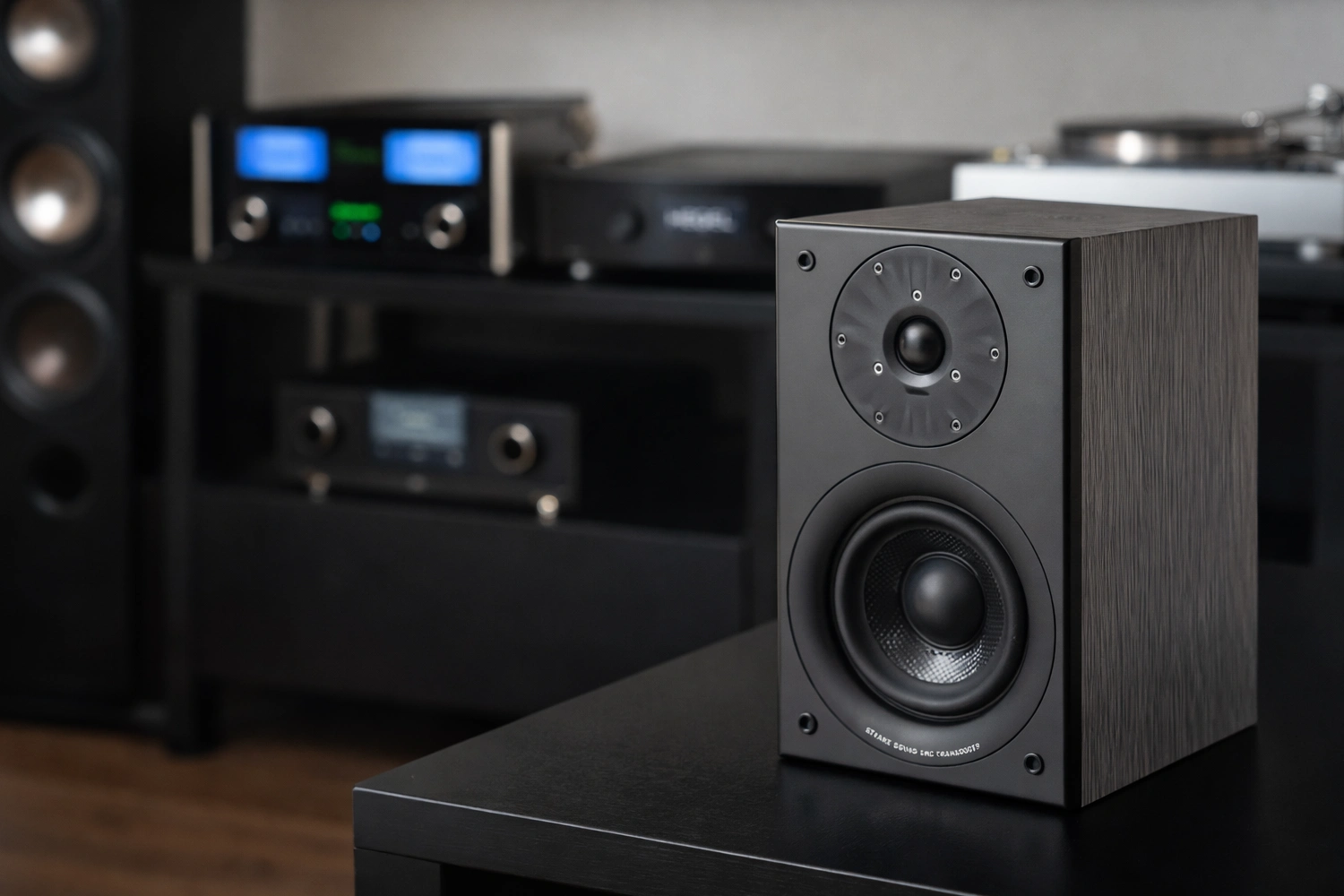
The compact Starke Sound Beta5 is designed for stereo, home theater and systems using Eversolo Play profiles.
The Beta5 is the smallest and most accessible model in Starke Sound’s Beta range, using a two-way bookshelf format intended for stereo, multichannel home theater and compact all-in-one systems.
Its most distinctive usability feature is integration with compatible Eversolo components.
Dedicated Beta5 equalization profiles within the Eversolo Play platform can configure the system using information about impedance, efficiency and placement. That integration gives the Beta5 a clearly defined role for existing Eversolo users, while its compact dimensions and broad intended applications make it less specialized than the studio monitors and installation speakers elsewhere in the list.
Best for: Compact systems and compatible Eversolo setups
- Compact two-way bookshelf design
- Suitable for stereo and multichannel systems
- Dedicated profile for compatible Eversolo equipment
- Profile accounts for electrical behavior and placement
Verdict: A versatile bookshelf speaker with an especially coherent usability case when paired with supported Eversolo hardware.

8. Sonos Roam SL
The Sonos Roam SL is a microphone-free portable speaker with IP67 protection, AirPlay 2 and Qi charging support.
Roam SL retains the portable fundamentals of the original Roam while removing its microphone.
It carries an IP67 water-resistance rating, supports Apple AirPlay 2 and provides up to 10 hours of continuous playback.
Charging is possible with a Qi-compatible wireless charger. The microphone-free design also removes Amazon Alexa and Google Assistant support, automatic Trueplay adjustment and Sound Swap, so the lower-cost positioning comes with meaningful functional trade-offs. A Roam SL can still form a stereo pair with another Roam SL or the original Roam over Wi-Fi, making it useful for listeners already invested in the Sonos platform.
Best for: Portable Sonos listening without voice assistants
- IP67 water-resistance certification
- Up to 10 hours of continuous playback
- Apple AirPlay 2 and Qi charging support
- Wi-Fi stereo pairing with Roam models
Verdict: A sensible mic-free Roam for users who value portability and Sonos integration more than voice control, automatic Trueplay or Sound Swap.
9. Elac Debut 3.0
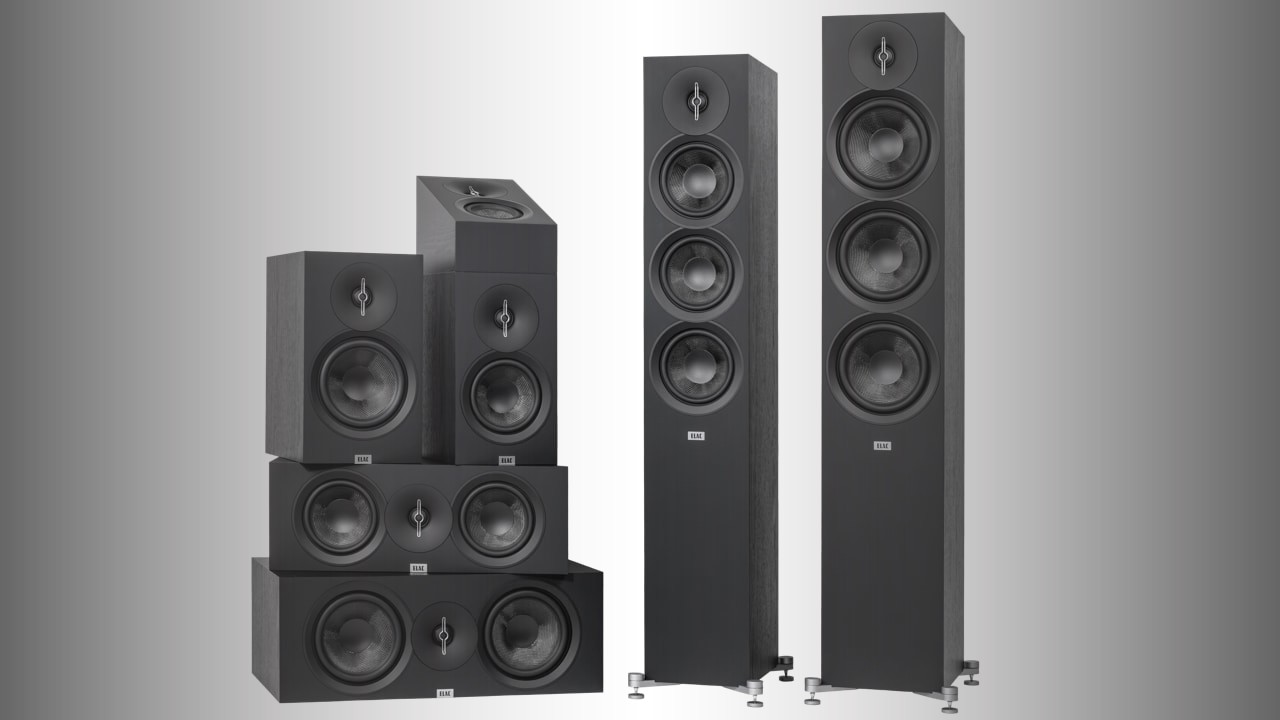
The Elac Debut 3.0 family includes floorstanding, monitor, center and wall-mountable Dolby Atmos speakers.
Debut 3.0 is a seven-model entry-level range rather than a single speaker, making it the broadest foundation here for a coordinated multichannel system.
It includes two three-way floorstanders, two two-way monitor models, two center speakers and the DA43-BK Dolby Atmos speaker.
The Atmos model can sit on a floorstander or monitor, or be mounted directly on a wall. Elac uses closed cabinets for the center models to simplify placement in television furniture, and every model is finished in black ash. Buyers can therefore select different cabinet and woofer sizes while remaining within one visually consistent family.
Best for: Building a coordinated entry-level surround system
- Seven models covering stereo and surround roles
- Choice of floorstanding and monitor speakers
- Two matching center-channel sizes
- Atmos speaker supports top-mounted or wall-mounted use
Verdict: A practical speaker family for buyers who want matching stereo, center and height channels without mixing unrelated ranges.
10. Edifier MR5
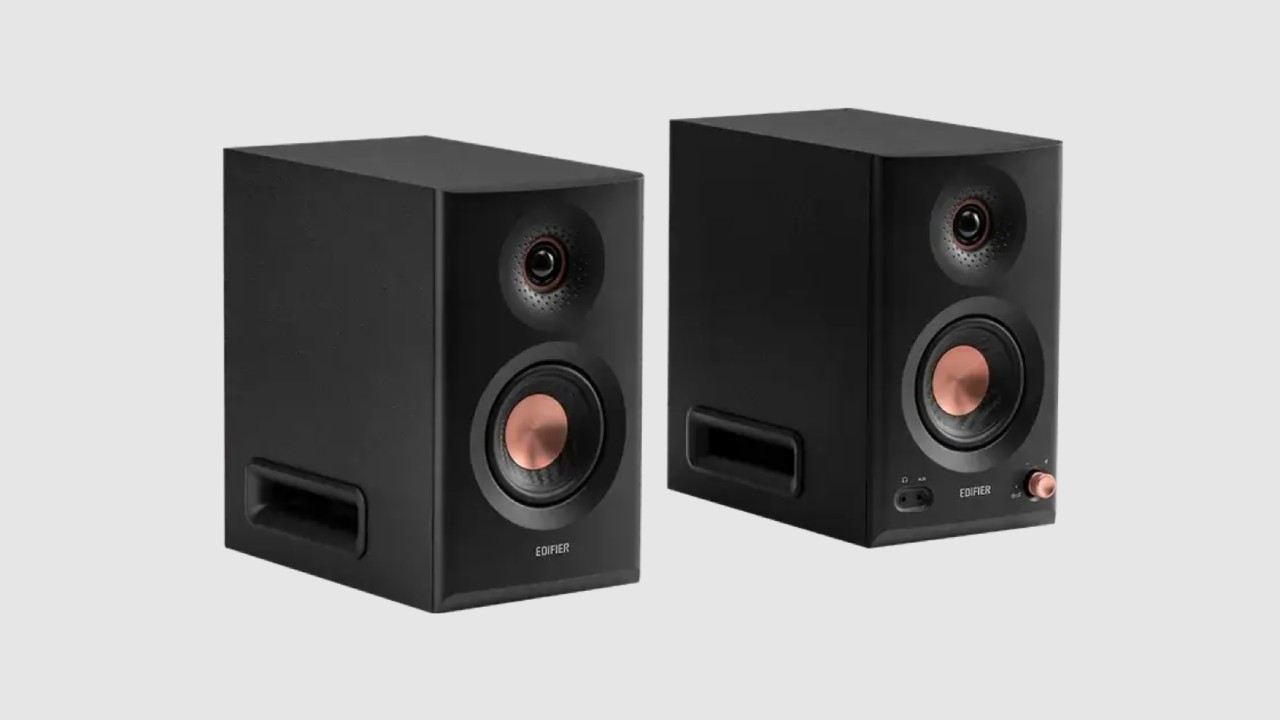
The Edifier MR5 uses a three-way driver layout with dedicated amplification and a wired master-and-slave arrangement.
The MR5 is a three-way master-and-slave monitor system with separate Class D amplification for its tweeter, midrange driver and woofer.
Each speaker uses a 1-inch silk-dome tweeter, 3.75-inch midrange unit and internally housed 5-inch woofer, with a stated 55 watts RMS per channel.
Edifier specifies a response of 46 Hz to 40 kHz and maximum output of 101 dB at one meter. Hi-Res Audio support and Bluetooth LDAC broaden its usefulness beyond a conventional wired desktop monitor, although the passive slave must remain connected to the electronics-equipped master speaker by cable.
Best for: Home studios and nearfield listening with wireless convenience
- Three-way design with separate driver amplification
- 55 watts RMS specified per channel
- Bluetooth LDAC and Hi-Res Audio support
- 46 Hz to 40 kHz specified frequency response
Verdict: A well-equipped three-way desktop monitor system that combines studio-oriented driver separation with practical high-quality Bluetooth support.

Sound Off
0Join the discussion if you have something to add.