
Amplifier is a broad category, and these ten products occupy distinctly different roles.
The field includes connected integrated amplifiers, an all-analog solid-state integrated, a tube integrated, stereo and monoblock power amplifiers, line-level preamplifiers and a specialist phono stage.
They are ranked as components for real systems rather than treated as interchangeable boxes. The order favors overall system usefulness, clearly documented engineering, stated load-driving ability and connection flexibility. The supplied sources do not provide a uniform set of independent measurements or direct comparative listening results, so the ranking does not claim to be a controlled shootout. Higher positions identify the strongest general recommendations from the available evidence. Lower positions often reflect a narrower role or incomplete published specifications rather than lesser ambition. Speaker matching, source requirements and the need for additional components remain important distinctions throughout the list.
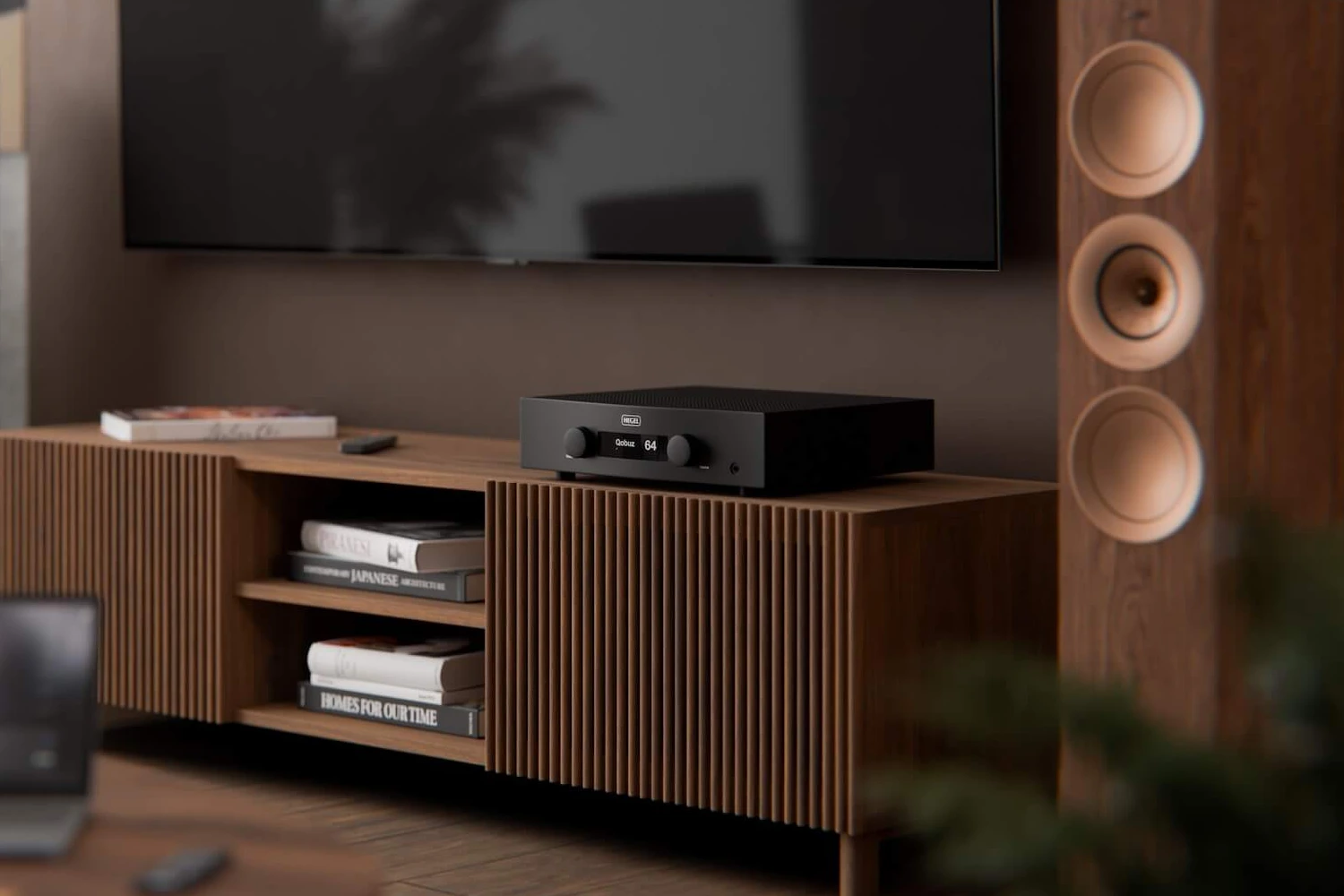
1. Hegel H200: The Most Complete All-Rounder
The Hegel H200 integrates network playback, digital conversion, analog inputs, MM phono support and headphone listening.
The Hegel H200 takes first place because it combines a substantial Class A/B amplifier with most of the source and control functions required by a contemporary system.
It is rated at 150 watts per channel and includes network playback, digital conversion, analog inputs, an MM phono stage and headphone listening.
Hegel also specifies stability into loads down to 2 ohms and a damping factor greater than 4,000. SoundEngine2 is intended to identify and reduce distortion as it occurs, while balanced XLR and unbalanced RCA inputs provide options for external sources. The source article also introduces the analog-only A200, but that is a separate sibling rather than part of this ranking entry; the H200 alone earns the position for its unusually complete feature set.
Best for: Listeners seeking a powerful connected integrated amplifier
- 150-watt-per-channel Class A/B amplification
- Network playback and built-in digital conversion
- Integrated MM phono stage and headphone listening
- Specified stability into speaker loads down to 2 ohms
Verdict: The H200 is the strongest overall recommendation because it combines broad source support with a clearly specified, load-tolerant amplifier platform.
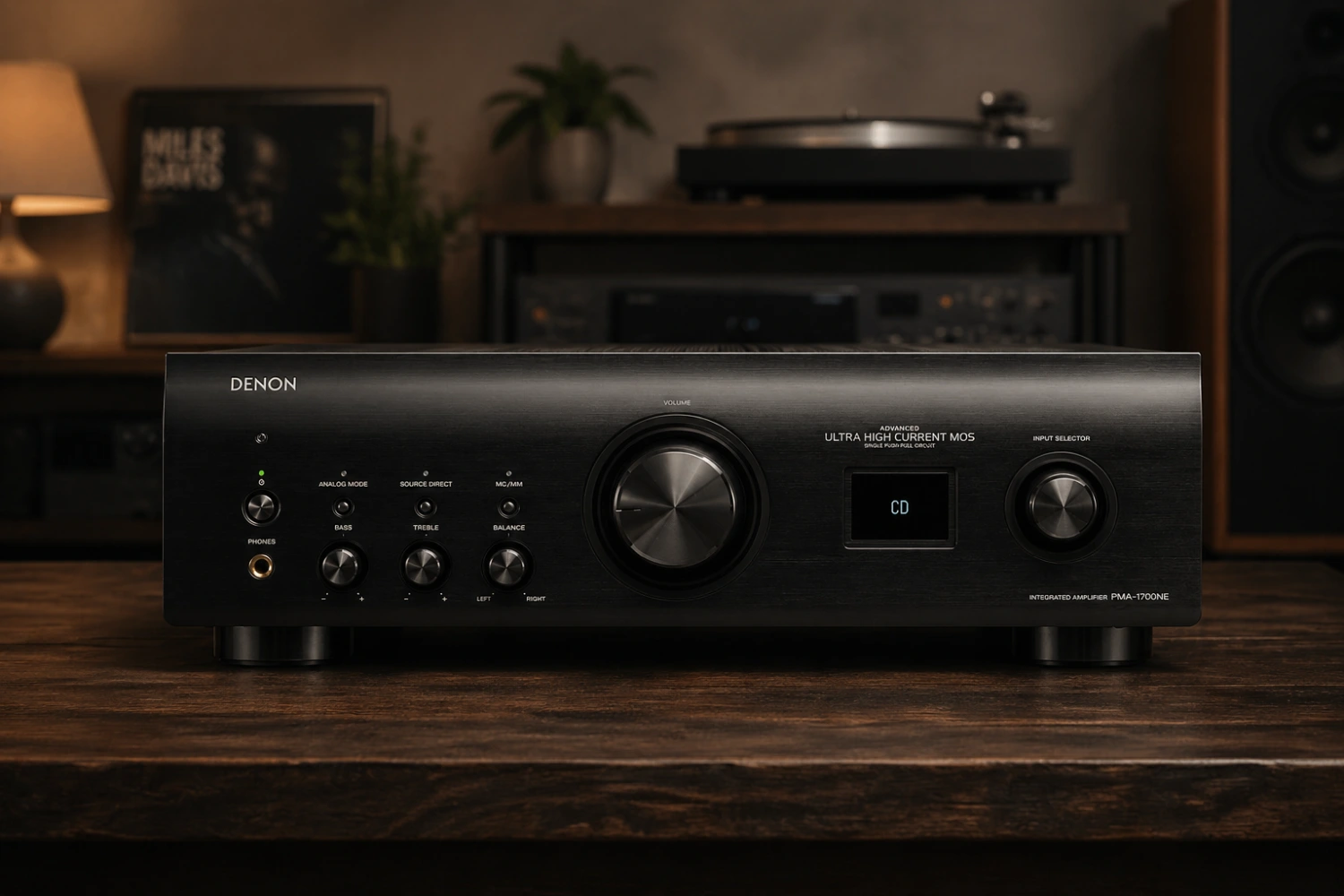
2. Denon PMA-1700NE: A Strong Purist Integrated Choice
The Denon PMA-1700NE uses UHC MOSFET output devices and retains dedicated tone and balance controls.
The Denon PMA-1700NE earns second place by concentrating on the fundamentals of an integrated amplifier.
Its UHC MOSFET output devices operate in a single push-pull configuration, with output stated at up to 140 watts into 4 ohms.
The source describes a divided internal layout intended to reduce interference between functional sections. Mechanical construction receives similar attention through steel reinforcement and carefully damped components. Conventional tone and balance controls also give the listener direct adjustment without abandoning the familiar Denon layout. It lacks the documented network versatility that puts the Hegel first, but its combination of power, physical construction and hands-on control makes it a convincing general-purpose integrated amplifier.
Best for: Traditional integrated-amplifier systems that prioritize power and physical controls
- Up to 140 watts into 4 ohms
- UHC MOSFET single push-pull output stage
- Separated circuit blocks intended to limit interference
- Traditional tone and balance controls
Verdict: The PMA-1700NE is a well-specified integrated amplifier built around substantial output capability and disciplined internal construction.
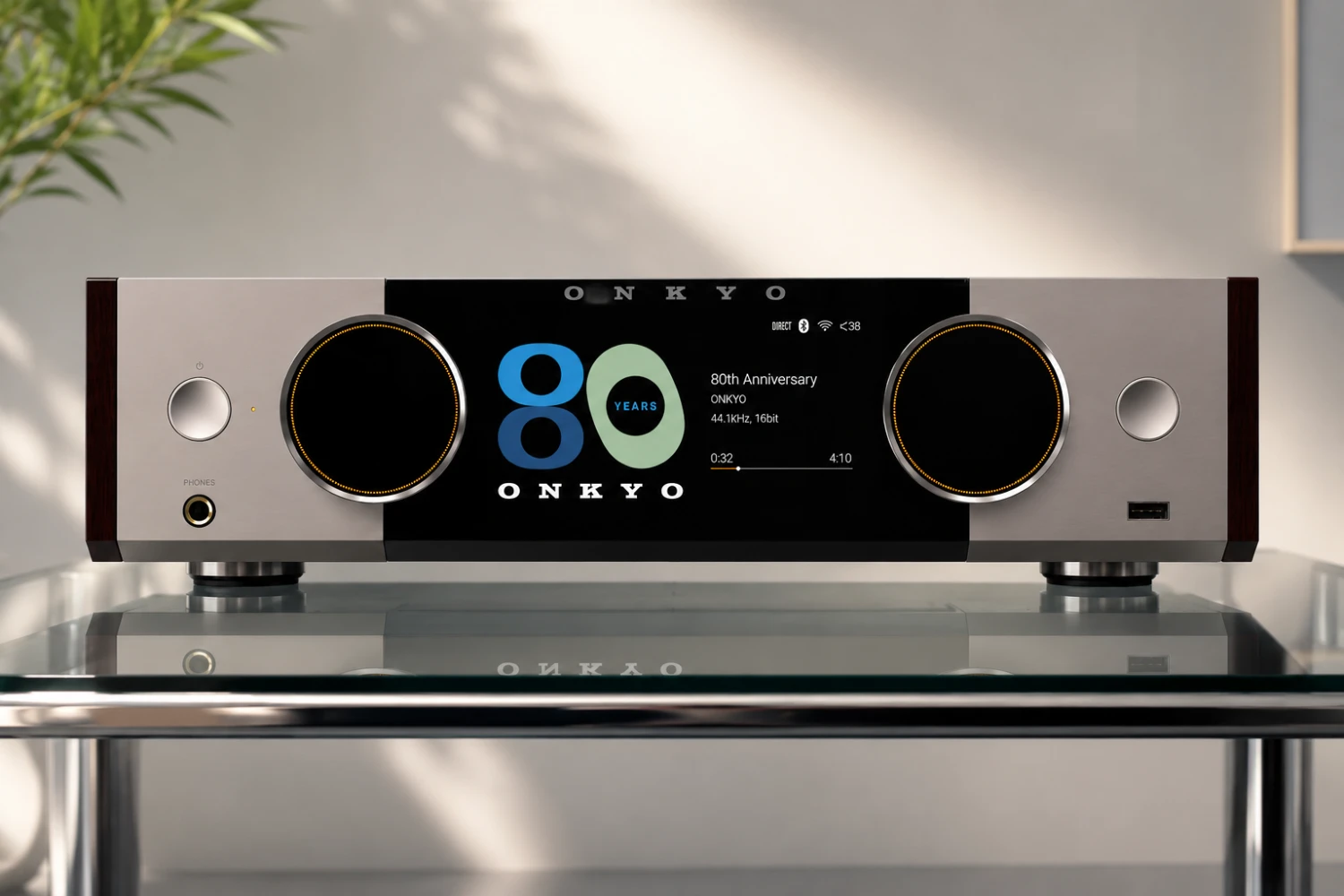
3. Onkyo Muse Y-50 80th Anniversary Edition: Retro Style, Modern Reach
The Onkyo Muse Y-50 combines retro-inspired styling with network streaming, HDMI ARC and phono connectivity.
The Muse Y-50 is the most overtly modern system hub near the top of the list.
Its Axign Class D amplifier and MOSFET output section are rated at 250 watts into 4 ohms, while network streaming, room calibration, HDMI ARC and MM/MC phono connectivity cover a wide range of listening sources.
Onkyo wraps those functions in styling inspired by earlier Integra components, including walnut-colored side panels, a champagne-colored front and a patterned ventilated top. A 5.46-inch color display can show system information or analog-style VU meters, and the Onkyo Controller app provides another control option. Its anniversary presentation will be a matter of taste, but the underlying connectivity is unusually comprehensive.
Best for: Multi-source systems combining television, streaming and vinyl
- Rated at 250 watts into 4 ohms
- Network streaming and room calibration
- HDMI ARC plus MM and MC phono connectivity
- Large color display and app-based control
Verdict: The Muse Y-50 is a highly versatile network amplifier whose retro presentation conceals a distinctly contemporary feature set.

4. McIntosh MA2375: Analog Tube Integration
The McIntosh MA2375 is a 75-watt-per-channel tube integrated amplifier with Unity Coupled Circuit output transformers.
The MA2375 is the highest-ranked tube design because it combines preamplification and power amplification in one fully analog component.
Its tube complement includes four KT88 output tubes, four 12AT7 driver tubes and additional 12AX7A and 12AT7 devices in the preamplifier stage.
McIntosh rates the amplifier at 75 watts per channel into 4-, 8- or 16-ohm speakers through its Unity Coupled Circuit output transformers. That consistent rating across three nominal impedances is more informative than a single headline figure when assessing potential speaker partnerships. Power Guard Screen protection adds a modern safeguard to an otherwise traditional tube-amplifier concept.
Best for: Analog-focused listeners seeking an integrated tube amplifier
- Fully analog integrated-amplifier architecture
- 75 watts per channel into 4, 8 or 16 ohms
- Unity Coupled Circuit output transformers
- Power Guard Screen protection
Verdict: The MA2375 packages McIntosh tube circuitry, impedance flexibility and protection technology in a single analog amplifier.

5. PS Audio PMG Signature S400: High-Power Stereo Amplification
The PS Audio PMG Signature S400 is rated at 400 watts per channel into a 4-ohm load.
The PMG Signature S400 is a dedicated stereo power amplifier for systems built around a separate preamplifier.
It is rated at 400 watts per channel into 4 ohms, giving it the highest explicitly stated per-channel output in this ranking.
PS Audio describes it as a new design rather than an update of an earlier amplifier. Its focused role makes the S400 less self-contained than the integrated models above it, but it is also simpler to incorporate than a pair of monoblocks. The source introduces a lower-powered S200 at the same time; that model remains a distinct product and is not combined with the S400 evaluated here.
Best for: High-powered separate systems with an existing preamplifier
- Rated at 400 watts per channel into 4 ohms
- Dedicated two-channel power-amplifier design
- Developed as a new design rather than a revision
- Stereo chassis avoids the need for two monoblock enclosures
Verdict: The S400 is the clearest high-output stereo power-amplifier choice in the supplied field, provided the system already has source control and preamplification.

6. Grimm Audio PA1: A Focused Class AB Monoblock
The compact Grimm Audio PA1 uses a fully balanced Class AB monoblock architecture.
The Grimm Audio PA1 takes a more specialized route as a compact, fully balanced Class AB monoblock.
Its development centers on distortion under dynamic signal conditions rather than relying only on static measurements, according to Grimm Audio.
That is a relevant engineering focus, although the supplied source does not provide the full numerical specification needed for direct power comparisons. As a monoblock, the PA1 requires one amplifier for each channel as well as a separate preamplifier. The resulting system is less compact overall than the enclosure itself might suggest, but the format provides physically independent amplification for the left and right speakers.
Best for: Balanced high-end systems built around separate mono power amplifiers
- Fully balanced circuit architecture
- Dedicated monoblock construction
- Class A/B design focused on dynamic signal behavior
- Compact individual enclosure
Verdict: The PA1 is an engineering-led monoblock for committed separates users, though the supplied information limits direct output comparisons.

7. Vitus Audio SM-025: Signature Series Class A Monoblock
The Vitus Audio SM-025 replaces the SM-011 as the company’s revised Signature Series monoblock.
The SM-025 is the direct successor to the long-running SM-011 and retains the established visual language of Vitus Audio while introducing a substantially revised internal architecture.
The company says selected engineering ideas were drawn from its flagship SIA-030 integrated amplifier.
Vitus Audio also describes the SM-025 as doubling the Class A power of its predecessor, but the supplied source does not include absolute output figures. That missing context and the need for two amplifiers plus a preamplifier place it below the more fully documented choices, even though its redesigned architecture makes it a significant addition to the Signature Series.
Best for: High-end systems specifically seeking Vitus Audio Class A monoblocks
- Dedicated Signature Series monoblock design
- Substantially revised internal architecture
- Incorporates selected engineering ideas from the SIA-030
- Claimed to double the Class A power of its predecessor
Verdict: The SM-025 is a major architectural update for Vitus Audio separates, but incomplete output data prevents a stronger comparative ranking.
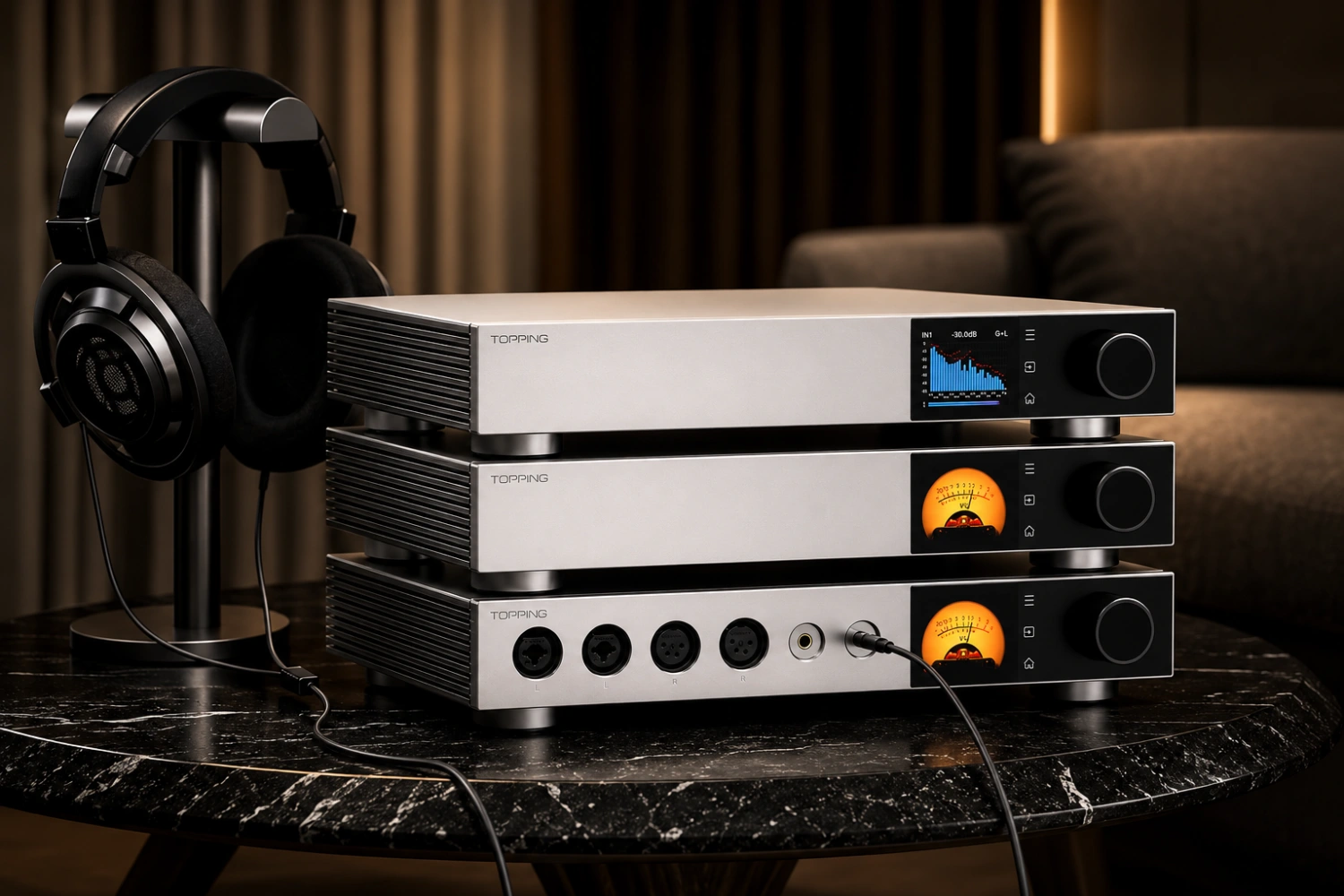
8. TOPPING Pre900: Precision Control for Separates
The TOPPING Pre900 is a fully balanced preamplifier built around a relay-controlled 1,000-step volume system.
The TOPPING Pre900 is a line-level preamplifier rather than a speaker-driving amplifier, so its value lies in signal routing and volume control.
It uses a fully balanced four-channel differential architecture in which the left and right channels follow independent paths.
Separate power circuits for the digital control and analog sections are intended to reduce interaction between them. Its defining control feature is a relay-based volume system with 1,000 steps, offering unusually fine adjustment without a conventional potentiometer. It still requires source components and a power amplifier, but it is one of the most technically explicit control components in this list.
Best for: Balanced desktop, studio or hi-fi separates requiring precise level control
- Fully balanced four-channel differential architecture
- Independent left and right signal paths
- Separate power circuits for analog and digital control sections
- Relay-controlled 1,000-step volume adjustment
Verdict: The Pre900 is a technically focused balanced preamplifier whose fine volume control is more important than broad source integration.
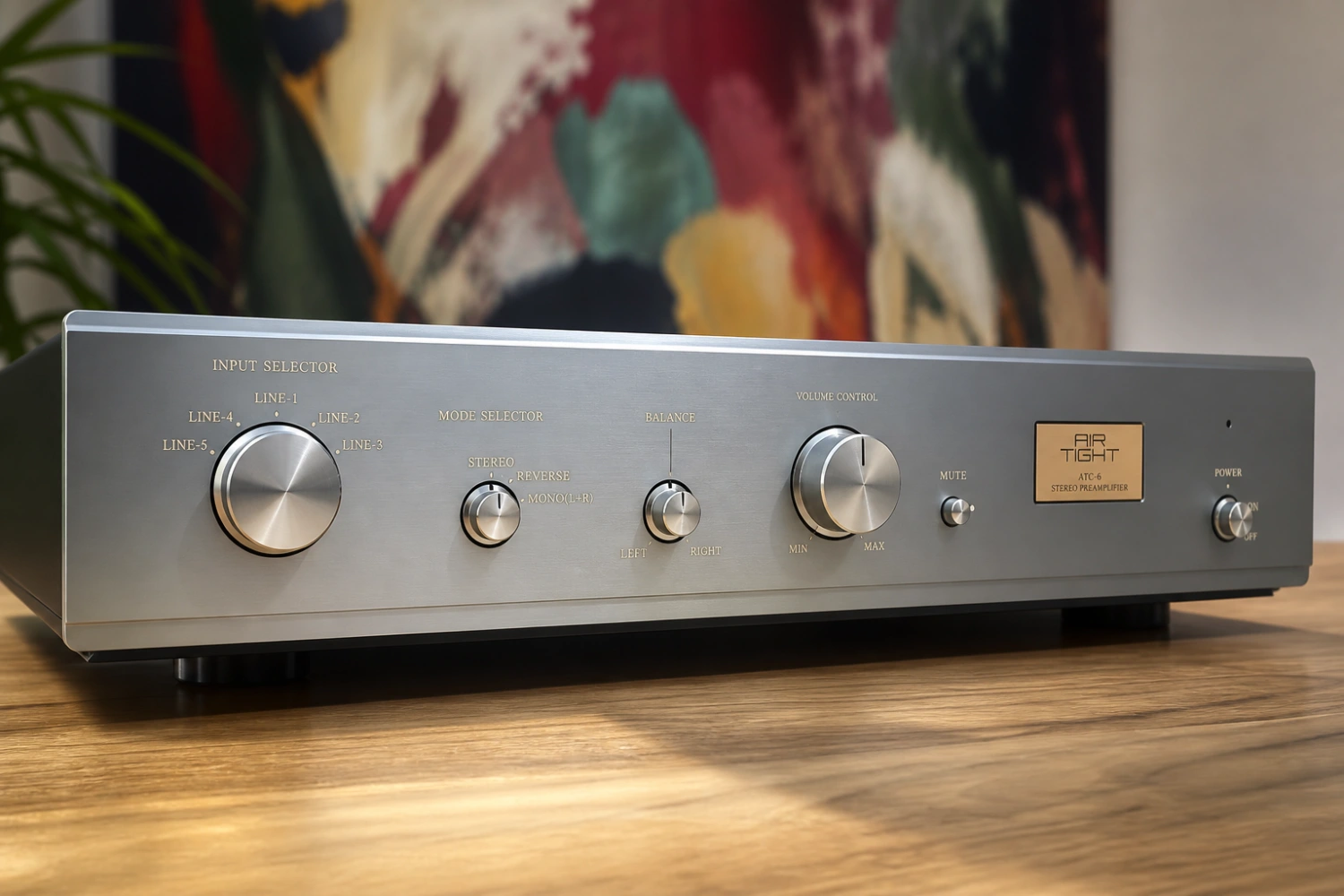
9. Air Tight ATC-6: Tube Line-Level Purism
The Air Tight ATC-6 is a two-stage tube line preamplifier with balanced XLR and unbalanced RCA connectivity.
The Air Tight ATC-6 is another preamplifier-only choice, but its priorities differ markedly from those of the TOPPING.
It uses a traditional two-stage tube circuit built around a pair of 12AT7 dual triodes and remains dedicated to analog line-level sources rather than adding digital functions.
Five line-level inputs include two balanced XLR connections alongside RCA inputs, giving the purist design reasonable source flexibility. Structural and electrical changes are intended to lower noise and improve stability and long-term reliability relative to the ATC-3 it replaces. A separate power amplifier remains essential.
Best for: All-analog separates centered on a tube line preamplifier
- Two-stage tube architecture using 12AT7 dual triodes
- Five analog line-level inputs
- Two balanced XLR input connections
- Revised structural and electrical design
Verdict: The ATC-6 is a deliberately traditional tube preamplifier for systems that value analog focus over digital integration.

10. Vertere Acoustics Phono-1 LX: Specialist Vinyl Gain
The Vertere Acoustics Phono-1 LX is a compact configurable phono preamplifier for MM and MC cartridges.
The Phono-1 LX occupies the narrowest role in the ranking: it amplifies and equalizes the low-level signal from a turntable cartridge rather than controlling a complete system or driving loudspeakers.
It develops Vertere’s compact Phono-1 platform and incorporates knowledge derived from the flagship dual-mono Calon phono preamplifier.
The platform supports MM and MC cartridge use with adjustments involving gain, input impedance and capacitance. That configurability is important for cartridge matching, but the product still needs a line preamplifier or integrated amplifier downstream. Its last-place position reflects this highly specialized function rather than a judgment that phono amplification is unimportant.
Best for: Vinyl systems requiring a configurable external phono stage
- Dedicated MM and MC phono amplification
- Adjustable gain and cartridge loading
- Compact established Phono-1 platform
- Development informed by the flagship Calon phono stage
Verdict: The Phono-1 LX is a focused and adjustable vinyl front end, but its single-source role makes it the least universal amplifier in the ranking.


Sound Off
0Join the discussion if you have something to add.